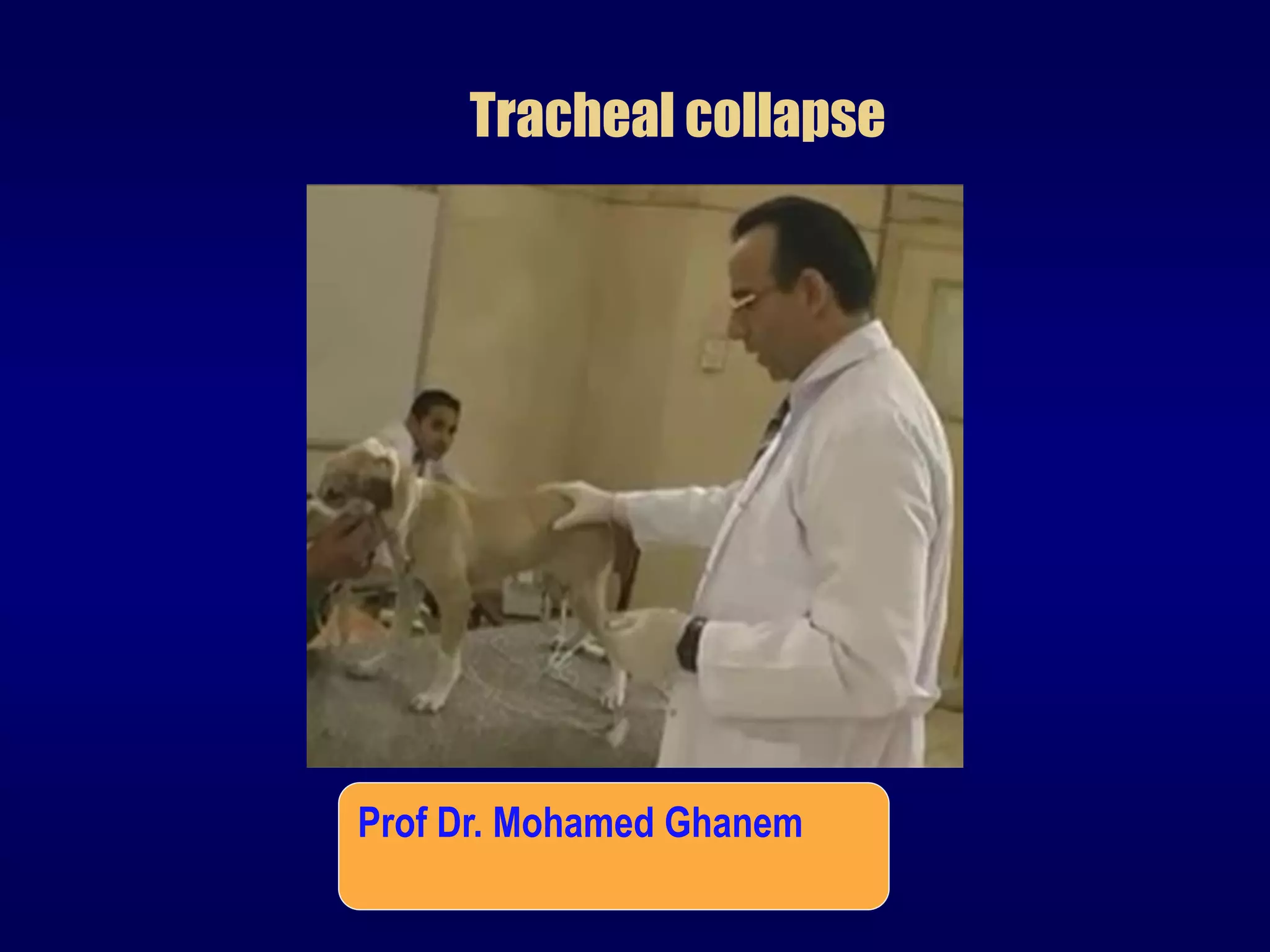
Tracheal collapse
DISEASES OF TRACHEA
Prof Dr. Mohamed Ghanem
A-Tracheal Collapse
Definition:
• It is the collapse and flattening of the
trachea that is usually occurs in Toy
and other breeds of dogs and is
characterized by chronic dry cough
(goose honk cough) and easily tired
dogs. Mostly occur in fat dogs
Causes
1. neurological deficiency of tracheal
muscles leading to their weakness
(deficient innervation of the trachealis
dorsalis muscle)
2. changes in the organic matter of the
tracheal cartilage- degeneration of
cartilage
3. Nutritional disorders
4. Small airway diseases
5. Genetic defects involving failure of
chondrogenesis
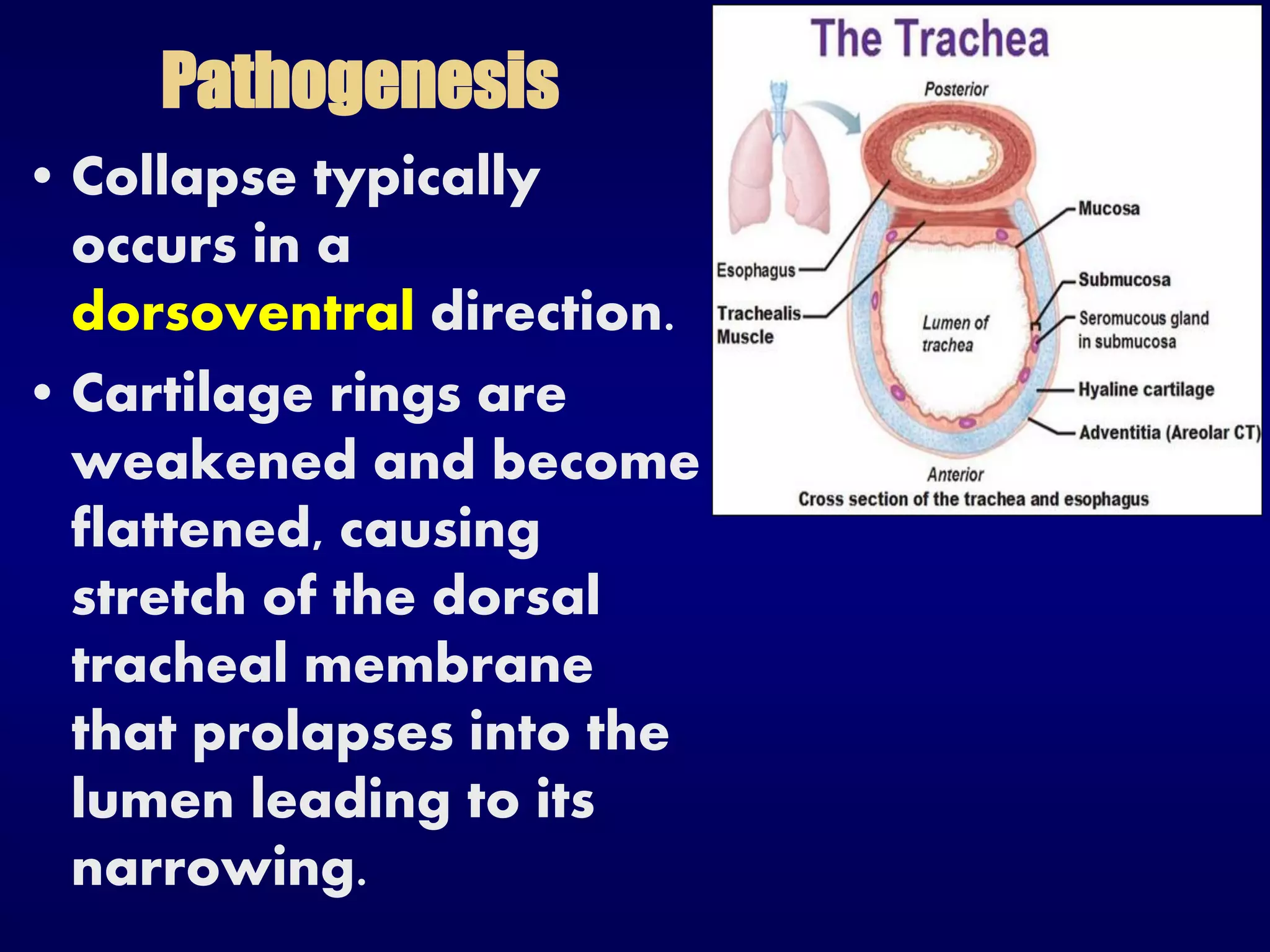
Pathogenesis
• Collapse typically
occurs in a
dorsoventral direction.
• Cartilage rings are
weakened and become
flattened, causing
stretch of the dorsal
tracheal membrane
that prolapses into the
lumen leading to its
narrowing.
Collapse in a dorsoventral position
Clinical symptoms
1. Chronic dry cough (honk goose)
2. the patient dog is easily tired and loss its weight
3. exercise intolerance, heat intolerance
4. Many dogs are unable to sleep comfortably due
to the difficult breathing
5. cyanosis of the mucous membrane (bluish
discoloration)
6. respiratory distresses depend upon the degree
of collapse
7. Physical exam:
1. palpation of cervical trachea may reveal flatness or
flaccidness
2. loud bronchial sounds on auscultation of trachea
Diagnosis
1. Based upon the clinical symptoms,
physical exam, and radiograph
2. Diagnosis is best made by visible
inspection of the airway by
bronchoscopy.
3. Radiographic exam: may show the
collapse and confirm diagnosis
Treatment: medical an dsurgical
I- Medical treatment
1. Restriction of activity.
2. Low dose of sedation by promazine or
phenobarbitons.
3. Antitussive and bronchodilators codeins 5mg
every 6-8 hours orally.
4. Glucocorticoids therapy as:
1. Corticotropine ACTH 1.5mg/kg body weight I.M. daily.
2. Deoxycorticosterone acetate DOCA 2mg /day I.M.
5. Oxygen therapy: At the onset of respiratory
distress or dyspnea many dogs will have a
normal life with this treatment.
II-Surgical interference
• Recommended only if the medical treatment
fails
• Surgical placement of prosthetic rings is a
viable treatment option for dogs with
unrelenting signs of dyspnea and cough
associated with cervical tracheal collapse.
• External polypropylene rings or spirals
inserted around the outside of the trachea or
internal support using internal devices.
External tracheal ring to treat tracheal collapse
Internal tracheal rings
Examples of some patent
Antitussive drugs
• Codipront syrup
• Bromosyrup (bromofor + codeine + Tr.Aconite
+ cherry laural water + glycerine + syrup tolu)..
• Tussivan syrup (Ephedrine +
phenylepinephrine Hcl + chlorpheneramine
maleate + codeine phosphate).
• Tussilar syrup.
• Toclase syrup (carbetopentane chloride).
Example of some patent
bronchodilator drugs:
• Ephidrine tablets ephedrine Hcl
• Dogs: 5-15 mg Po.
• Cats: 2-5 mg po.
• Ephidrine Hcl amp.
• Isoprine tables (isoprenalin)
• Prenasma tablets (isoprenalin).
• Avipect syrup.
• Isilin syrup (Ammonium chloride + Diphenhydramine
Hcl + Sodium citrate + chloroform + menthol).
Questions

Trachea collapse

  • 1.
    Tracheal collapse DISEASES OFTRACHEA Prof Dr. Mohamed Ghanem
  • 2.
    A-Tracheal Collapse Definition: • Itis the collapse and flattening of the trachea that is usually occurs in Toy and other breeds of dogs and is characterized by chronic dry cough (goose honk cough) and easily tired dogs. Mostly occur in fat dogs
  • 3.
    Causes 1. neurological deficiencyof tracheal muscles leading to their weakness (deficient innervation of the trachealis dorsalis muscle) 2. changes in the organic matter of the tracheal cartilage- degeneration of cartilage 3. Nutritional disorders 4. Small airway diseases 5. Genetic defects involving failure of chondrogenesis
  • 4.
    Pathogenesis • Collapse typically occursin a dorsoventral direction. • Cartilage rings are weakened and become flattened, causing stretch of the dorsal tracheal membrane that prolapses into the lumen leading to its narrowing.
  • 5.
    Collapse in adorsoventral position
  • 6.
    Clinical symptoms 1. Chronicdry cough (honk goose) 2. the patient dog is easily tired and loss its weight 3. exercise intolerance, heat intolerance 4. Many dogs are unable to sleep comfortably due to the difficult breathing 5. cyanosis of the mucous membrane (bluish discoloration) 6. respiratory distresses depend upon the degree of collapse 7. Physical exam: 1. palpation of cervical trachea may reveal flatness or flaccidness 2. loud bronchial sounds on auscultation of trachea
  • 7.
    Diagnosis 1. Based uponthe clinical symptoms, physical exam, and radiograph 2. Diagnosis is best made by visible inspection of the airway by bronchoscopy. 3. Radiographic exam: may show the collapse and confirm diagnosis
  • 8.
    Treatment: medical andsurgical I- Medical treatment 1. Restriction of activity. 2. Low dose of sedation by promazine or phenobarbitons. 3. Antitussive and bronchodilators codeins 5mg every 6-8 hours orally. 4. Glucocorticoids therapy as: 1. Corticotropine ACTH 1.5mg/kg body weight I.M. daily. 2. Deoxycorticosterone acetate DOCA 2mg /day I.M. 5. Oxygen therapy: At the onset of respiratory distress or dyspnea many dogs will have a normal life with this treatment.
  • 9.
    II-Surgical interference • Recommendedonly if the medical treatment fails • Surgical placement of prosthetic rings is a viable treatment option for dogs with unrelenting signs of dyspnea and cough associated with cervical tracheal collapse. • External polypropylene rings or spirals inserted around the outside of the trachea or internal support using internal devices.
  • 10.
    External tracheal ringto treat tracheal collapse
  • 12.
  • 13.
    Examples of somepatent Antitussive drugs • Codipront syrup • Bromosyrup (bromofor + codeine + Tr.Aconite + cherry laural water + glycerine + syrup tolu).. • Tussivan syrup (Ephedrine + phenylepinephrine Hcl + chlorpheneramine maleate + codeine phosphate). • Tussilar syrup. • Toclase syrup (carbetopentane chloride).
  • 14.
    Example of somepatent bronchodilator drugs: • Ephidrine tablets ephedrine Hcl • Dogs: 5-15 mg Po. • Cats: 2-5 mg po. • Ephidrine Hcl amp. • Isoprine tables (isoprenalin) • Prenasma tablets (isoprenalin). • Avipect syrup. • Isilin syrup (Ammonium chloride + Diphenhydramine Hcl + Sodium citrate + chloroform + menthol).
  • 15.