By
Prof Mohamed Ghanem
Definition
 A disturbance in water balance in which
more fluid is lost from the body than is
absorbed resulting in reduction in the
circulating blood volume.
 In contrast, the rapid ingestion of large
quantity of water can lead to overhydration
(water intoxication)
Etiology and pathogenesis
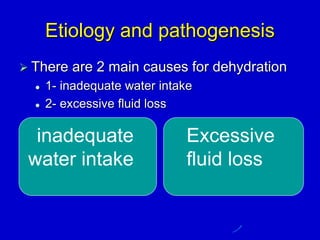
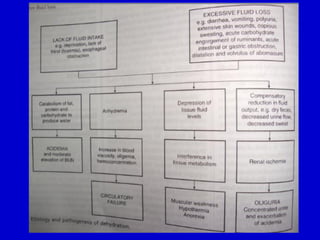
 There are 2 main causes for dehydration
 1- inadequate water intake
 2- excessive fluid loss
inadequate
water intake
Excessive
fluid loss
Types of dehydration
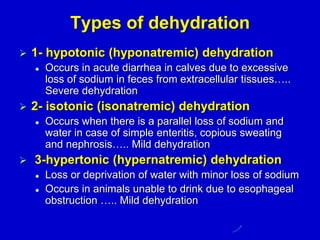
 1- hypotonic (hyponatremic) dehydration
 Occurs in acute diarrhea in calves due to excessive
loss of sodium in feces from extracellular tissues…..
Severe dehydration
 2- isotonic (isonatremic) dehydration
 Occurs when there is a parallel loss of sodium and
water in case of simple enteritis, copious sweating
and nephrosis….. Mild dehydration
 3-hypertonic (hypernatremic) dehydration
 Loss or deprivation of water with minor loss of sodium
 Occurs in animals unable to drink due to esophageal
obstruction ….. Mild dehydration
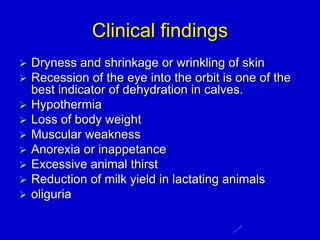
Clinical findings
 Dryness and shrinkage or wrinkling of skin
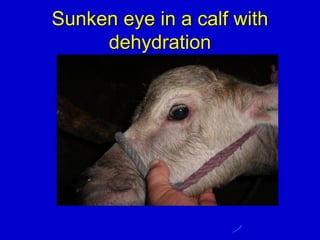
 Recession of the eye into the orbit is one of the
best indicator of dehydration in calves.
 Hypothermia
 Loss of body weight
 Muscular weakness
 Anorexia or inappetance
 Excessive animal thirst
 Reduction of milk yield in lactating animals
 oliguria
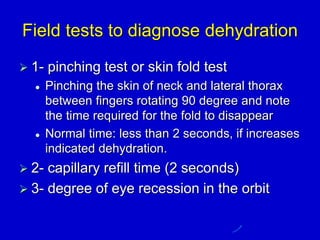
Field tests to diagnose dehydration
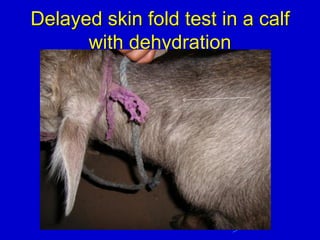
 1- pinching test or skin fold test
 Pinching the skin of neck and lateral thorax
between fingers rotating 90 degree and note
the time required for the fold to disappear
 Normal time: less than 2 seconds, if increases
indicated dehydration.
 2- capillary refill time (2 seconds)
 3- degree of eye recession in the orbit
Sunken eye in a calf with
dehydration
Delayed skin fold test in a calf
with dehydration
Lab exam
 1- increased PCV %
 2- increased total proteins
 3- metabolic acidosis
 4- Elevated level of blood urea nitrogen
Treatment
 Fluid and electrolyte thrapy
 Isotonic saline (0.9% NaCl) to expand blood
volume
 5% sodium bicarb in severe acidosis
 Lactated ringers in metabolic acidosis
 Hypertonic Nacl 7.2% in endotoxic shock
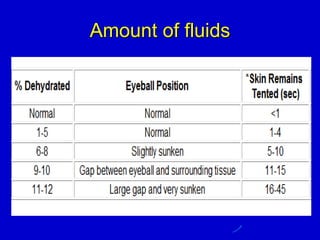
Amount of fluids
 a simple calculation can be done to
identify how much fluid is required.
 Take the % dehydrated and multiply by the
calf’s body weight in kg.
 For example, (36 kg) calf is determined to
be 9% dehydrated.
.09 X 36 kg = 3.24 – This means that 3.24
liters of fluid (oral electrolytes, or IV fluid)
are required to replace what has been lost.
 After the initial calculated fluid dose is
administered, additional fluids can be
given at a rate of 5 mL for every 1 kg,
every hour
 Oral Fluid Administration: Oral fluids
should only be used in calves that are 1-
5% dehydrated
Questions
dr.mohamedghanem@yahoo.com
Reference
Veterinary medicine 11th ed
Constable et al

Dehydration

  • 1.
  • 2.
    Definition  A disturbancein water balance in which more fluid is lost from the body than is absorbed resulting in reduction in the circulating blood volume.  In contrast, the rapid ingestion of large quantity of water can lead to overhydration (water intoxication)
  • 3.
    Etiology and pathogenesis There are 2 main causes for dehydration  1- inadequate water intake  2- excessive fluid loss inadequate water intake Excessive fluid loss
  • 5.
    Types of dehydration 1- hypotonic (hyponatremic) dehydration  Occurs in acute diarrhea in calves due to excessive loss of sodium in feces from extracellular tissues….. Severe dehydration  2- isotonic (isonatremic) dehydration  Occurs when there is a parallel loss of sodium and water in case of simple enteritis, copious sweating and nephrosis….. Mild dehydration  3-hypertonic (hypernatremic) dehydration  Loss or deprivation of water with minor loss of sodium  Occurs in animals unable to drink due to esophageal obstruction ….. Mild dehydration
  • 6.
    Clinical findings  Drynessand shrinkage or wrinkling of skin  Recession of the eye into the orbit is one of the best indicator of dehydration in calves.  Hypothermia  Loss of body weight  Muscular weakness  Anorexia or inappetance  Excessive animal thirst  Reduction of milk yield in lactating animals  oliguria
  • 7.
    Field tests todiagnose dehydration  1- pinching test or skin fold test  Pinching the skin of neck and lateral thorax between fingers rotating 90 degree and note the time required for the fold to disappear  Normal time: less than 2 seconds, if increases indicated dehydration.  2- capillary refill time (2 seconds)  3- degree of eye recession in the orbit
  • 8.
    Sunken eye ina calf with dehydration
  • 9.
    Delayed skin foldtest in a calf with dehydration
  • 10.
    Lab exam  1-increased PCV %  2- increased total proteins  3- metabolic acidosis  4- Elevated level of blood urea nitrogen
  • 11.
    Treatment  Fluid andelectrolyte thrapy  Isotonic saline (0.9% NaCl) to expand blood volume  5% sodium bicarb in severe acidosis  Lactated ringers in metabolic acidosis  Hypertonic Nacl 7.2% in endotoxic shock
  • 12.
  • 13.
     a simplecalculation can be done to identify how much fluid is required.  Take the % dehydrated and multiply by the calf’s body weight in kg.  For example, (36 kg) calf is determined to be 9% dehydrated. .09 X 36 kg = 3.24 – This means that 3.24 liters of fluid (oral electrolytes, or IV fluid) are required to replace what has been lost.
  • 14.
     After theinitial calculated fluid dose is administered, additional fluids can be given at a rate of 5 mL for every 1 kg, every hour
  • 15.
     Oral FluidAdministration: Oral fluids should only be used in calves that are 1- 5% dehydrated
  • 16.