PSYCHOTHERAPY FOR MOOD
DISORDERS
MUHAMMAD MUSAWAR ALI
MPHIL, ICAP
PSYCHMMUSAWARALI@GMAIL.COM
Apsychological disorder characterized by the
elevation or lowering of a person’s mood, such as
depression or bipolar disorder.
Depression
 Depression is a mood disorder
that causes a persistent feeling
of sadness and loss of interest.
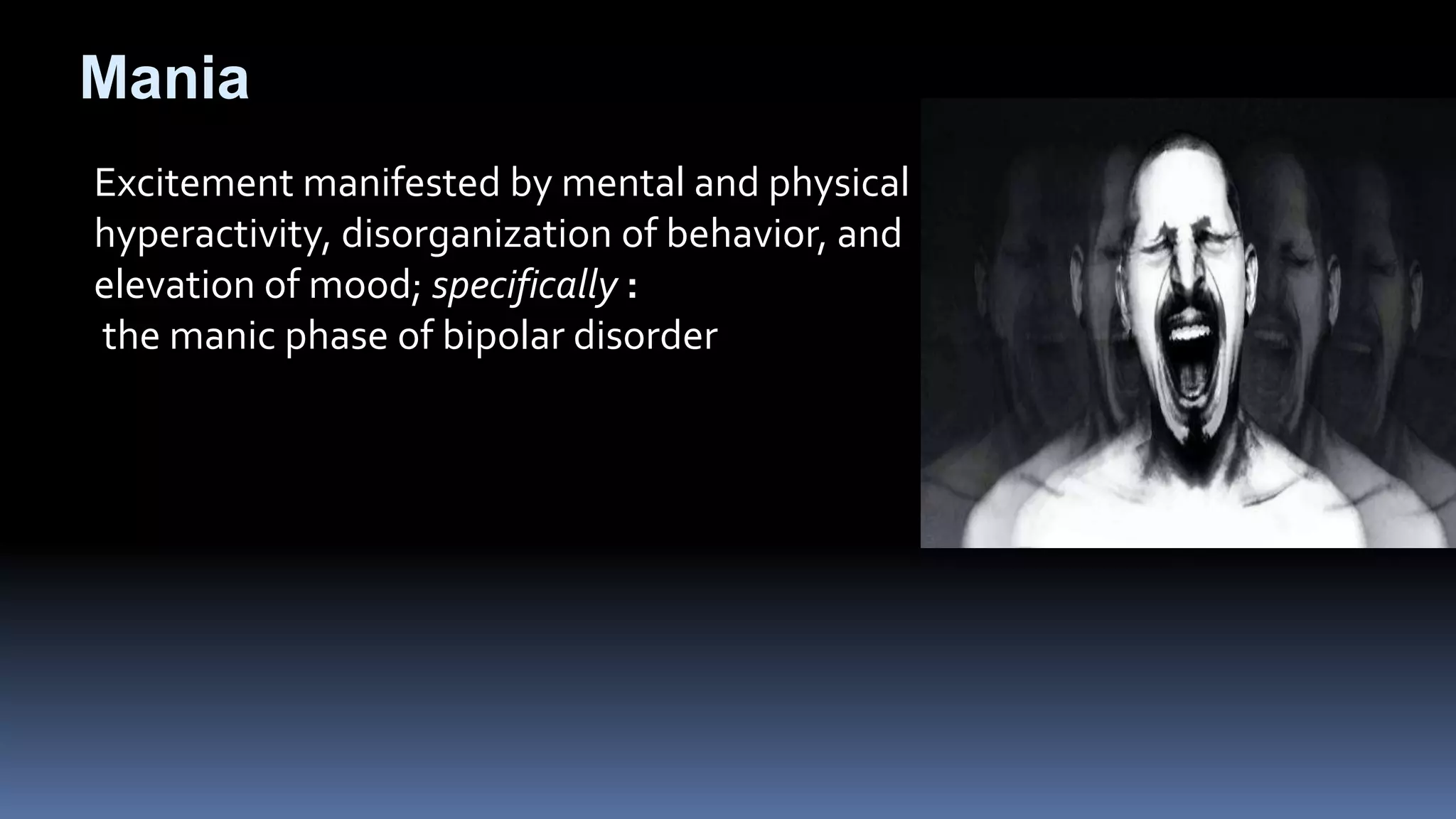
Mania
Excitement manifested by mental and physical
hyperactivity, disorganization of behavior, and
elevation of mood; specifically :
the manic phase of bipolar disorder
Four Types of Symptoms Associated With Mood
Disorders
 Emotional
 Cognitive
 Somatic
 Behavioral
Emotional Symptoms
 Depressed or dysphoric mood is the most common and
obvious symptom of depression
 People who are depressed describe themselves as
feeling utterly gloomy, dejected and despondent
 Manic patients experience euphoric like symptoms
Cognitive Symptoms
 Involve changes in the way
people think about themselves
and their surroundings
 Depressed people may have
trouble concentrating and are
easily distracted
 Preoccupation with guilt and
worthlessness
 Manic patients report sped up
thoughts and ideas
Somatic Symptoms
 Related to basic
physiological or bodily
functions
 Include fatigue, aches
and pains, and serious
changes in appetite or
sleeping patterns
Behavioral Symptoms
 Changes in the things
that people do and the
rate at which they do
them
 Psychomotor retardation
often accompanies the
onset of depression
 Manic patients show
energetic, provocative
and flirtatious behavior
Mood Disorders
 Two primary types:
 Unipolar mood disorder: the person experiences only episodes
of depression
 Bipolar mood disorder: the person experiences episodes of
mania as well as depression
Treatment of Mood Disorders
Psychosocial / Non-Pharmacological
Treatment and Advice(Depression)
1.Psychoeducation (for the person and his or her family, as appropriate)
Depression is a very common problem that can happen to anybody
Depressed people tend to have unrealistic negative opinions about
themselves, their life and their future.
Effective treatment is possible. It tends to take at least a few weeks
before treatment reduces the depression.
The following need to be emphasized:
Continuing activities that used to be interesting or give pleasure
maintain a regular sleep cycle
regular physical activity
regular social activity
Psychosocial / Non-Pharmacological
Treatment and Advice(Depression)
2.Addressing current psychosocial stressors
opportunity to talk, preferably in a private space.(Subjective
Understanding)
Ask about current psychosocial stressors
Assess and manage any situation of maltreatment, abuse (e.g.
domestic violence) and neglect (e.g. of children or older people)
Identify supportive family members and involve them as much as
possible and appropriate.
Psychosocial / Non-Pharmacological
Treatment and Advice(Depression)
3.Structured physical activity programme
Organization of physical activity of moderate duration (e.g. 45
minutes) 3 times per week.
Explore with the person what kind of physical activity is more
appealing, and support him or her to gradually increase the amount of
physical activity, starting for example with 5 minutes of physical activity
Supported Types of Psychotherapy
1. Interpersonal psychotherapy
2. Cognitive-BehaviorTherapy (CBT)
3. FamilyTherapy
 All trials of psychotherapy as complementary to pharmacotherapy
(Swartz, Frank, & Kupfer, 2006)
Cognitive Behavioral Therapy
 CBT combines both
cognitive therapy and
behavioral therapy
 Cognitive Therapy teaches a
person how certain thinking
patterns are causing their
symptoms-by giving them a
distorted picture of what's
going on in their life, and
making them feel anxious,
depressed or angry for no
good reason, or provoking
Cognitive Behavioral Therapy
 Behavioral Therapy helps patients weaken the connections
between troublesome situations and their habitual reactions to
them. It also teaches them how to calm their mind and body, so
they can feel better, think more clearly, and make better
decisions
Cognitive Behavioral Therapy
 Identify links between mood, thoughts,
activities
 Challenge negative thoughts
 Increase enjoyable activities
 Build skills to maintain relationships
Interpersonal Psychotherapy
IPT is a short-term, focused treatment
for depression. Studies have shown that
IPT, which addresses interpersonal issues,
may be at least as effective as short-term
treatment with antidepressants for mild to
moderate forms of clinical depression
Focus on the importance of interpersonal
relationships in determining behavior and
psychopathology
Major goal of treatment= change
interpersonal functioning by
encouraging:
More effective communication
emotional expression
increased understanding of behavior in
interpersonal settings
IPT assumes that by improving relationships, symptoms and the patient’s
life in general will improve
Four interpersonal problem need to be addressed
1. Grief is simply defined in IPT as "loss through death".
Goals:
a. Facilitate the mourning process.
b. Help the patient reestablish interest and relationships to substitute for what
has been lost.
2. Interpersonal disputes: often arguments, or disagreements with
others, particularly on a continuing basis, can lead to depression.
Goals:
a. Identify dispute.
b. Modify expectations or faulty communication to bring about a satisfactory
resolution.
3.Role transitions are situations in which the patient has to adapt to a
change in life circumstances. Some are planned for and some are not.
Goals:
a. Mourning and acceptance of the loss of the old role.
b. Help the patient to regard the new role as more positive.
c. Restore self-esteem by developing a sense of mastery regarding demands of
new roles.
4. Interpersonal Deficits the person has a history of problems in
beginning or maintaining relationships with friends, relatives or others.
Goals:
a. Reduce the patient’s social isolation.
b. Encourage formation of new relationships.
Family therapy
Its a type of therapy whose main goal is to teach patients and their
families about the nature of their illness. Family therapies are
different from other form of therapy because of their attention to
family dynamics and relationships as contributing factors that help
or hurt illness.
Offer regular follow-up
Follow up regularly (e.g. in person at the clinic, by phone, or
through community health worker).
Re-assess the person for improvement (e.g. after 4 weeks).
A person with mania should return for evaluation as frequently as
warranted.The evaluation should be more frequent until the manic
episode is over.
Psychotherapy for mood disorders

Psychotherapy for mood disorders

  • 1.
    PSYCHOTHERAPY FOR MOOD DISORDERS MUHAMMADMUSAWAR ALI MPHIL, ICAP PSYCHMMUSAWARALI@GMAIL.COM
  • 3.
    Apsychological disorder characterizedby the elevation or lowering of a person’s mood, such as depression or bipolar disorder.
  • 4.
    Depression  Depression isa mood disorder that causes a persistent feeling of sadness and loss of interest.
  • 5.
    Mania Excitement manifested bymental and physical hyperactivity, disorganization of behavior, and elevation of mood; specifically : the manic phase of bipolar disorder
  • 6.
    Four Types ofSymptoms Associated With Mood Disorders  Emotional  Cognitive  Somatic  Behavioral
  • 7.
    Emotional Symptoms  Depressedor dysphoric mood is the most common and obvious symptom of depression  People who are depressed describe themselves as feeling utterly gloomy, dejected and despondent  Manic patients experience euphoric like symptoms
  • 8.
    Cognitive Symptoms  Involvechanges in the way people think about themselves and their surroundings  Depressed people may have trouble concentrating and are easily distracted  Preoccupation with guilt and worthlessness  Manic patients report sped up thoughts and ideas
  • 9.
    Somatic Symptoms  Relatedto basic physiological or bodily functions  Include fatigue, aches and pains, and serious changes in appetite or sleeping patterns
  • 10.
    Behavioral Symptoms  Changesin the things that people do and the rate at which they do them  Psychomotor retardation often accompanies the onset of depression  Manic patients show energetic, provocative and flirtatious behavior
  • 11.
    Mood Disorders  Twoprimary types:  Unipolar mood disorder: the person experiences only episodes of depression  Bipolar mood disorder: the person experiences episodes of mania as well as depression
  • 12.
  • 13.
    Psychosocial / Non-Pharmacological Treatmentand Advice(Depression) 1.Psychoeducation (for the person and his or her family, as appropriate) Depression is a very common problem that can happen to anybody Depressed people tend to have unrealistic negative opinions about themselves, their life and their future. Effective treatment is possible. It tends to take at least a few weeks before treatment reduces the depression. The following need to be emphasized: Continuing activities that used to be interesting or give pleasure maintain a regular sleep cycle regular physical activity regular social activity
  • 14.
    Psychosocial / Non-Pharmacological Treatmentand Advice(Depression) 2.Addressing current psychosocial stressors opportunity to talk, preferably in a private space.(Subjective Understanding) Ask about current psychosocial stressors Assess and manage any situation of maltreatment, abuse (e.g. domestic violence) and neglect (e.g. of children or older people) Identify supportive family members and involve them as much as possible and appropriate.
  • 15.
    Psychosocial / Non-Pharmacological Treatmentand Advice(Depression) 3.Structured physical activity programme Organization of physical activity of moderate duration (e.g. 45 minutes) 3 times per week. Explore with the person what kind of physical activity is more appealing, and support him or her to gradually increase the amount of physical activity, starting for example with 5 minutes of physical activity
  • 16.
    Supported Types ofPsychotherapy 1. Interpersonal psychotherapy 2. Cognitive-BehaviorTherapy (CBT) 3. FamilyTherapy  All trials of psychotherapy as complementary to pharmacotherapy (Swartz, Frank, & Kupfer, 2006)
  • 17.
    Cognitive Behavioral Therapy CBT combines both cognitive therapy and behavioral therapy  Cognitive Therapy teaches a person how certain thinking patterns are causing their symptoms-by giving them a distorted picture of what's going on in their life, and making them feel anxious, depressed or angry for no good reason, or provoking
  • 18.
    Cognitive Behavioral Therapy Behavioral Therapy helps patients weaken the connections between troublesome situations and their habitual reactions to them. It also teaches them how to calm their mind and body, so they can feel better, think more clearly, and make better decisions
  • 19.
    Cognitive Behavioral Therapy Identify links between mood, thoughts, activities  Challenge negative thoughts  Increase enjoyable activities  Build skills to maintain relationships
  • 20.
    Interpersonal Psychotherapy IPT isa short-term, focused treatment for depression. Studies have shown that IPT, which addresses interpersonal issues, may be at least as effective as short-term treatment with antidepressants for mild to moderate forms of clinical depression
  • 21.
    Focus on theimportance of interpersonal relationships in determining behavior and psychopathology Major goal of treatment= change interpersonal functioning by encouraging: More effective communication emotional expression increased understanding of behavior in interpersonal settings
  • 22.
    IPT assumes thatby improving relationships, symptoms and the patient’s life in general will improve Four interpersonal problem need to be addressed 1. Grief is simply defined in IPT as "loss through death". Goals: a. Facilitate the mourning process. b. Help the patient reestablish interest and relationships to substitute for what has been lost. 2. Interpersonal disputes: often arguments, or disagreements with others, particularly on a continuing basis, can lead to depression. Goals: a. Identify dispute. b. Modify expectations or faulty communication to bring about a satisfactory resolution.
  • 23.
    3.Role transitions aresituations in which the patient has to adapt to a change in life circumstances. Some are planned for and some are not. Goals: a. Mourning and acceptance of the loss of the old role. b. Help the patient to regard the new role as more positive. c. Restore self-esteem by developing a sense of mastery regarding demands of new roles. 4. Interpersonal Deficits the person has a history of problems in beginning or maintaining relationships with friends, relatives or others. Goals: a. Reduce the patient’s social isolation. b. Encourage formation of new relationships.
  • 24.
  • 25.
    Its a typeof therapy whose main goal is to teach patients and their families about the nature of their illness. Family therapies are different from other form of therapy because of their attention to family dynamics and relationships as contributing factors that help or hurt illness.
  • 26.
    Offer regular follow-up Followup regularly (e.g. in person at the clinic, by phone, or through community health worker). Re-assess the person for improvement (e.g. after 4 weeks). A person with mania should return for evaluation as frequently as warranted.The evaluation should be more frequent until the manic episode is over.