Written By:
Muhammad Musawar ali
MPhil Psych, ICAP
Psychmmusawarali@gmail.com
Section One: Anger History Strategies
Section Two: Cognitive Strategies
Section Three: Behavioral Strategies
Section Four: Addictive Strategies
Section Five: Affective Strategies
Section Six: Spiritual Strategies
Section seven: Closing Strategies
 Time
 Opening of session
 Confidentiality
 Safety issues
 Handouts
 Assignments
 Closing of session
SECTION ONE: ANGER HISTORY
STRATEGIES
Objectives
To increase insight of negative or positive effects of anger.
To educate clients on the many ways anger may be expressed.
Anger’s many Faces
 Blaming
 Verbal Abuse
 Isolation
 Depression
 Blind Rage
Objective: To identify the role(s) anger has served.
 Guard against feelings
 Defense against shame
 Self-protection
 Power
 Avoid responsibility
 Moral superiority
Objectives: To identify anger incidents and behavioral response
Objectives: To identify perception of anger depth.
i) Identify their perception of being angry
ii) Begin the process of recognizing
Objective: To facilitate discussion of experience often defended and not recognized
in traditional talk therapy.
Starting Point
 Collage is a valuable exercise
 Collage is made by taking pictures, words or making statement.
 20-30 minutes to create a collage.
Objective: To recognize familial influence on unhealthy anger.
Unhealthy expressions of anger
 Name calling
 Sarcasm
 Silence as punishment
 Pushing
 Swearing
SECTION TWO: COGNITIVE
STRATEGIES
Objective: To heighten awareness of how thoughts influence feelings
Starting Point
It demonstrates how several persons’ perception of the same event varies
tremendously depending upon a person’s history, expectation, and intent.
Objective: To identify distorted thinking styles.
 Overgeneralization
 Filtering
 Catastrophizing
 Personalization
 Disqualifying the positive
 Blaming
Objectives: To identify negative beliefs that fuel anger.
To reframe beliefs in a positive way.
Objective: To understand the origins of shame
To understand relationship b/w shame and anger
What is Shame?
Shame is the intense painful feeling
that we are bad and unworthy.
Examples:
i) I am not good enough.
ii) I’ll never get this job done, so
why try?
Objective: To understand shame attacks and to intervene in this negative process.
Starting point:
 Addressing shame based thinking
 Focusing distorted thinking
What is Shame Attack?
Shame attack occurs when your internal negative beliefs that you are inadequate, stupid,
ugly, or incompetent are re-engaged.
Example:
I’ll lose my job. They will be sorry they hired me.
Identify it for what it is
This is a shame attack. I am feeling less than….and catastrophizing (only seeing
the worst)
 Stop the thinking
 Check the reality
 Get outside feedback
 Look at the origin of the shaming statement.
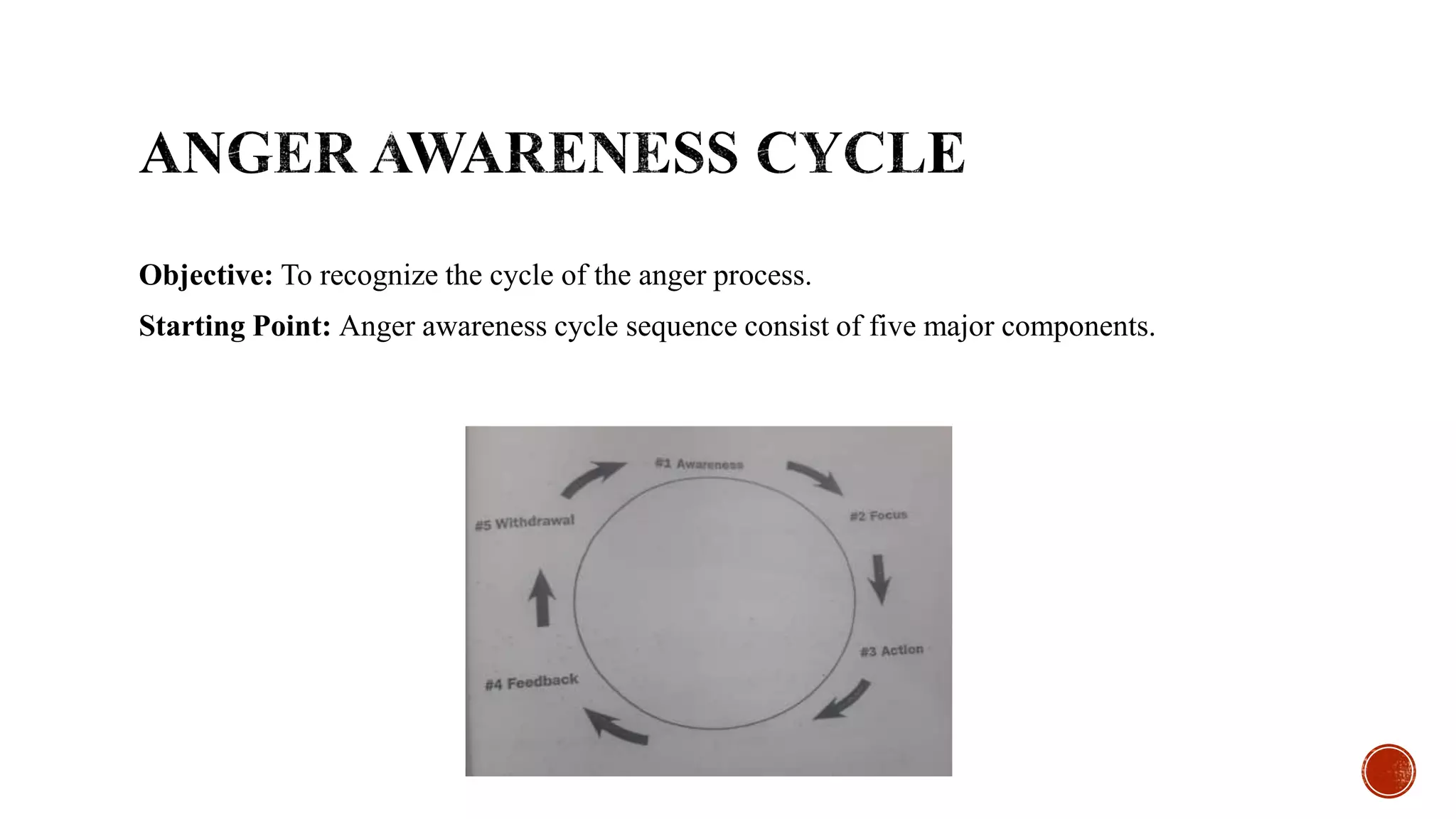
Objective: To recognize the cycle of the anger process.
Starting Point: Anger awareness cycle sequence consist of five major components.
Objective: To identify how change in thought influences change in
feelings and behavior.
To identify how change in behavior can create change in
thoughts and feelings.
Starting Point: Analyzing the triggers behind the anger.
Ask clients to think:-
 What were your thoughts just before that moment?
 What was going on inside of you (feelings) ?
Objective: To recognize varying degrees of anger.
Starting Point
Write the following words on the board to assess the different levels of anger.
 Annoyed
 Irritated
 Frustrated
 Disgusted
 Angry
 Mad
 Enraged
SECTION THREE: BEHAVIORAL
STRATEGIES
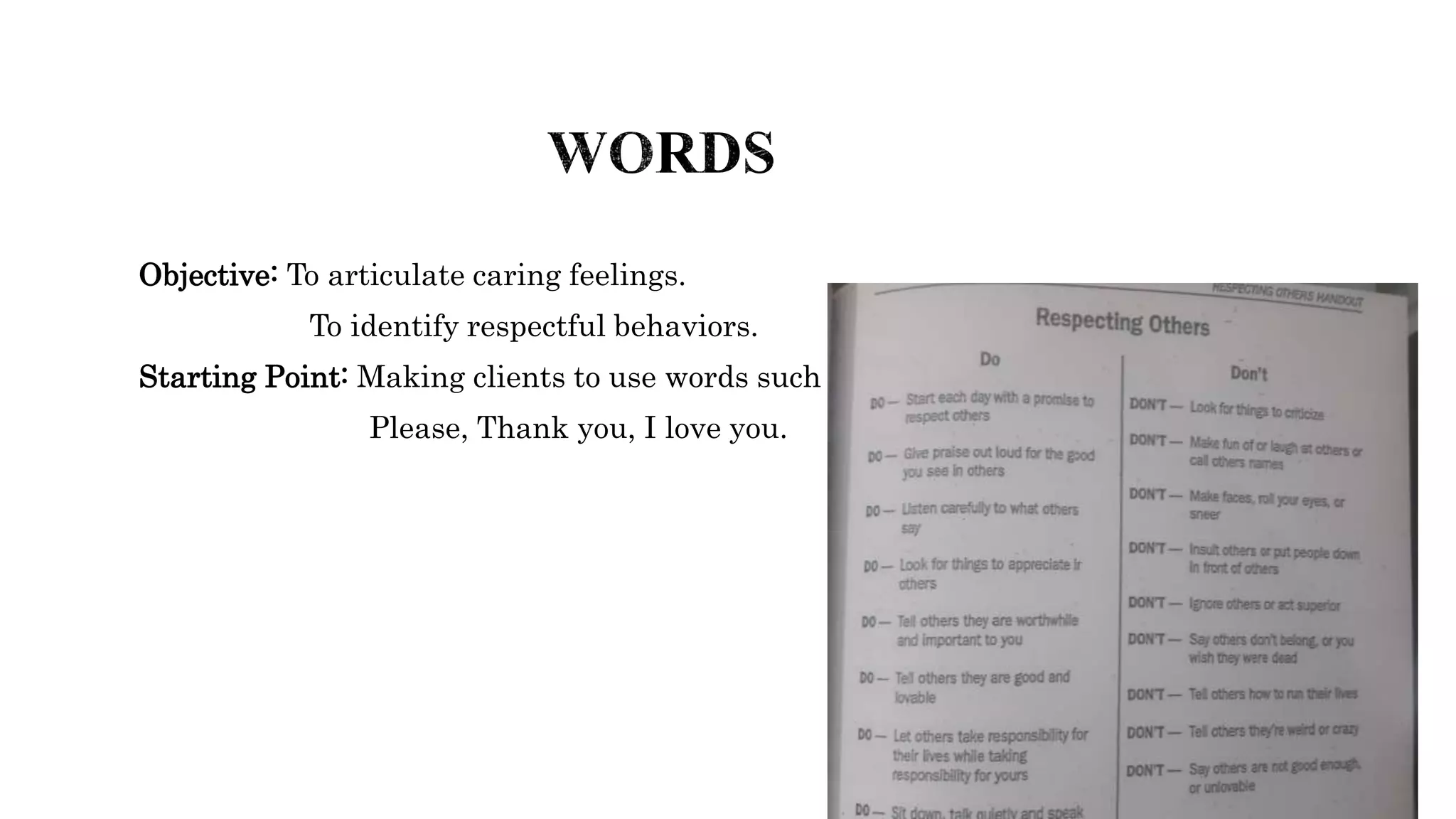
Objective: To articulate caring feelings.
To identify respectful behaviors.
Starting Point: Making clients to use words such as
Please, Thank you, I love you.
Objective: To develop conflict resolution skills.
Starting Point: Angry persons may ask for what they want, but if they don’t get it. They may:-
 Manipulate
 Make Threats
 Attack
Making clients follow the fair fighting rules.
Do Don’t
i) Tell people what you want i) Make fun of others or name call
ii) Stick to one issue at a time ii) Hit, push, hold or threaten to do so.
iii) Sit down to talk iii) Stand up and yell
iv) Listen iv) Make faces
v) Focus on the specific behavior you want v) Attack the other’s personality
vi) Be flexible, willing to change your mind vi) Interupt
Objective: To practice relaxation techniques.
To reduce internal stress.
 Deep Breathing
 Relaxing Sigh
 Attitude Change
 Listening Music
 Progressive Muscle Relaxation
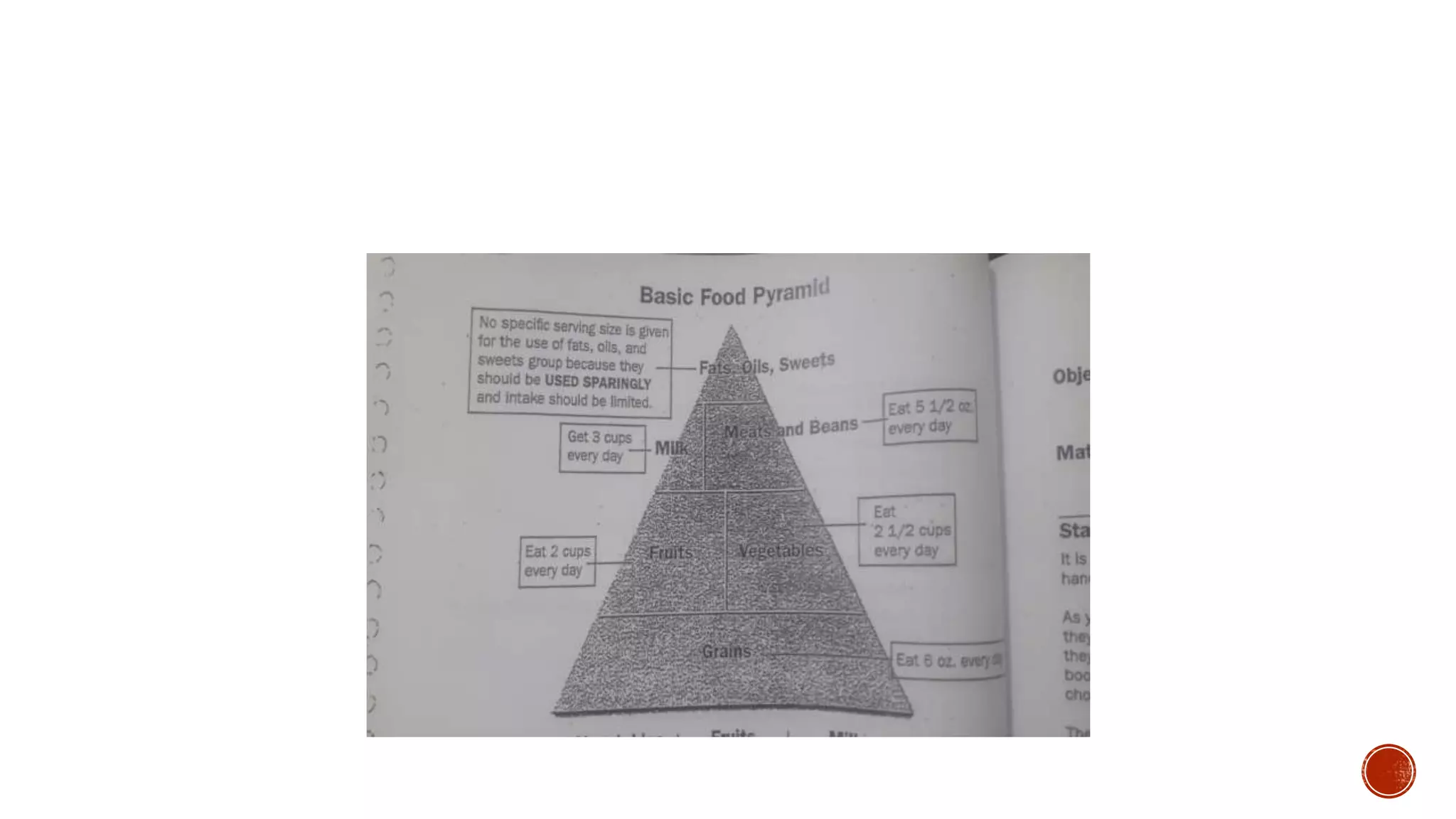
Objective: To recognize the interplay of caffeine, sugar, and nicotine with angry
feelings.
To identify and reinforce healthy eating patterns.
Three Nutrition Demons
1. Do you smoke? Would you like to reduce your use of nicotine?
2. In what foods or drinks do you consume caffeine? i.e coffe, tea, soda, chocolate or other.
3. How much sugar is in your diet?
Objective: To identify potential anger triggers and develop appropriate plan of
intervention.
Triggers can be anything as follows:-
 Place
 Specific restaurant
 Movie
 Computer
 Picture
 Situation
SECTION FOUR: ADDICTION
STRATEGIES
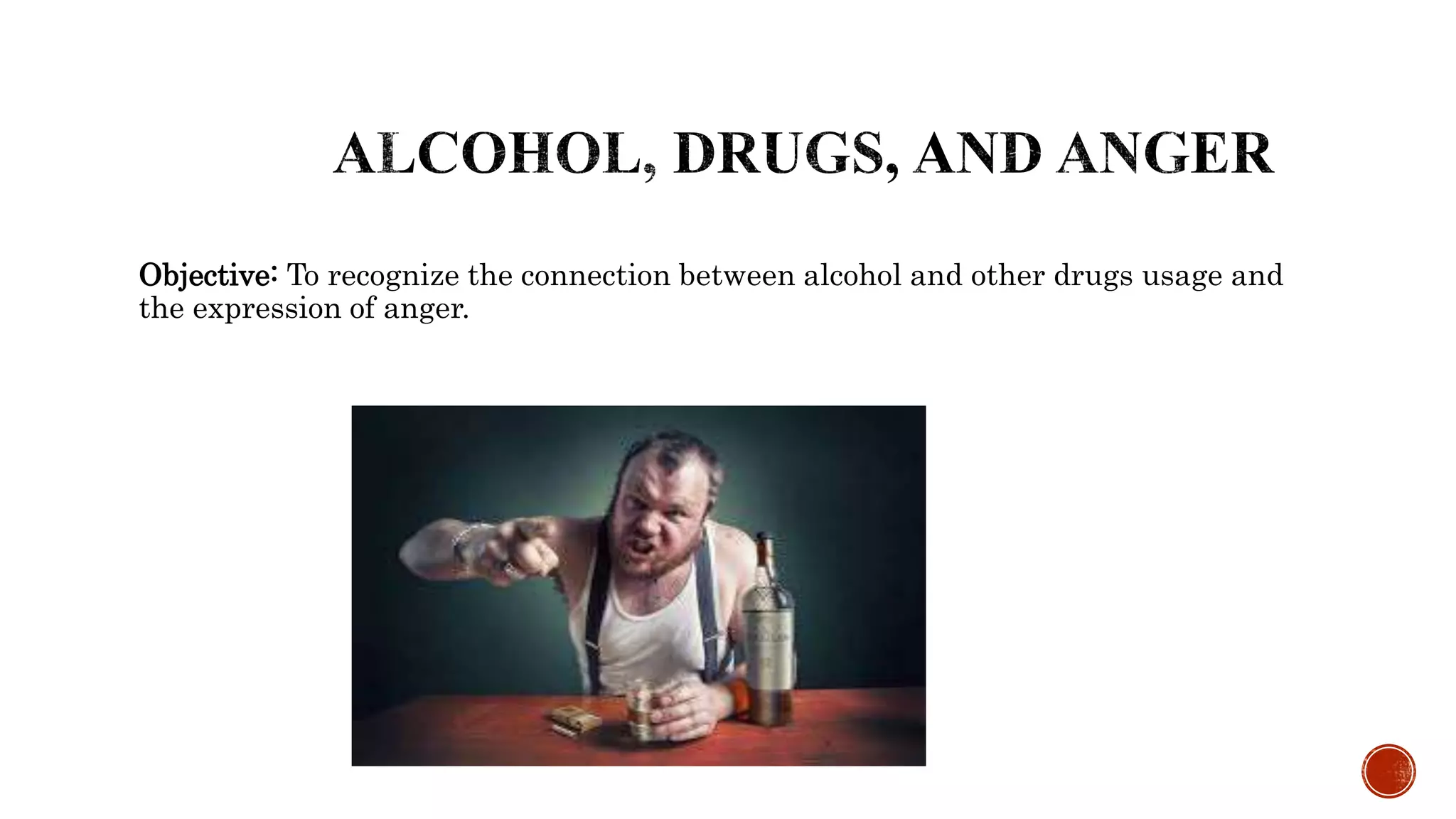
Objective: To recognize the connection between alcohol and other drugs usage and
the expression of anger.
Objective: To recognize the addictive nature of anger.
Objective: To recognize the role of anger in relapse from addiction
recovery.
Objective: To utilize the philosophy of Twelve steps programs in anger recovery.
Step#1: Admit you are angry and your life has become problematic as a result of anger.
Step#2: Demonstrate a willingness to do something about your anger.
Step#3: Take a personal inventory of how anger has affected your life
Step#4: Using your personal inventory admit to yourself and to your God that you have been hurtful
with your anger.
Step#5: Make a written list of those you have harmed.
Step#6: Make direct amends to such people whenever possible.
Step#7: Continue to take a personal inventory of whether or not you are angry.
SECTION FIVE: AFFECTIVE STRATEGIES
Objective: To recognize fear related to expressing feelings.
 What are the feelings that are the easiest to demonstrate in front of people?
 What are the more difficult feelings for you to show people?
 Take one of the difficult feelings, when you begin to experience it do you mask it
with other feeling?
 Identify the fear that gets in the way of you showing that emotion?
Objective: To identify behaviors related to experiencing fear.
To identify behaviors related to experiencing sadness.
 Recognize the feeling and own it to yourself
 Recognize the feeling and share it with someone else
 Engage in a relaxation technique
 Engage In spiritual practice
 Objective: To identify pleasurable feelings today.
Objective: To acknowledge how anger has influenced their lives.
SECTION SIX: SPIRITUAL
STRATEGIES
Objective: To explore the role of a higher power and spiritual practices.
 Take a short history of client’s religious involvement.
 Describe any unpleasant experiences or feelings related to belief in God.
 What is your present belief about God?
 What is the most positive feature of you spiritual life at present?
Objective: To introduce the concept of spiritual practice
Spirituality
It is a process of going inward to the part of yourself that connects to the larger
context.
 Prayer
 Meditation
 Practice of silence
 Guided imagery
 Living a thought full life
SECTION SEVEN: CLOSING
STRATEGIES
Objective: To identify the use of available tools for recovery.
 Practice positive thinking
 Utilize relaxation techniques
 Practice counter thoughts to negative thinkning
 Pray and meditate
 Eat healthy
 Participate in fun activity
 Set boundaries
Objective: To use newly learned cognitive and behavioral skills.
 Identify relapse triggers
 Make a plan of action
Objective: To experience a healthy closure in treatment.
Closure Imagery
 Slowly breath in and out.
 Say to yourself:
 I deserve to have a healthy relationship with myself.
 Today, acceptance is the answer to all my problems
 Today, I will let my Higher Power guide my journey
 Today, I chose to release my anger.
 Today, I chose to live my life with complete peace.
 I am precious.
 I am worthy
 I love my self
 I am able to receive love and support from others.
Thanks

Anger Management strategies

  • 1.
    Written By: Muhammad Musawarali MPhil Psych, ICAP Psychmmusawarali@gmail.com
  • 2.
    Section One: AngerHistory Strategies Section Two: Cognitive Strategies Section Three: Behavioral Strategies Section Four: Addictive Strategies Section Five: Affective Strategies Section Six: Spiritual Strategies Section seven: Closing Strategies
  • 3.
     Time  Openingof session  Confidentiality  Safety issues  Handouts  Assignments  Closing of session
  • 4.
    SECTION ONE: ANGERHISTORY STRATEGIES
  • 5.
    Objectives To increase insightof negative or positive effects of anger. To educate clients on the many ways anger may be expressed. Anger’s many Faces  Blaming  Verbal Abuse  Isolation  Depression  Blind Rage
  • 6.
    Objective: To identifythe role(s) anger has served.  Guard against feelings  Defense against shame  Self-protection  Power  Avoid responsibility  Moral superiority
  • 7.
    Objectives: To identifyanger incidents and behavioral response
  • 8.
    Objectives: To identifyperception of anger depth. i) Identify their perception of being angry ii) Begin the process of recognizing
  • 9.
    Objective: To facilitatediscussion of experience often defended and not recognized in traditional talk therapy. Starting Point  Collage is a valuable exercise  Collage is made by taking pictures, words or making statement.  20-30 minutes to create a collage.
  • 10.
    Objective: To recognizefamilial influence on unhealthy anger. Unhealthy expressions of anger  Name calling  Sarcasm  Silence as punishment  Pushing  Swearing
  • 11.
  • 12.
    Objective: To heightenawareness of how thoughts influence feelings Starting Point It demonstrates how several persons’ perception of the same event varies tremendously depending upon a person’s history, expectation, and intent.
  • 13.
    Objective: To identifydistorted thinking styles.  Overgeneralization  Filtering  Catastrophizing  Personalization  Disqualifying the positive  Blaming
  • 14.
    Objectives: To identifynegative beliefs that fuel anger. To reframe beliefs in a positive way.
  • 15.
    Objective: To understandthe origins of shame To understand relationship b/w shame and anger What is Shame? Shame is the intense painful feeling that we are bad and unworthy. Examples: i) I am not good enough. ii) I’ll never get this job done, so why try?
  • 16.
    Objective: To understandshame attacks and to intervene in this negative process. Starting point:  Addressing shame based thinking  Focusing distorted thinking What is Shame Attack? Shame attack occurs when your internal negative beliefs that you are inadequate, stupid, ugly, or incompetent are re-engaged. Example: I’ll lose my job. They will be sorry they hired me.
  • 17.
    Identify it forwhat it is This is a shame attack. I am feeling less than….and catastrophizing (only seeing the worst)  Stop the thinking  Check the reality  Get outside feedback  Look at the origin of the shaming statement.
  • 18.
    Objective: To recognizethe cycle of the anger process. Starting Point: Anger awareness cycle sequence consist of five major components.
  • 19.
    Objective: To identifyhow change in thought influences change in feelings and behavior. To identify how change in behavior can create change in thoughts and feelings. Starting Point: Analyzing the triggers behind the anger. Ask clients to think:-  What were your thoughts just before that moment?  What was going on inside of you (feelings) ?
  • 20.
    Objective: To recognizevarying degrees of anger. Starting Point Write the following words on the board to assess the different levels of anger.  Annoyed  Irritated  Frustrated  Disgusted  Angry  Mad  Enraged
  • 21.
  • 22.
    Objective: To articulatecaring feelings. To identify respectful behaviors. Starting Point: Making clients to use words such as Please, Thank you, I love you.
  • 23.
    Objective: To developconflict resolution skills. Starting Point: Angry persons may ask for what they want, but if they don’t get it. They may:-  Manipulate  Make Threats  Attack Making clients follow the fair fighting rules. Do Don’t i) Tell people what you want i) Make fun of others or name call ii) Stick to one issue at a time ii) Hit, push, hold or threaten to do so. iii) Sit down to talk iii) Stand up and yell iv) Listen iv) Make faces v) Focus on the specific behavior you want v) Attack the other’s personality vi) Be flexible, willing to change your mind vi) Interupt
  • 24.
    Objective: To practicerelaxation techniques. To reduce internal stress.  Deep Breathing  Relaxing Sigh  Attitude Change  Listening Music  Progressive Muscle Relaxation
  • 25.
    Objective: To recognizethe interplay of caffeine, sugar, and nicotine with angry feelings. To identify and reinforce healthy eating patterns. Three Nutrition Demons 1. Do you smoke? Would you like to reduce your use of nicotine? 2. In what foods or drinks do you consume caffeine? i.e coffe, tea, soda, chocolate or other. 3. How much sugar is in your diet?
  • 27.
    Objective: To identifypotential anger triggers and develop appropriate plan of intervention. Triggers can be anything as follows:-  Place  Specific restaurant  Movie  Computer  Picture  Situation
  • 28.
  • 29.
    Objective: To recognizethe connection between alcohol and other drugs usage and the expression of anger.
  • 30.
    Objective: To recognizethe addictive nature of anger.
  • 31.
    Objective: To recognizethe role of anger in relapse from addiction recovery.
  • 32.
    Objective: To utilizethe philosophy of Twelve steps programs in anger recovery. Step#1: Admit you are angry and your life has become problematic as a result of anger. Step#2: Demonstrate a willingness to do something about your anger. Step#3: Take a personal inventory of how anger has affected your life Step#4: Using your personal inventory admit to yourself and to your God that you have been hurtful with your anger. Step#5: Make a written list of those you have harmed. Step#6: Make direct amends to such people whenever possible. Step#7: Continue to take a personal inventory of whether or not you are angry.
  • 33.
  • 34.
    Objective: To recognizefear related to expressing feelings.  What are the feelings that are the easiest to demonstrate in front of people?  What are the more difficult feelings for you to show people?  Take one of the difficult feelings, when you begin to experience it do you mask it with other feeling?  Identify the fear that gets in the way of you showing that emotion?
  • 35.
    Objective: To identifybehaviors related to experiencing fear. To identify behaviors related to experiencing sadness.  Recognize the feeling and own it to yourself  Recognize the feeling and share it with someone else  Engage in a relaxation technique  Engage In spiritual practice
  • 36.
     Objective: Toidentify pleasurable feelings today.
  • 37.
    Objective: To acknowledgehow anger has influenced their lives.
  • 38.
  • 39.
    Objective: To explorethe role of a higher power and spiritual practices.  Take a short history of client’s religious involvement.  Describe any unpleasant experiences or feelings related to belief in God.  What is your present belief about God?  What is the most positive feature of you spiritual life at present?
  • 40.
    Objective: To introducethe concept of spiritual practice Spirituality It is a process of going inward to the part of yourself that connects to the larger context.  Prayer  Meditation  Practice of silence  Guided imagery  Living a thought full life
  • 41.
  • 42.
    Objective: To identifythe use of available tools for recovery.  Practice positive thinking  Utilize relaxation techniques  Practice counter thoughts to negative thinkning  Pray and meditate  Eat healthy  Participate in fun activity  Set boundaries
  • 43.
    Objective: To usenewly learned cognitive and behavioral skills.  Identify relapse triggers  Make a plan of action
  • 44.
    Objective: To experiencea healthy closure in treatment. Closure Imagery  Slowly breath in and out.  Say to yourself:  I deserve to have a healthy relationship with myself.  Today, acceptance is the answer to all my problems  Today, I will let my Higher Power guide my journey  Today, I chose to release my anger.  Today, I chose to live my life with complete peace.  I am precious.  I am worthy  I love my self  I am able to receive love and support from others.
  • 45.