By: M Musawar Ali
Snr. Psychologist
Self-Refinement According to
Psychology
CONTENTS
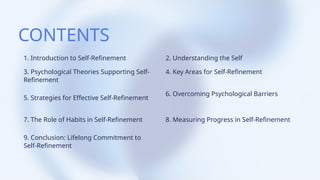
1. Introduction to Self-Refinement
3. Psychological Theories Supporting Self-
Refinement
5. Strategies for Effective Self-Refinement
7. The Role of Habits in Self-Refinement
9. Conclusion: Lifelong Commitment to
Self-Refinement
2. Understanding the Self
4. Key Areas for Self-Refinement
6. Overcoming Psychological Barriers
8. Measuring Progress in Self-Refinement
01
Introduction to Self-Refinement
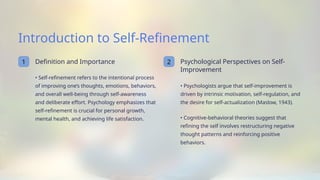
1 Definition and Importance
• Self-refinement refers to the intentional process
of improving one’s thoughts, emotions, behaviors,
and overall well-being through self-awareness
and deliberate effort. Psychology emphasizes that
self-refinement is crucial for personal growth,
mental health, and achieving life satisfaction.
2 Psychological Perspectives on Self-
Improvement
• Psychologists argue that self-improvement is
driven by intrinsic motivation, self-regulation, and
the desire for self-actualization (Maslow, 1943).
• Cognitive-behavioral theories suggest that
refining the self involves restructuring negative
thought patterns and reinforcing positive
behaviors.
02
Understanding the Self
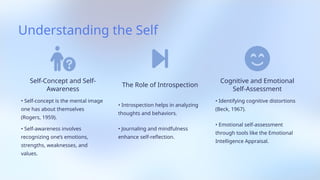
Self-Concept and Self-
Awareness
• Self-concept is the mental image
one has about themselves
(Rogers, 1959).
• Self-awareness involves
recognizing one’s emotions,
strengths, weaknesses, and
values.
The Role of Introspection
• Introspection helps in analyzing
thoughts and behaviors.
• Journaling and mindfulness
enhance self-reflection.
Cognitive and Emotional
Self-Assessment
• Identifying cognitive distortions
(Beck, 1967).
• Emotional self-assessment
through tools like the Emotional
Intelligence Appraisal.
03
Psychological Theories
Supporting Self-Refinement
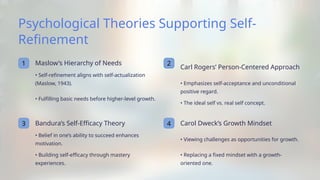
Psychological Theories Supporting Self-
Refinement
1 Maslow’s Hierarchy of Needs
• Self-refinement aligns with self-actualization
(Maslow, 1943).
• Fulfilling basic needs before higher-level growth.
3 Bandura’s Self-Efficacy Theory
• Belief in one’s ability to succeed enhances
motivation.
• Building self-efficacy through mastery
experiences.
2
Carl Rogers’ Person-Centered Approach
• Emphasizes self-acceptance and unconditional
positive regard.
4
• The ideal self vs. real self concept.
Carol Dweck’s Growth Mindset
• Viewing challenges as opportunities for growth.
• Replacing a fixed mindset with a growth-
oriented one.
04
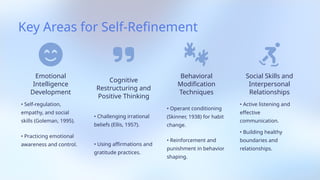
Key Areas for Self-Refinement
Emotional
Intelligence
Development
• Self-regulation,
empathy, and social
skills (Goleman, 1995).
Cognitive
Restructuring and
Positive Thinking
• Practicing emotional
awareness and control.
• Challenging irrational
beliefs (Ellis, 1957).
• Using affirmations and
gratitude practices.
Behavioral
Modification
Techniques
• Operant conditioning
(Skinner, 1938) for habit
change.
• Reinforcement and
punishment in behavior
shaping.
Social Skills and
Interpersonal
Relationships
• Active listening and
effective
communication.
• Building healthy
boundaries and
relationships.
05
Strategies for Effective Self-
Refinement
Strategies for Effective Self-
Refinement
1 Goal Setting and
SMART Goals
• Specific, Measurable,
Achievable, Relevant, Time-
bound goals.
3 Journaling for Self-
Reflection
2 Mindfulness and
Meditation
• Tracking progress and
emotional patterns.
• Reducing stress and
improving focus (Kabat-
Zinn, 1990).
4 Seeking Feedback
and Mentorship
• Constructive criticism for
growth.
• Learning from role
models.
06
Overcoming Psychological
Barriers
Overcoming Psychological Barriers
Fear of Failure and
Perfectionism
• Embracing mistakes as learning
opportunities.
Imposter Syndrome
• Recognizing achievements and
self-worth.
Cognitive Distortions and
Negative Self-Talk
• Reframing thoughts using CBT
techniques.
07
The Role of Habits in Self-
Refinement
The Role of Habits in Self-
Refinement
1 The Science of Habit Formation
• Cue, Routine, Reward loop (Duhigg, 2012).
2
Breaking Bad Habits and Building Positive Ones
• Replacement behaviors and consistency.
3 The 21/90 Rule in Habit Development
• 21 days to form a habit, 90 days to make it permanent.
08
Measuring Progress in Self-
Refinement
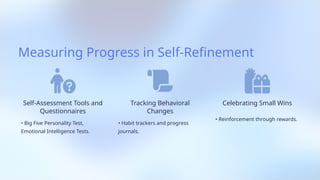
Measuring Progress in Self-Refinement
Self-Assessment Tools and
Questionnaires
• Big Five Personality Test,
Emotional Intelligence Tests.
Tracking Behavioral
Changes
• Habit trackers and progress
journals.
Celebrating Small Wins
• Reinforcement through rewards.
09
Conclusion: Lifelong Commitment
to Self-Refinement
Conclusion: Lifelong Commitment to Self-
Refinement
Self-refinement is a continuous journey requiring self-awareness, psychological strategies, and persistence. By
integrating these principles, individuals can achieve lasting personal growth and fulfillment.
Thank You

Self Refinement According to Psychology

  • 1.
    By: M MusawarAli Snr. Psychologist Self-Refinement According to Psychology
  • 2.
    CONTENTS 1. Introduction toSelf-Refinement 3. Psychological Theories Supporting Self- Refinement 5. Strategies for Effective Self-Refinement 7. The Role of Habits in Self-Refinement 9. Conclusion: Lifelong Commitment to Self-Refinement 2. Understanding the Self 4. Key Areas for Self-Refinement 6. Overcoming Psychological Barriers 8. Measuring Progress in Self-Refinement
  • 3.
  • 4.
    Introduction to Self-Refinement 1Definition and Importance • Self-refinement refers to the intentional process of improving one’s thoughts, emotions, behaviors, and overall well-being through self-awareness and deliberate effort. Psychology emphasizes that self-refinement is crucial for personal growth, mental health, and achieving life satisfaction. 2 Psychological Perspectives on Self- Improvement • Psychologists argue that self-improvement is driven by intrinsic motivation, self-regulation, and the desire for self-actualization (Maslow, 1943). • Cognitive-behavioral theories suggest that refining the self involves restructuring negative thought patterns and reinforcing positive behaviors.
  • 5.
  • 6.
    Understanding the Self Self-Conceptand Self- Awareness • Self-concept is the mental image one has about themselves (Rogers, 1959). • Self-awareness involves recognizing one’s emotions, strengths, weaknesses, and values. The Role of Introspection • Introspection helps in analyzing thoughts and behaviors. • Journaling and mindfulness enhance self-reflection. Cognitive and Emotional Self-Assessment • Identifying cognitive distortions (Beck, 1967). • Emotional self-assessment through tools like the Emotional Intelligence Appraisal.
  • 7.
  • 8.
    Psychological Theories SupportingSelf- Refinement 1 Maslow’s Hierarchy of Needs • Self-refinement aligns with self-actualization (Maslow, 1943). • Fulfilling basic needs before higher-level growth. 3 Bandura’s Self-Efficacy Theory • Belief in one’s ability to succeed enhances motivation. • Building self-efficacy through mastery experiences. 2 Carl Rogers’ Person-Centered Approach • Emphasizes self-acceptance and unconditional positive regard. 4 • The ideal self vs. real self concept. Carol Dweck’s Growth Mindset • Viewing challenges as opportunities for growth. • Replacing a fixed mindset with a growth- oriented one.
  • 9.
    04 Key Areas forSelf-Refinement
  • 10.
    Key Areas forSelf-Refinement Emotional Intelligence Development • Self-regulation, empathy, and social skills (Goleman, 1995). Cognitive Restructuring and Positive Thinking • Practicing emotional awareness and control. • Challenging irrational beliefs (Ellis, 1957). • Using affirmations and gratitude practices. Behavioral Modification Techniques • Operant conditioning (Skinner, 1938) for habit change. • Reinforcement and punishment in behavior shaping. Social Skills and Interpersonal Relationships • Active listening and effective communication. • Building healthy boundaries and relationships.
  • 11.
  • 12.
    Strategies for EffectiveSelf- Refinement 1 Goal Setting and SMART Goals • Specific, Measurable, Achievable, Relevant, Time- bound goals. 3 Journaling for Self- Reflection 2 Mindfulness and Meditation • Tracking progress and emotional patterns. • Reducing stress and improving focus (Kabat- Zinn, 1990). 4 Seeking Feedback and Mentorship • Constructive criticism for growth. • Learning from role models.
  • 13.
  • 14.
    Overcoming Psychological Barriers Fearof Failure and Perfectionism • Embracing mistakes as learning opportunities. Imposter Syndrome • Recognizing achievements and self-worth. Cognitive Distortions and Negative Self-Talk • Reframing thoughts using CBT techniques.
  • 15.
    07 The Role ofHabits in Self- Refinement
  • 16.
    The Role ofHabits in Self- Refinement 1 The Science of Habit Formation • Cue, Routine, Reward loop (Duhigg, 2012). 2 Breaking Bad Habits and Building Positive Ones • Replacement behaviors and consistency. 3 The 21/90 Rule in Habit Development • 21 days to form a habit, 90 days to make it permanent.
  • 17.
    08 Measuring Progress inSelf- Refinement
  • 18.
    Measuring Progress inSelf-Refinement Self-Assessment Tools and Questionnaires • Big Five Personality Test, Emotional Intelligence Tests. Tracking Behavioral Changes • Habit trackers and progress journals. Celebrating Small Wins • Reinforcement through rewards.
  • 19.
  • 20.
    Conclusion: Lifelong Commitmentto Self- Refinement Self-refinement is a continuous journey requiring self-awareness, psychological strategies, and persistence. By integrating these principles, individuals can achieve lasting personal growth and fulfillment.
  • 21.