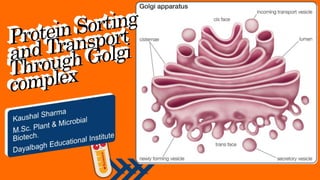
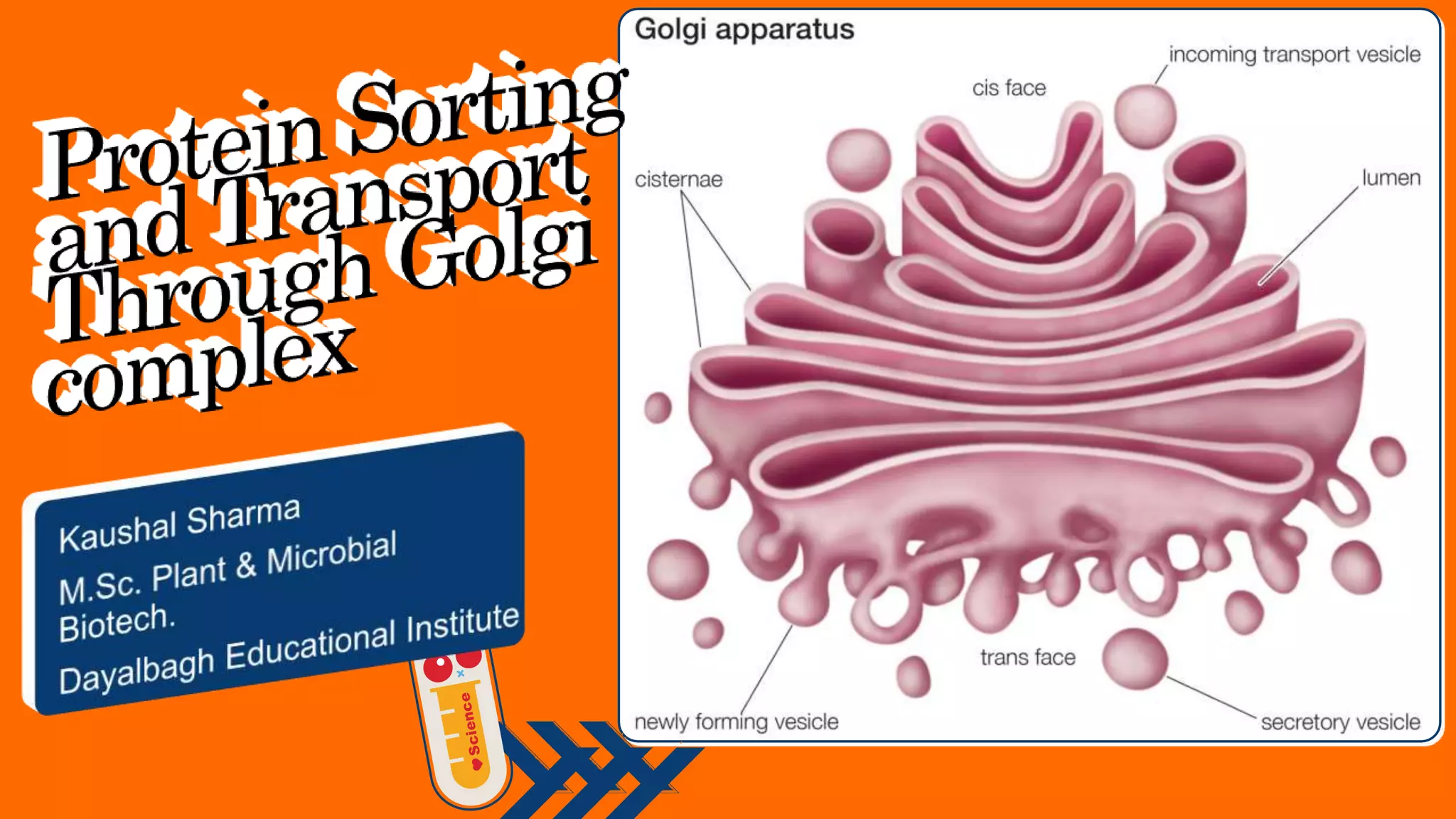
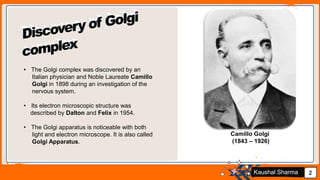
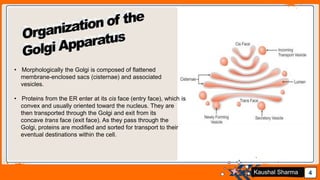
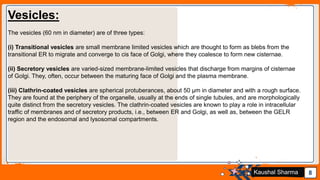
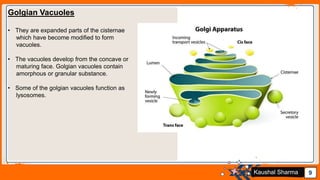
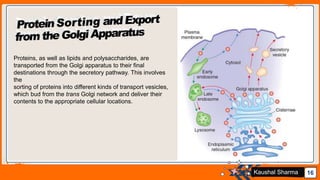
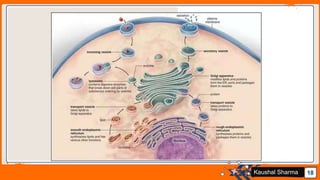
The Golgi apparatus, discovered by Camillo Golgi in 1898, is a vital cellular organelle present in all eukaryotic cells, responsible for modifying, sorting, and packaging proteins and lipids for transport within the cell or secretion. It consists of stacked membrane-enclosed sacs called cisternae, which receive materials from the endoplasmic reticulum and process them before dispatching them through vesicles. The Golgi complex also plays roles in synthesizing glycoproteins, glycolipids, complex carbohydrates, and various other essential cellular components.