
MATERNAL EFFECTS: SHELL
COILING IN SNAILS &
PIGMENTATION IN MOTHS
Presented by:
Vishakha Chodankar
M.Sc Part- I
Semester- II
Paper- III
What are Maternal Effects?
 Maternal effects are the influences of a mothers genotype on the
phenotype of her offspring.
 It results from the asymmetric contribution of the female parent to the
development of zygotes.
 In terms of chromosomal genes, both male and female parents contribute
equally to the zygote.
 The female parent contributes to the zygotes initial cytoplasm and
organelles. Sperm rarely contribute anything other than chromosomes.
 Therefore zygotic development begins within a maternal medium and hence
the maternal cytoplasm directly affects zygotic development.
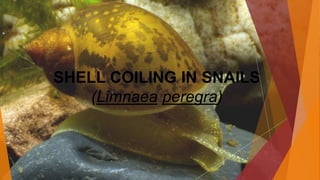
SHELL COILING IN SNAILS
(Limnaea peregra)
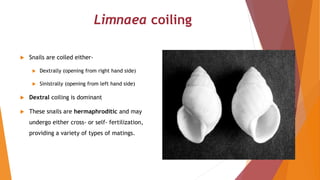
Limnaea coiling
 Snails are coiled either-
 Dextrally (opening from right hand side)
 Sinistrally (opening from left hand side)
 Dextral coiling is dominant
 These snails are hermaphroditic and may
undergo either cross- or self- fertilization,
providing a variety of types of matings.
Fig.1: Inheritance of coiling in snail Limnaea perega
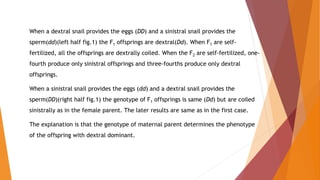
When a dextral snail provides the eggs (DD) and a sinistral snail provides the
sperm(dd)(left half fig.1) the F1 offsprings are dextral(Dd). When F1 are self-
fertilized, all the offsprings are dextrally coiled. When the F2 are self-fertilized, one-
fourth produce only sinistral offsprings and three-fourths produce only dextral
offsprings.
When a sinistral snail provides the eggs (dd) and a dextral snail provides the
sperm(DD)(right half fig.1) the genotype of F1 offsprings is same (Dd) but are coiled
sinistrally as in the female parent. The later results are same as in the first case.
The explanation is that the genotype of maternal parent determines the phenotype
of the offspring with dextral dominant.
Why does this pattern occur?
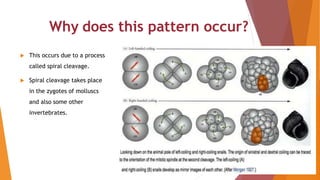
 This occurs due to a process
called spiral cleavage.
 Spiral cleavage takes place
in the zygotes of molluscs
and also some other
invertebrates.
 The orientation of spindle in the first
cleavage division after fertilization
determines the direction of coiling.
 Spindle orientation is controlled by maternal
genes acting on developing eggs in ovary.
 This influences cell divisions following
fertilization and establishes the permanent
adult coiling pattern.
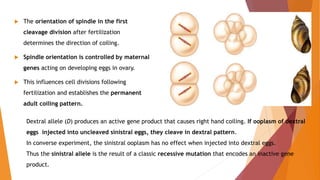
Dextral allele (D) produces an active gene product that causes right hand coiling. If ooplasm of dextral
eggs injected into uncleaved sinistral eggs, they cleave in dextral pattern.
In converse experiment, the sinistral ooplasm has no effect when injected into dextral eggs.
Thus the sinistral allele is the result of a classic recessive mutation that encodes an inactive gene
product.
Conclusion
 The females that are either DD or Dd produce oocytes that synthesize
the D gene product which is stored is ooplasm.
 Even if the oocyte contains only the d allele (in female with Dd
genotype) following meiosis and is fertilized by a d- bearing sperm the
resulting ‘dd’ snail will be dextrally coiled.
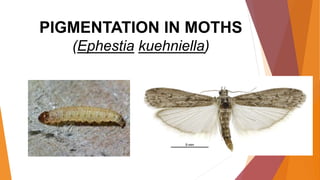
PIGMENTATION IN MOTHS
(Ephestia kuehniella)
Ephestia Pigmentation
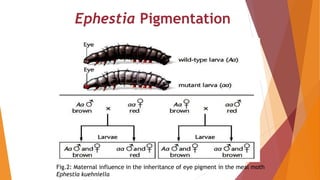
Fig.2: Maternal influence in the inheritance of eye pigment in the meal moth
Ephestia kuehniella
 The wild type larva of Ephestia kuehneilla has a pigmented skin and brown eyes as a result of
the dominant gene A.
 The pigment is derived from a precursor molecule, kynurenine, which is a tryptophan
derivative.
 A mutation, a, interupts the synthesis of kynurenine. Homozygosity may result in red eyes
and little pigmentation in larvae.
 The results of the cross (Aa x aa) are illustrated in fig.2
 When the male is heterozygous parent a 1:1 brown to red-eyed ratio is observed in larvae.
 When the female is heterozygous for A gene, all larvae are pigmented and have brown eyes,
in spite of half of them being aa. As these larvae develop into adults one half of them
gradually develop red eyes, reestablishing the 1:1 ratio.
 The explanation for these results is that the Aa oocytes synthesize kynurenine or an enzyme
necessary for its synthesis and accumulate it in the ooplasm prior to the completion of
meiosis.
 When the mothers were Aa, in the aa progeny, this pigment is distributed in the cytoplasm
of the cells of the developing larvae and hence they develop pigmentation and brown eyes.
 In these progeny, however, the pigment is eventually diluted among many cells and
depleted, resulting in the conversion to red eyes as adults.
 The Ephestia example demonstrates the maternal effect in which a cytoplasmically stored
nuclear gene product influences the larval phenotype and, at least temporarily, overrides
the genotype of the progeny.
Maternal effects

Maternal effects

  • 1.
    MATERNAL EFFECTS: SHELL COILINGIN SNAILS & PIGMENTATION IN MOTHS Presented by: Vishakha Chodankar M.Sc Part- I Semester- II Paper- III
  • 2.
    What are MaternalEffects?  Maternal effects are the influences of a mothers genotype on the phenotype of her offspring.  It results from the asymmetric contribution of the female parent to the development of zygotes.  In terms of chromosomal genes, both male and female parents contribute equally to the zygote.  The female parent contributes to the zygotes initial cytoplasm and organelles. Sperm rarely contribute anything other than chromosomes.  Therefore zygotic development begins within a maternal medium and hence the maternal cytoplasm directly affects zygotic development.
  • 3.
    SHELL COILING INSNAILS (Limnaea peregra)
  • 4.
    Limnaea coiling  Snailsare coiled either-  Dextrally (opening from right hand side)  Sinistrally (opening from left hand side)  Dextral coiling is dominant  These snails are hermaphroditic and may undergo either cross- or self- fertilization, providing a variety of types of matings.
  • 5.
    Fig.1: Inheritance ofcoiling in snail Limnaea perega
  • 6.
    When a dextralsnail provides the eggs (DD) and a sinistral snail provides the sperm(dd)(left half fig.1) the F1 offsprings are dextral(Dd). When F1 are self- fertilized, all the offsprings are dextrally coiled. When the F2 are self-fertilized, one- fourth produce only sinistral offsprings and three-fourths produce only dextral offsprings. When a sinistral snail provides the eggs (dd) and a dextral snail provides the sperm(DD)(right half fig.1) the genotype of F1 offsprings is same (Dd) but are coiled sinistrally as in the female parent. The later results are same as in the first case. The explanation is that the genotype of maternal parent determines the phenotype of the offspring with dextral dominant.
  • 7.
    Why does thispattern occur?  This occurs due to a process called spiral cleavage.  Spiral cleavage takes place in the zygotes of molluscs and also some other invertebrates.
  • 8.
     The orientationof spindle in the first cleavage division after fertilization determines the direction of coiling.  Spindle orientation is controlled by maternal genes acting on developing eggs in ovary.  This influences cell divisions following fertilization and establishes the permanent adult coiling pattern. Dextral allele (D) produces an active gene product that causes right hand coiling. If ooplasm of dextral eggs injected into uncleaved sinistral eggs, they cleave in dextral pattern. In converse experiment, the sinistral ooplasm has no effect when injected into dextral eggs. Thus the sinistral allele is the result of a classic recessive mutation that encodes an inactive gene product.
  • 9.
    Conclusion  The femalesthat are either DD or Dd produce oocytes that synthesize the D gene product which is stored is ooplasm.  Even if the oocyte contains only the d allele (in female with Dd genotype) following meiosis and is fertilized by a d- bearing sperm the resulting ‘dd’ snail will be dextrally coiled.
  • 10.
  • 11.
    Ephestia Pigmentation Fig.2: Maternalinfluence in the inheritance of eye pigment in the meal moth Ephestia kuehniella
  • 12.
     The wildtype larva of Ephestia kuehneilla has a pigmented skin and brown eyes as a result of the dominant gene A.  The pigment is derived from a precursor molecule, kynurenine, which is a tryptophan derivative.  A mutation, a, interupts the synthesis of kynurenine. Homozygosity may result in red eyes and little pigmentation in larvae.  The results of the cross (Aa x aa) are illustrated in fig.2  When the male is heterozygous parent a 1:1 brown to red-eyed ratio is observed in larvae.  When the female is heterozygous for A gene, all larvae are pigmented and have brown eyes, in spite of half of them being aa. As these larvae develop into adults one half of them gradually develop red eyes, reestablishing the 1:1 ratio.
  • 13.
     The explanationfor these results is that the Aa oocytes synthesize kynurenine or an enzyme necessary for its synthesis and accumulate it in the ooplasm prior to the completion of meiosis.  When the mothers were Aa, in the aa progeny, this pigment is distributed in the cytoplasm of the cells of the developing larvae and hence they develop pigmentation and brown eyes.  In these progeny, however, the pigment is eventually diluted among many cells and depleted, resulting in the conversion to red eyes as adults.  The Ephestia example demonstrates the maternal effect in which a cytoplasmically stored nuclear gene product influences the larval phenotype and, at least temporarily, overrides the genotype of the progeny.