THIS PRESENTATION WAS DONE BY
P.SUGANYA
20UEDO48
I B.ED PHYSICAL SCIENCE AND ENGLISH
TOPICS FOR THIS PRESENTATION
 WHAT IS TEAM TEACHING?
 CHARACTERISTICS OF TEAM TEACHING
 OBJECTIVES OF TEAM TEACHING
 PRINCIPLES OF TEAM TEACHING
 TYPES OF TEAM TEACHING
 PROCEDURE OF TEAM TEACHING
 BENEFITS OF TEAM TEACHING
 ADVANTAGES OF TEAM TEACHING
 DISADVANTAGES OF TEAM TEACHING
TEAM TEACHING
 Team teaching is the method of teaching by group of
two or more teachers working together to plan,
conduct and evaluate the learning activities for the
same group of learners.
 Team teaching approaches allows for more interaction
between teachers and students, leads to well organized
system of teaching in which many teachers impart
instructions to a group of students in cooperative
manner.
TEAM TEACHING
CHARACTERISTICS OF TEAM TEACHING
 The plan of team teaching is flexible.
 The teachers decide their activities themselves in the team
teaching.
 This method involves collective responsibility gives
importance to all the team teaching teachers.
 In the team teaching various aspects of any topic if one
subject is taught by two or more teachers turn by turn.
 Team spirit of teachers is bound to benefit the students to
the maximum.
 It is the sort of pooling of expertise and resources such as
experience, interest, knowledge and skills of teachers.
OBJECTIVE OF TEAM TEACHING
 To improve quality of education.
 To develop the sense of shared responsibility.
 To utilize the resources of school.
 To increase flexibility in grouping and scheduling as
the team teaching groups students according to their
interest and aptitudes in the subject.
 To understand the importance of cooperation and
group work among teachers.
PRINCIPLES OF TEAM TEACHING
 The size and composition of the group must be
appropriate to its purpose.
 The time allotted to any group must be appropriate to
its purpose.
 The learning environment must be appropriate to the
activities of the group.
 The nature and extent of the supervision of the group
activities depends upon the purpose of the group.
 The duties assigned to teachers must be appropriate to
their special qualifications and interests.
TYPES OF TEAM TEACHING
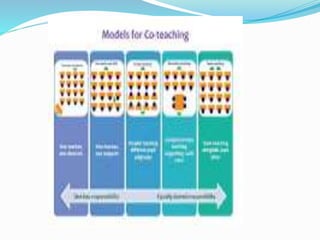
 TRADITIONAL TEAM TEACHING:
Both teachers actively share the instructions
share the instruction of content and skills, both
teachers equal responsibility for all pupils and both
teachers are actively involved throughout the class.
 LEAD AND SUPPORT TEACHING:
One teacher leads the lesson assuming
responsibility for teaching the content, the other
teacher provides support and follow up activities
TYPES OF TEAM TEACHING
 PARALLEL INSTRUCTION:
The class is divided into two group and each
teacher delivers the same content and skills/both
teachers are performing the same tasks in parallel
fashion.
 DIFFERENTIATED SPILT CLASS TEAM TEACHING:
The class is divided into two groups according to
a specified learning need. Each group is provided with
activities to meet that specified need.
PROCEDURE OF TEAM TEACHING
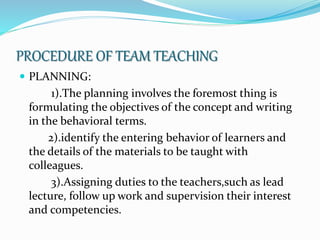
 PLANNING:
1).The planning involves the foremost thing is
formulating the objectives of the concept and writing
in the behavioral terms.
2).identify the entering behavior of learners and
the details of the materials to be taught with
colleagues.
3).Assigning duties to the teachers,such as lead
lecture, follow up work and supervision their interest
and competencies.
PROCEDURE OF TEAM TEACHING
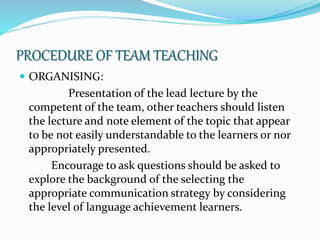
 ORGANISING:
Presentation of the lead lecture by the
competent of the team, other teachers should listen
the lecture and note element of the topic that appear
to be not easily understandable to the learners or nor
appropriately presented.
Encourage to ask questions should be asked to
explore the background of the selecting the
appropriate communication strategy by considering
the level of language achievement learners.
PROCEDURE OF TEAM TEACHING
 EVALUTION:
EVALUATION is the important aspect of any type
of teaching. It will helpful to measure the performance
of learners. It also provides reinforcement to the team
of teachers as well as to the learners
Asking questions measure a particular objective
and the planning and organizing phase of team
teaching itself on the basis of evaluation of the
student.
BENEFIT OF TEAM TEACHING TO STUDENTS
 Different style of teaching can be employed to
accommodate different styles of learning.
 Classroom discipline is improved which reduces
classroom disruption.
 Any child with a difficulty can receive the full attention
of a teacher.
 Can simply be a more fun class.
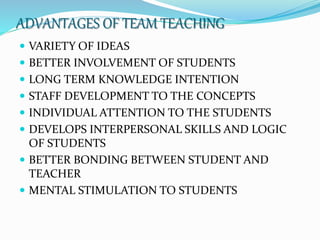
ADVANTAGES OF TEAM TEACHING
 VARIETY OF IDEAS
 BETTER INVOLVEMENT OF STUDENTS
 LONG TERM KNOWLEDGE INTENTION
 STAFF DEVELOPMENT TO THE CONCEPTS
 INDIVIDUAL ATTENTION TO THE STUDENTS
 DEVELOPS INTERPERSONAL SKILLS AND LOGIC
OF STUDENTS
 BETTER BONDING BETWEEN STUDENT AND
TEACHER
 MENTAL STIMULATION TO STUDENTS
DISADVANTAGES OF TEAM TEACHING
 ACCEPTANCE OF CHANGE BY TEACHERS
 RIGIDITY IN TEACHERS
 BAD TEAM MANAGEMENT
 PERSONALITY CONFLICT
 LACK OF TIME MANAGEMENT FOR
COORDINATION AND PLANNING
 HARD TO KEEP TRACK
 INABILITY TO COMPLETE CURRICULUM
Team teaching

Team teaching

  • 1.
    THIS PRESENTATION WASDONE BY P.SUGANYA 20UEDO48 I B.ED PHYSICAL SCIENCE AND ENGLISH
  • 2.
    TOPICS FOR THISPRESENTATION  WHAT IS TEAM TEACHING?  CHARACTERISTICS OF TEAM TEACHING  OBJECTIVES OF TEAM TEACHING  PRINCIPLES OF TEAM TEACHING  TYPES OF TEAM TEACHING  PROCEDURE OF TEAM TEACHING  BENEFITS OF TEAM TEACHING  ADVANTAGES OF TEAM TEACHING  DISADVANTAGES OF TEAM TEACHING
  • 3.
    TEAM TEACHING  Teamteaching is the method of teaching by group of two or more teachers working together to plan, conduct and evaluate the learning activities for the same group of learners.  Team teaching approaches allows for more interaction between teachers and students, leads to well organized system of teaching in which many teachers impart instructions to a group of students in cooperative manner.
  • 4.
  • 5.
    CHARACTERISTICS OF TEAMTEACHING  The plan of team teaching is flexible.  The teachers decide their activities themselves in the team teaching.  This method involves collective responsibility gives importance to all the team teaching teachers.  In the team teaching various aspects of any topic if one subject is taught by two or more teachers turn by turn.  Team spirit of teachers is bound to benefit the students to the maximum.  It is the sort of pooling of expertise and resources such as experience, interest, knowledge and skills of teachers.
  • 6.
    OBJECTIVE OF TEAMTEACHING  To improve quality of education.  To develop the sense of shared responsibility.  To utilize the resources of school.  To increase flexibility in grouping and scheduling as the team teaching groups students according to their interest and aptitudes in the subject.  To understand the importance of cooperation and group work among teachers.
  • 7.
    PRINCIPLES OF TEAMTEACHING  The size and composition of the group must be appropriate to its purpose.  The time allotted to any group must be appropriate to its purpose.  The learning environment must be appropriate to the activities of the group.  The nature and extent of the supervision of the group activities depends upon the purpose of the group.  The duties assigned to teachers must be appropriate to their special qualifications and interests.
  • 8.
    TYPES OF TEAMTEACHING  TRADITIONAL TEAM TEACHING: Both teachers actively share the instructions share the instruction of content and skills, both teachers equal responsibility for all pupils and both teachers are actively involved throughout the class.  LEAD AND SUPPORT TEACHING: One teacher leads the lesson assuming responsibility for teaching the content, the other teacher provides support and follow up activities
  • 9.
    TYPES OF TEAMTEACHING  PARALLEL INSTRUCTION: The class is divided into two group and each teacher delivers the same content and skills/both teachers are performing the same tasks in parallel fashion.  DIFFERENTIATED SPILT CLASS TEAM TEACHING: The class is divided into two groups according to a specified learning need. Each group is provided with activities to meet that specified need.
  • 11.
    PROCEDURE OF TEAMTEACHING  PLANNING: 1).The planning involves the foremost thing is formulating the objectives of the concept and writing in the behavioral terms. 2).identify the entering behavior of learners and the details of the materials to be taught with colleagues. 3).Assigning duties to the teachers,such as lead lecture, follow up work and supervision their interest and competencies.
  • 12.
    PROCEDURE OF TEAMTEACHING  ORGANISING: Presentation of the lead lecture by the competent of the team, other teachers should listen the lecture and note element of the topic that appear to be not easily understandable to the learners or nor appropriately presented. Encourage to ask questions should be asked to explore the background of the selecting the appropriate communication strategy by considering the level of language achievement learners.
  • 13.
    PROCEDURE OF TEAMTEACHING  EVALUTION: EVALUATION is the important aspect of any type of teaching. It will helpful to measure the performance of learners. It also provides reinforcement to the team of teachers as well as to the learners Asking questions measure a particular objective and the planning and organizing phase of team teaching itself on the basis of evaluation of the student.
  • 14.
    BENEFIT OF TEAMTEACHING TO STUDENTS  Different style of teaching can be employed to accommodate different styles of learning.  Classroom discipline is improved which reduces classroom disruption.  Any child with a difficulty can receive the full attention of a teacher.  Can simply be a more fun class.
  • 15.
    ADVANTAGES OF TEAMTEACHING  VARIETY OF IDEAS  BETTER INVOLVEMENT OF STUDENTS  LONG TERM KNOWLEDGE INTENTION  STAFF DEVELOPMENT TO THE CONCEPTS  INDIVIDUAL ATTENTION TO THE STUDENTS  DEVELOPS INTERPERSONAL SKILLS AND LOGIC OF STUDENTS  BETTER BONDING BETWEEN STUDENT AND TEACHER  MENTAL STIMULATION TO STUDENTS
  • 16.
    DISADVANTAGES OF TEAMTEACHING  ACCEPTANCE OF CHANGE BY TEACHERS  RIGIDITY IN TEACHERS  BAD TEAM MANAGEMENT  PERSONALITY CONFLICT  LACK OF TIME MANAGEMENT FOR COORDINATION AND PLANNING  HARD TO KEEP TRACK  INABILITY TO COMPLETE CURRICULUM