PROJECT
METHOD
J.SUNITHA
MSC(n)1ST YEAR
PSYCHIATRIC
NURSING
DEPARTMENT
INTRODUCTION
• Modern method of teaching
• Important for designing curricula(syllabus) and content
• Based on the philosophy of pragmatism (thinking of or
dealing with problems in a practical way)
• Pupils performs constructive activities
• Demands work from the pupils
• With principle of learning by doing
CHARACTERISTICS
• Modern method of teaching
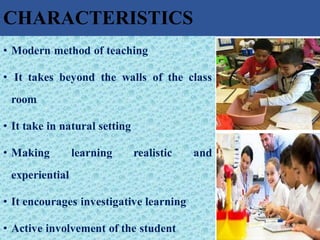
• It takes beyond the walls of the class
room
• It take in natural setting
• Making learning realistic and
experiential
• It encourages investigative learning
• Active involvement of the student
CHARACTERISTICS
• It encourages the spirit of scientific
enquiry
• Promotes better knowledge as
knowledge gained from the books
• Enhance the student’s social skills
• Boost the student psychologically
• Encourages spirits of research
Types of project
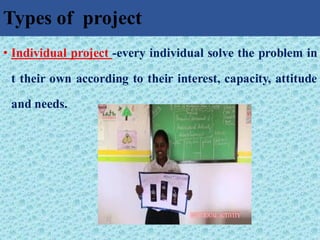
• Individual project -every individual solve the problem in
t their own according to their interest, capacity, attitude
and needs.
Continue………….
• Group project -the problem is solved by the group of
pupil in the class.
• Here the social citizenship qualities and synergism
(interactions) are develops
Continue………….
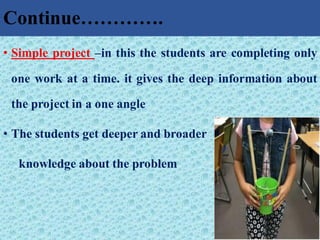
• Simple project –in this the students are completing only
one work at a time. it gives the deep information about
the project in a one angle
• The students get deeper and broader
knowledge about the problem
Continue………….
• complex project – the students are carried out more than
one work at a time.
• They are focus on the work in various subject and angles
• Here the students get the knowledge
about the work in various activities
and dimensions
According to Kilpatrick; there are four
types of projects
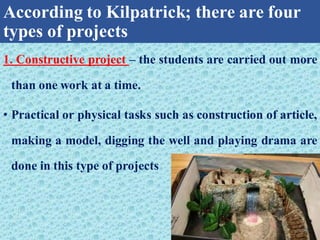
1. Constructive project – the students are carried out more
than one work at a time.
• Practical or physical tasks such as construction of article,
making a model, digging the well and playing drama are
done in this type of projects
Continue…
2. Aesthetic project – Appreciation powers of the students
are developed in this type of project through the musical
programs , beautification of something, appreciation of
poems and so on
Continue……
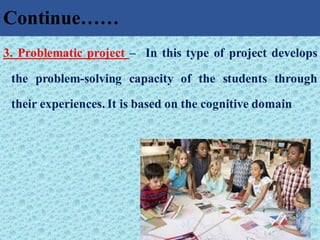
3. Problematic project – In this type of project develops
the problem-solving capacity of the students through
their experiences. It is based on the cognitive domain
Continue……
4. Drill project – it is for the mastery of the skill and
knowledge of the students , it increases the work efficacy
of the students
Steps of project method
➢Creating situation
➢Selection of the problem
➢Planning
➢Execution
➢evaluation
Creating situation
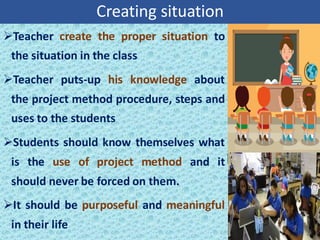
➢Teacher create the proper situation to
the situation in the class
➢Teacher puts-up his knowledge about
the project method procedure, steps and
uses to the students
➢Students should know themselves what
is the use of project method and it
should never be forced on them.
➢It should be purposeful and meaningful
in their life
Selection of the problem
➢ the teacher helps the student
for selection of the problem
➢The teacher guide them
➢Students have the freedom to
choose the topic based on their
interest and ability
➢The principles must be follow
before choosing the problem
Continue…………..
➢ Teacher should only tempt the students for
a particular project
➢But final proposal for the project comes from
the students
Planning
➢As a teacher she should discuss about problem
with the students in various angles and points
➢When the students freely expressing their opinions
about problem, the teacher writes down the whole
program of action step wise on the black board
execution
➢Here the students are start their work
➢They are collecting relevant
information and materials at first
➢Teacher give the time and right to the
students according to their own speed,
interest and ability
➢During this step the teacher should
carefully supervise the pupils in
manipulative skills to prevent waste of
materials and guard accidents
evaluation
➢ Should be done by teacher and student with
proper plan
➢Here the students evaluate their task
➢ Students express their feeling about the task
freely
Reporting and recording
➢Last step in which each and every step of the work are
reported.
➢The reported things are recorded in a certain order in a
book form
➢It should include the proposal plan and its discussion,
duties allotted to different students and how fare they
were carried out by them
Continue….
➢It should also include the details of places visited
and surveyed guidance for future and other
possible details
➢The book format report is submitted to the teacher
at the end
Role of the teacher
➢Guide the students
➢Act like a friend and philosopher
➢Act as a working partner
➢Encourages his students to work collectively
and co-operatively
➢Help students to avoid mistakes
➢ Teacher makes that each student in the group
gain knowledge after completion of the project
Continue…..
➢Suggestions if the students face the failure during
execution
➢Develop the character and personality
➢Provide democratic atmosphere
➢ teacher Should be alert and active
➢Selection of the problem
➢Should have the thorough Knowledge
of individual children
Merits of project method
Merits :
➢Project according with their interest
➢Psychological satisfaction
➢Students are provided with various opportunities
➢Enhance the critical thinking skills among students
➢Develop co-ordination among
their body or mind
Continue….
Continue….
➢Well balanced development of the students
➢Social interaction and co-operation among students
➢Acquire permanent kind of information
➢Stimulate the constructive skills
➢Stimulate the creative skills
Demerits of project method
➢Lot of time to plan and execute
➢Not possible to design different projects for different
topics
➢Large number of financial resources are required
➢Teacher should be highly knowledgeable, active and
alert
➢Sometimes the projects are too ambitious
Steps of project method
thankyou

The project method

  • 1.
  • 2.
    INTRODUCTION • Modern methodof teaching • Important for designing curricula(syllabus) and content • Based on the philosophy of pragmatism (thinking of or dealing with problems in a practical way) • Pupils performs constructive activities • Demands work from the pupils • With principle of learning by doing
  • 3.
    CHARACTERISTICS • Modern methodof teaching • It takes beyond the walls of the class room • It take in natural setting • Making learning realistic and experiential • It encourages investigative learning • Active involvement of the student
  • 4.
    CHARACTERISTICS • It encouragesthe spirit of scientific enquiry • Promotes better knowledge as knowledge gained from the books • Enhance the student’s social skills • Boost the student psychologically • Encourages spirits of research
  • 5.
    Types of project •Individual project -every individual solve the problem in t their own according to their interest, capacity, attitude and needs.
  • 6.
    Continue…………. • Group project-the problem is solved by the group of pupil in the class. • Here the social citizenship qualities and synergism (interactions) are develops
  • 7.
    Continue…………. • Simple project–in this the students are completing only one work at a time. it gives the deep information about the project in a one angle • The students get deeper and broader knowledge about the problem
  • 8.
    Continue…………. • complex project– the students are carried out more than one work at a time. • They are focus on the work in various subject and angles • Here the students get the knowledge about the work in various activities and dimensions
  • 9.
    According to Kilpatrick;there are four types of projects 1. Constructive project – the students are carried out more than one work at a time. • Practical or physical tasks such as construction of article, making a model, digging the well and playing drama are done in this type of projects
  • 10.
    Continue… 2. Aesthetic project– Appreciation powers of the students are developed in this type of project through the musical programs , beautification of something, appreciation of poems and so on
  • 11.
    Continue…… 3. Problematic project– In this type of project develops the problem-solving capacity of the students through their experiences. It is based on the cognitive domain
  • 12.
    Continue…… 4. Drill project– it is for the mastery of the skill and knowledge of the students , it increases the work efficacy of the students
  • 13.
    Steps of projectmethod ➢Creating situation ➢Selection of the problem ➢Planning ➢Execution ➢evaluation
  • 14.
    Creating situation ➢Teacher createthe proper situation to the situation in the class ➢Teacher puts-up his knowledge about the project method procedure, steps and uses to the students ➢Students should know themselves what is the use of project method and it should never be forced on them. ➢It should be purposeful and meaningful in their life
  • 15.
    Selection of theproblem ➢ the teacher helps the student for selection of the problem ➢The teacher guide them ➢Students have the freedom to choose the topic based on their interest and ability ➢The principles must be follow before choosing the problem
  • 16.
    Continue………….. ➢ Teacher shouldonly tempt the students for a particular project ➢But final proposal for the project comes from the students
  • 17.
    Planning ➢As a teachershe should discuss about problem with the students in various angles and points ➢When the students freely expressing their opinions about problem, the teacher writes down the whole program of action step wise on the black board
  • 18.
    execution ➢Here the studentsare start their work ➢They are collecting relevant information and materials at first ➢Teacher give the time and right to the students according to their own speed, interest and ability ➢During this step the teacher should carefully supervise the pupils in manipulative skills to prevent waste of materials and guard accidents
  • 19.
    evaluation ➢ Should bedone by teacher and student with proper plan ➢Here the students evaluate their task ➢ Students express their feeling about the task freely
  • 20.
    Reporting and recording ➢Laststep in which each and every step of the work are reported. ➢The reported things are recorded in a certain order in a book form ➢It should include the proposal plan and its discussion, duties allotted to different students and how fare they were carried out by them
  • 21.
    Continue…. ➢It should alsoinclude the details of places visited and surveyed guidance for future and other possible details ➢The book format report is submitted to the teacher at the end
  • 22.
    Role of theteacher ➢Guide the students ➢Act like a friend and philosopher ➢Act as a working partner ➢Encourages his students to work collectively and co-operatively ➢Help students to avoid mistakes ➢ Teacher makes that each student in the group gain knowledge after completion of the project
  • 23.
    Continue….. ➢Suggestions if thestudents face the failure during execution ➢Develop the character and personality ➢Provide democratic atmosphere ➢ teacher Should be alert and active ➢Selection of the problem ➢Should have the thorough Knowledge of individual children
  • 24.
    Merits of projectmethod Merits : ➢Project according with their interest ➢Psychological satisfaction ➢Students are provided with various opportunities ➢Enhance the critical thinking skills among students ➢Develop co-ordination among their body or mind
  • 25.
    Continue…. Continue…. ➢Well balanced developmentof the students ➢Social interaction and co-operation among students ➢Acquire permanent kind of information ➢Stimulate the constructive skills ➢Stimulate the creative skills
  • 26.
    Demerits of projectmethod ➢Lot of time to plan and execute ➢Not possible to design different projects for different topics ➢Large number of financial resources are required ➢Teacher should be highly knowledgeable, active and alert ➢Sometimes the projects are too ambitious
  • 27.
    Steps of projectmethod thankyou