Chapter 9
Project Scheduling: Networks,
Duration Estimation, and
Critical Path
09-01
Copyright © 2013 Pearson Education, Inc. Publishing as Prentice Hall
Chapter 9 Learning Objectives
After completing this chapter, students will be able to:
 Understand and apply key scheduling terminology.
 Apply the logic used to create activity networks,
including predecessor and successor tasks.
 Develop an activity network using Activity-on-Node
(AON) techniques.
 Perform activity duration estimation based on the
use of probabilistic estimating techniques.
09-02
Copyright © 2013 Pearson Education, Inc. Publishing as Prentice Hall
Chapter 9 Learning Objectives
After completing this chapter, students will be able to:
 Construct the critical path for a project schedule
network using forward and backward passes.
 Identify activity float and the manner in which it is
determined.
 Calculate the probability of a project finishing on time
under PERT estimates.
 Understand the steps that can be employed to reduce
the critical path.
09-03
Copyright © 2013 Pearson Education, Inc. Publishing as Prentice Hall
Project Scheduling
 Project scheduling requires us to follow some
carefully laid-out steps, in order, for the schedule
to take shape.
 Project planning, as it relates to the scheduling
process, has been defined by the PMBoK as:
The identification of the project objectives and the
ordered activity necessary to complete the project
including the identification of resource types and
quantities required to carry out each activity or task.
09-04
Copyright © 2013 Pearson Education, Inc. Publishing as Prentice Hall
Project Scheduling Terms
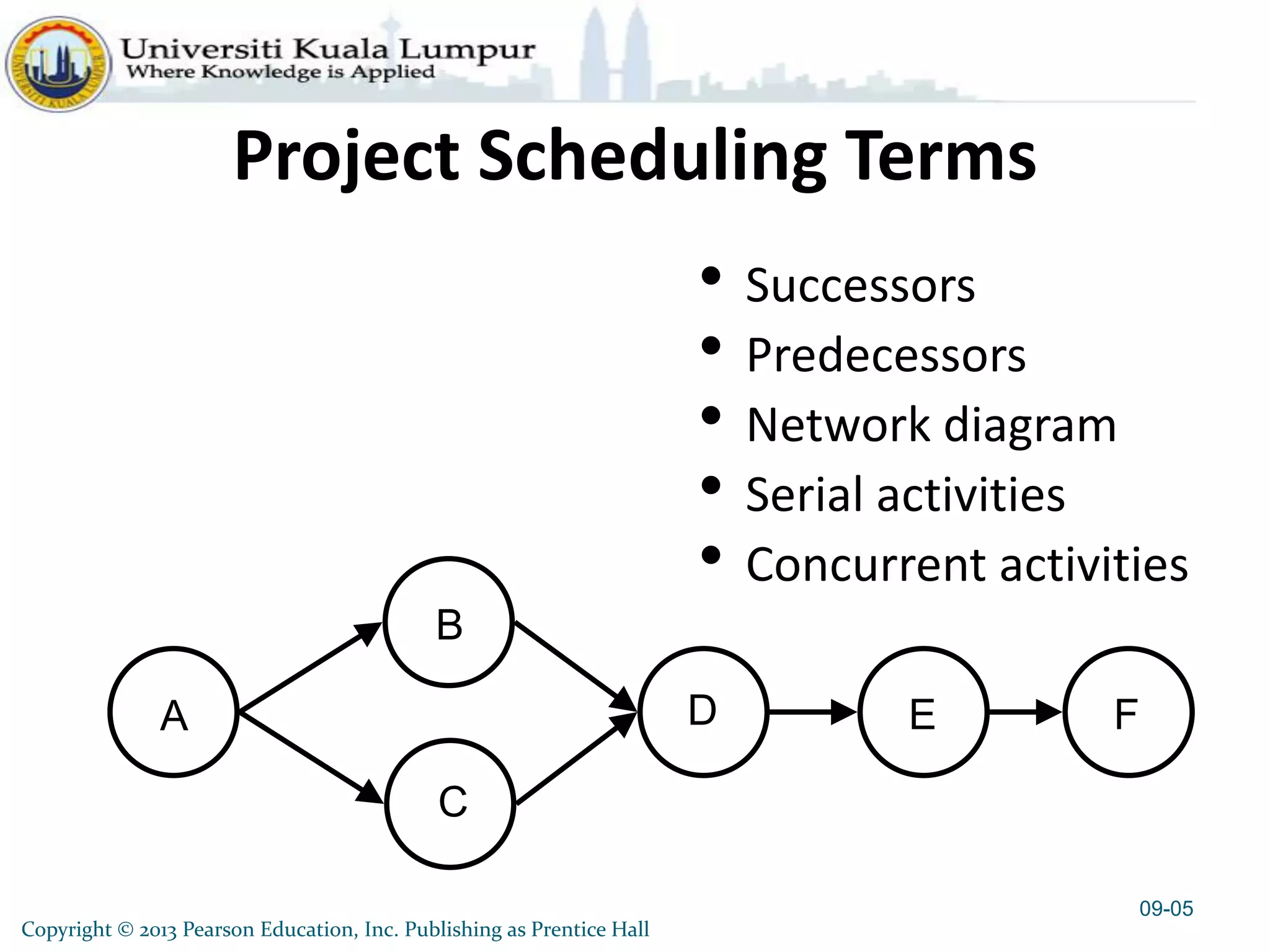
• Successors
• Predecessors
• Network diagram
• Serial activities
• Concurrent activities
09-05
ED
C
B
A F
Copyright © 2013 Pearson Education, Inc. Publishing as Prentice Hall
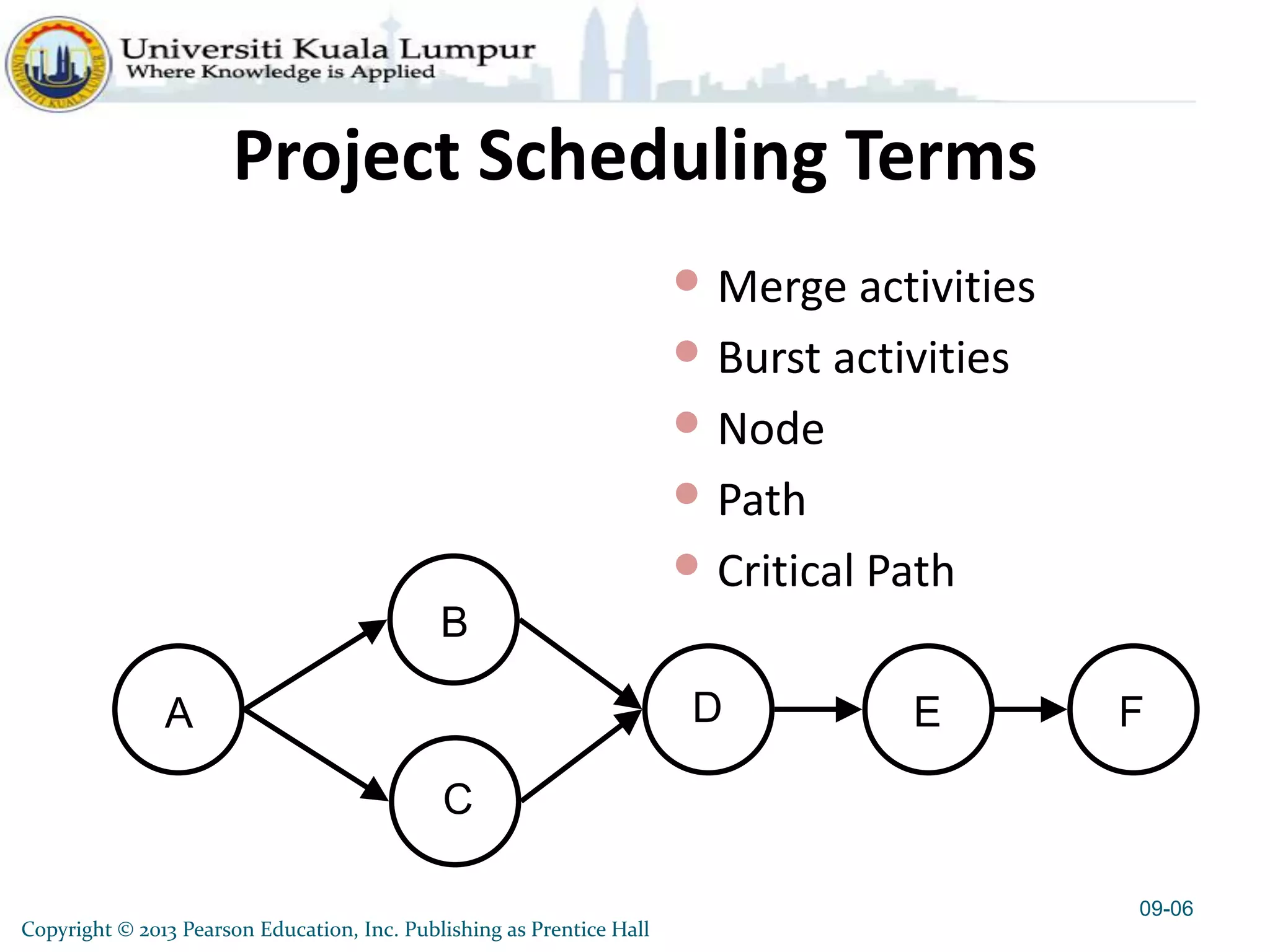
Project Scheduling Terms
09-06
ED
C
B
A F
• Merge activities
• Burst activities
• Node
• Path
• Critical Path
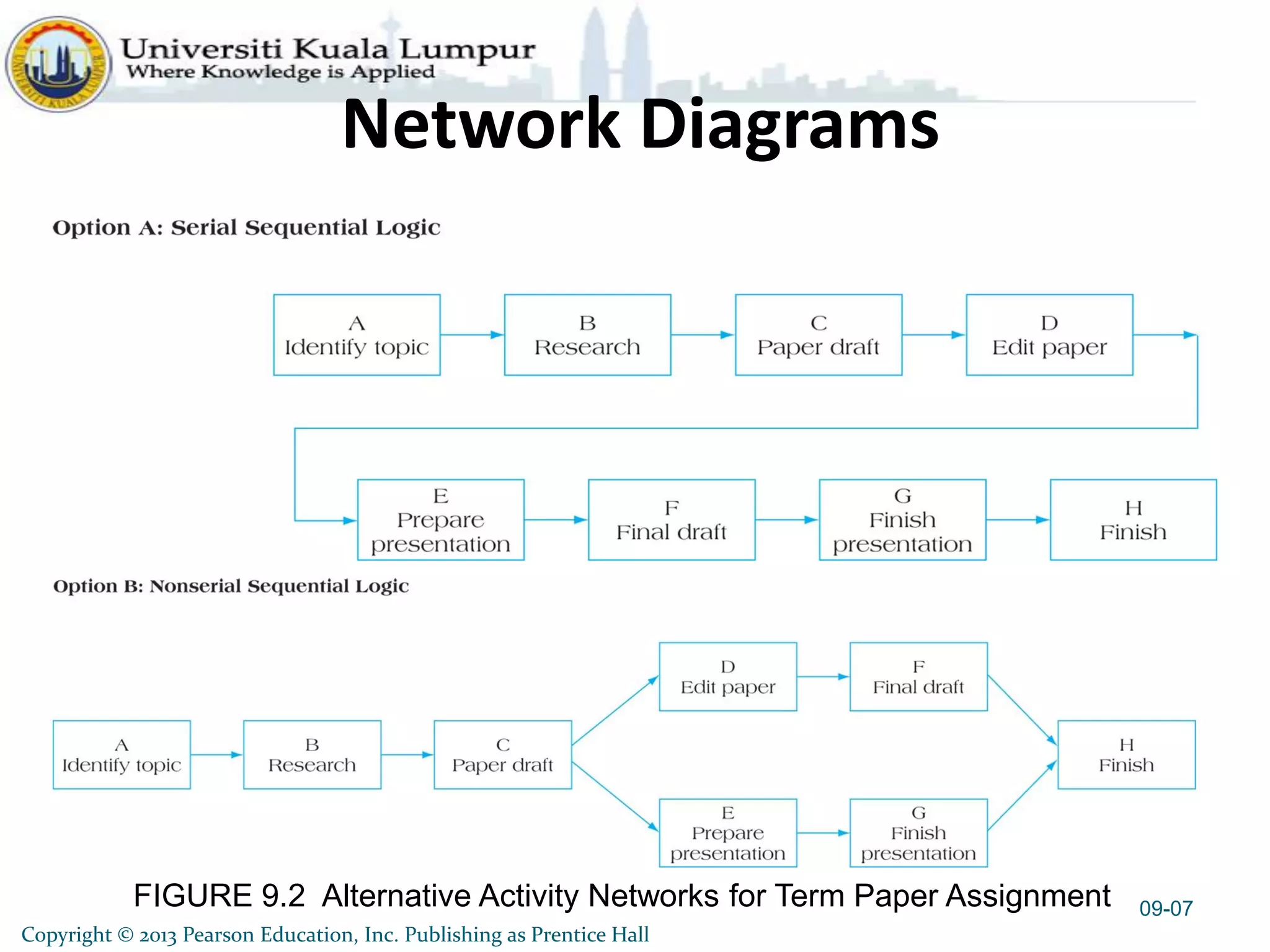
FIGURE 9.2 Alternative Activity Networks for Term Paper Assignment
Network Diagrams
09-07
Copyright © 2013 Pearson Education, Inc. Publishing as Prentice Hall
AOA Versus AON
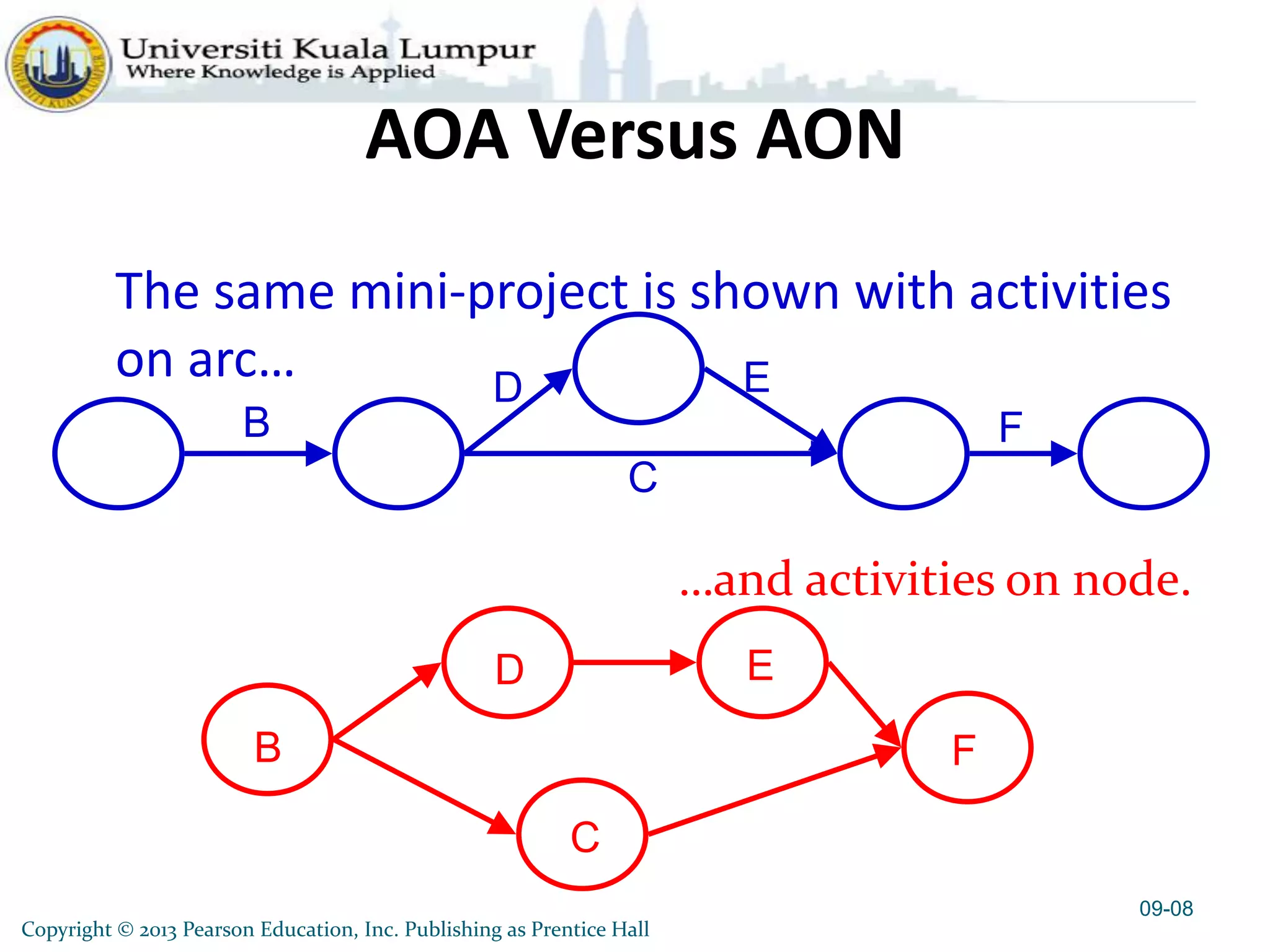
The same mini-project is shown with activities
on arc…
09-08
C
ED
B F
E
C
D
B F
…and activities on node.
Copyright © 2013 Pearson Education, Inc. Publishing as Prentice Hall
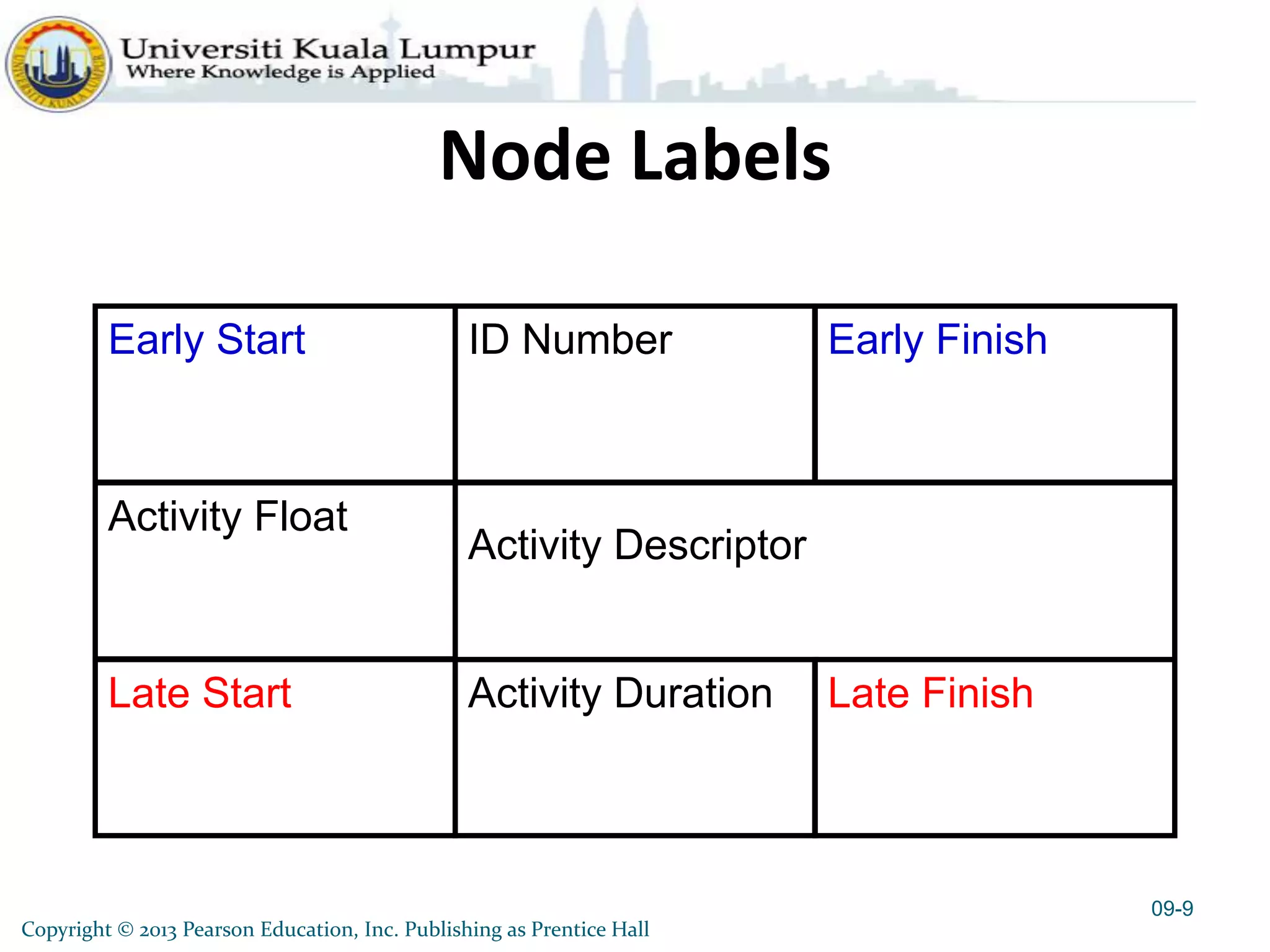
Node Labels
09-9
Early Start
Activity Float
Activity Descriptor
Late Start
ID Number
Activity Duration Late Finish
Early Finish
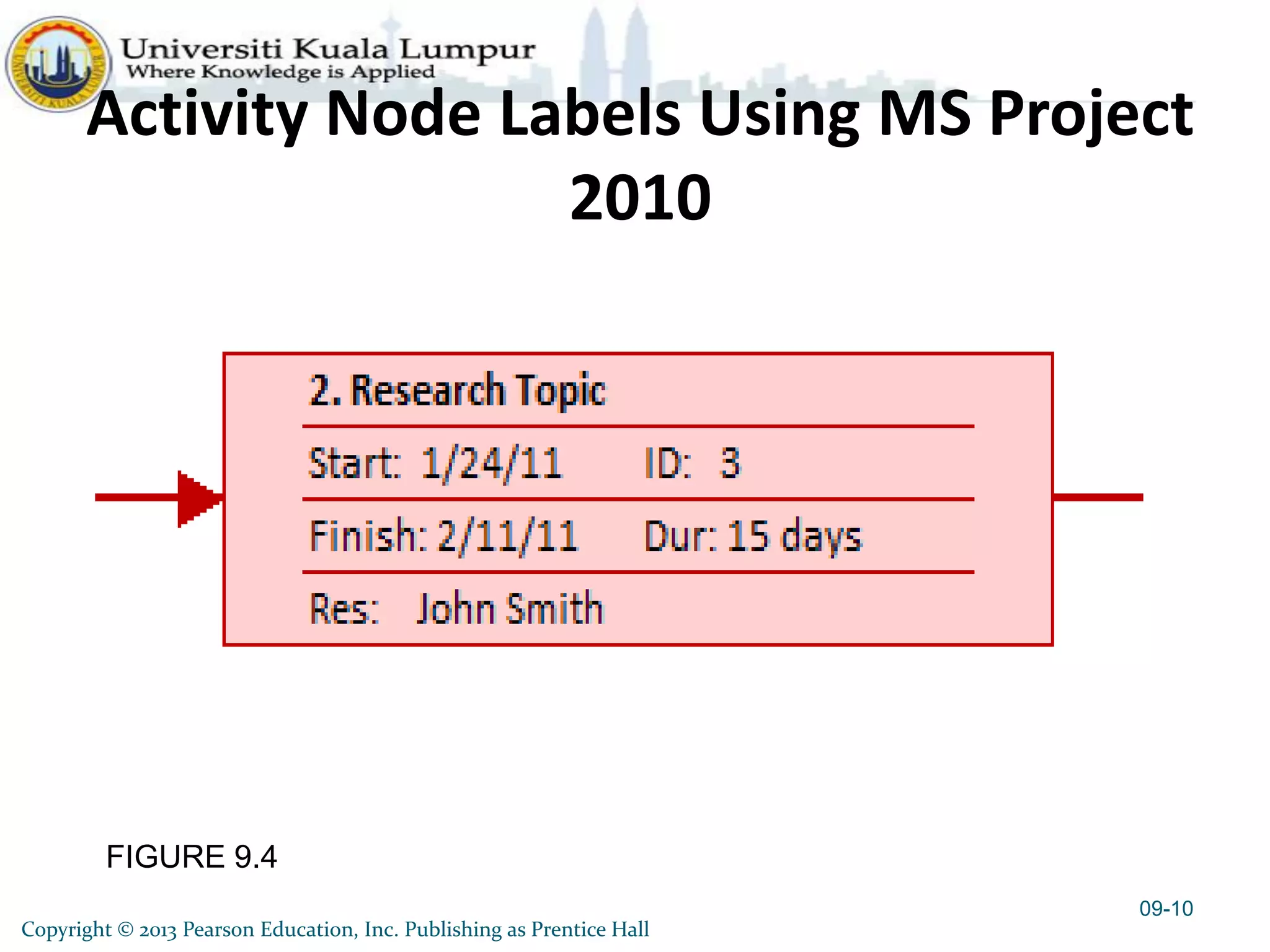
FIGURE 9.4
Activity Node Labels Using MS Project
2010
09-10
Copyright © 2013 Pearson Education, Inc. Publishing as Prentice Hall
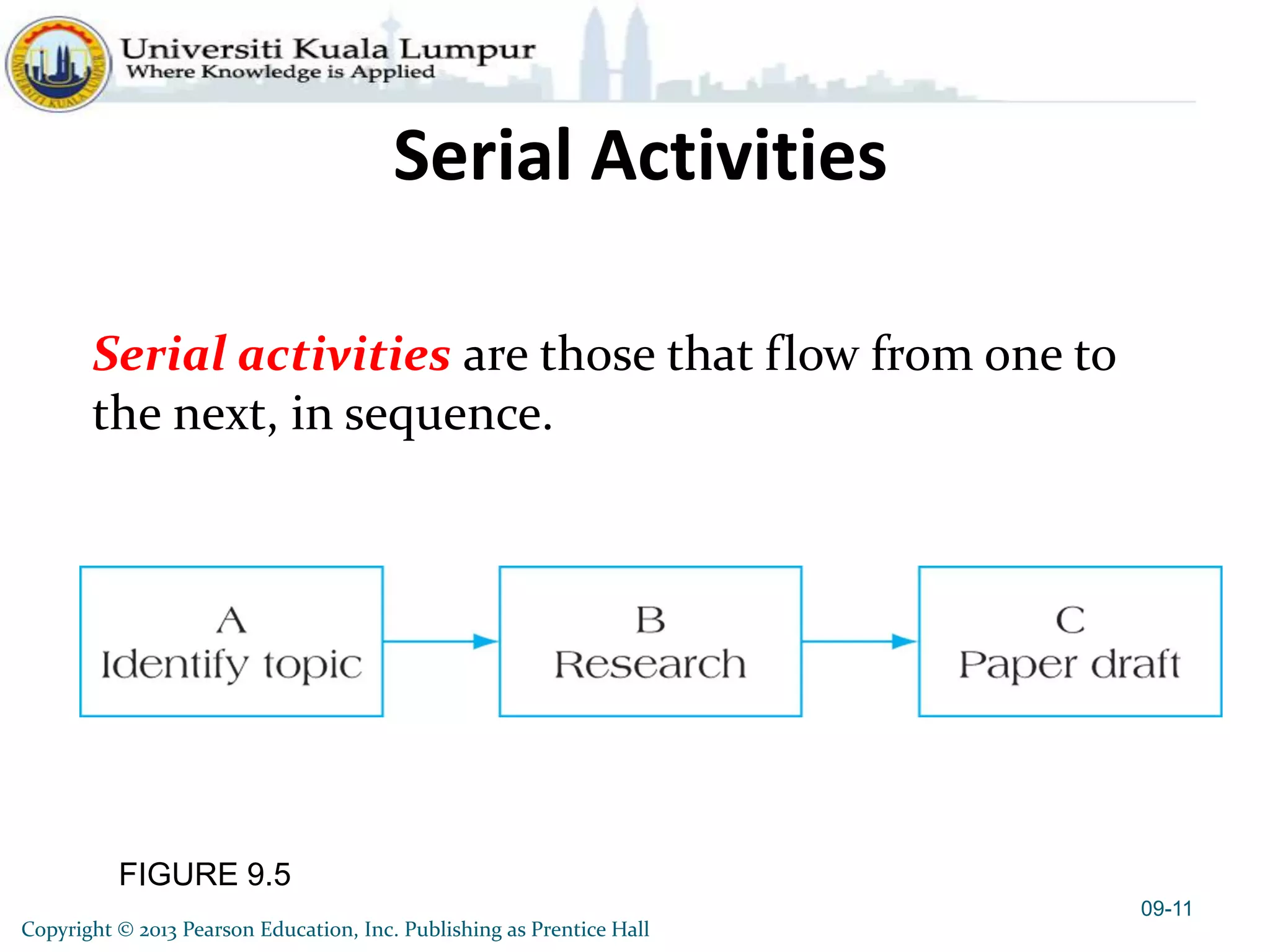
FIGURE 9.5
Serial Activities
09-11
Serial activities are those that flow from one to
the next, in sequence.
Copyright © 2013 Pearson Education, Inc. Publishing as Prentice Hall
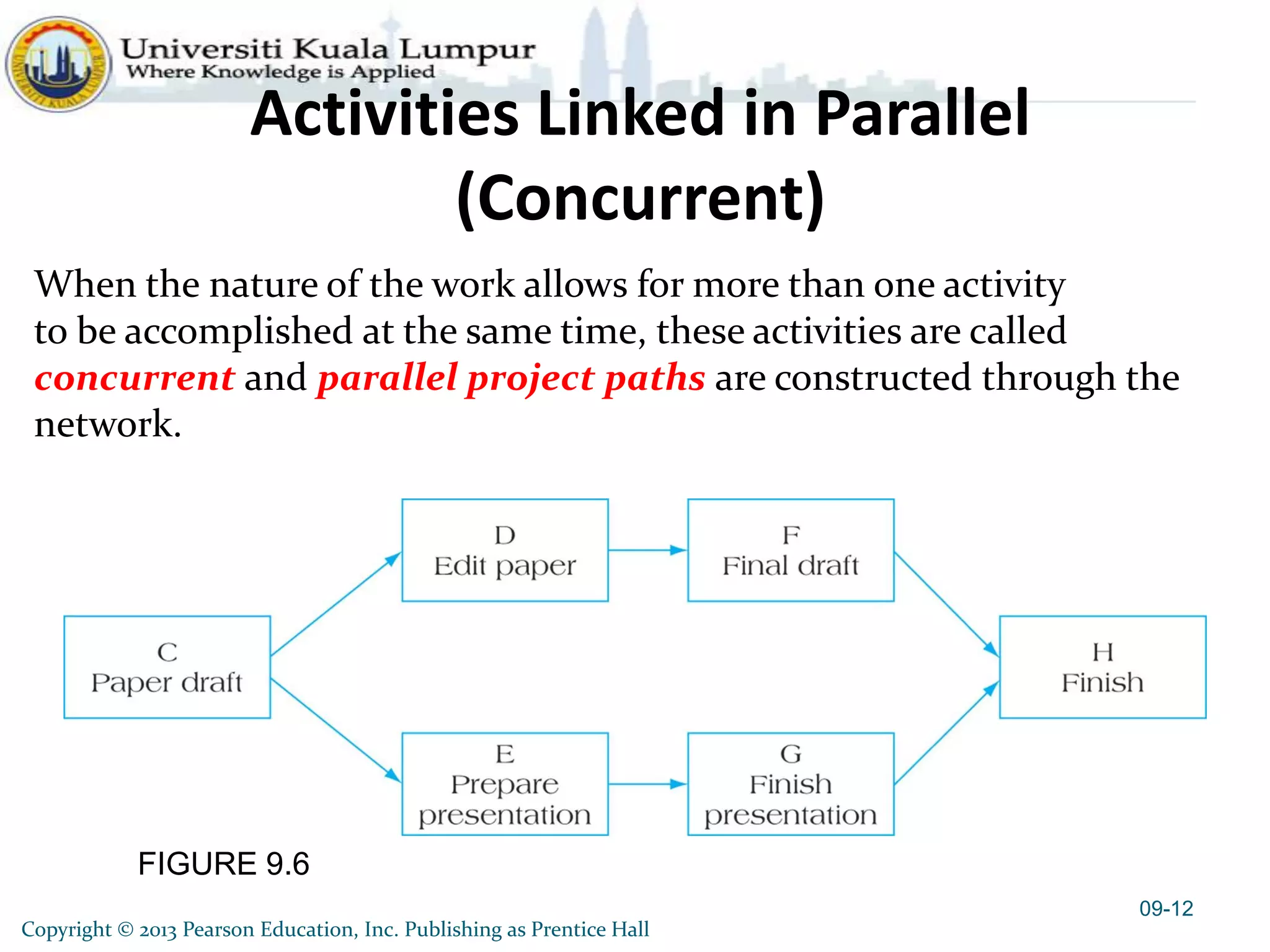
FIGURE 9.6
Activities Linked in Parallel
(Concurrent)
09-12
Copyright © 2013 Pearson Education, Inc. Publishing as Prentice Hall
When the nature of the work allows for more than one activity
to be accomplished at the same time, these activities are called
concurrent and parallel project paths are constructed through the
network.
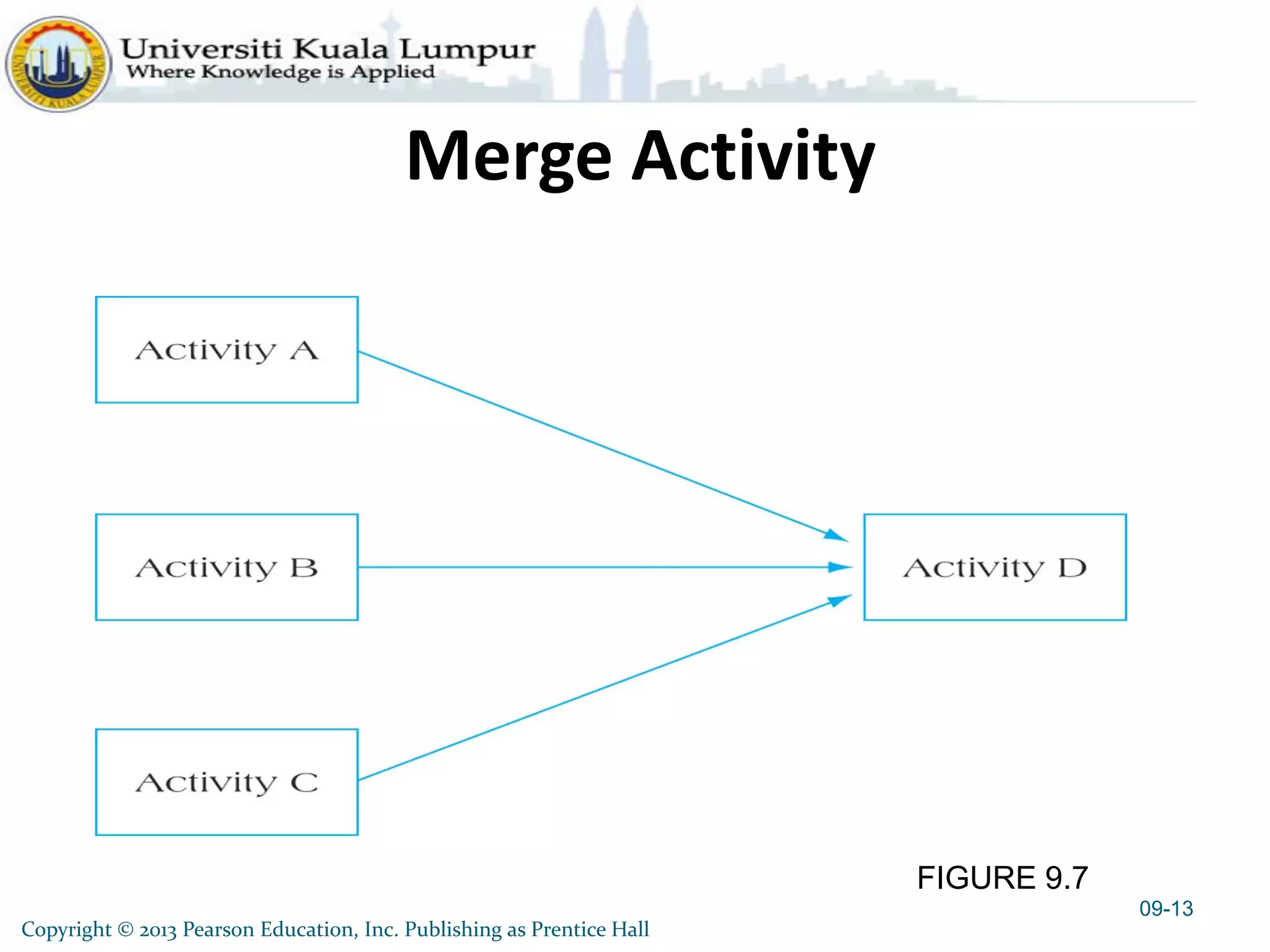
FIGURE 9.7
Merge Activity
09-13
Copyright © 2013 Pearson Education, Inc. Publishing as Prentice Hall
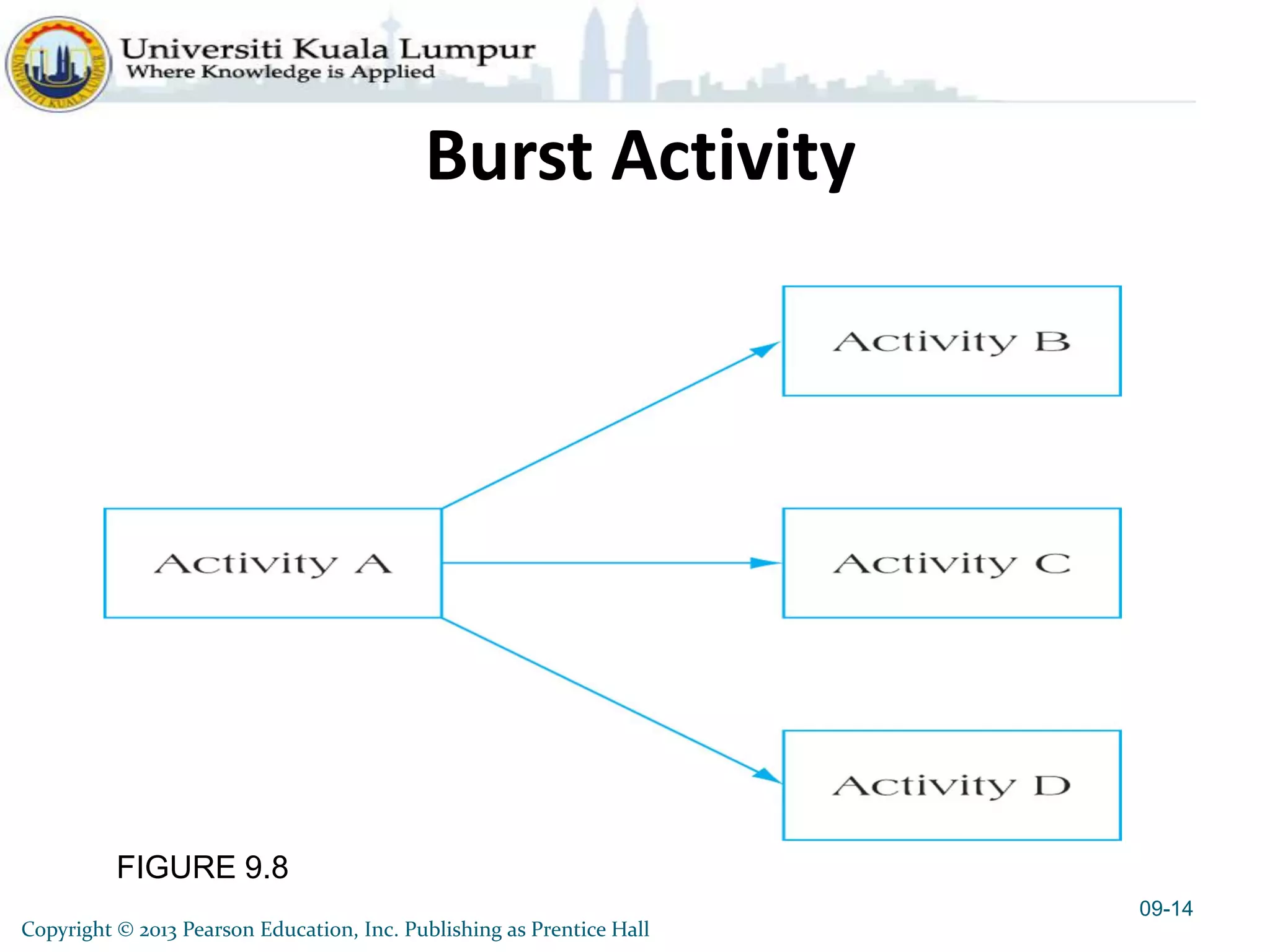
FIGURE 9.8
Burst Activity
09-14
Copyright © 2013 Pearson Education, Inc. Publishing as Prentice Hall
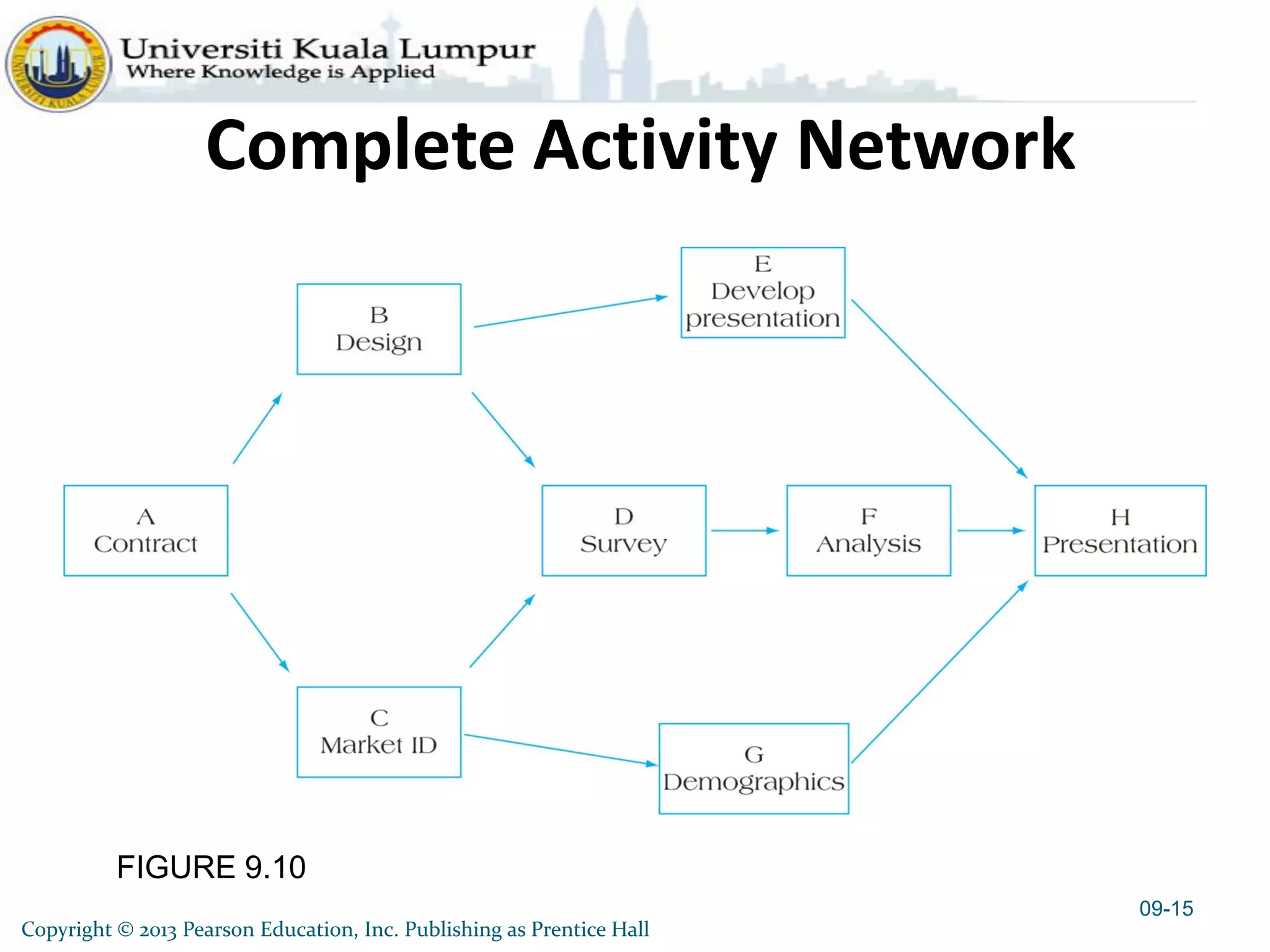
FIGURE 9.10
Complete Activity Network
09-15
Copyright © 2013 Pearson Education, Inc. Publishing as Prentice Hall
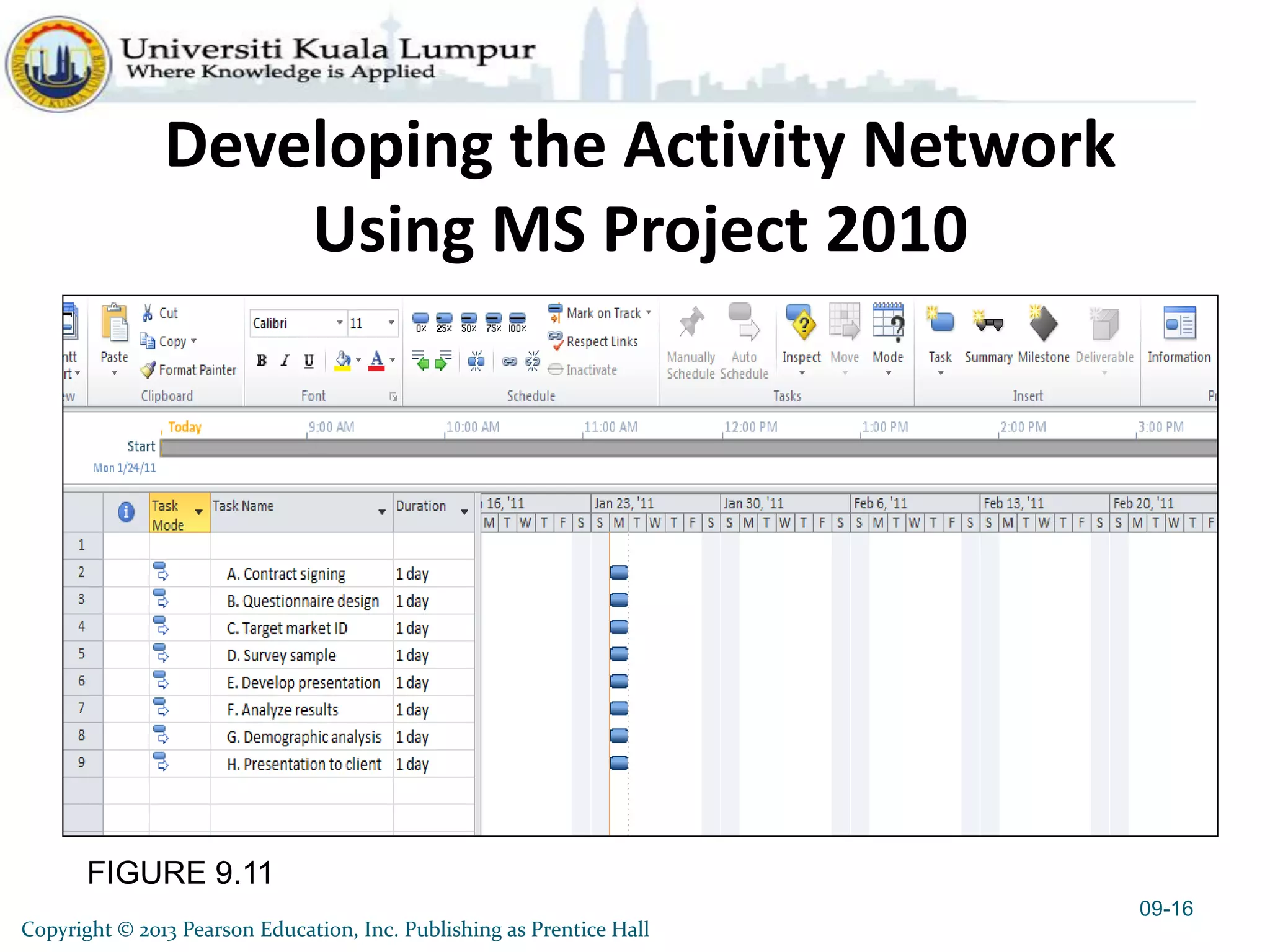
FIGURE 9.11
Developing the Activity Network
Using MS Project 2010
09-16
Copyright © 2013 Pearson Education, Inc. Publishing as Prentice Hall
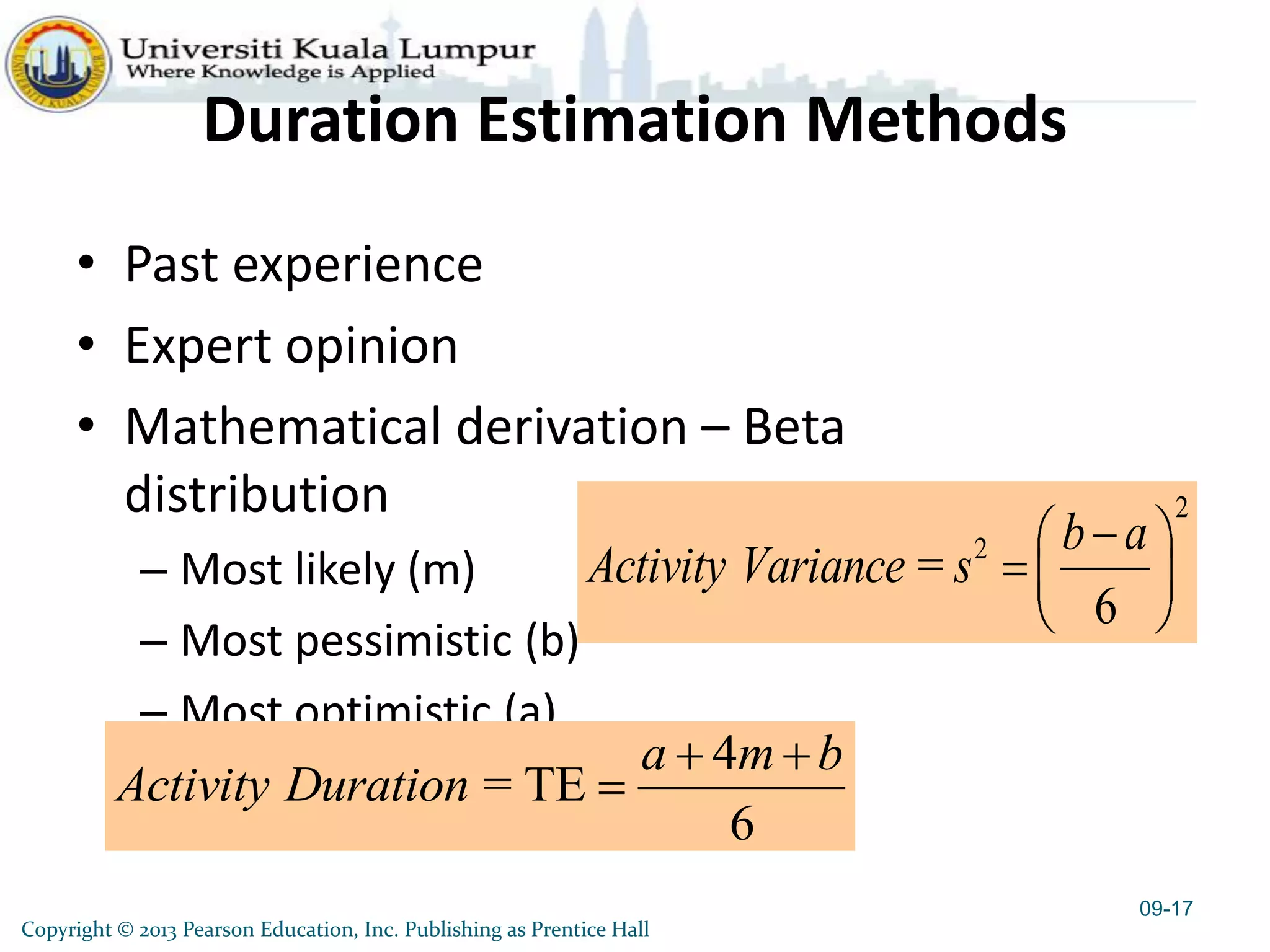
Duration Estimation Methods
• Past experience
• Expert opinion
• Mathematical derivation – Beta
distribution
– Most likely (m)
– Most pessimistic (b)
– Most optimistic (a)
4
= TE
6
a m b
Activity Duration
09-17
2
2
=
6
b a
Activity Variance s
Copyright © 2013 Pearson Education, Inc. Publishing as Prentice Hall
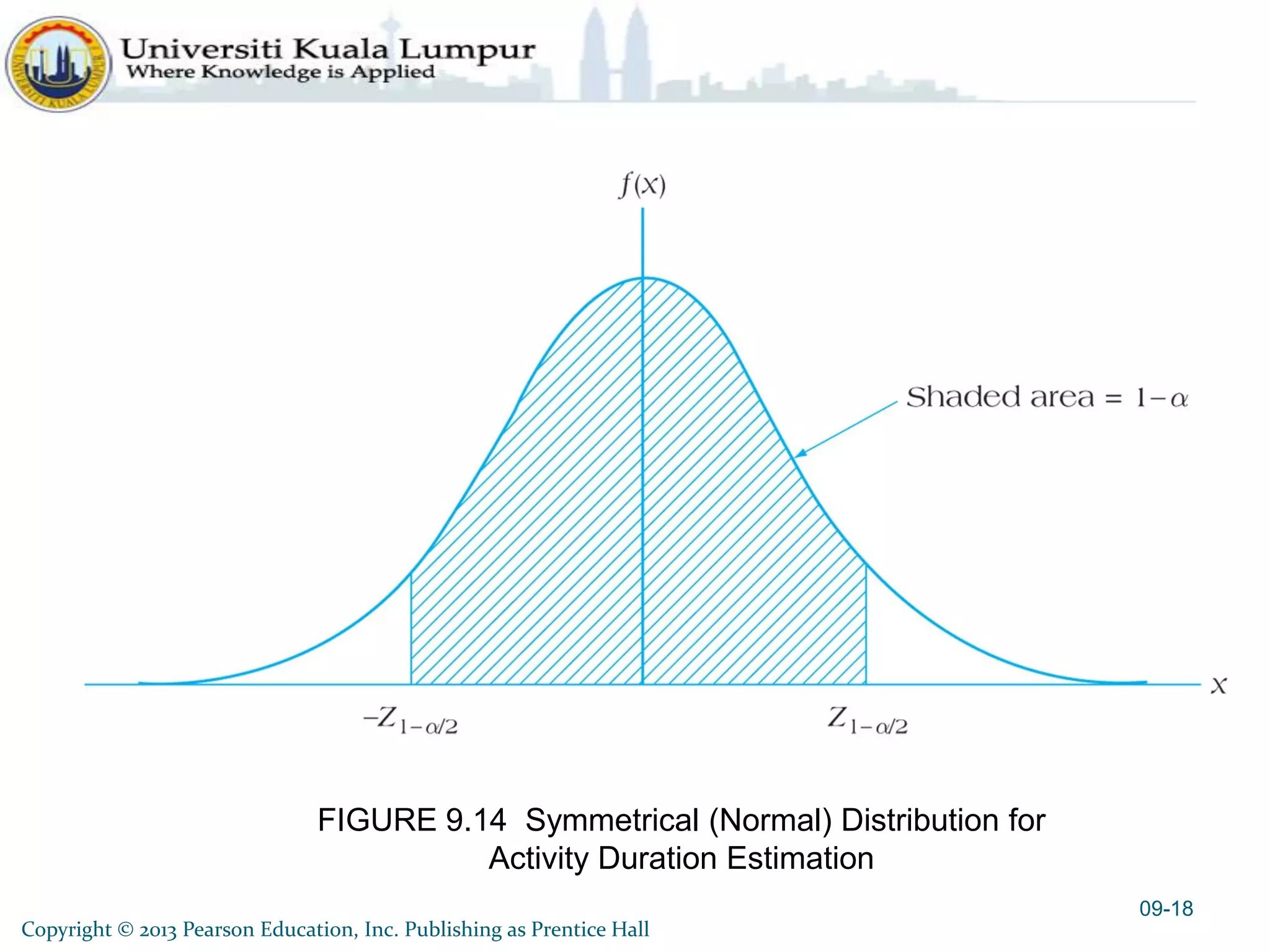
FIGURE 9.14 Symmetrical (Normal) Distribution for
Activity Duration Estimation
Copyright © 2013 Pearson Education, Inc. Publishing as Prentice Hall
09-18
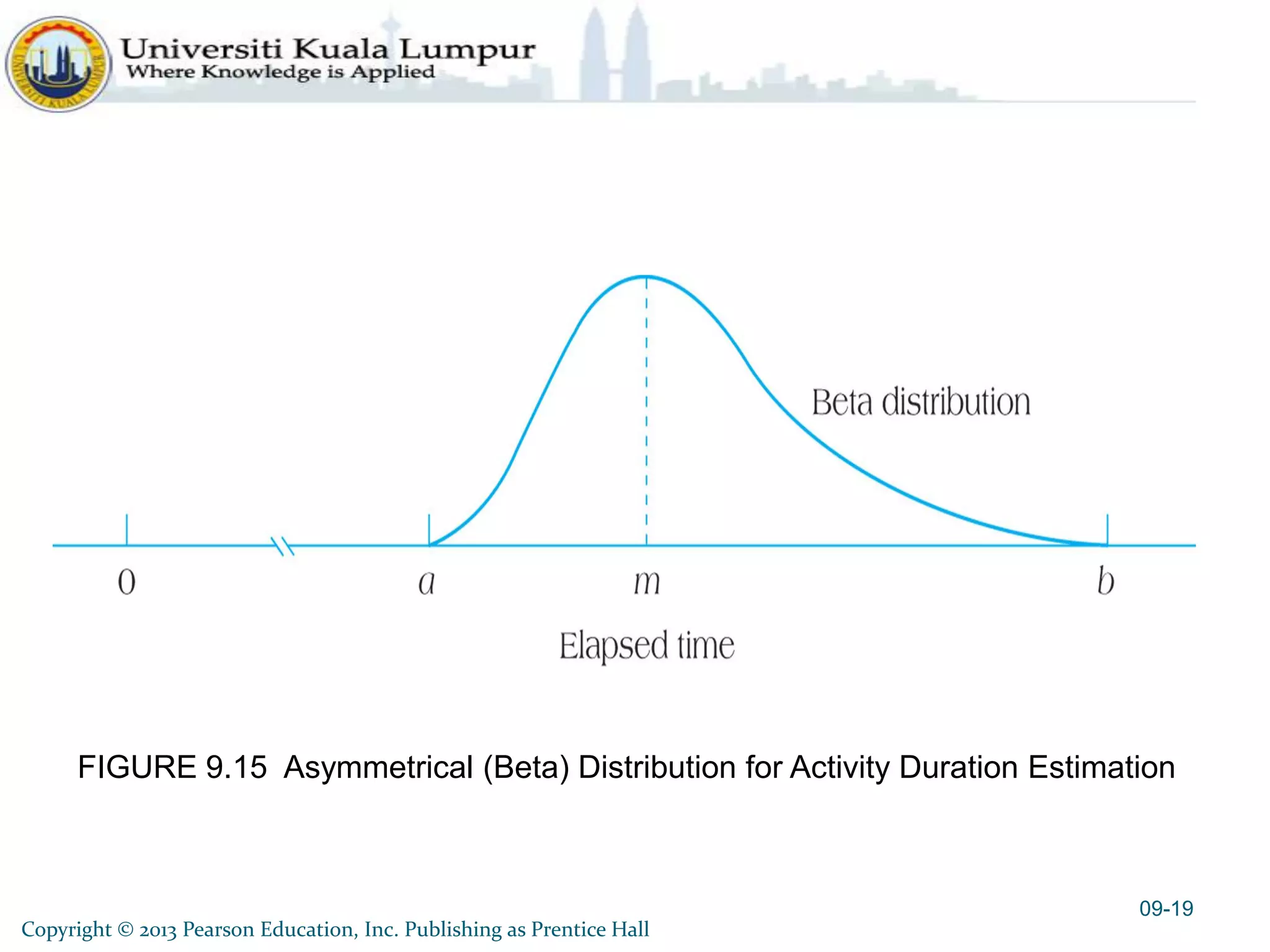
FIGURE 9.15 Asymmetrical (Beta) Distribution for Activity Duration Estimation
Copyright © 2013 Pearson Education, Inc. Publishing as Prentice Hall
09-19
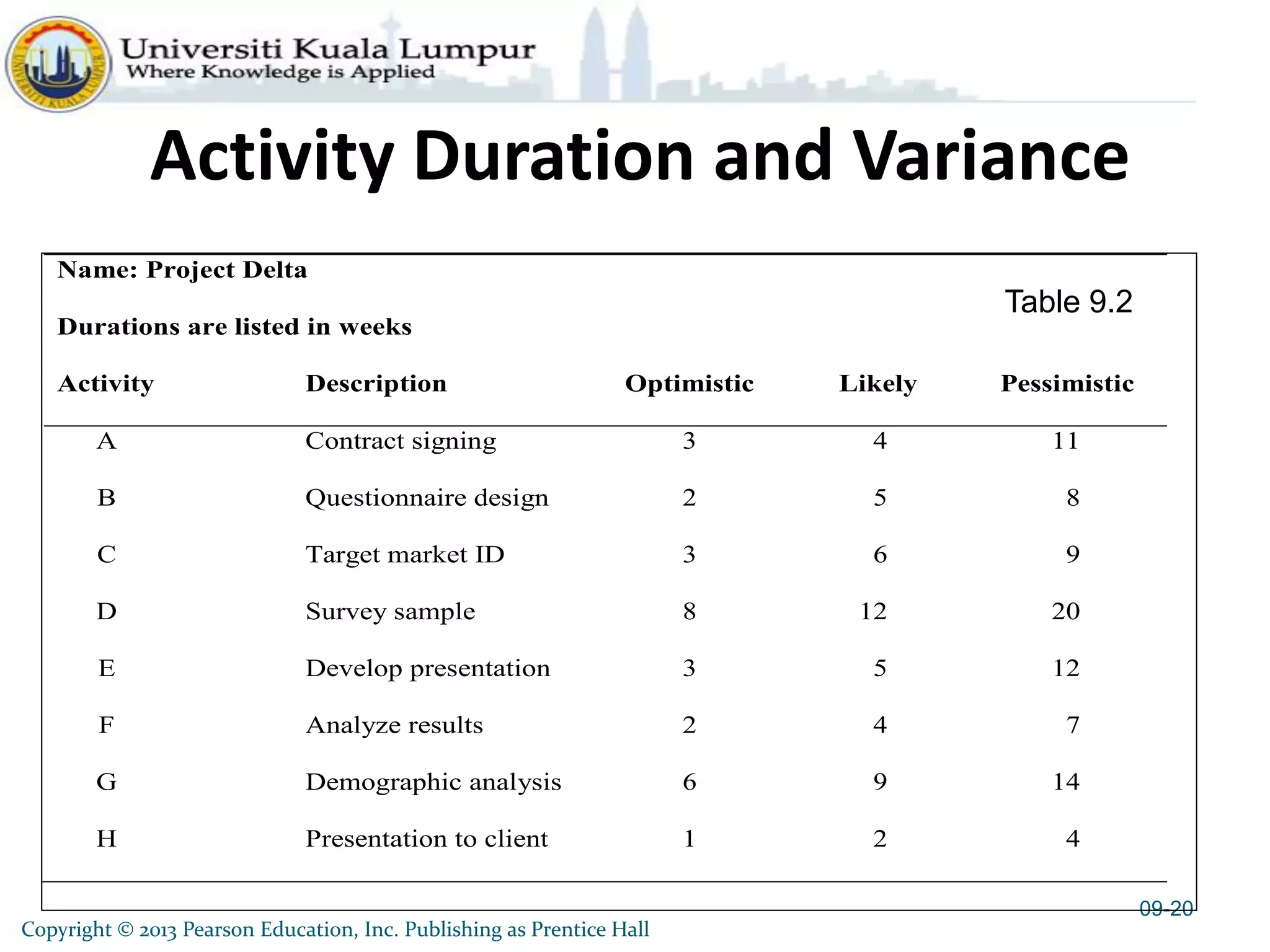
Activity Duration and Variance
09-20
Name: Project Delta
Durations are listed in weeks
Activity Description Optimistic Likely Pessimistic
A Contract signing 3 4 11
B Questionnaire design 2 5 8
C Target market ID 3 6 9
D Survey sample 8 12 20
E Develop presentation 3 5 12
F Analyze results 2 4 7
G Demographic analysis 6 9 14
H Presentation to client 1 2 4
Copyright © 2013 Pearson Education, Inc. Publishing as Prentice Hall
Table 9.2
Copyright © 2013 Pearson Education, Inc. Publishing as Prentice Hall
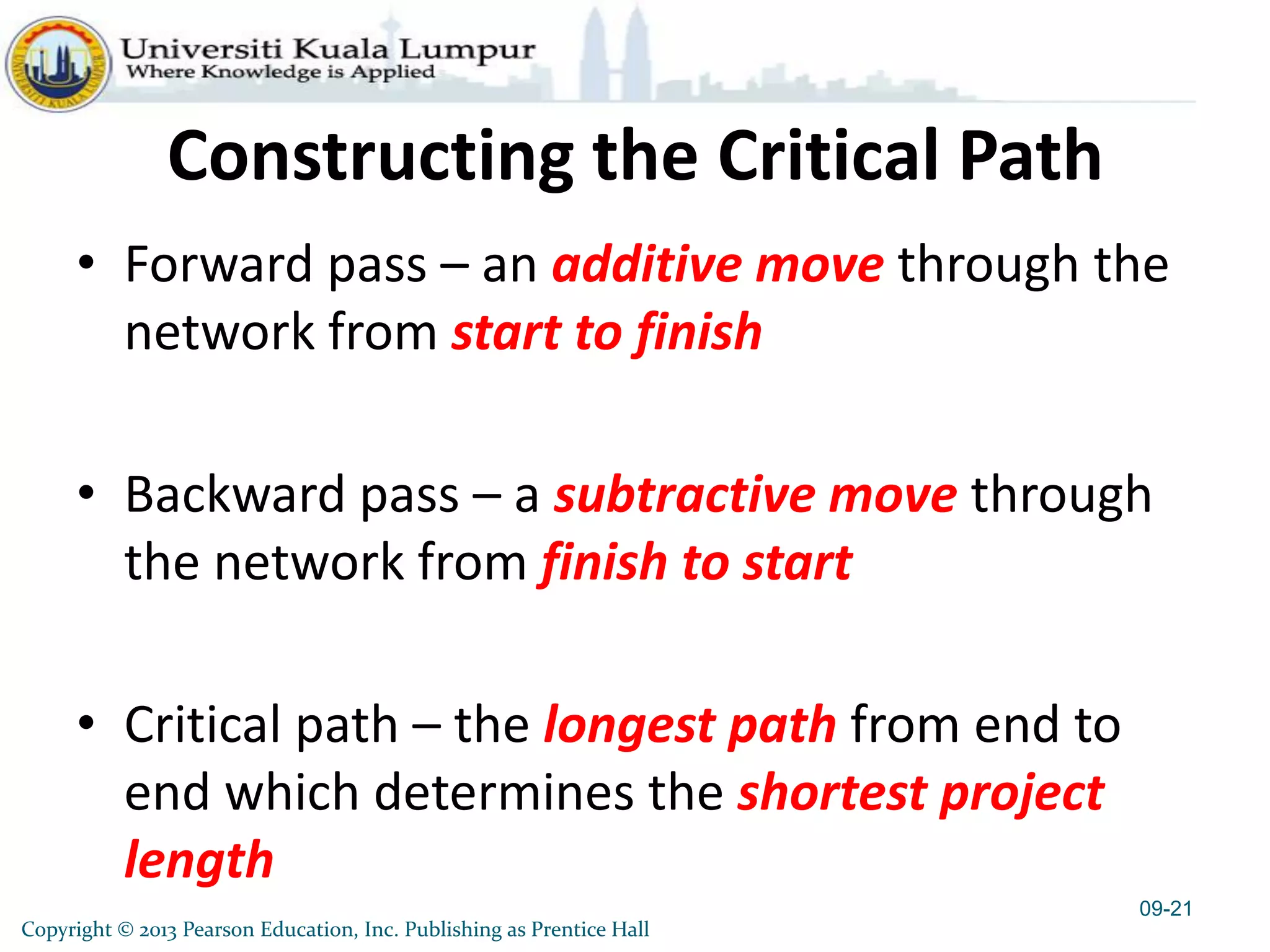
Constructing the Critical Path
• Forward pass – an additive move through the
network from start to finish
• Backward pass – a subtractive move through
the network from finish to start
• Critical path – the longest path from end to
end which determines the shortest project
length
09-21
Copyright © 2013 Pearson Education, Inc. Publishing as Prentice Hall
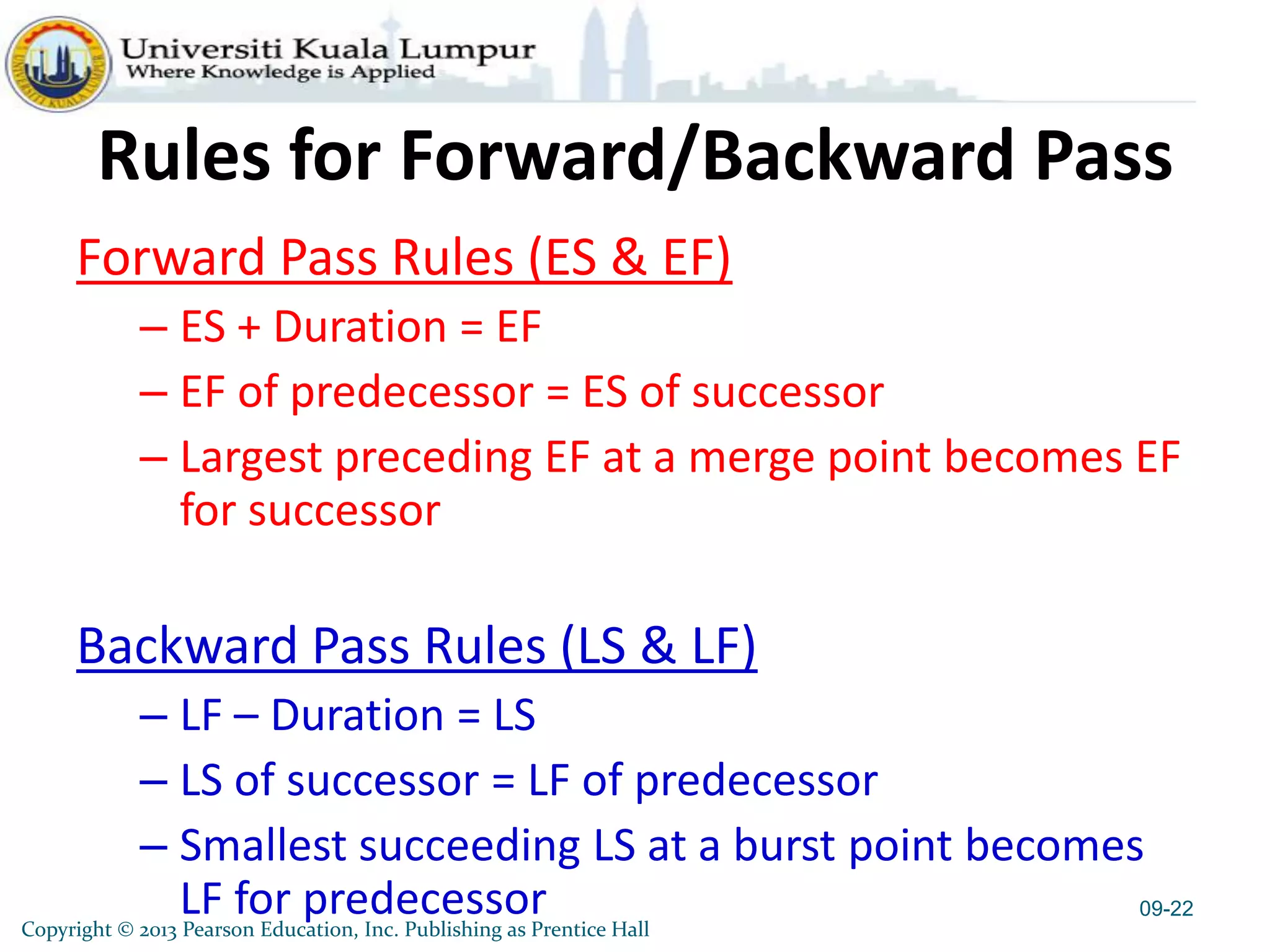
Rules for Forward/Backward Pass
Forward Pass Rules (ES & EF)
– ES + Duration = EF
– EF of predecessor = ES of successor
– Largest preceding EF at a merge point becomes EF
for successor
Backward Pass Rules (LS & LF)
– LF – Duration = LS
– LS of successor = LF of predecessor
– Smallest succeeding LS at a burst point becomes
LF for predecessor 09-22
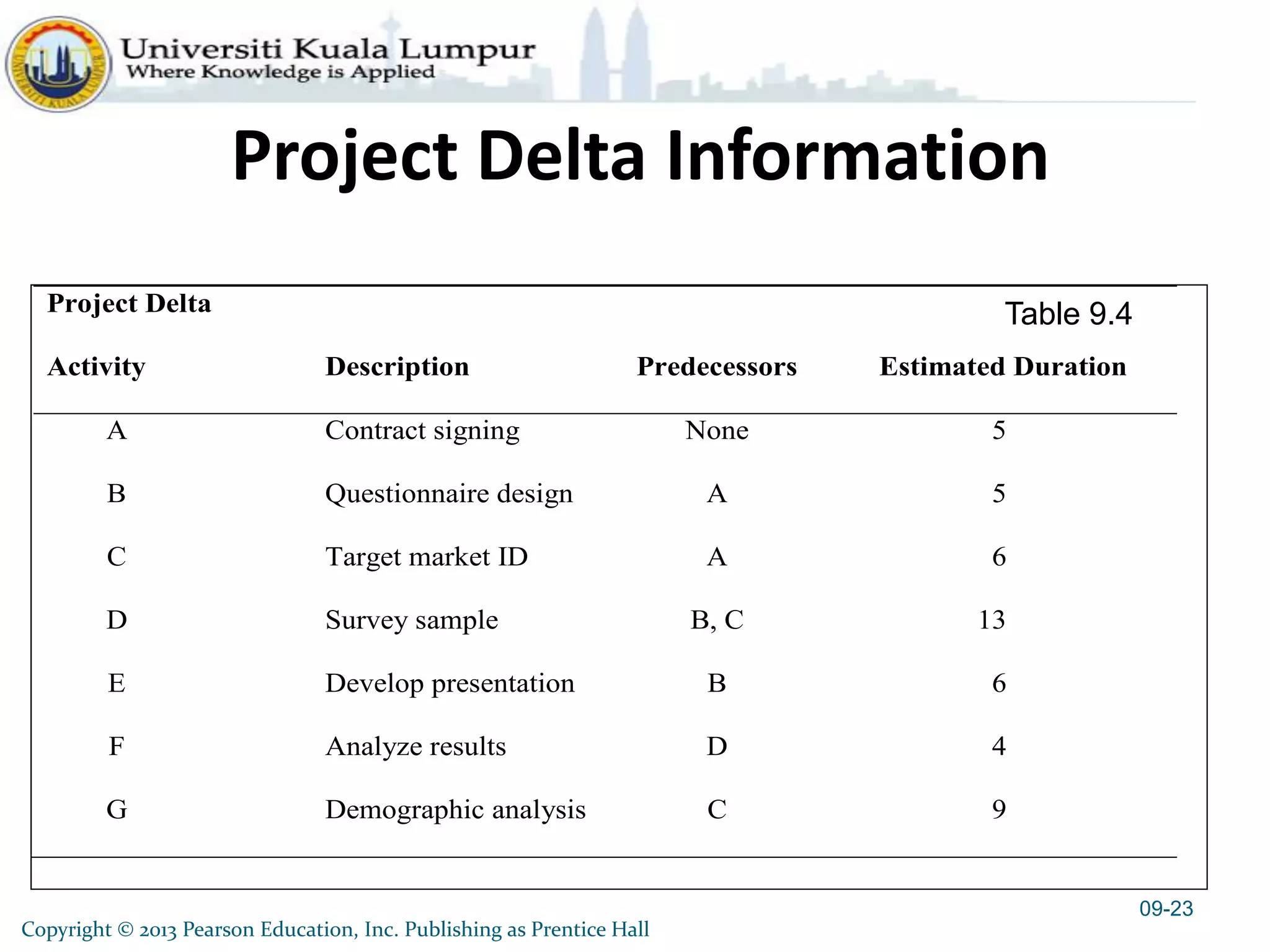
Project Delta Information
09-23
Project Delta
Activity Description Predecessors Estimated Duration
A Contract signing None 5
B Questionnaire design A 5
C Target market ID A 6
D Survey sample B, C 13
E Develop presentation B 6
F Analyze results D 4
G Demographic analysis C 9
Copyright © 2013 Pearson Education, Inc. Publishing as Prentice Hall
Table 9.4
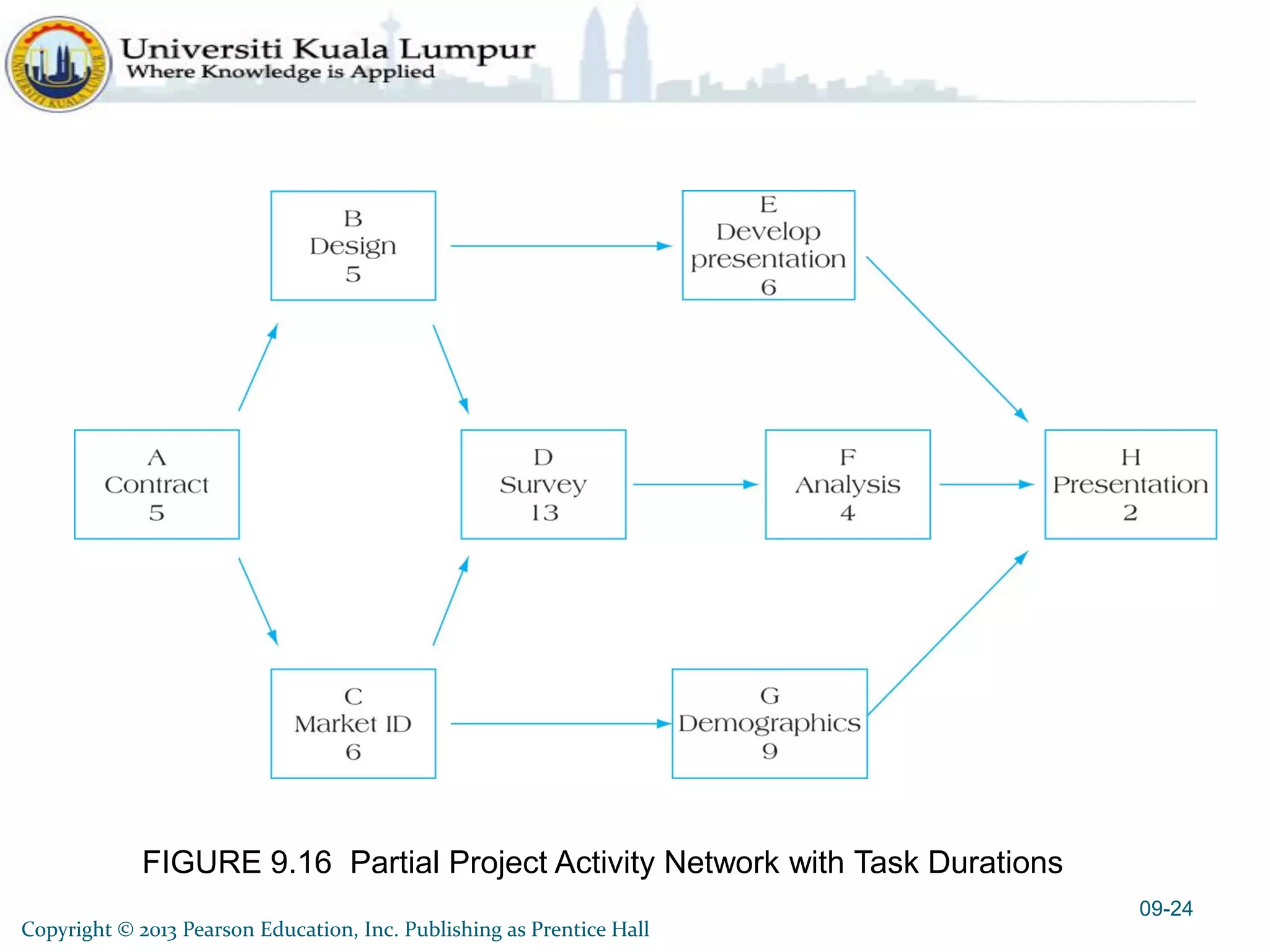
FIGURE 9.16 Partial Project Activity Network with Task Durations
Copyright © 2013 Pearson Education, Inc. Publishing as Prentice Hall
09-24
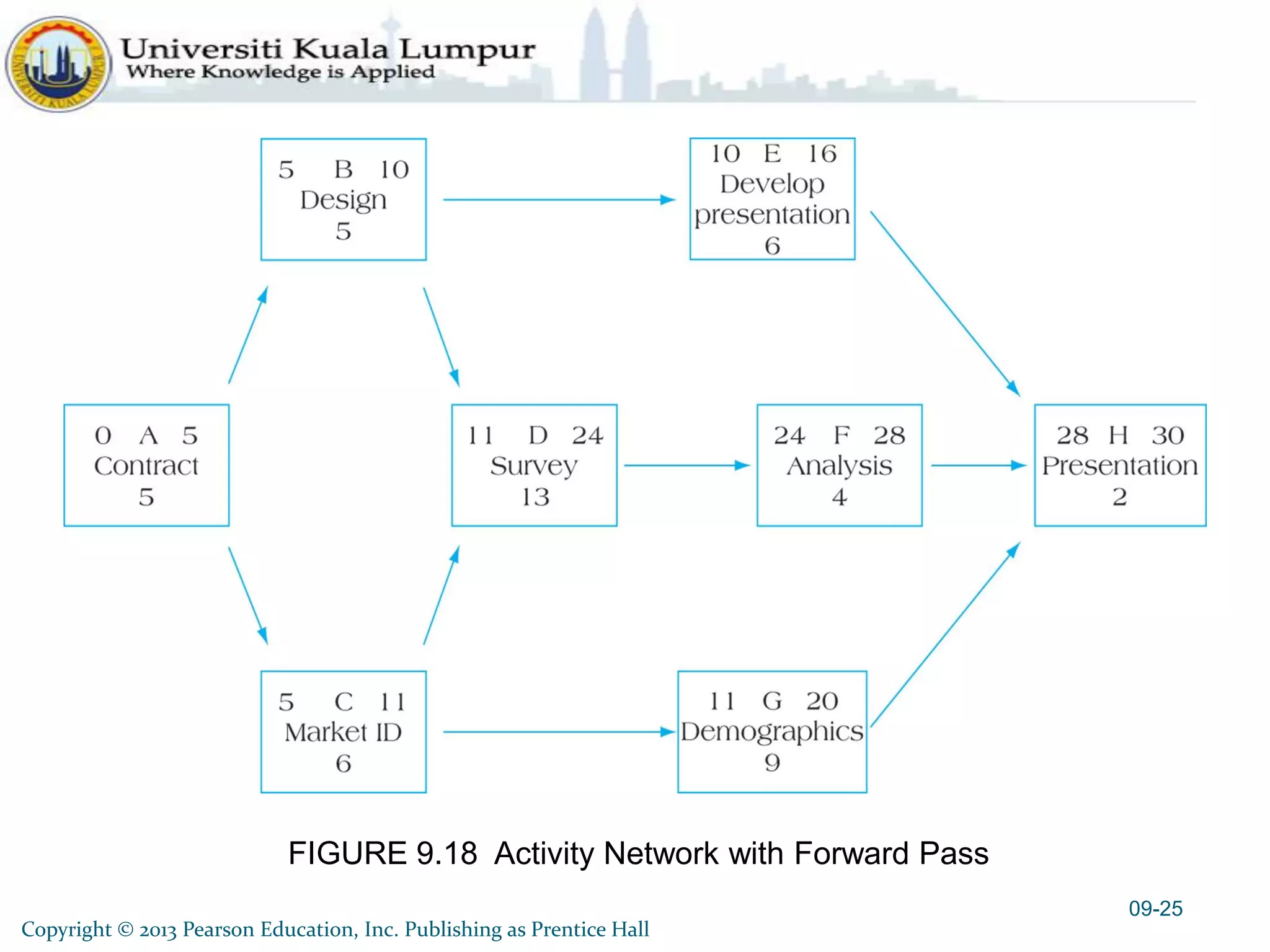
FIGURE 9.18 Activity Network with Forward Pass
09-25
Copyright © 2013 Pearson Education, Inc. Publishing as Prentice Hall
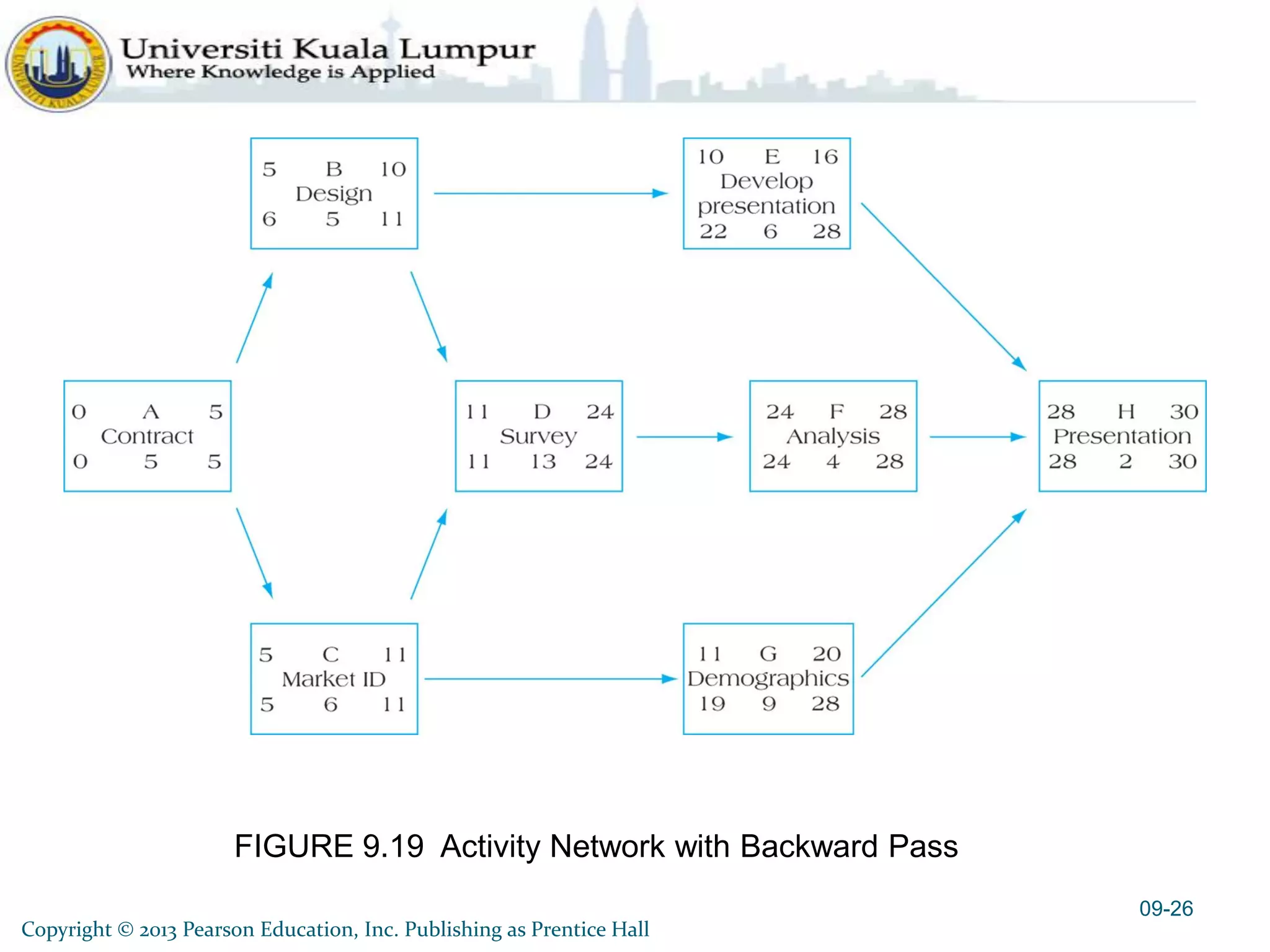
FIGURE 9.19 Activity Network with Backward Pass
09-26
Copyright © 2013 Pearson Education, Inc. Publishing as Prentice Hall
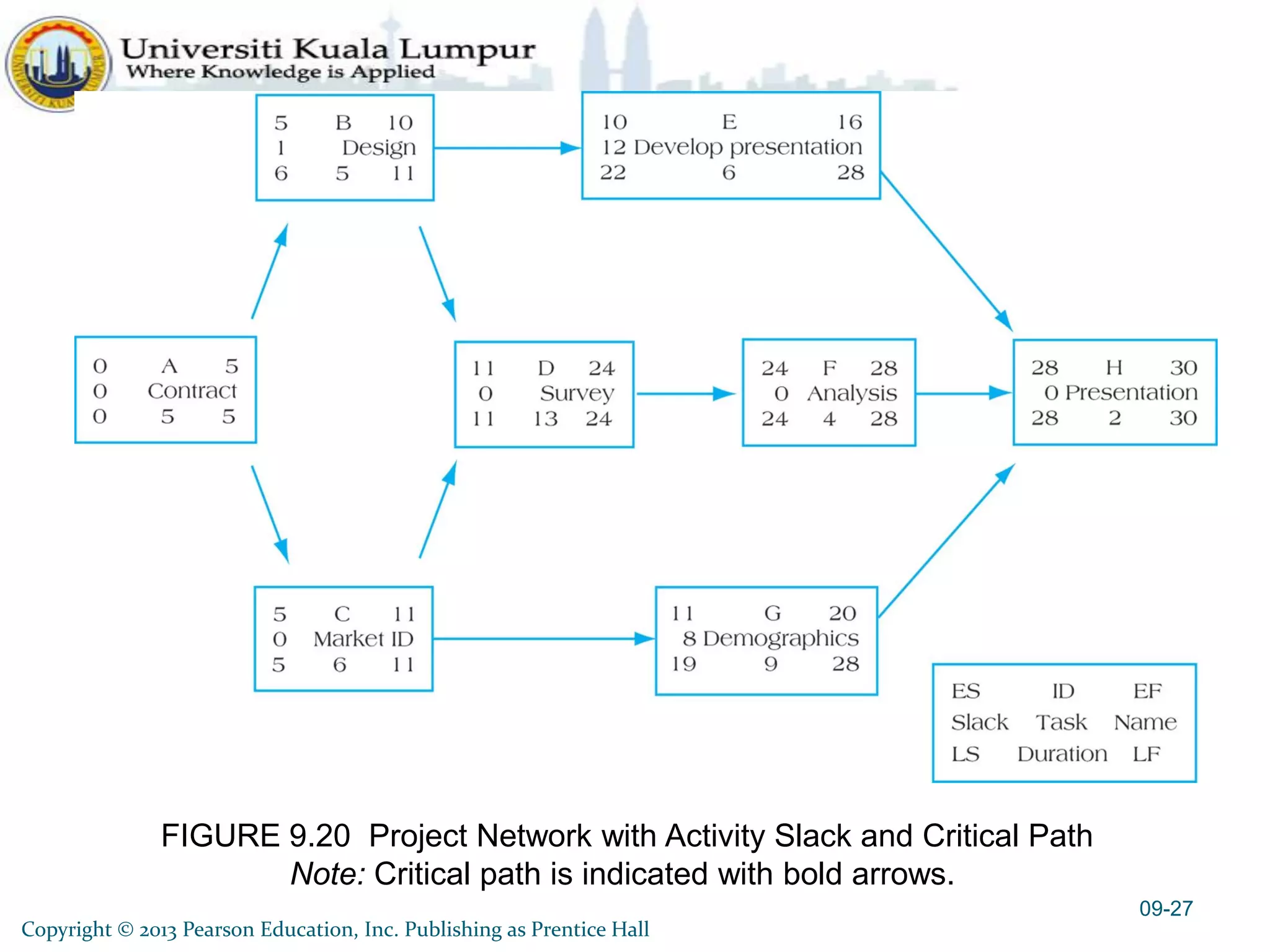
FIGURE 9.20 Project Network with Activity Slack and Critical Path
Note: Critical path is indicated with bold arrows.
09-27
Copyright © 2013 Pearson Education, Inc. Publishing as Prentice Hall
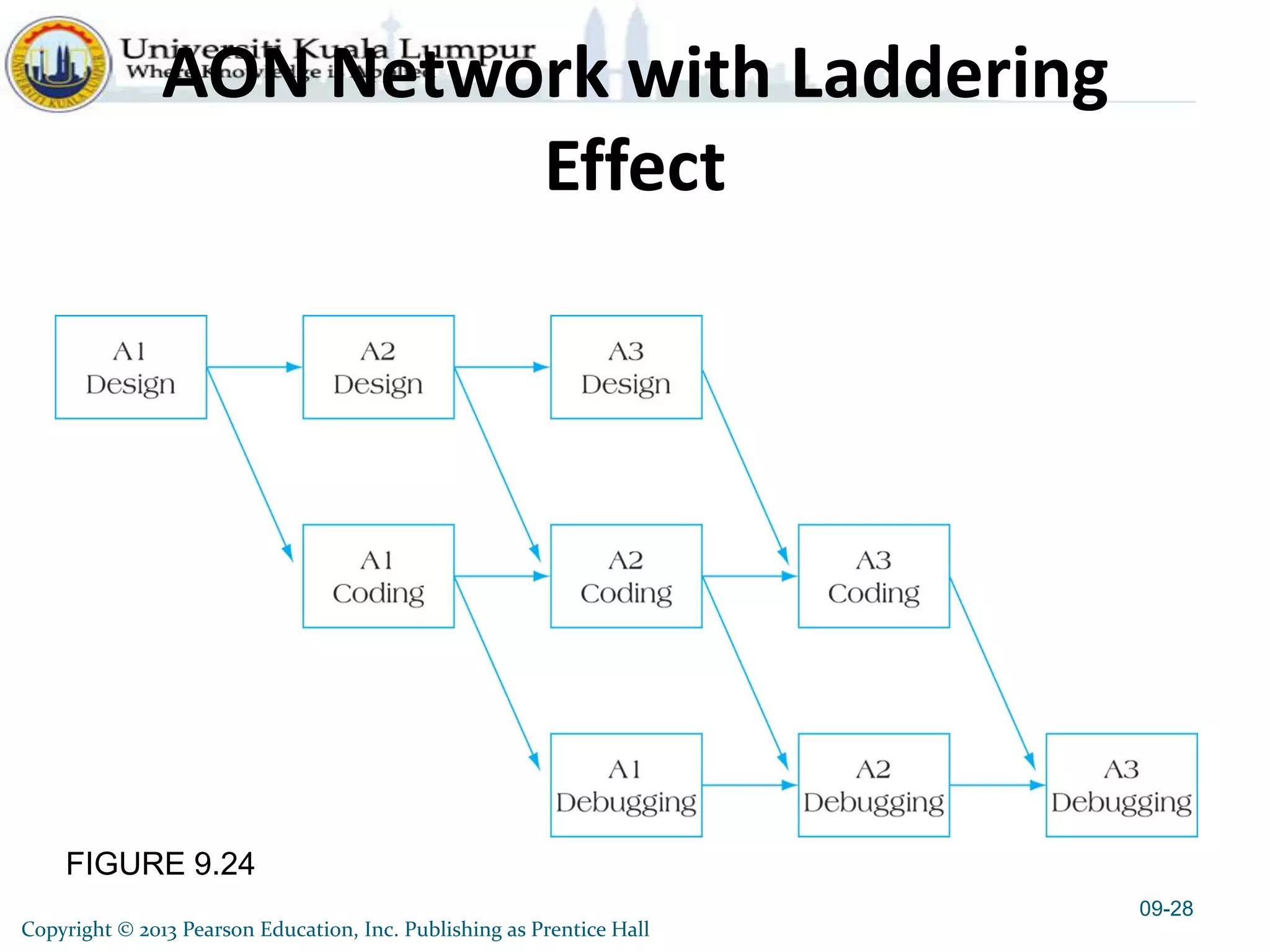
FIGURE 9.24
AON Network with Laddering
Effect
09-28
Copyright © 2013 Pearson Education, Inc. Publishing as Prentice Hall
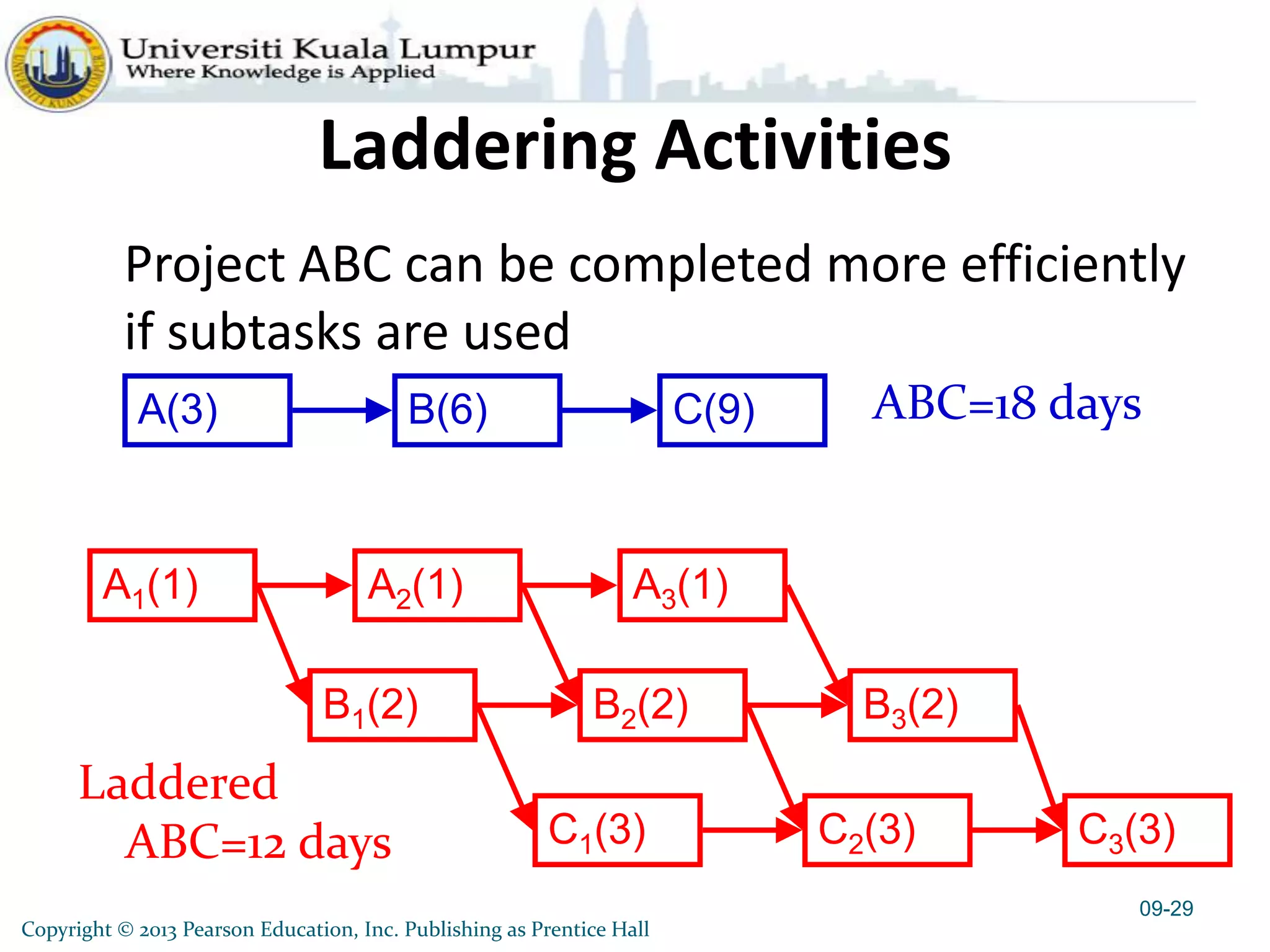
Laddering Activities
Project ABC can be completed more efficiently
if subtasks are used
09-29
A(3) B(6) C(9) ABC=18 days
Laddered
ABC=12 days
A1(1) A2(1) A3(1)
B1(2) B2(2) B3(2)
C1(3) C2(3) C3(3)
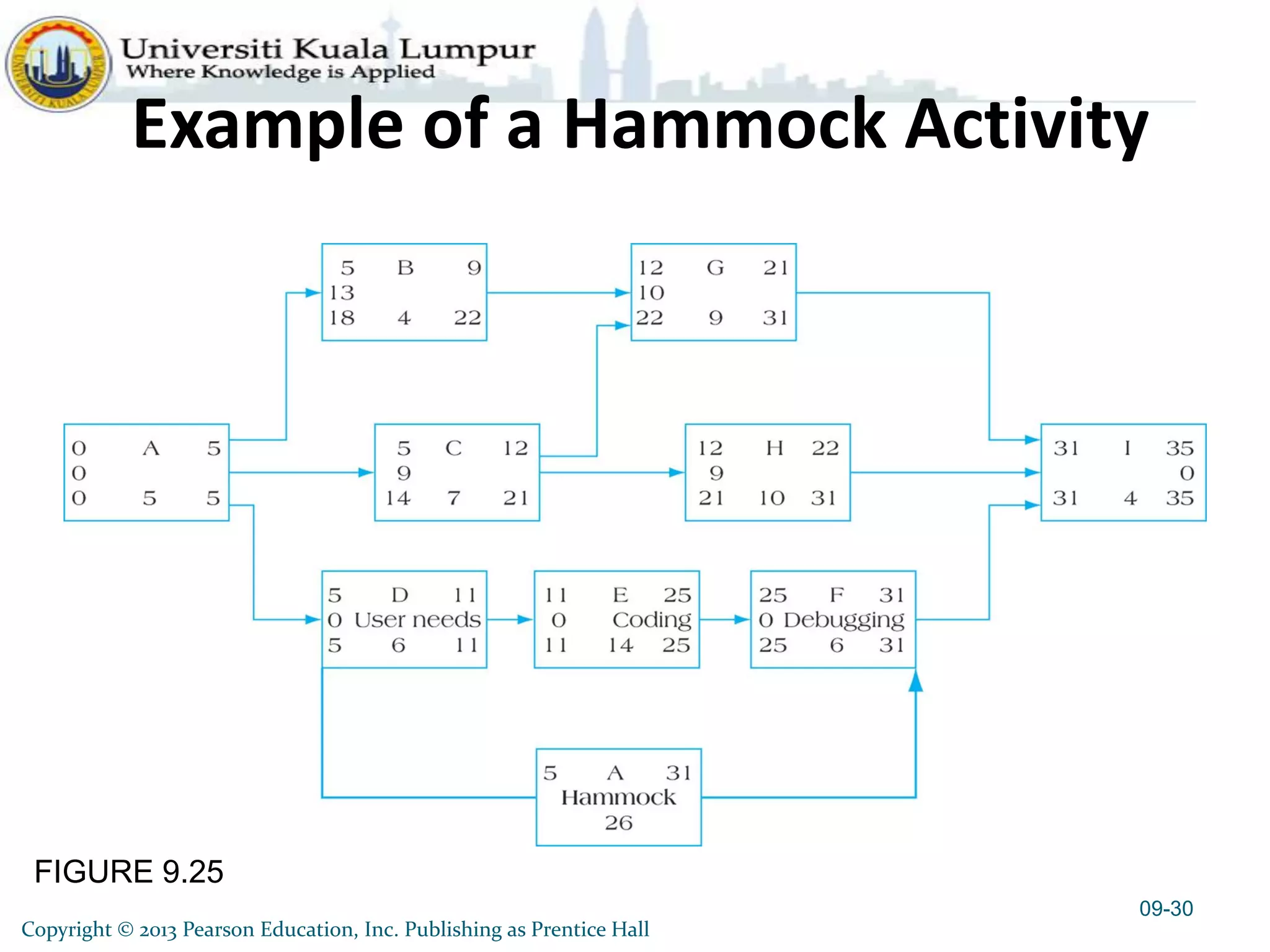
FIGURE 9.25
Example of a Hammock Activity
09-30
Copyright © 2013 Pearson Education, Inc. Publishing as Prentice Hall
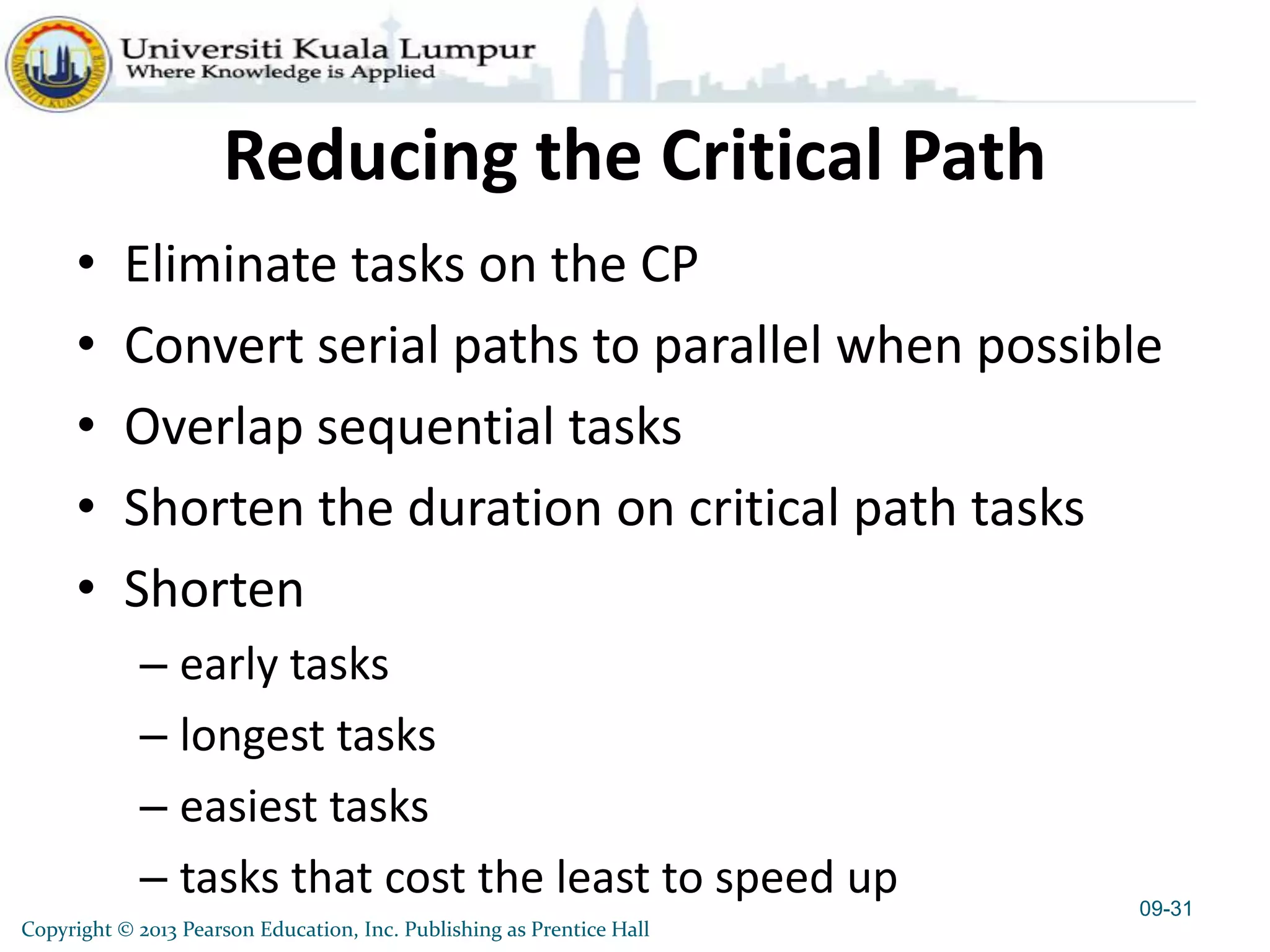
Reducing the Critical Path
• Eliminate tasks on the CP
• Convert serial paths to parallel when possible
• Overlap sequential tasks
• Shorten the duration on critical path tasks
• Shorten
– early tasks
– longest tasks
– easiest tasks
– tasks that cost the least to speed up 09-31
Copyright © 2013 Pearson Education, Inc. Publishing as Prentice Hall
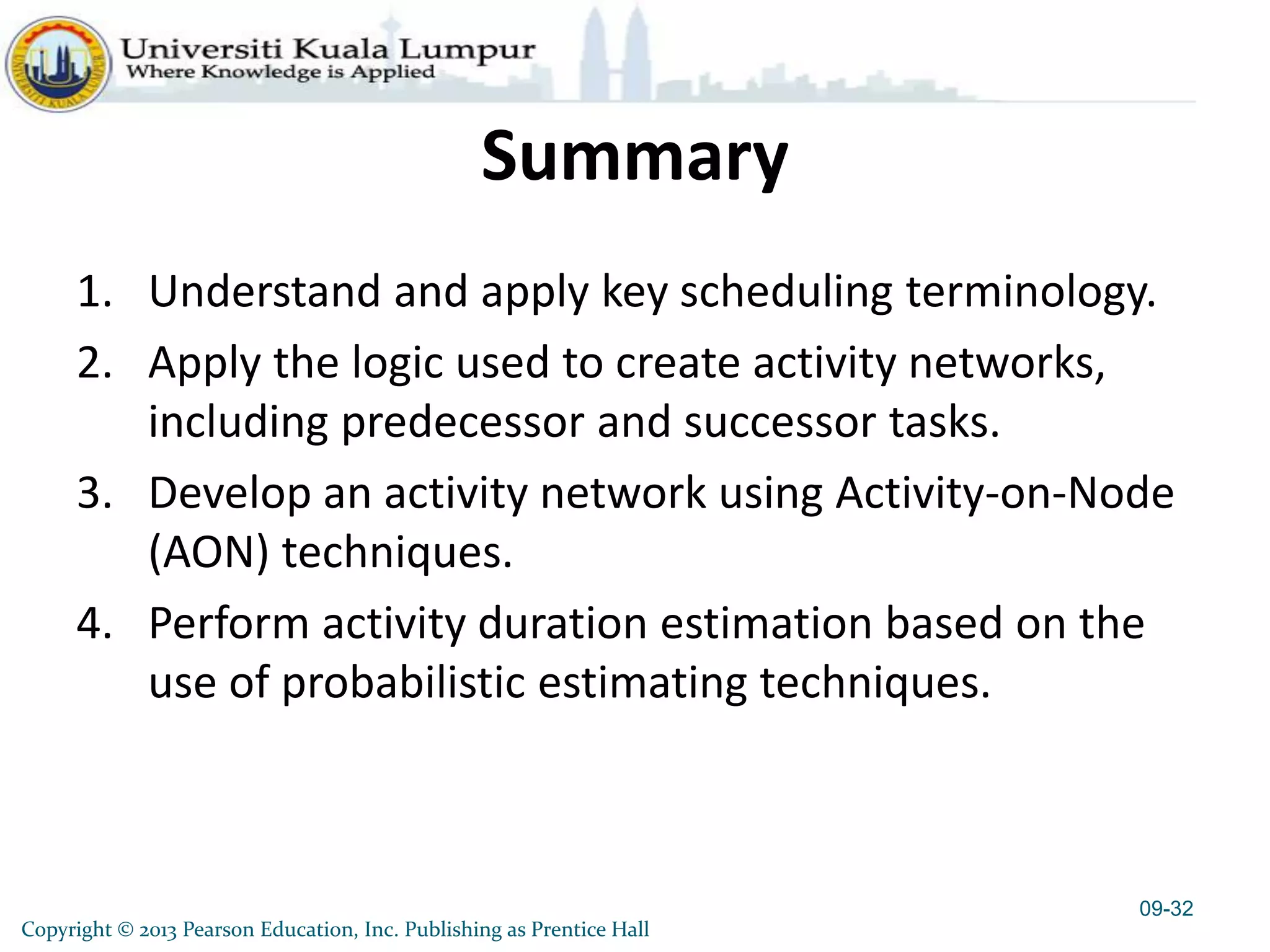
Summary
1. Understand and apply key scheduling terminology.
2. Apply the logic used to create activity networks,
including predecessor and successor tasks.
3. Develop an activity network using Activity-on-Node
(AON) techniques.
4. Perform activity duration estimation based on the
use of probabilistic estimating techniques.
09-32
Copyright © 2013 Pearson Education, Inc. Publishing as Prentice Hall
Summary
5. Construct the critical path for a project schedule
network using forward and backward passes.
6. Identify activity float and the manner in which it is
determined.
7. Calculate the probability of a project finishing on
time under PERT estimates.
8. Understand the steps that can be employed to
reduce the critical path.
09-33
Copyright © 2013 Pearson Education, Inc. Publishing as Prentice Hall
09-34

Project Management CH9 Project Scheduling

  • 1.
    Chapter 9 Project Scheduling:Networks, Duration Estimation, and Critical Path 09-01
  • 2.
    Copyright © 2013Pearson Education, Inc. Publishing as Prentice Hall Chapter 9 Learning Objectives After completing this chapter, students will be able to:  Understand and apply key scheduling terminology.  Apply the logic used to create activity networks, including predecessor and successor tasks.  Develop an activity network using Activity-on-Node (AON) techniques.  Perform activity duration estimation based on the use of probabilistic estimating techniques. 09-02
  • 3.
    Copyright © 2013Pearson Education, Inc. Publishing as Prentice Hall Chapter 9 Learning Objectives After completing this chapter, students will be able to:  Construct the critical path for a project schedule network using forward and backward passes.  Identify activity float and the manner in which it is determined.  Calculate the probability of a project finishing on time under PERT estimates.  Understand the steps that can be employed to reduce the critical path. 09-03
  • 4.
    Copyright © 2013Pearson Education, Inc. Publishing as Prentice Hall Project Scheduling  Project scheduling requires us to follow some carefully laid-out steps, in order, for the schedule to take shape.  Project planning, as it relates to the scheduling process, has been defined by the PMBoK as: The identification of the project objectives and the ordered activity necessary to complete the project including the identification of resource types and quantities required to carry out each activity or task. 09-04
  • 5.
    Copyright © 2013Pearson Education, Inc. Publishing as Prentice Hall Project Scheduling Terms • Successors • Predecessors • Network diagram • Serial activities • Concurrent activities 09-05 ED C B A F
  • 6.
    Copyright © 2013Pearson Education, Inc. Publishing as Prentice Hall Project Scheduling Terms 09-06 ED C B A F • Merge activities • Burst activities • Node • Path • Critical Path
  • 7.
    FIGURE 9.2 AlternativeActivity Networks for Term Paper Assignment Network Diagrams 09-07 Copyright © 2013 Pearson Education, Inc. Publishing as Prentice Hall
  • 8.
    Copyright © 2013Pearson Education, Inc. Publishing as Prentice Hall AOA Versus AON The same mini-project is shown with activities on arc… 09-08 C ED B F E C D B F …and activities on node.
  • 9.
    Copyright © 2013Pearson Education, Inc. Publishing as Prentice Hall Node Labels 09-9 Early Start Activity Float Activity Descriptor Late Start ID Number Activity Duration Late Finish Early Finish
  • 10.
    FIGURE 9.4 Activity NodeLabels Using MS Project 2010 09-10 Copyright © 2013 Pearson Education, Inc. Publishing as Prentice Hall
  • 11.
    FIGURE 9.5 Serial Activities 09-11 Serialactivities are those that flow from one to the next, in sequence. Copyright © 2013 Pearson Education, Inc. Publishing as Prentice Hall
  • 12.
    FIGURE 9.6 Activities Linkedin Parallel (Concurrent) 09-12 Copyright © 2013 Pearson Education, Inc. Publishing as Prentice Hall When the nature of the work allows for more than one activity to be accomplished at the same time, these activities are called concurrent and parallel project paths are constructed through the network.
  • 13.
    FIGURE 9.7 Merge Activity 09-13 Copyright© 2013 Pearson Education, Inc. Publishing as Prentice Hall
  • 14.
    FIGURE 9.8 Burst Activity 09-14 Copyright© 2013 Pearson Education, Inc. Publishing as Prentice Hall
  • 15.
    FIGURE 9.10 Complete ActivityNetwork 09-15 Copyright © 2013 Pearson Education, Inc. Publishing as Prentice Hall
  • 16.
    FIGURE 9.11 Developing theActivity Network Using MS Project 2010 09-16 Copyright © 2013 Pearson Education, Inc. Publishing as Prentice Hall
  • 17.
    Duration Estimation Methods •Past experience • Expert opinion • Mathematical derivation – Beta distribution – Most likely (m) – Most pessimistic (b) – Most optimistic (a) 4 = TE 6 a m b Activity Duration 09-17 2 2 = 6 b a Activity Variance s Copyright © 2013 Pearson Education, Inc. Publishing as Prentice Hall
  • 18.
    FIGURE 9.14 Symmetrical(Normal) Distribution for Activity Duration Estimation Copyright © 2013 Pearson Education, Inc. Publishing as Prentice Hall 09-18
  • 19.
    FIGURE 9.15 Asymmetrical(Beta) Distribution for Activity Duration Estimation Copyright © 2013 Pearson Education, Inc. Publishing as Prentice Hall 09-19
  • 20.
    Activity Duration andVariance 09-20 Name: Project Delta Durations are listed in weeks Activity Description Optimistic Likely Pessimistic A Contract signing 3 4 11 B Questionnaire design 2 5 8 C Target market ID 3 6 9 D Survey sample 8 12 20 E Develop presentation 3 5 12 F Analyze results 2 4 7 G Demographic analysis 6 9 14 H Presentation to client 1 2 4 Copyright © 2013 Pearson Education, Inc. Publishing as Prentice Hall Table 9.2
  • 21.
    Copyright © 2013Pearson Education, Inc. Publishing as Prentice Hall Constructing the Critical Path • Forward pass – an additive move through the network from start to finish • Backward pass – a subtractive move through the network from finish to start • Critical path – the longest path from end to end which determines the shortest project length 09-21
  • 22.
    Copyright © 2013Pearson Education, Inc. Publishing as Prentice Hall Rules for Forward/Backward Pass Forward Pass Rules (ES & EF) – ES + Duration = EF – EF of predecessor = ES of successor – Largest preceding EF at a merge point becomes EF for successor Backward Pass Rules (LS & LF) – LF – Duration = LS – LS of successor = LF of predecessor – Smallest succeeding LS at a burst point becomes LF for predecessor 09-22
  • 23.
    Project Delta Information 09-23 ProjectDelta Activity Description Predecessors Estimated Duration A Contract signing None 5 B Questionnaire design A 5 C Target market ID A 6 D Survey sample B, C 13 E Develop presentation B 6 F Analyze results D 4 G Demographic analysis C 9 Copyright © 2013 Pearson Education, Inc. Publishing as Prentice Hall Table 9.4
  • 24.
    FIGURE 9.16 PartialProject Activity Network with Task Durations Copyright © 2013 Pearson Education, Inc. Publishing as Prentice Hall 09-24
  • 25.
    FIGURE 9.18 ActivityNetwork with Forward Pass 09-25 Copyright © 2013 Pearson Education, Inc. Publishing as Prentice Hall
  • 26.
    FIGURE 9.19 ActivityNetwork with Backward Pass 09-26 Copyright © 2013 Pearson Education, Inc. Publishing as Prentice Hall
  • 27.
    FIGURE 9.20 ProjectNetwork with Activity Slack and Critical Path Note: Critical path is indicated with bold arrows. 09-27 Copyright © 2013 Pearson Education, Inc. Publishing as Prentice Hall
  • 28.
    FIGURE 9.24 AON Networkwith Laddering Effect 09-28 Copyright © 2013 Pearson Education, Inc. Publishing as Prentice Hall
  • 29.
    Copyright © 2013Pearson Education, Inc. Publishing as Prentice Hall Laddering Activities Project ABC can be completed more efficiently if subtasks are used 09-29 A(3) B(6) C(9) ABC=18 days Laddered ABC=12 days A1(1) A2(1) A3(1) B1(2) B2(2) B3(2) C1(3) C2(3) C3(3)
  • 30.
    FIGURE 9.25 Example ofa Hammock Activity 09-30 Copyright © 2013 Pearson Education, Inc. Publishing as Prentice Hall
  • 31.
    Copyright © 2013Pearson Education, Inc. Publishing as Prentice Hall Reducing the Critical Path • Eliminate tasks on the CP • Convert serial paths to parallel when possible • Overlap sequential tasks • Shorten the duration on critical path tasks • Shorten – early tasks – longest tasks – easiest tasks – tasks that cost the least to speed up 09-31
  • 32.
    Copyright © 2013Pearson Education, Inc. Publishing as Prentice Hall Summary 1. Understand and apply key scheduling terminology. 2. Apply the logic used to create activity networks, including predecessor and successor tasks. 3. Develop an activity network using Activity-on-Node (AON) techniques. 4. Perform activity duration estimation based on the use of probabilistic estimating techniques. 09-32
  • 33.
    Copyright © 2013Pearson Education, Inc. Publishing as Prentice Hall Summary 5. Construct the critical path for a project schedule network using forward and backward passes. 6. Identify activity float and the manner in which it is determined. 7. Calculate the probability of a project finishing on time under PERT estimates. 8. Understand the steps that can be employed to reduce the critical path. 09-33
  • 34.
    Copyright © 2013Pearson Education, Inc. Publishing as Prentice Hall 09-34