




What is a Problem? 
A problem exists when 
a problem solver has a 
goal but does not 
know how this goal is 
to be reached.
Problem-solving is a mental process 
that involves 
discovering, analyzing and solving 
problems. 
The ultimate goal of problem-solving 
is to 
overcome obstacles and find a 
solution that 
best resolves the issue .
DEFINITION 
“Problem solving is a process of 
overcoming difficulties that 
appear to interfere with the 
attainment of a goal. It is a 
process of making adjustment in 
spite of interferences” 
Skinner
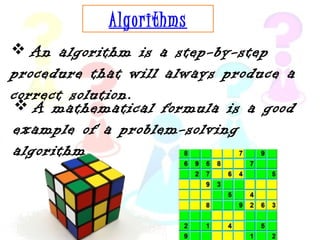
Algorithms 
 An algorithm is a step-by-step 
procedure that will always produce a 
correct solution. 
 A mathematical formula is a good 
example of a problem-solving 
algorithm.
Heuristics 
Heuristics are general 
strategies used to make 
quick, short-cut solutions to 
problems that sometimes 
lead to solutions but 
sometimes lead to errors.
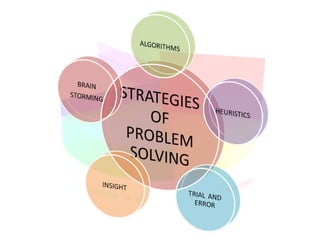
Trial-and-Error 
A trial-and-error approach 
to problem-solving involves 
trying a number of different 
solutions and ruling out 
those that do not work.
Insight 
In some cases, the 
solution to a problem can 
appear as a sudden 
insight.
BRAINSTORMING 
Brainstorming is a 
problem-solving strategy 
in which you come up with 
as many possible solutions 
as you can, usually within 
a certain period of time.
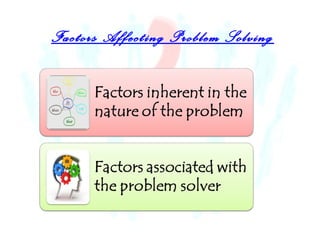
Factors Affecting Problem Solving
Factors inherent in the nature of the 
problem 
Simplicity & complexity of the problem. 
 size or shape of the problem. 
Appropriate or inappropriate definition of the 
problem. 
Nature of the definiteness of the problem. 
Similarity or analogy with the problems 
experienced or solved in 
the past. 
Help available from present circumstances & 
resources at hand.
Factors associated with 
the problem solver 
Level of previous learning or training. 
Interest and motivational level. 
Analysis of the problem. 
Mental set. 
Functional fixedness. 
Mental and physical states. 
Time spent on solving the problem.
Role of Teacher 
Help the pupils to locate and select the 
problem to be solved 
Create moderate motivation in learner 
Encourage divergent thinking 
Present the problem as a whole 
Guide the pupils 
Give practice
problem solving
problem solving

problem solving

  • 4.
    What is aProblem? A problem exists when a problem solver has a goal but does not know how this goal is to be reached.
  • 5.
    Problem-solving is amental process that involves discovering, analyzing and solving problems. The ultimate goal of problem-solving is to overcome obstacles and find a solution that best resolves the issue .
  • 6.
    DEFINITION “Problem solvingis a process of overcoming difficulties that appear to interfere with the attainment of a goal. It is a process of making adjustment in spite of interferences” Skinner
  • 9.
    Algorithms  Analgorithm is a step-by-step procedure that will always produce a correct solution.  A mathematical formula is a good example of a problem-solving algorithm.
  • 10.
    Heuristics Heuristics aregeneral strategies used to make quick, short-cut solutions to problems that sometimes lead to solutions but sometimes lead to errors.
  • 11.
    Trial-and-Error A trial-and-errorapproach to problem-solving involves trying a number of different solutions and ruling out those that do not work.
  • 12.
    Insight In somecases, the solution to a problem can appear as a sudden insight.
  • 13.
    BRAINSTORMING Brainstorming isa problem-solving strategy in which you come up with as many possible solutions as you can, usually within a certain period of time.
  • 14.
  • 15.
    Factors inherent inthe nature of the problem Simplicity & complexity of the problem.  size or shape of the problem. Appropriate or inappropriate definition of the problem. Nature of the definiteness of the problem. Similarity or analogy with the problems experienced or solved in the past. Help available from present circumstances & resources at hand.
  • 16.
    Factors associated with the problem solver Level of previous learning or training. Interest and motivational level. Analysis of the problem. Mental set. Functional fixedness. Mental and physical states. Time spent on solving the problem.
  • 17.
    Role of Teacher Help the pupils to locate and select the problem to be solved Create moderate motivation in learner Encourage divergent thinking Present the problem as a whole Guide the pupils Give practice