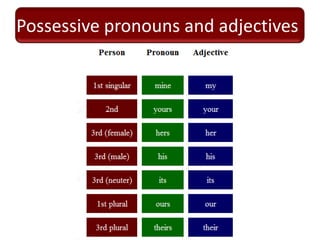
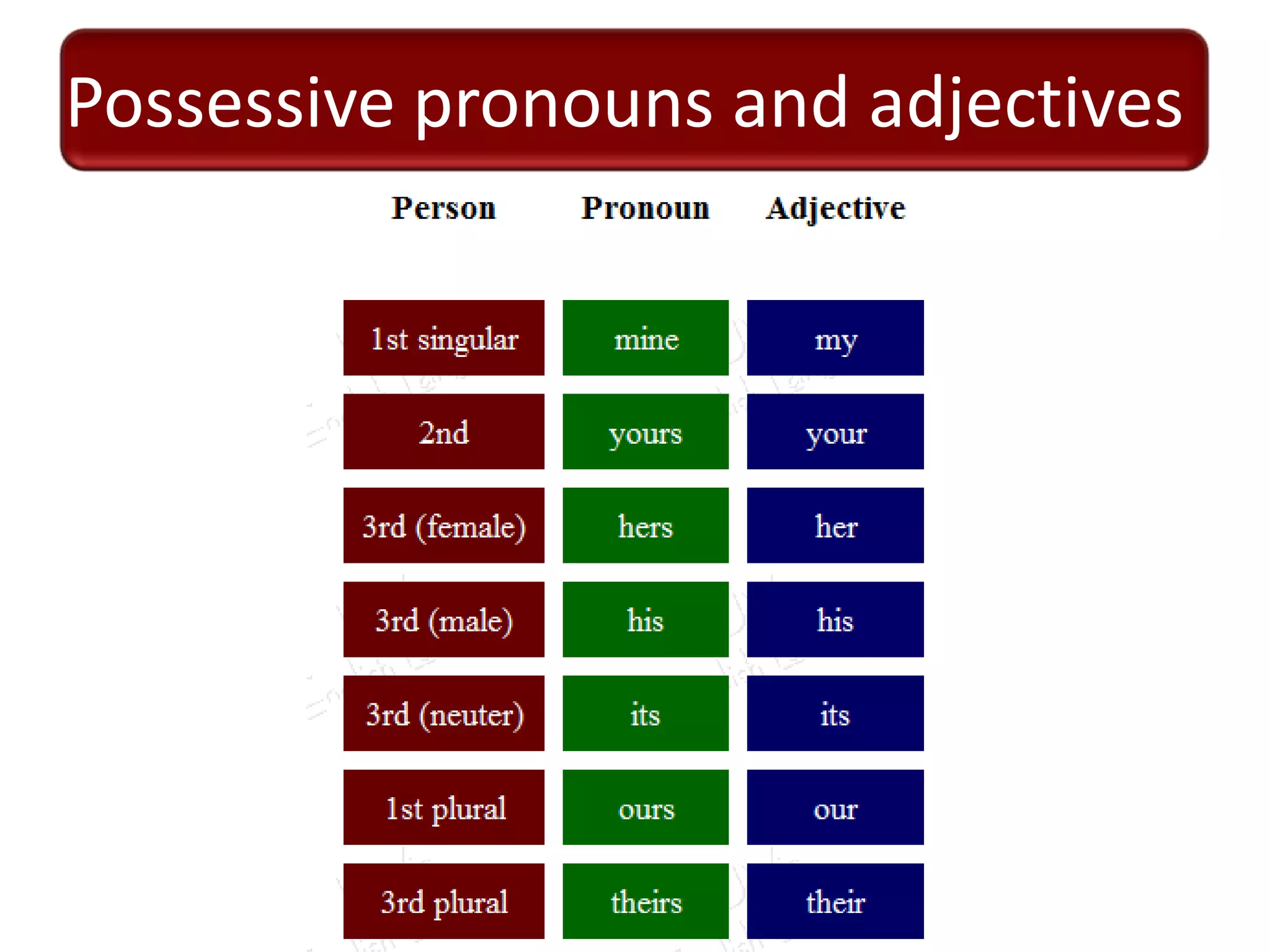
Possessive pronouns and adjectives
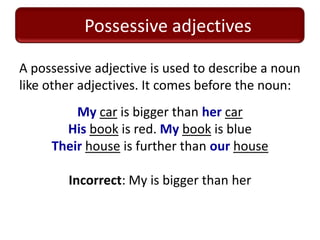
Possessive adjectives

A possessive adjective is used to describe a noun
like other adjectives. It comes before the noun:
         My car is bigger than her car
       His book is red. My book is blue
     Their house is further than our house

        Incorrect: My is bigger than her
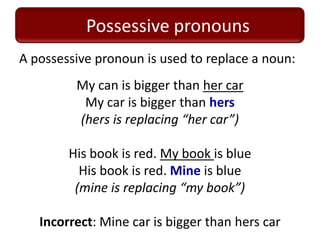
Possessive pronouns
A possessive pronoun is used to replace a noun:
         My can is bigger than her car
          My car is bigger than hers
         (hers is replacing “her car”)

        His book is red. My book is blue
          His book is red. Mine is blue
         (mine is replacing “my book”)

   Incorrect: Mine car is bigger than hers car
Reflexive pronouns

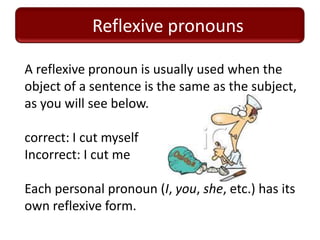
A reflexive pronoun is usually used when the
object of a sentence is the same as the subject,
as you will see below.

correct: I cut myself
Incorrect: I cut me

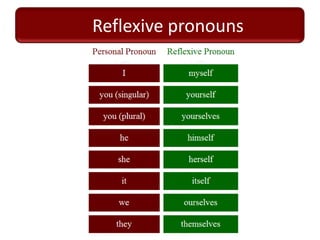
Each personal pronoun (I, you, she, etc.) has its
own reflexive form.
Reflexive pronouns
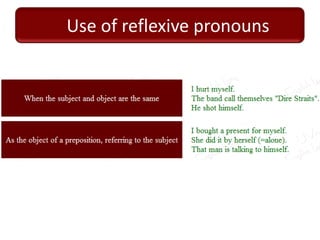
Use of reflexive pronouns

Possessive and reflexive pronouns

  • 1.
  • 2.
    Possessive adjectives A possessiveadjective is used to describe a noun like other adjectives. It comes before the noun: My car is bigger than her car His book is red. My book is blue Their house is further than our house Incorrect: My is bigger than her
  • 3.
    Possessive pronouns A possessivepronoun is used to replace a noun: My can is bigger than her car My car is bigger than hers (hers is replacing “her car”) His book is red. My book is blue His book is red. Mine is blue (mine is replacing “my book”) Incorrect: Mine car is bigger than hers car
  • 4.
    Reflexive pronouns A reflexivepronoun is usually used when the object of a sentence is the same as the subject, as you will see below. correct: I cut myself Incorrect: I cut me Each personal pronoun (I, you, she, etc.) has its own reflexive form.
  • 5.
  • 6.