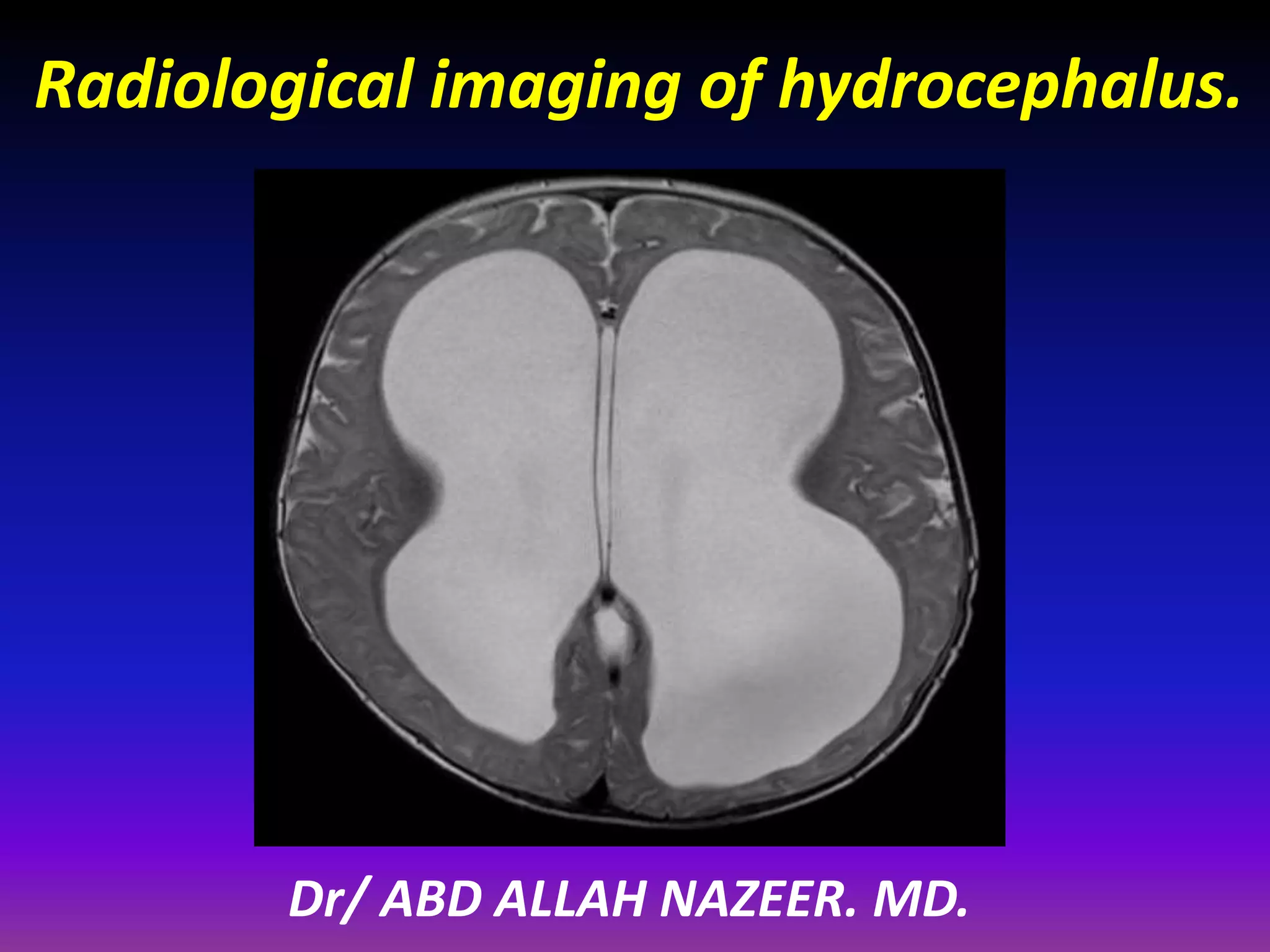
Radiological imaging of hydrocephalus. 
Dr/ ABD ALLAH NAZEER. MD.
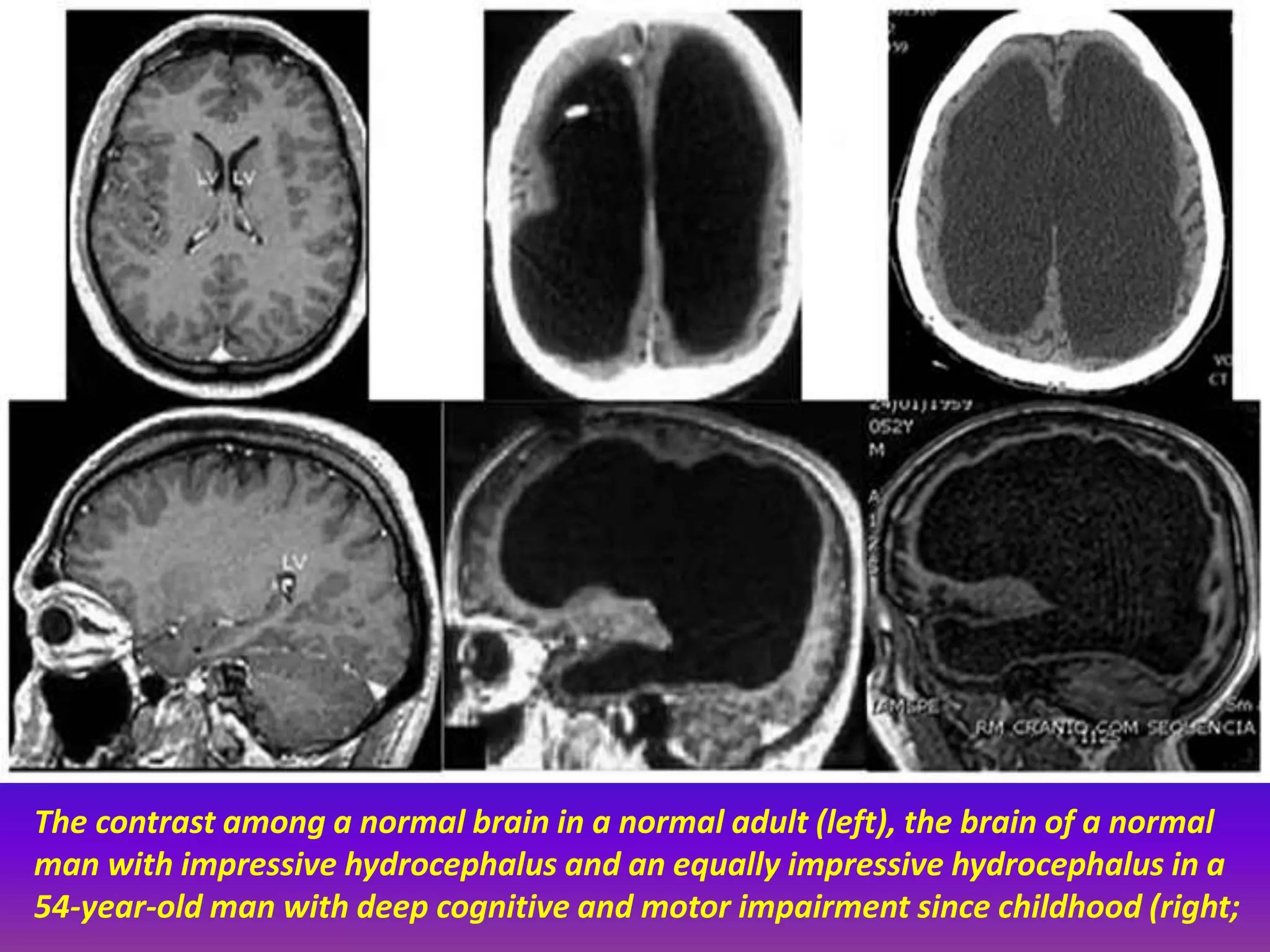
The contrast among a normal brain in a normal adult (left), the brain of a normal 
man with impressive hydrocephalus and an equally impressive hydrocephalus in a 
54-year-old man with deep cognitive and motor impairment since childhood (right;
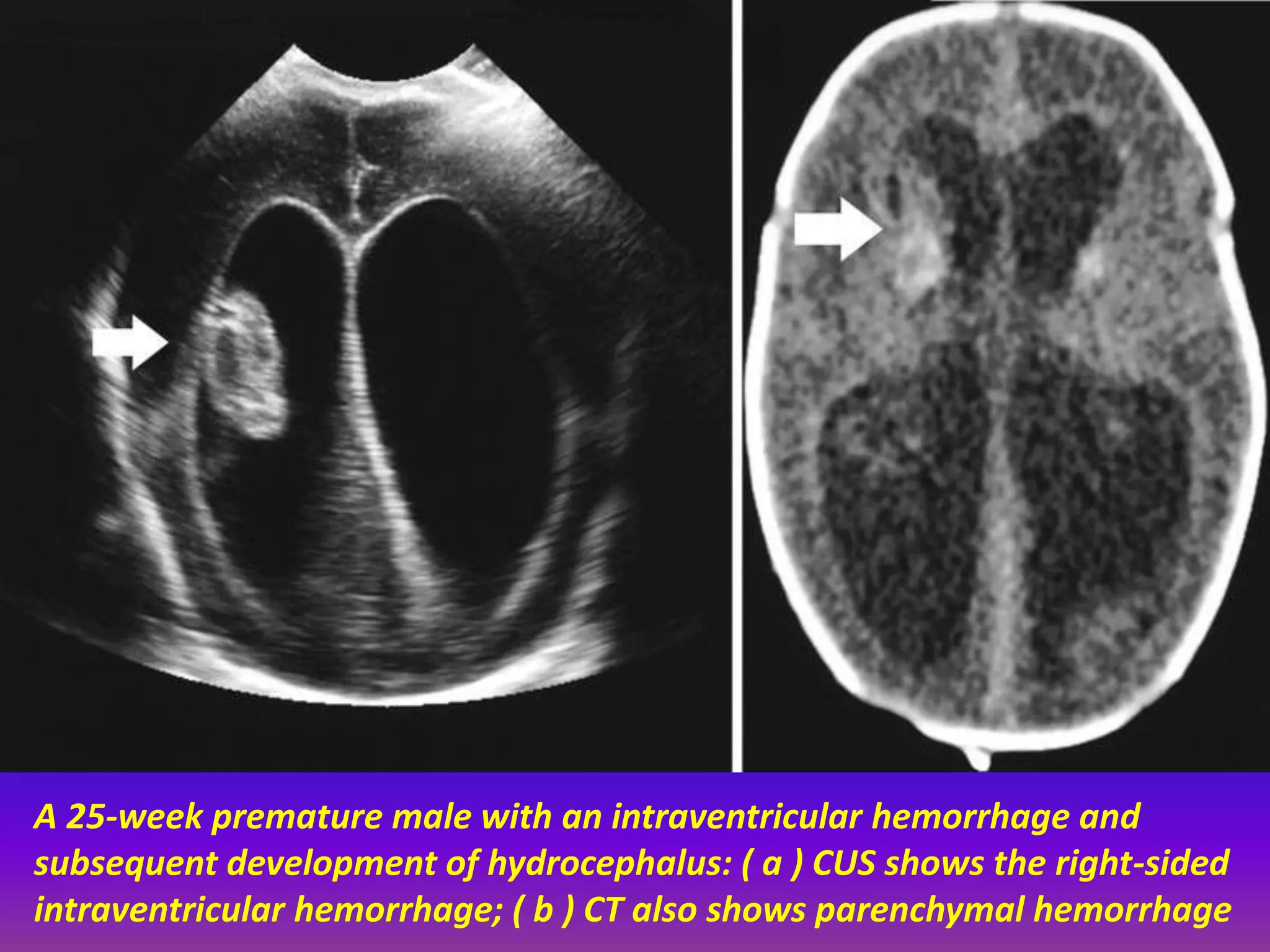
A 25-week premature male with an intraventricular hemorrhage and 
subsequent development of hydrocephalus: ( a ) CUS shows the right-sided 
intraventricular hemorrhage; ( b ) CT also shows parenchymal hemorrhage
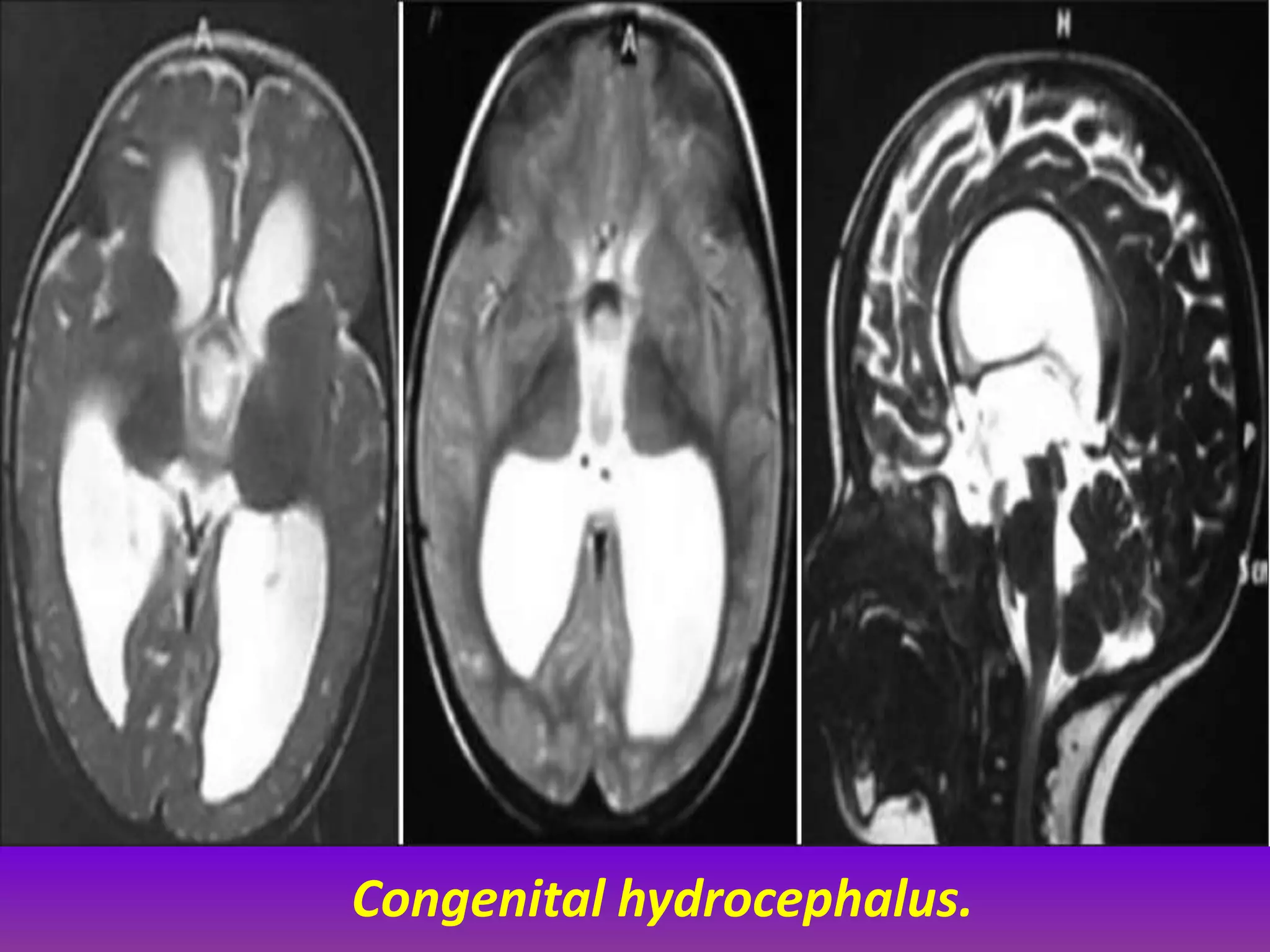
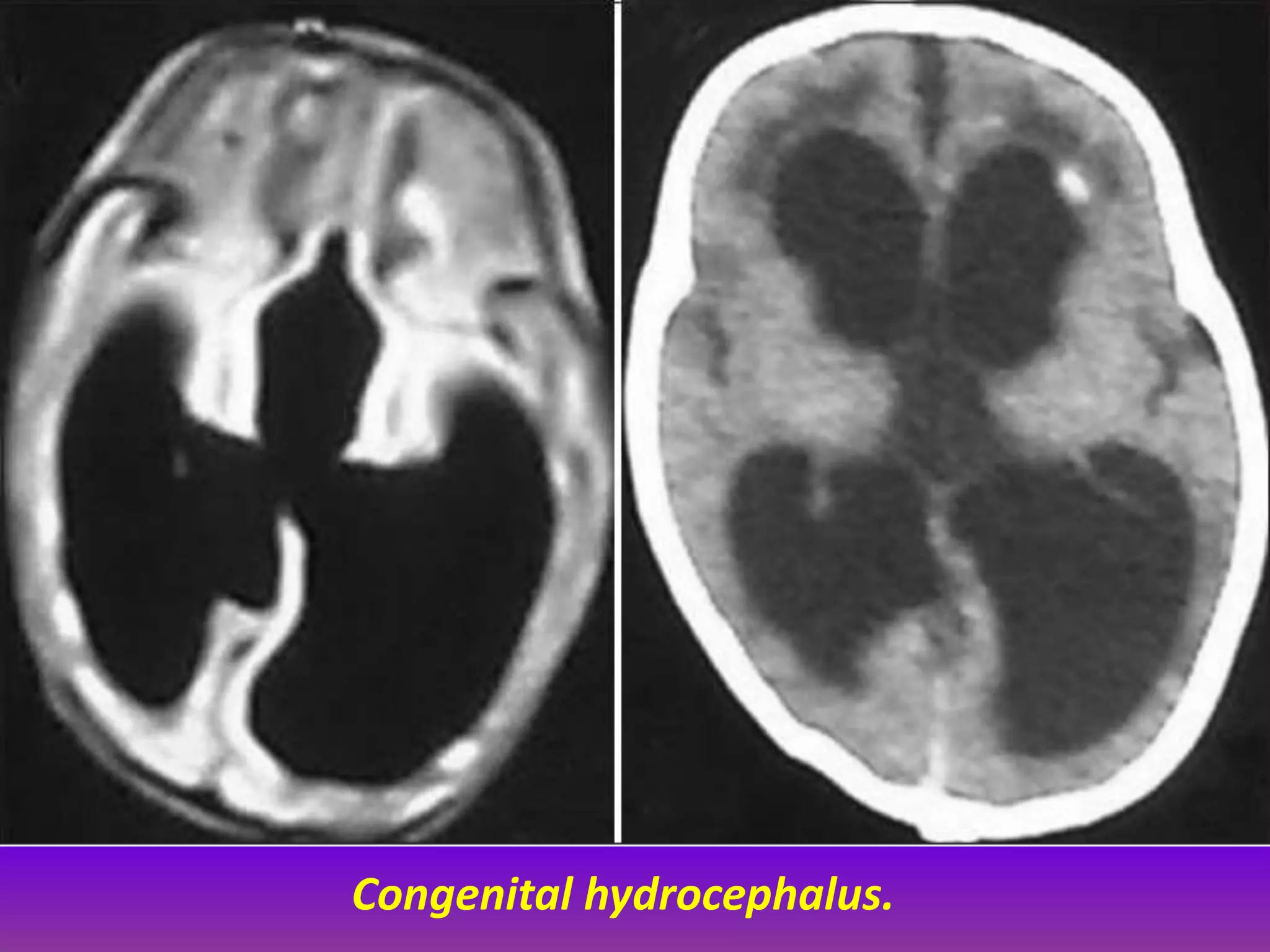
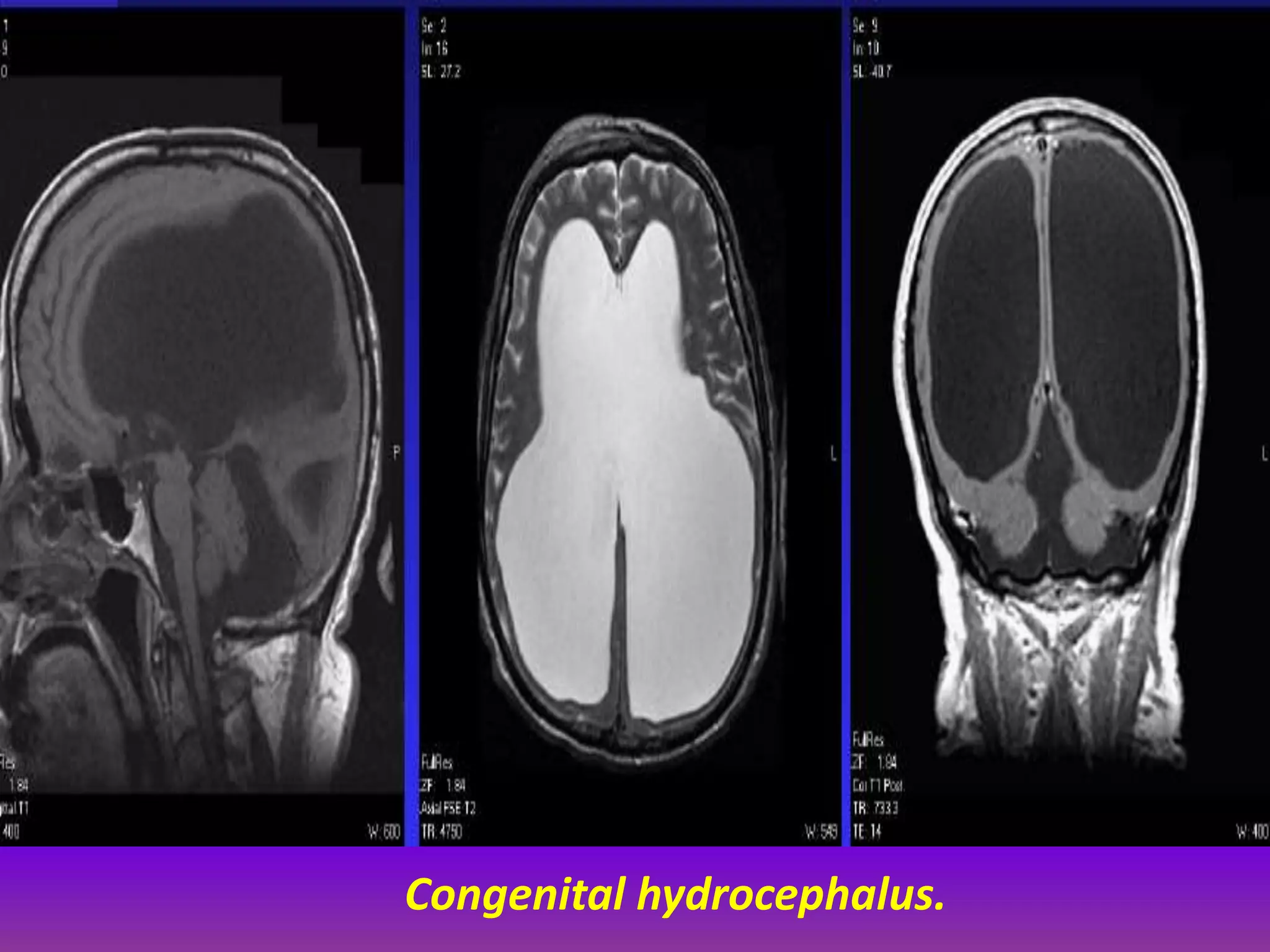
Congenital hydrocephalus.
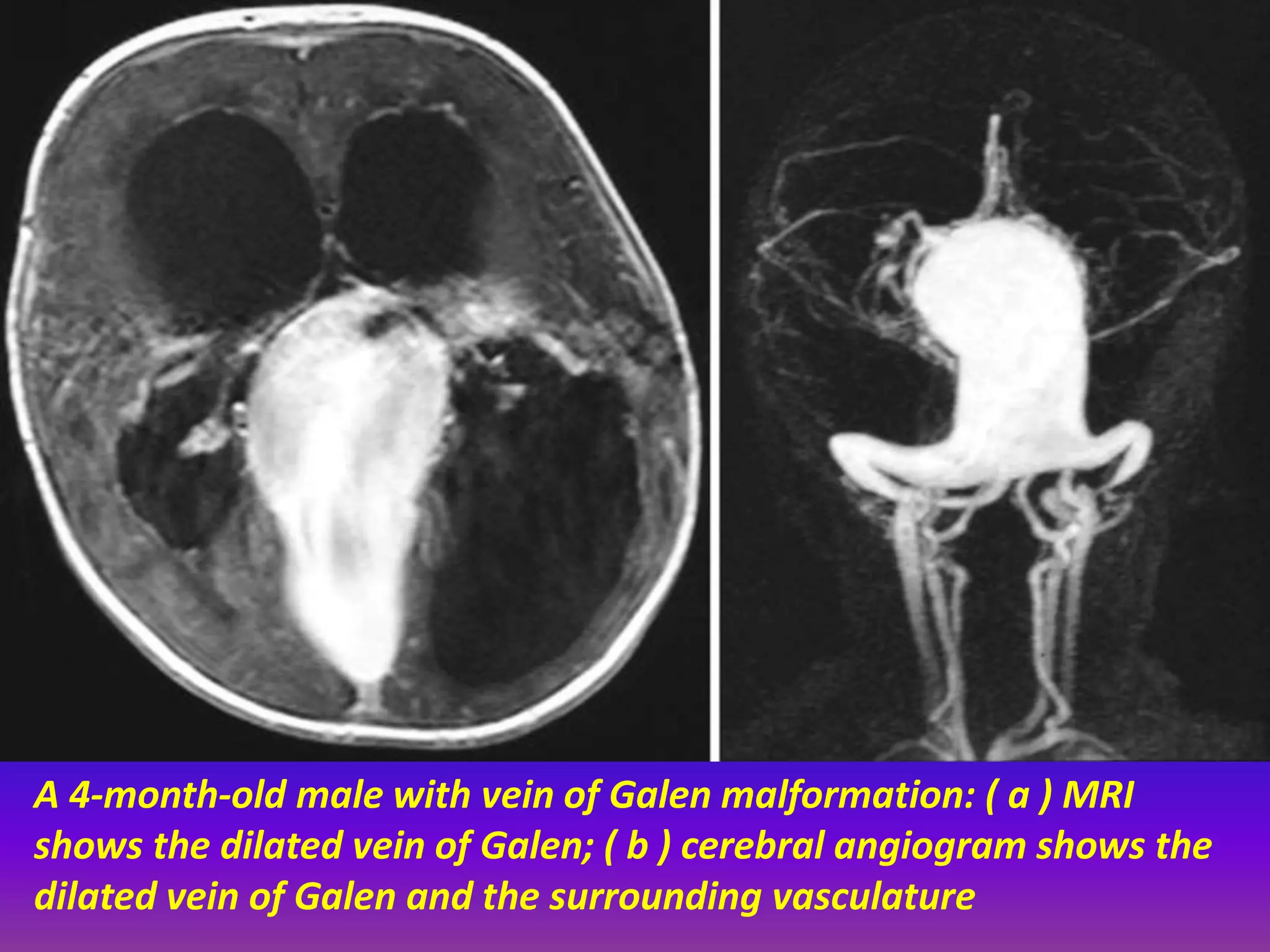
A 4-month-old male with vein of Galen malformation: ( a ) MRI 
shows the dilated vein of Galen; ( b ) cerebral angiogram shows the 
dilated vein of Galen and the surrounding vasculature
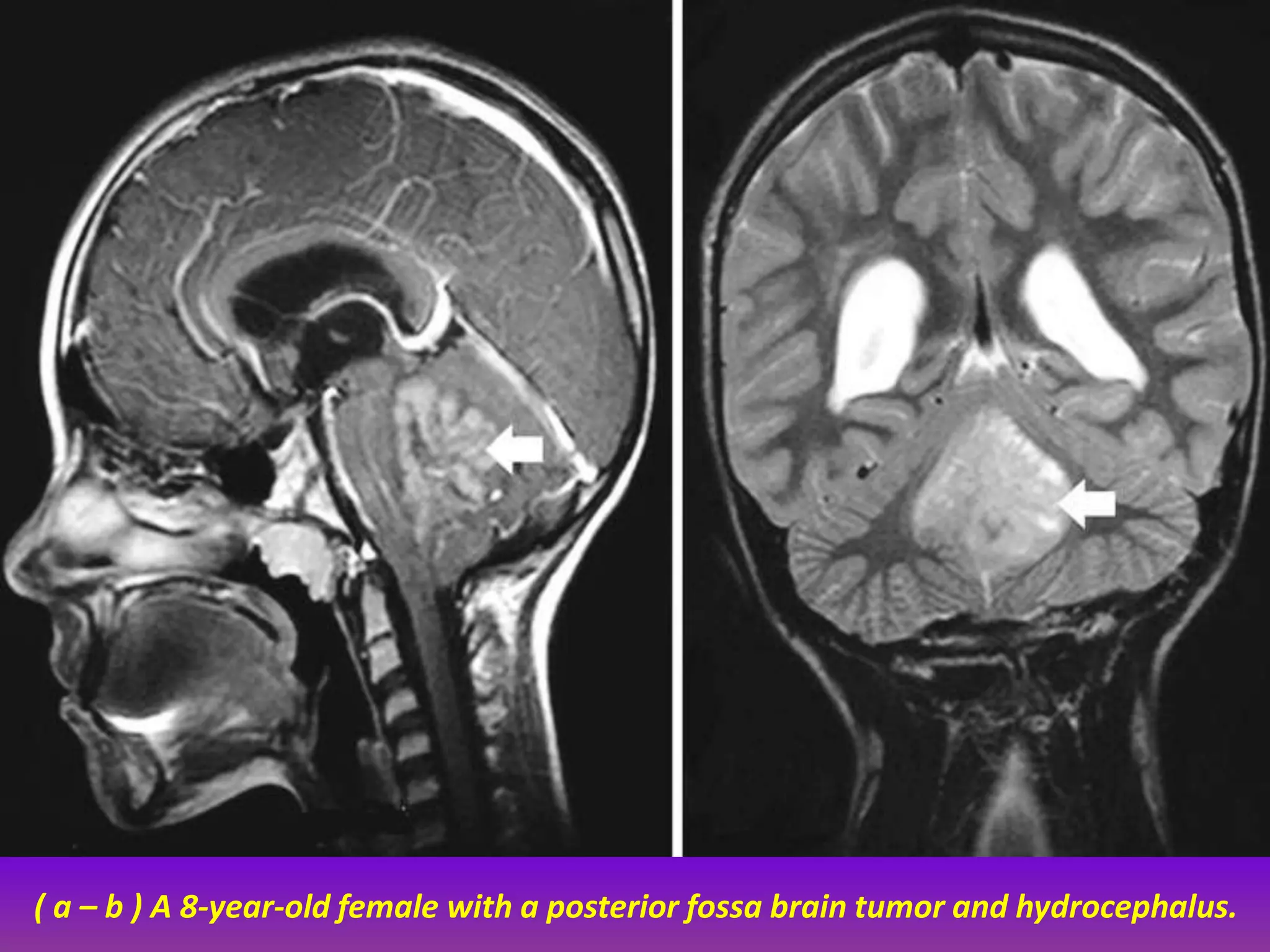
( a – b ) A 8-year-old female with a posterior fossa brain tumor and hydrocephalus.
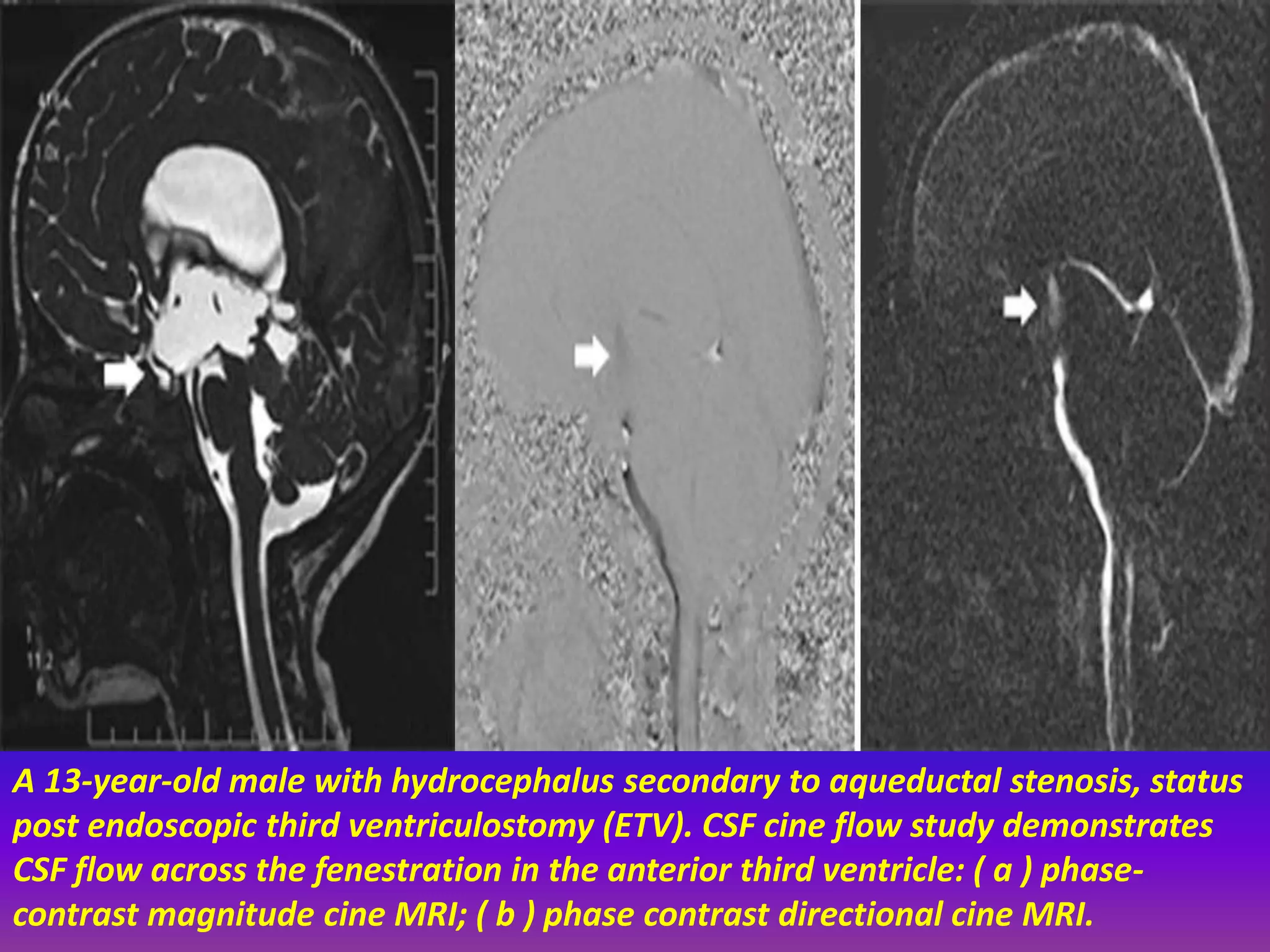
A 13-year-old male with hydrocephalus secondary to aqueductal stenosis, status 
post endoscopic third ventriculostomy (ETV). CSF cine flow study demonstrates 
CSF flow across the fenestration in the anterior third ventricle: ( a ) phase-contrast 
magnitude cine MRI; ( b ) phase contrast directional cine MRI.
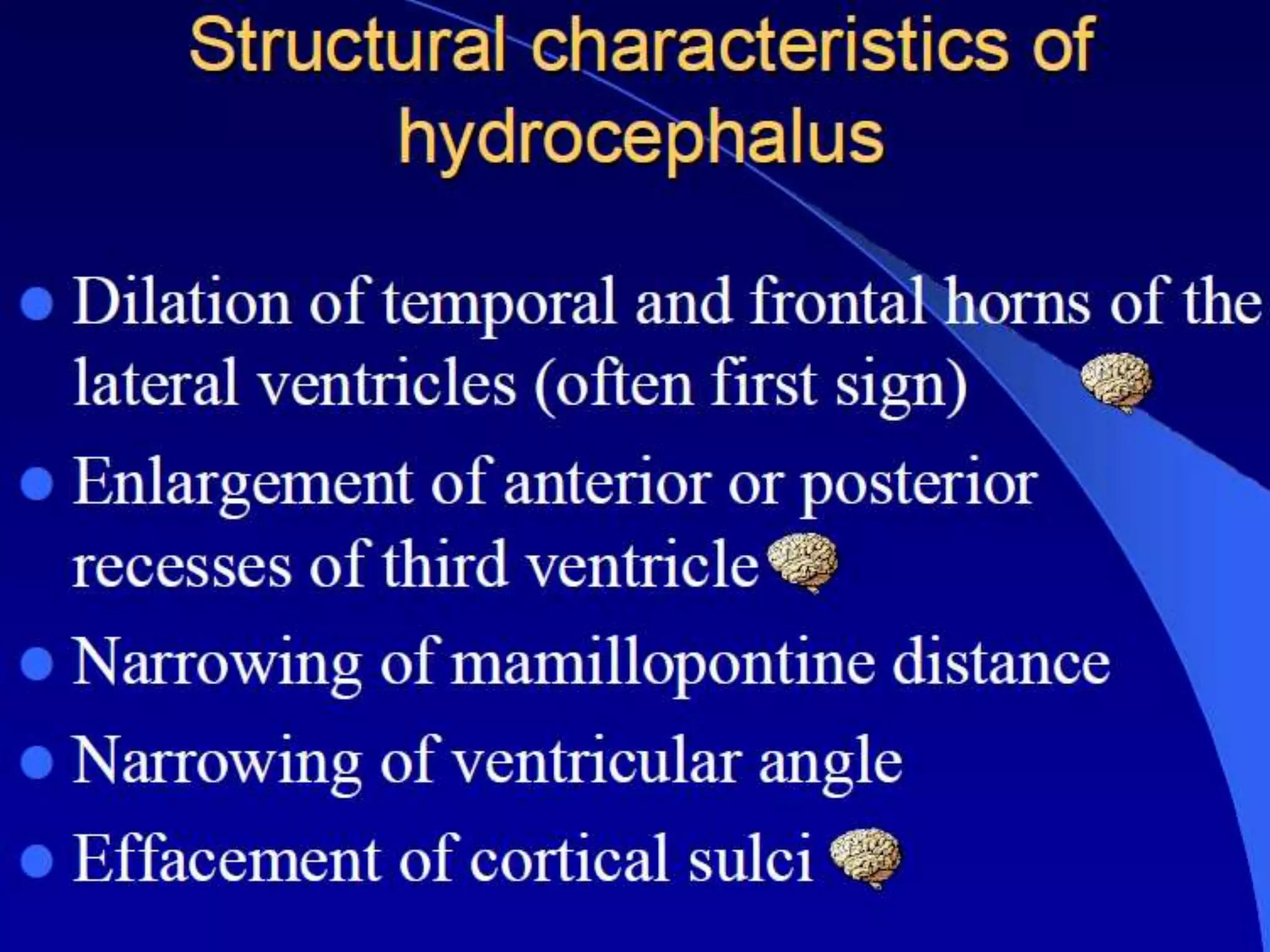
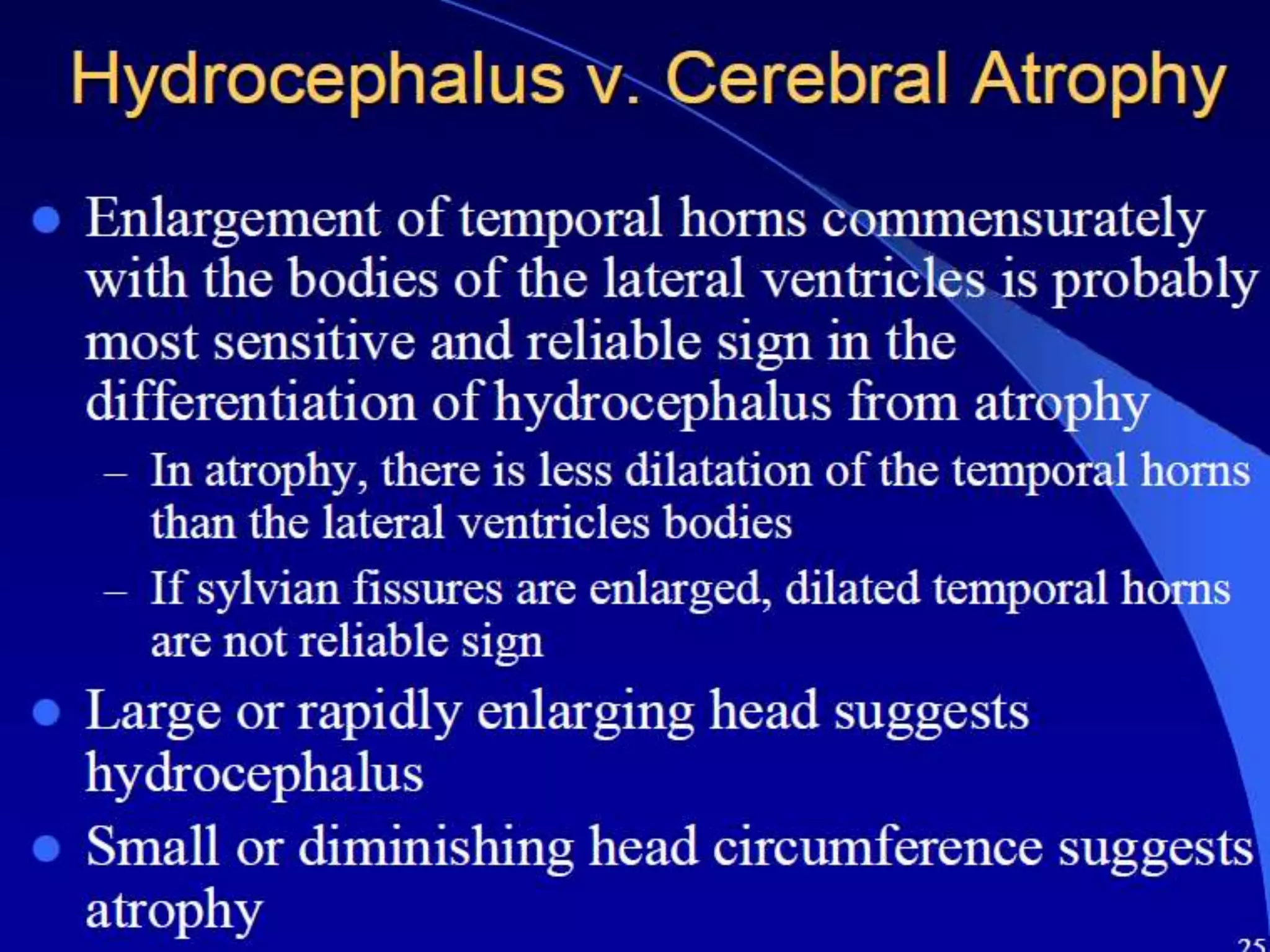
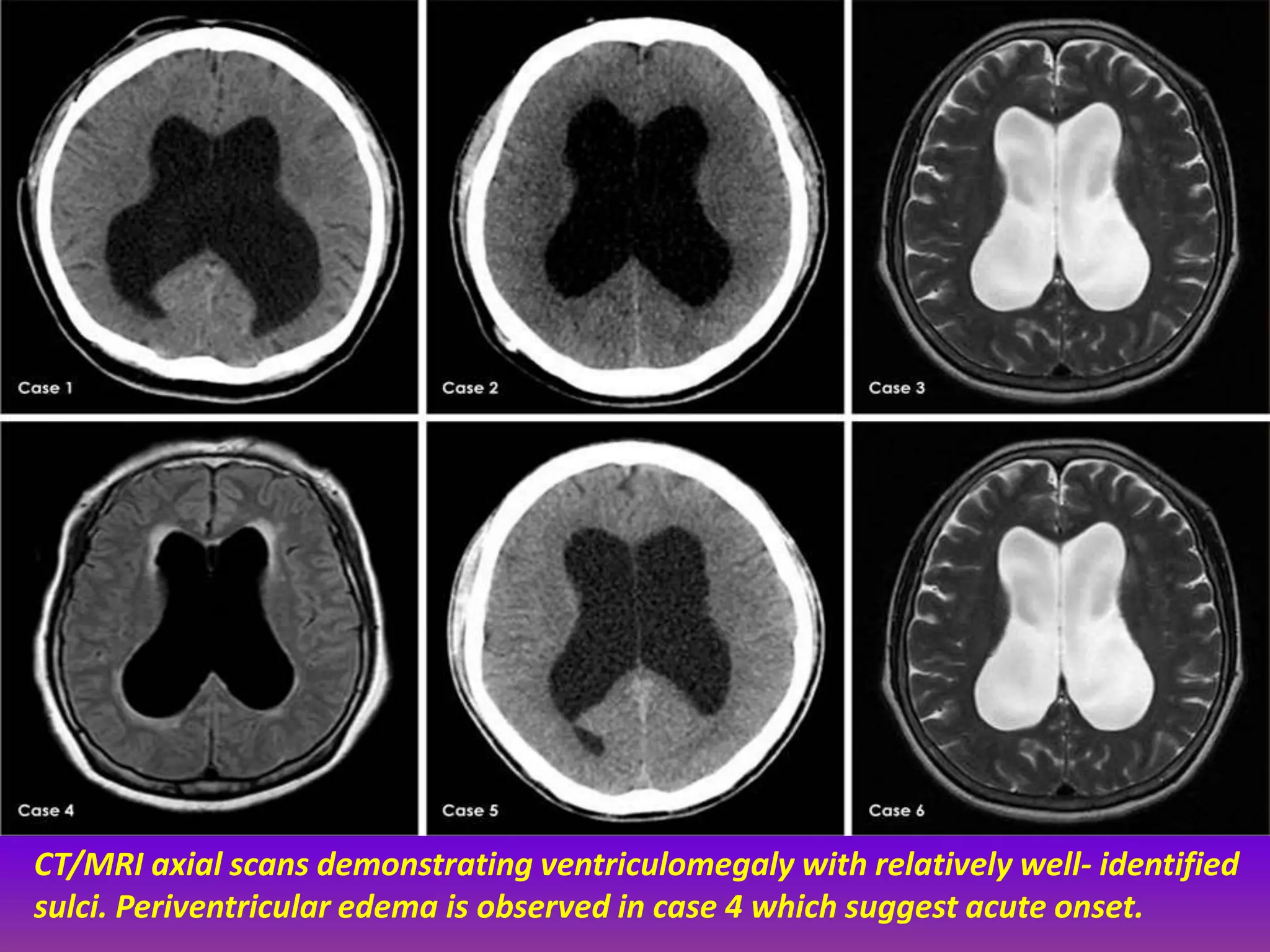
CT/MRI axial scans demonstrating ventriculomegaly with relatively well- identified 
sulci. Periventricular edema is observed in case 4 which suggest acute onset.
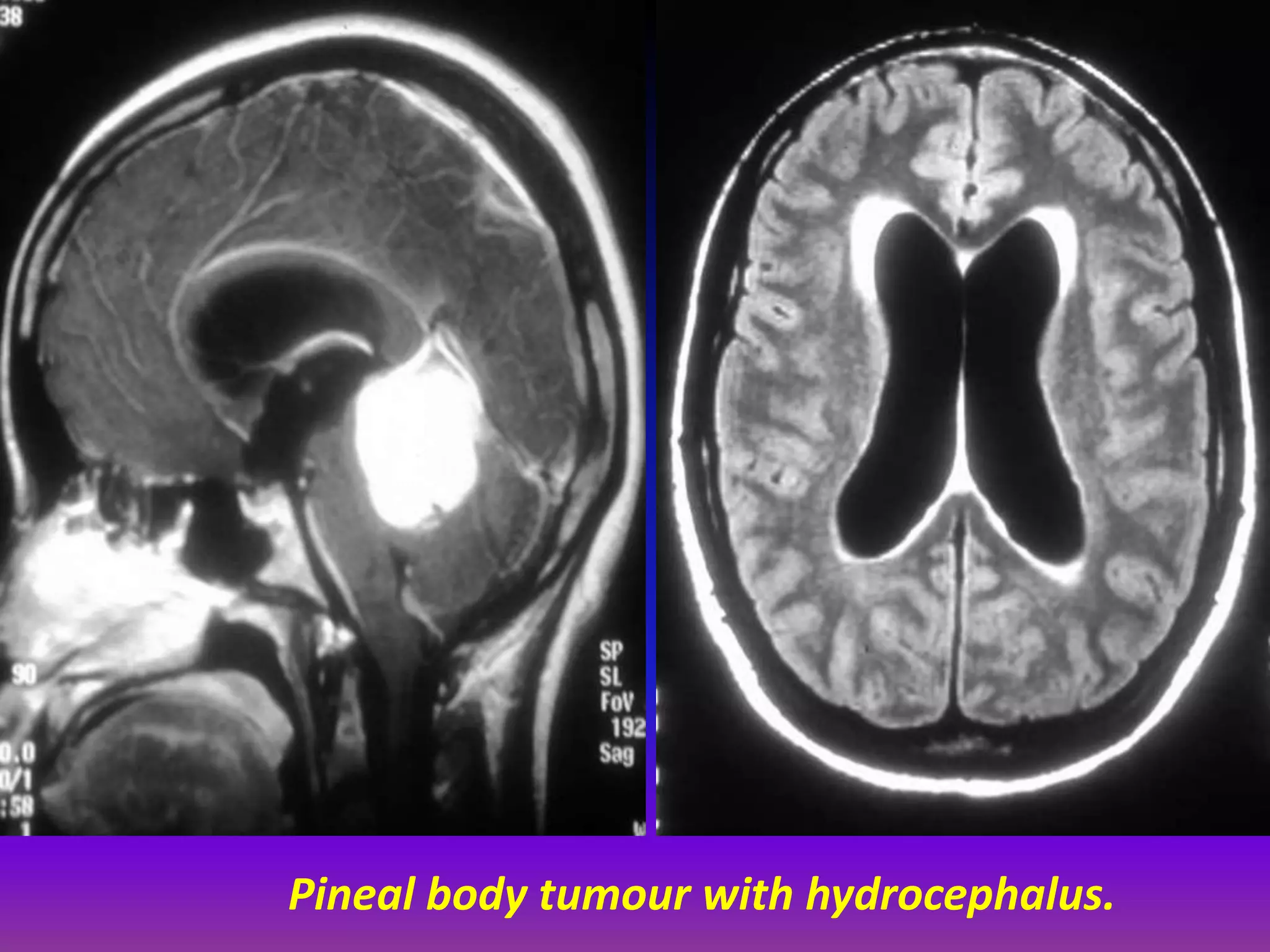
Pineal body tumour with hydrocephalus.
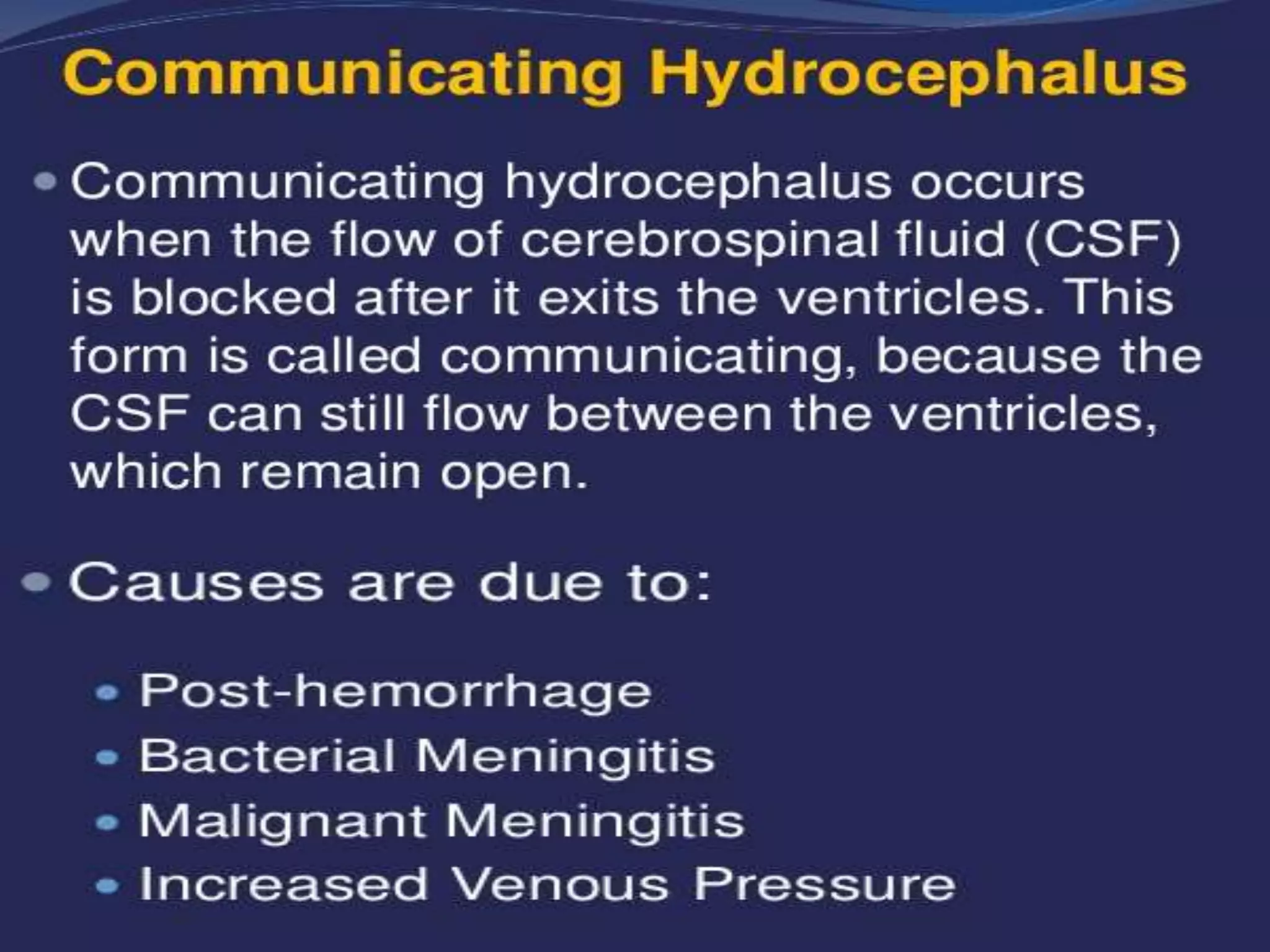
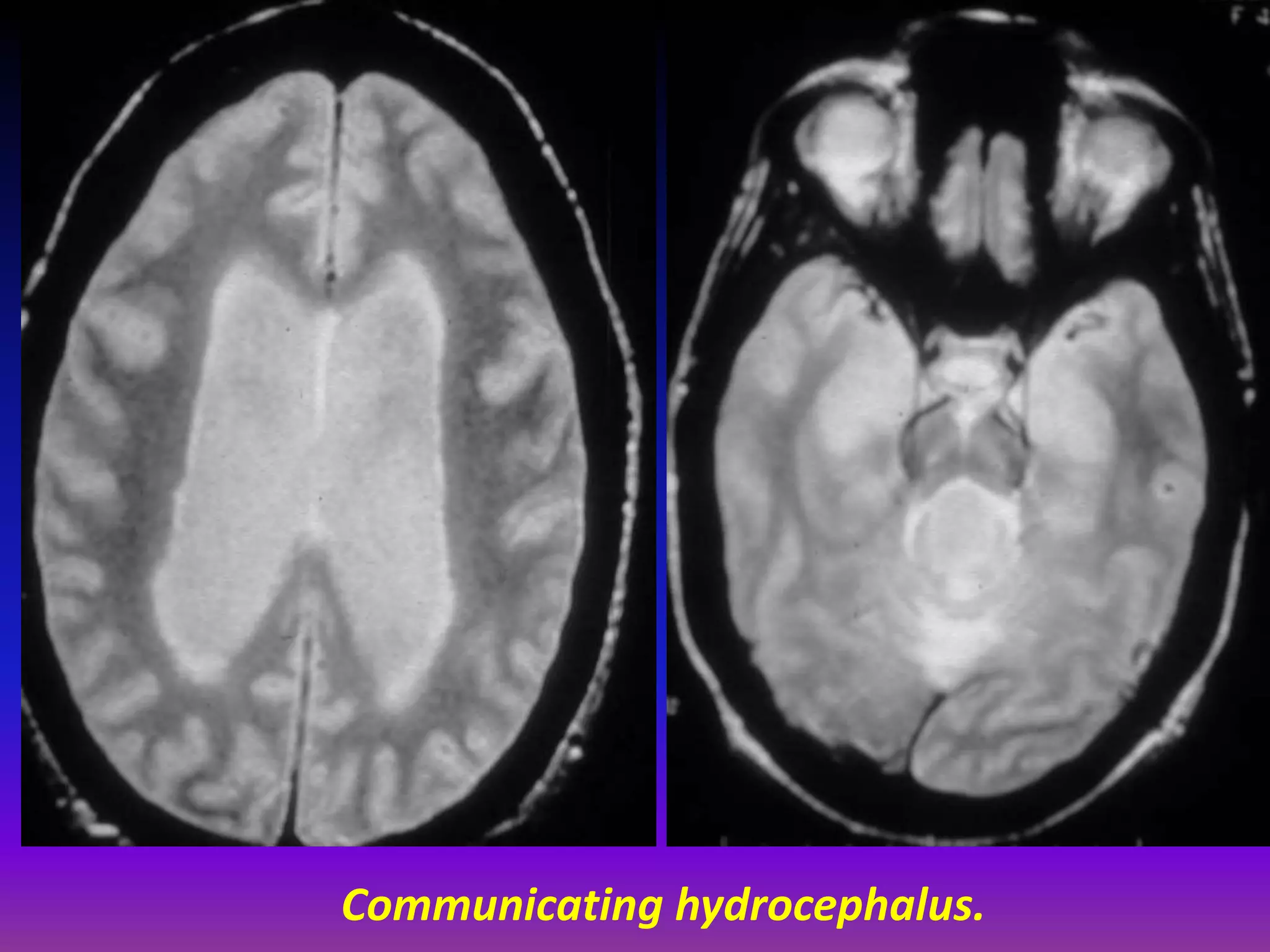
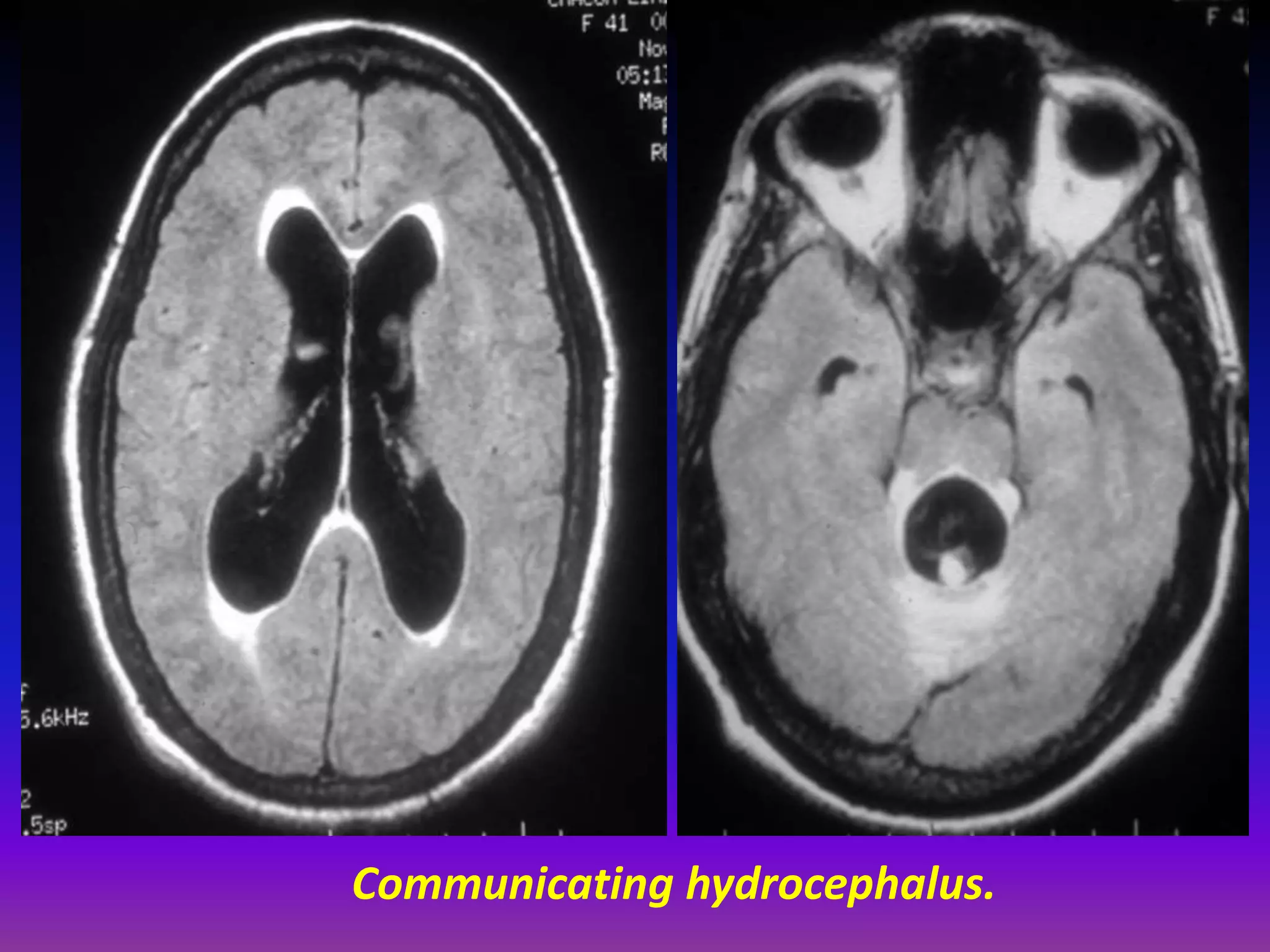
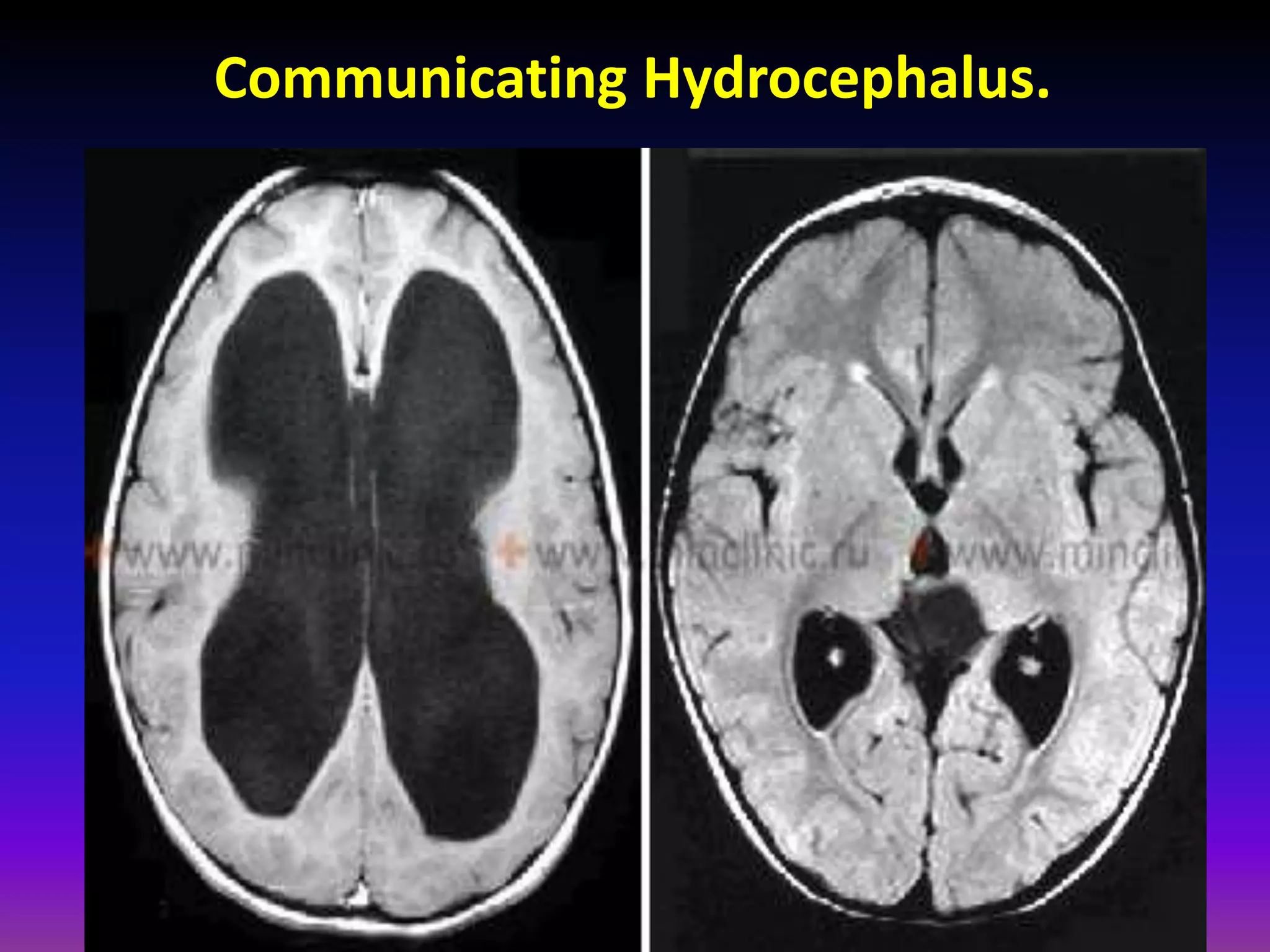
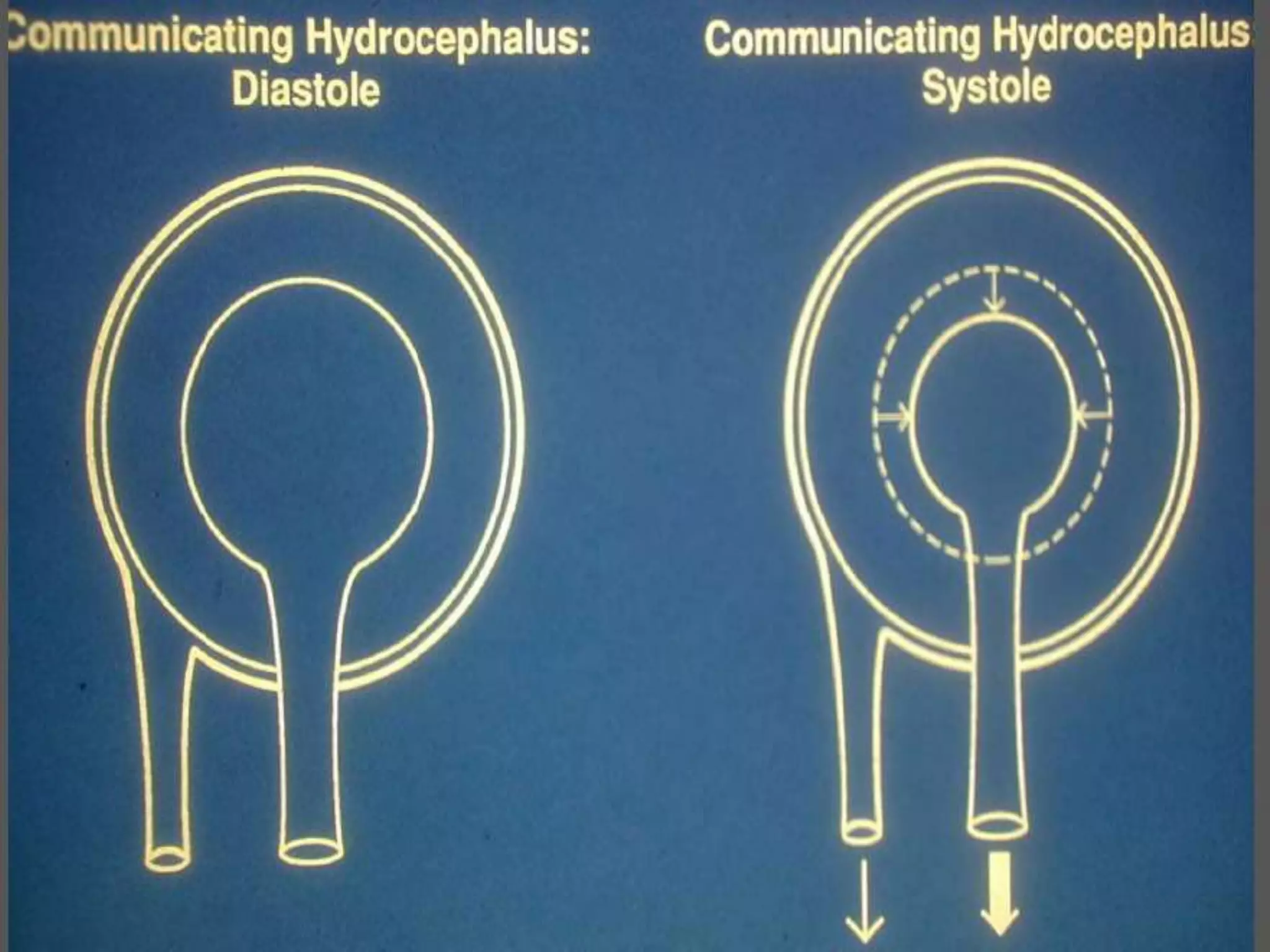
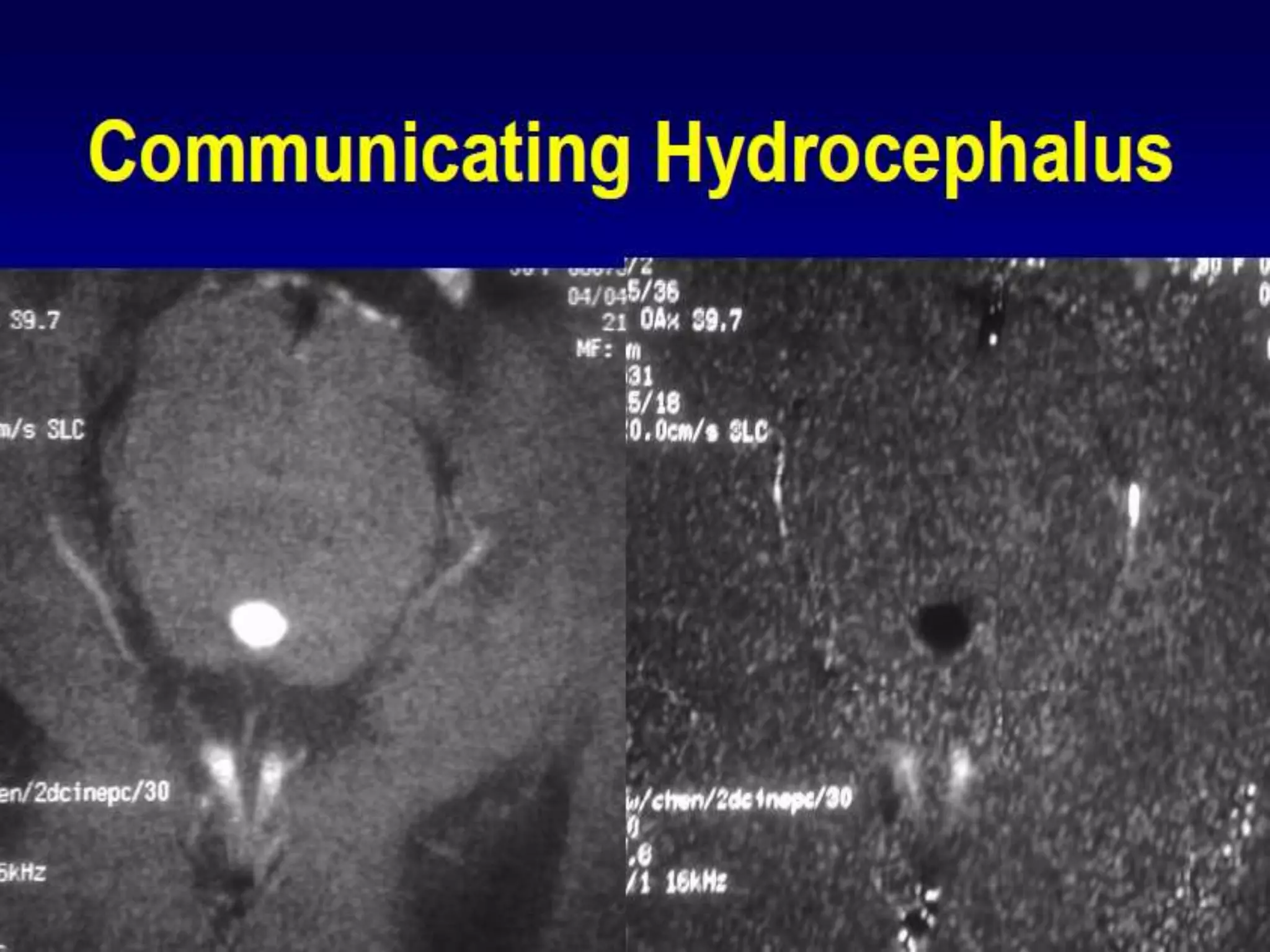
Communicating hydrocephalus.
Communicating Hydrocephalus.
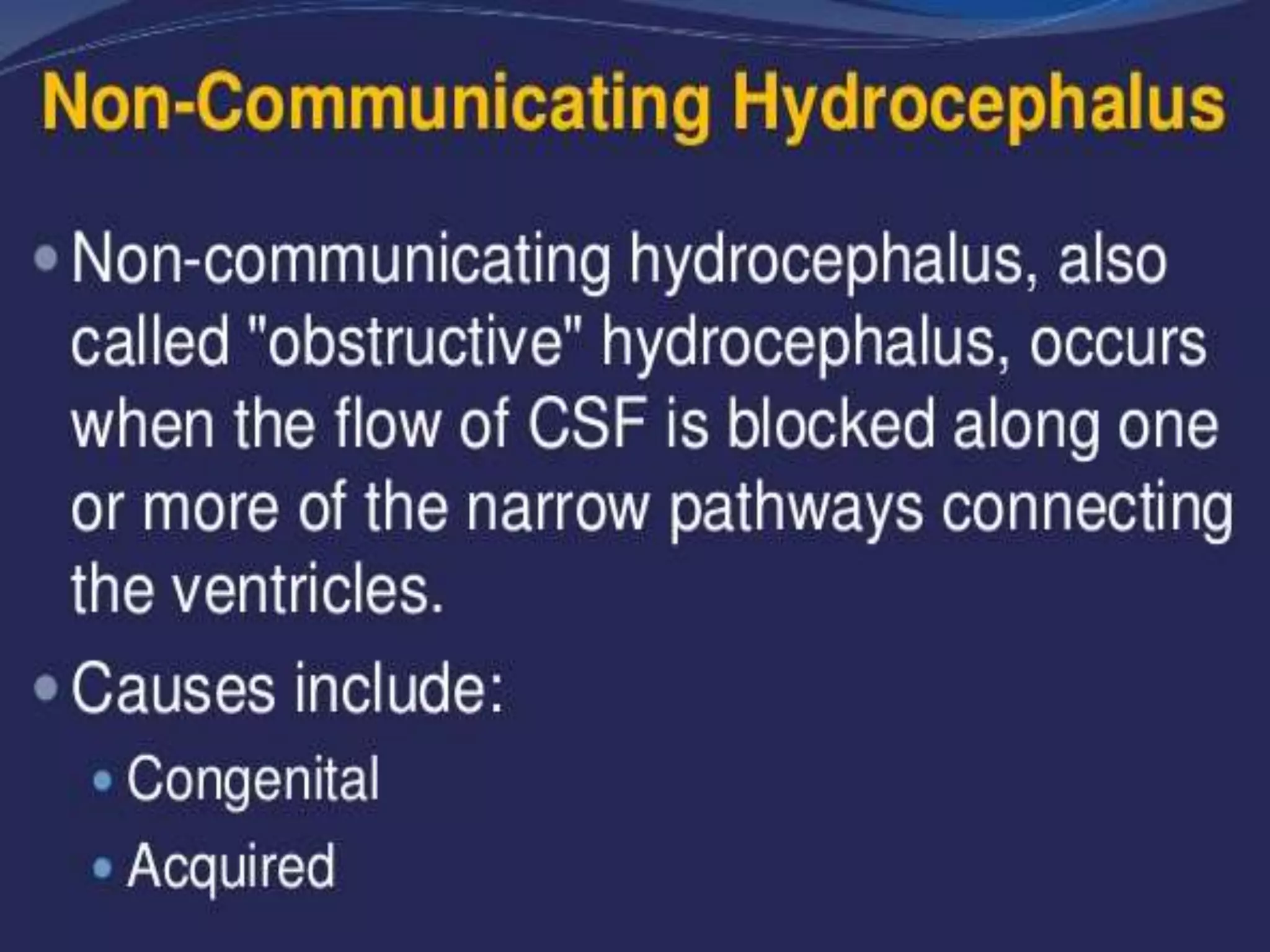
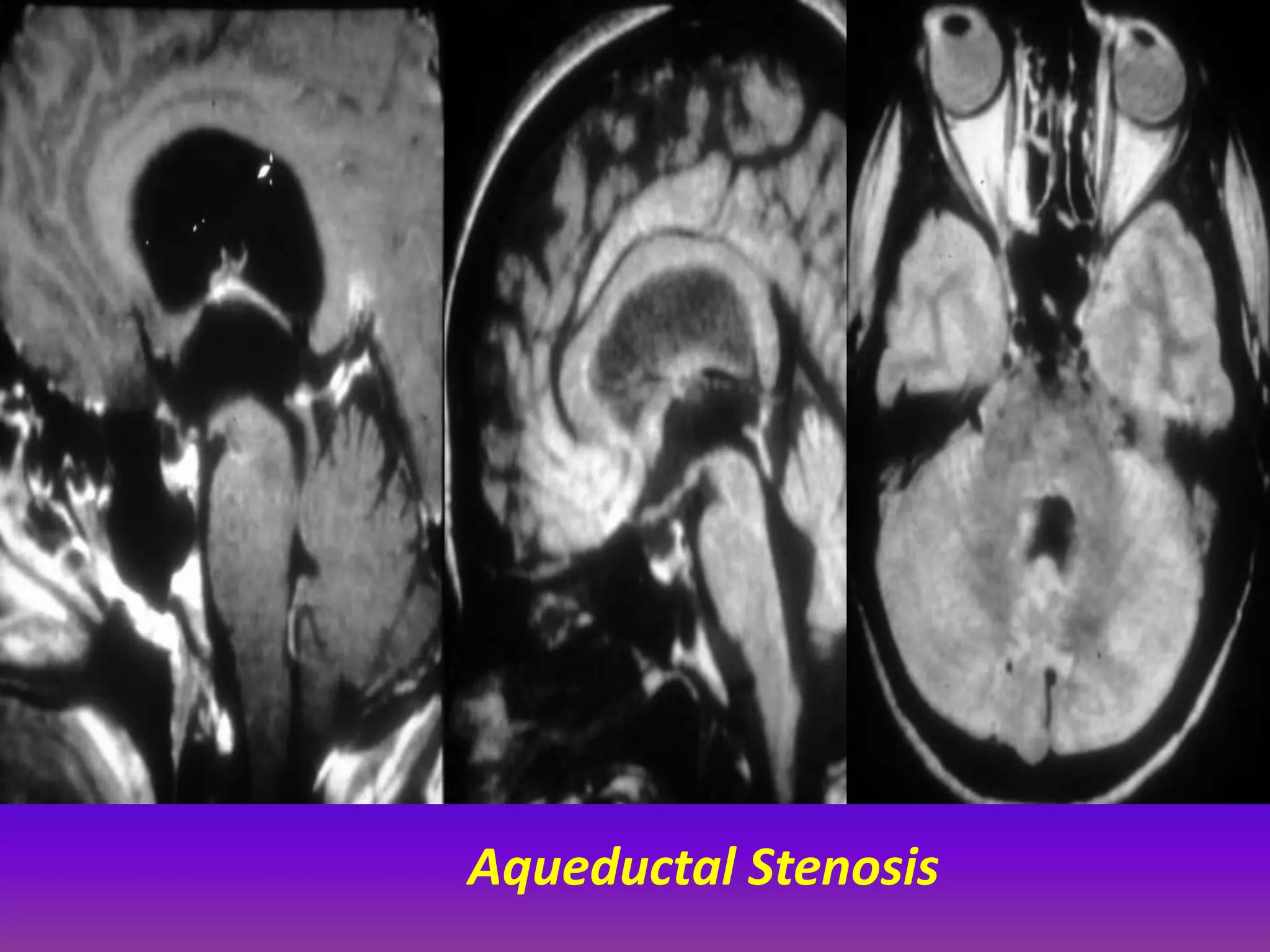
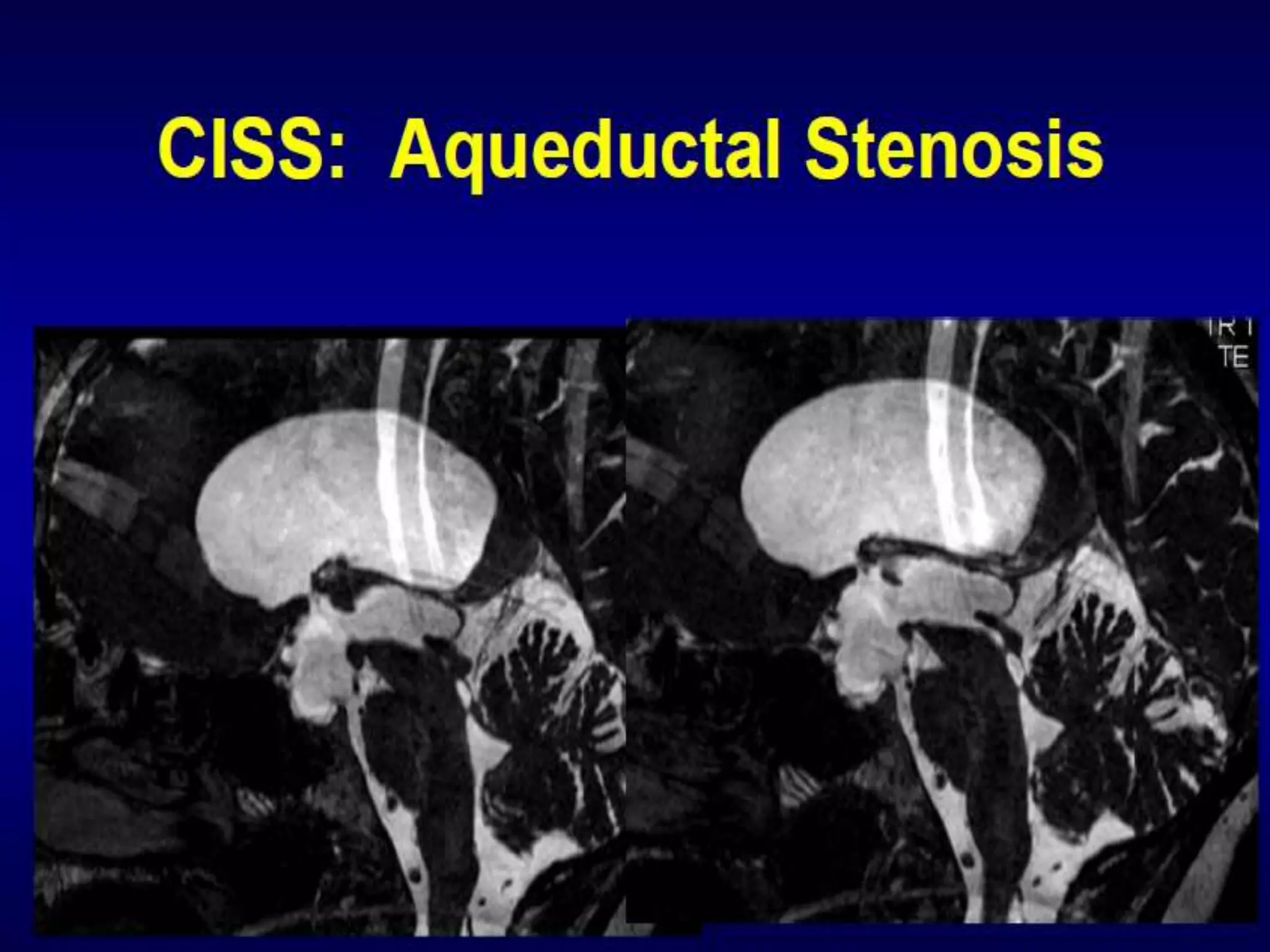
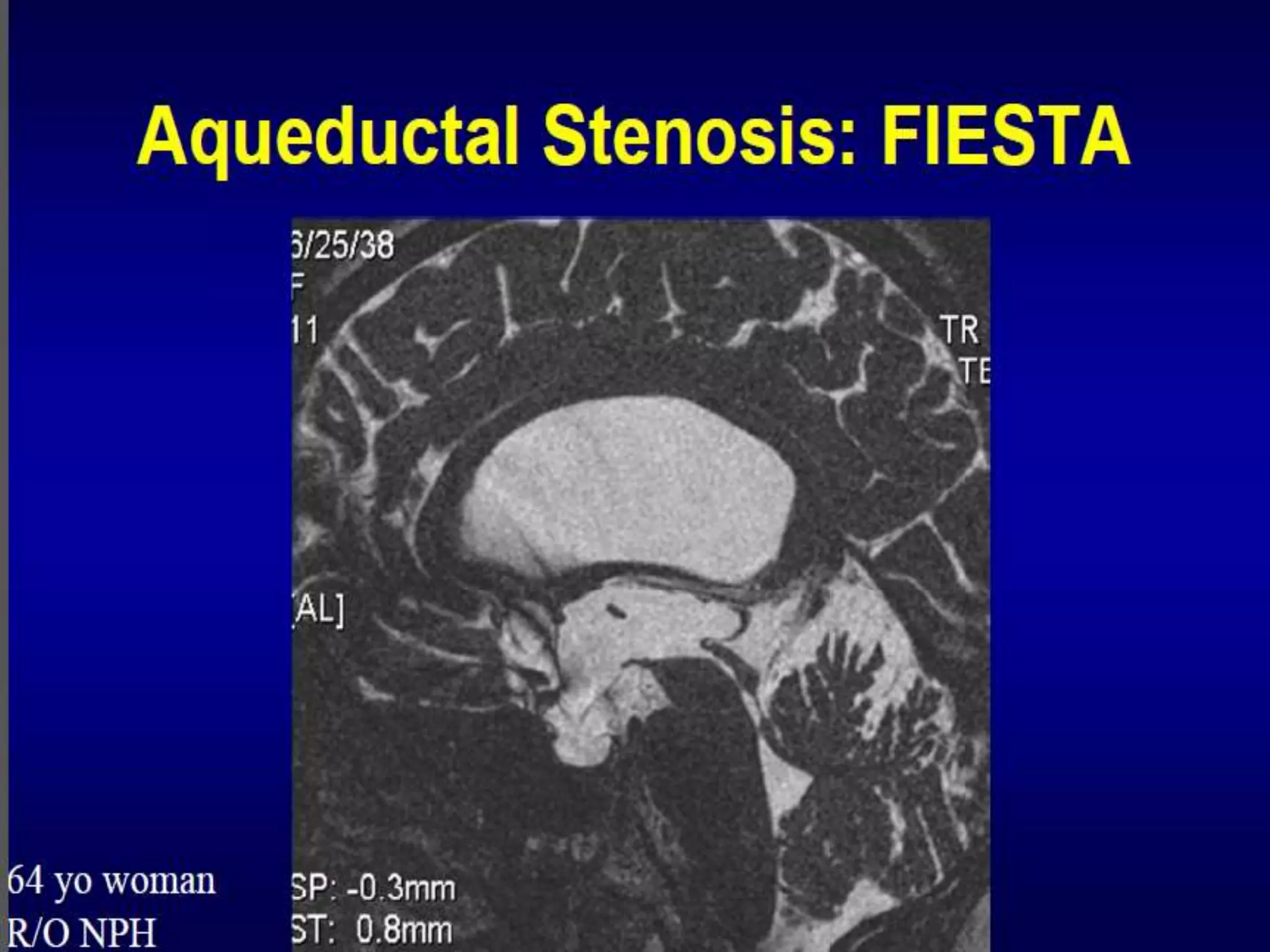
Aqueductal Stenosis
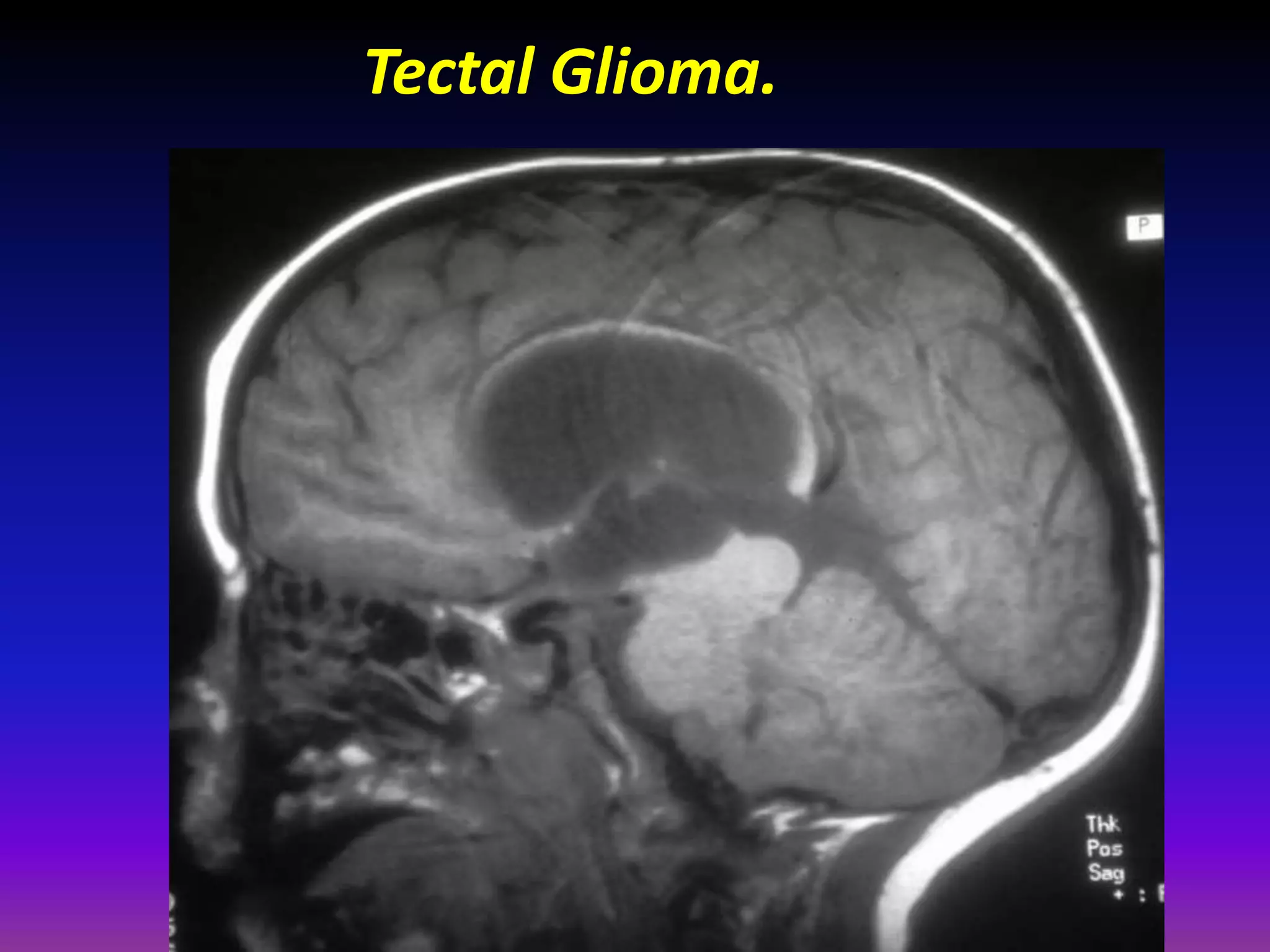
Tectal Glioma.
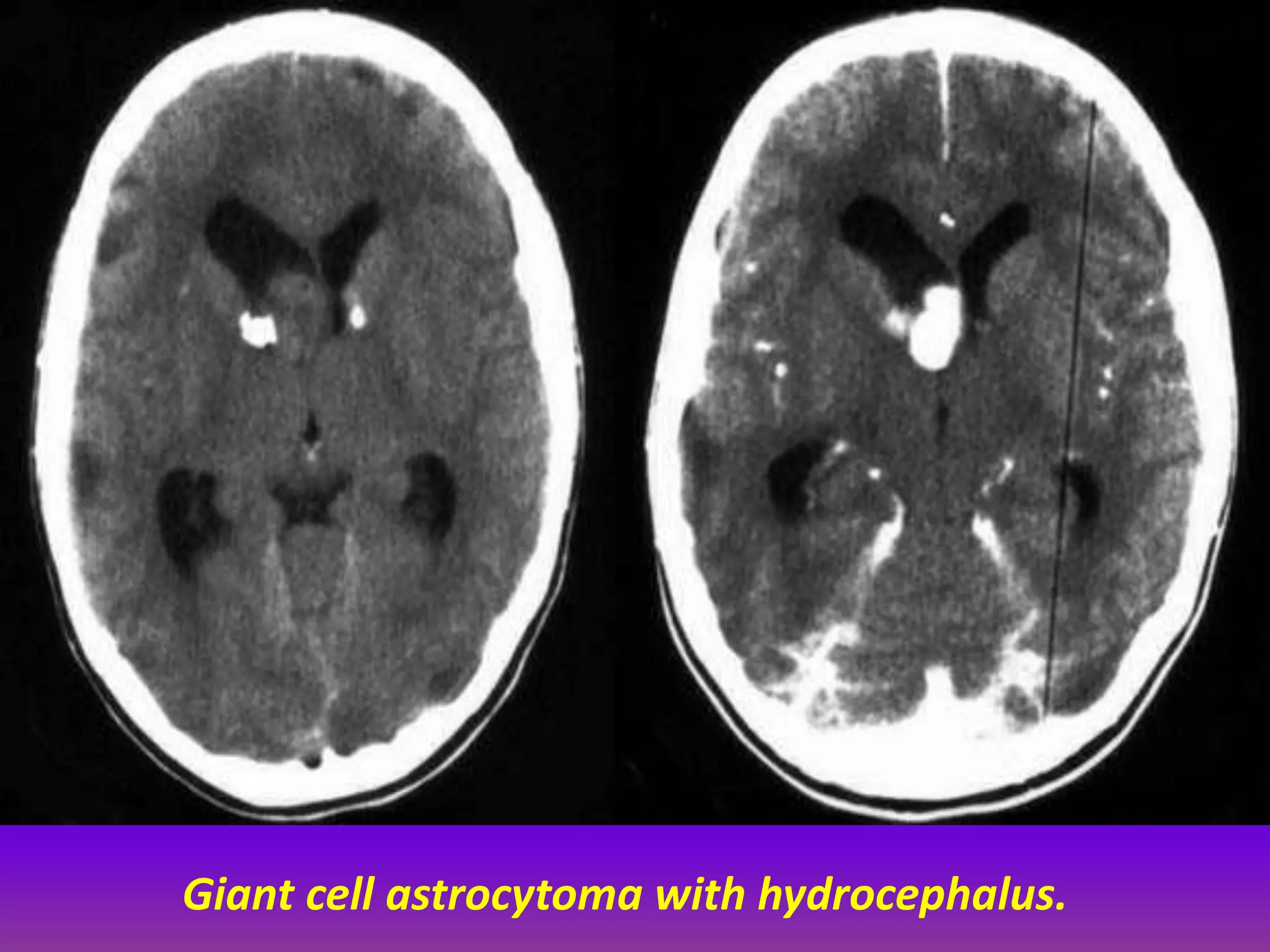
Giant cell astrocytoma with hydrocephalus.
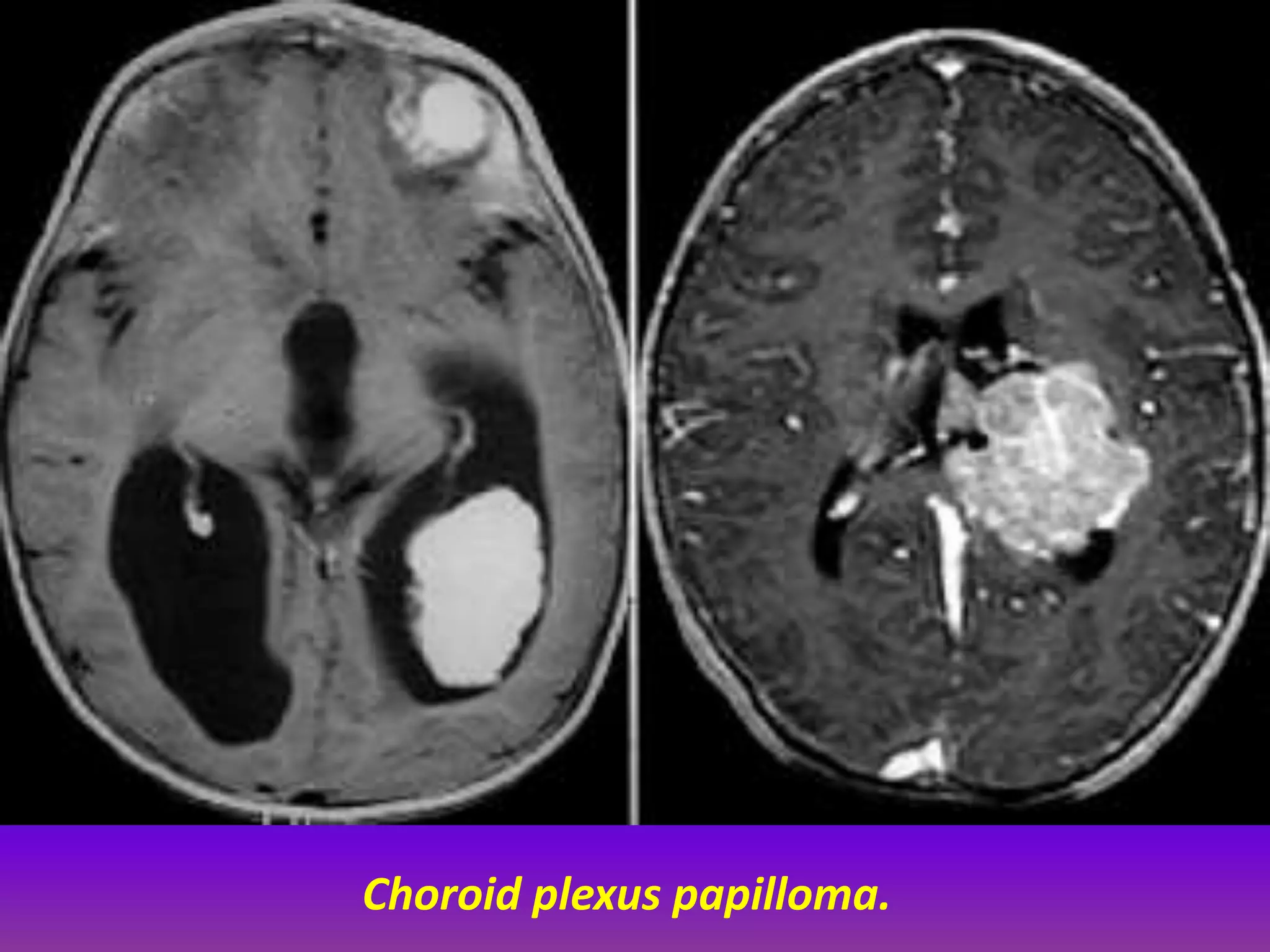
Choroid plexus papilloma.
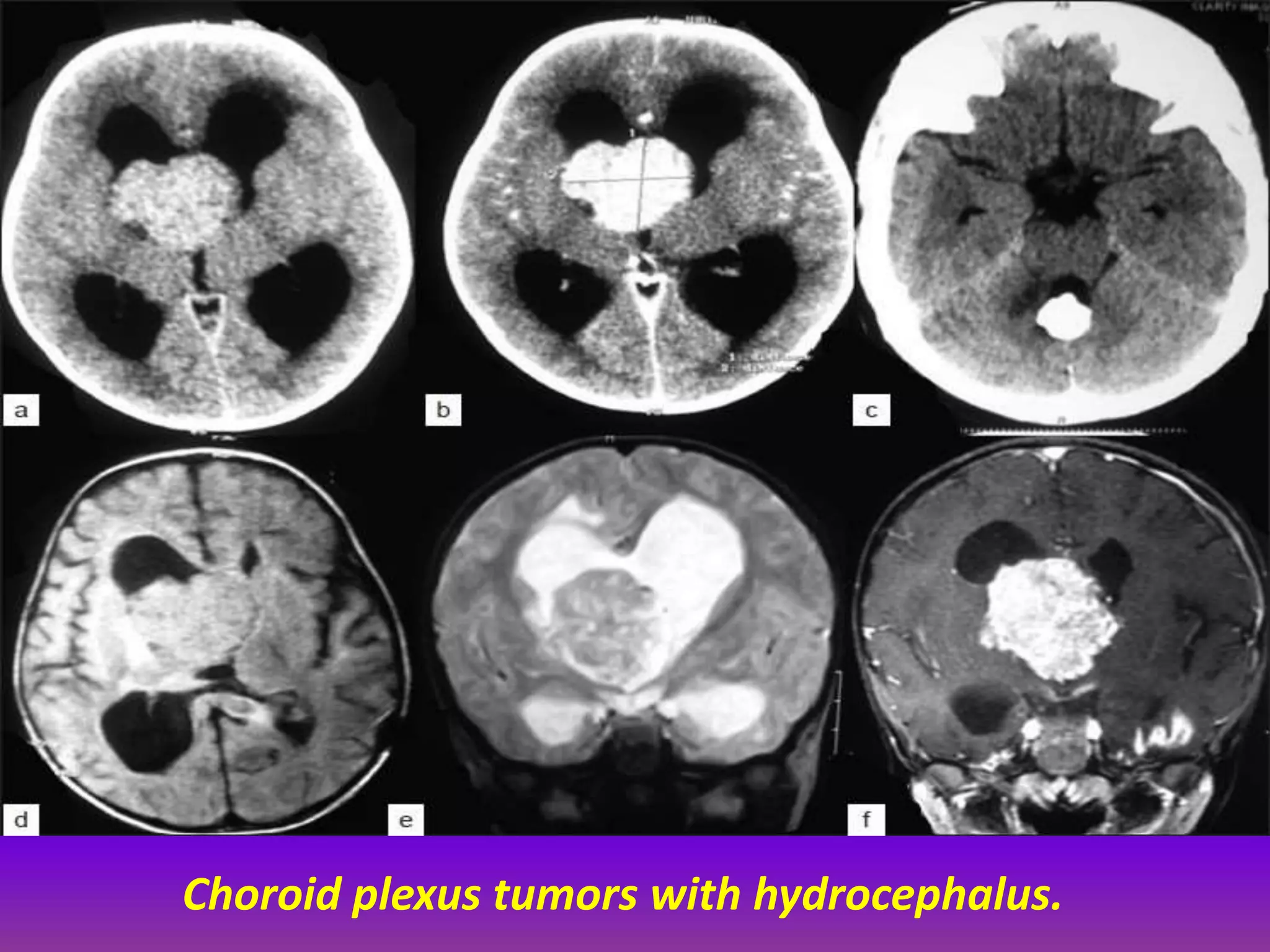
Choroid plexus tumors with hydrocephalus.
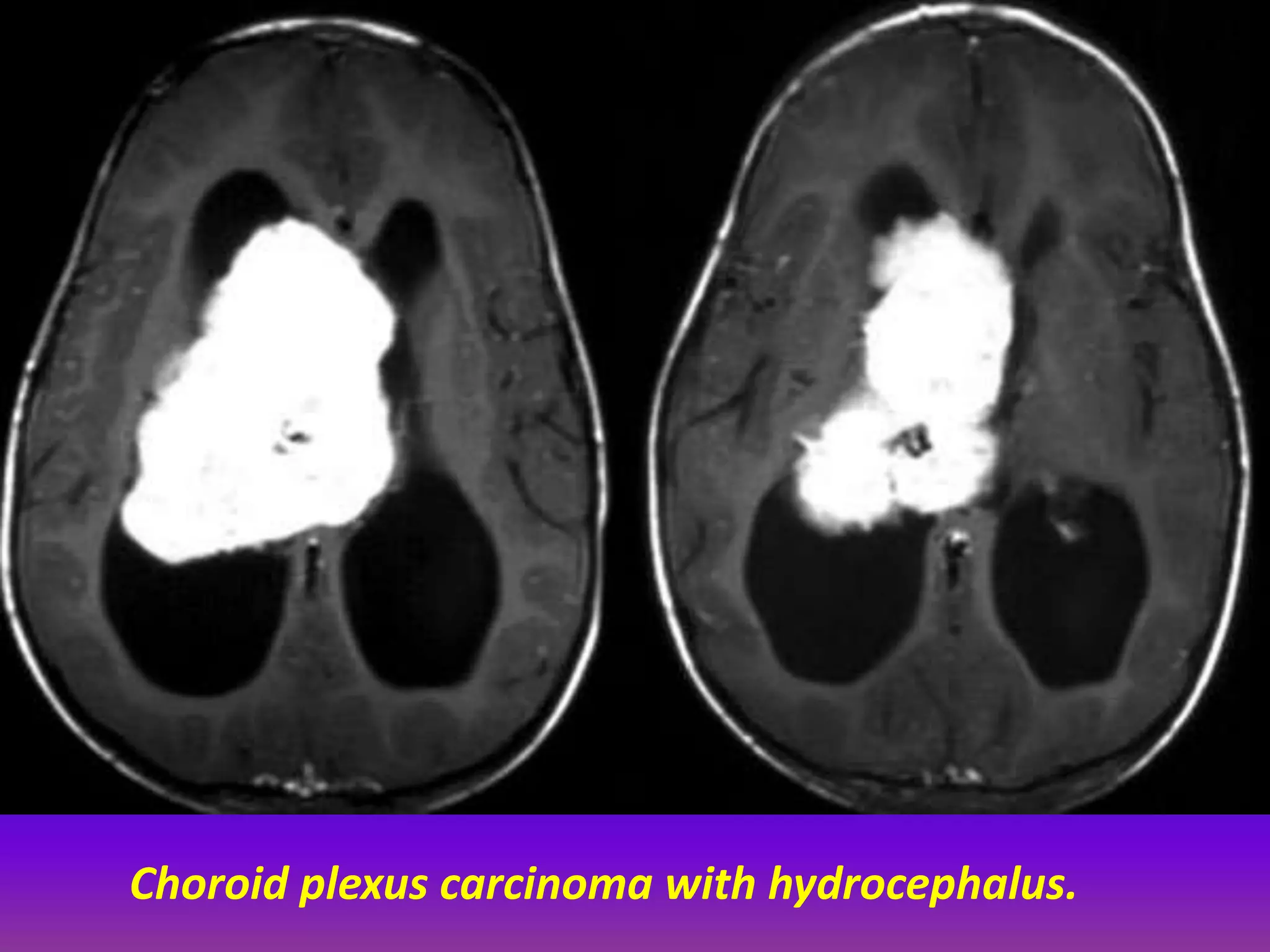
Choroid plexus carcinoma with hydrocephalus.
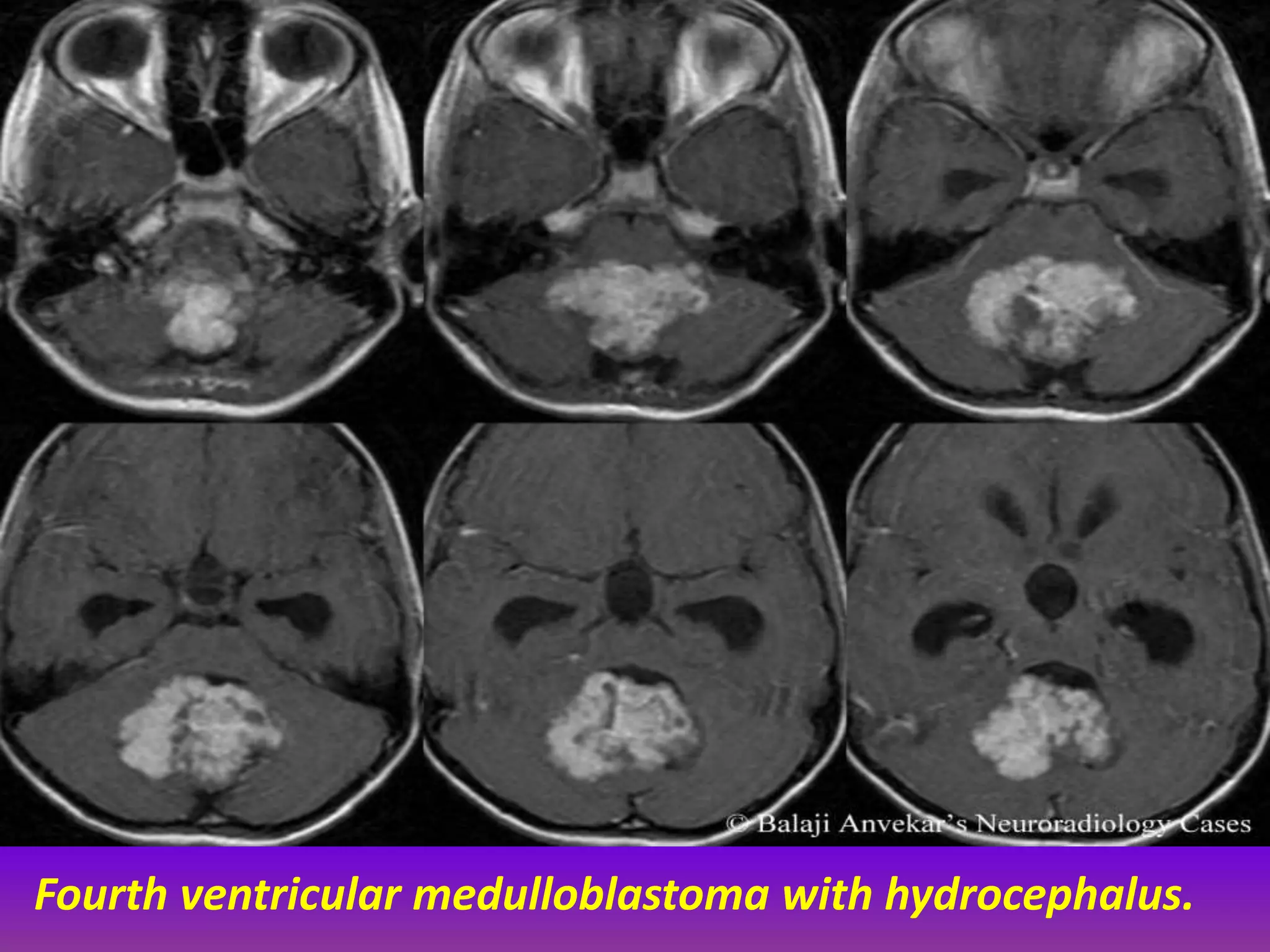
Fourth ventricular medulloblastoma with hydrocephalus.
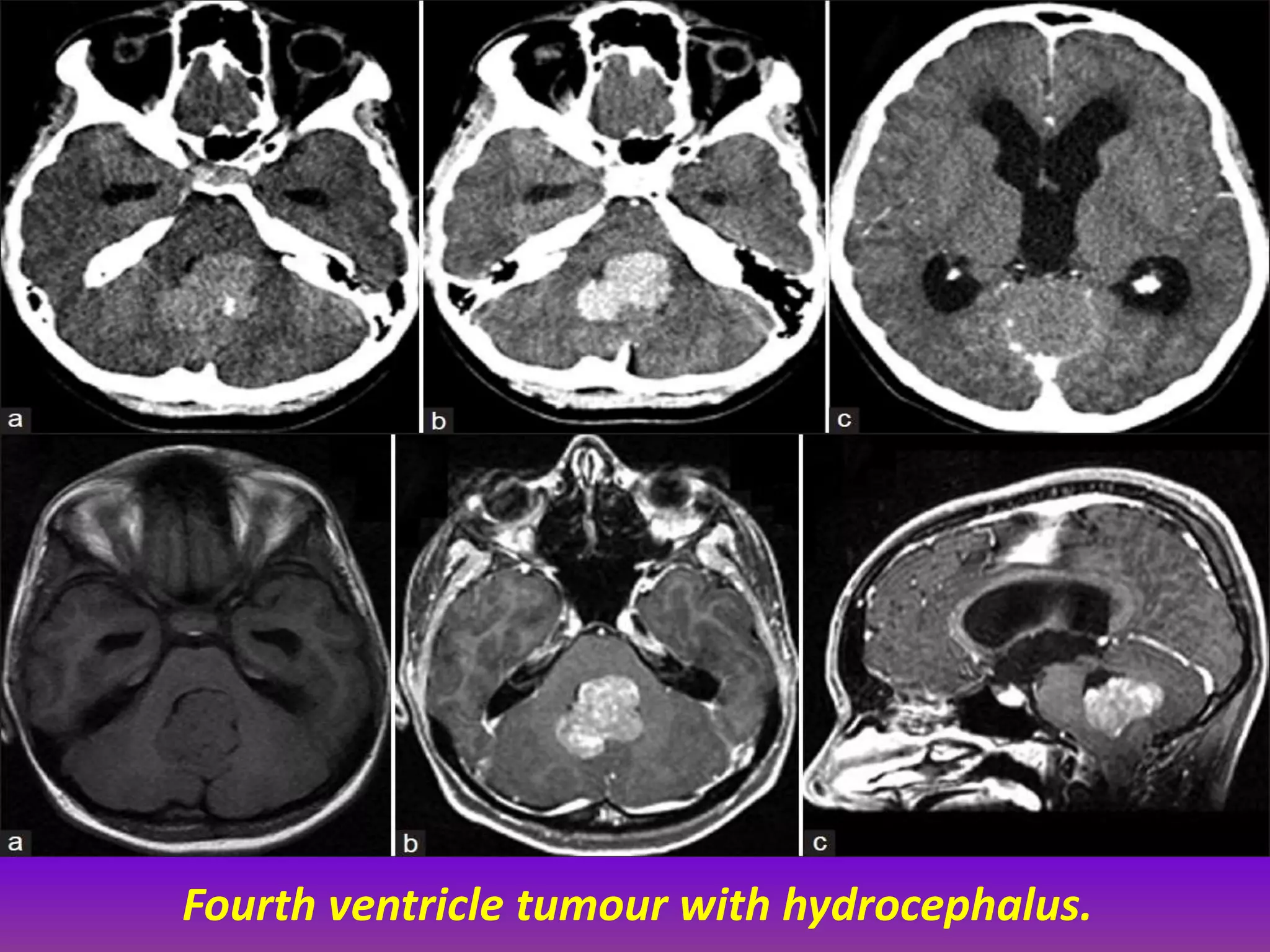
Fourth ventricle tumour with hydrocephalus.
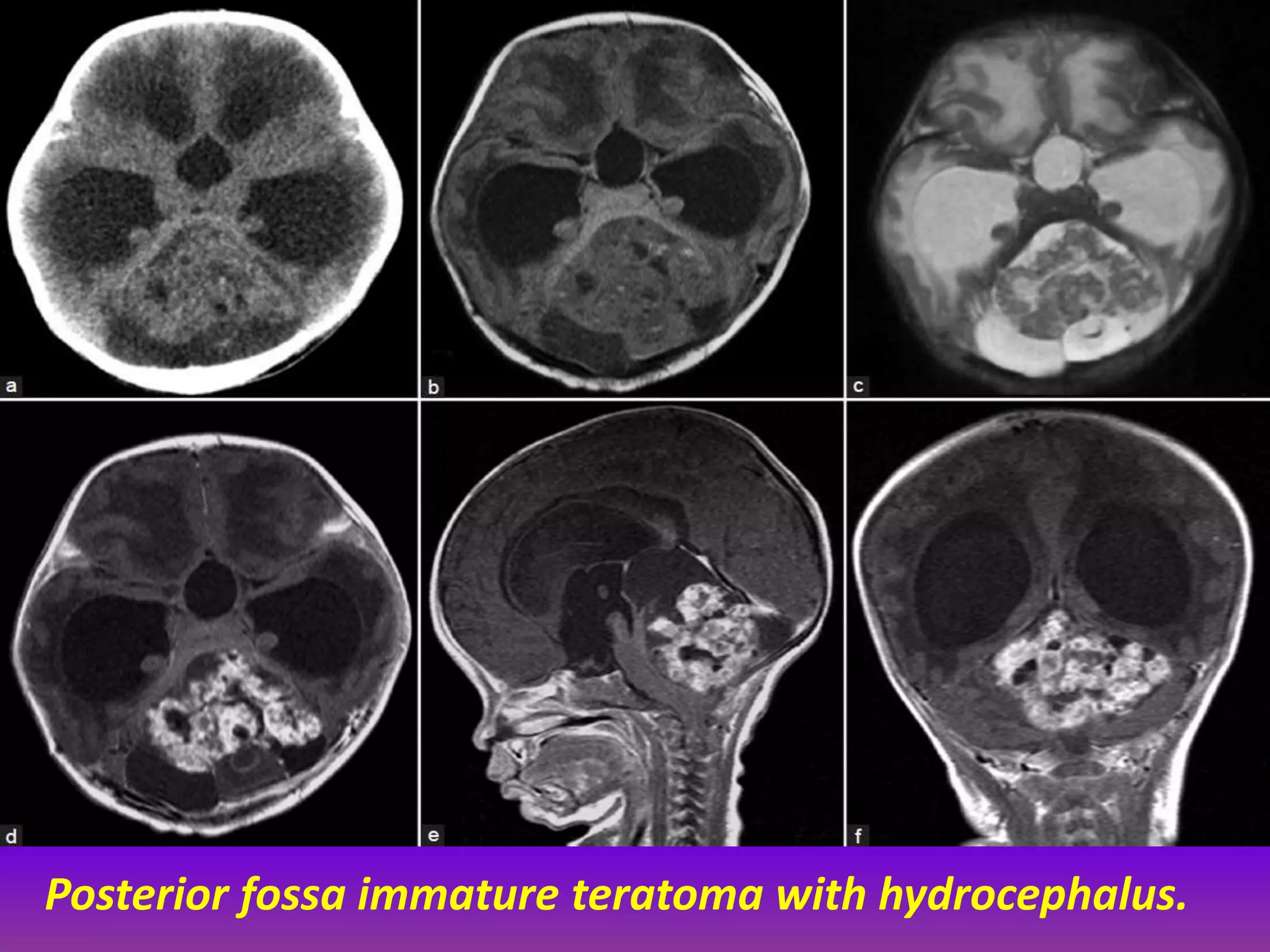
Posterior fossa immature teratoma with hydrocephalus.
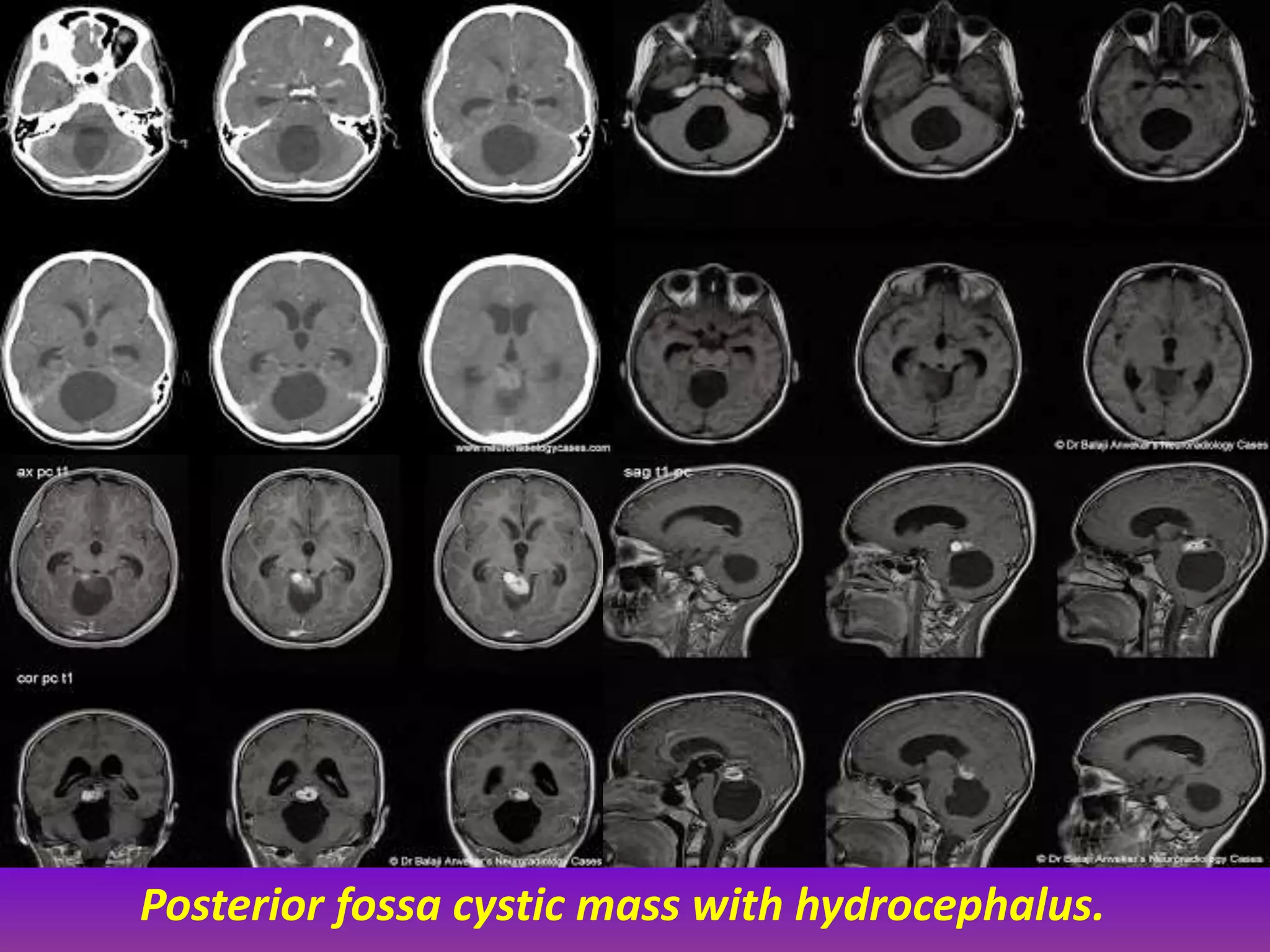
Posterior fossa cystic mass with hydrocephalus.
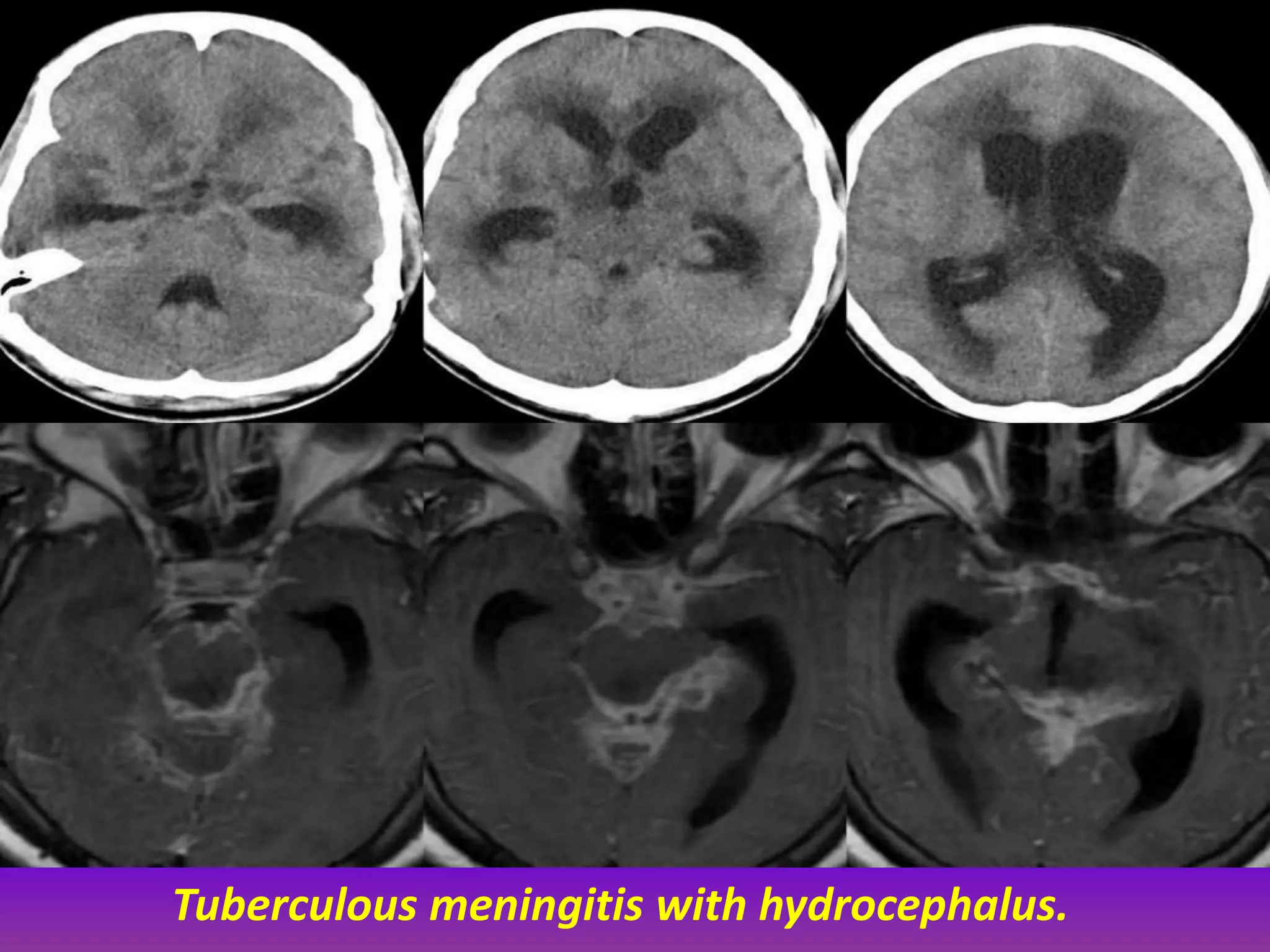
Tuberculous meningitis with hydrocephalus.
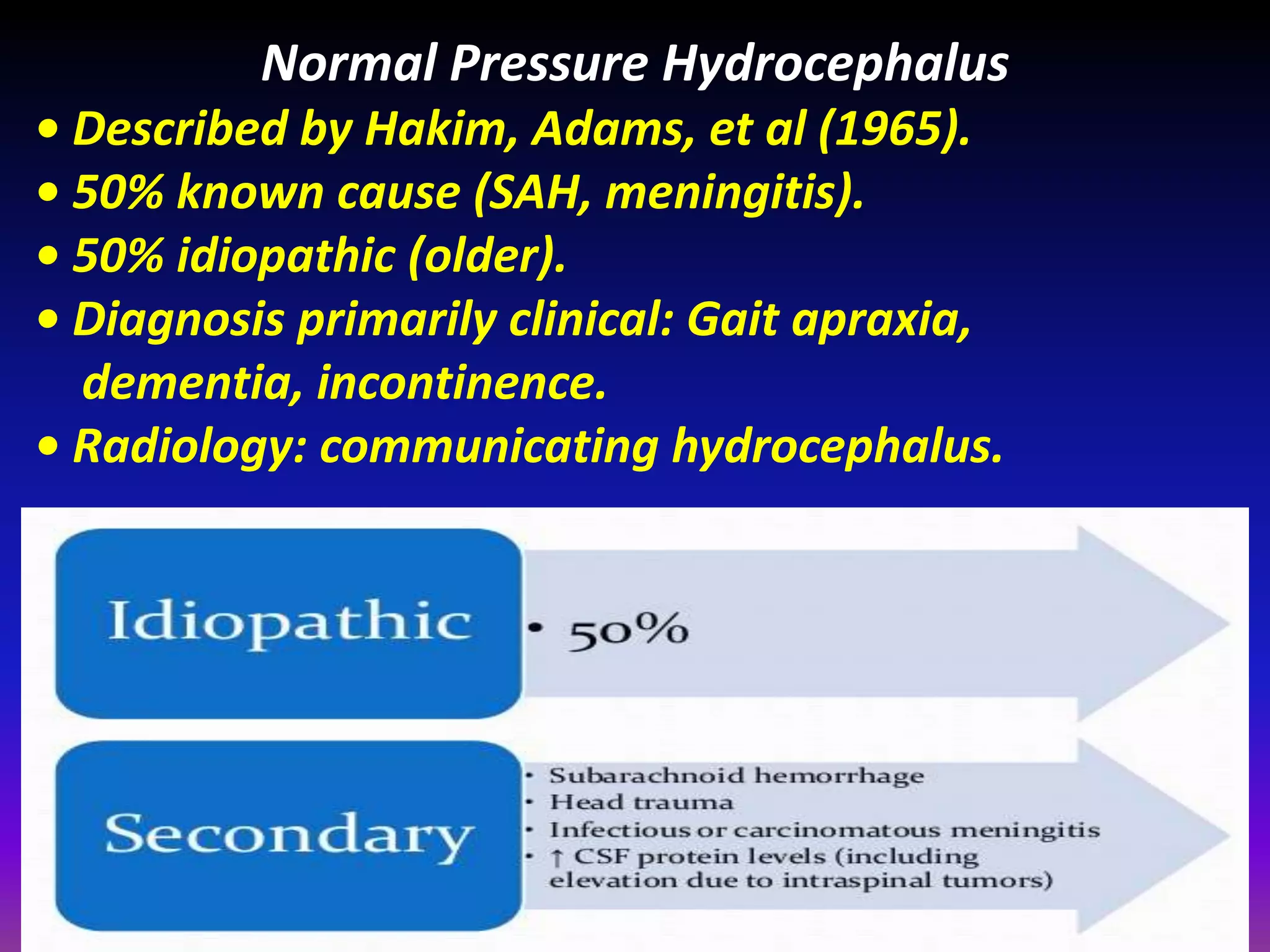
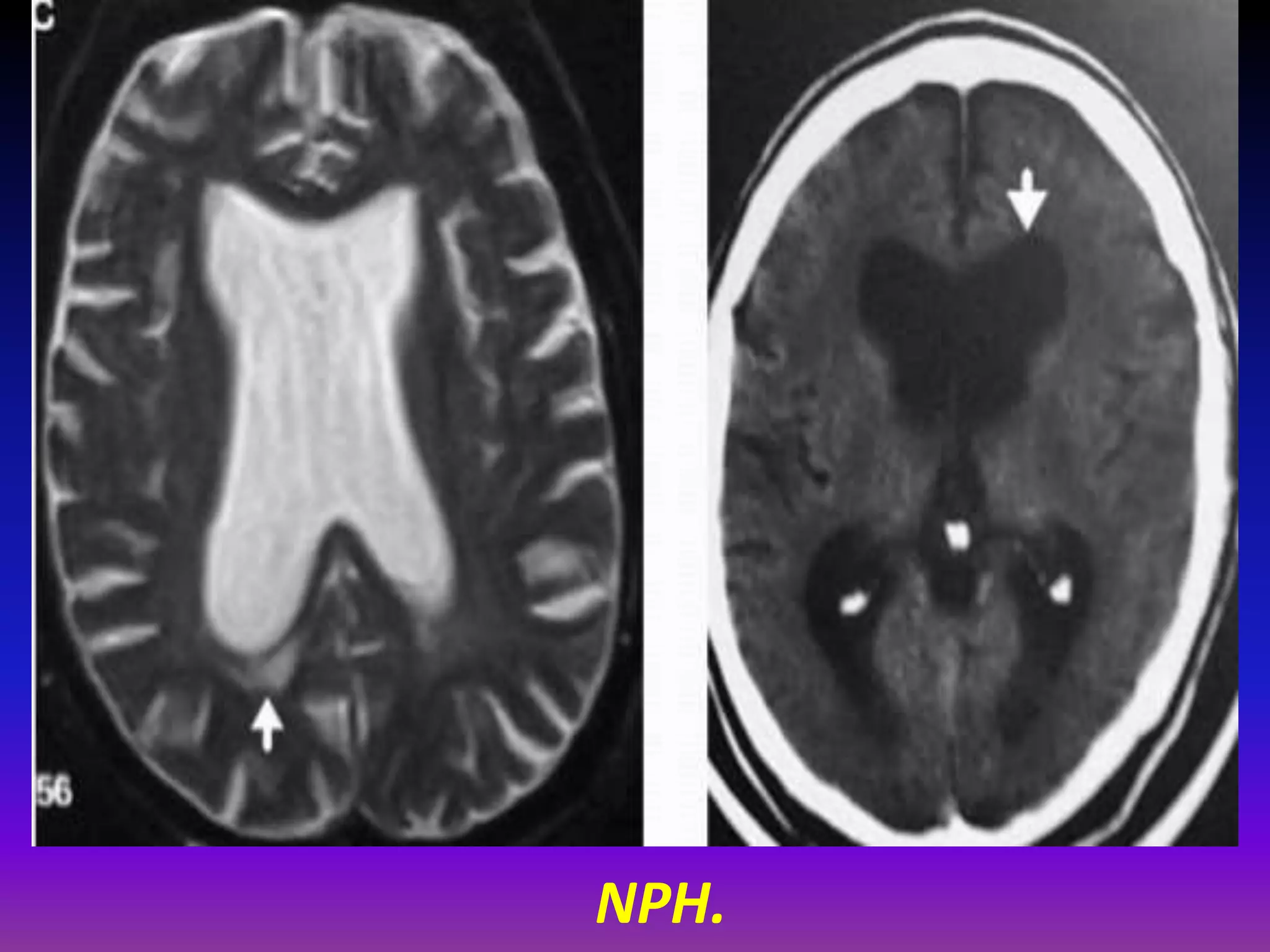
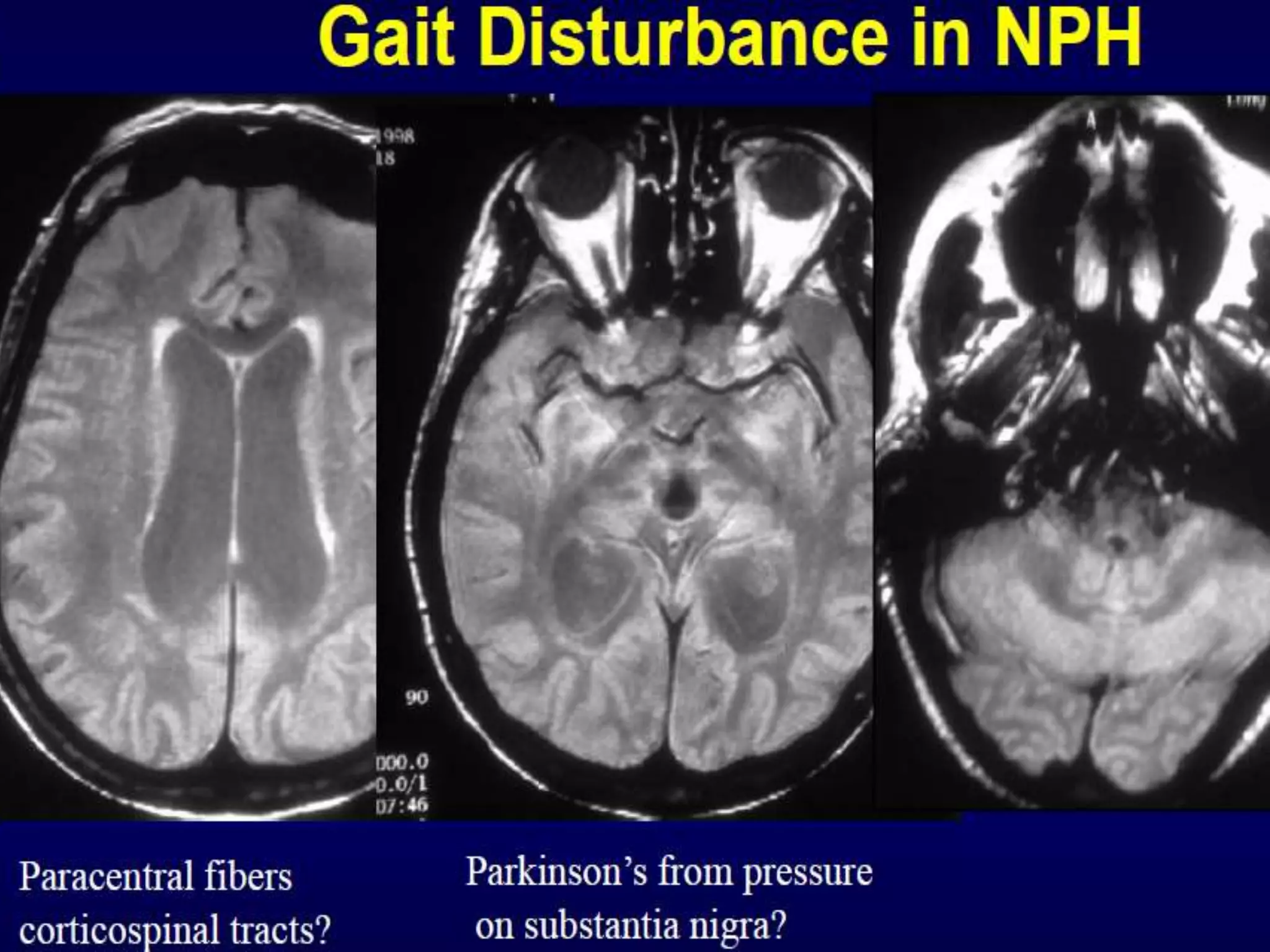
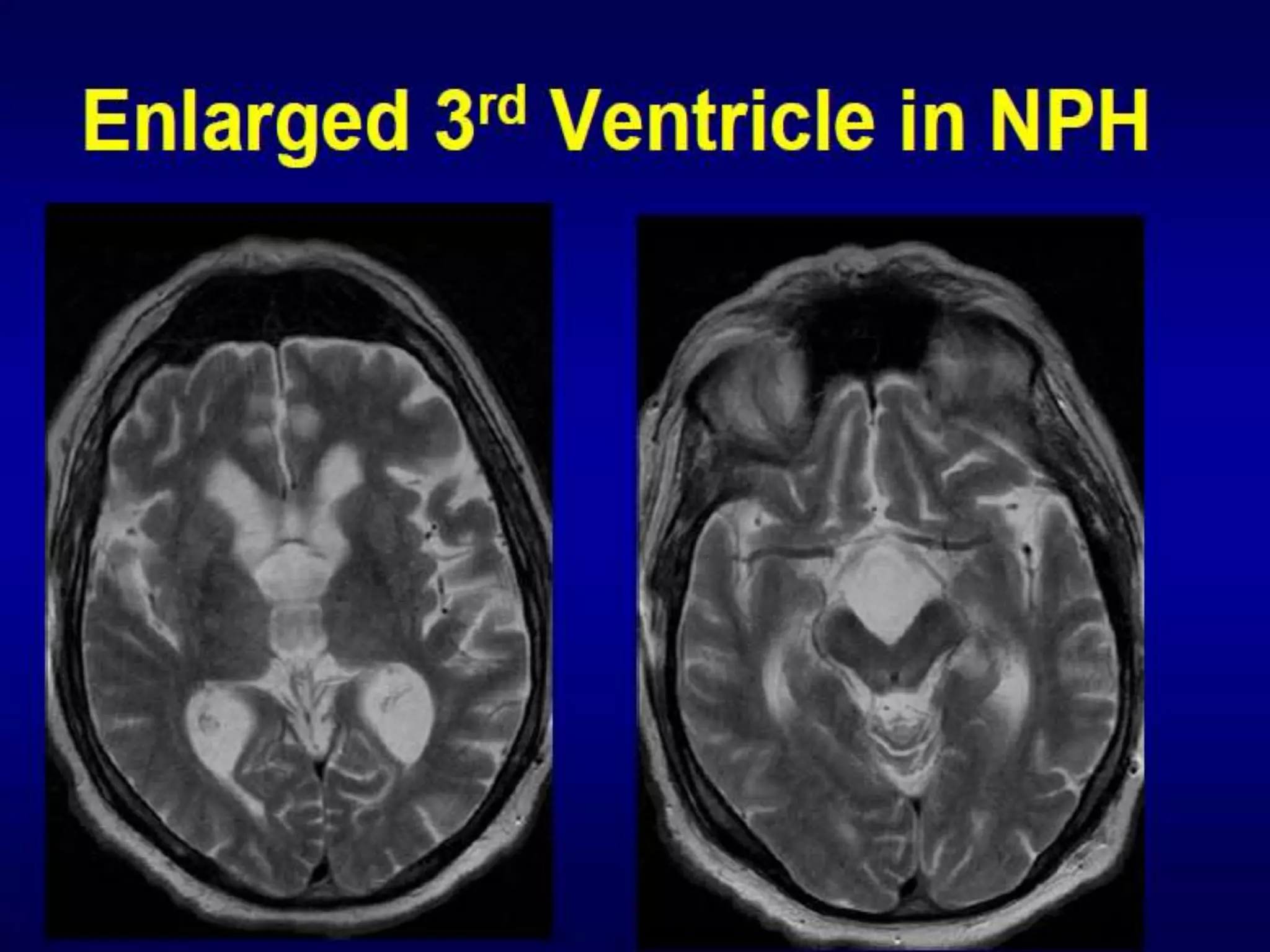
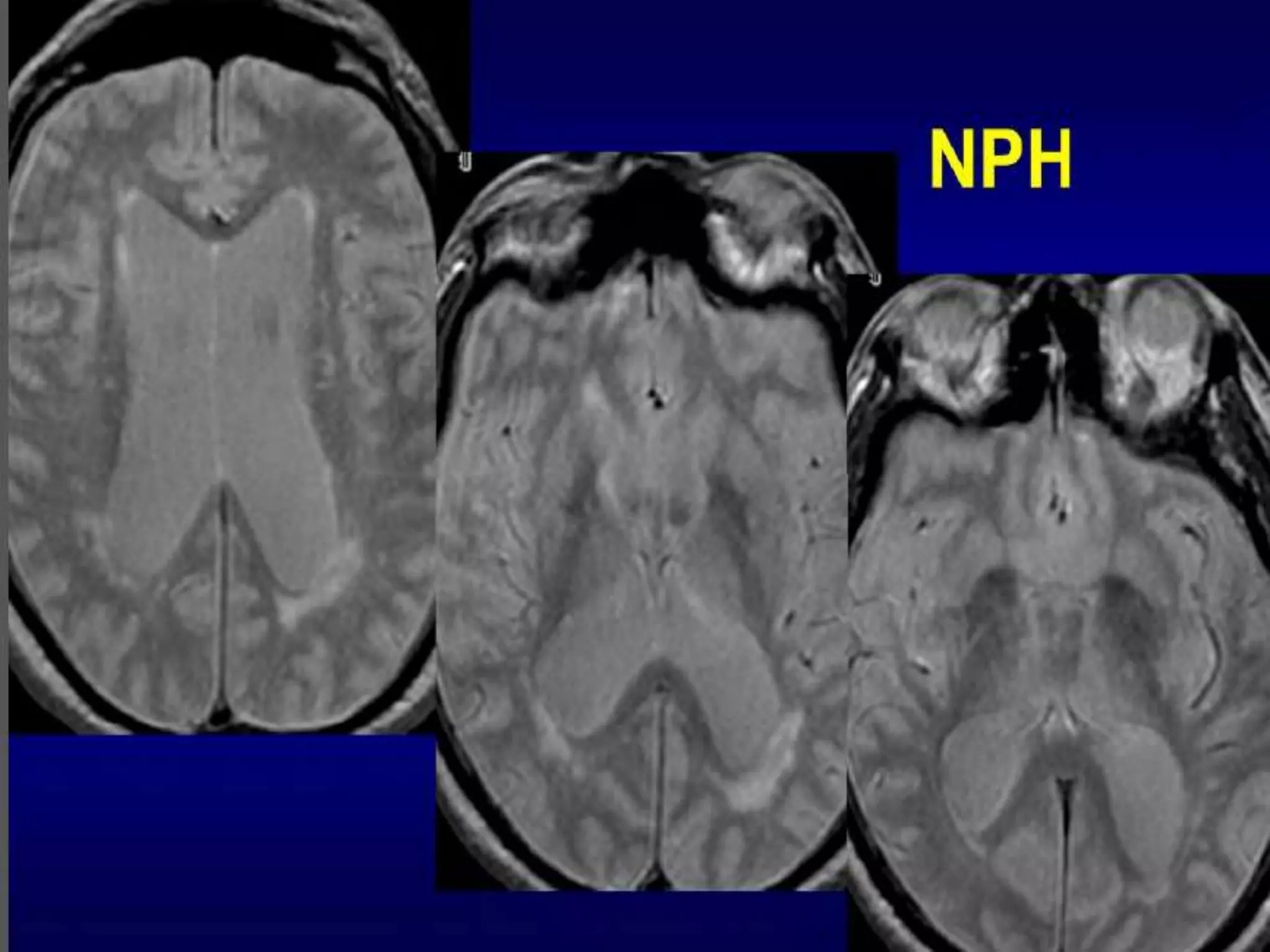
Normal Pressure Hydrocephalus 
• Described by Hakim, Adams, et al (1965). 
• 50% known cause (SAH, meningitis). 
• 50% idiopathic (older). 
• Diagnosis primarily clinical: Gait apraxia, 
dementia, incontinence. 
• Radiology: communicating hydrocephalus.
Physiologic Tests for NPH 
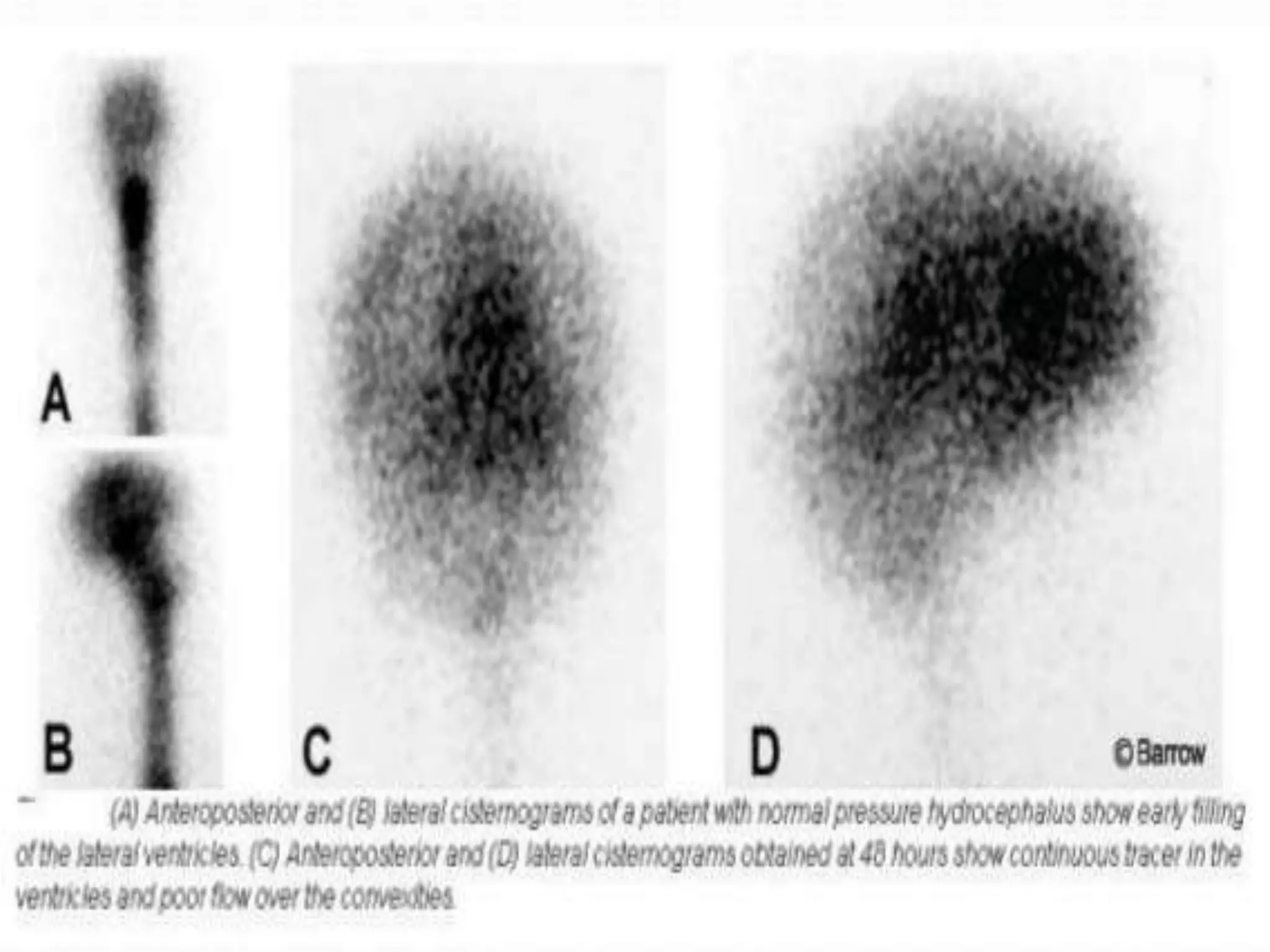
• Nuclear cisternography 
– Communicating hydrocephalus 
• Pressure monitoring 
– Water hammer pulse 
– Plateau waves 
• Saline Infusion (outpatient) 
– If resistance > 4mmHg/ml/min, 82% respond 
to ELD 
• 50 cc Tap test: PPV 73-100%; sensitivity 26-62% 
• External lumbar drainage (inpatient)
External Lumbar Drainage 
• 16 gauge lumbar puncture; catheter 
drainage 
• 10 cc/hour for 3 days; gait assessed. 
• Of 151 patients* with iNPH,100 improved 
with ELD. 
– Gait only (88%), gait/dementia (84%), triad 
(59%). 
• Of responders, 90% improve with VP shunt. 
• Of nonresponders, 22% improve with shunt.
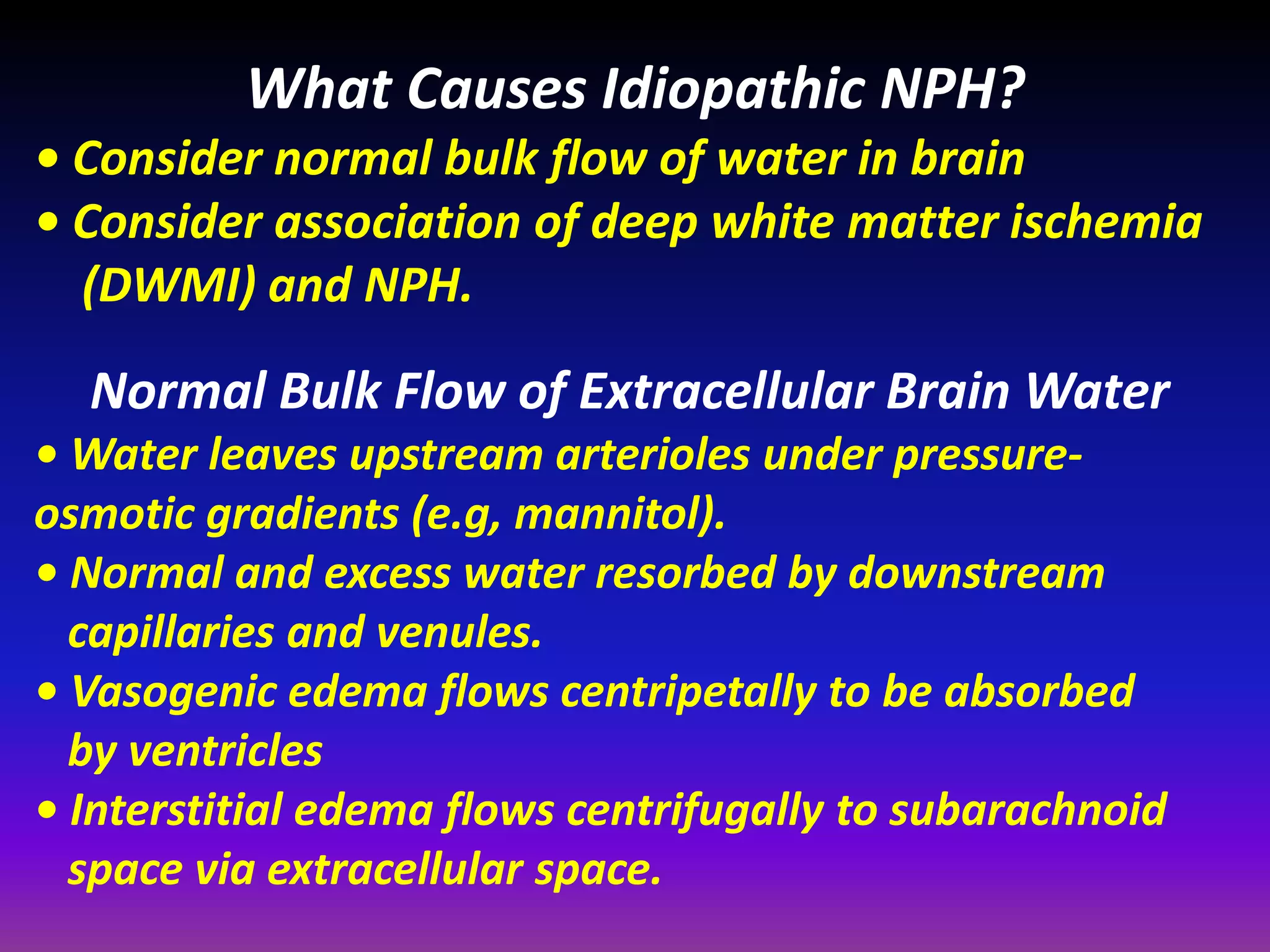
What Causes Idiopathic NPH? 
• Consider normal bulk flow of water in brain 
• Consider association of deep white matter ischemia 
(DWMI) and NPH. 
Normal Bulk Flow of Extracellular Brain Water 
• Water leaves upstream arterioles under pressure-osmotic 
gradients (e.g, mannitol). 
• Normal and excess water resorbed by downstream 
capillaries and venules. 
• Vasogenic edema flows centripetally to be absorbed 
by ventricles 
• Interstitial edema flows centrifugally to subarachnoid 
space via extracellular space.
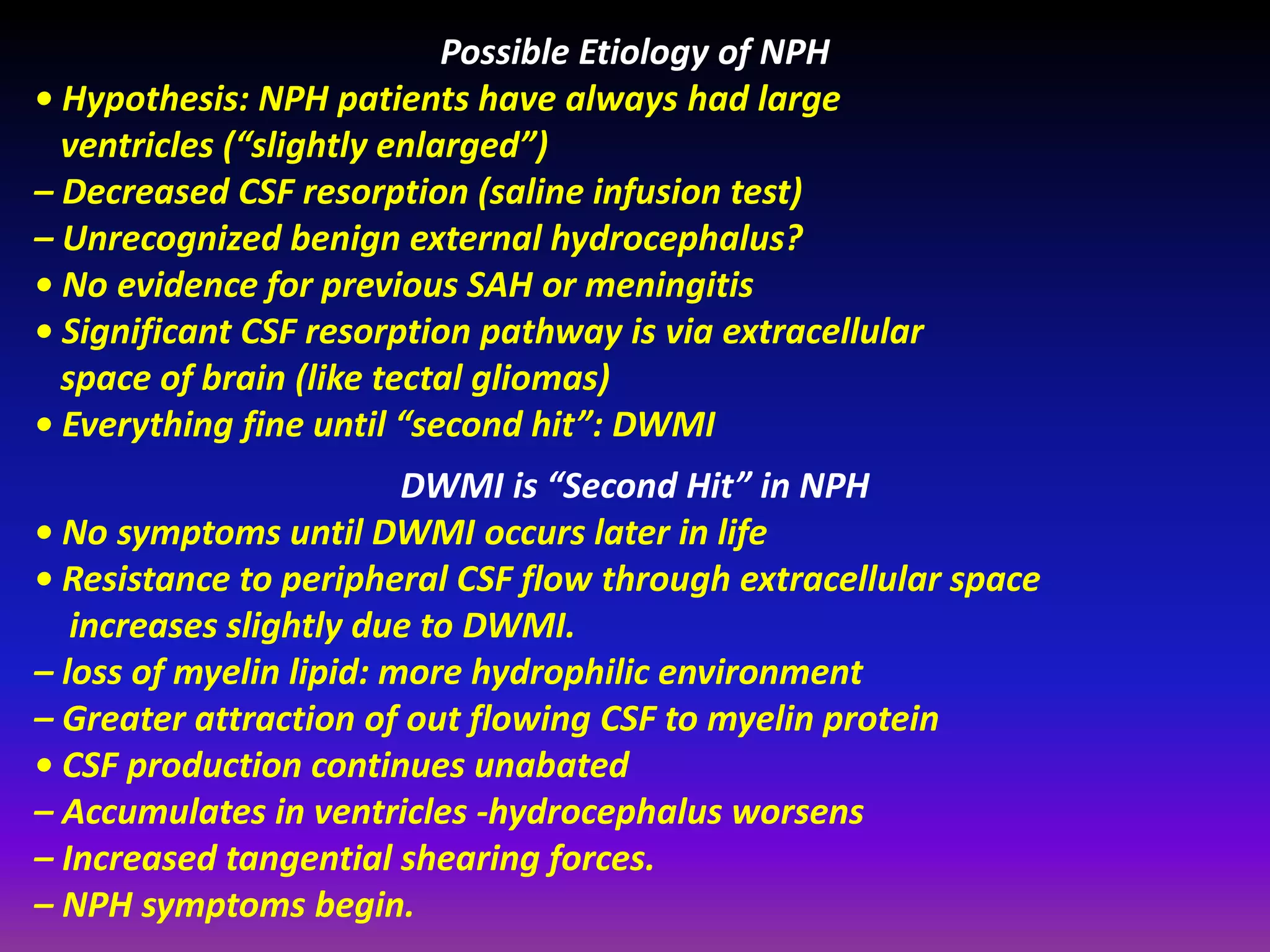
Possible Etiology of NPH 
• Hypothesis: NPH patients have always had large 
ventricles (“slightly enlarged”) 
– Decreased CSF resorption (saline infusion test) 
– Unrecognized benign external hydrocephalus? 
• No evidence for previous SAH or meningitis 
• Significant CSF resorption pathway is via extracellular 
space of brain (like tectal gliomas) 
• Everything fine until “second hit”: DWMI 
DWMI is “Second Hit” in NPH 
• No symptoms until DWMI occurs later in life 
• Resistance to peripheral CSF flow through extracellular space 
increases slightly due to DWMI. 
– loss of myelin lipid: more hydrophilic environment 
– Greater attraction of out flowing CSF to myelin protein 
• CSF production continues unabated 
– Accumulates in ventricles -hydrocephalus worsens 
– Increased tangential shearing forces. 
– NPH symptoms begin.
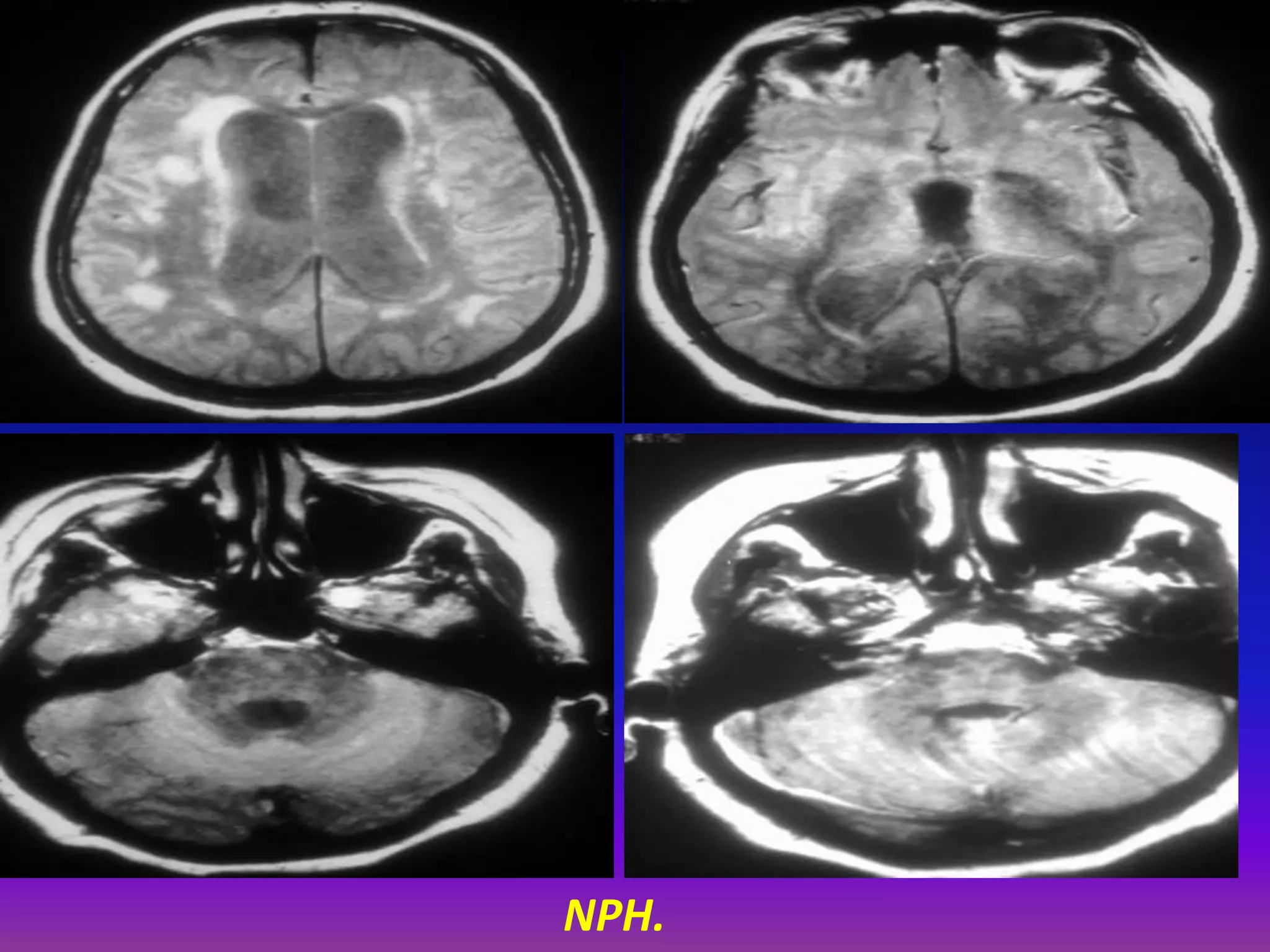
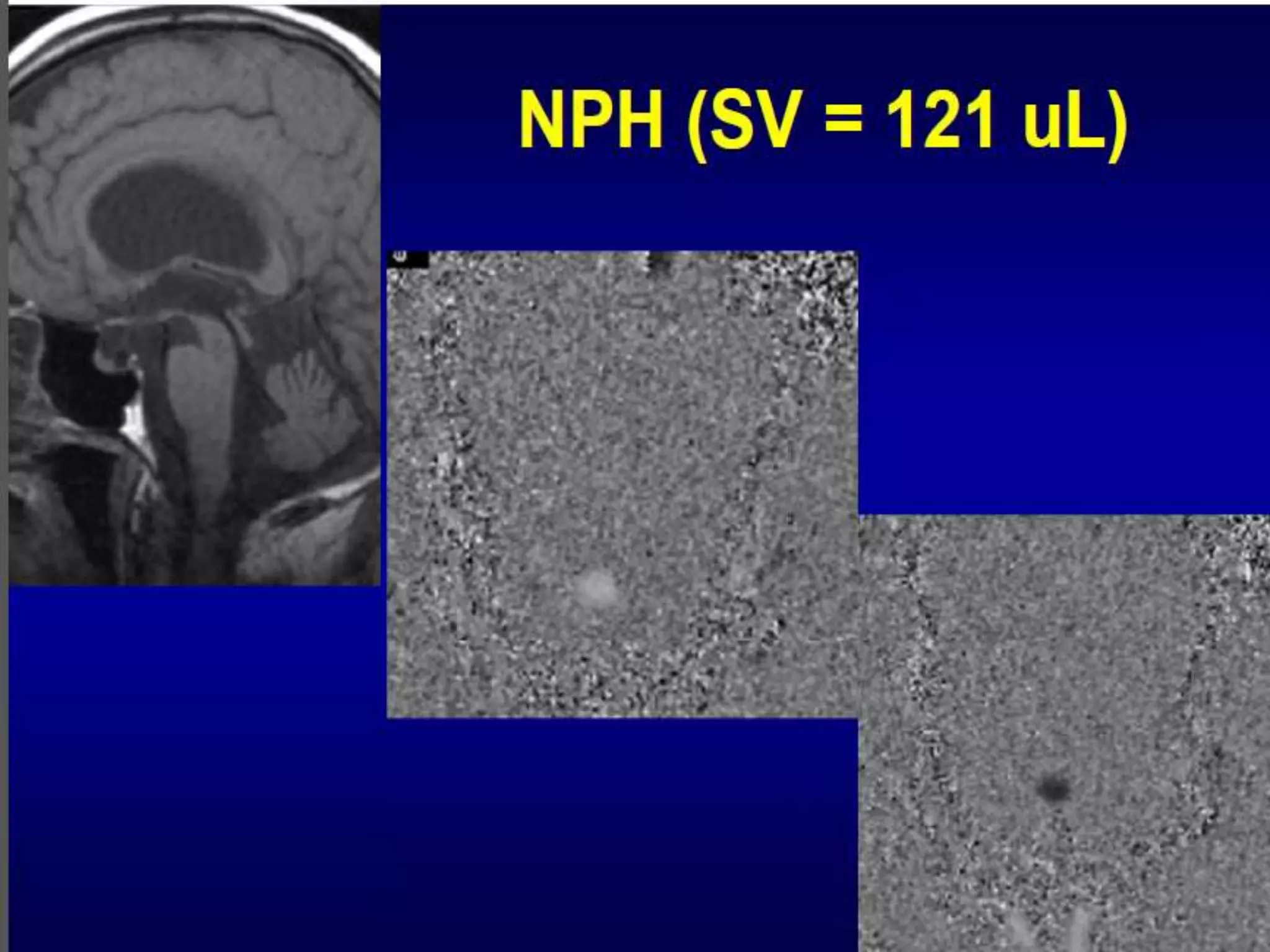
NPH.
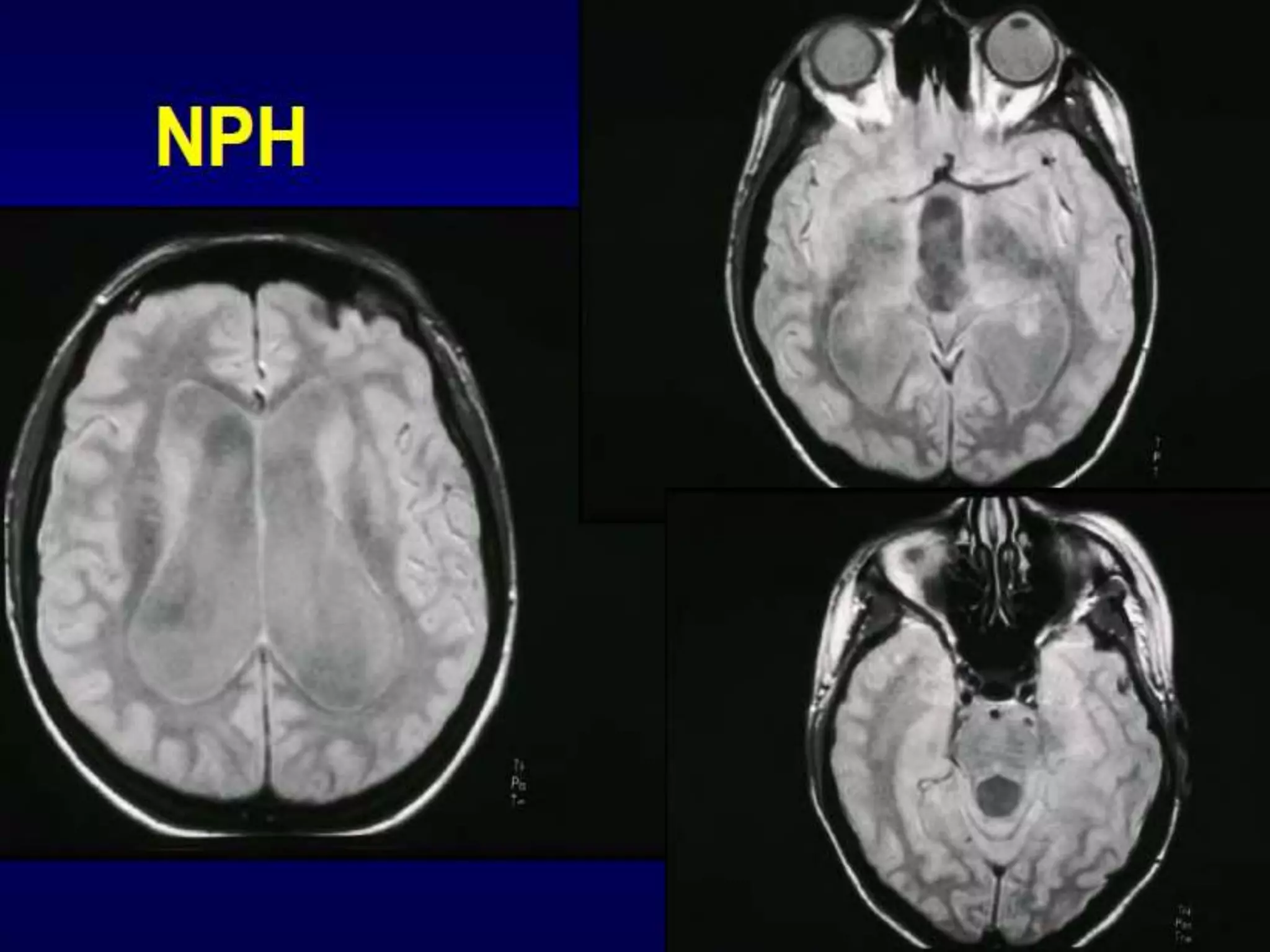
NPH.
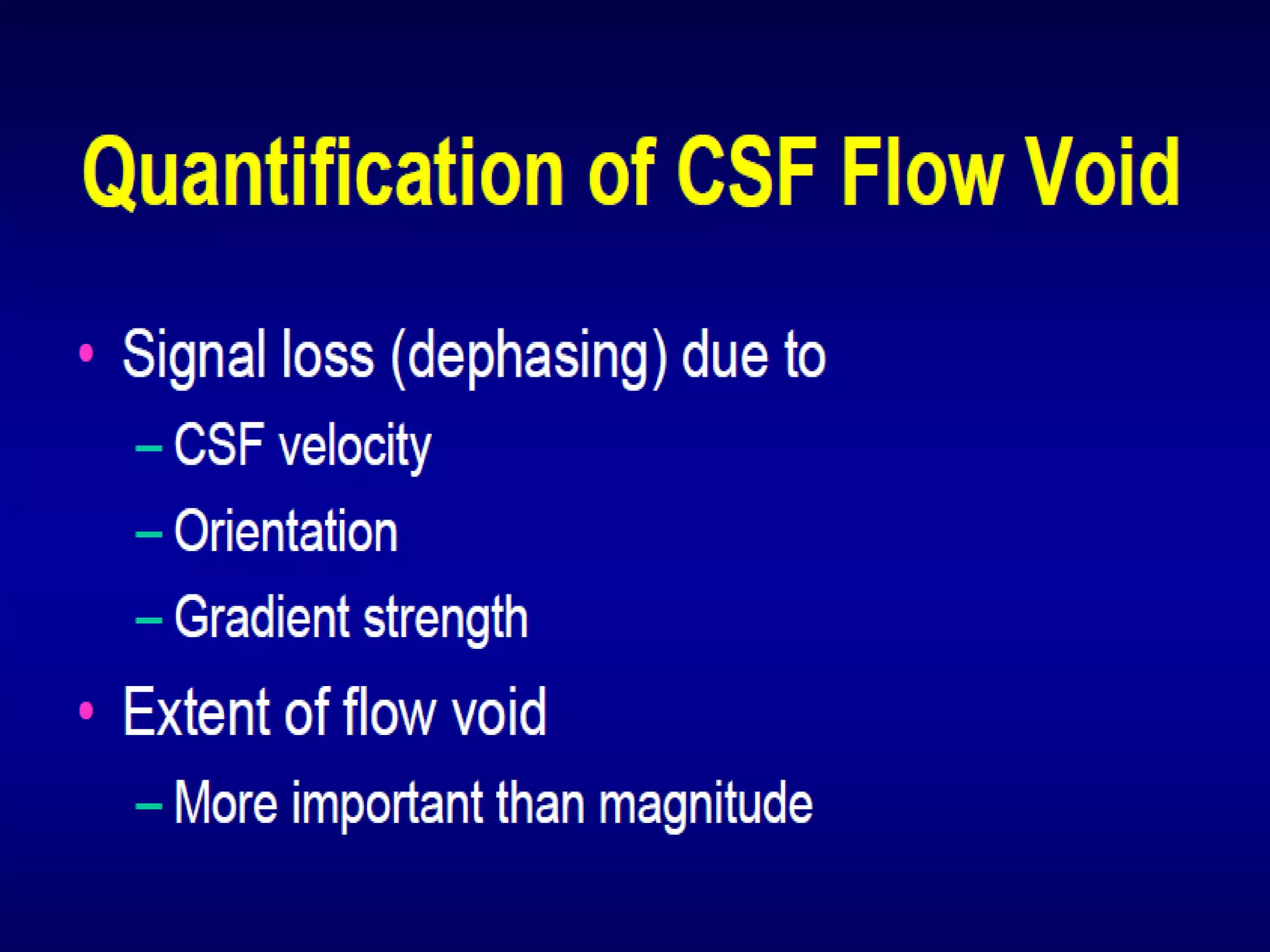
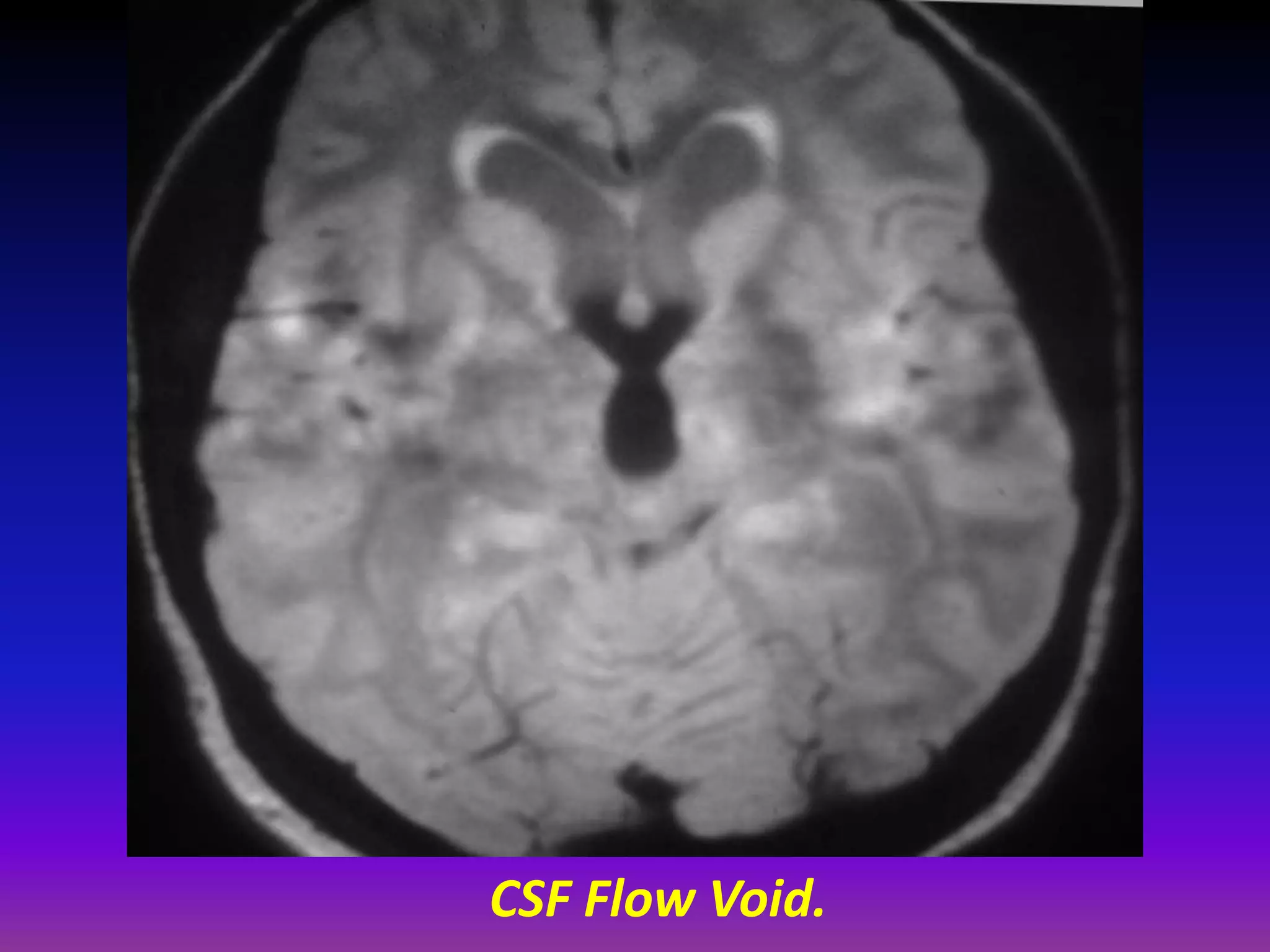
CSF Flow Void.
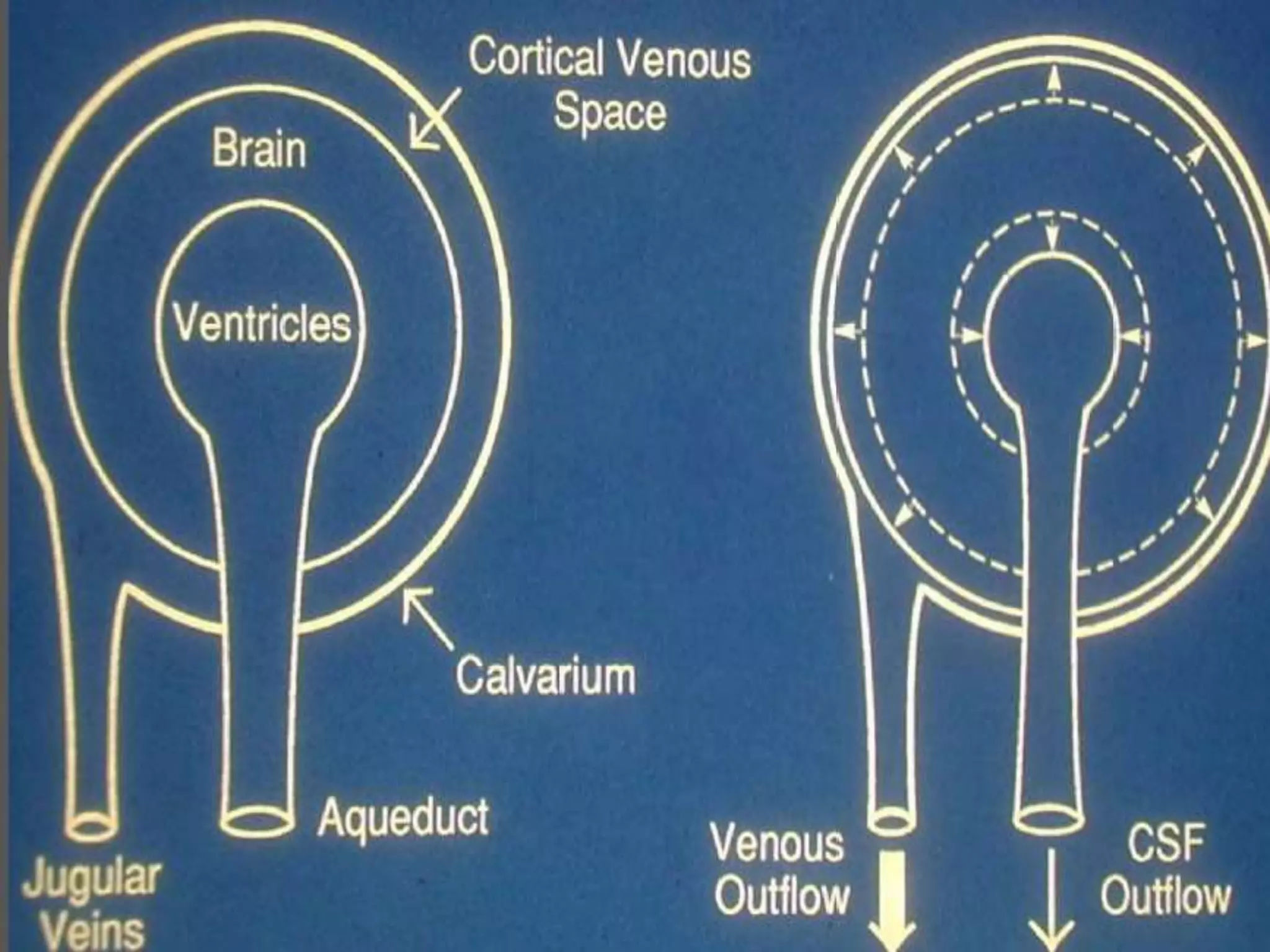
Proposed Causes of CSF Motion 
• Production by choroid plexus 
(500 ml/day). 
• Cardiac pulsations. 
– Choroid plexus (Bering, 1959). 
– Large arteries. 
– Cerebral hemispheres (phase-contrast 
MRI).
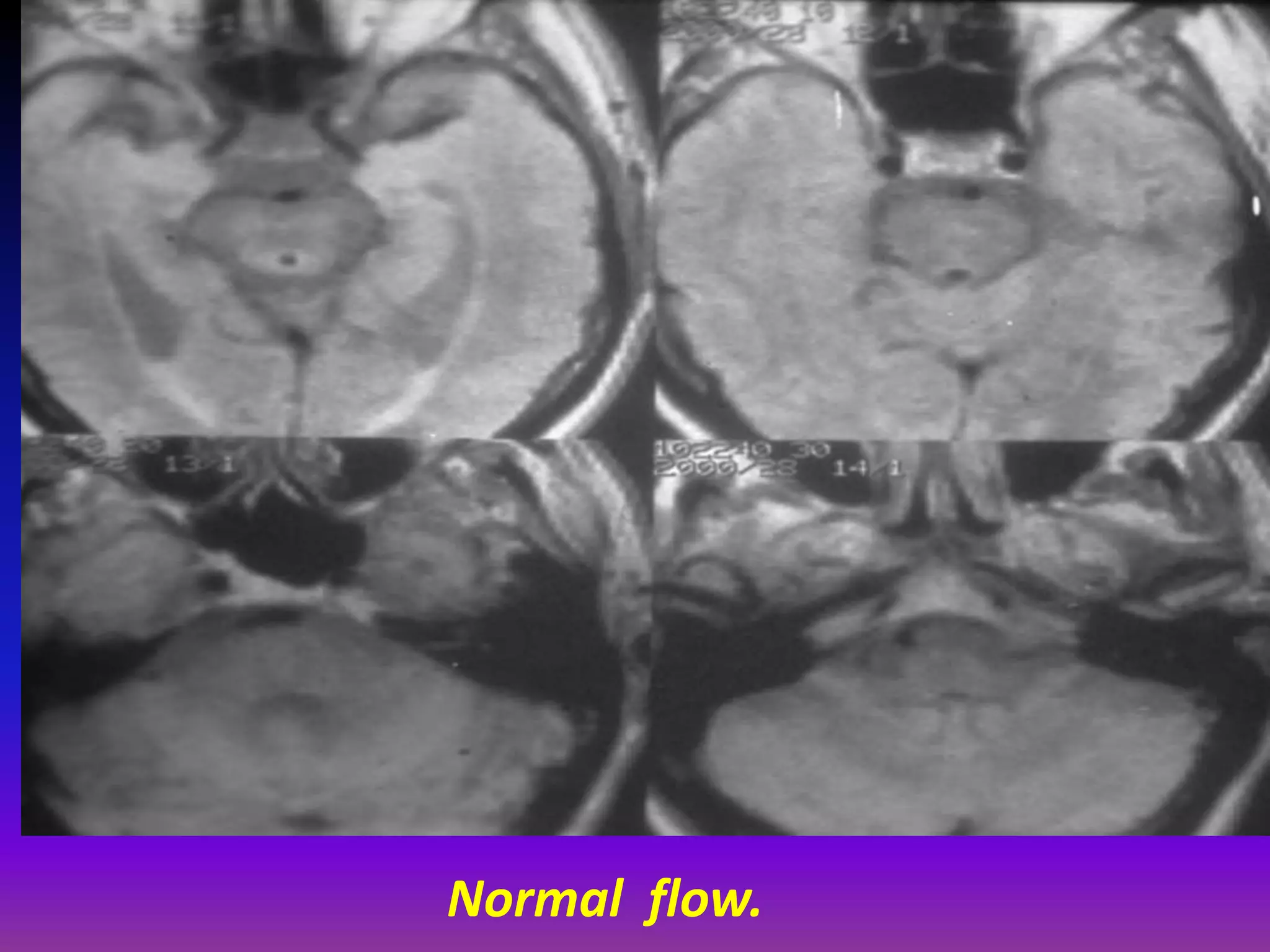
Normal flow.
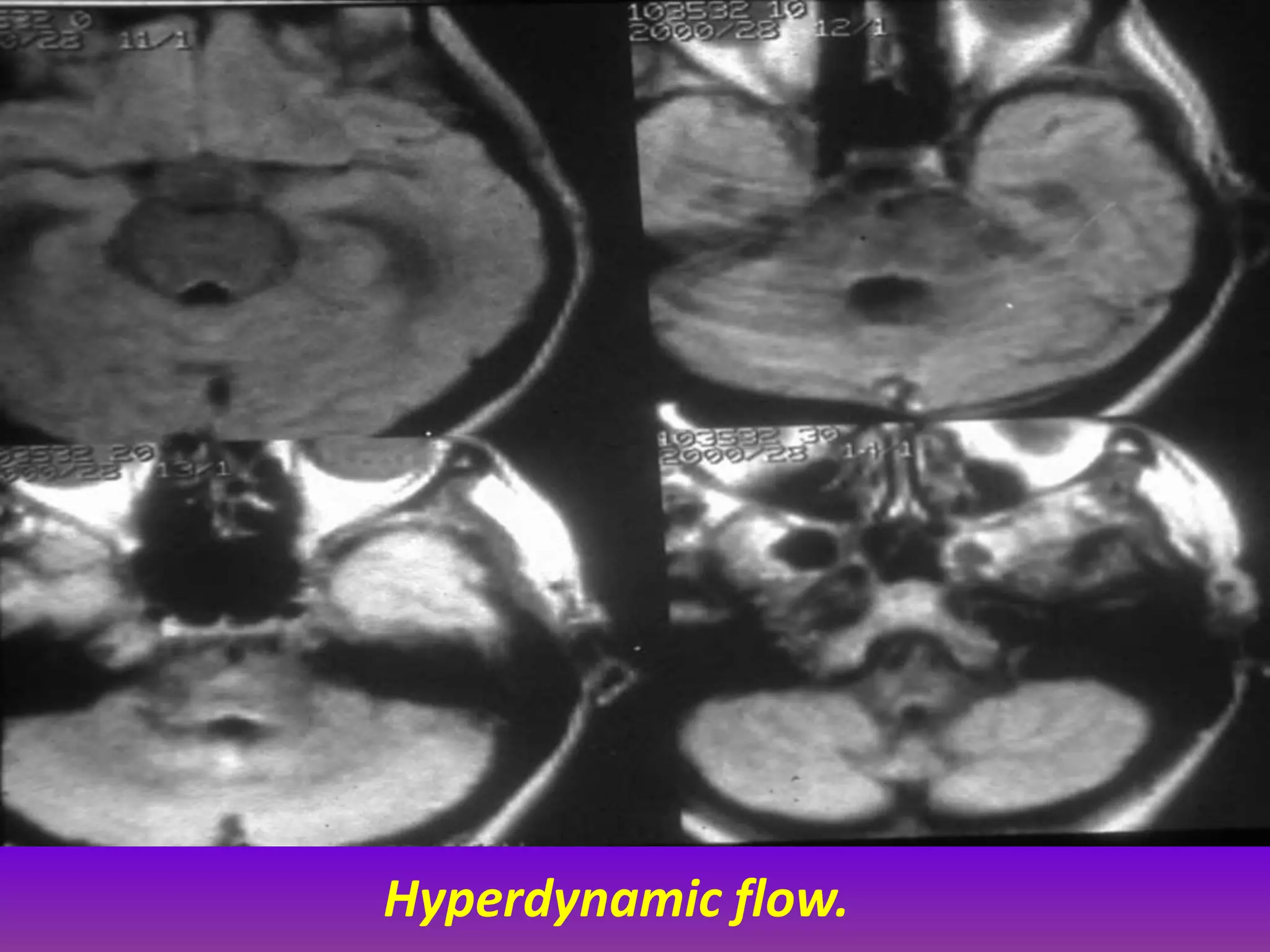
Hyperdynamic flow.
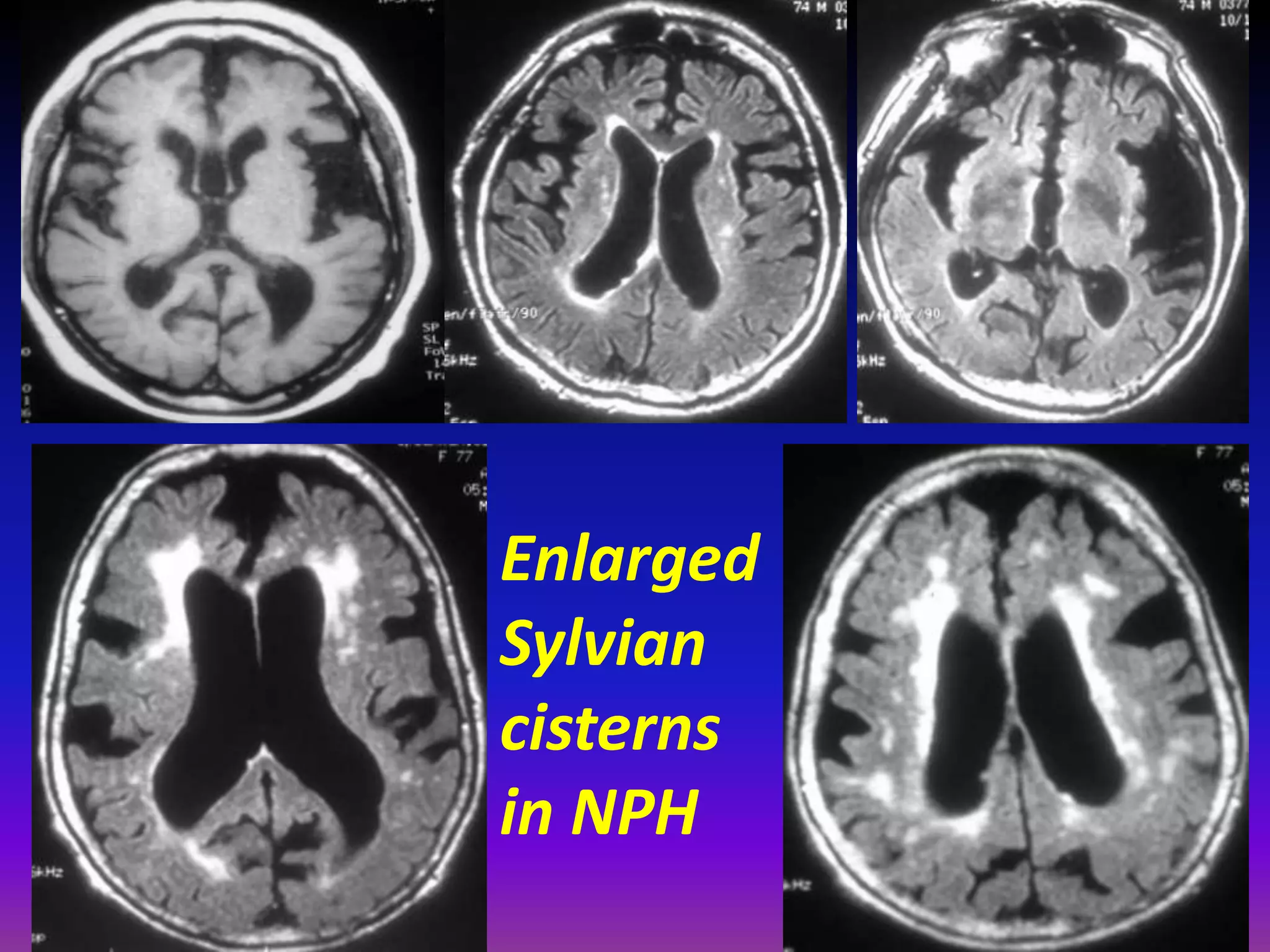
Enlarged 
Sylvian 
cisterns 
in NPH
Association of DWMI and NPH: Clinical 
• Some cases of L’etat Lacunaire (Marie, 1901) 
may have been NPH (Fischer, 1981) 
• Coexistence of NPH and Hypertensive 
Cerebrovascular Disease Noted Previously 
(Earnest 1974, Goto 1977, Graff-Radford 1987) 
• CSF flow void is useful indicator of favorable 
response to CSF diversion 
• Presence of DWMI is not contraindication to 
shunting 
• NPH and DWMI may be related
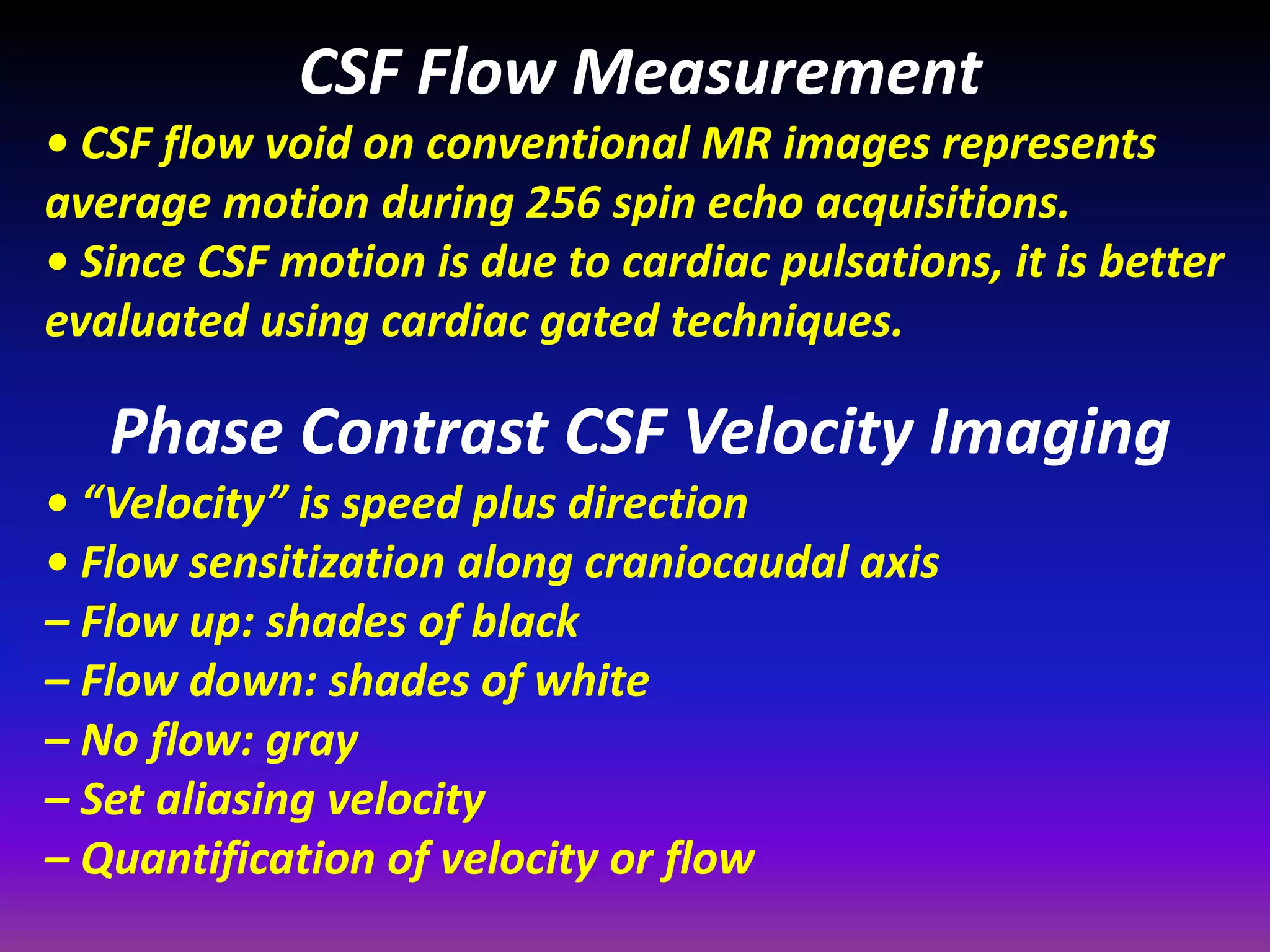
CSF Flow Measurement 
• CSF flow void on conventional MR images represents 
average motion during 256 spin echo acquisitions. 
• Since CSF motion is due to cardiac pulsations, it is better 
evaluated using cardiac gated techniques. 
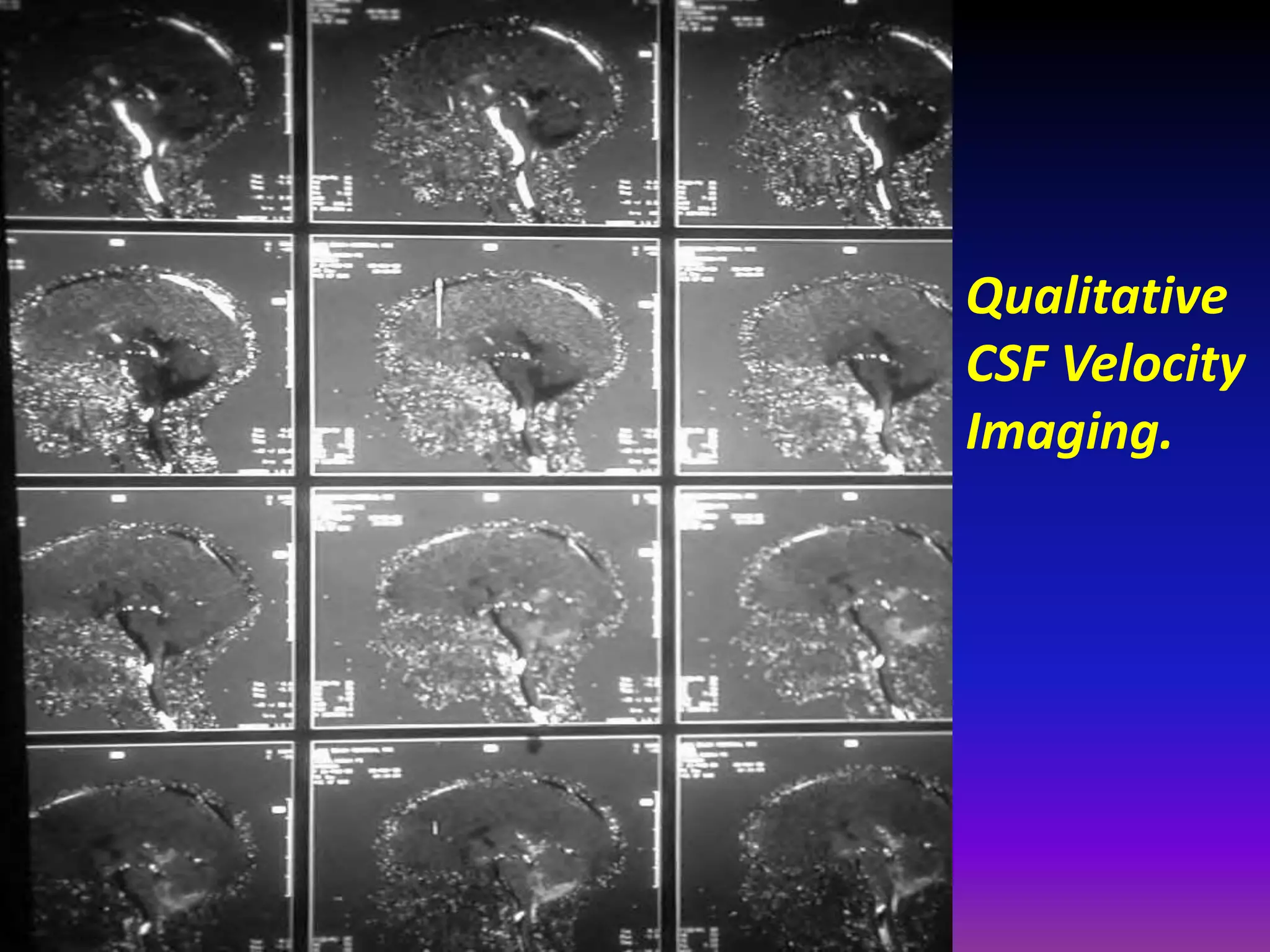
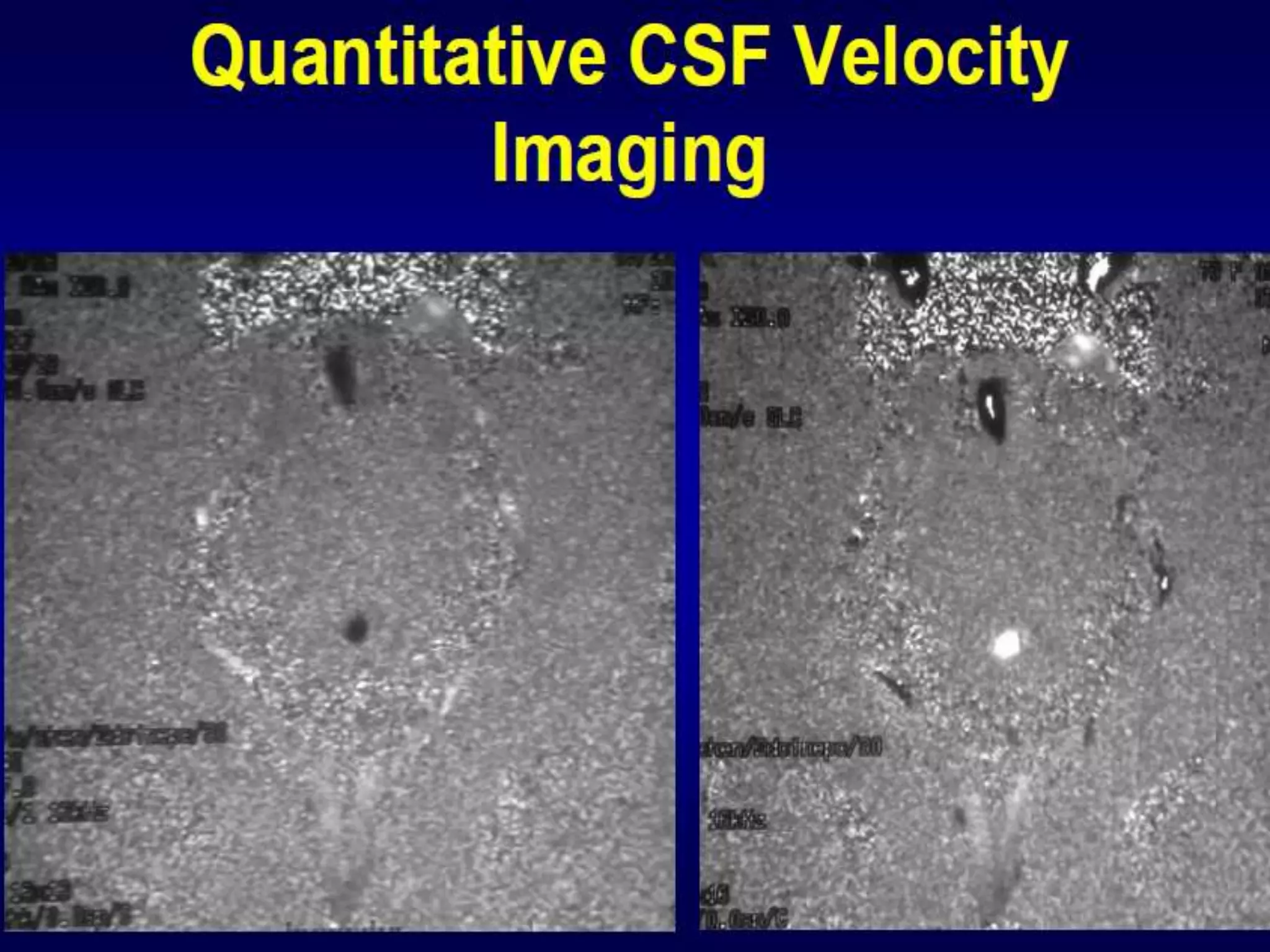
Phase Contrast CSF Velocity Imaging 
• “Velocity” is speed plus direction 
• Flow sensitization along craniocaudal axis 
– Flow up: shades of black 
– Flow down: shades of white 
– No flow: gray 
– Set aliasing velocity 
– Quantification of velocity or flow
Qualitative 
CSF Velocity 
Imaging.
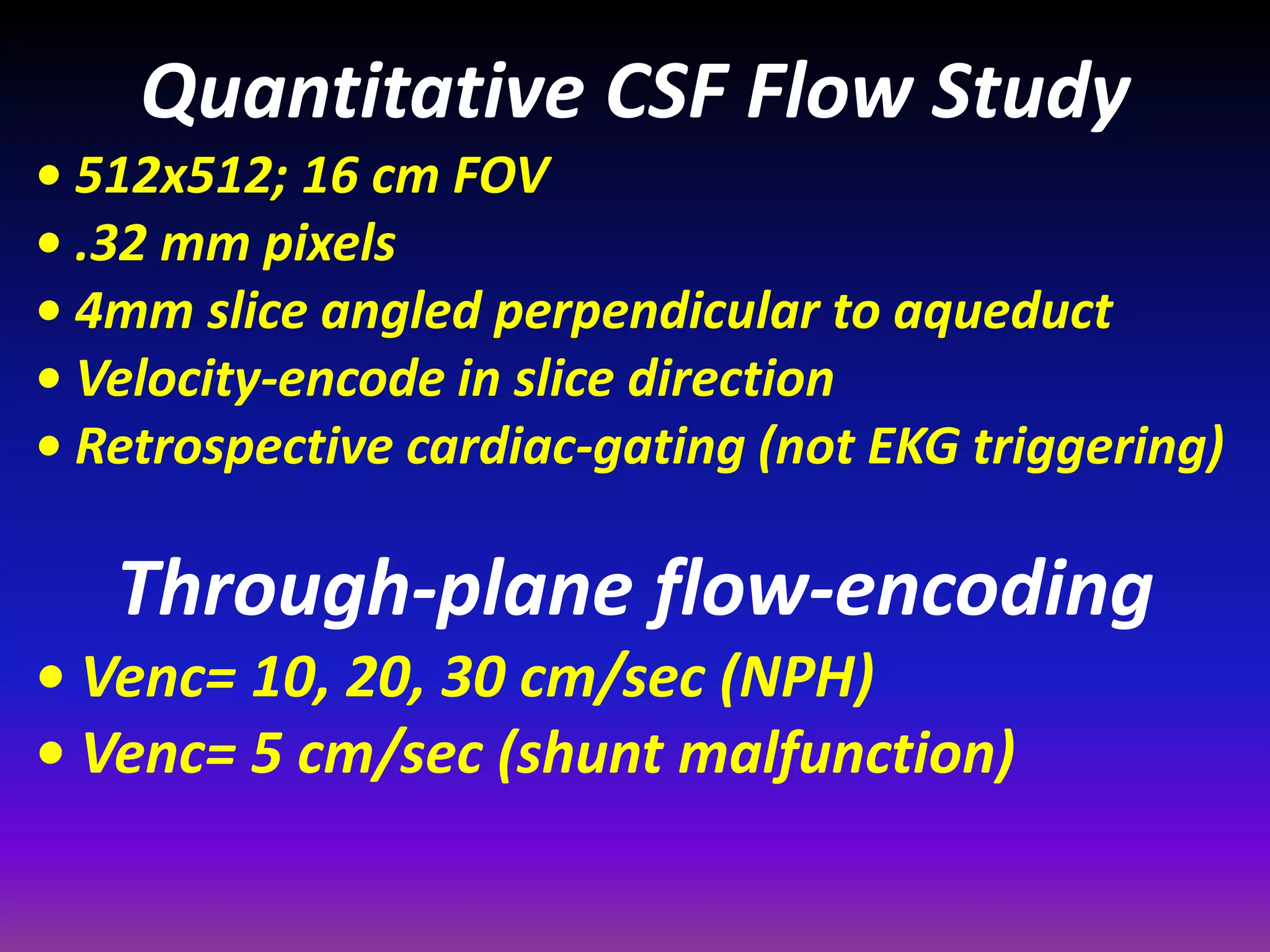
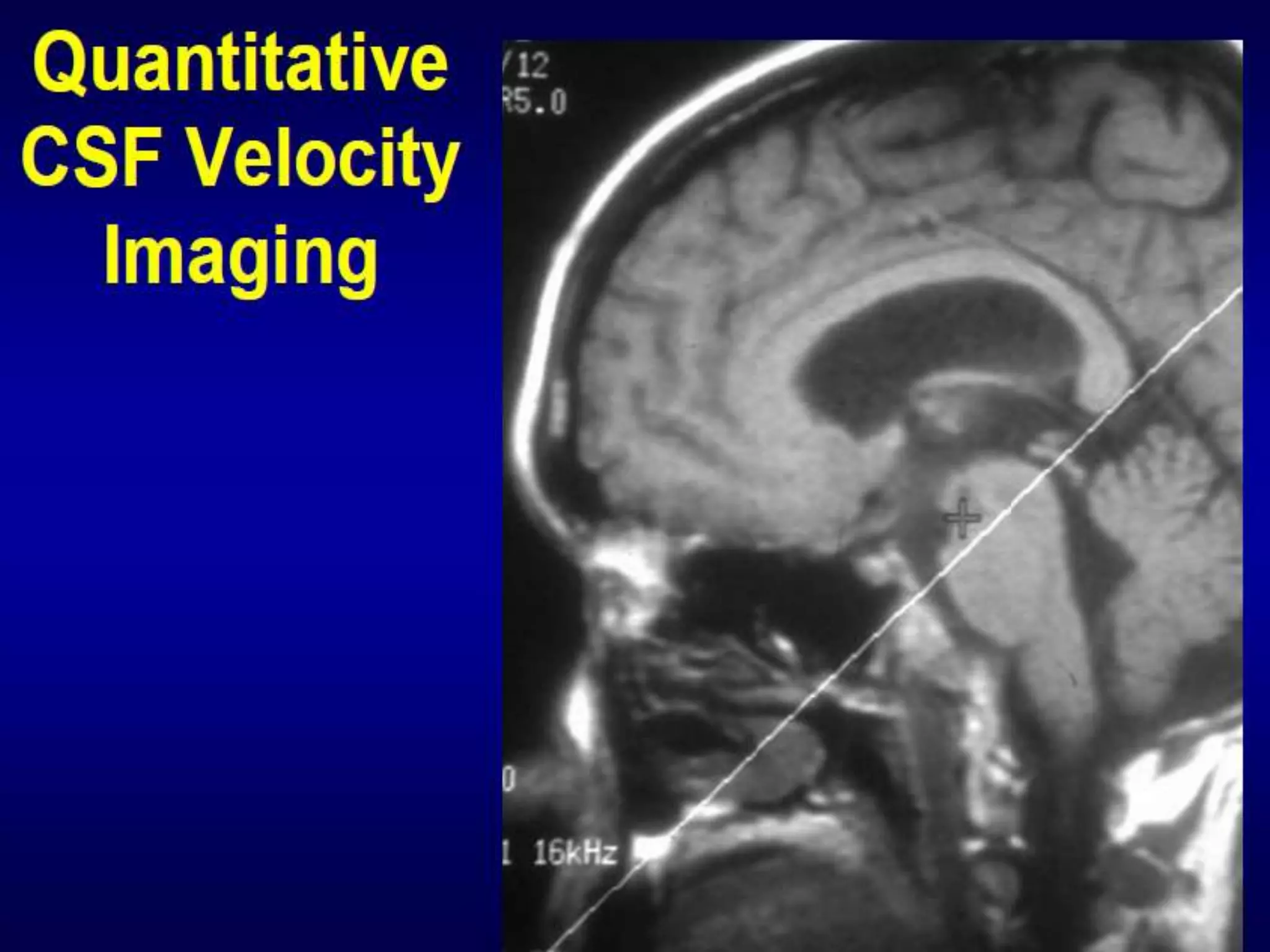
Quantitative CSF Flow Study 
• 512x512; 16 cm FOV 
• .32 mm pixels 
• 4mm slice angled perpendicular to aqueduct 
• Velocity-encode in slice direction 
• Retrospective cardiac-gating (not EKG triggering) 
Through-plane flow-encoding 
• Venc= 10, 20, 30 cm/sec (NPH) 
• Venc= 5 cm/sec (shunt malfunction)
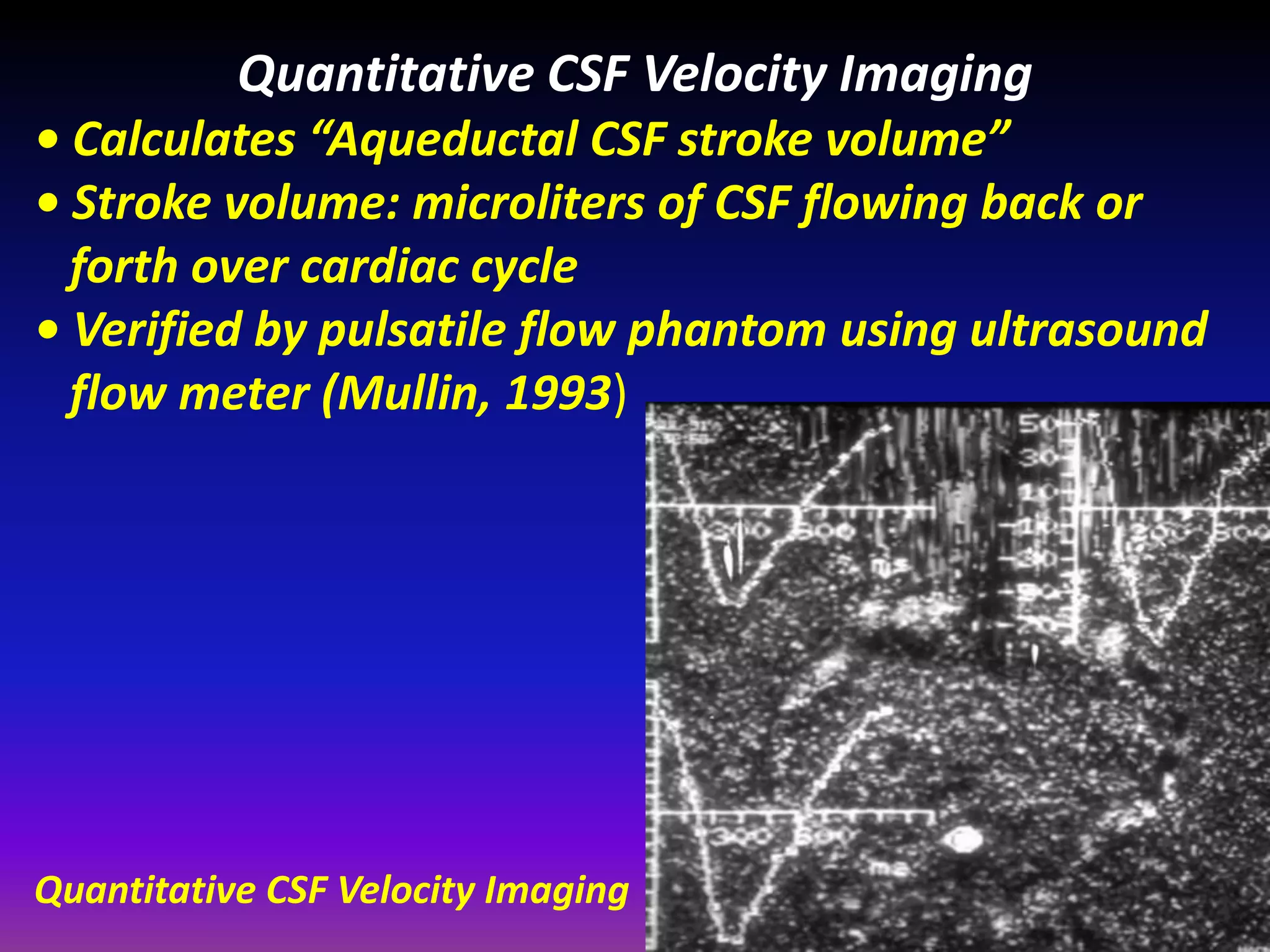
Quantitative CSF Velocity Imaging 
• Calculates “Aqueductal CSF stroke volume” 
• Stroke volume: microliters of CSF flowing back or 
forth over cardiac cycle 
• Verified by pulsatile flow phantom using ultrasound 
flow meter (Mullin, 1993) 
Quantitative CSF Velocity Imaging
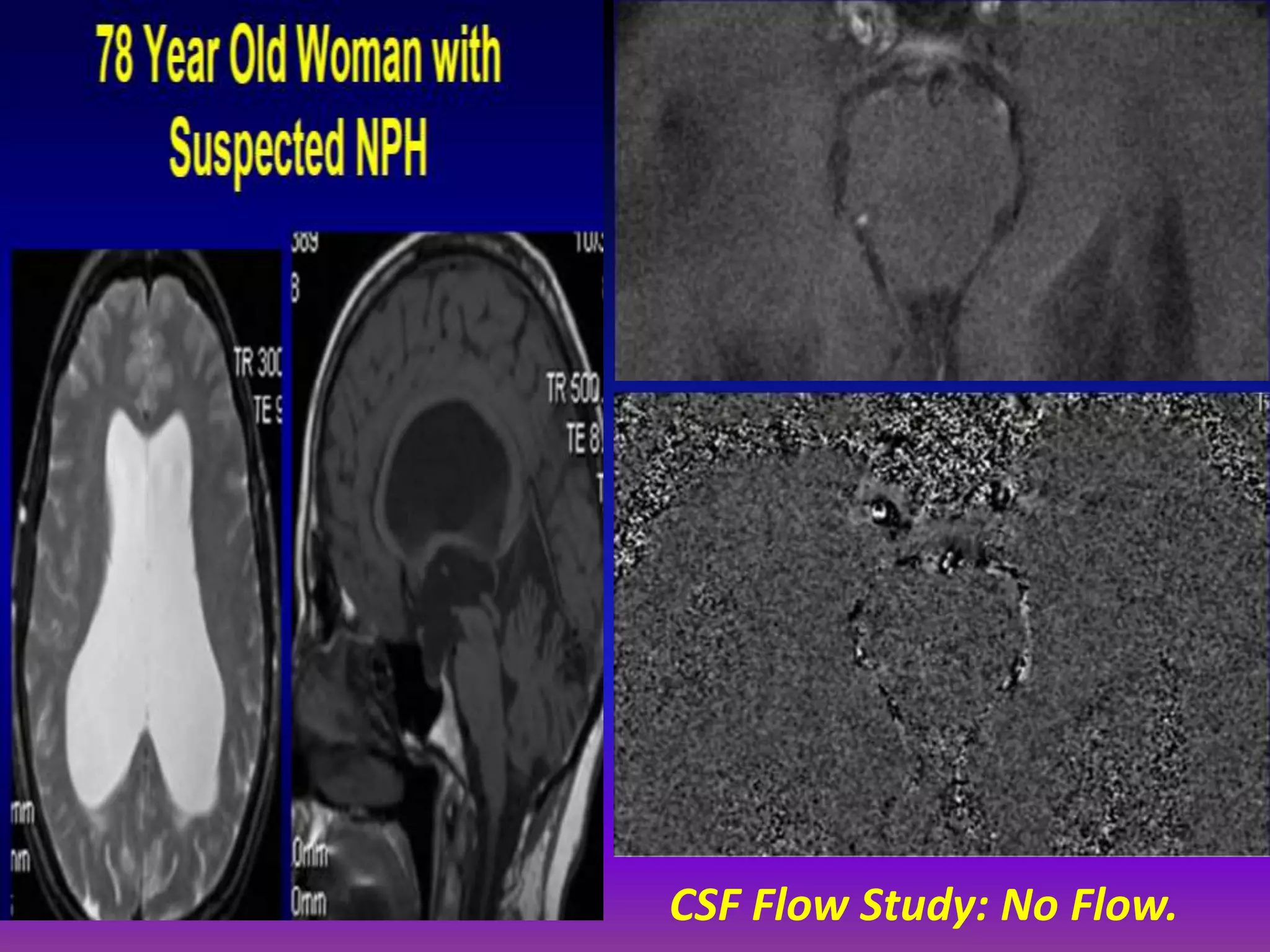
CSF Flow Study: No Flow.
Conclusions 
• NPH diagnosed by symptoms, not MRI 
• MRI used to confirm diagnosis of 
shunt-responsive NPH 
• Asymptomatic patients may have dilated 
ventricles and elevated CSF flow: Pre NPH? 
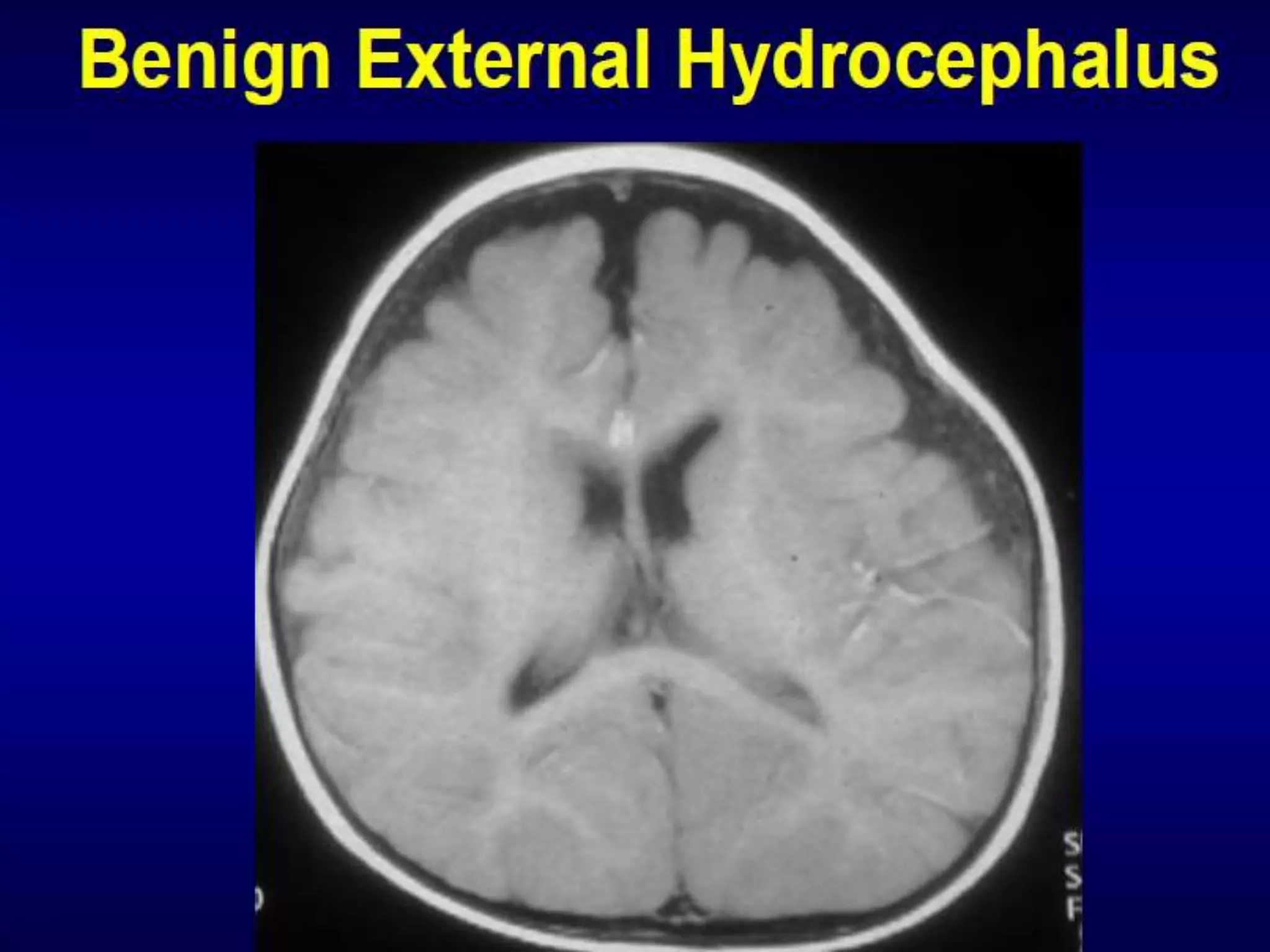
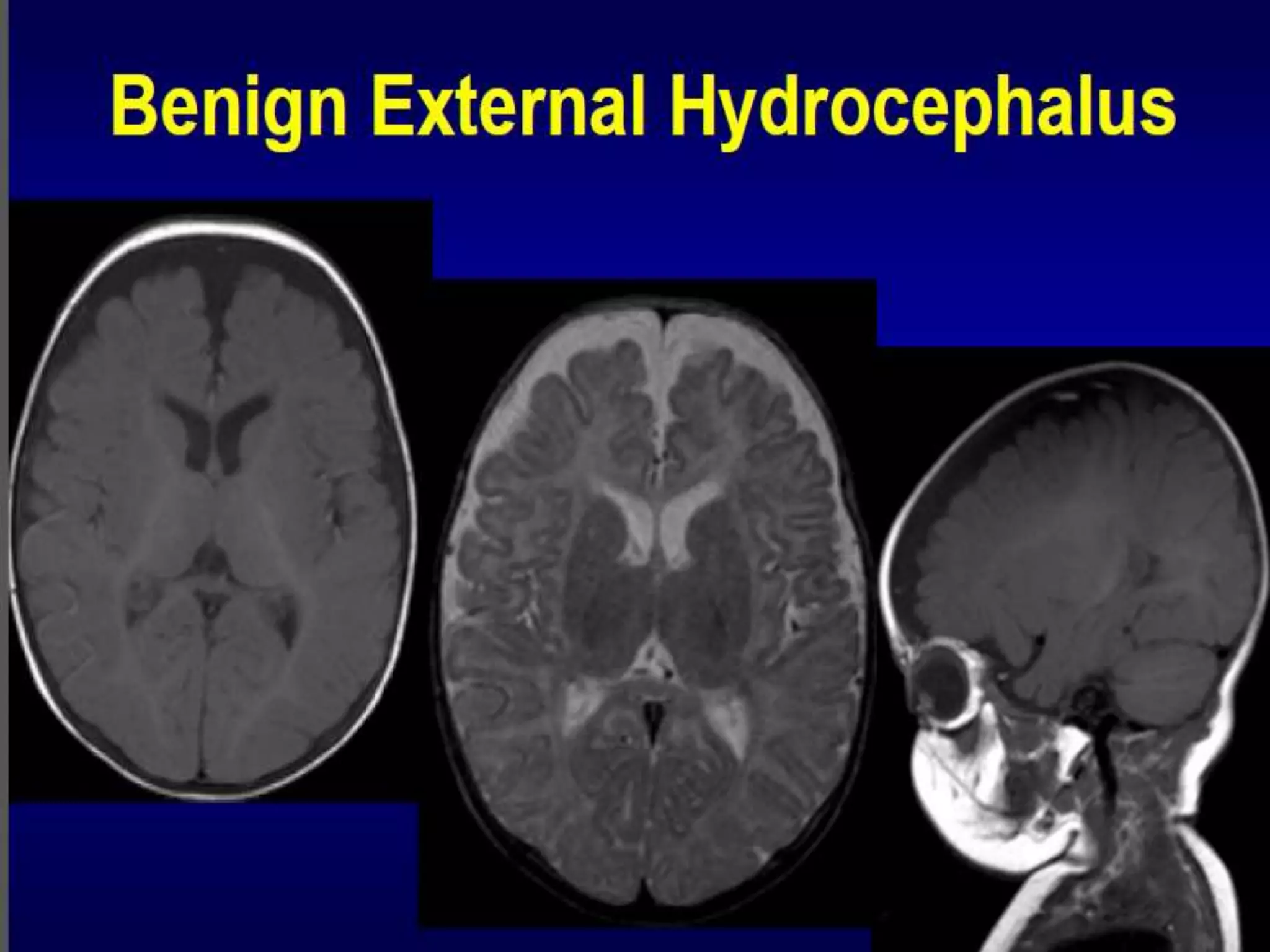
• Not everyone with benign external 
hydrocephalus gets NPH 
• Keep your extracellular space open
Thank You.

Presentation1.pptx, radiological imaging of hydrocephalus.

  • 1.
    Radiological imaging ofhydrocephalus. Dr/ ABD ALLAH NAZEER. MD.
  • 21.
    The contrast amonga normal brain in a normal adult (left), the brain of a normal man with impressive hydrocephalus and an equally impressive hydrocephalus in a 54-year-old man with deep cognitive and motor impairment since childhood (right;
  • 22.
    A 25-week prematuremale with an intraventricular hemorrhage and subsequent development of hydrocephalus: ( a ) CUS shows the right-sided intraventricular hemorrhage; ( b ) CT also shows parenchymal hemorrhage
  • 23.
  • 24.
  • 25.
  • 26.
    A 4-month-old malewith vein of Galen malformation: ( a ) MRI shows the dilated vein of Galen; ( b ) cerebral angiogram shows the dilated vein of Galen and the surrounding vasculature
  • 27.
    ( a –b ) A 8-year-old female with a posterior fossa brain tumor and hydrocephalus.
  • 28.
    A 13-year-old malewith hydrocephalus secondary to aqueductal stenosis, status post endoscopic third ventriculostomy (ETV). CSF cine flow study demonstrates CSF flow across the fenestration in the anterior third ventricle: ( a ) phase-contrast magnitude cine MRI; ( b ) phase contrast directional cine MRI.
  • 29.
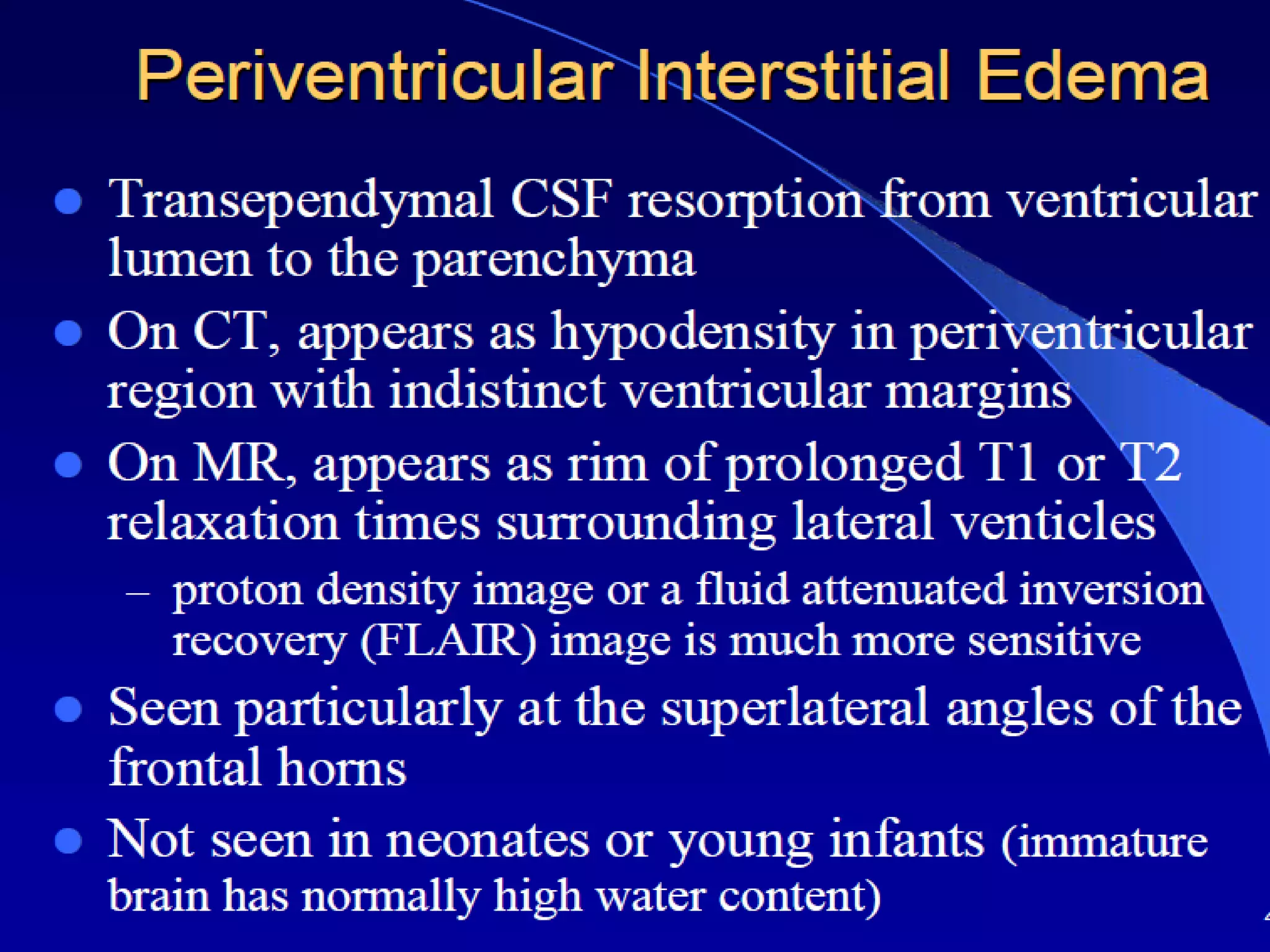
    CT/MRI axial scansdemonstrating ventriculomegaly with relatively well- identified sulci. Periventricular edema is observed in case 4 which suggest acute onset.
  • 30.
    Pineal body tumourwith hydrocephalus.
  • 31.
  • 32.
  • 34.
  • 35.
  • 38.
  • 40.
    Giant cell astrocytomawith hydrocephalus.
  • 41.
  • 42.
    Choroid plexus tumorswith hydrocephalus.
  • 43.
    Choroid plexus carcinomawith hydrocephalus.
  • 44.
  • 45.
    Fourth ventricle tumourwith hydrocephalus.
  • 46.
    Posterior fossa immatureteratoma with hydrocephalus.
  • 47.
    Posterior fossa cysticmass with hydrocephalus.
  • 48.
  • 49.
    Normal Pressure Hydrocephalus • Described by Hakim, Adams, et al (1965). • 50% known cause (SAH, meningitis). • 50% idiopathic (older). • Diagnosis primarily clinical: Gait apraxia, dementia, incontinence. • Radiology: communicating hydrocephalus.
  • 51.
    Physiologic Tests forNPH • Nuclear cisternography – Communicating hydrocephalus • Pressure monitoring – Water hammer pulse – Plateau waves • Saline Infusion (outpatient) – If resistance > 4mmHg/ml/min, 82% respond to ELD • 50 cc Tap test: PPV 73-100%; sensitivity 26-62% • External lumbar drainage (inpatient)
  • 53.
    External Lumbar Drainage • 16 gauge lumbar puncture; catheter drainage • 10 cc/hour for 3 days; gait assessed. • Of 151 patients* with iNPH,100 improved with ELD. – Gait only (88%), gait/dementia (84%), triad (59%). • Of responders, 90% improve with VP shunt. • Of nonresponders, 22% improve with shunt.
  • 55.
    What Causes IdiopathicNPH? • Consider normal bulk flow of water in brain • Consider association of deep white matter ischemia (DWMI) and NPH. Normal Bulk Flow of Extracellular Brain Water • Water leaves upstream arterioles under pressure-osmotic gradients (e.g, mannitol). • Normal and excess water resorbed by downstream capillaries and venules. • Vasogenic edema flows centripetally to be absorbed by ventricles • Interstitial edema flows centrifugally to subarachnoid space via extracellular space.
  • 56.
    Possible Etiology ofNPH • Hypothesis: NPH patients have always had large ventricles (“slightly enlarged”) – Decreased CSF resorption (saline infusion test) – Unrecognized benign external hydrocephalus? • No evidence for previous SAH or meningitis • Significant CSF resorption pathway is via extracellular space of brain (like tectal gliomas) • Everything fine until “second hit”: DWMI DWMI is “Second Hit” in NPH • No symptoms until DWMI occurs later in life • Resistance to peripheral CSF flow through extracellular space increases slightly due to DWMI. – loss of myelin lipid: more hydrophilic environment – Greater attraction of out flowing CSF to myelin protein • CSF production continues unabated – Accumulates in ventricles -hydrocephalus worsens – Increased tangential shearing forces. – NPH symptoms begin.
  • 57.
  • 59.
  • 63.
  • 64.
    Proposed Causes ofCSF Motion • Production by choroid plexus (500 ml/day). • Cardiac pulsations. – Choroid plexus (Bering, 1959). – Large arteries. – Cerebral hemispheres (phase-contrast MRI).
  • 65.
  • 66.
  • 69.
  • 70.
    Association of DWMIand NPH: Clinical • Some cases of L’etat Lacunaire (Marie, 1901) may have been NPH (Fischer, 1981) • Coexistence of NPH and Hypertensive Cerebrovascular Disease Noted Previously (Earnest 1974, Goto 1977, Graff-Radford 1987) • CSF flow void is useful indicator of favorable response to CSF diversion • Presence of DWMI is not contraindication to shunting • NPH and DWMI may be related
  • 71.
    CSF Flow Measurement • CSF flow void on conventional MR images represents average motion during 256 spin echo acquisitions. • Since CSF motion is due to cardiac pulsations, it is better evaluated using cardiac gated techniques. Phase Contrast CSF Velocity Imaging • “Velocity” is speed plus direction • Flow sensitization along craniocaudal axis – Flow up: shades of black – Flow down: shades of white – No flow: gray – Set aliasing velocity – Quantification of velocity or flow
  • 72.
  • 73.
    Quantitative CSF FlowStudy • 512x512; 16 cm FOV • .32 mm pixels • 4mm slice angled perpendicular to aqueduct • Velocity-encode in slice direction • Retrospective cardiac-gating (not EKG triggering) Through-plane flow-encoding • Venc= 10, 20, 30 cm/sec (NPH) • Venc= 5 cm/sec (shunt malfunction)
  • 77.
    Quantitative CSF VelocityImaging • Calculates “Aqueductal CSF stroke volume” • Stroke volume: microliters of CSF flowing back or forth over cardiac cycle • Verified by pulsatile flow phantom using ultrasound flow meter (Mullin, 1993) Quantitative CSF Velocity Imaging
  • 80.
  • 84.
    Conclusions • NPHdiagnosed by symptoms, not MRI • MRI used to confirm diagnosis of shunt-responsive NPH • Asymptomatic patients may have dilated ventricles and elevated CSF flow: Pre NPH? • Not everyone with benign external hydrocephalus gets NPH • Keep your extracellular space open
  • 85.