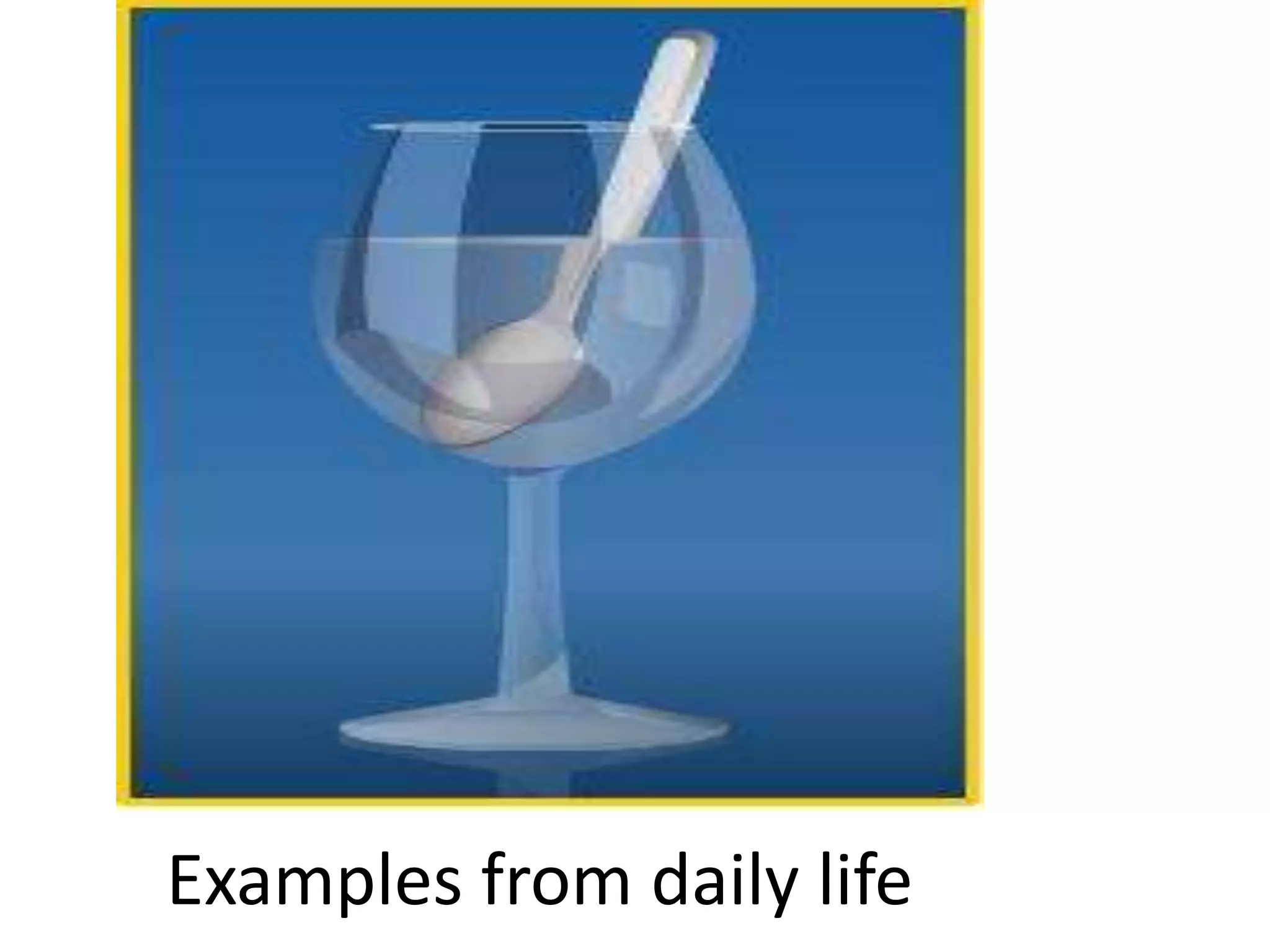
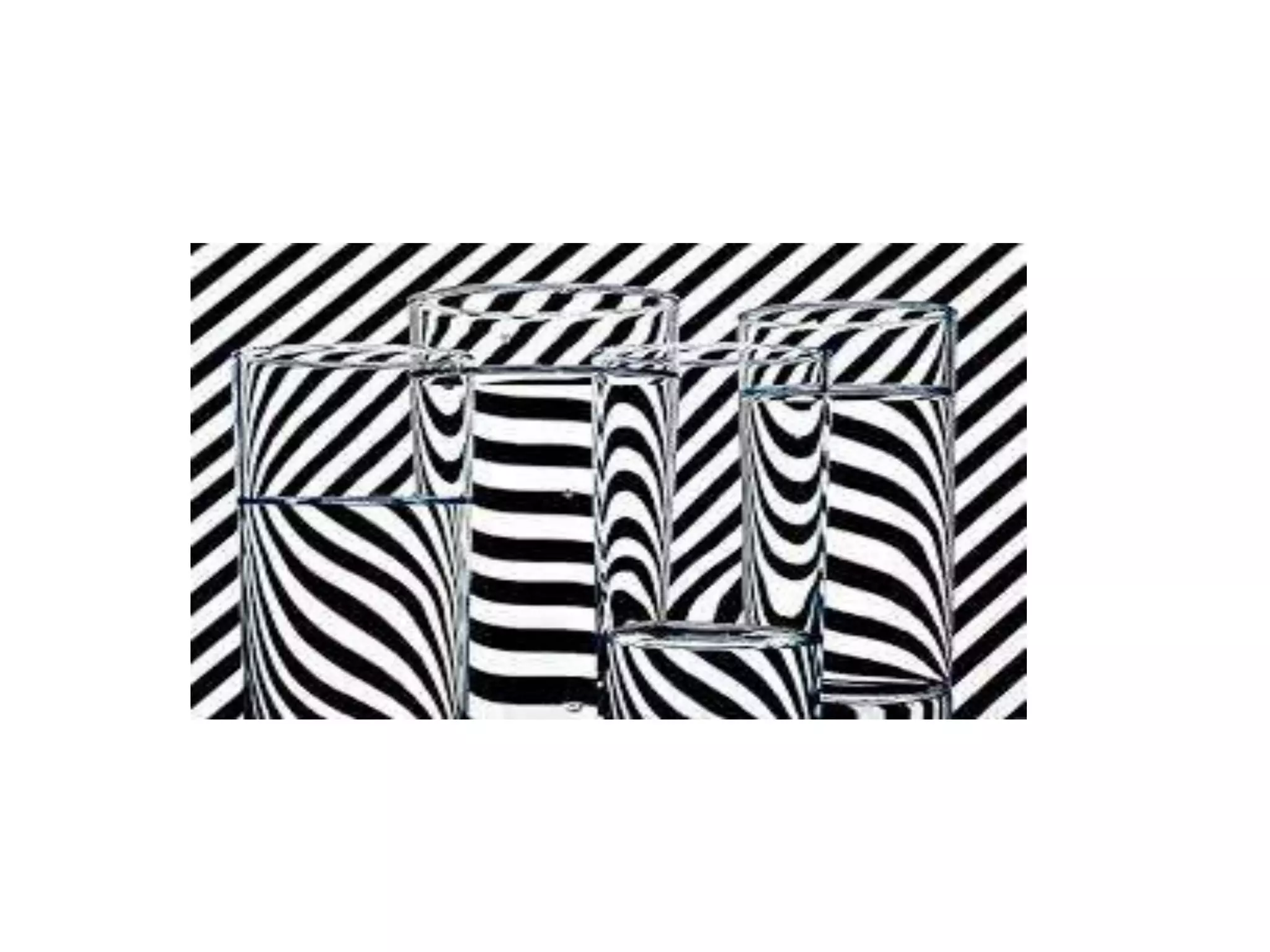
Examples from daily life
Points to remember 
 When a ray light passes from air to water its speed changes. Due to this 
there is a change in direction of the ray 
 The change in direction suffered by a ray of light as passes obliquely from 
one optical medium to another with different optical densities is known as 
refraction 
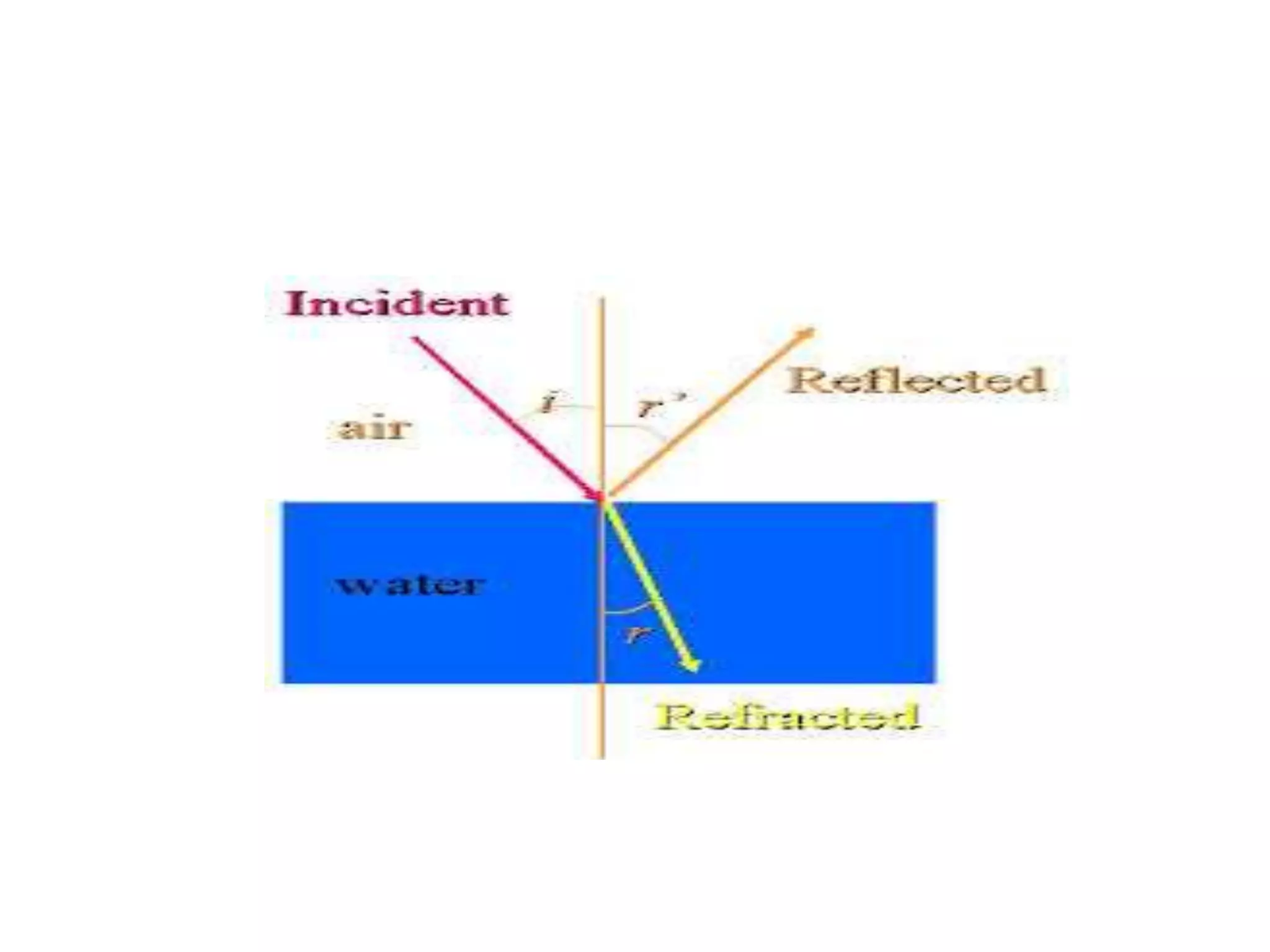
 When a ray of light is incident on a surface separating two media a small 
fraction of light always get reflected. 
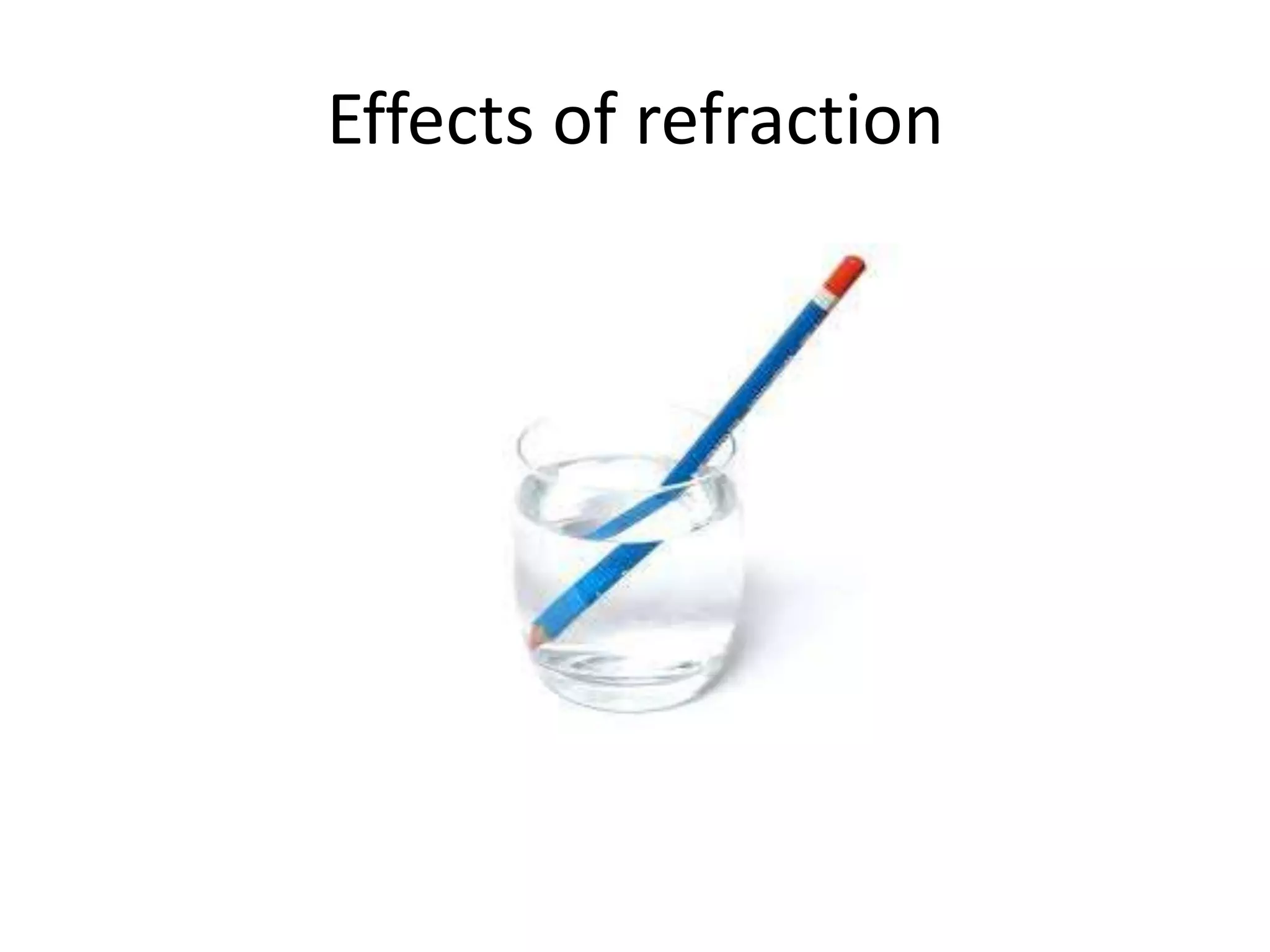
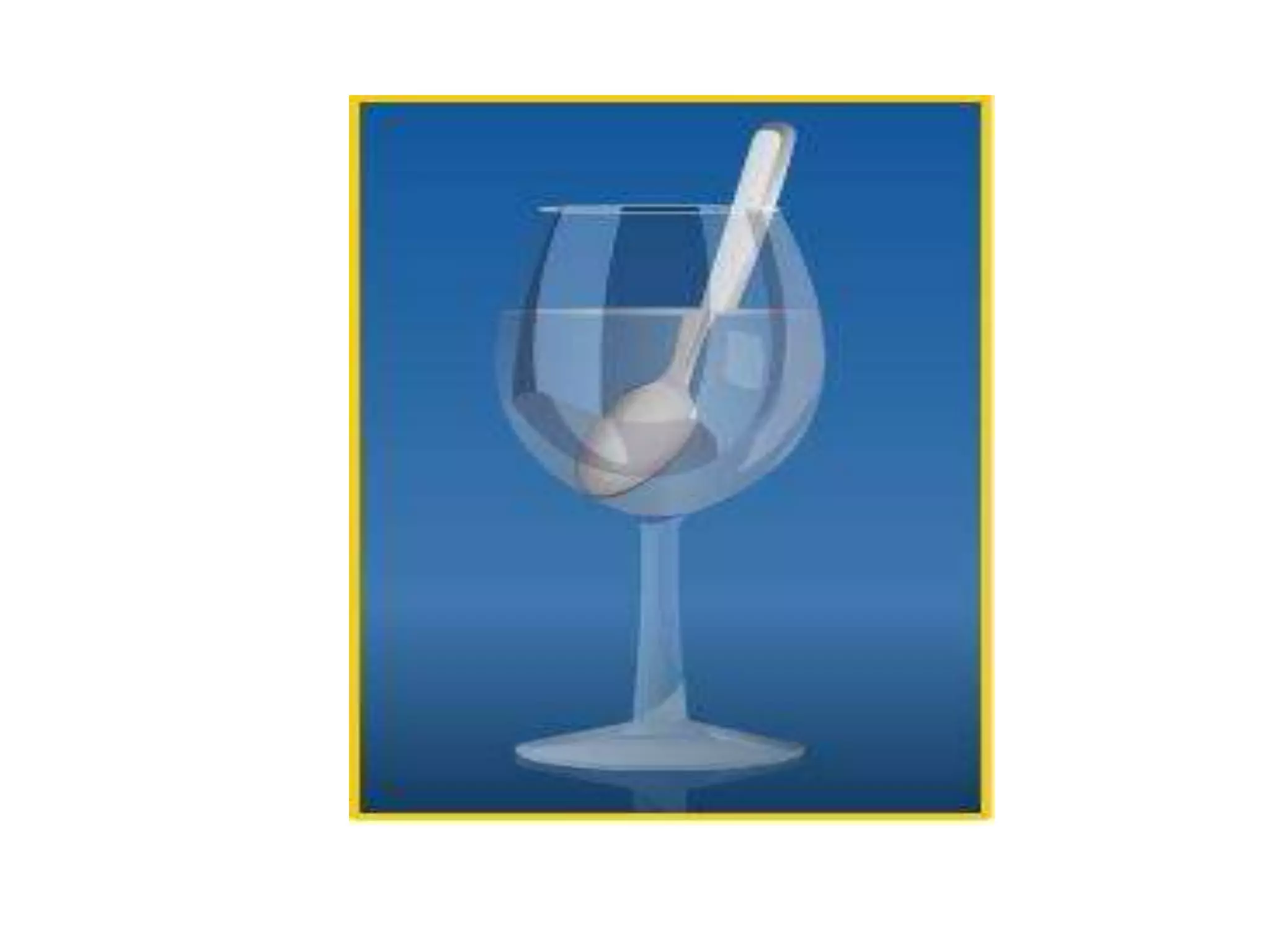
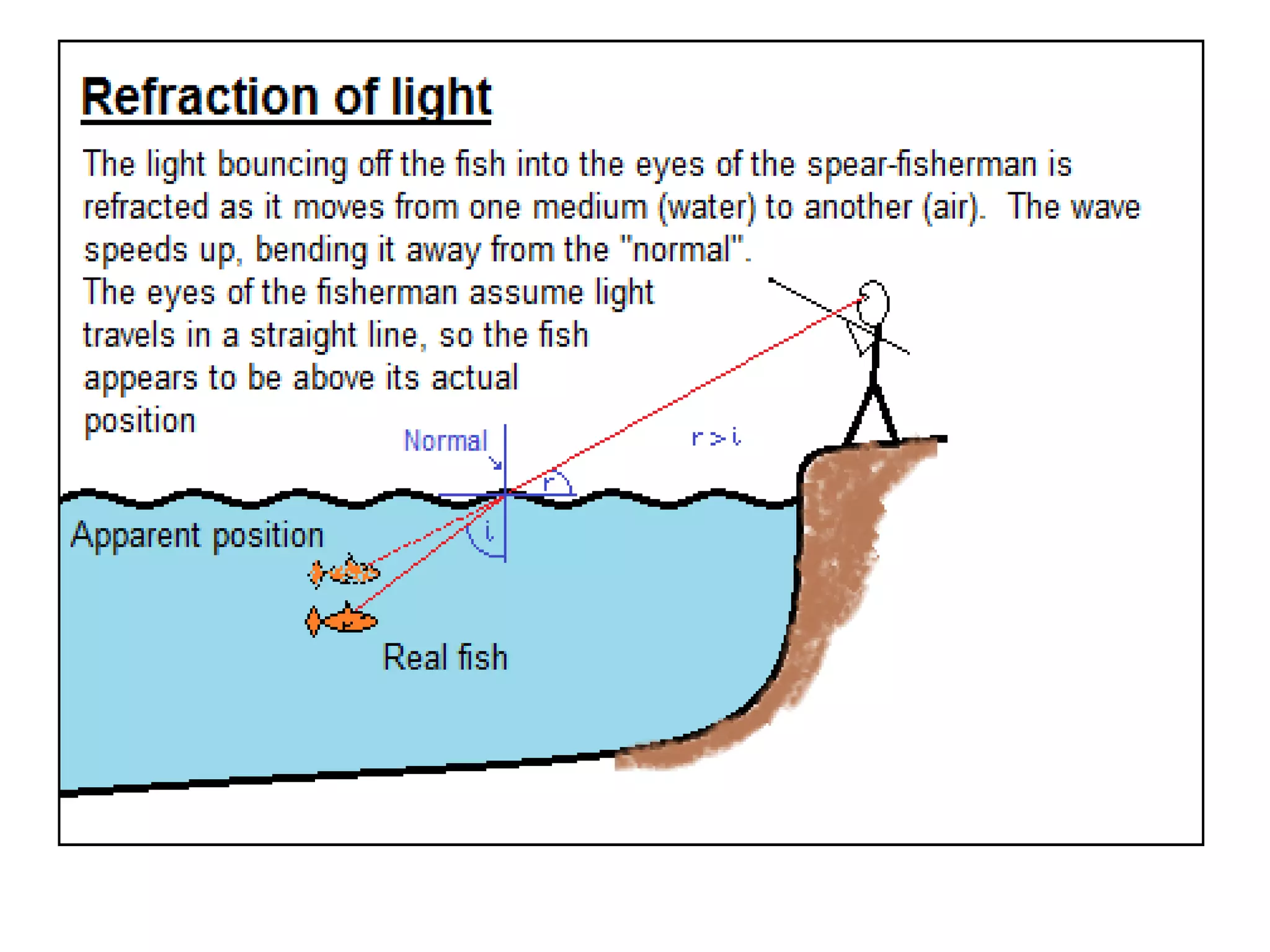
 Refraction can make an object appear to be on a different position
Why does light refract? 
Why does light refract?
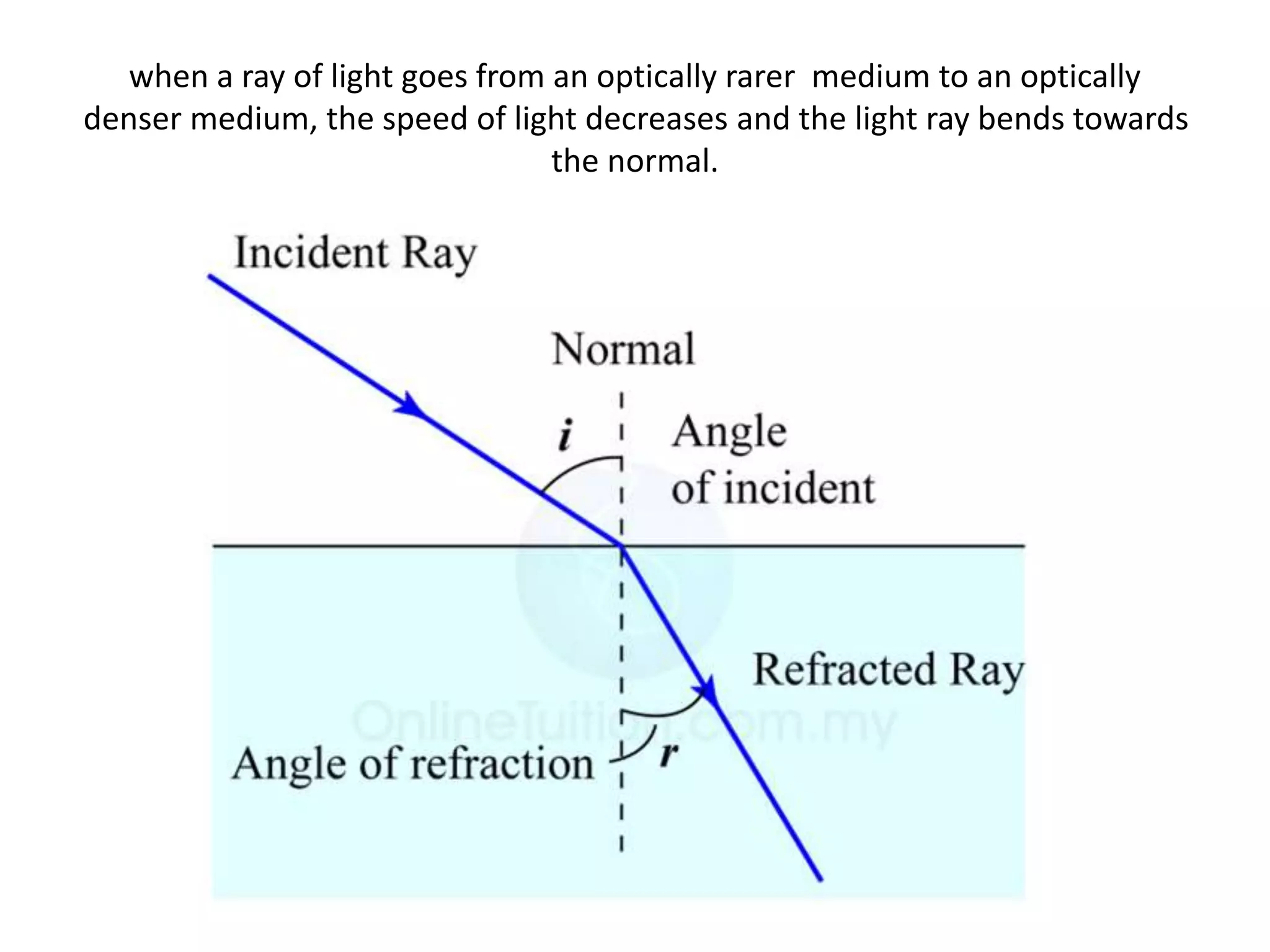
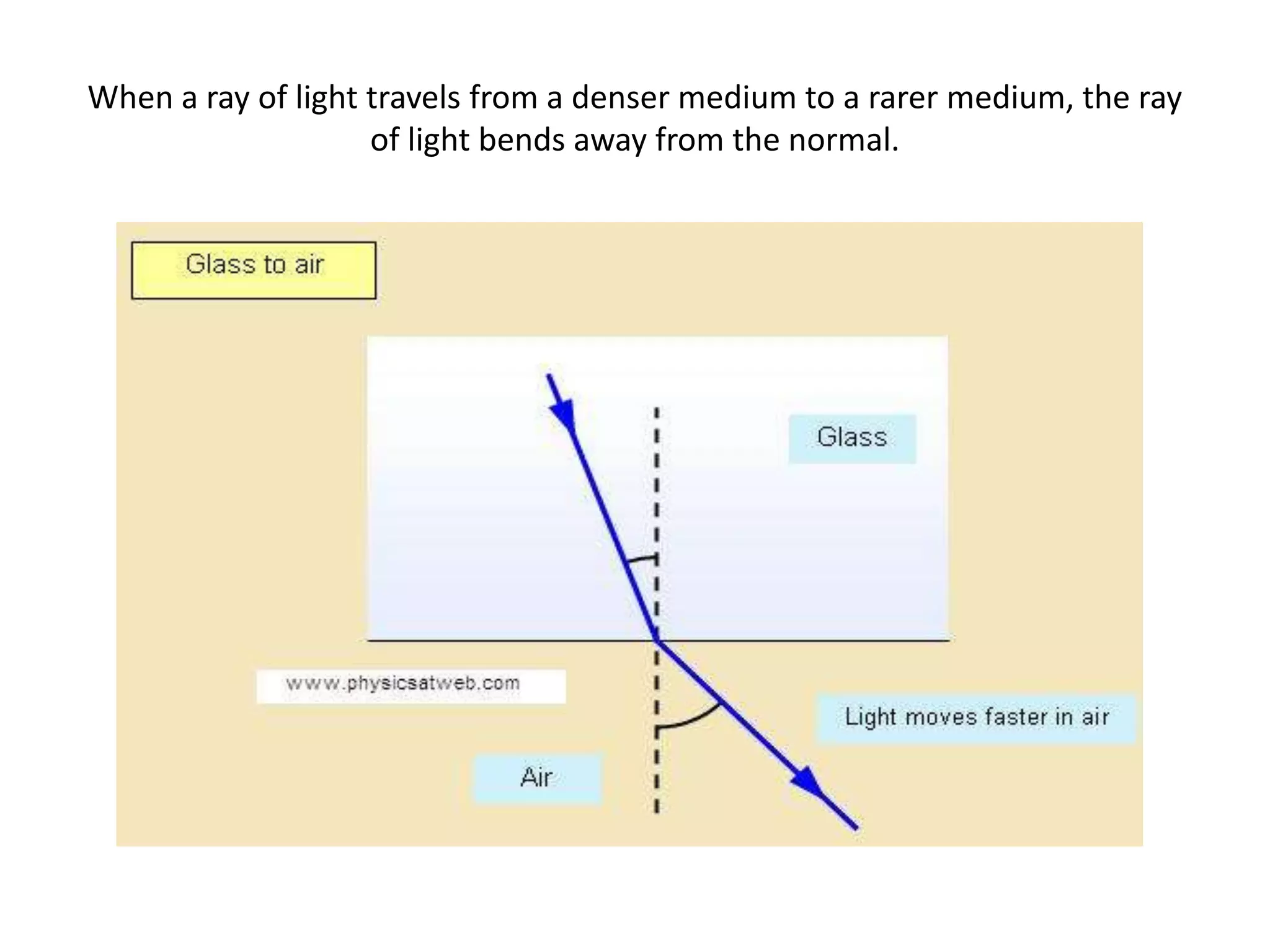
when a ray of light goes from an optically rarer medium to an optically 
denser medium, the speed of light decreases and the light ray bends towards 
the normal.
When a ray of light travels from a denser medium to a rarer medium, the ray 
of light bends away from the normal.
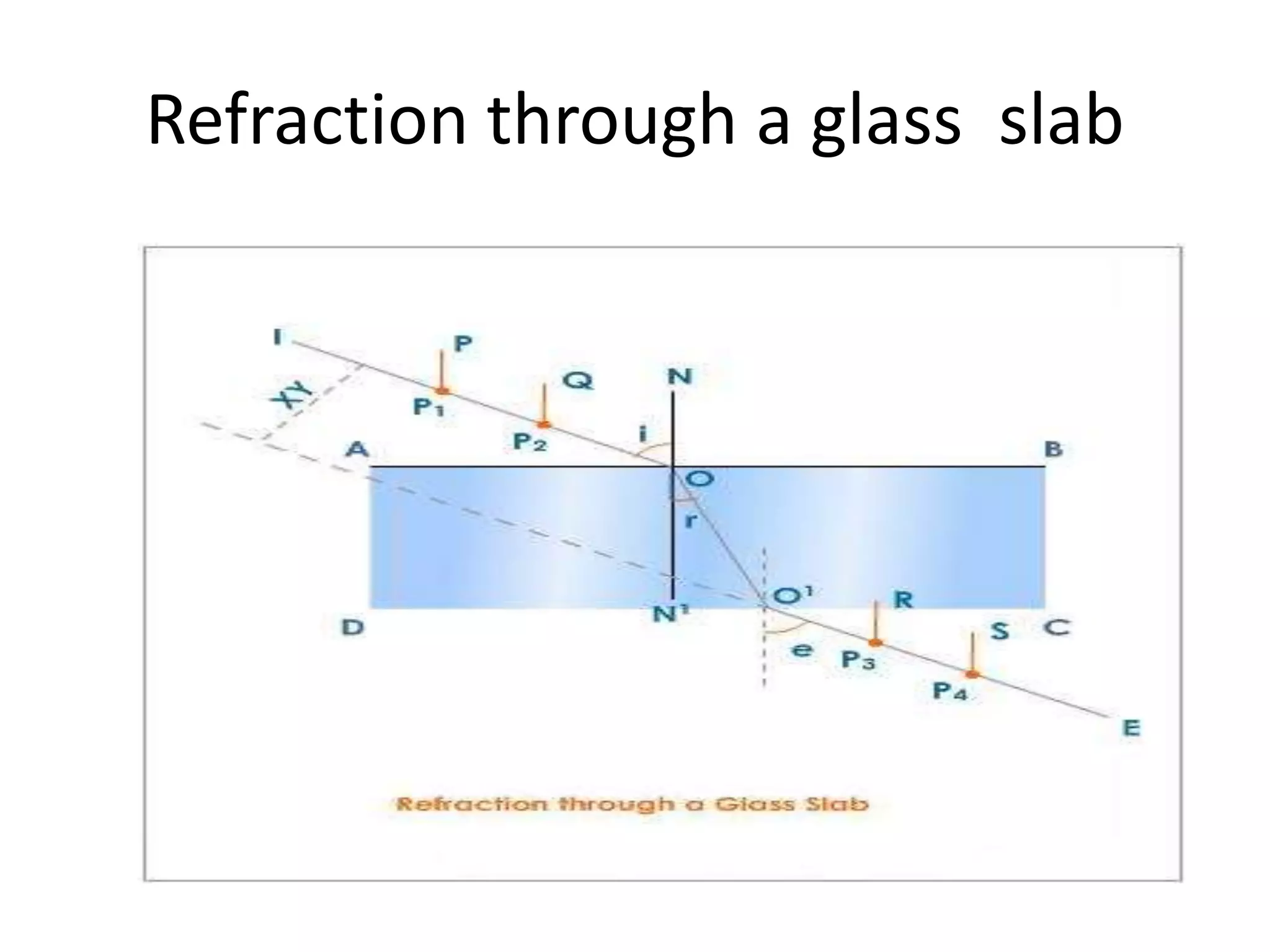
Refraction through a glass slab
Effects of refraction
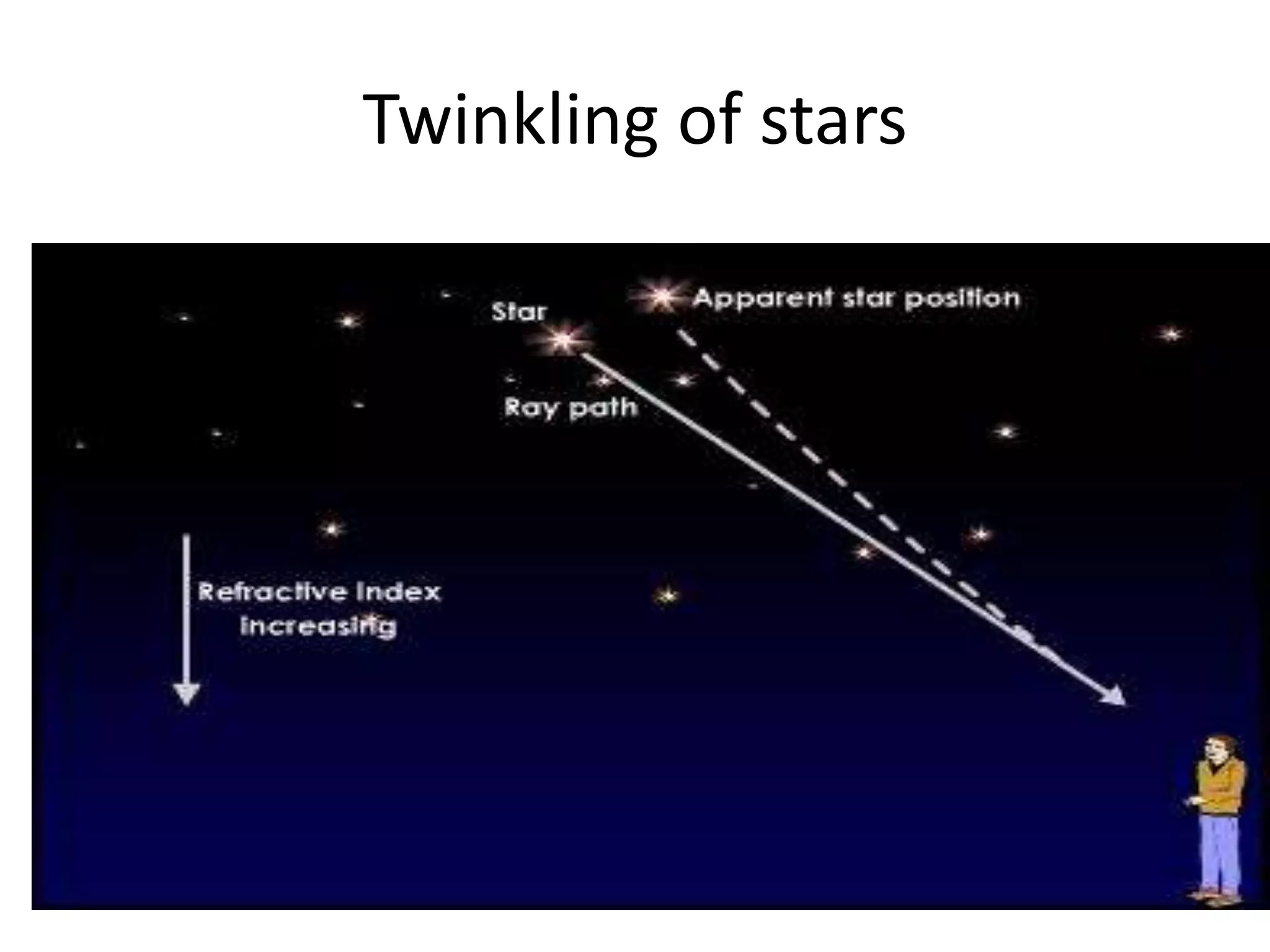
Twinkling of stars
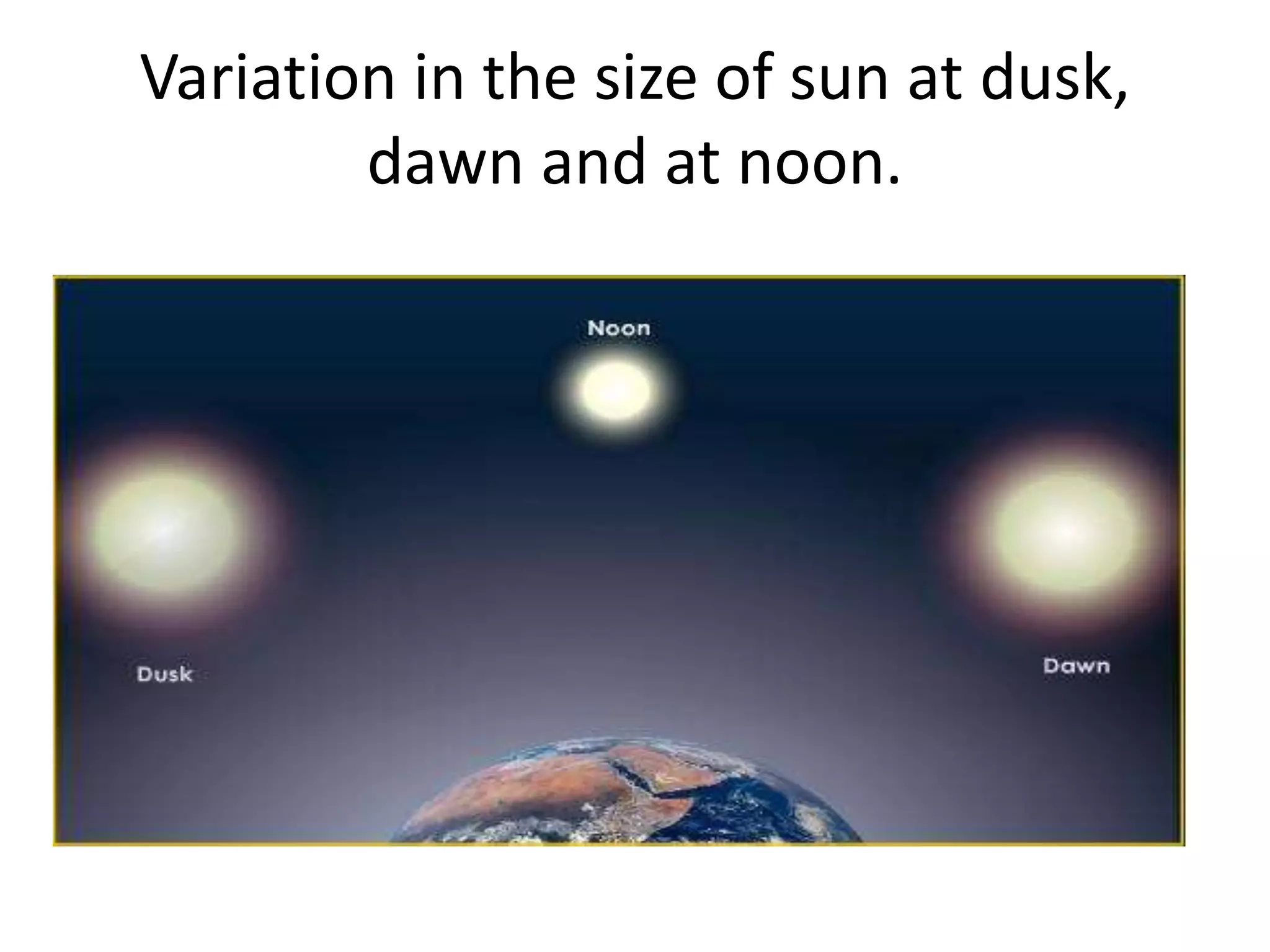
Variation in the size of sun at dusk, 
dawn and at noon.
Refractive index 
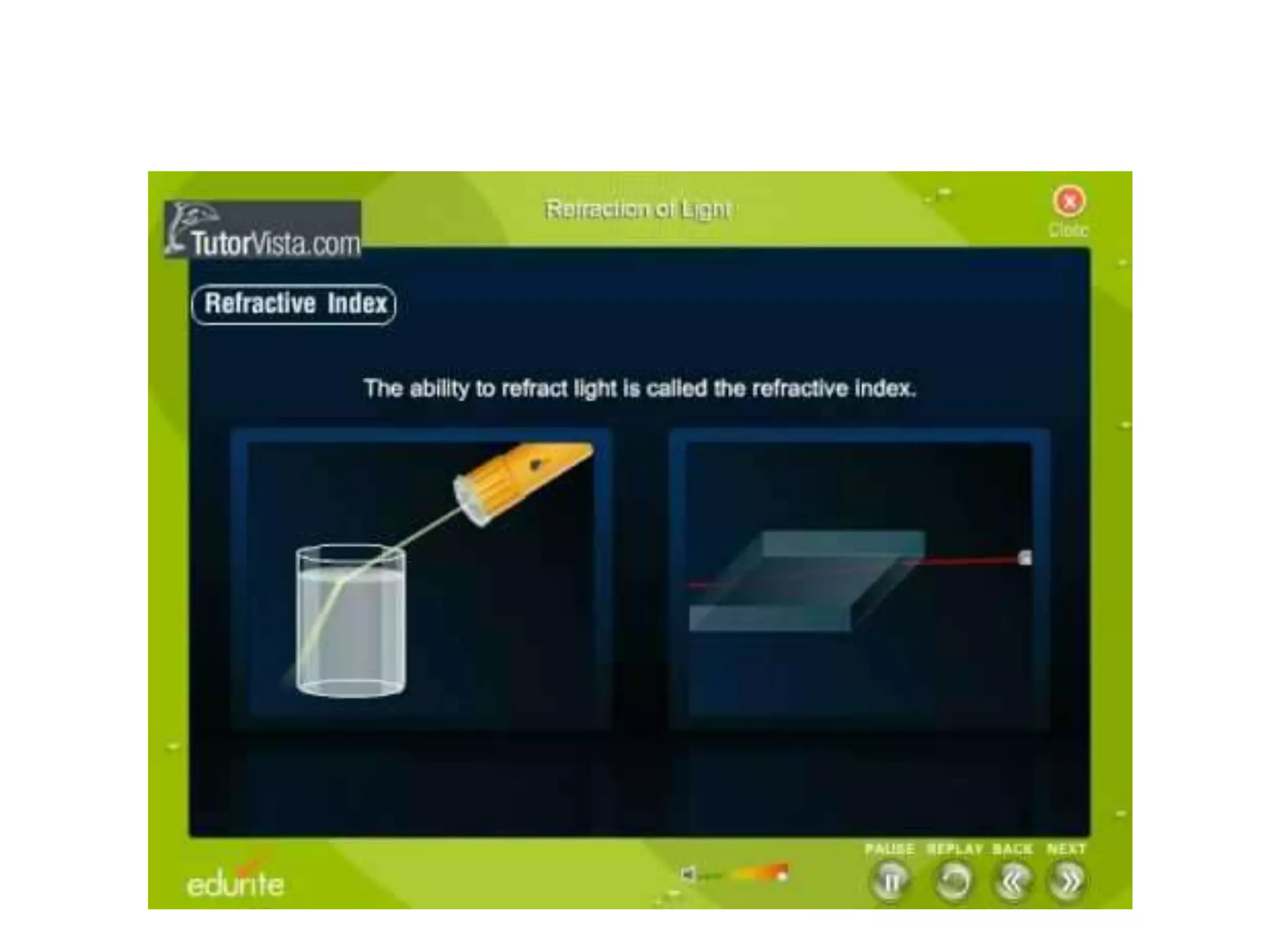
• The ability to refract light is called refractive index. 
• Refractive index of a medium is equal to the ratio of speed of light in 
vacuum to the speed of light in that particular medium 
• This ratio is a constant for a given pair of media. 
• It is represented by a greek letter ‘μ’
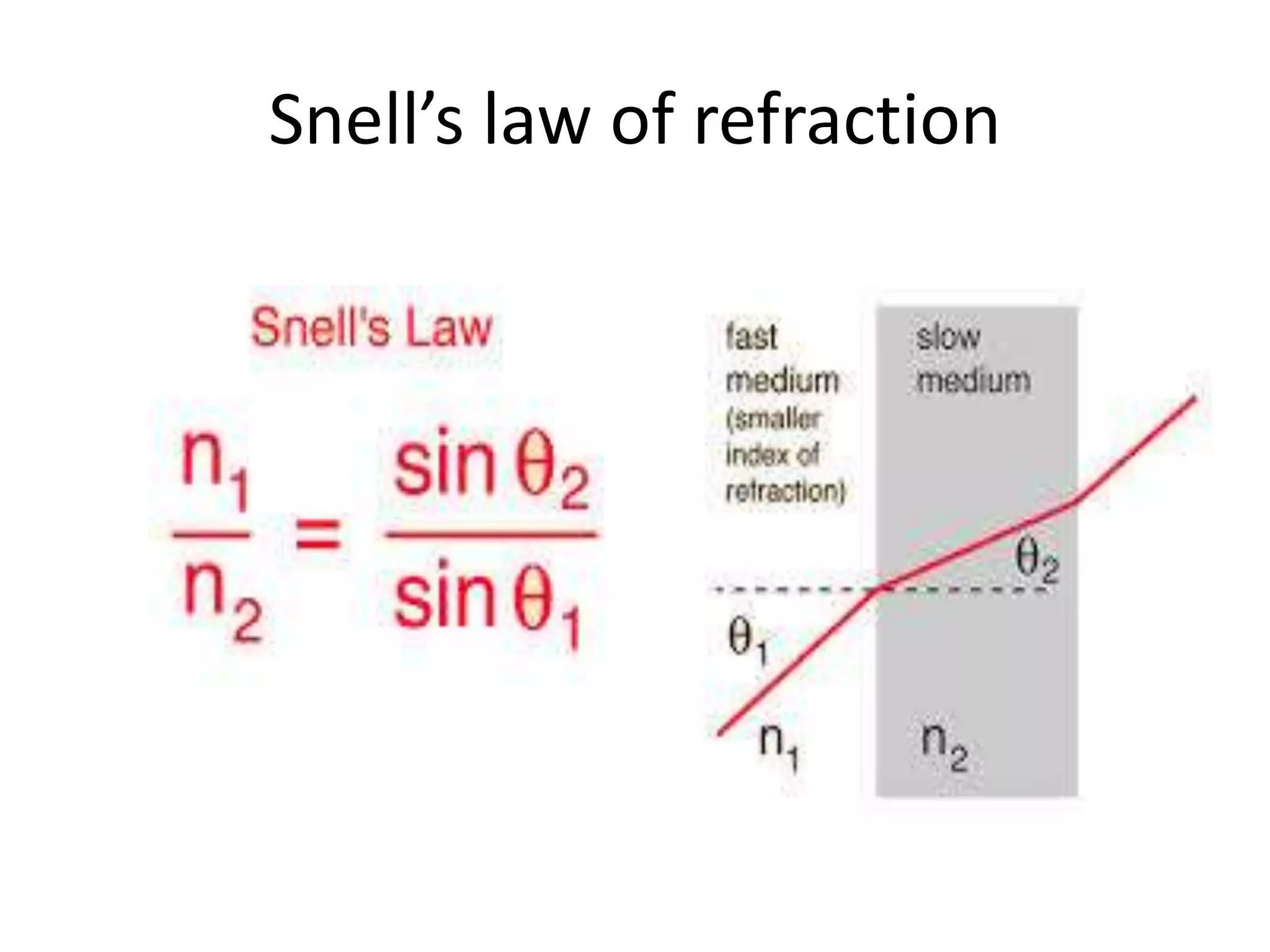
Snell’s law of refraction
Thank you

Presentation1

  • 2.
  • 5.
    Points to remember  When a ray light passes from air to water its speed changes. Due to this there is a change in direction of the ray  The change in direction suffered by a ray of light as passes obliquely from one optical medium to another with different optical densities is known as refraction  When a ray of light is incident on a surface separating two media a small fraction of light always get reflected.  Refraction can make an object appear to be on a different position
  • 6.
    Why does lightrefract? Why does light refract?
  • 7.
    when a rayof light goes from an optically rarer medium to an optically denser medium, the speed of light decreases and the light ray bends towards the normal.
  • 9.
    When a rayof light travels from a denser medium to a rarer medium, the ray of light bends away from the normal.
  • 10.
  • 11.
  • 14.
  • 15.
    Variation in thesize of sun at dusk, dawn and at noon.
  • 16.
    Refractive index •The ability to refract light is called refractive index. • Refractive index of a medium is equal to the ratio of speed of light in vacuum to the speed of light in that particular medium • This ratio is a constant for a given pair of media. • It is represented by a greek letter ‘μ’
  • 17.
    Snell’s law ofrefraction
  • 18.