light
What is Light? 
Light is the part of the EM spectrum which we 
can see. 
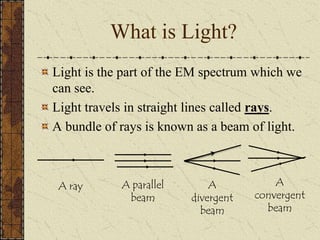
Light travels in straight lines called rays. 
A bundle of rays is known as a beam of light. 
A ray A parallel 
beam 
A 
divergent 
beam 
A 
convergent 
beam
Luminous and Non-Luminous 
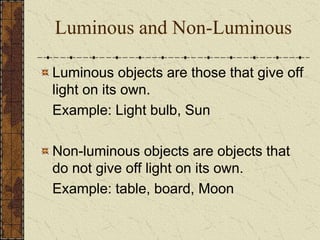
Luminous objects are those that give off 
light on its own. 
Example: Light bulb, Sun 
Non-luminous objects are objects that 
do not give off light on its own. 
Example: table, board, Moon
Reflection 
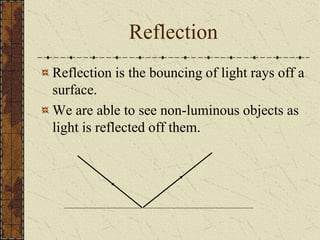
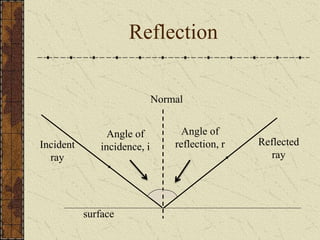
Reflection is the bouncing of light rays off a 
surface. 
We are able to see non-luminous objects as 
light is reflected off them.
Reflection 
Angle of 
incidence, i 
Normal 
Angle of 
reflection, r 
Incident 
ray 
Reflected 
ray 
surface
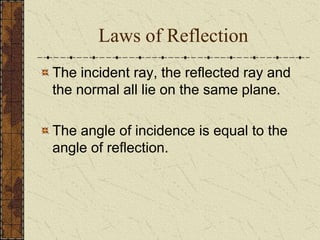
Laws of Reflection 
The incident ray, the reflected ray and 
the normal all lie on the same plane. 
The angle of incidence is equal to the 
angle of reflection.
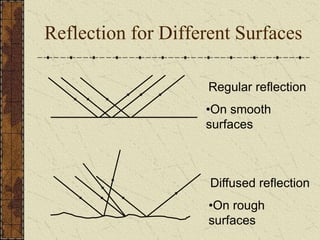
Reflection for Different Surfaces 
Regular reflection 
•On smooth 
surfaces 
Diffused reflection 
•On rough 
surfaces
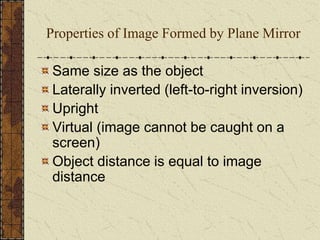
Properties of Image Formed by Plane Mirror 
Same size as the object 
Laterally inverted (left-to-right inversion) 
Upright 
Virtual (image cannot be caught on a 
screen) 
Object distance is equal to image 
distance
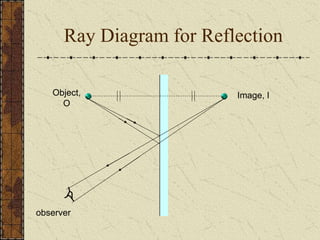
Ray Diagram for Reflection 
Image, I 
Object, 
O 
observer
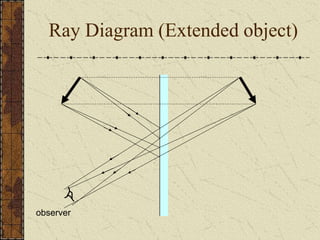
Ray Diagram (Extended object) 
observer
Refraction 
Refraction is the bending of light when it 
enters from one transparent medium into 
another. 
It is caused by the different speeds of light 
in different media. 
The greater the optical density of the 
medium, the slower the speed of light.
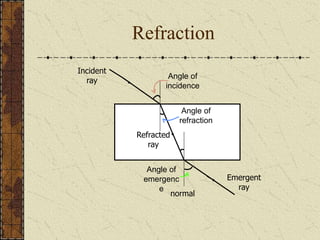
Refraction 
Incident 
ray 
Refracted 
ray 
Emergent 
ray 
Angle of 
incidence 
Angle of 
refraction 
Angle of 
emergenc 
normal 
e
Laws of Refraction 
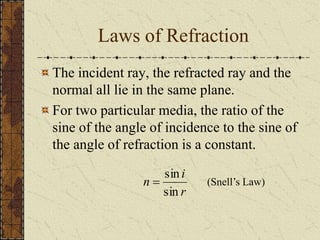
The incident ray, the refracted ray and the 
normal all lie in the same plane. 
For two particular media, the ratio of the 
sine of the angle of incidence to the sine of 
the angle of refraction is a constant. 
i 
 (Snell’s Law) 
r 
n 
sin 
sin
Refractive Index 
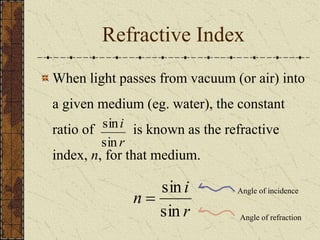
When light passes from vacuum (or air) into 
a given medium (eg. water), the constant 
ratio of sin 
i 
is known as the refractive 
sin 
r 
index, n, for that medium. 
i 
 Angle of incidence 
r 
n 
sin 
sin 
Angle of refraction
Speed and Refractive Index 
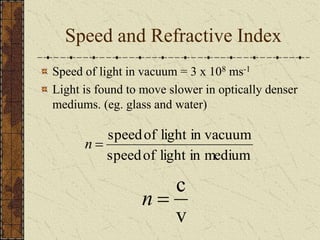
Speed of light in vacuum = 3 x 10⁸ ms-1 
Light is found to move slower in optically denser 
mediums. (eg. glass and water) 
speed of light in vacuum 
speed of light in medium 
c 
v 
n  
n 
Daily Phenomena of Refraction 
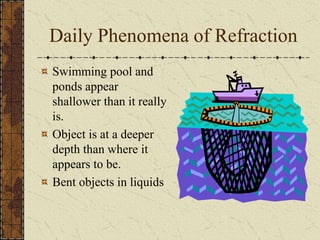
Swimming pool and 
ponds appear 
shallower than it really 
is. 
Object is at a deeper 
depth than where it 
appears to be. 
Bent objects in liquids
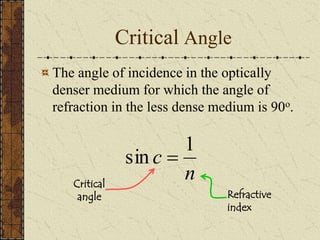
Critical Angle 
The angle of incidence in the optically 
denser medium for which the angle of 
refraction in the less dense medium is 90o. 
n 
c 
1 
sin  
Refractive 
index 
Critical 
angle
Light ppt

Light ppt

  • 1.
  • 2.
    What is Light? Light is the part of the EM spectrum which we can see. Light travels in straight lines called rays. A bundle of rays is known as a beam of light. A ray A parallel beam A divergent beam A convergent beam
  • 3.
    Luminous and Non-Luminous Luminous objects are those that give off light on its own. Example: Light bulb, Sun Non-luminous objects are objects that do not give off light on its own. Example: table, board, Moon
  • 4.
    Reflection Reflection isthe bouncing of light rays off a surface. We are able to see non-luminous objects as light is reflected off them.
  • 5.
    Reflection Angle of incidence, i Normal Angle of reflection, r Incident ray Reflected ray surface
  • 6.
    Laws of Reflection The incident ray, the reflected ray and the normal all lie on the same plane. The angle of incidence is equal to the angle of reflection.
  • 7.
    Reflection for DifferentSurfaces Regular reflection •On smooth surfaces Diffused reflection •On rough surfaces
  • 8.
    Properties of ImageFormed by Plane Mirror Same size as the object Laterally inverted (left-to-right inversion) Upright Virtual (image cannot be caught on a screen) Object distance is equal to image distance
  • 9.
    Ray Diagram forReflection Image, I Object, O observer
  • 10.
    Ray Diagram (Extendedobject) observer
  • 11.
    Refraction Refraction isthe bending of light when it enters from one transparent medium into another. It is caused by the different speeds of light in different media. The greater the optical density of the medium, the slower the speed of light.
  • 12.
    Refraction Incident ray Refracted ray Emergent ray Angle of incidence Angle of refraction Angle of emergenc normal e
  • 13.
    Laws of Refraction The incident ray, the refracted ray and the normal all lie in the same plane. For two particular media, the ratio of the sine of the angle of incidence to the sine of the angle of refraction is a constant. i  (Snell’s Law) r n sin sin
  • 14.
    Refractive Index Whenlight passes from vacuum (or air) into a given medium (eg. water), the constant ratio of sin i is known as the refractive sin r index, n, for that medium. i  Angle of incidence r n sin sin Angle of refraction
  • 15.
    Speed and RefractiveIndex Speed of light in vacuum = 3 x 10⁸ ms-1 Light is found to move slower in optically denser mediums. (eg. glass and water) speed of light in vacuum speed of light in medium c v n  n 
  • 16.
    Daily Phenomena ofRefraction Swimming pool and ponds appear shallower than it really is. Object is at a deeper depth than where it appears to be. Bent objects in liquids
  • 17.
    Critical Angle Theangle of incidence in the optically denser medium for which the angle of refraction in the less dense medium is 90o. n c 1 sin  Refractive index Critical angle