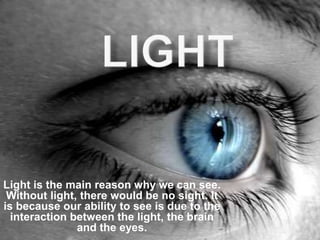
Light is the main reason why we can see.
 Without light, there would be no sight. It
is because our ability to see is due to the
  interaction between the light, the brain
               and the eyes.
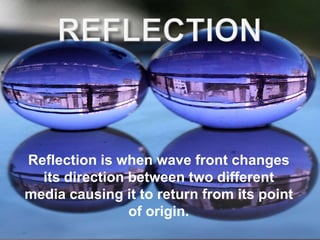
Reflection is when wave front changes
  its direction between two different
media causing it to return from its point
                of origin.
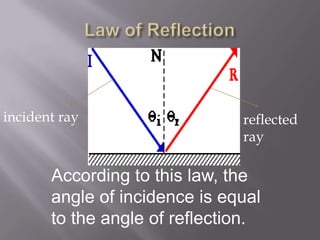
incident ray                   reflected
                               ray

       According to this law, the
       angle of incidence is equal
       to the angle of reflection.
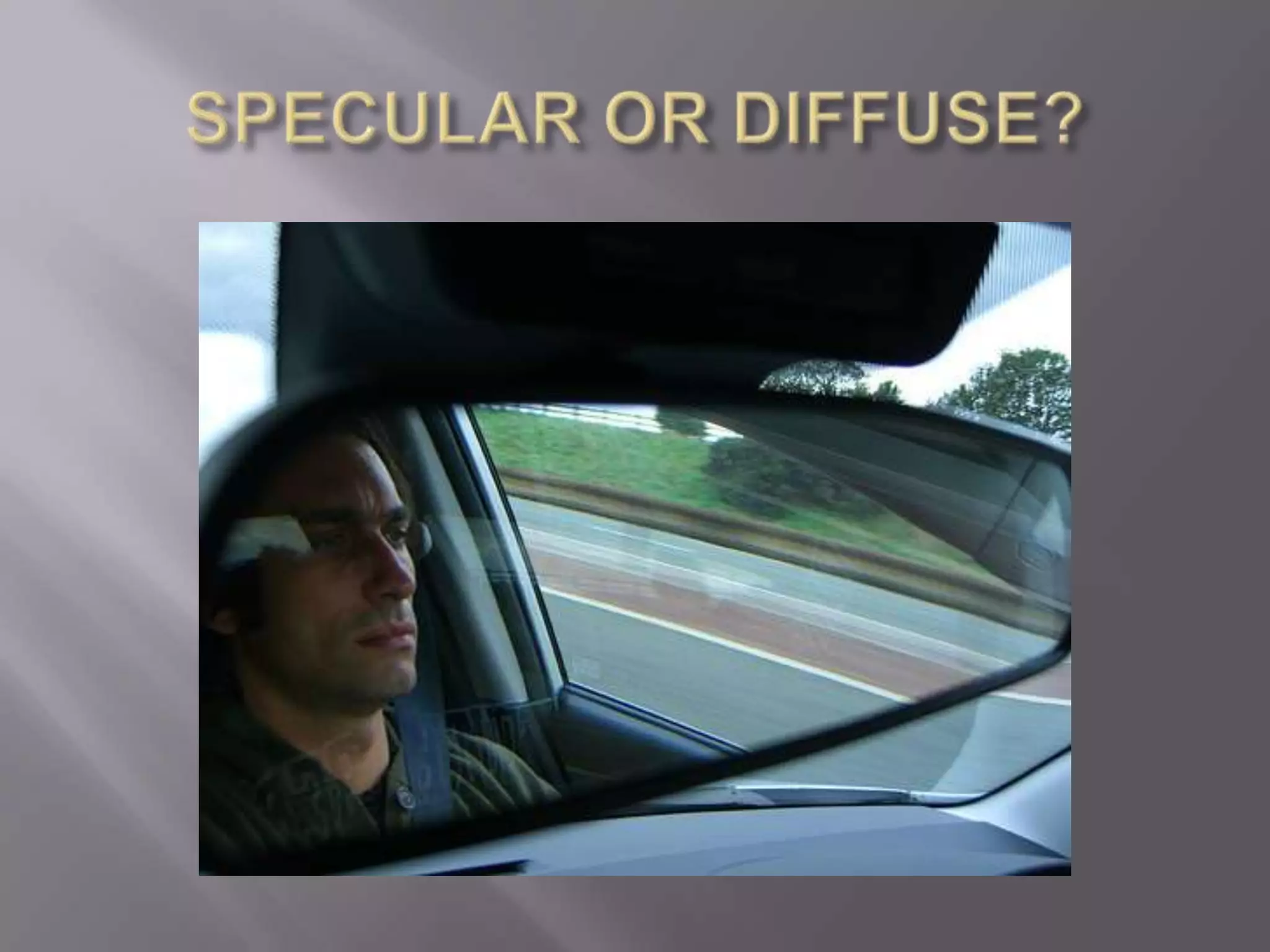
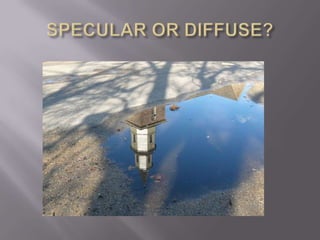
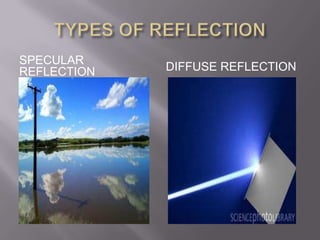
SPECULAR
REFLECTION   DIFFUSE REFLECTION
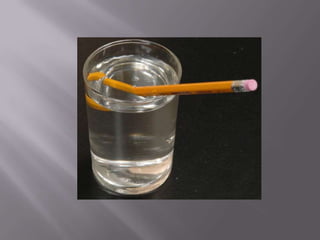
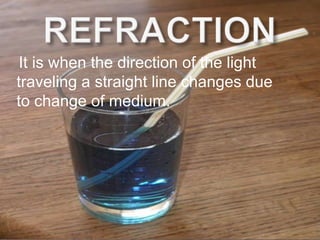
It is when the direction of the light
traveling a straight line changes due
to change of medium.
 Refraction occurs when a light
  ray changes mediums.
 The speed of light changes when
  it changes mediums. In almost
  every case, the direction of the
  light ray also changes.
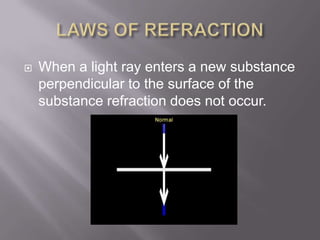
   When a light ray enters a new substance
    perpendicular to the surface of the
    substance refraction does not occur.
   When a light ray enters a new
    substance obliquely to the surface of the
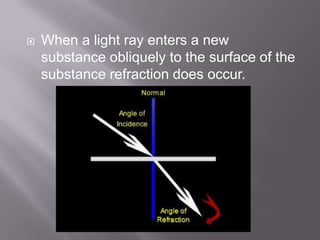
    substance refraction does occur.
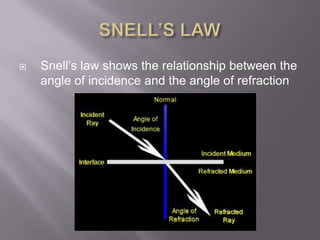
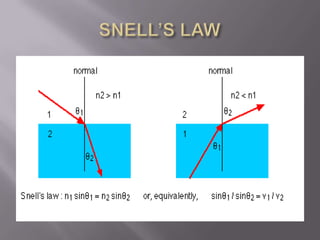
   Snell’s law shows the relationship between the
    angle of incidence and the angle of refraction
REFLECTION AND REFRACTION OF LIGHT

REFLECTION AND REFRACTION OF LIGHT

  • 6.
    Light is themain reason why we can see. Without light, there would be no sight. It is because our ability to see is due to the interaction between the light, the brain and the eyes.
  • 7.
    Reflection is whenwave front changes its direction between two different media causing it to return from its point of origin.
  • 8.
    incident ray reflected ray According to this law, the angle of incidence is equal to the angle of reflection.
  • 9.
    SPECULAR REFLECTION DIFFUSE REFLECTION
  • 12.
    It is whenthe direction of the light traveling a straight line changes due to change of medium.
  • 13.
     Refraction occurswhen a light ray changes mediums.  The speed of light changes when it changes mediums. In almost every case, the direction of the light ray also changes.
  • 14.
    When a light ray enters a new substance perpendicular to the surface of the substance refraction does not occur.
  • 15.
    When a light ray enters a new substance obliquely to the surface of the substance refraction does occur.
  • 16.
    Snell’s law shows the relationship between the angle of incidence and the angle of refraction