PRESENTATION ON INSILICO
DRUG DESIGN AND VIRTUAL
SCREENING TECHNIQUES
PRESENTED BY- SUBHAM GHOSH
M.PHARM,2ND SEMESTER
DIBRUGARH UNIVERSITY
• Drug Design : Based on the knowledge of the
biological target,finding a new medication is what
we called as drug design.
• In Silico drug design: Drug design when
performed in computers using computational
softwares is known as in silico drug design.
• Since the electronic chips used in the computers
are usually made up of silicon,hence came the
name in silico drug design.
• In silico is also an expression used to mean
‘performed on computer or via computer
simulation.’
• Types of In silico Drug Design :
a.Ligand Based Drug Design
b. Structure Based Drug Design
LIGAND BASED DRUG DESIGN
• Ligand: It is simply a molecule that binds to
another. Often a soluble molecule such as
hormone or neurotransmitter that binds to a
receptor.
• In this type of drug design,the receptor is
unknown but the ligand is known.
• It is also the statistical analysis of what groups
are important for biological activity.
• LBDD relies on the knowledge of other
molecules that bind to the biological target of
interest.
• Used to derive a pharmacophore.
• Also defines the minimum necessary
structural characteristics a molecule must
possess in order to bind to the target.
STRUCTURE BASED DRUG DESIGN
• In case of SBDD its just opposite of LBDD,where
the receptor is known whereas the ligand is
unknown.
• Completely relies on the knowledge of the 3D
structure of the biological target.
• Methods by which the 3D structure of biological
target are obtained are mentioned below.
• X-ray crystallography
• NMR spectroscopy
• Homology modelling
VIRTUAL SCREENING TECHNIQUES
• Virtual screening is a computational technique
used in drug discovery to search the libraries
of small molecules in order to identify those
structures which are most likely to bind to a
drug target,typically a protein receptor or
enzyme.
• It is also defined as a ‘automatically evaluating
very large libraries of compounds’using
computer programs.
CATEGORIES OF SCREENING
• There are two broad categories of screening
techniques:
A.Ligand based screening
B.Structure based screening
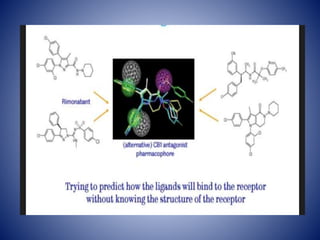
• Ligand-based: A model of the ligand can be built
by exploiting the collective information
contained in such set of ligands.These are known
as pharmacophore models.
• A candidate ligand can there be compared to the
pharmacophore model to determine whether it is
compatible with it and therefore likely to bind.
• Another approach to LB virtual screening is to
use 2D chemical similarity analysis method to
scan a database of molecules against one or more
active ligand structure.
• A popular approach to LBVS is based on
searching molecules with shape similar to that
of known actives, as such molecules will fit the
targets binding site and hence will be likely to
bind the target.
• One of the important type of LBVS is-
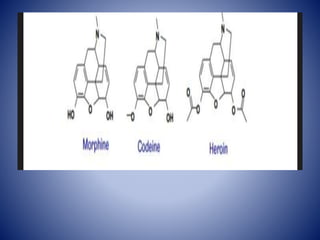
.Similarity based virtual screening:The similar
property principle states that structurally
similar molecules tends to have similar
properties.
• A active reference structure is provided and a
database of compounds are ranked in an
order based on similarity to the reference.
• Select the top ranking compound for
biological testing.
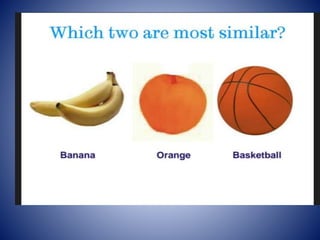
• But similarity is inherently subjective,so need
to provide a quantitative basis,a similarity
measure,for ranking structures.
•
•
THANK YOU

Presentation on insilico drug design and virtual screening

  • 1.
    PRESENTATION ON INSILICO DRUGDESIGN AND VIRTUAL SCREENING TECHNIQUES PRESENTED BY- SUBHAM GHOSH M.PHARM,2ND SEMESTER DIBRUGARH UNIVERSITY
  • 2.
    • Drug Design: Based on the knowledge of the biological target,finding a new medication is what we called as drug design. • In Silico drug design: Drug design when performed in computers using computational softwares is known as in silico drug design. • Since the electronic chips used in the computers are usually made up of silicon,hence came the name in silico drug design.
  • 3.
    • In silicois also an expression used to mean ‘performed on computer or via computer simulation.’ • Types of In silico Drug Design : a.Ligand Based Drug Design b. Structure Based Drug Design
  • 4.
    LIGAND BASED DRUGDESIGN • Ligand: It is simply a molecule that binds to another. Often a soluble molecule such as hormone or neurotransmitter that binds to a receptor. • In this type of drug design,the receptor is unknown but the ligand is known. • It is also the statistical analysis of what groups are important for biological activity.
  • 5.
    • LBDD relieson the knowledge of other molecules that bind to the biological target of interest. • Used to derive a pharmacophore. • Also defines the minimum necessary structural characteristics a molecule must possess in order to bind to the target.
  • 7.
    STRUCTURE BASED DRUGDESIGN • In case of SBDD its just opposite of LBDD,where the receptor is known whereas the ligand is unknown. • Completely relies on the knowledge of the 3D structure of the biological target. • Methods by which the 3D structure of biological target are obtained are mentioned below.
  • 8.
    • X-ray crystallography •NMR spectroscopy • Homology modelling
  • 10.
    VIRTUAL SCREENING TECHNIQUES •Virtual screening is a computational technique used in drug discovery to search the libraries of small molecules in order to identify those structures which are most likely to bind to a drug target,typically a protein receptor or enzyme. • It is also defined as a ‘automatically evaluating very large libraries of compounds’using computer programs.
  • 11.
    CATEGORIES OF SCREENING •There are two broad categories of screening techniques: A.Ligand based screening B.Structure based screening
  • 12.
    • Ligand-based: Amodel of the ligand can be built by exploiting the collective information contained in such set of ligands.These are known as pharmacophore models. • A candidate ligand can there be compared to the pharmacophore model to determine whether it is compatible with it and therefore likely to bind. • Another approach to LB virtual screening is to use 2D chemical similarity analysis method to scan a database of molecules against one or more active ligand structure.
  • 13.
    • A popularapproach to LBVS is based on searching molecules with shape similar to that of known actives, as such molecules will fit the targets binding site and hence will be likely to bind the target. • One of the important type of LBVS is- .Similarity based virtual screening:The similar property principle states that structurally similar molecules tends to have similar properties.
  • 15.
    • A activereference structure is provided and a database of compounds are ranked in an order based on similarity to the reference. • Select the top ranking compound for biological testing. • But similarity is inherently subjective,so need to provide a quantitative basis,a similarity measure,for ranking structures.
  • 17.