 Drug design is the inventive process of finding
new medications based on the knowledge of a
biological target.
 It involves the design of molecules that are
complementary in shape and charge to the
biomolecular target with which they interact
and therefore will bind to it.
 Drug design frequently but not necessarily
relies on computer modeling techniques.
 This type of modeling is sometimes referred
to as computer-aided drug design.
 CADD represents computational
methods and resources that are used to
facilitate the design and discovery of
new therapeutic solutions.
 Drug design with the help of computers may be used at any of the following
stages of drug discovery:
 hit identification using virtual screening (structure- or ligand-based design)
 hit-to-lead optimization of affinity and selectivity (structure-based
design, QSAR, etc.)
 lead optimization: optimization of other pharmaceutical properties while
maintaining affinity.
 To change from:
 Random screening against disease assays
 Natural products, synthetic chemicals
 To:
 Rational drug design and testing
 Speed-up screening process
 Efficient screening (focused, target directed)
 De novo design (target directed)
 Integration of testing into design process
 Fail drugs fast (remove hopeless ones as early as
possible)
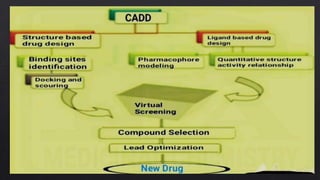
1) Ligand based drug design 2)Structure based drug design
 Ligand Based Drug Design (or)
Indirect Drug Design relies on
knowledge of other molecules that
bind to the biological target of interest.
 used to derive a pharmacophore model
that defines the minimum necessary
structural characteristics of a molecule
must possess in order to bind to the
target.
 a model of the biological target may be built based on the knowledge of what
binds to it, and this model in turn may be used to design new molecular
entities that interact with the target.
 Alternatively, a quantitative structure-activity relationship (QSAR), in which
a correlation between calculated properties of molecules and their
experimentally determined biological activity, may be derived. These QSAR
relationships in turn may be used to predict the activity of new analogs.
NMR spectroscopy
X-ray crystallography
 If an experimental structure of a target is not available, it
may be possible to create a homology model of the target
based on the experimental structure of a related protein.
 Using the structure of the biological target, candidate
drugs that are predicted to bind with high affinity and
selectivity to the target may be designed using:
 interactive graphics
 Intelligence of a medicinal chemist.
 various automated computational procedures may be
used to suggest new drug candidates.
 Time
 Cost
 Accuracy
 information about the disease
 screening is reduced
 Database screening
 less manpower is required
1
2
3
4
5
6
Databases & Draw Tools
Molecular Modeling & HomologyModeling
Binding site prediction &Docking
Ligand design Screening -QSAR
Binding free energy estimation
ADME Toxicity
 ZincDatabase, Zinc15Database
 ChEMBL
 JChemforExcel
 ProteinDataBank(PDB)
 BindingMOAD(MotherOfAllDatabase)
 PDBbind
 STITCH,SMPDB
 ChemDraw
 MarvinSketch
 ACD/ChemSketch
 Marvin molecule editor and viewer
 ChemWriter
 UCSFChimera
 Pymol
 CHARMM
 GROMACS
 Amber
 SwissParam
 CHARMM-GUI
 CHARMMing.org
 SwissSideChain
 Modeller
 I-TASSER
 LOMETS
 SWISS-MODEL
 SWISS-MODELRepository
 Robetta
 MED-SuMo
 CAVER
 FINDSITE
 sc-PDB
 Pocketome
 PocketAnnotatedatabase
 3DLigandSite,
 metaPocket
 PocketAnnotate
 Autodock
 DOCK
 GOLD
 SwissDock
 DockingServer
 1-ClickDocking
 iGemdock
 Pharmer
 Catalyst
 PharmaGist
 SwissSimilarity
 Blaster
 AnchorQuery
 ligandscout
 Discovery Studio
 MolScore-Antivirals
 MolScore-Antibiotics
 Swiss Target Prediction
 SEA
 ChemProt
 GANDI
 LUDI
 AutoT&T2
 SwissBioisostere
 VAMMPIRE
 sc-PDB-Frag
 e-LEA3D
 eDesign
 iScreen
 Hyde, X-score
 NNScore
 DSXONLINE
 BAPPLserver
 BAPPL-Zserver,
 cQSAR
 clogP
 ClogP/CMR
 MOLEdb
 ChemDB/Datasets
 OCHEM
 E-Dragon
 PatternMatchCounter
 avogadro
 VolSurf
 GastroPlus
 MedChemStudio
 ALOGPS
 OSIRISPropertyExplorer
 SwissADME
 Metrabase
 PACT-F, TOXNET
cadd .pptx

cadd .pptx

  • 2.
     Drug designis the inventive process of finding new medications based on the knowledge of a biological target.  It involves the design of molecules that are complementary in shape and charge to the biomolecular target with which they interact and therefore will bind to it.  Drug design frequently but not necessarily relies on computer modeling techniques.  This type of modeling is sometimes referred to as computer-aided drug design.
  • 3.
     CADD representscomputational methods and resources that are used to facilitate the design and discovery of new therapeutic solutions.
  • 4.
     Drug designwith the help of computers may be used at any of the following stages of drug discovery:  hit identification using virtual screening (structure- or ligand-based design)  hit-to-lead optimization of affinity and selectivity (structure-based design, QSAR, etc.)  lead optimization: optimization of other pharmaceutical properties while maintaining affinity.
  • 5.
     To changefrom:  Random screening against disease assays  Natural products, synthetic chemicals  To:  Rational drug design and testing  Speed-up screening process  Efficient screening (focused, target directed)  De novo design (target directed)  Integration of testing into design process  Fail drugs fast (remove hopeless ones as early as possible)
  • 7.
    1) Ligand baseddrug design 2)Structure based drug design
  • 8.
     Ligand BasedDrug Design (or) Indirect Drug Design relies on knowledge of other molecules that bind to the biological target of interest.  used to derive a pharmacophore model that defines the minimum necessary structural characteristics of a molecule must possess in order to bind to the target.
  • 9.
     a modelof the biological target may be built based on the knowledge of what binds to it, and this model in turn may be used to design new molecular entities that interact with the target.  Alternatively, a quantitative structure-activity relationship (QSAR), in which a correlation between calculated properties of molecules and their experimentally determined biological activity, may be derived. These QSAR relationships in turn may be used to predict the activity of new analogs.
  • 10.
  • 11.
     If anexperimental structure of a target is not available, it may be possible to create a homology model of the target based on the experimental structure of a related protein.  Using the structure of the biological target, candidate drugs that are predicted to bind with high affinity and selectivity to the target may be designed using:  interactive graphics  Intelligence of a medicinal chemist.  various automated computational procedures may be used to suggest new drug candidates.
  • 21.
     Time  Cost Accuracy  information about the disease  screening is reduced  Database screening  less manpower is required
  • 23.
    1 2 3 4 5 6 Databases & DrawTools Molecular Modeling & HomologyModeling Binding site prediction &Docking Ligand design Screening -QSAR Binding free energy estimation ADME Toxicity
  • 24.
     ZincDatabase, Zinc15Database ChEMBL  JChemforExcel  ProteinDataBank(PDB)  BindingMOAD(MotherOfAllDatabase)  PDBbind  STITCH,SMPDB
  • 25.
     ChemDraw  MarvinSketch ACD/ChemSketch  Marvin molecule editor and viewer  ChemWriter  UCSFChimera  Pymol
  • 26.
     CHARMM  GROMACS Amber  SwissParam  CHARMM-GUI  CHARMMing.org  SwissSideChain
  • 27.
     Modeller  I-TASSER LOMETS  SWISS-MODEL  SWISS-MODELRepository  Robetta
  • 28.
     MED-SuMo  CAVER FINDSITE  sc-PDB  Pocketome  PocketAnnotatedatabase  3DLigandSite,  metaPocket  PocketAnnotate
  • 29.
     Autodock  DOCK GOLD  SwissDock  DockingServer  1-ClickDocking  iGemdock
  • 30.
     Pharmer  Catalyst PharmaGist  SwissSimilarity  Blaster  AnchorQuery  ligandscout  Discovery Studio
  • 31.
     MolScore-Antivirals  MolScore-Antibiotics Swiss Target Prediction  SEA  ChemProt
  • 32.
     GANDI  LUDI AutoT&T2  SwissBioisostere  VAMMPIRE  sc-PDB-Frag  e-LEA3D  eDesign  iScreen
  • 33.
     Hyde, X-score NNScore  DSXONLINE  BAPPLserver  BAPPL-Zserver,
  • 34.
     cQSAR  clogP ClogP/CMR  MOLEdb  ChemDB/Datasets  OCHEM  E-Dragon  PatternMatchCounter  avogadro
  • 35.
     VolSurf  GastroPlus MedChemStudio  ALOGPS  OSIRISPropertyExplorer  SwissADME  Metrabase  PACT-F, TOXNET