Preparation and Reaction of
Phenol
PREPARATION OF PHENOL
In Dow's process method chlorobenzene
is heated with aq. NaOH at about 623k and
300 atm. pressure to form sodium
phenoxide, which is acidified by dilute acid
like HCl to form phenol.
To prepare phenol, cumene is first oxidized
in the presence of air of cumene hydro-
peroxide. Then, cumene hydroxide is
treated with dilute acid to prepare
phenol and acetone as by-products.
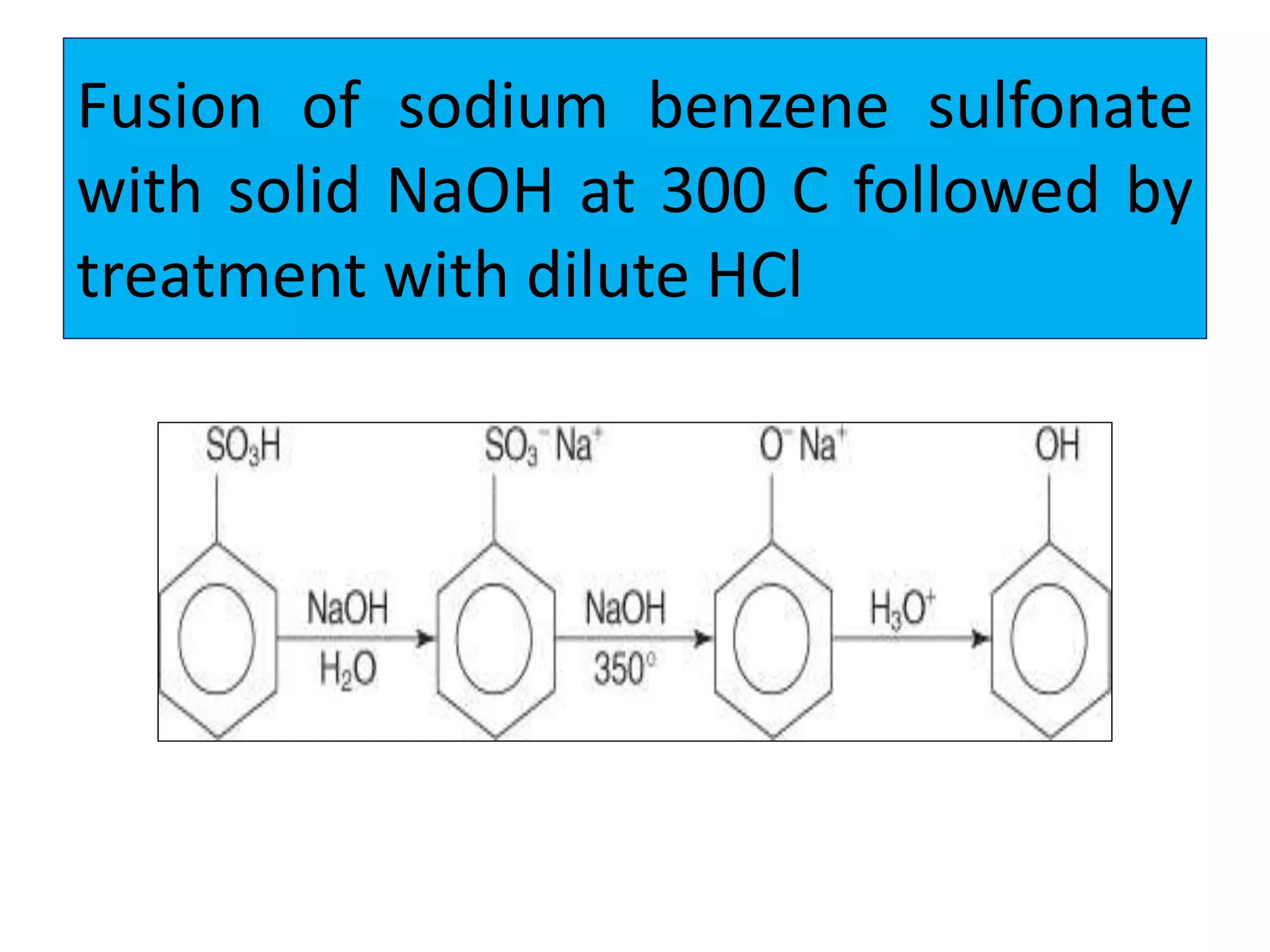
Fusion of sodium benzene sulfonate
with solid NaOH at 300 C followed by
treatment with dilute HCl
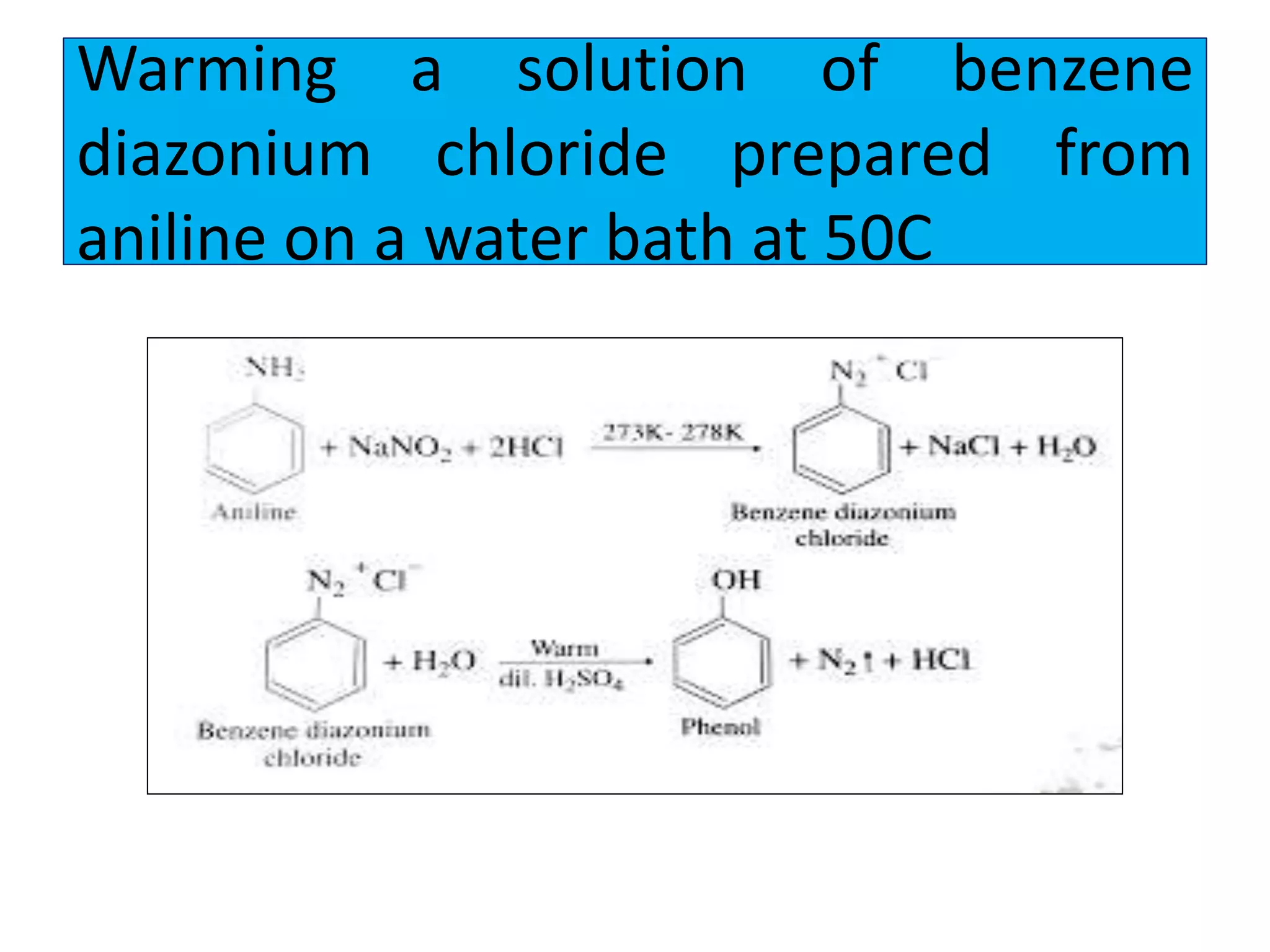
Warming a solution of benzene
diazonium chloride prepared from
aniline on a water bath at 50C
From Coal tar
• Coal tar provides natural source of phenol and
cresol.
• The middle oil fraction of coal tar contains
phenols, cresols and naphthalene.[ 170-240 C]
• Oil when cooled solid naphthalene deposit.
• Centrifuge and the oil left out is agitated with
NaOH gives phenols and cresols.
REACTION OF PHENOL
Formation of salt
Phenol is acidic It react with sodium
hydroxide or sodium metal to form
salts
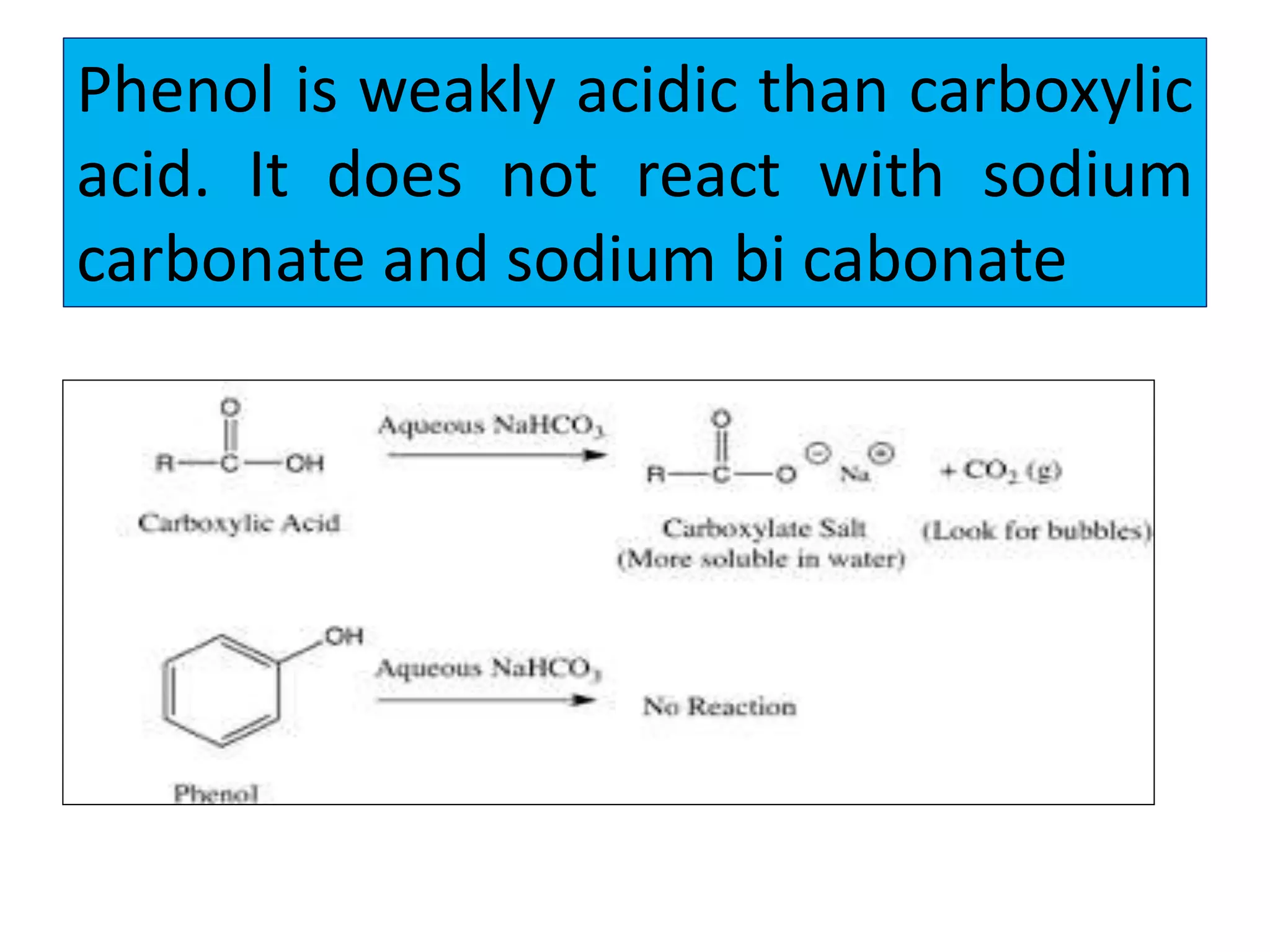
Phenol is weakly acidic than carboxylic
acid. It does not react with sodium
carbonate and sodium bi cabonate
Reaction with FeCl3 phenol give violet
colour on treatment with FeCl3 due to
formation of complex. This reaction is
given by most of the phenols
Formation of esters- alkali react with
phenol to form phenoxide which will
react with acid chloride to form phenyl
esters
Formation of ether- phenol react with
alkyl halide in alkali solution form
phenyl ethers.
Phenol distilled with zinc dust yield
benzene in low amount
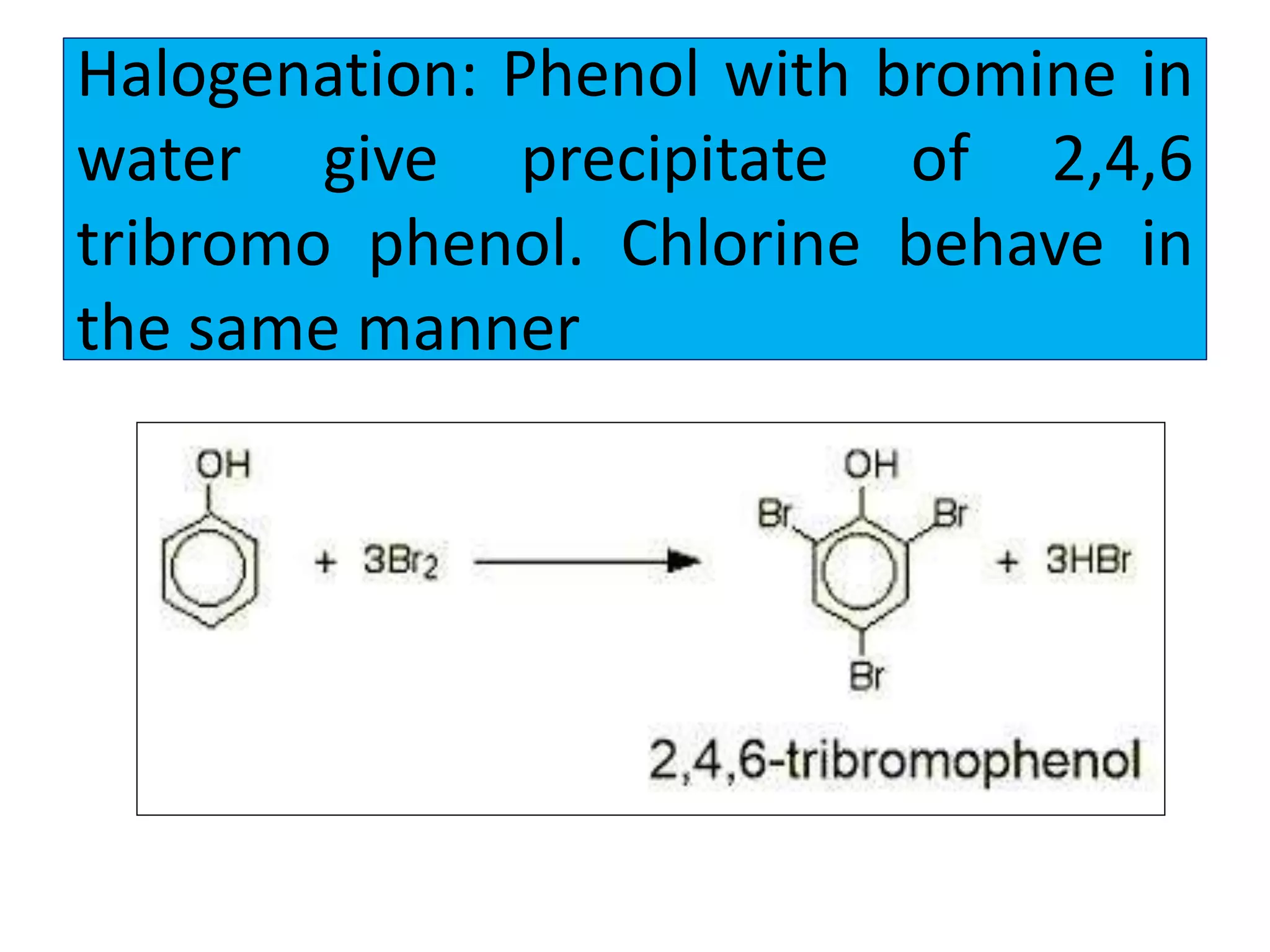
Halogenation: Phenol with bromine in
water give precipitate of 2,4,6
tribromo phenol. Chlorine behave in
the same manner
Halogenation: Phenol with bromine in
CS2/CCl4 give precipitate of 2,4,6
tribromo phenol. Chlorine behave in
the same manner
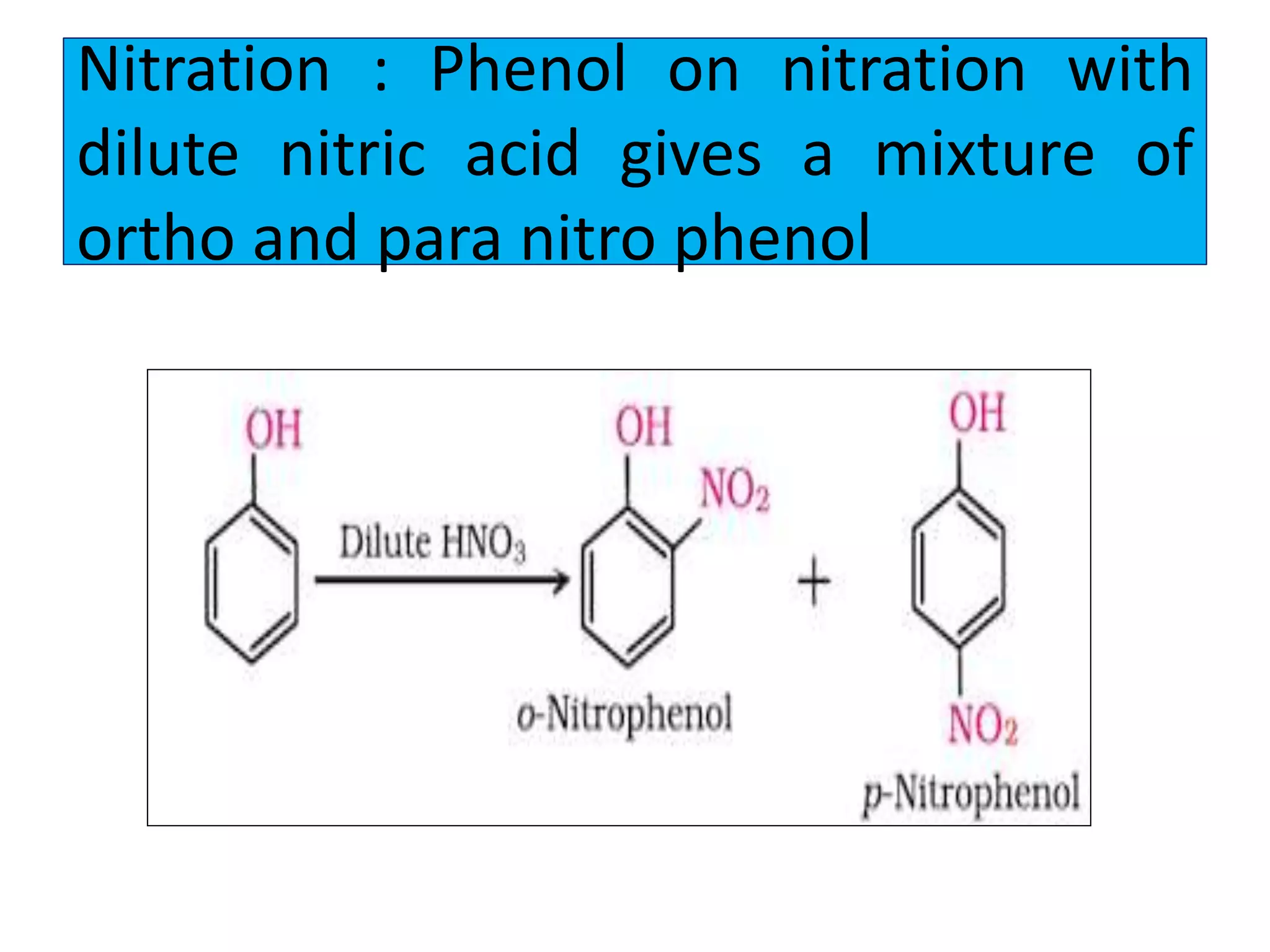
Nitration : Phenol on nitration with
dilute nitric acid gives a mixture of
ortho and para nitro phenol
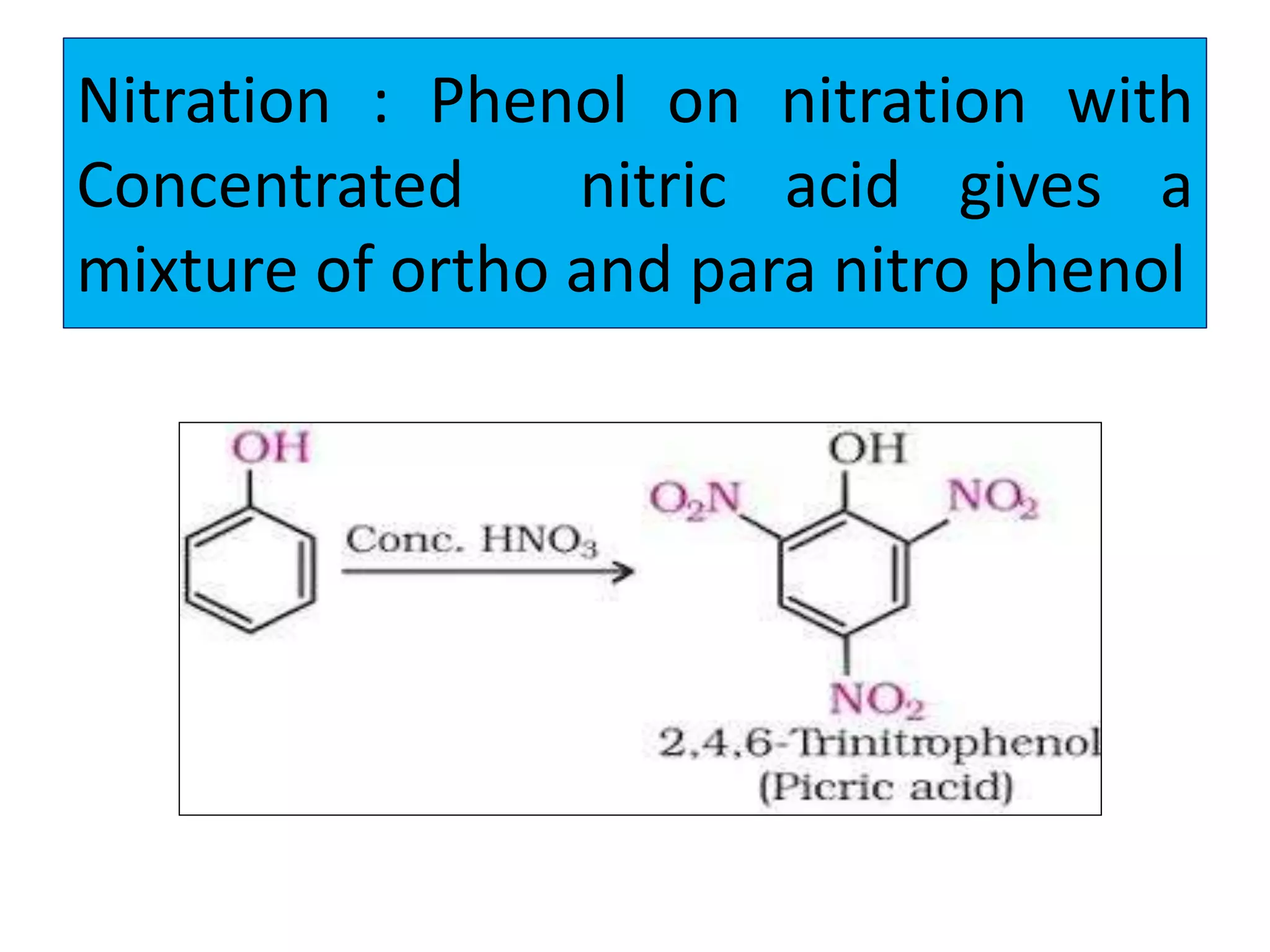
Nitration : Phenol on nitration with
Concentrated nitric acid gives a
mixture of ortho and para nitro phenol
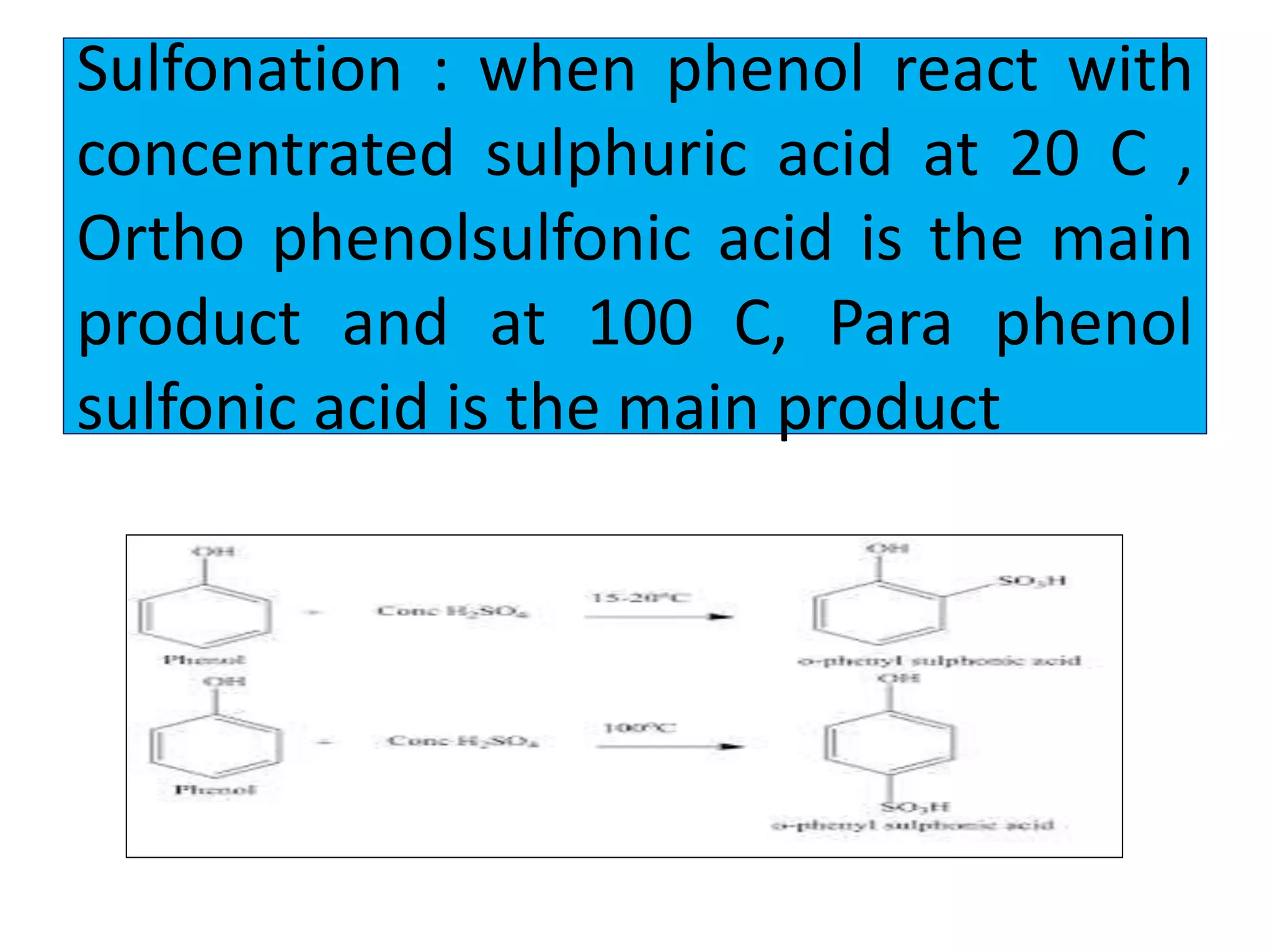
Sulfonation : when phenol react with
concentrated sulphuric acid at 20 C ,
Ortho phenolsulfonic acid is the main
product and at 100 C, Para phenol
sulfonic acid is the main product
Reimer Tiemann reaction of phenol
The Reimer Tiemann reaction is an organic
chemical reaction where phenol is converted
into an ortho hydroxy benzaldehyde using
chloroform, a base, and acid workup. This
name reaction can also be described as the
chemical reaction used for the ortho-
formylation of phenols.
Mechanism of Reimer Tiemann
reaction
Mechanism of Reimer Tiemann
reaction
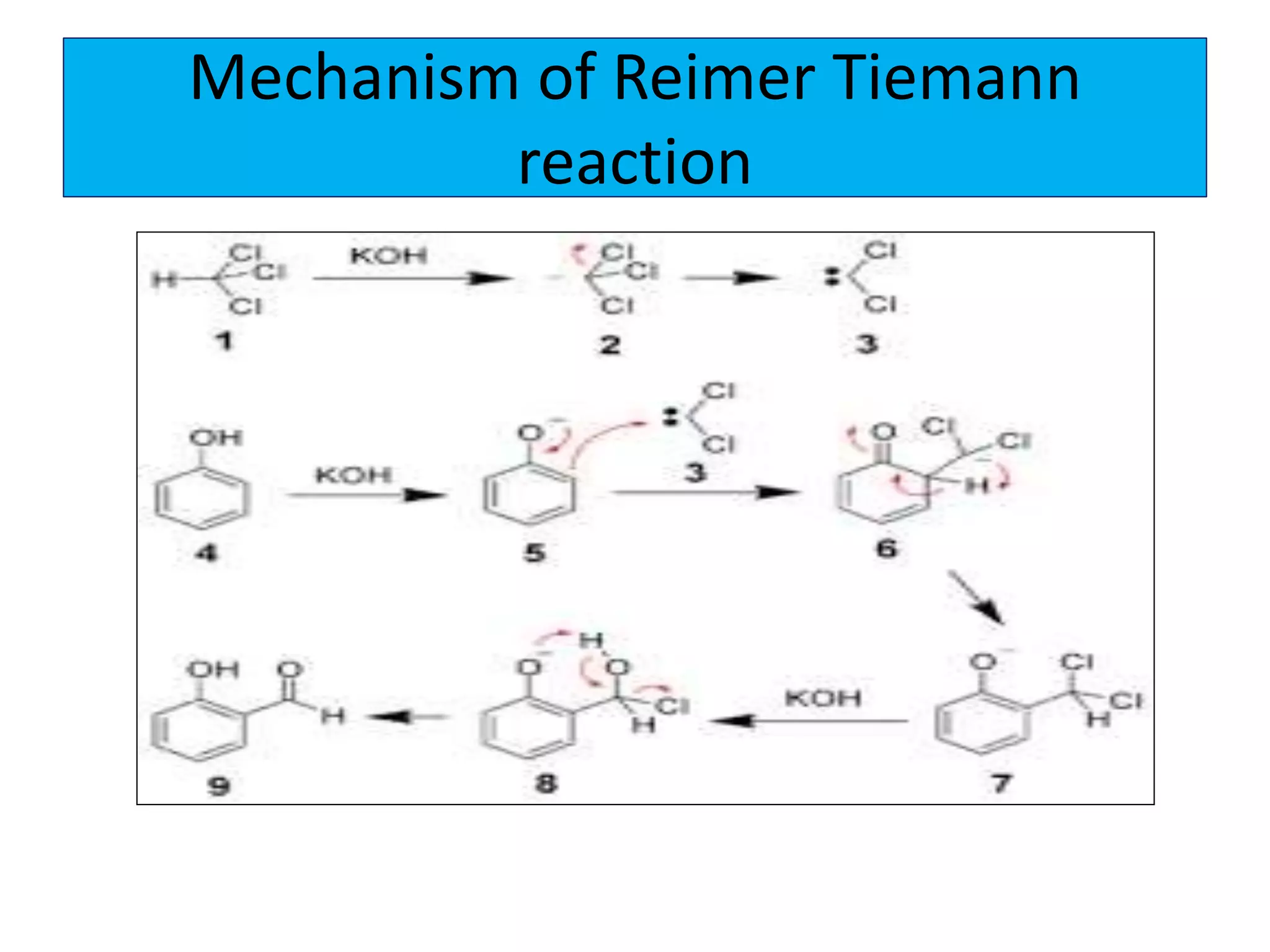
• Chloroform (1) is deprotonated by a strong
base (normally hydroxide) to form the
chloroform carbanion (2)
• It will quickly alpha-eliminate to
give dichlorocarbene (3); this is the principal
reactive species.
• The hydroxide will also deprotonate the
phenol (4) to give a negatively charged
phenoxide (5).
Mechanism of Reimer Tiemann
reaction
• The negative charge is delocalised into the
aromatic ring, making it far more nucleophilic.
• Nucleophilic attack on the dichlorocarbene
gives an intermediate dichloromethyl
substituted phenol (7).
• After basic hydrolysis, the desired product (9)
is formed.
The Kolbe–
Schmitt reaction or Kolbe process
(named after Hermann Kolbe and
Rudolf Schmitt)
Kolbe’s process is a carboxylation
chemical reaction that proceeds by heating
sodium phenoxide (the sodium salt of phenol)
with carbon dioxide under pressure (100 atm,
125 °C), then treating the product with sulfuric
acid.
• The Kolbe reaction can be classified as a carboxylation
chemical reaction. The reaction occurs when sodium
phenoxide is allowed to absorb carbon dioxide and the
resulting product is heated at a temperature of a 125-
degree celsius and a pressure of over a hundred
atmospheres. An unstable intermediate is now formed.
• This unstable intermediate goes through a proton shift,
leading to the formation of sodium salicylate. Now, this
mixture is treated with sulfuric acid. The acidification
of the mixture yields the salicylic acid.
Gattermann Reaction- it involves the
treatment of phenol with a mixture of
hydrogen cyanide and hydrogen
chloride in the presence of aluminium
chloride as catalyst . Salicylic acid is
formed.
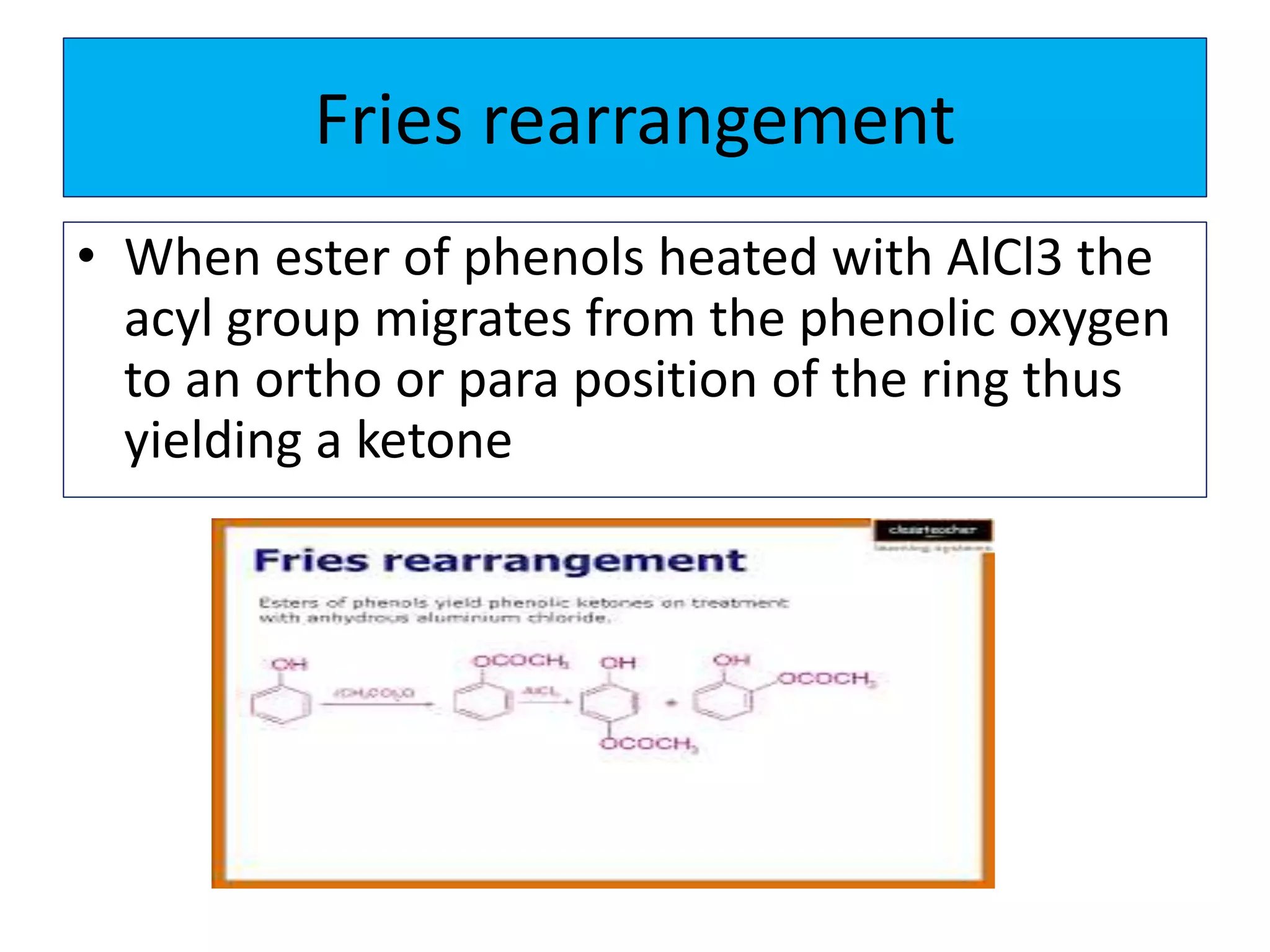
Fries rearrangement
• When ester of phenols heated with AlCl3 the
acyl group migrates from the phenolic oxygen
to an ortho or para position of the ring thus
yielding a ketone
Phenol couple with benzene
diazonium chloride in alkaline medium
form P-hydroxyazobenzene
Phenol with phthalic anhydride in the
presence of sulfuric acid to form
phenolphthalein
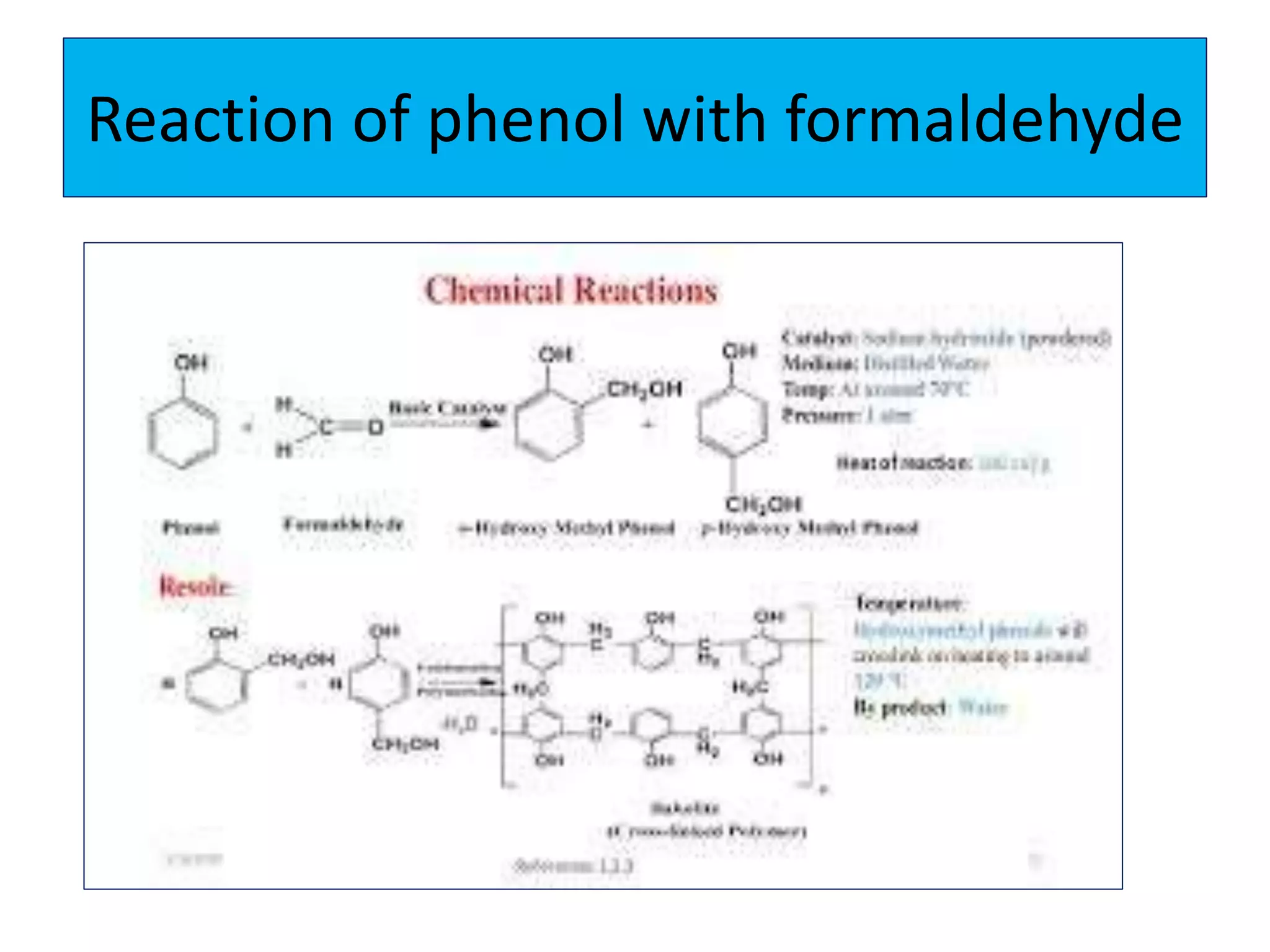
Reaction of phenol with formaldehyde
Preparation and reaction of phenol

Preparation and reaction of phenol

  • 1.
  • 2.
  • 3.
    In Dow's processmethod chlorobenzene is heated with aq. NaOH at about 623k and 300 atm. pressure to form sodium phenoxide, which is acidified by dilute acid like HCl to form phenol.
  • 4.
    To prepare phenol,cumene is first oxidized in the presence of air of cumene hydro- peroxide. Then, cumene hydroxide is treated with dilute acid to prepare phenol and acetone as by-products.
  • 5.
    Fusion of sodiumbenzene sulfonate with solid NaOH at 300 C followed by treatment with dilute HCl
  • 6.
    Warming a solutionof benzene diazonium chloride prepared from aniline on a water bath at 50C
  • 7.
    From Coal tar •Coal tar provides natural source of phenol and cresol. • The middle oil fraction of coal tar contains phenols, cresols and naphthalene.[ 170-240 C] • Oil when cooled solid naphthalene deposit. • Centrifuge and the oil left out is agitated with NaOH gives phenols and cresols.
  • 8.
  • 9.
    Formation of salt Phenolis acidic It react with sodium hydroxide or sodium metal to form salts
  • 10.
    Phenol is weaklyacidic than carboxylic acid. It does not react with sodium carbonate and sodium bi cabonate
  • 11.
    Reaction with FeCl3phenol give violet colour on treatment with FeCl3 due to formation of complex. This reaction is given by most of the phenols
  • 12.
    Formation of esters-alkali react with phenol to form phenoxide which will react with acid chloride to form phenyl esters
  • 13.
    Formation of ether-phenol react with alkyl halide in alkali solution form phenyl ethers.
  • 14.
    Phenol distilled withzinc dust yield benzene in low amount
  • 15.
    Halogenation: Phenol withbromine in water give precipitate of 2,4,6 tribromo phenol. Chlorine behave in the same manner
  • 16.
    Halogenation: Phenol withbromine in CS2/CCl4 give precipitate of 2,4,6 tribromo phenol. Chlorine behave in the same manner
  • 17.
    Nitration : Phenolon nitration with dilute nitric acid gives a mixture of ortho and para nitro phenol
  • 18.
    Nitration : Phenolon nitration with Concentrated nitric acid gives a mixture of ortho and para nitro phenol
  • 19.
    Sulfonation : whenphenol react with concentrated sulphuric acid at 20 C , Ortho phenolsulfonic acid is the main product and at 100 C, Para phenol sulfonic acid is the main product
  • 20.
  • 21.
    Reimer Tiemann reactionof phenol The Reimer Tiemann reaction is an organic chemical reaction where phenol is converted into an ortho hydroxy benzaldehyde using chloroform, a base, and acid workup. This name reaction can also be described as the chemical reaction used for the ortho- formylation of phenols.
  • 22.
    Mechanism of ReimerTiemann reaction
  • 23.
    Mechanism of ReimerTiemann reaction • Chloroform (1) is deprotonated by a strong base (normally hydroxide) to form the chloroform carbanion (2) • It will quickly alpha-eliminate to give dichlorocarbene (3); this is the principal reactive species. • The hydroxide will also deprotonate the phenol (4) to give a negatively charged phenoxide (5).
  • 24.
    Mechanism of ReimerTiemann reaction • The negative charge is delocalised into the aromatic ring, making it far more nucleophilic. • Nucleophilic attack on the dichlorocarbene gives an intermediate dichloromethyl substituted phenol (7). • After basic hydrolysis, the desired product (9) is formed.
  • 25.
    The Kolbe– Schmitt reactionor Kolbe process (named after Hermann Kolbe and Rudolf Schmitt)
  • 26.
    Kolbe’s process isa carboxylation chemical reaction that proceeds by heating sodium phenoxide (the sodium salt of phenol) with carbon dioxide under pressure (100 atm, 125 °C), then treating the product with sulfuric acid.
  • 28.
    • The Kolbereaction can be classified as a carboxylation chemical reaction. The reaction occurs when sodium phenoxide is allowed to absorb carbon dioxide and the resulting product is heated at a temperature of a 125- degree celsius and a pressure of over a hundred atmospheres. An unstable intermediate is now formed. • This unstable intermediate goes through a proton shift, leading to the formation of sodium salicylate. Now, this mixture is treated with sulfuric acid. The acidification of the mixture yields the salicylic acid.
  • 29.
    Gattermann Reaction- itinvolves the treatment of phenol with a mixture of hydrogen cyanide and hydrogen chloride in the presence of aluminium chloride as catalyst . Salicylic acid is formed.
  • 30.
    Fries rearrangement • Whenester of phenols heated with AlCl3 the acyl group migrates from the phenolic oxygen to an ortho or para position of the ring thus yielding a ketone
  • 31.
    Phenol couple withbenzene diazonium chloride in alkaline medium form P-hydroxyazobenzene
  • 32.
    Phenol with phthalicanhydride in the presence of sulfuric acid to form phenolphthalein
  • 33.
    Reaction of phenolwith formaldehyde