KOTA COLLEGE
OF PHARMACY
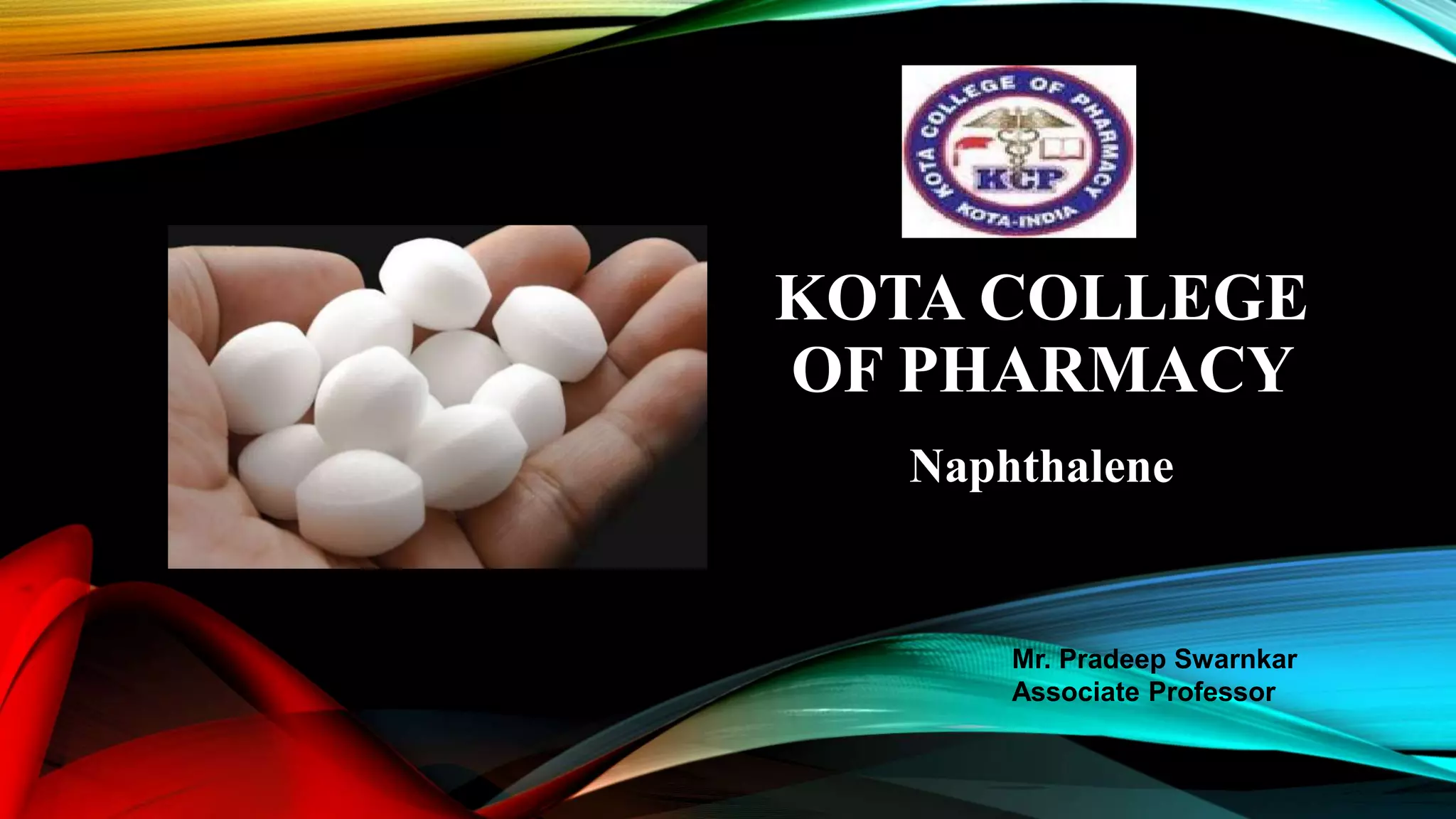
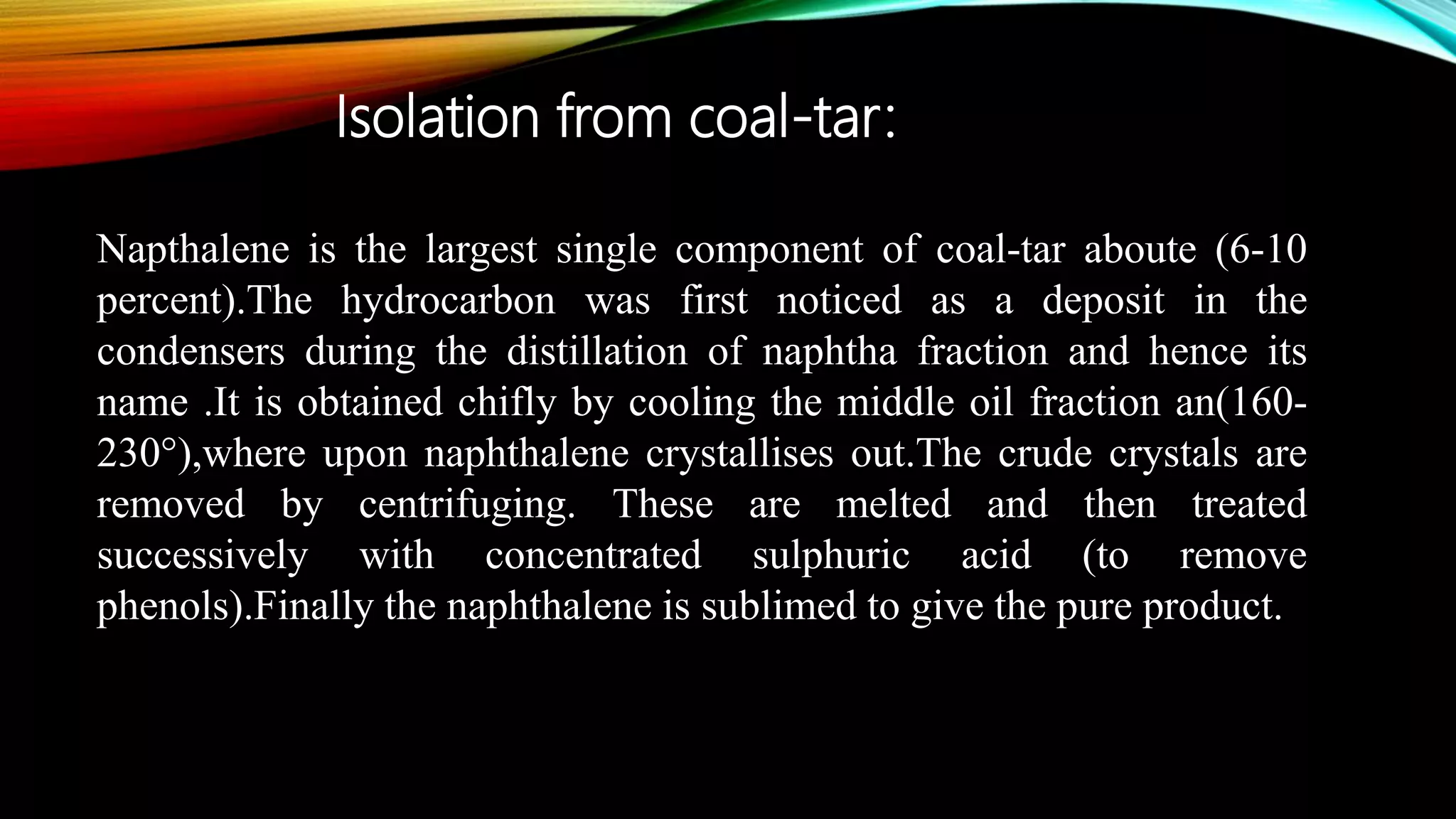
Naphthalene
Mr. Pradeep Swarnkar
Associate Professor
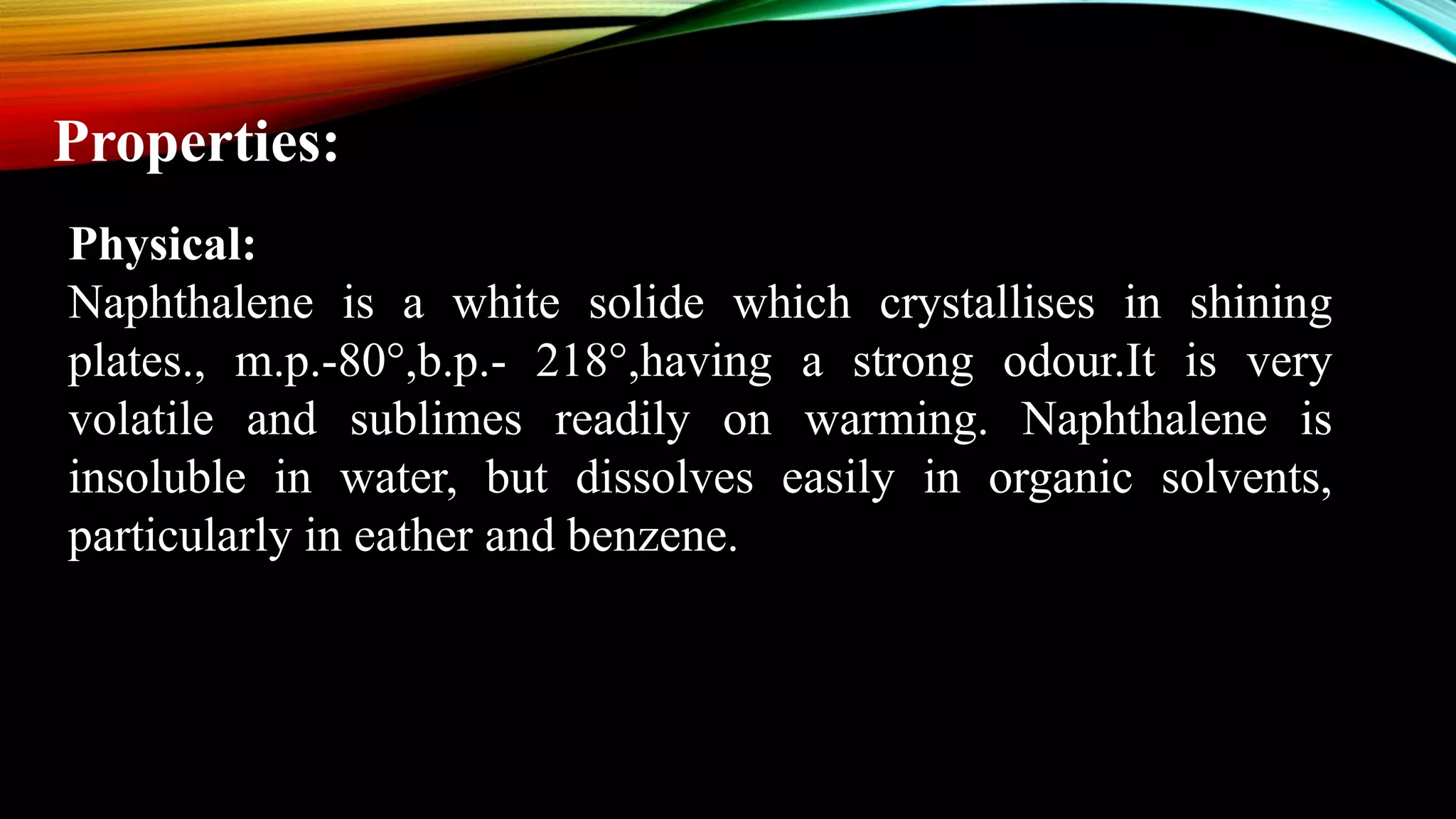
Naphthalene (C10H8) is an aromatic hydrocarbon in
which two benzene rings are fused in ortho
positions.
Isolation from coal-tar:
Napthalene is the largest single component of coal-tar aboute (6-10
percent).The hydrocarbon was first noticed as a deposit in the
condensers during the distillation of naphtha fraction and hence its
name .It is obtained chifly by cooling the middle oil fraction an(160-
230°),where upon naphthalene crystallises out.The crude crystals are
removed by centrifuging. These are melted and then treated
successively with concentrated sulphuric acid (to remove
phenols).Finally the naphthalene is sublimed to give the pure product.
Properties:
Physical:
Naphthalene is a white solide which crystallises in shining
plates., m.p.-80°,b.p.- 218°,having a strong odour.It is very
volatile and sublimes readily on warming. Naphthalene is
insoluble in water, but dissolves easily in organic solvents,
particularly in eather and benzene.
Chemical:
The reactions of naphthalene are essentially the same as those of
benzene .It undergoes substitution readily and forms addition
products. however it is somewhat less aromatic than benzene.Thus
the double bonds in naphthalene exhibit in part the reactivity of
alkenes and it forms addition compounds more readily than does
benzene. As soon as one of the ring is fully saturated by addition
of hydrogen or halogen.
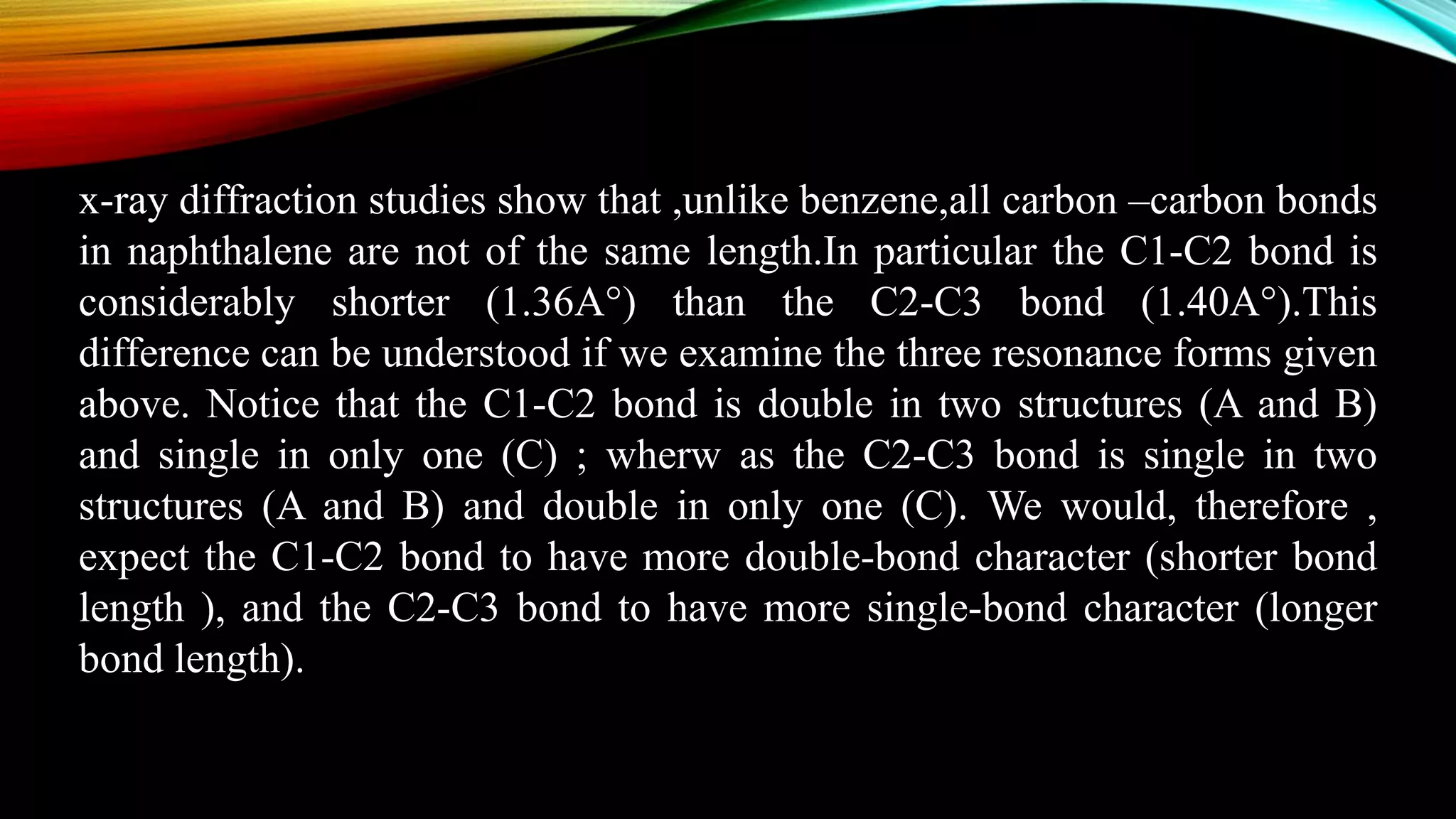
Resonance structure of naphthalene:
x-ray diffraction studies show that ,unlike benzene,all carbon –carbon bonds
in naphthalene are not of the same length.In particular the C1-C2 bond is
considerably shorter (1.36A°) than the C2-C3 bond (1.40A°).This
difference can be understood if we examine the three resonance forms given
above. Notice that the C1-C2 bond is double in two structures (A and B)
and single in only one (C) ; wherw as the C2-C3 bond is single in two
structures (A and B) and double in only one (C). We would, therefore ,
expect the C1-C2 bond to have more double-bond character (shorter bond
length ), and the C2-C3 bond to have more single-bond character (longer
bond length).
The resonance energy of naphthalene is about 61 kcal/mole.This value is
less than twice the amount of a single benzene ring (36 kcal/mole).As a
result, naphthalene is somewhat less aromatic (more reactive) than
benzene.
Preparation of Naphthalene:
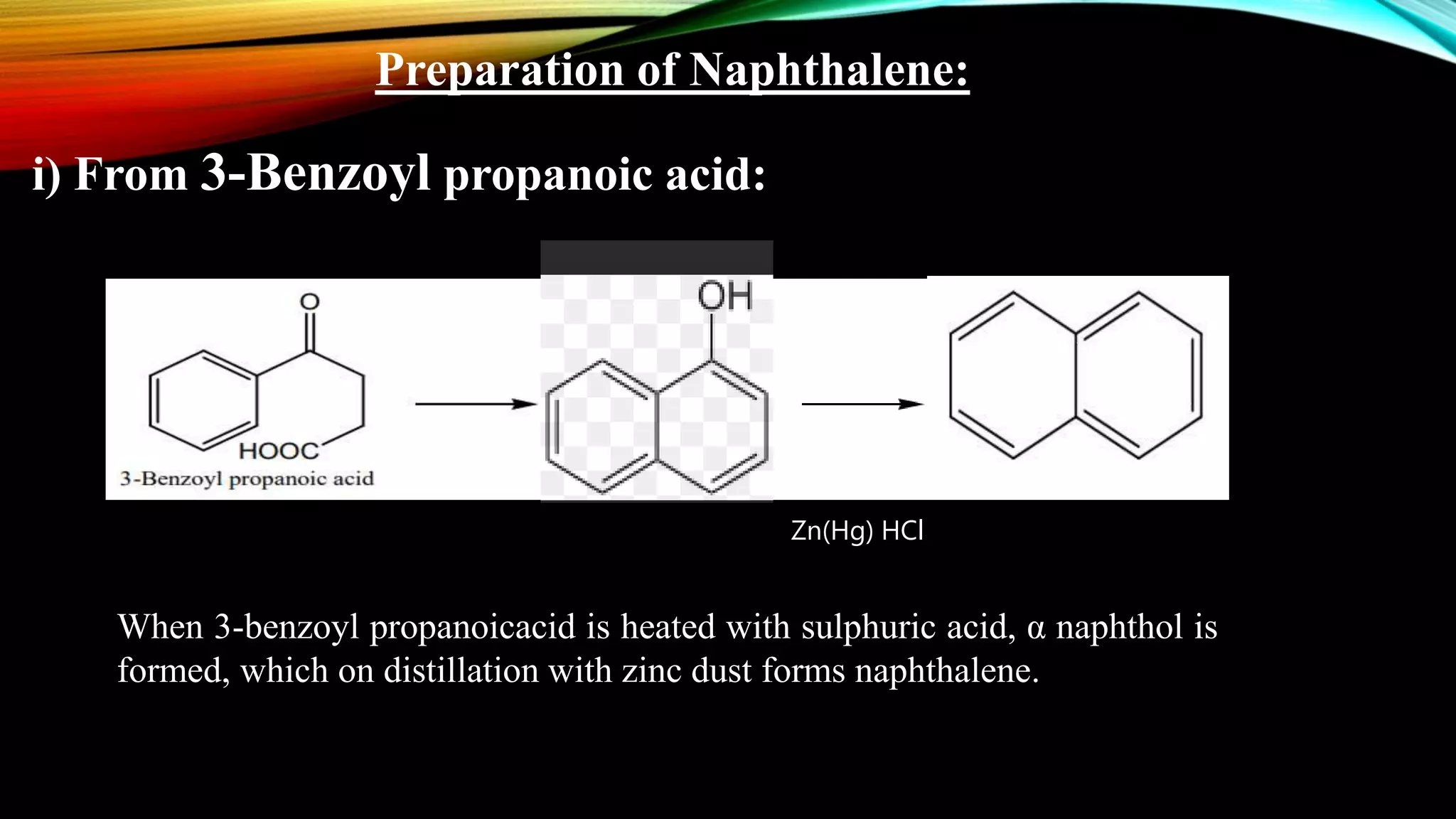
i) From 3-Benzoyl propanoic acid:
Zn(Hg) HCl
When 3-benzoyl propanoicacid is heated with sulphuric acid, α naphthol is
formed, which on distillation with zinc dust forms naphthalene.
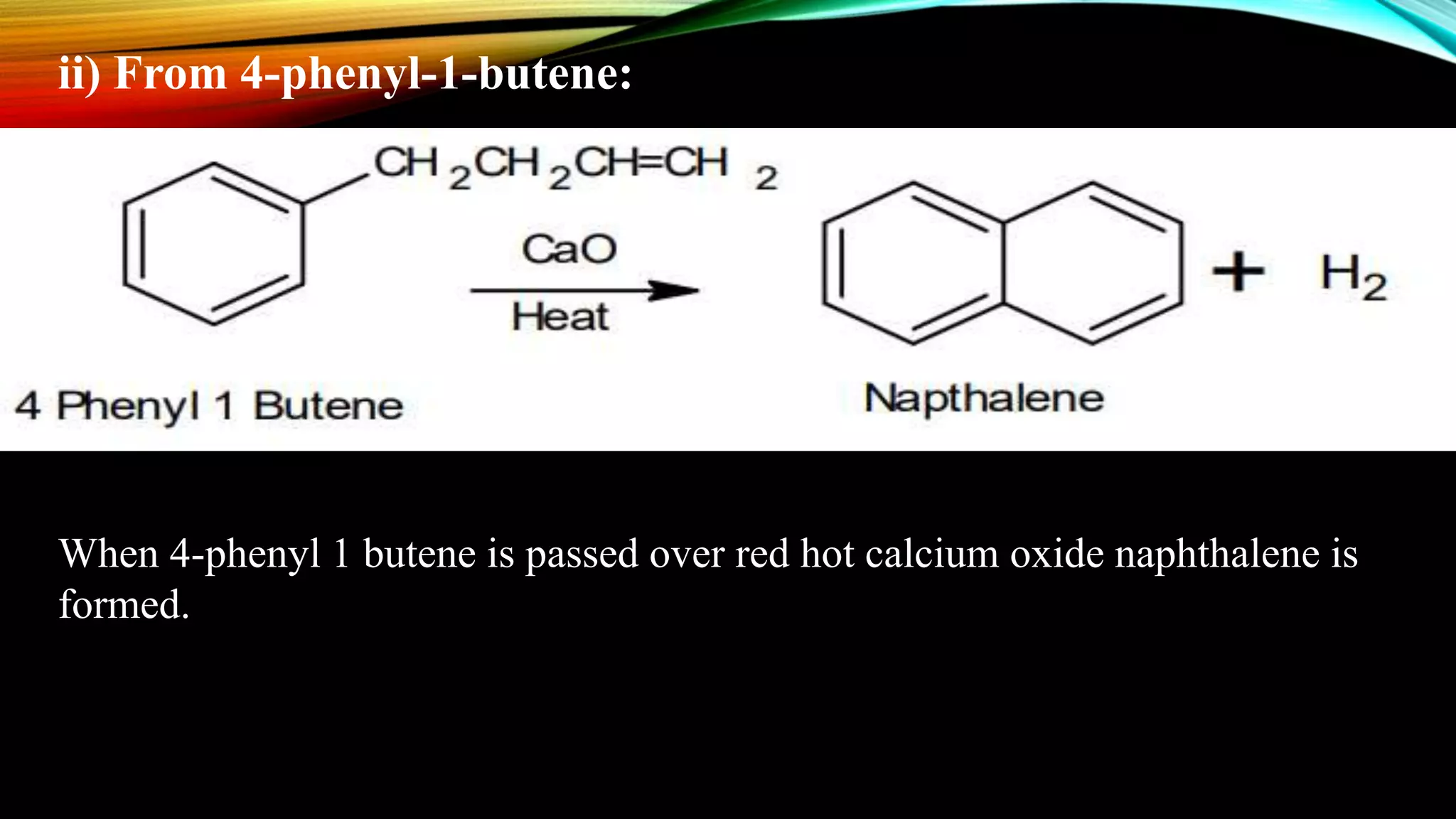
ii) From 4-phenyl-1-butene:
When 4-phenyl 1 butene is passed over red hot calcium oxide naphthalene is
formed.
iii) Haworth synthesis:
It involves five steps.
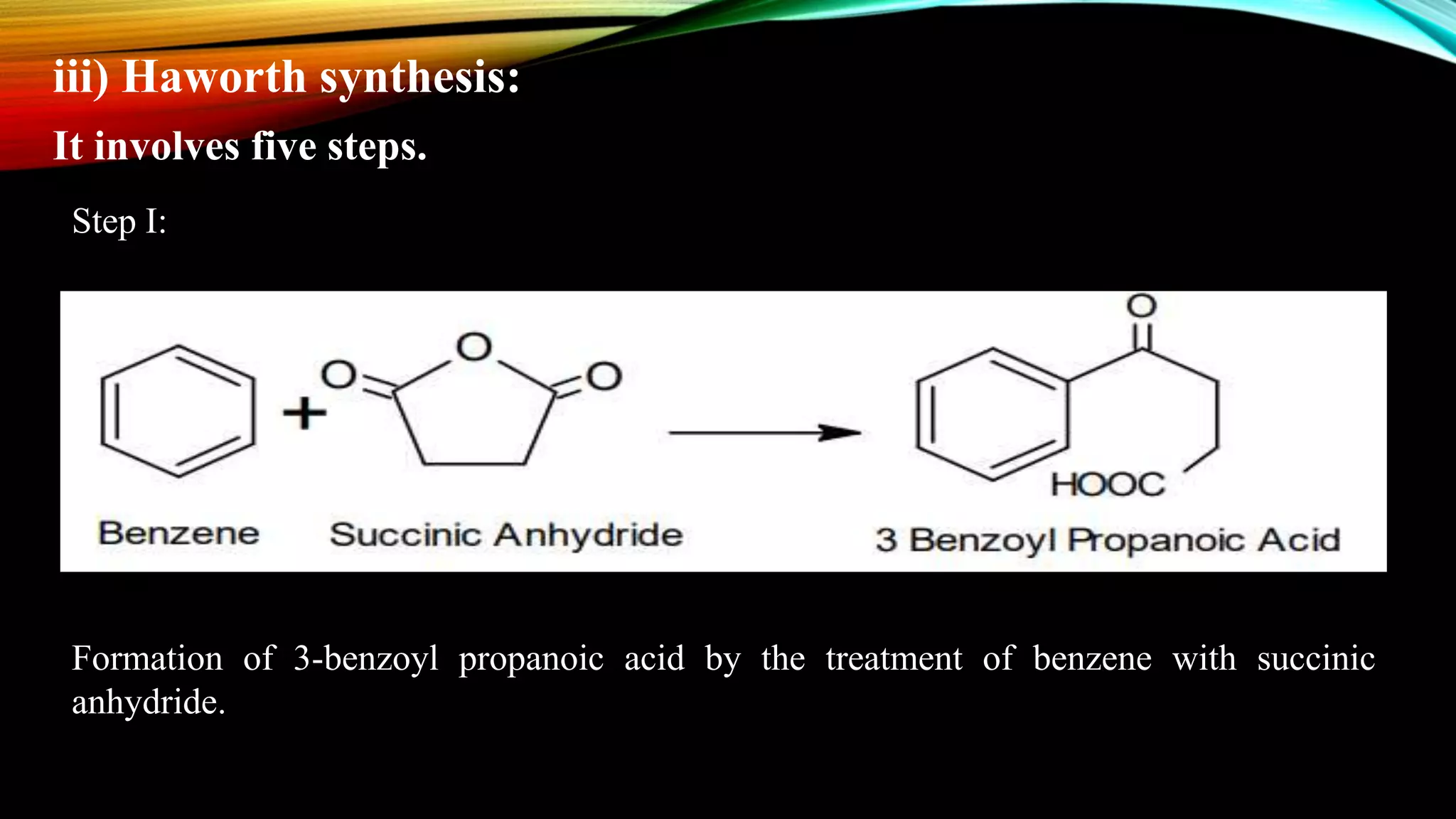
Step I:
Formation of 3-benzoyl propanoic acid by the treatment of benzene with succinic
anhydride.
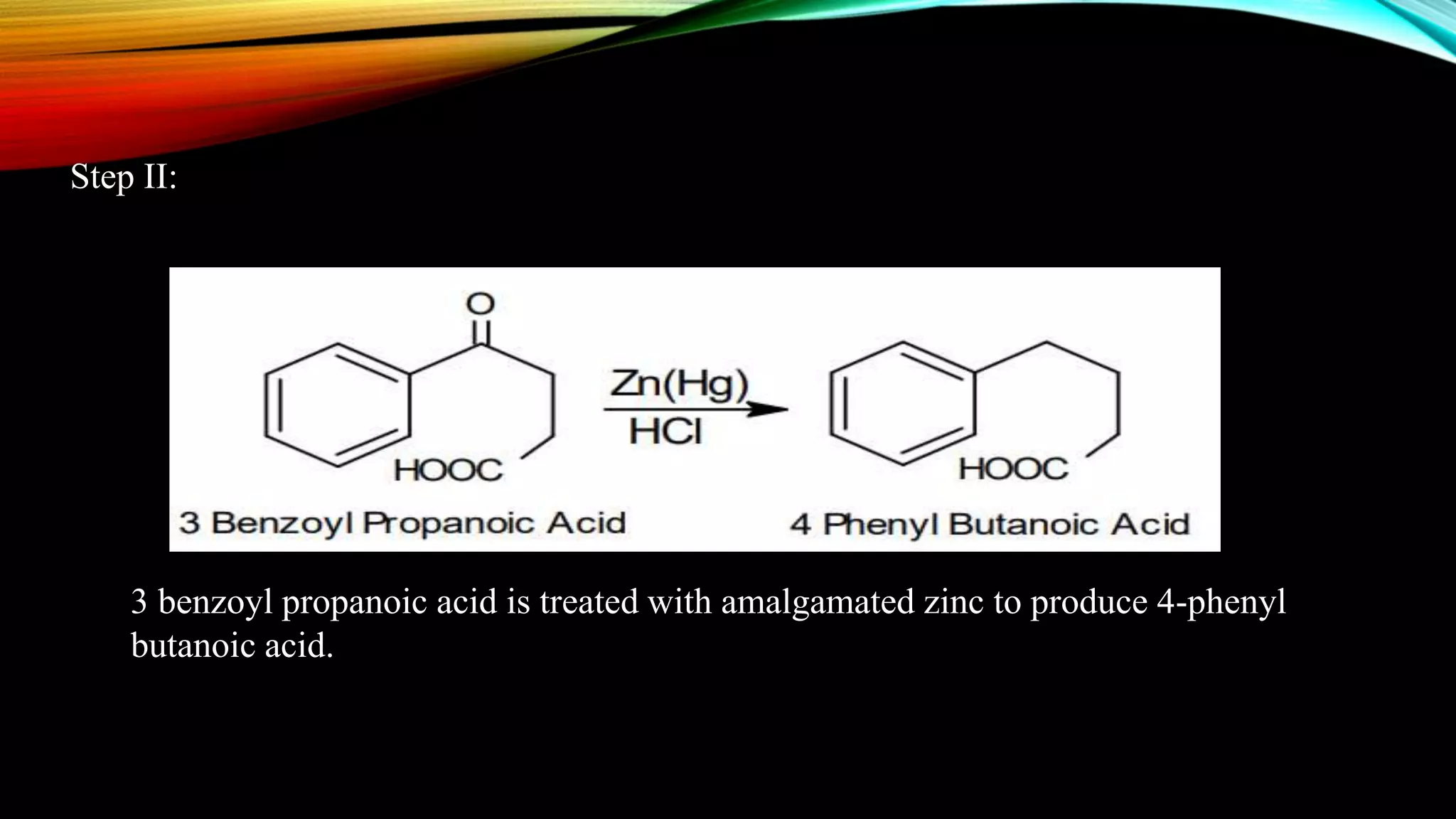
Step II:
3 benzoyl propanoic acid is treated with amalgamated zinc to produce 4-phenyl
butanoic acid.
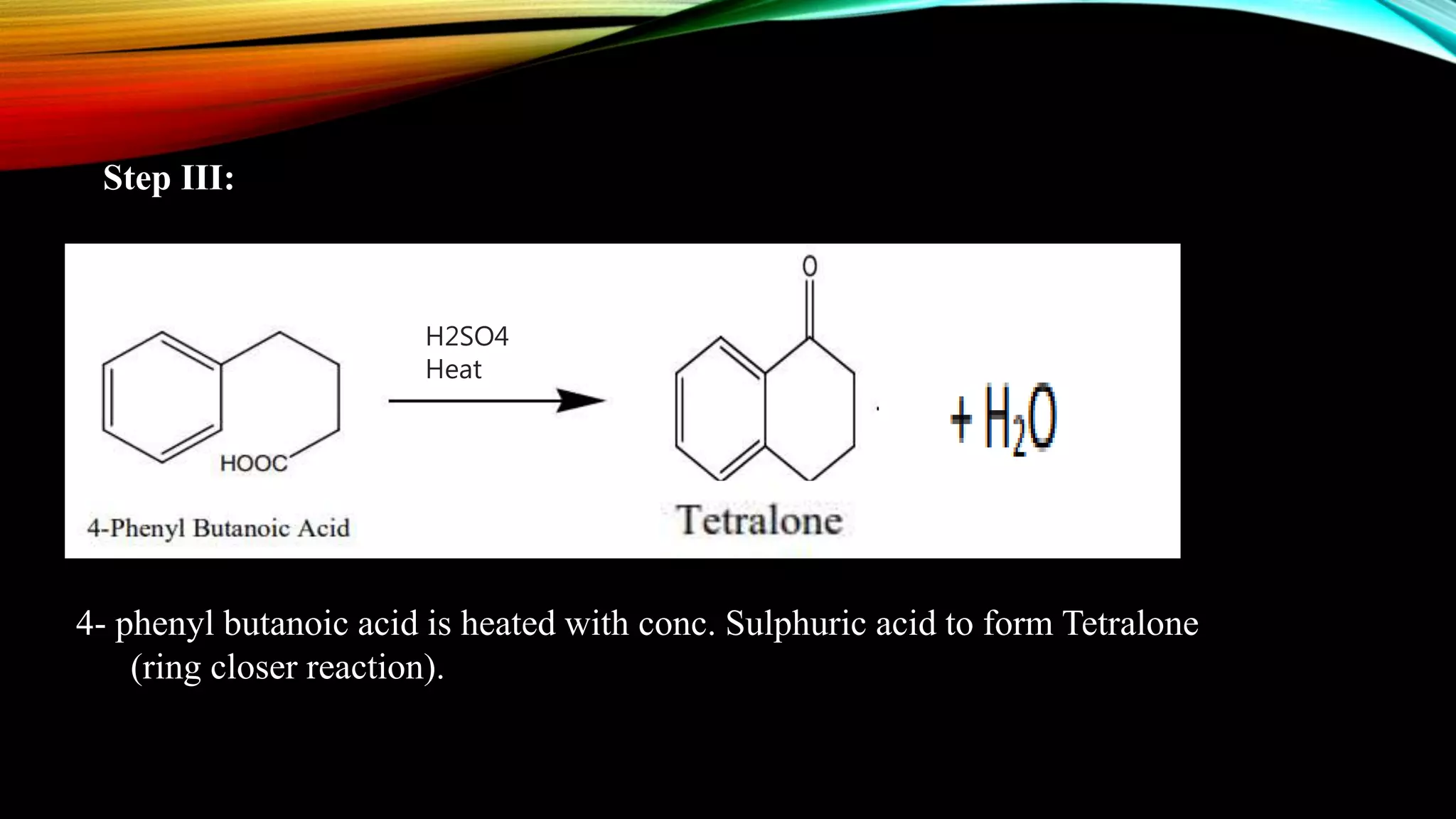
Step III:
4- phenyl butanoic acid is heated with conc. Sulphuric acid to form Tetralone
(ring closer reaction).
H2SO4
Heat
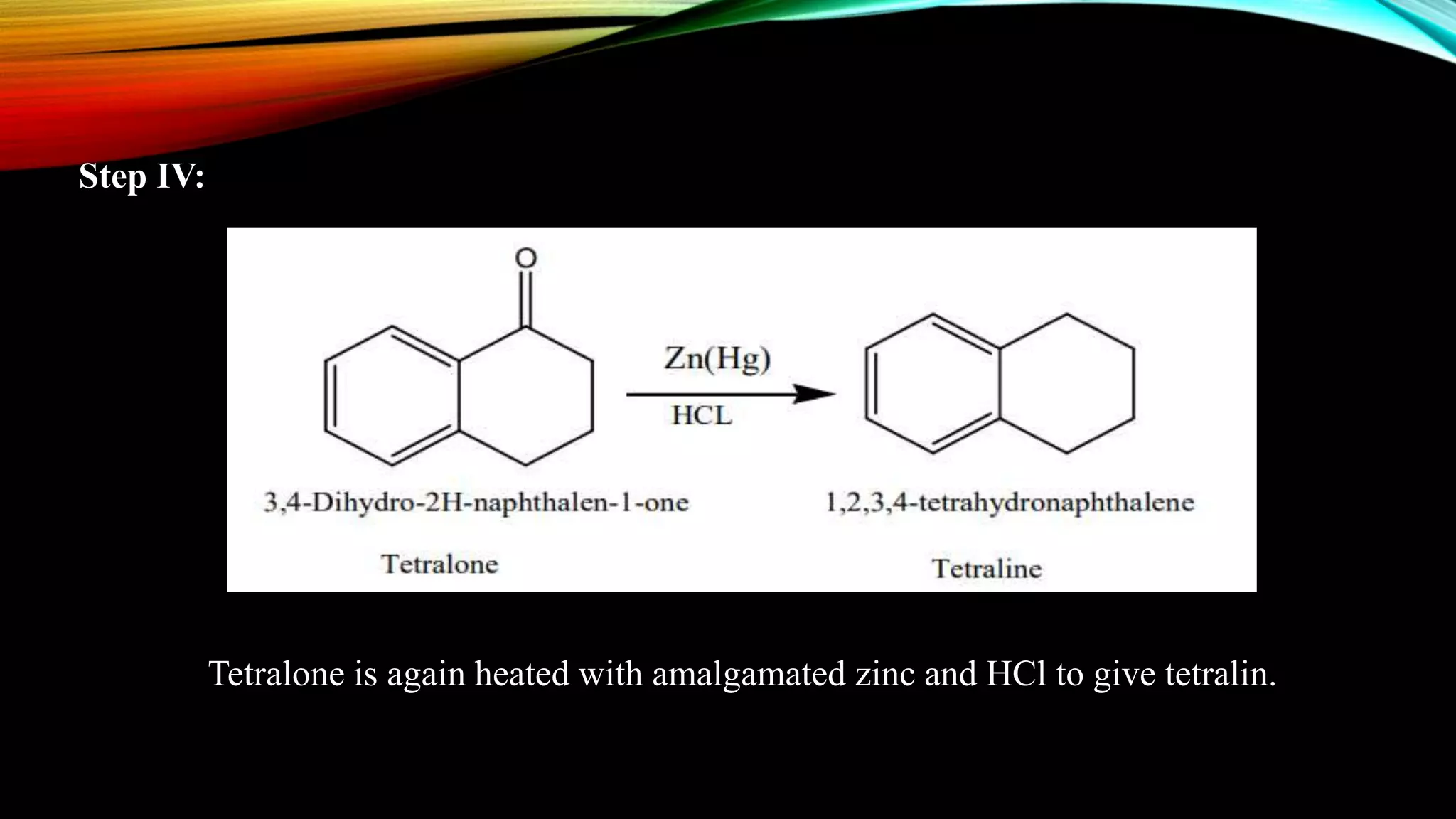
Step IV:
Tetralone is again heated with amalgamated zinc and HCl to give tetralin.
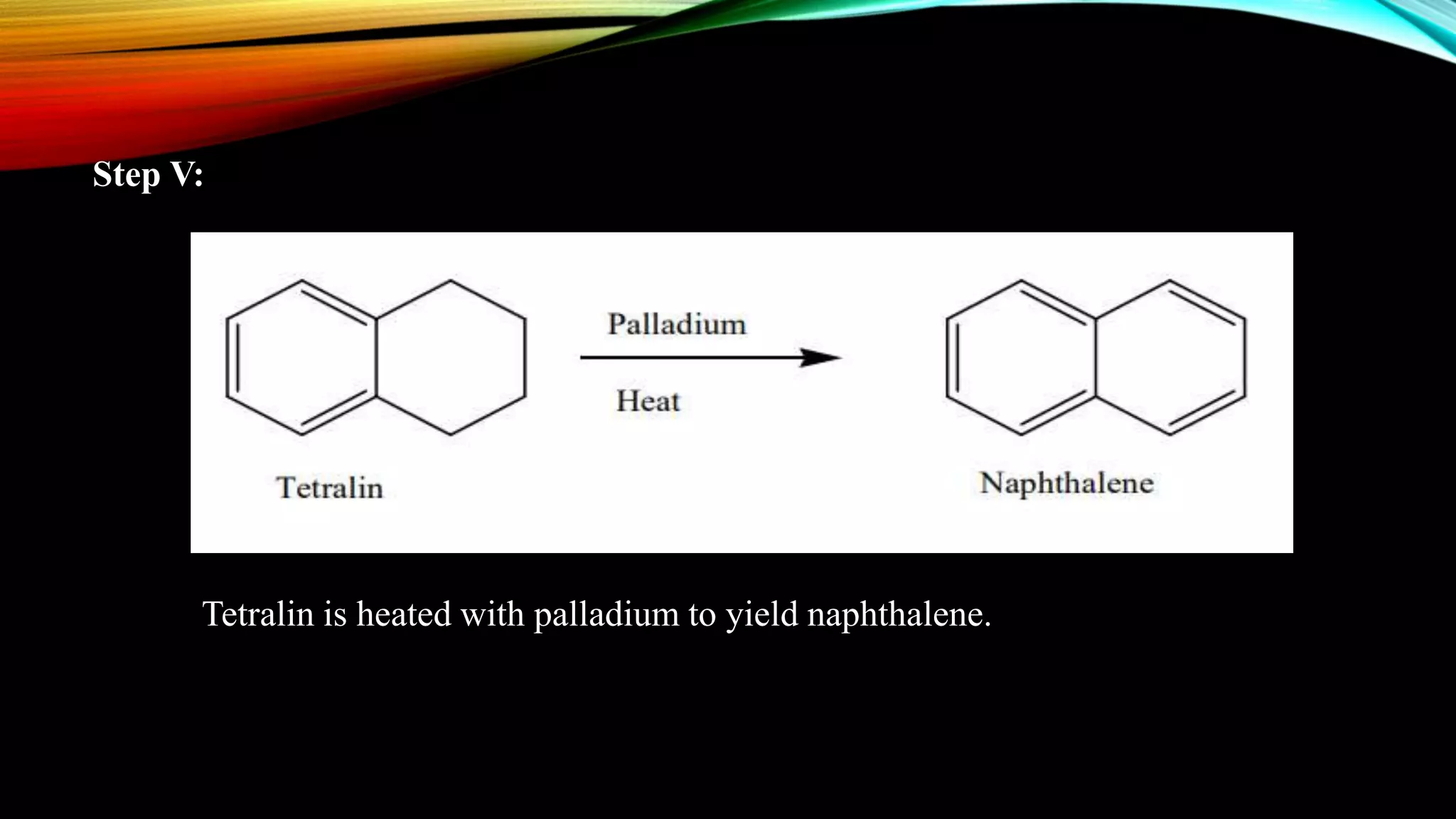
Step V:
Tetralin is heated with palladium to yield naphthalene.
Reactions of Naphthalene:
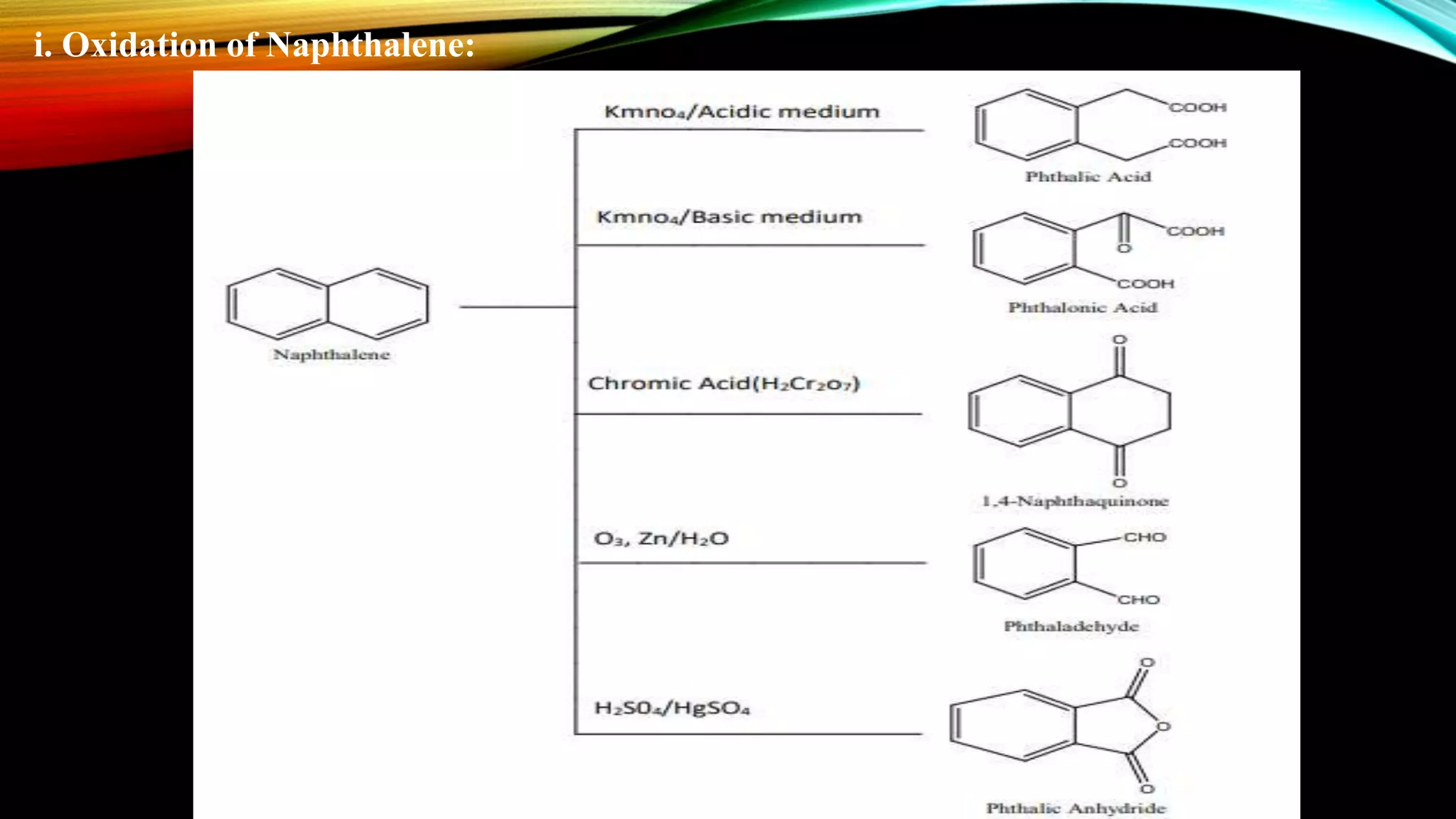
i. Oxidation of Naphthalene:
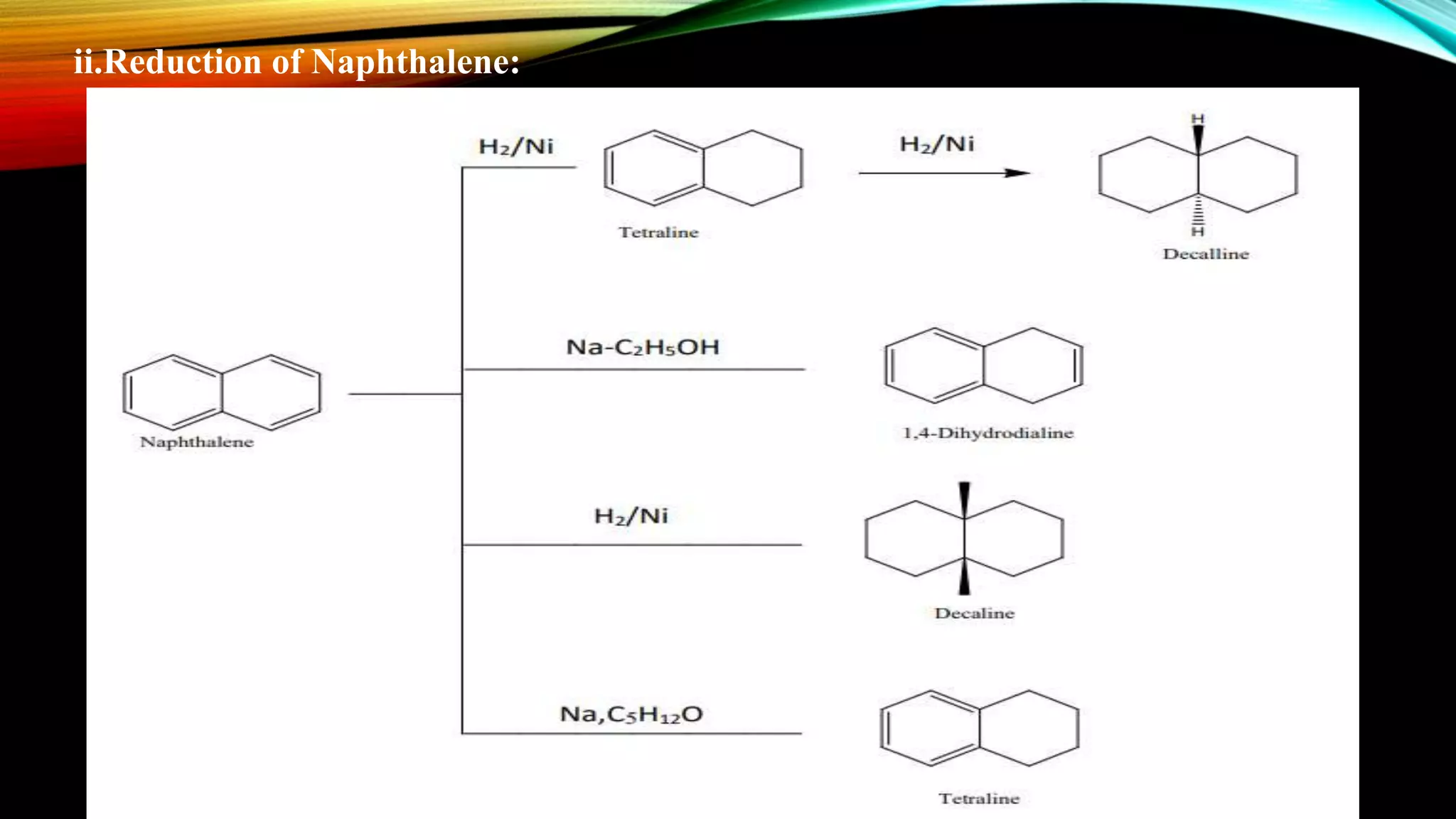
ii.Reduction of Naphthalene:
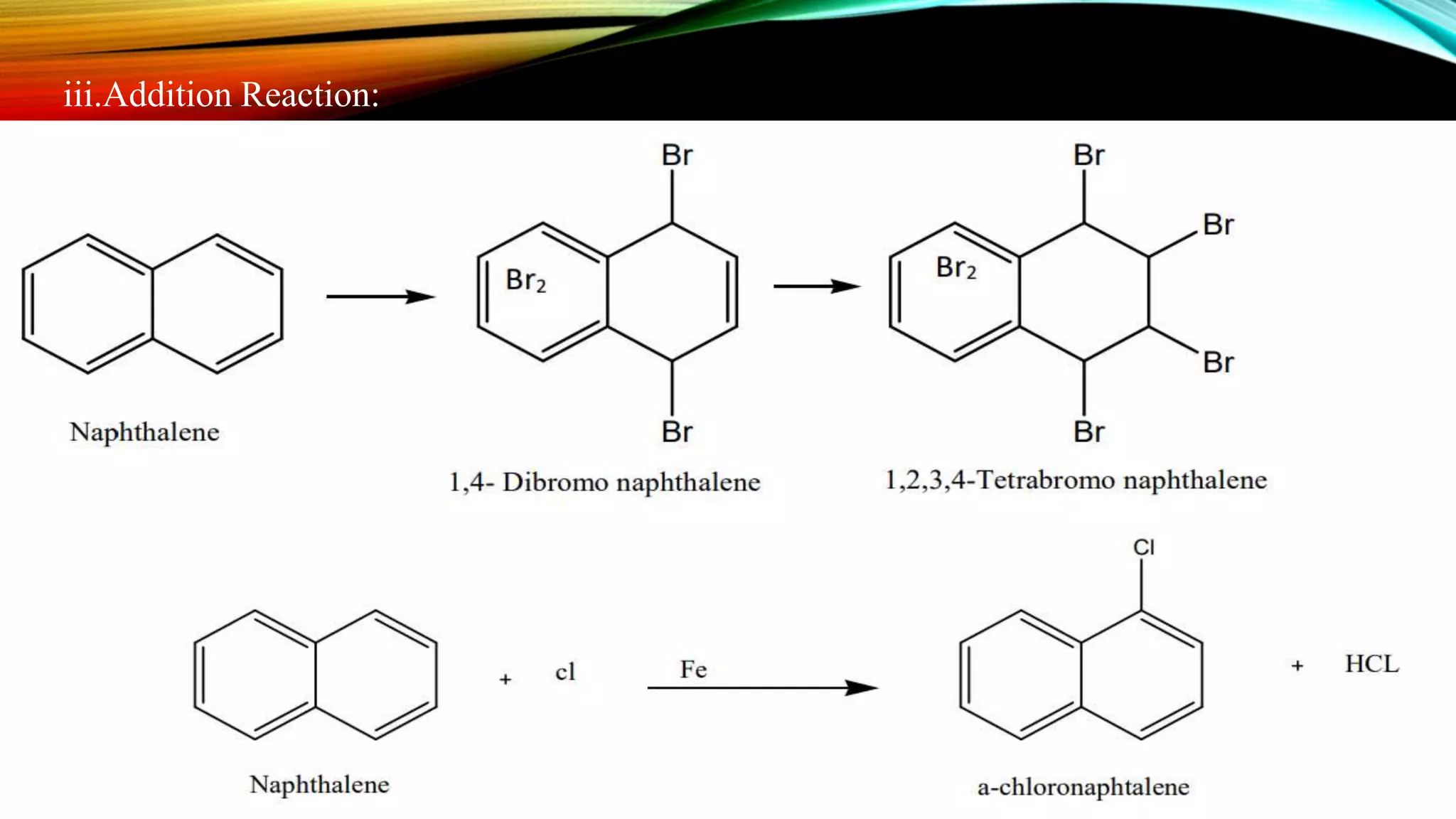
iii.Addition Reaction:
Addition of bromine or chlorine to naphthalene gives naphthalene
dibromide or naphthalene dichloride. Further addition of bromine or
chlorine results in formation of naphthalene tetra bromide or
naphthalene tetra chloride.
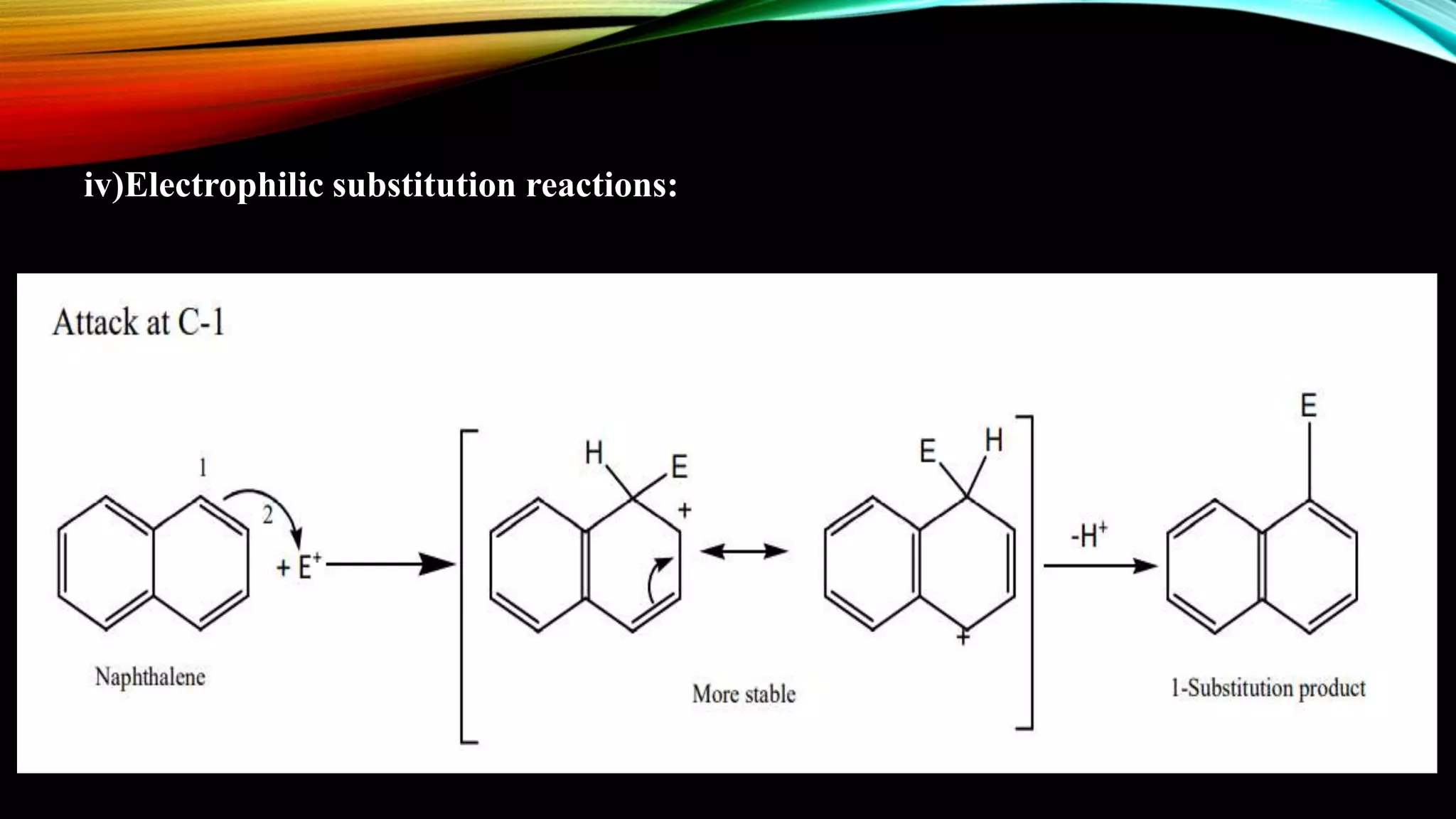
iv)Electrophilic substitution reactions:
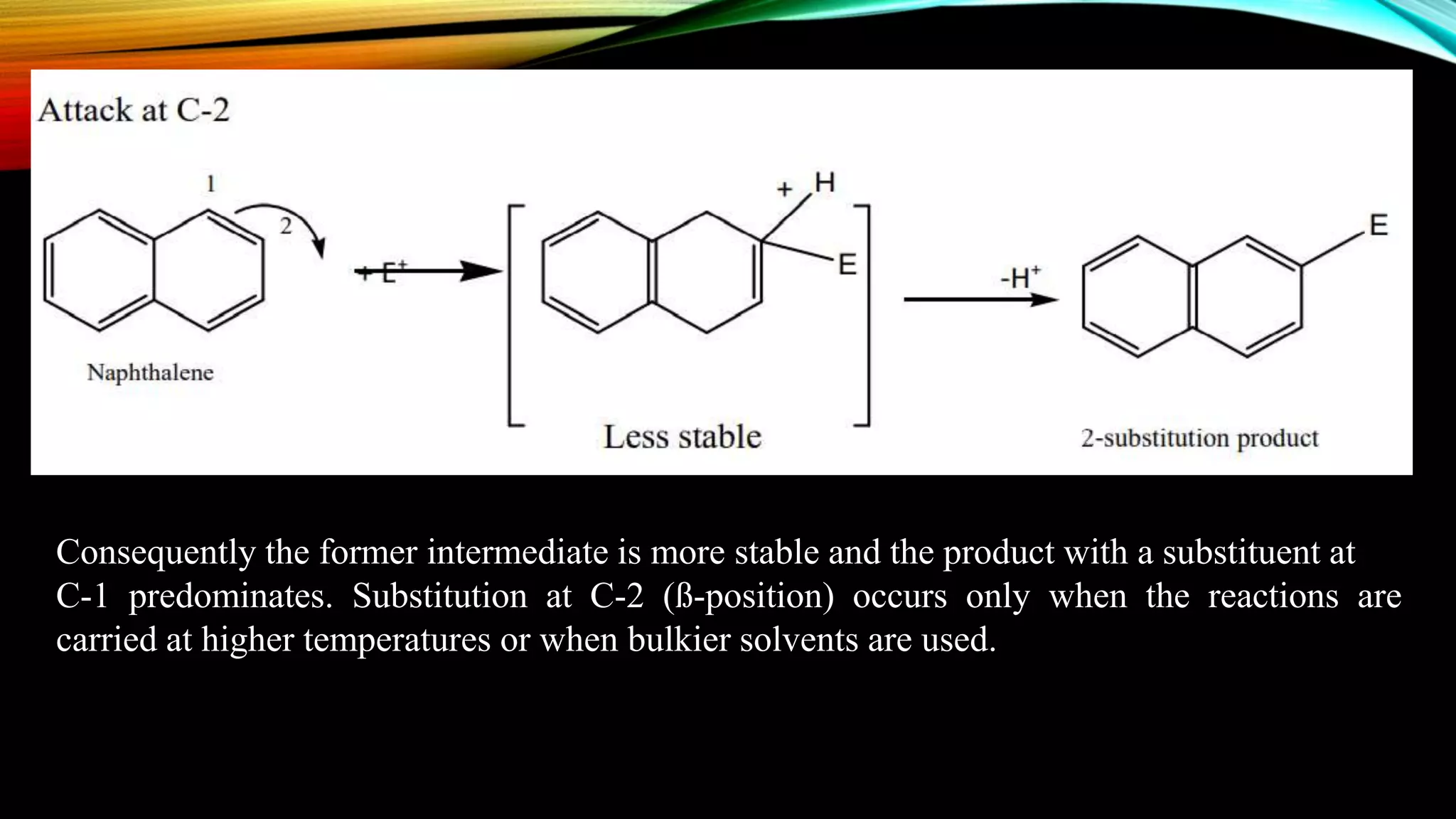
Consequently the former intermediate is more stable and the product with a substituent at
C-1 predominates. Substitution at C-2 (ß-position) occurs only when the reactions are
carried at higher temperatures or when bulkier solvents are used.
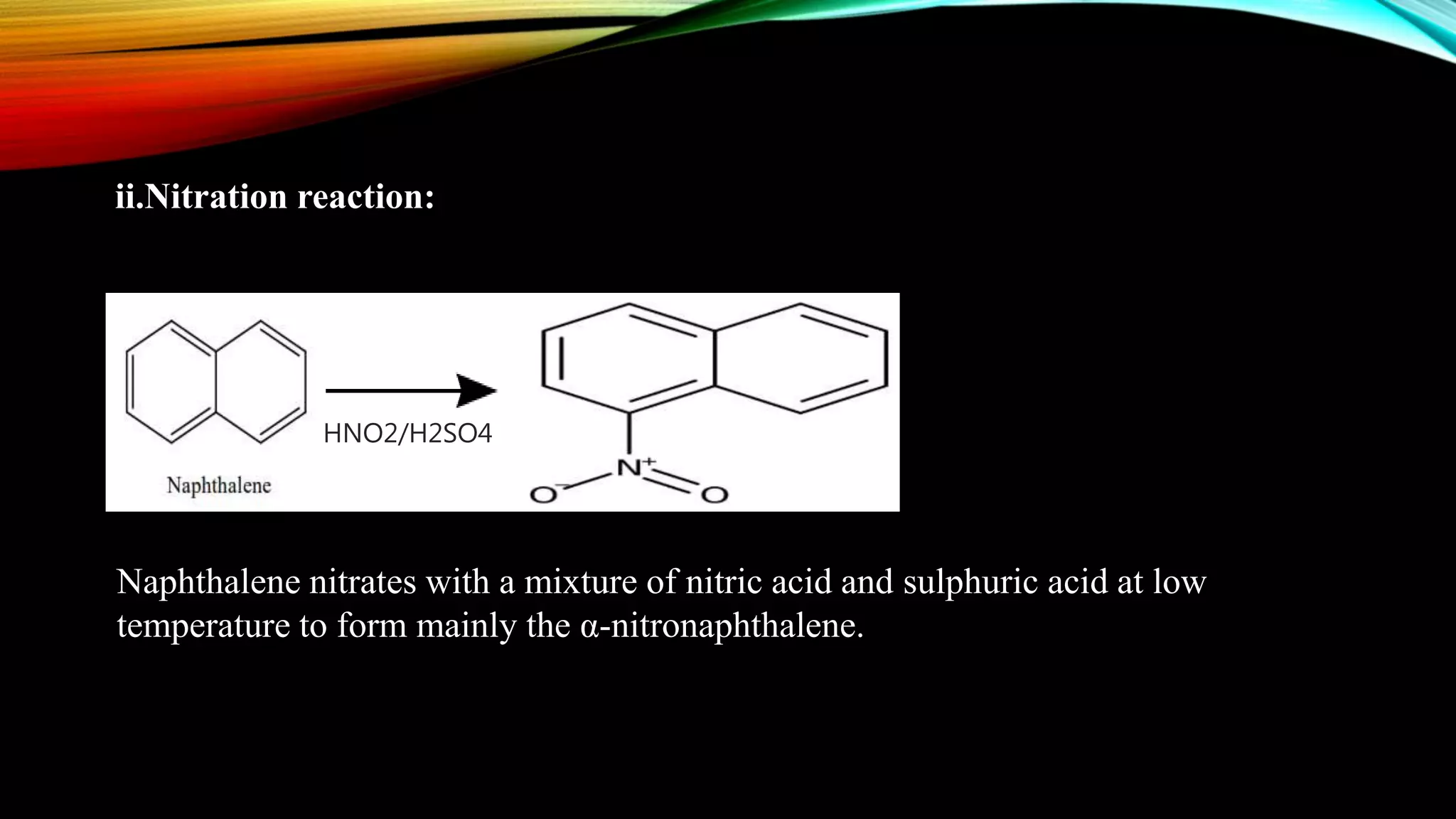
ii.Nitration reaction:
HNO2/H2SO4
Naphthalene nitrates with a mixture of nitric acid and sulphuric acid at low
temperature to form mainly the α-nitronaphthalene.
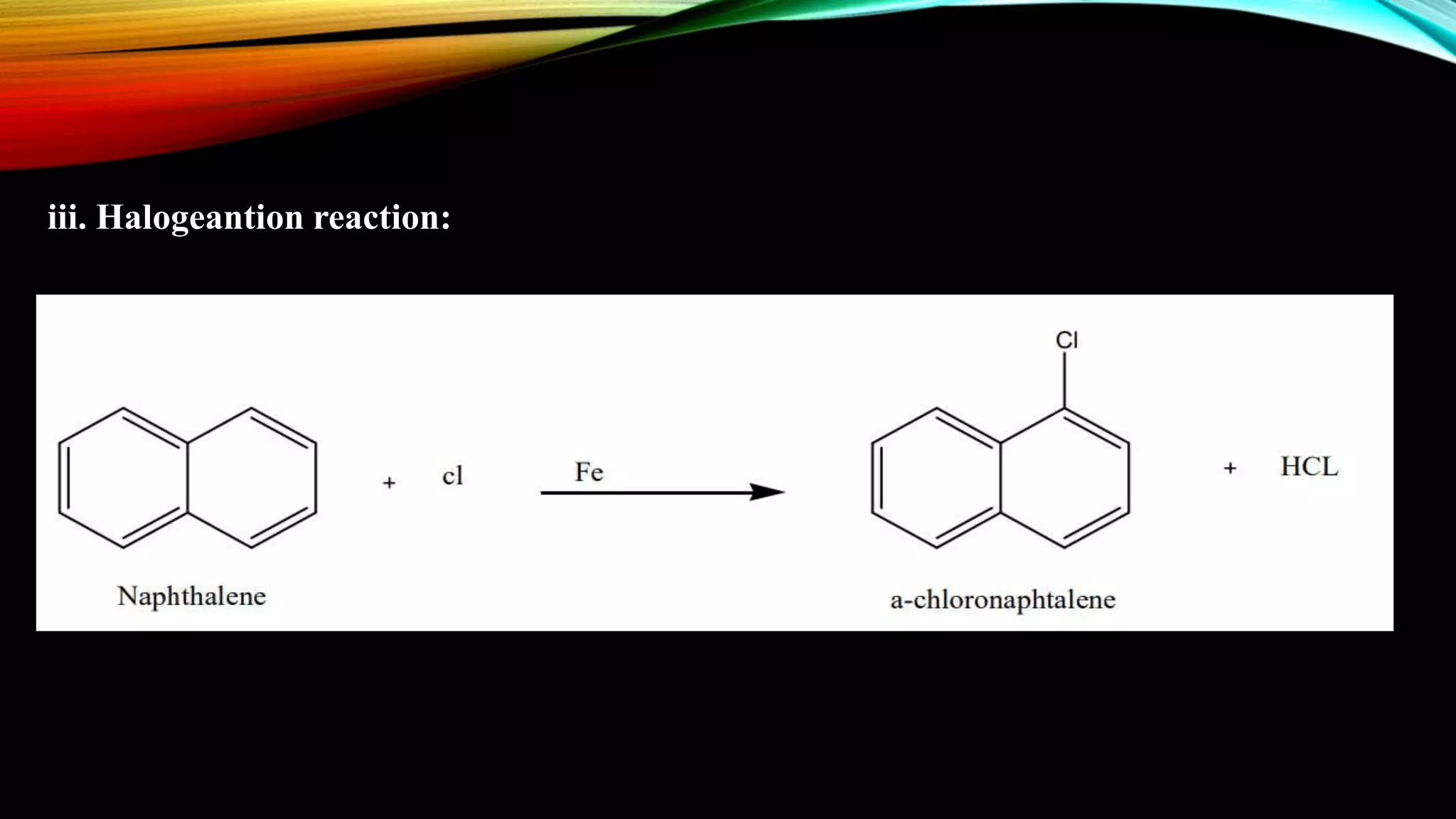
iii. Halogeantion reaction:
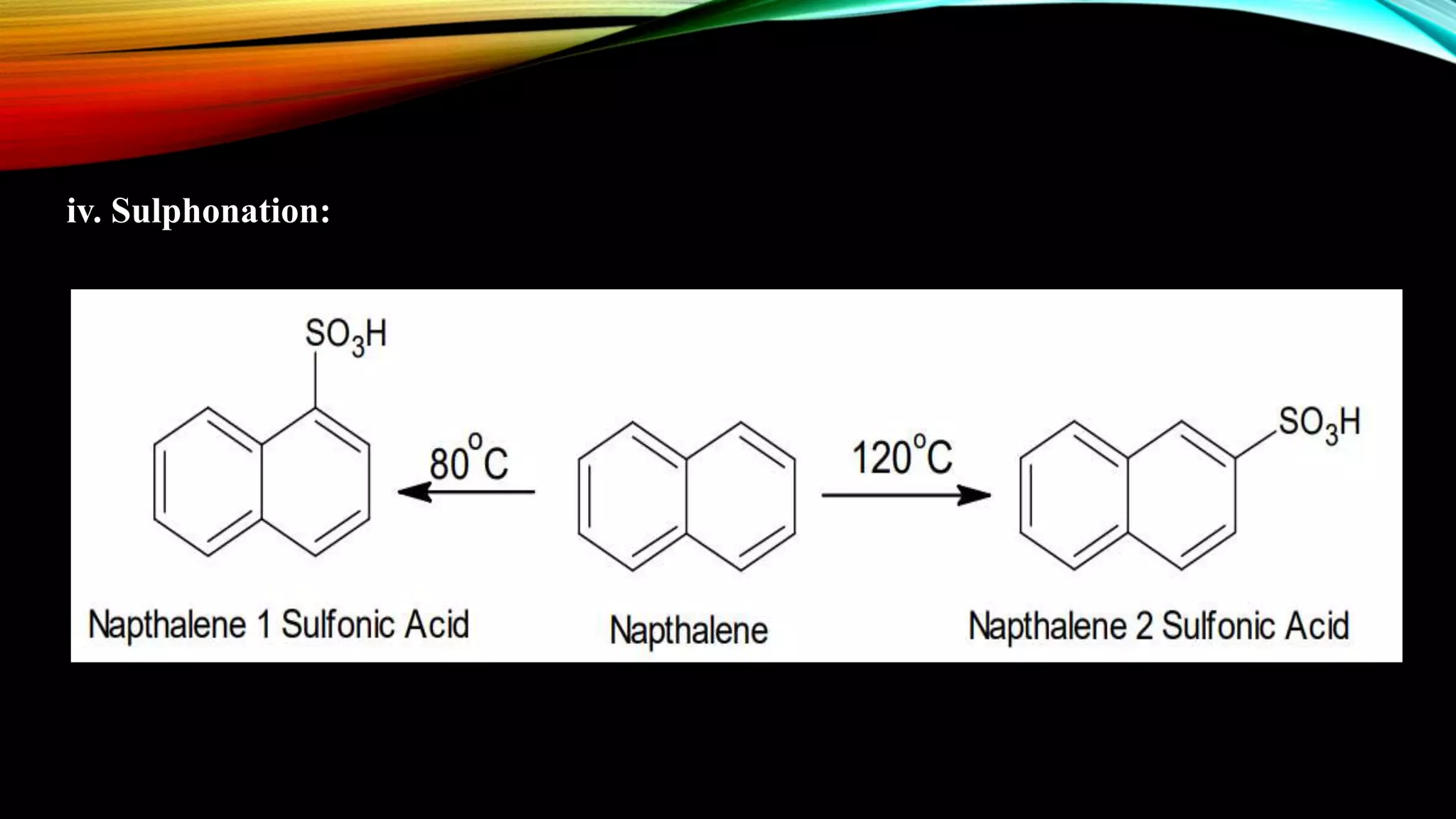
iv. Sulphonation:
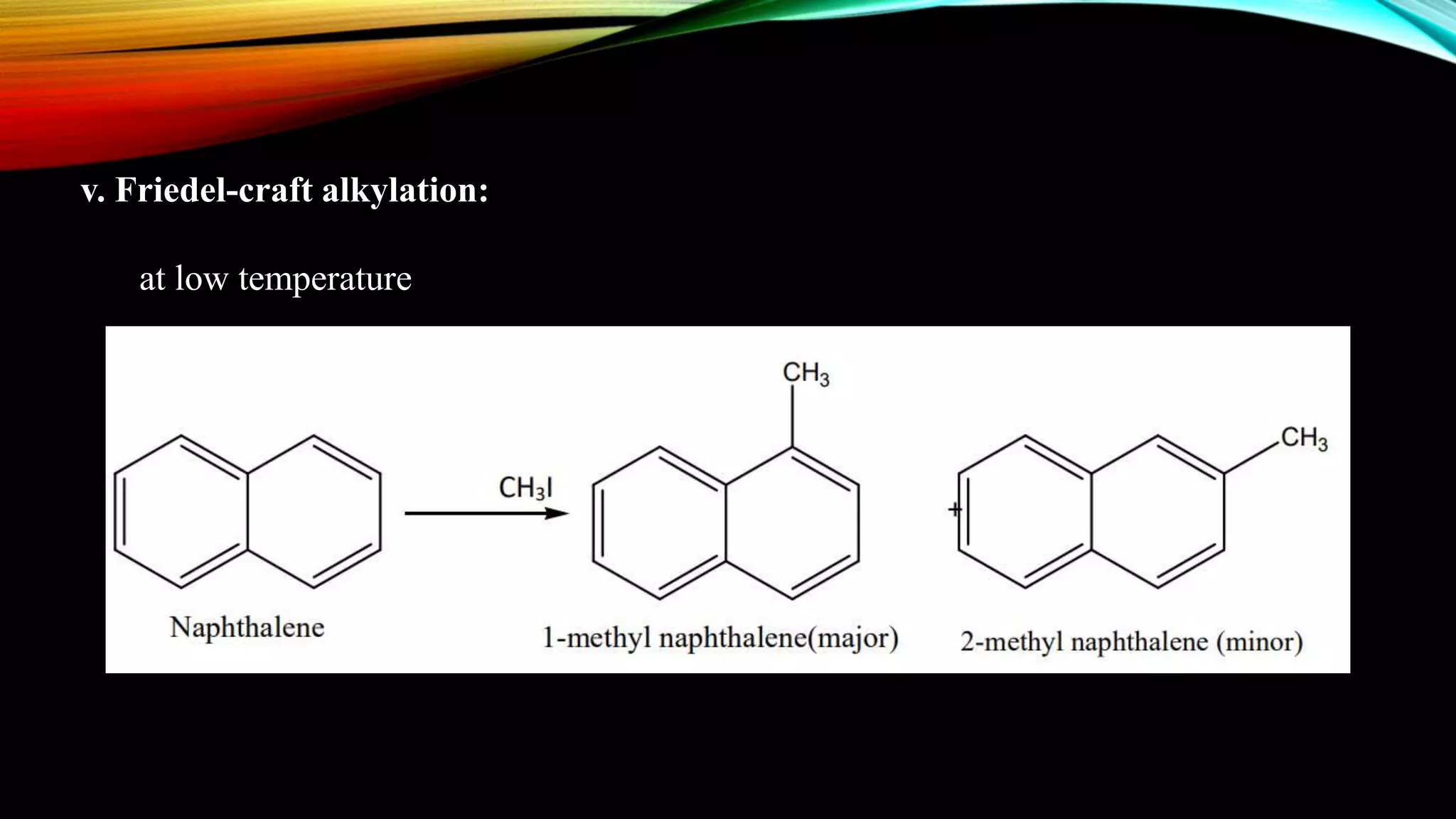
v. Friedel-craft alkylation:
at low temperature
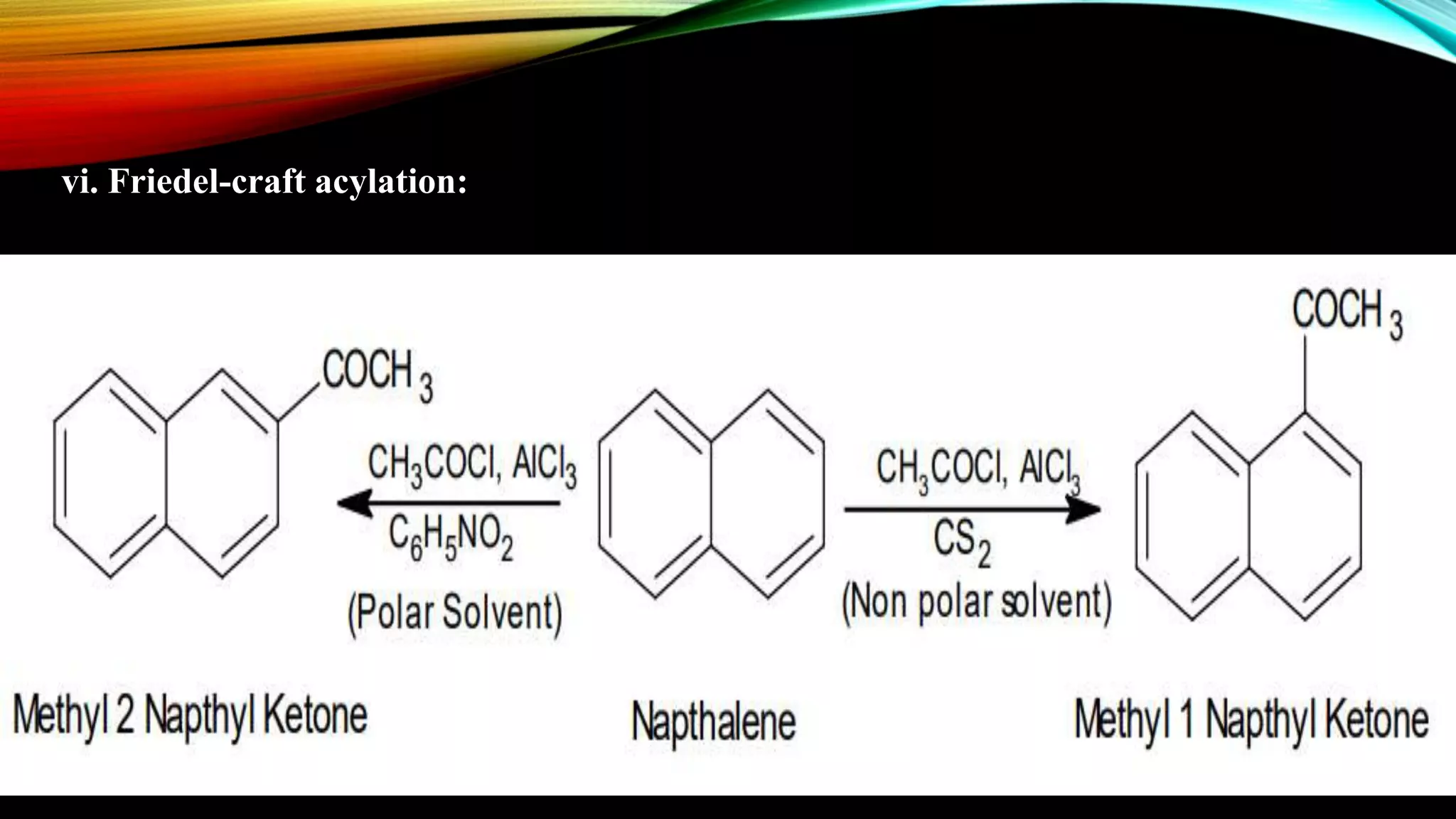
vi. Friedel-craft acylation:
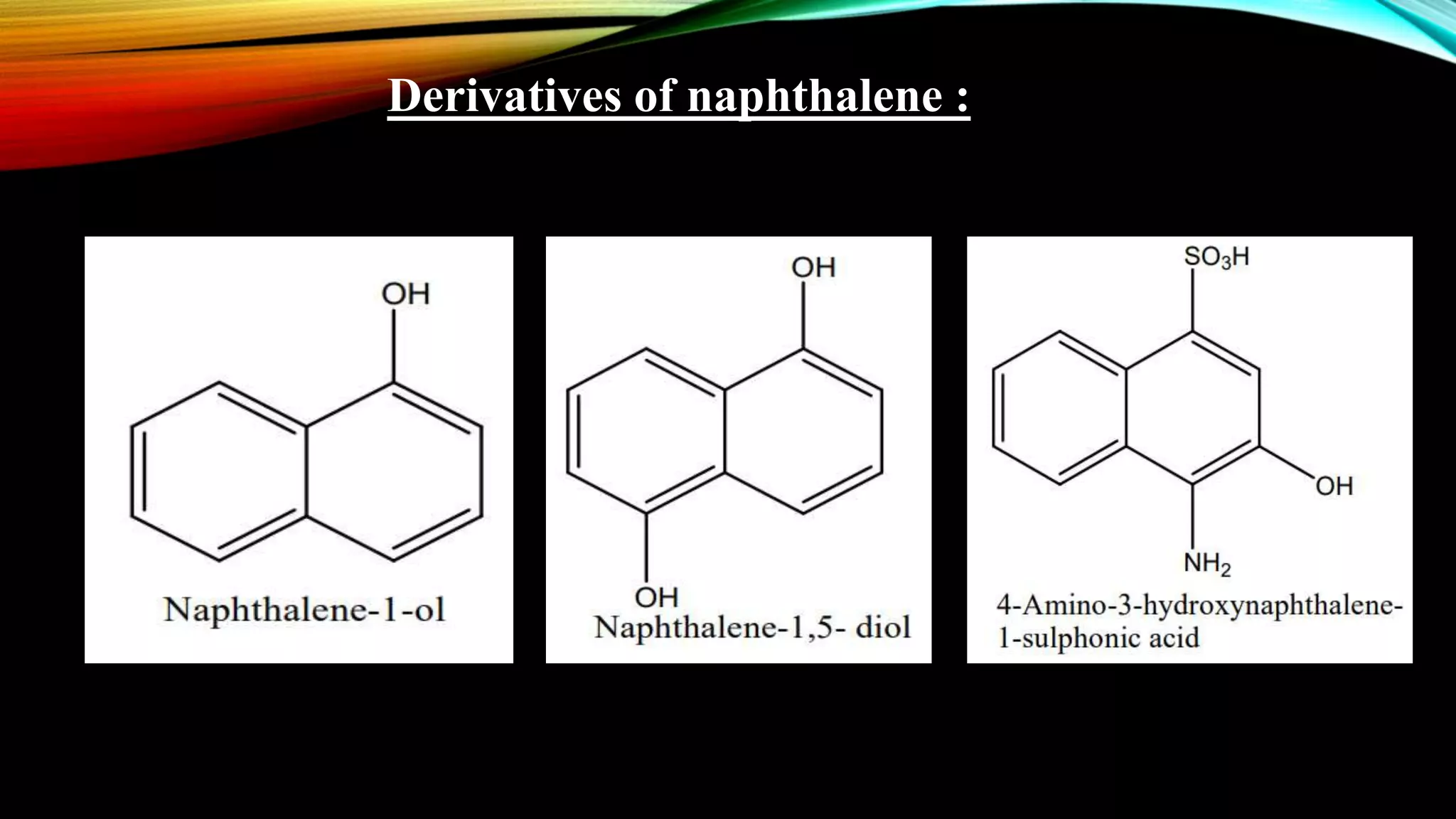
Derivatives of naphthalene :
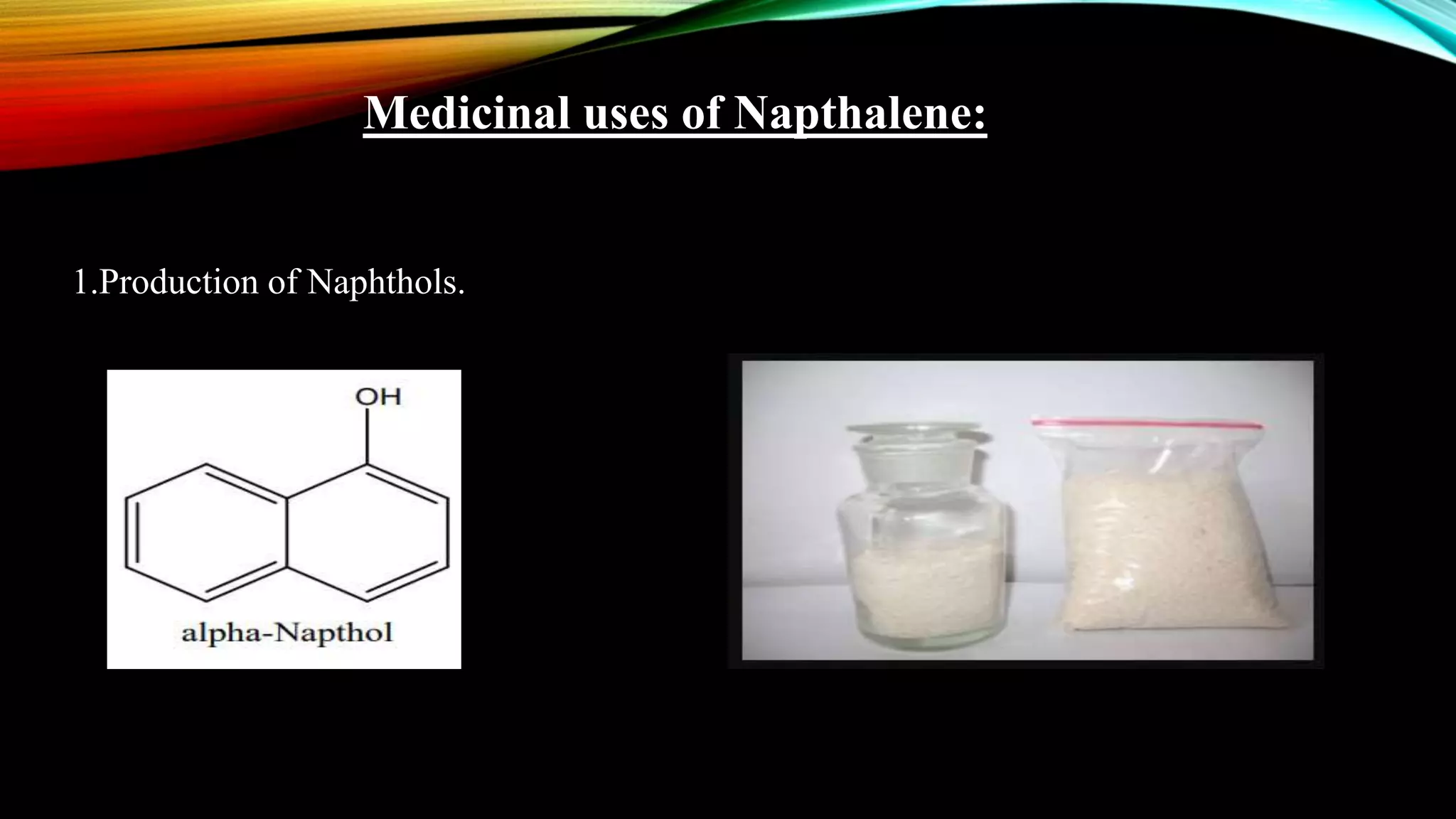
Medicinal uses of Napthalene:
1.Production of Naphthols.
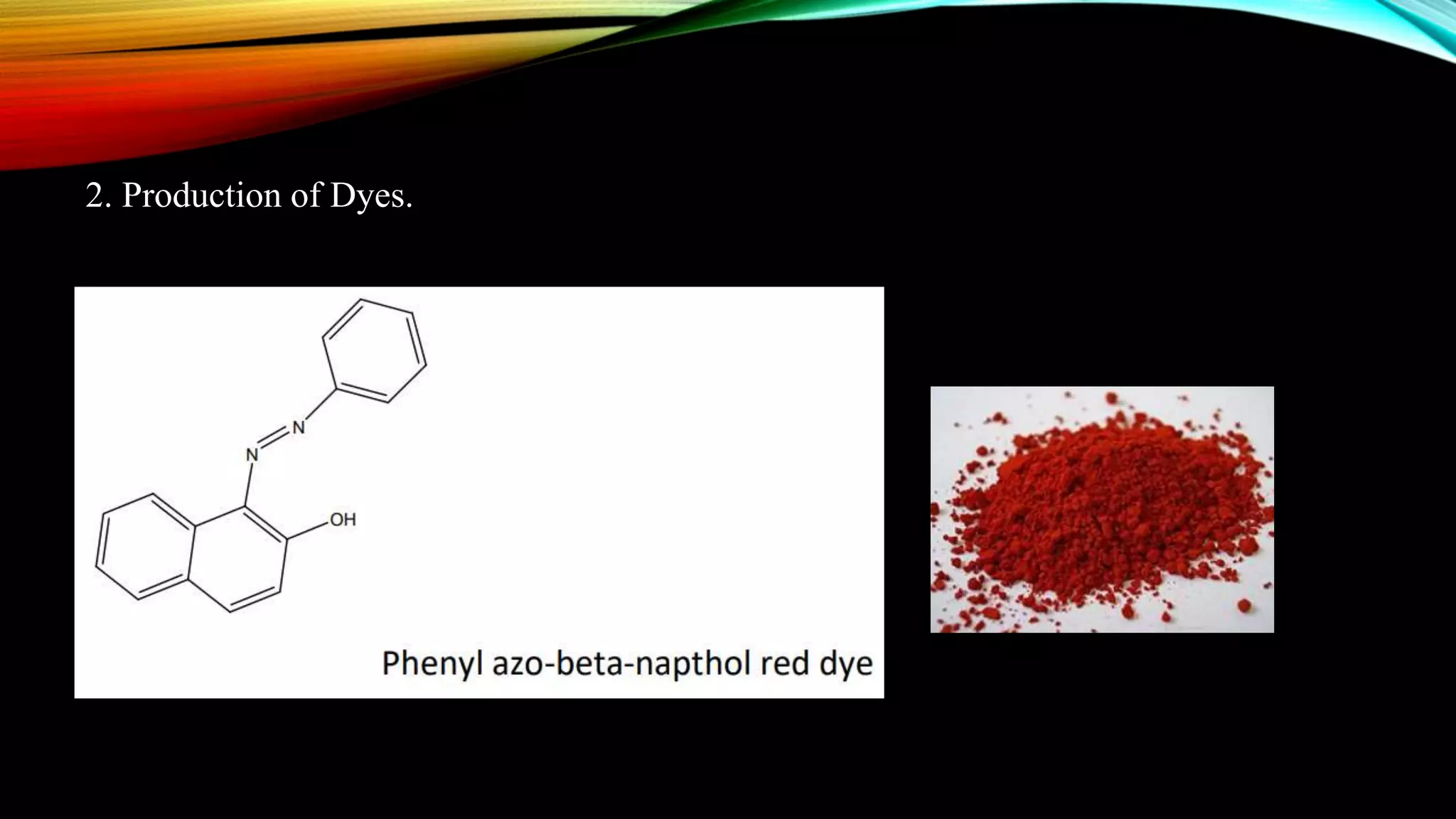
2. Production of Dyes.
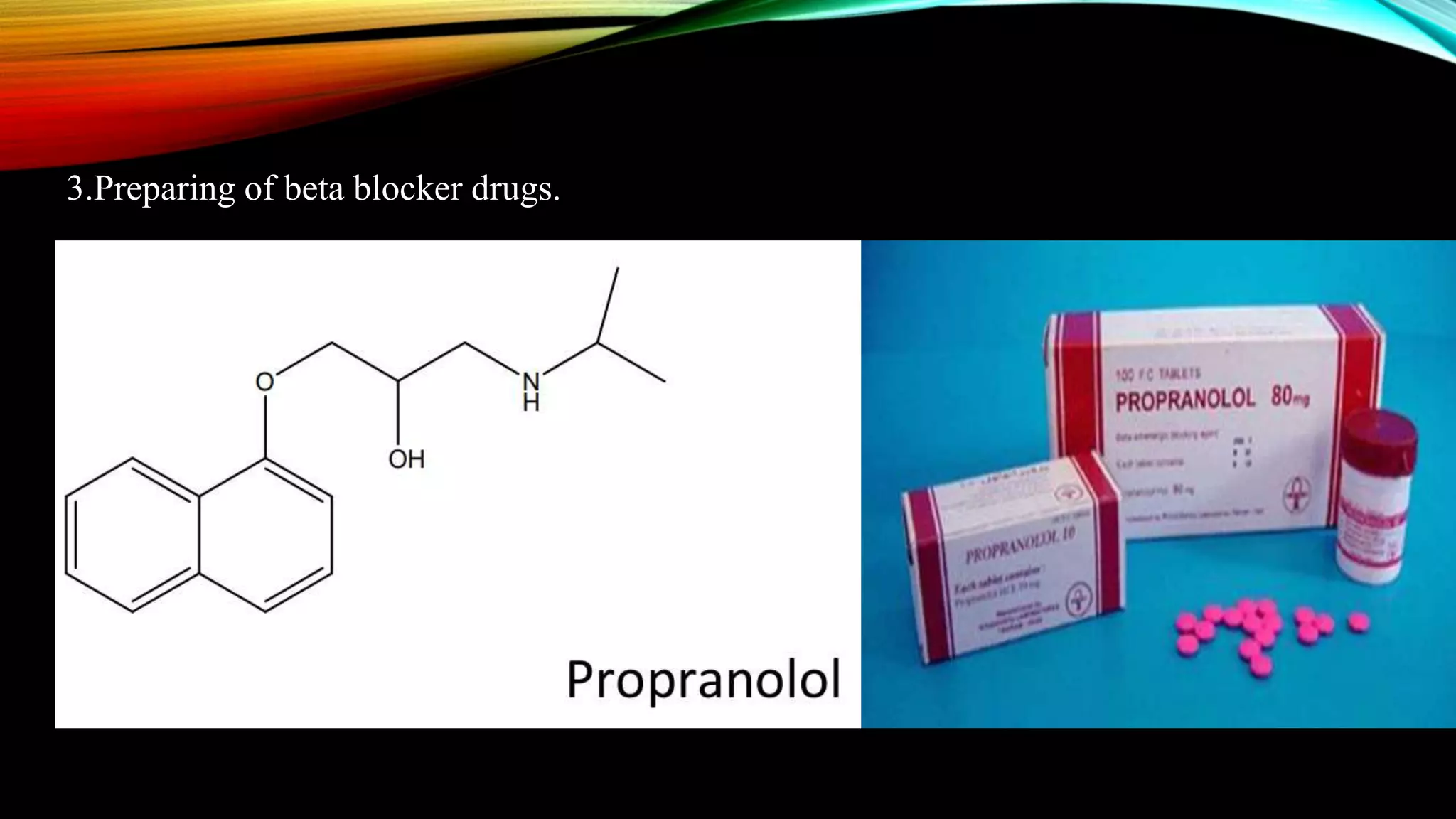
3.Preparing of beta blocker drugs.
4.To synthesize synthetic dyes.
5.Usefull insecticide.
6.Veterinary medicine – dusting powder.
7.Polyethylene naphthalene to prepare plastic bottles.
8.Naphthalene sulfonic acids are used to prepare plasticizers, natural rubbers etc.
9.Naphthalene drugs to cure cough, urine infection, eye trouble etc.
Naphthalene by Mr. Pradeep Swarnkar

Naphthalene by Mr. Pradeep Swarnkar

  • 1.
    KOTA COLLEGE OF PHARMACY Naphthalene Mr.Pradeep Swarnkar Associate Professor
  • 2.
    Naphthalene (C10H8) isan aromatic hydrocarbon in which two benzene rings are fused in ortho positions.
  • 3.
    Isolation from coal-tar: Napthaleneis the largest single component of coal-tar aboute (6-10 percent).The hydrocarbon was first noticed as a deposit in the condensers during the distillation of naphtha fraction and hence its name .It is obtained chifly by cooling the middle oil fraction an(160- 230°),where upon naphthalene crystallises out.The crude crystals are removed by centrifuging. These are melted and then treated successively with concentrated sulphuric acid (to remove phenols).Finally the naphthalene is sublimed to give the pure product.
  • 4.
    Properties: Physical: Naphthalene is awhite solide which crystallises in shining plates., m.p.-80°,b.p.- 218°,having a strong odour.It is very volatile and sublimes readily on warming. Naphthalene is insoluble in water, but dissolves easily in organic solvents, particularly in eather and benzene.
  • 5.
    Chemical: The reactions ofnaphthalene are essentially the same as those of benzene .It undergoes substitution readily and forms addition products. however it is somewhat less aromatic than benzene.Thus the double bonds in naphthalene exhibit in part the reactivity of alkenes and it forms addition compounds more readily than does benzene. As soon as one of the ring is fully saturated by addition of hydrogen or halogen.
  • 6.
  • 7.
    x-ray diffraction studiesshow that ,unlike benzene,all carbon –carbon bonds in naphthalene are not of the same length.In particular the C1-C2 bond is considerably shorter (1.36A°) than the C2-C3 bond (1.40A°).This difference can be understood if we examine the three resonance forms given above. Notice that the C1-C2 bond is double in two structures (A and B) and single in only one (C) ; wherw as the C2-C3 bond is single in two structures (A and B) and double in only one (C). We would, therefore , expect the C1-C2 bond to have more double-bond character (shorter bond length ), and the C2-C3 bond to have more single-bond character (longer bond length).
  • 8.
    The resonance energyof naphthalene is about 61 kcal/mole.This value is less than twice the amount of a single benzene ring (36 kcal/mole).As a result, naphthalene is somewhat less aromatic (more reactive) than benzene.
  • 9.
    Preparation of Naphthalene: i)From 3-Benzoyl propanoic acid: Zn(Hg) HCl When 3-benzoyl propanoicacid is heated with sulphuric acid, α naphthol is formed, which on distillation with zinc dust forms naphthalene.
  • 10.
    ii) From 4-phenyl-1-butene: When4-phenyl 1 butene is passed over red hot calcium oxide naphthalene is formed.
  • 11.
    iii) Haworth synthesis: Itinvolves five steps. Step I: Formation of 3-benzoyl propanoic acid by the treatment of benzene with succinic anhydride.
  • 12.
    Step II: 3 benzoylpropanoic acid is treated with amalgamated zinc to produce 4-phenyl butanoic acid.
  • 13.
    Step III: 4- phenylbutanoic acid is heated with conc. Sulphuric acid to form Tetralone (ring closer reaction). H2SO4 Heat
  • 14.
    Step IV: Tetralone isagain heated with amalgamated zinc and HCl to give tetralin.
  • 15.
    Step V: Tetralin isheated with palladium to yield naphthalene.
  • 16.
  • 17.
    i. Oxidation ofNaphthalene:
  • 18.
  • 19.
  • 20.
    Addition of bromineor chlorine to naphthalene gives naphthalene dibromide or naphthalene dichloride. Further addition of bromine or chlorine results in formation of naphthalene tetra bromide or naphthalene tetra chloride.
  • 21.
  • 22.
    Consequently the formerintermediate is more stable and the product with a substituent at C-1 predominates. Substitution at C-2 (ß-position) occurs only when the reactions are carried at higher temperatures or when bulkier solvents are used.
  • 23.
    ii.Nitration reaction: HNO2/H2SO4 Naphthalene nitrateswith a mixture of nitric acid and sulphuric acid at low temperature to form mainly the α-nitronaphthalene.
  • 24.
  • 25.
  • 26.
  • 27.
  • 28.
  • 29.
    Medicinal uses ofNapthalene: 1.Production of Naphthols.
  • 30.
  • 31.
    3.Preparing of betablocker drugs.
  • 32.
    4.To synthesize syntheticdyes. 5.Usefull insecticide. 6.Veterinary medicine – dusting powder. 7.Polyethylene naphthalene to prepare plastic bottles. 8.Naphthalene sulfonic acids are used to prepare plasticizers, natural rubbers etc. 9.Naphthalene drugs to cure cough, urine infection, eye trouble etc.