Prepared By
Ms.Sayyed Mohsina
Aromatic Carboxylic Acid
“Do not give up
the Beginning
is always the
Hardest.”
2
CONTENT
METHOD OF PREPARATION OF AROMATIC CARBOXYLIC ACID
1.Oxidation of primaryalcohols and aldehyde
2.Hydrolysis of nitrile
3.Carbonation of grignard reagent
4.Oxidation of carbon side chain
5. Hydrolysis of trichloromethyl group on benzene nucleus
6.Friedel craft reaction
3
4
CONTENT
REACTIONS OF CARBOXYLIC ACID
1.Esterification
2.Anhydride formation
3.Acid halide formation
4. Acid amide formation
5.Decarboxylation
6. Reduction
7. Electrophilic substitution in benzene ring
Method of Preparation of
Aromatic Carboxylic Acid
Oxidation of Primary Alcohols and
Aldehydes
Primary aromatic alcohols can be oxidized to aromatic
carboxylic acid.
6
Hydrolysis of Nitriles
Hydrolysis of nitriles provide carboxylic acid.
7
Carbonation of Grignard Reagents
Reaction of grignard reagent with carbon dioxide can be used to
preparearomatic carboxylic acid.
8
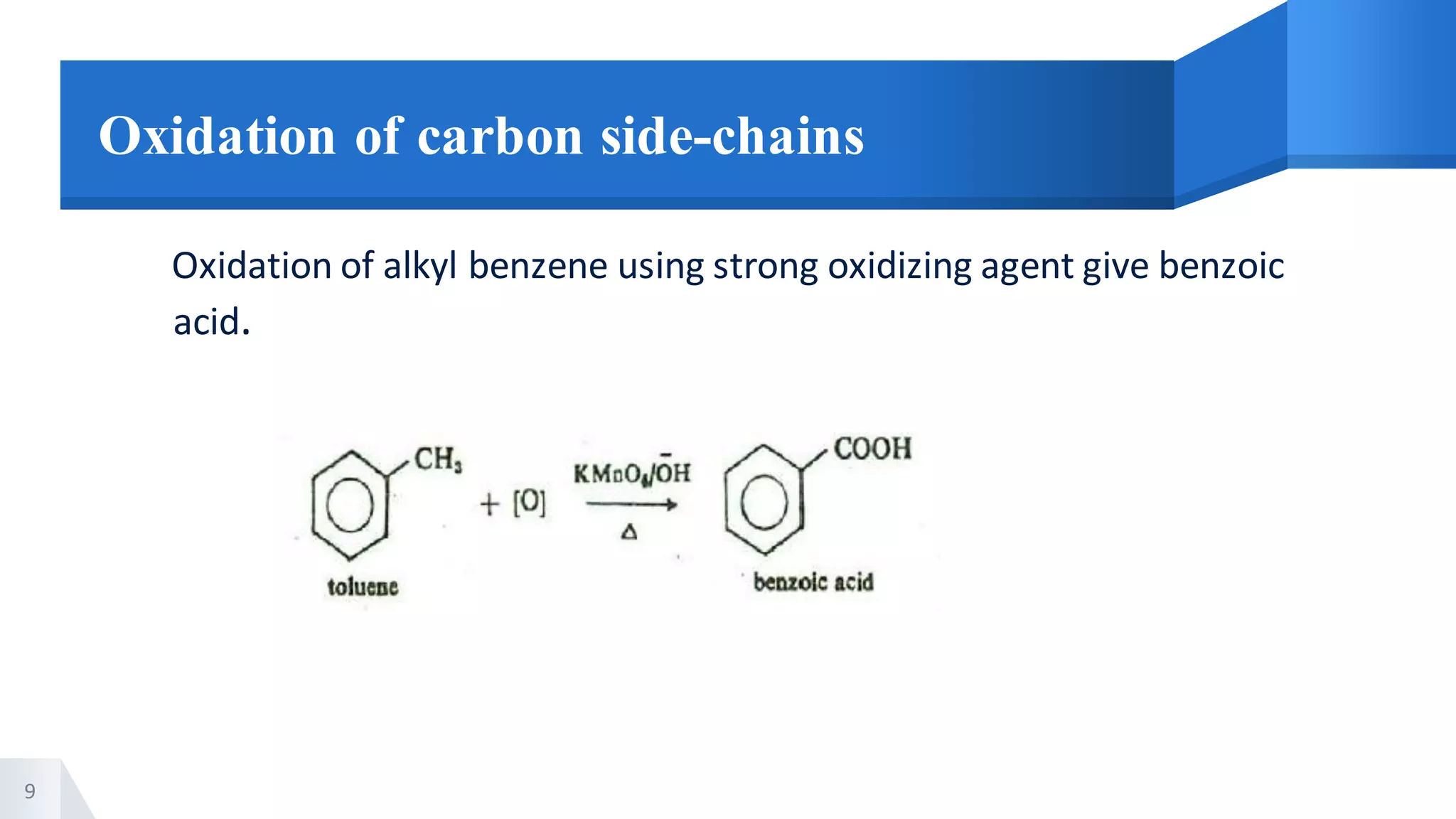
Oxidation of carbon side-chains
Oxidation of alkyl benzene using strong oxidizing agent give benzoic
acid.
9
Hydrolysis of Trichloromethyl group on
benzene nucleus
10
Benzotrichloride on hydrolysis yield benzoic acid.
Friedel-Craft Reaction
11
Benzene in presence of aluminium trichloride react with carbonyl
chloride give benzoyl chloride which on hydrolysis give benzoic acid.
Reactions of Aromatic
Carboxylic Acid
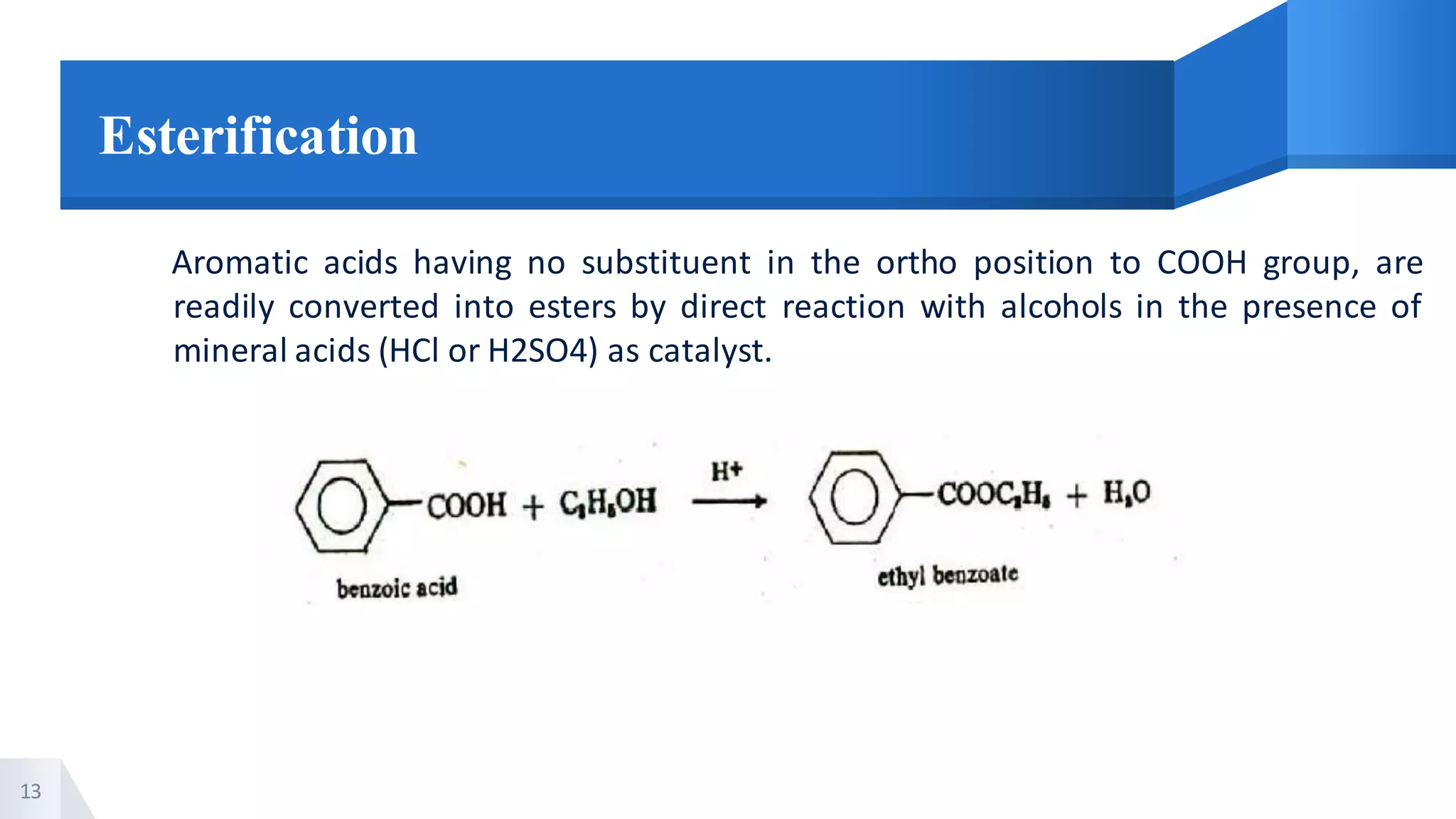
Esterification
Aromatic acids having no substituent in the ortho position to COOH group, are
readily converted into esters by direct reaction with alcohols in the presence of
mineral acids (HCl or H2SO4) as catalyst.
13
14
If, however, the ortho substituent is present, the rate of esterification is
considerablyreduced.
When both ortho positions are occupied, esterification does not occur at all.
Esterification....
Anhydride Formation
The reaction of an aromatic acid chloride with sodium salt of the acid
yields the anhydride.
15
Acid Halide Formation
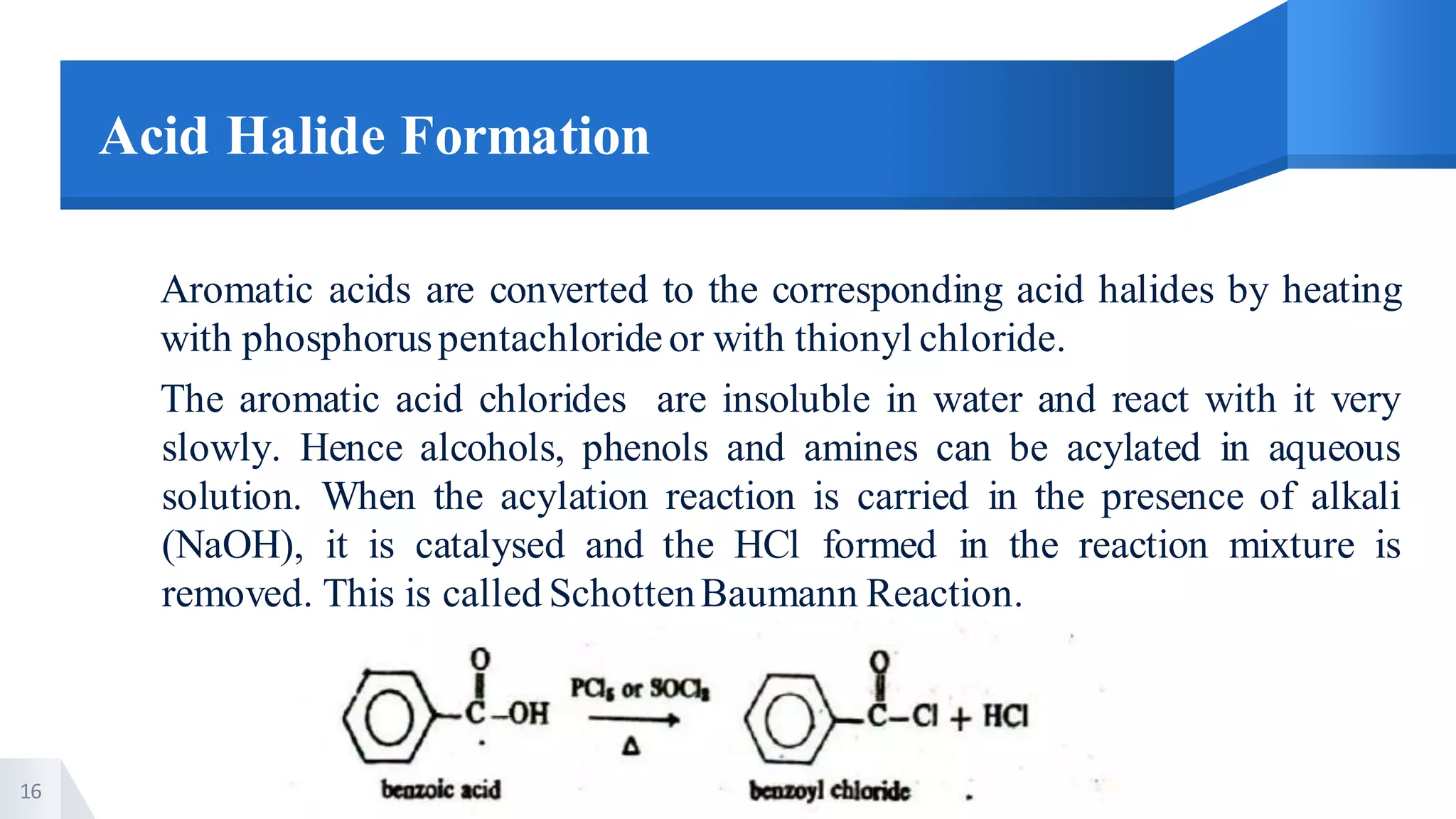
Aromatic acids are converted to the corresponding acid halides by heating
with phosphoruspentachloride or with thionyl chloride.
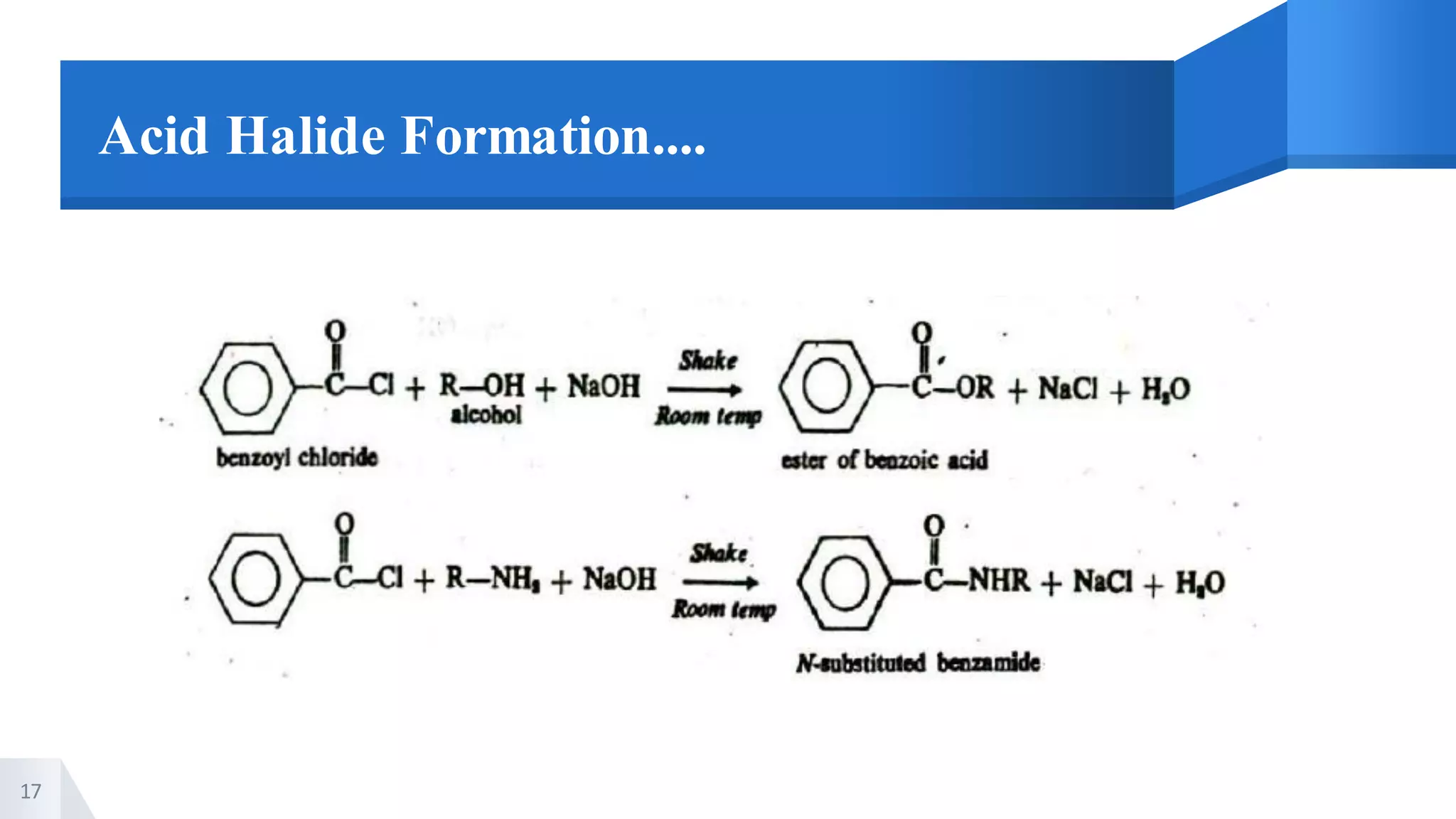
The aromatic acid chlorides are insoluble in water and react with it very
slowly. Hence alcohols, phenols and amines can be acylated in aqueous
solution. When the acylation reaction is carried in the presence of alkali
(NaOH), it is catalysed and the HCl formed in the reaction mixture is
removed. This is called SchottenBaumann Reaction.
16
17
Acid Halide Formation....
Acid Amide Formation
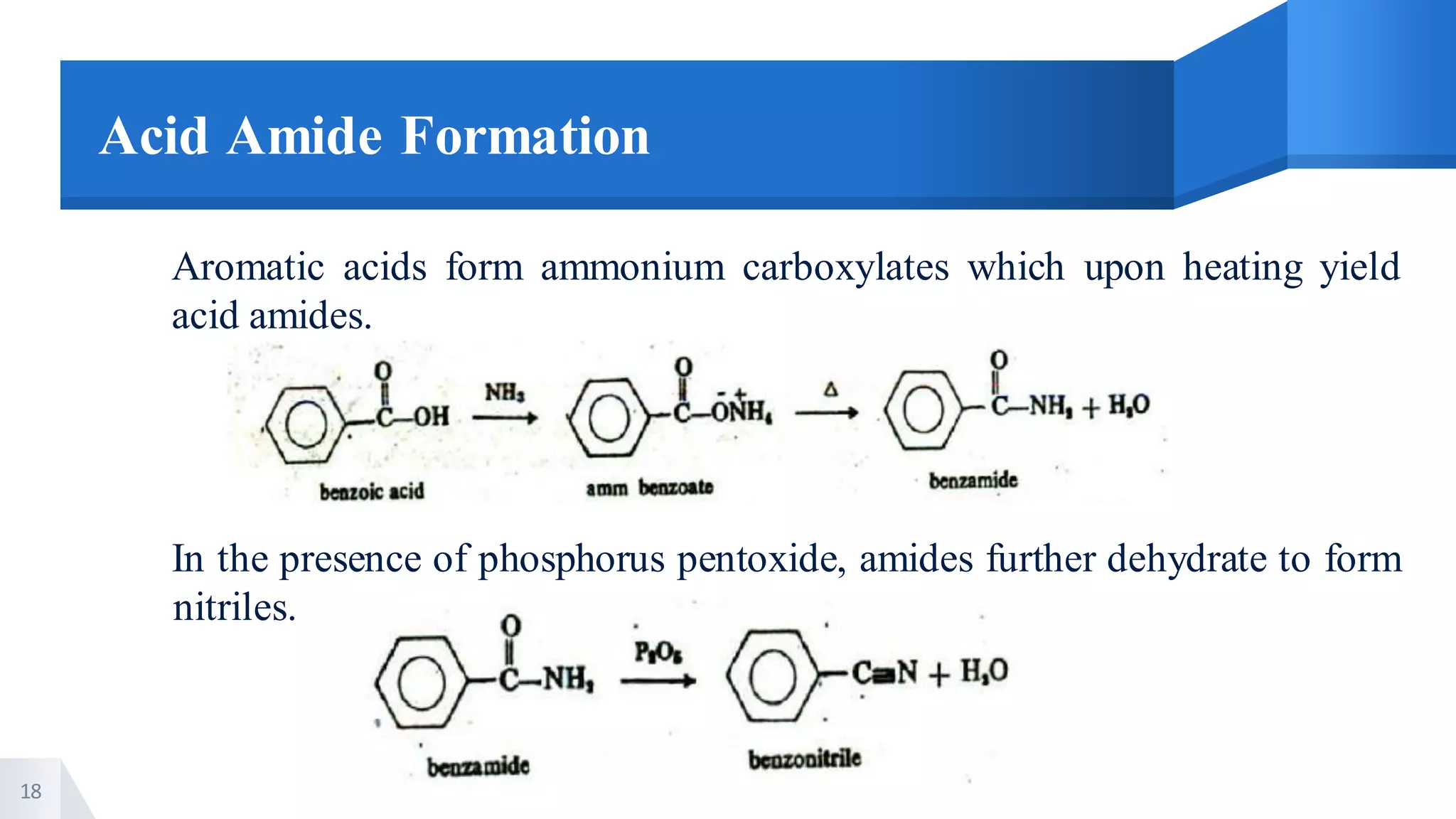
Aromatic acids form ammonium carboxylates which upon heating yield
acid amides.
In the presence of phosphorus pentoxide, amides further dehydrate to form
nitriles.
18
Decarboxylation
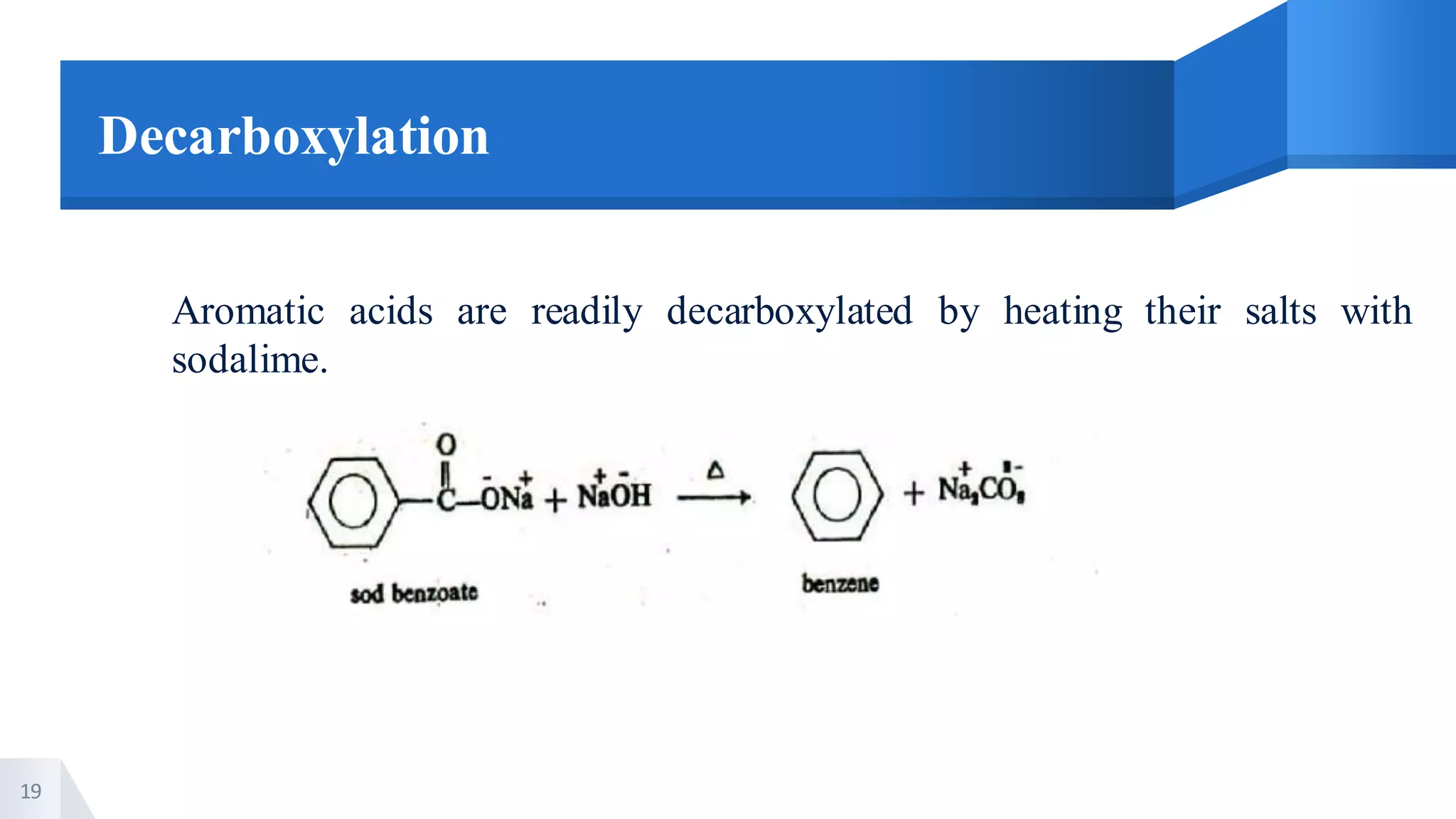
Aromatic acids are readily decarboxylated by heating their salts with
sodalime.
19
Reduction
Aromatic acids on reduction with lithium aluminium hydride give benzyl
alcoholsin 80 to 99 percent yield.
20
Electrophilic Substitution in
Benzene Ring
Aromatic acids undergo electrophilic substitution reactions in the benzene
ring. The COOH group is meta director and the substitution takes place less
readily than in the parent hydrocarbon ring. For example, benzoic acid
undergoes halogenation, nitration and suiphonation giving m-chlorobenzoic
acid, m-nitrobenzoic acid and m-benzenesulphonicacid.
21
22
Benzoic acid undergoes nitration giving m-nitrobenzoic acid.
Electrophilic Substitution in
Benzene Ring.....
Thank you
23
Placeyour screenshot here
24
USING MOBILE

Aromatic carboxylic acid preparation and reaction

  • 1.
  • 2.
    “Do not giveup the Beginning is always the Hardest.” 2
  • 3.
    CONTENT METHOD OF PREPARATIONOF AROMATIC CARBOXYLIC ACID 1.Oxidation of primaryalcohols and aldehyde 2.Hydrolysis of nitrile 3.Carbonation of grignard reagent 4.Oxidation of carbon side chain 5. Hydrolysis of trichloromethyl group on benzene nucleus 6.Friedel craft reaction 3
  • 4.
    4 CONTENT REACTIONS OF CARBOXYLICACID 1.Esterification 2.Anhydride formation 3.Acid halide formation 4. Acid amide formation 5.Decarboxylation 6. Reduction 7. Electrophilic substitution in benzene ring
  • 5.
    Method of Preparationof Aromatic Carboxylic Acid
  • 6.
    Oxidation of PrimaryAlcohols and Aldehydes Primary aromatic alcohols can be oxidized to aromatic carboxylic acid. 6
  • 7.
    Hydrolysis of Nitriles Hydrolysisof nitriles provide carboxylic acid. 7
  • 8.
    Carbonation of GrignardReagents Reaction of grignard reagent with carbon dioxide can be used to preparearomatic carboxylic acid. 8
  • 9.
    Oxidation of carbonside-chains Oxidation of alkyl benzene using strong oxidizing agent give benzoic acid. 9
  • 10.
    Hydrolysis of Trichloromethylgroup on benzene nucleus 10 Benzotrichloride on hydrolysis yield benzoic acid.
  • 11.
    Friedel-Craft Reaction 11 Benzene inpresence of aluminium trichloride react with carbonyl chloride give benzoyl chloride which on hydrolysis give benzoic acid.
  • 12.
  • 13.
    Esterification Aromatic acids havingno substituent in the ortho position to COOH group, are readily converted into esters by direct reaction with alcohols in the presence of mineral acids (HCl or H2SO4) as catalyst. 13
  • 14.
    14 If, however, theortho substituent is present, the rate of esterification is considerablyreduced. When both ortho positions are occupied, esterification does not occur at all. Esterification....
  • 15.
    Anhydride Formation The reactionof an aromatic acid chloride with sodium salt of the acid yields the anhydride. 15
  • 16.
    Acid Halide Formation Aromaticacids are converted to the corresponding acid halides by heating with phosphoruspentachloride or with thionyl chloride. The aromatic acid chlorides are insoluble in water and react with it very slowly. Hence alcohols, phenols and amines can be acylated in aqueous solution. When the acylation reaction is carried in the presence of alkali (NaOH), it is catalysed and the HCl formed in the reaction mixture is removed. This is called SchottenBaumann Reaction. 16
  • 17.
  • 18.
    Acid Amide Formation Aromaticacids form ammonium carboxylates which upon heating yield acid amides. In the presence of phosphorus pentoxide, amides further dehydrate to form nitriles. 18
  • 19.
    Decarboxylation Aromatic acids arereadily decarboxylated by heating their salts with sodalime. 19
  • 20.
    Reduction Aromatic acids onreduction with lithium aluminium hydride give benzyl alcoholsin 80 to 99 percent yield. 20
  • 21.
    Electrophilic Substitution in BenzeneRing Aromatic acids undergo electrophilic substitution reactions in the benzene ring. The COOH group is meta director and the substitution takes place less readily than in the parent hydrocarbon ring. For example, benzoic acid undergoes halogenation, nitration and suiphonation giving m-chlorobenzoic acid, m-nitrobenzoic acid and m-benzenesulphonicacid. 21
  • 22.
    22 Benzoic acid undergoesnitration giving m-nitrobenzoic acid. Electrophilic Substitution in Benzene Ring.....
  • 23.
  • 24.