Prepared By
Ms.Sayyed Mohsina
CONTENTS
➢ A: REACTIONS OF –NH2 GROUP
1. 1.Salt Formation
2. Acylation
3. Sulphonylation
4. Alkylation and Arylation
5. Reaction with Nitrous acid
6. Oxidation
7. Reaction with Aldehyde
8. Carbylamine Reaction
9. Reaction with Carbon Disulphide
10. Reaction with Grignard Reagent
➢ B: REACTIONS INVOLVING THE BENZENE RING
1. Bromination
2. Nitration
3. Sulphonation
4. Hofmann-Martius Rearrangement
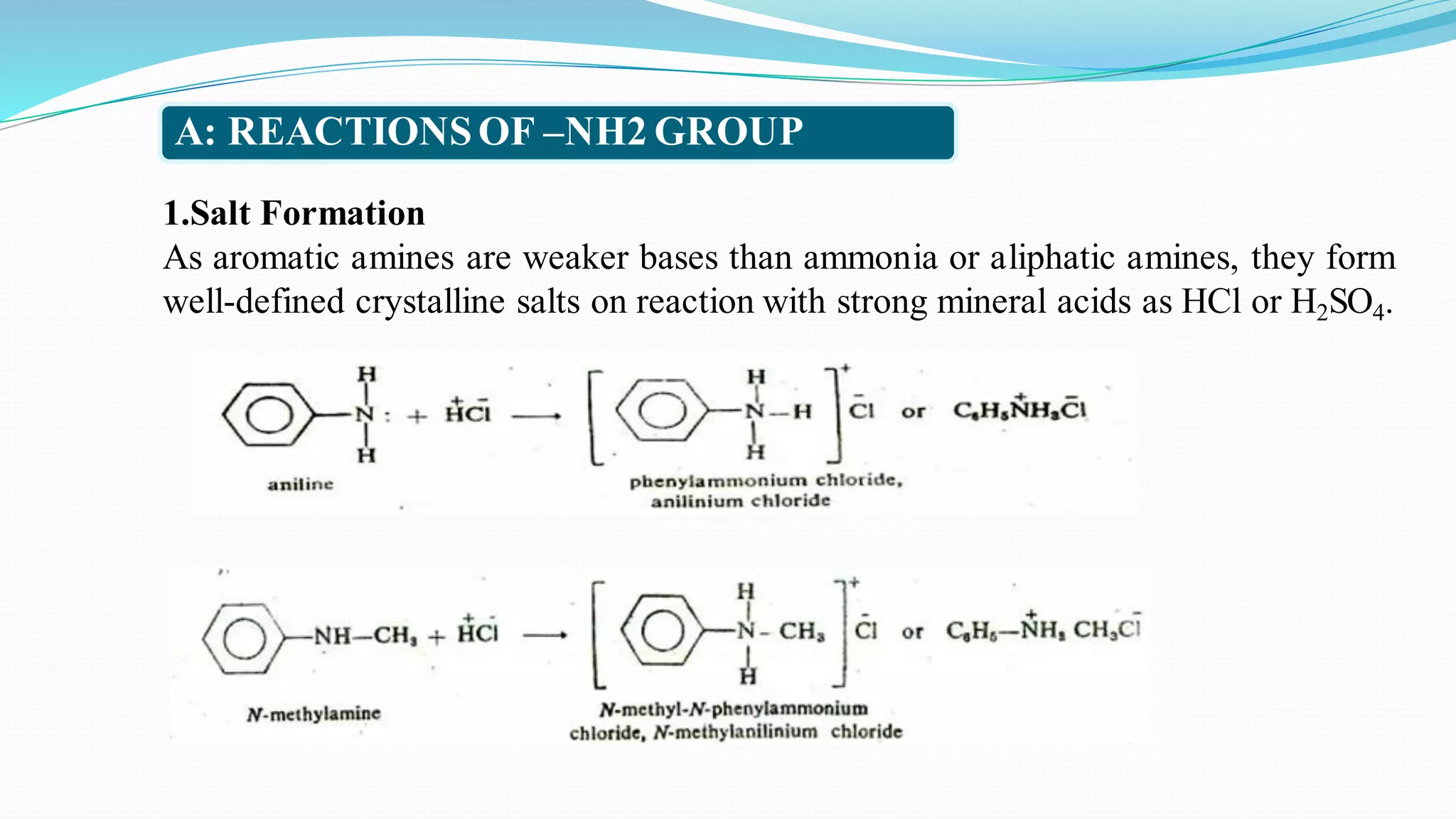
1.Salt Formation
As aromatic amines are weaker bases than ammonia or aliphatic amines, they form
well-defined crystalline salts on reaction with strong mineral acids as HCl or H2SO4.
A: REACTIONSOF –NH2 GROUP
2.Acylation
The primary and secondary aromatic amines react with aryl chlorides or anhydrides,
the hydrogen atom attached to N-atom is replaced by acyl group (Acylation).
3.Sulphonylation
Aromatic secondary and tertiary amines react with an arylsulphonyl chloride in
pyridine. The hydrogen atom attached to N atom is replaced by the sulphonyl
group to form N-arylsulphonamide. Thus, aniline reacts with benzene sulphonyl
chloride to form N-benzenesulphonamide.
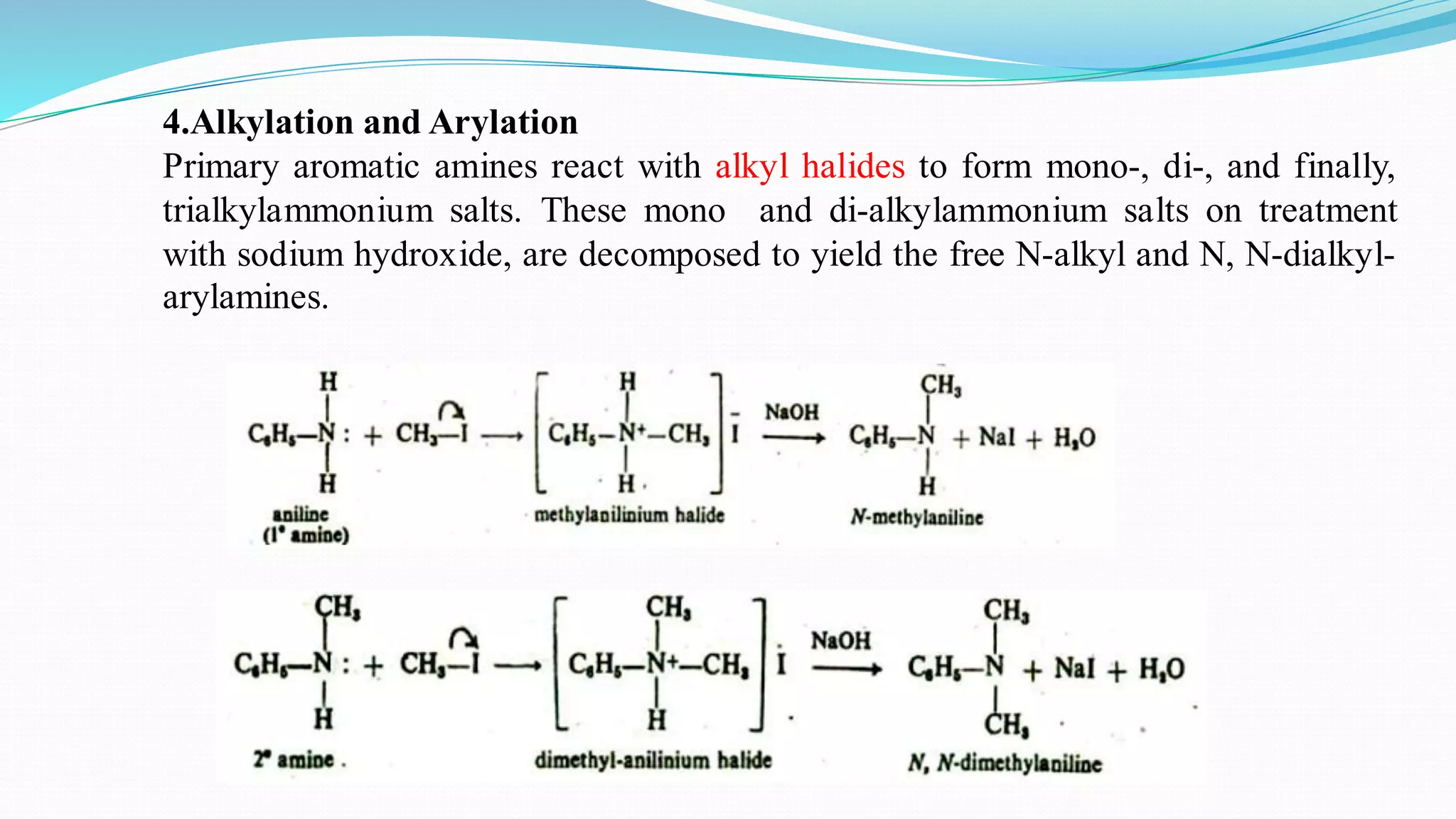
4.Alkylation and Arylation
Primary aromatic amines react with alkyl halides to form mono-, di-, and finally,
trialkylammonium salts. These mono and di-alkylammonium salts on treatment
with sodium hydroxide, are decomposed to yield the free N-alkyl and N, N-dialkyl-
arylamines.
The arylation of aniline can be carried more readily by heating together, under
pressure, aniline and anilinium chloride at about 140°C
Some diphenylamine is produced by heating aniline at 200°C (under pressure) with
chlorobenzene in the presence of cuprous chloride.
5. Reaction with Nitrous acid
Aromatic amines react with nitrous acid (NaNO2 + HCl) and the nature of the
reaction depends on whether the amine is primary, secondary or tertiary.
(a) PRIMARY AMINE
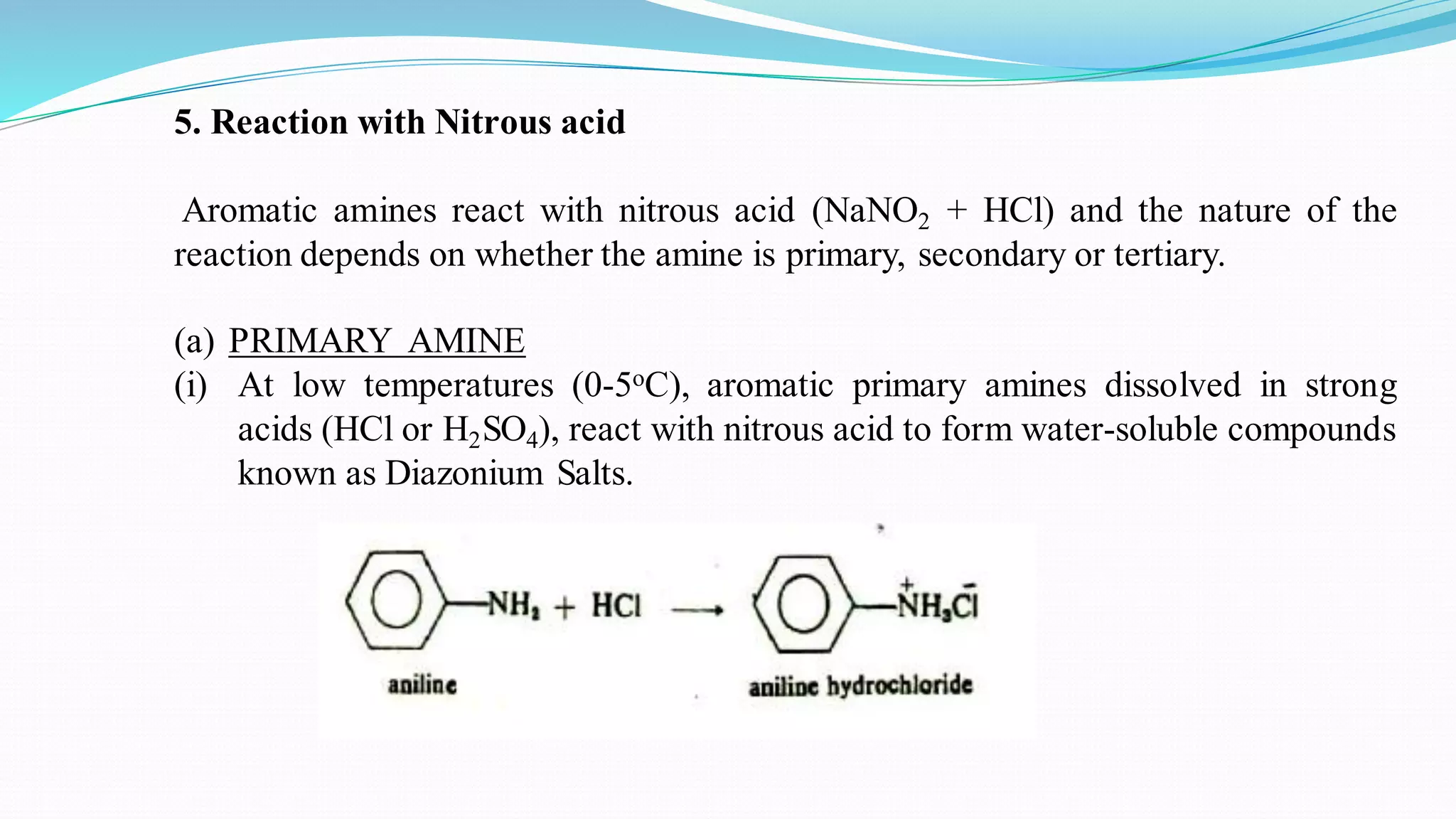
(i) At low temperatures (0-5oC), aromatic primary amines dissolved in strong
acids (HCl or H2SO4), react with nitrous acid to form water-soluble compounds
known as Diazonium Salts.
(ii) At higher temperatures
At higher temperatures primary aromatic amines form phenols and nitrogen.
Thus, aniline dissolved in hydrochloric acid forms the salt, aniline hydrochloride
(C6H5N+H3)Cl- which reacts with nitrous acid to give benzenediazonium chloride.
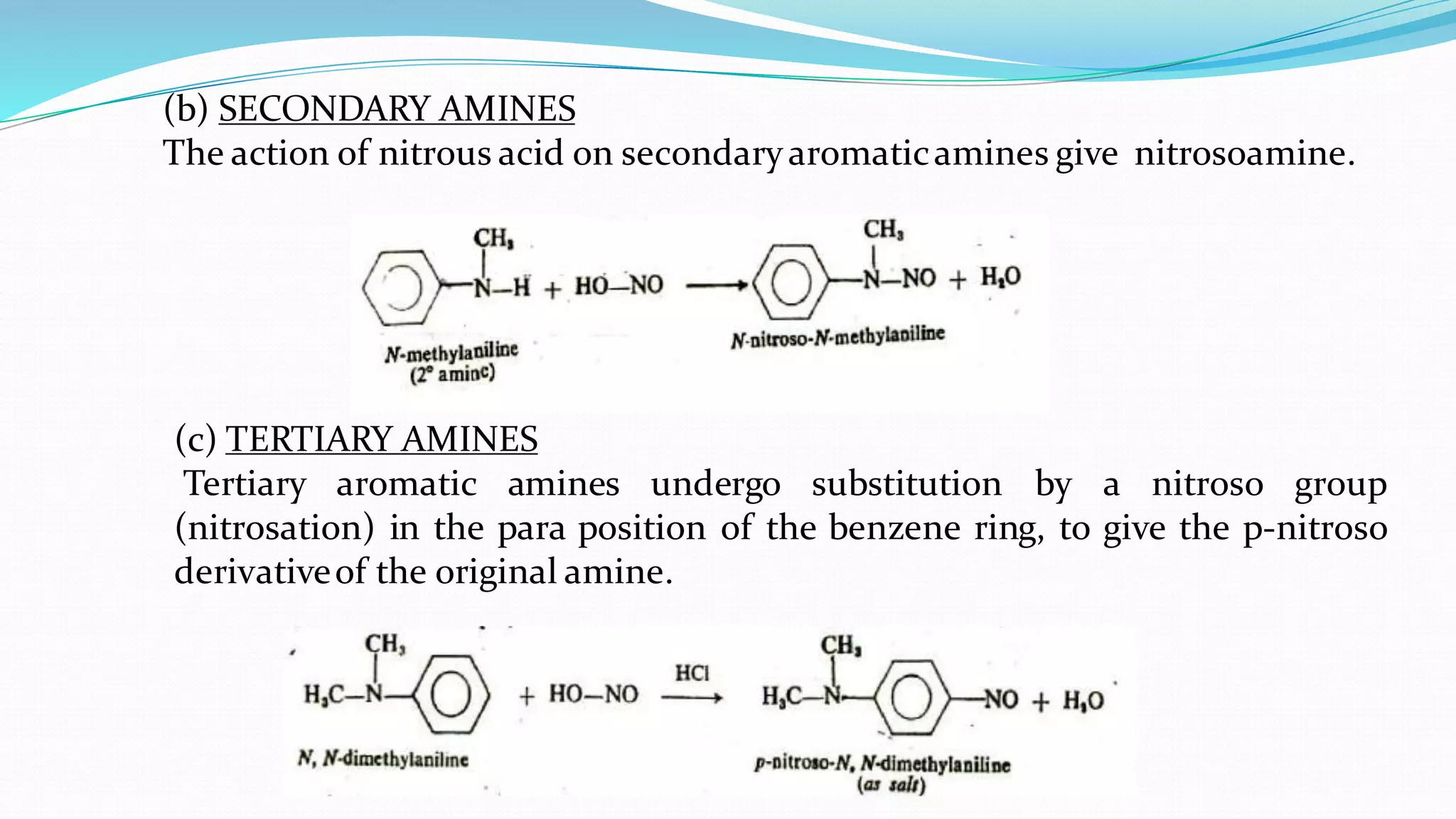
(b) SECONDARY AMINES
The action of nitrous acid on secondaryaromaticamines give nitrosoamine.
(c) TERTIARY AMINES
Tertiary aromatic amines undergo substitution by a nitroso group
(nitrosation) in the para position of the benzene ring, to give the p-nitroso
derivativeof the original amine.
6.Oxidation
Aromatic amines are readily oxidised. They undergo slow aerial oxidation on storage
and become dark in colour. Thus freshly distilled aniline is colourless but soon turns
yellow and then dark red on exposure to the air.Vigorous oxidation of primary
aromatic amines with pot. dichromate and sulphuric acid results in the formation of
quinones.
7.Reaction with Aldehydes
Primary aromatic amines react with aldehydes, giving condensation products. Thus
when aniline reacts with an aldehyde on warming to give Schiff's bases. These
products are most stable when the aldehyde is an aromatic one e.g., benzaldehyde.
The Schiff's base obtained from aromatic amines and aromatic aldehydes are
crystalline solids, often useful for the identification of either the amine or the
aldehyde.
8.Carbylamine Reaction
Primary aromatic amines react with chloroform and ethanolic potash, to form
Carbylamines (isocyanides or isonitriles). These have very disagreeable odour. The
reaction is used as a test for the detection of amides and for chloroform.
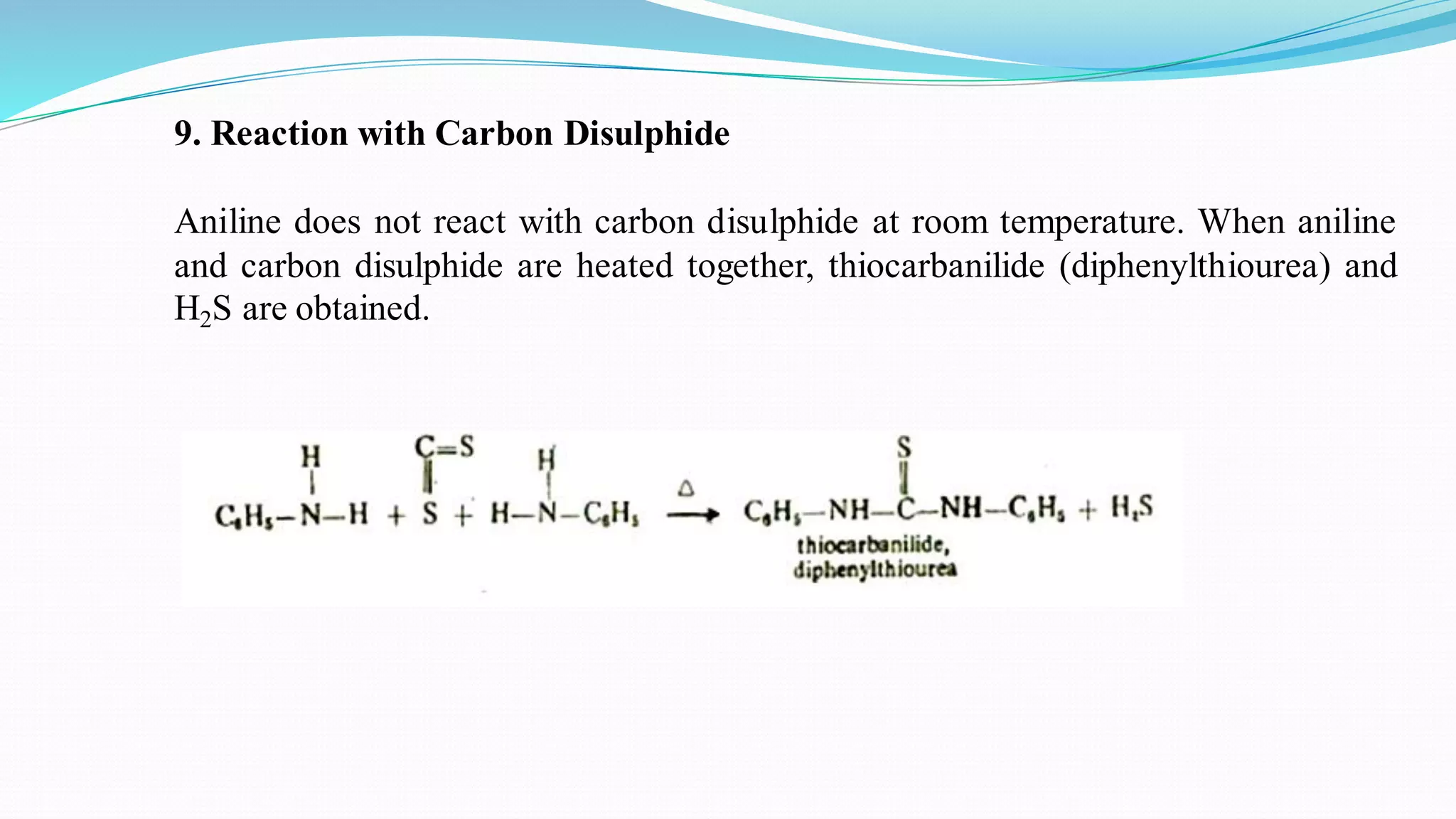
9. Reaction with Carbon Disulphide
Aniline does not react with carbon disulphide at room temperature. When aniline
and carbon disulphide are heated together, thiocarbanilide (diphenylthiourea) and
H2S are obtained.
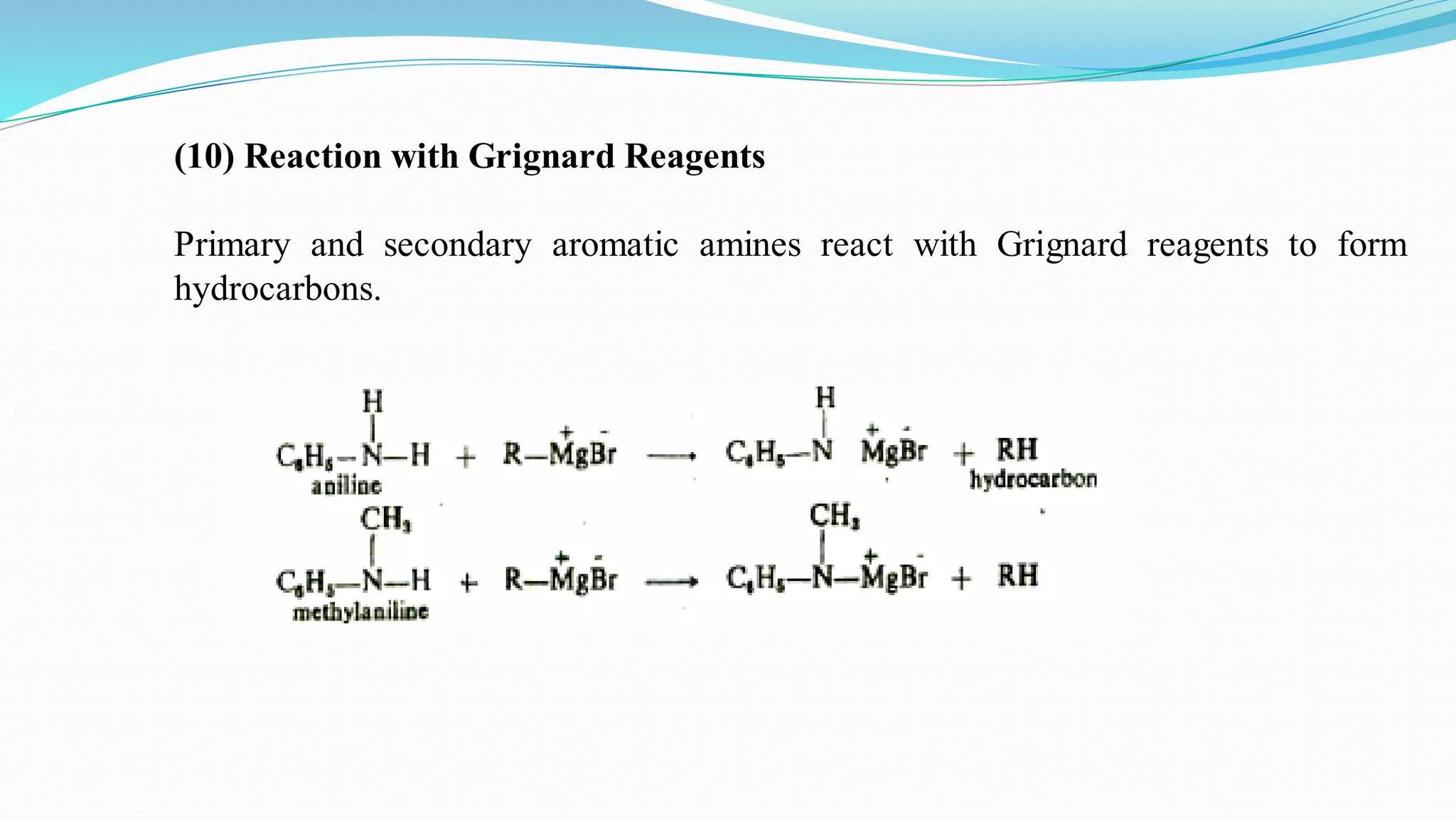
(10) Reaction with Grignard Reagents
Primary and secondary aromatic amines react with Grignard reagents to form
hydrocarbons.
1. Bromination
When an aromatic amine is treated with chlorine or bromine-water, halogenation
occurs readily. Thus, the benzene ring in aniline is so greatly activated by -NH2,
group that treatment with aqueous bromine at once forms 2, 4, 6-tribromoaniline.
B:Reactions Involving Benzene Ring
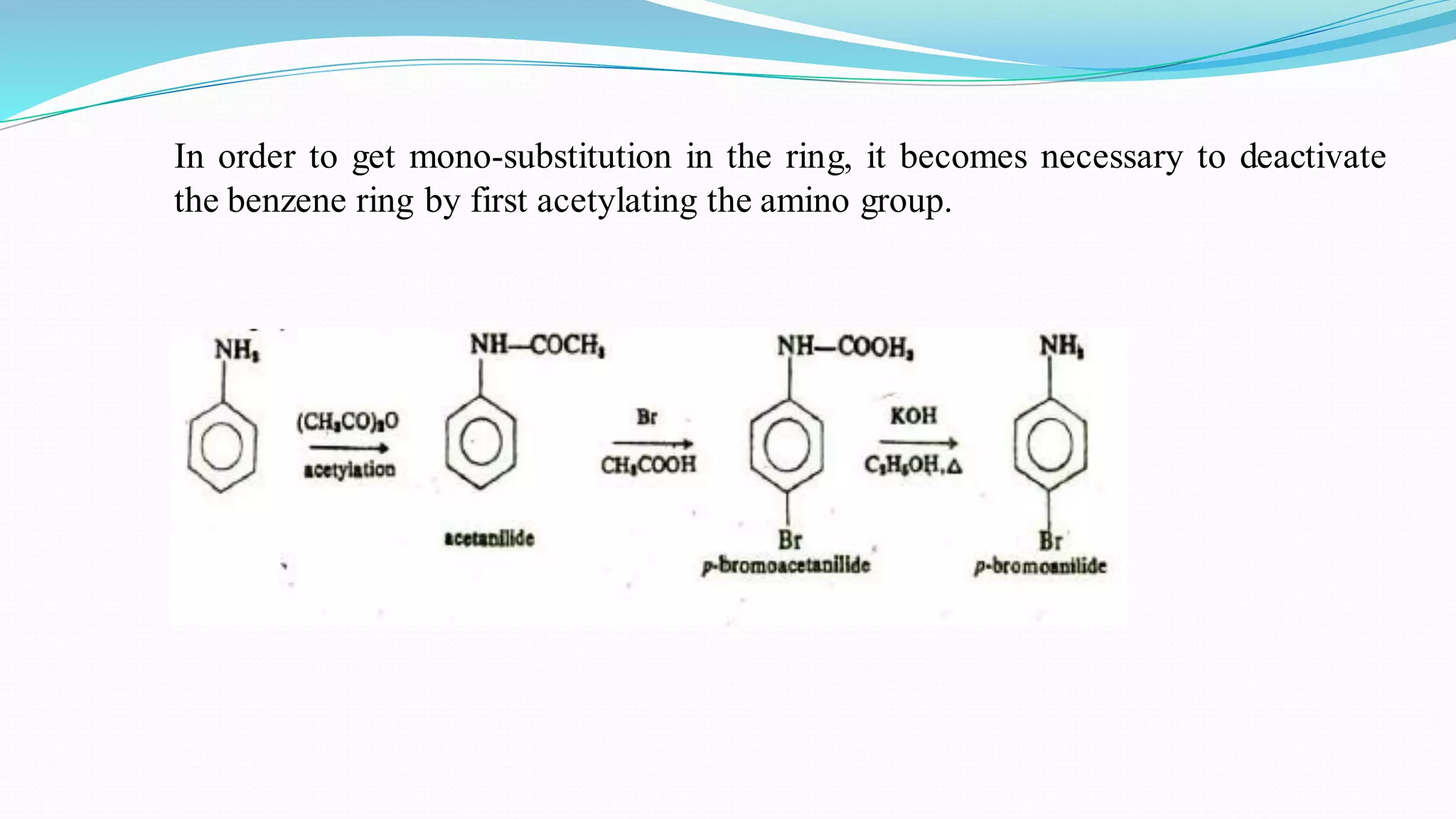
In order to get mono-substitution in the ring, it becomes necessary to deactivate
the benzene ring by first acetylating the amino group.
2) Nitration
Direct nitration of an aromatic ring which contains unprotected primary or
secondary amino group (-NH2 or -NHR) is unsatisfactory because of the
susceptibility of amines toward oxidation. Nitration of aniline, for example, by use
of HNO3+ H2SO4 mixture yields m-nitroaniline.
(3)Sulphonation
Primary aromatic amines can be sulphonated without prior protection of –NH2
group because sulphuric acid is a weaker oxidising agent than nitric acid. Thus
aniline can be sulphonated to give p-aminobenzenesulphonic acid or sulphanilic
acid. Aniline reacts with sulphuric acid to form aniline hydrogen sulphate. It is
assumed that heating at 180-200oC forms phenylsulphamic acid. This undergo
rearrangement to yield p-aminobenzenessulphonic acid .
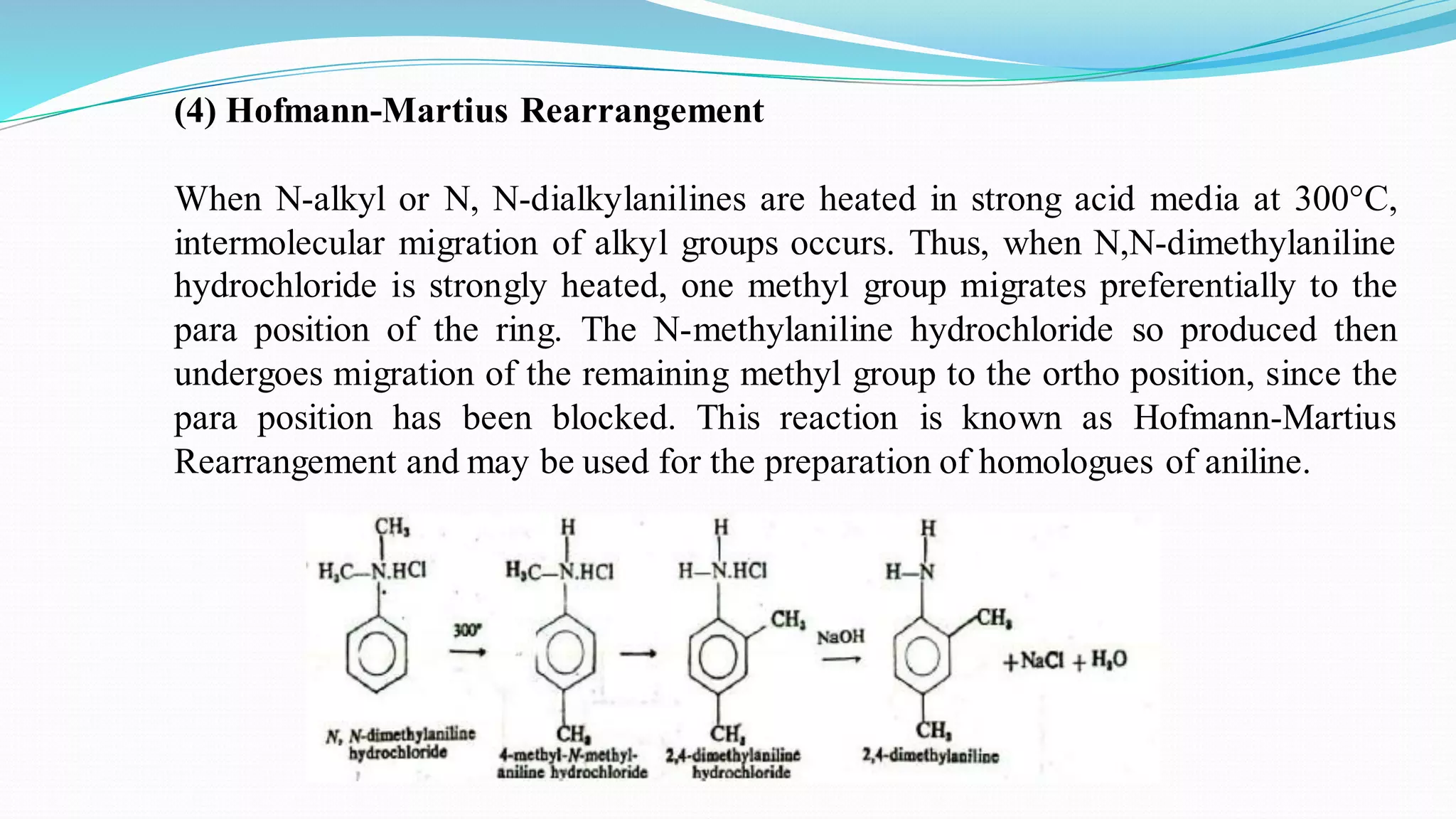
(4) Hofmann-Martius Rearrangement
When N-alkyl or N, N-dialkylanilines are heated in strong acid media at 300°C,
intermolecular migration of alkyl groups occurs. Thus, when N,N-dimethylaniline
hydrochloride is strongly heated, one methyl group migrates preferentially to the
para position of the ring. The N-methylaniline hydrochloride so produced then
undergoes migration of the remaining methyl group to the ortho position, since the
para position has been blocked. This reaction is known as Hofmann-Martius
Rearrangement and may be used for the preparation of homologues of aniline.
Thank you

Reactions of aromatic amines

  • 1.
  • 2.
    CONTENTS ➢ A: REACTIONSOF –NH2 GROUP 1. 1.Salt Formation 2. Acylation 3. Sulphonylation 4. Alkylation and Arylation 5. Reaction with Nitrous acid 6. Oxidation 7. Reaction with Aldehyde 8. Carbylamine Reaction 9. Reaction with Carbon Disulphide 10. Reaction with Grignard Reagent ➢ B: REACTIONS INVOLVING THE BENZENE RING 1. Bromination 2. Nitration 3. Sulphonation 4. Hofmann-Martius Rearrangement
  • 3.
    1.Salt Formation As aromaticamines are weaker bases than ammonia or aliphatic amines, they form well-defined crystalline salts on reaction with strong mineral acids as HCl or H2SO4. A: REACTIONSOF –NH2 GROUP
  • 4.
    2.Acylation The primary andsecondary aromatic amines react with aryl chlorides or anhydrides, the hydrogen atom attached to N-atom is replaced by acyl group (Acylation).
  • 5.
    3.Sulphonylation Aromatic secondary andtertiary amines react with an arylsulphonyl chloride in pyridine. The hydrogen atom attached to N atom is replaced by the sulphonyl group to form N-arylsulphonamide. Thus, aniline reacts with benzene sulphonyl chloride to form N-benzenesulphonamide.
  • 6.
    4.Alkylation and Arylation Primaryaromatic amines react with alkyl halides to form mono-, di-, and finally, trialkylammonium salts. These mono and di-alkylammonium salts on treatment with sodium hydroxide, are decomposed to yield the free N-alkyl and N, N-dialkyl- arylamines.
  • 7.
    The arylation ofaniline can be carried more readily by heating together, under pressure, aniline and anilinium chloride at about 140°C Some diphenylamine is produced by heating aniline at 200°C (under pressure) with chlorobenzene in the presence of cuprous chloride.
  • 8.
    5. Reaction withNitrous acid Aromatic amines react with nitrous acid (NaNO2 + HCl) and the nature of the reaction depends on whether the amine is primary, secondary or tertiary. (a) PRIMARY AMINE (i) At low temperatures (0-5oC), aromatic primary amines dissolved in strong acids (HCl or H2SO4), react with nitrous acid to form water-soluble compounds known as Diazonium Salts.
  • 9.
    (ii) At highertemperatures At higher temperatures primary aromatic amines form phenols and nitrogen. Thus, aniline dissolved in hydrochloric acid forms the salt, aniline hydrochloride (C6H5N+H3)Cl- which reacts with nitrous acid to give benzenediazonium chloride.
  • 10.
    (b) SECONDARY AMINES Theaction of nitrous acid on secondaryaromaticamines give nitrosoamine. (c) TERTIARY AMINES Tertiary aromatic amines undergo substitution by a nitroso group (nitrosation) in the para position of the benzene ring, to give the p-nitroso derivativeof the original amine.
  • 11.
    6.Oxidation Aromatic amines arereadily oxidised. They undergo slow aerial oxidation on storage and become dark in colour. Thus freshly distilled aniline is colourless but soon turns yellow and then dark red on exposure to the air.Vigorous oxidation of primary aromatic amines with pot. dichromate and sulphuric acid results in the formation of quinones.
  • 12.
    7.Reaction with Aldehydes Primaryaromatic amines react with aldehydes, giving condensation products. Thus when aniline reacts with an aldehyde on warming to give Schiff's bases. These products are most stable when the aldehyde is an aromatic one e.g., benzaldehyde. The Schiff's base obtained from aromatic amines and aromatic aldehydes are crystalline solids, often useful for the identification of either the amine or the aldehyde.
  • 13.
    8.Carbylamine Reaction Primary aromaticamines react with chloroform and ethanolic potash, to form Carbylamines (isocyanides or isonitriles). These have very disagreeable odour. The reaction is used as a test for the detection of amides and for chloroform.
  • 14.
    9. Reaction withCarbon Disulphide Aniline does not react with carbon disulphide at room temperature. When aniline and carbon disulphide are heated together, thiocarbanilide (diphenylthiourea) and H2S are obtained.
  • 15.
    (10) Reaction withGrignard Reagents Primary and secondary aromatic amines react with Grignard reagents to form hydrocarbons.
  • 16.
    1. Bromination When anaromatic amine is treated with chlorine or bromine-water, halogenation occurs readily. Thus, the benzene ring in aniline is so greatly activated by -NH2, group that treatment with aqueous bromine at once forms 2, 4, 6-tribromoaniline. B:Reactions Involving Benzene Ring
  • 17.
    In order toget mono-substitution in the ring, it becomes necessary to deactivate the benzene ring by first acetylating the amino group.
  • 18.
    2) Nitration Direct nitrationof an aromatic ring which contains unprotected primary or secondary amino group (-NH2 or -NHR) is unsatisfactory because of the susceptibility of amines toward oxidation. Nitration of aniline, for example, by use of HNO3+ H2SO4 mixture yields m-nitroaniline.
  • 19.
    (3)Sulphonation Primary aromatic aminescan be sulphonated without prior protection of –NH2 group because sulphuric acid is a weaker oxidising agent than nitric acid. Thus aniline can be sulphonated to give p-aminobenzenesulphonic acid or sulphanilic acid. Aniline reacts with sulphuric acid to form aniline hydrogen sulphate. It is assumed that heating at 180-200oC forms phenylsulphamic acid. This undergo rearrangement to yield p-aminobenzenessulphonic acid .
  • 20.
    (4) Hofmann-Martius Rearrangement WhenN-alkyl or N, N-dialkylanilines are heated in strong acid media at 300°C, intermolecular migration of alkyl groups occurs. Thus, when N,N-dimethylaniline hydrochloride is strongly heated, one methyl group migrates preferentially to the para position of the ring. The N-methylaniline hydrochloride so produced then undergoes migration of the remaining methyl group to the ortho position, since the para position has been blocked. This reaction is known as Hofmann-Martius Rearrangement and may be used for the preparation of homologues of aniline.
  • 21.