
Potassium channel openers

     Dr. Naser Ashraf Tadvi
      Associate Professor
    Dept. of Pharmacology
  Kamineni Institute of Medical
     Sciences, Narketpally
Objectives
• Potassium channels
  –   Types
  –   Distribution
  –   KATP channels
  –   Modulators
• Potassium channel openers
  –   Classification
  –   Mechanism of action
  –   Pharmacological actions
  –   Uses
  –   Adverse effects
  –   Important drugs
Ion Channels
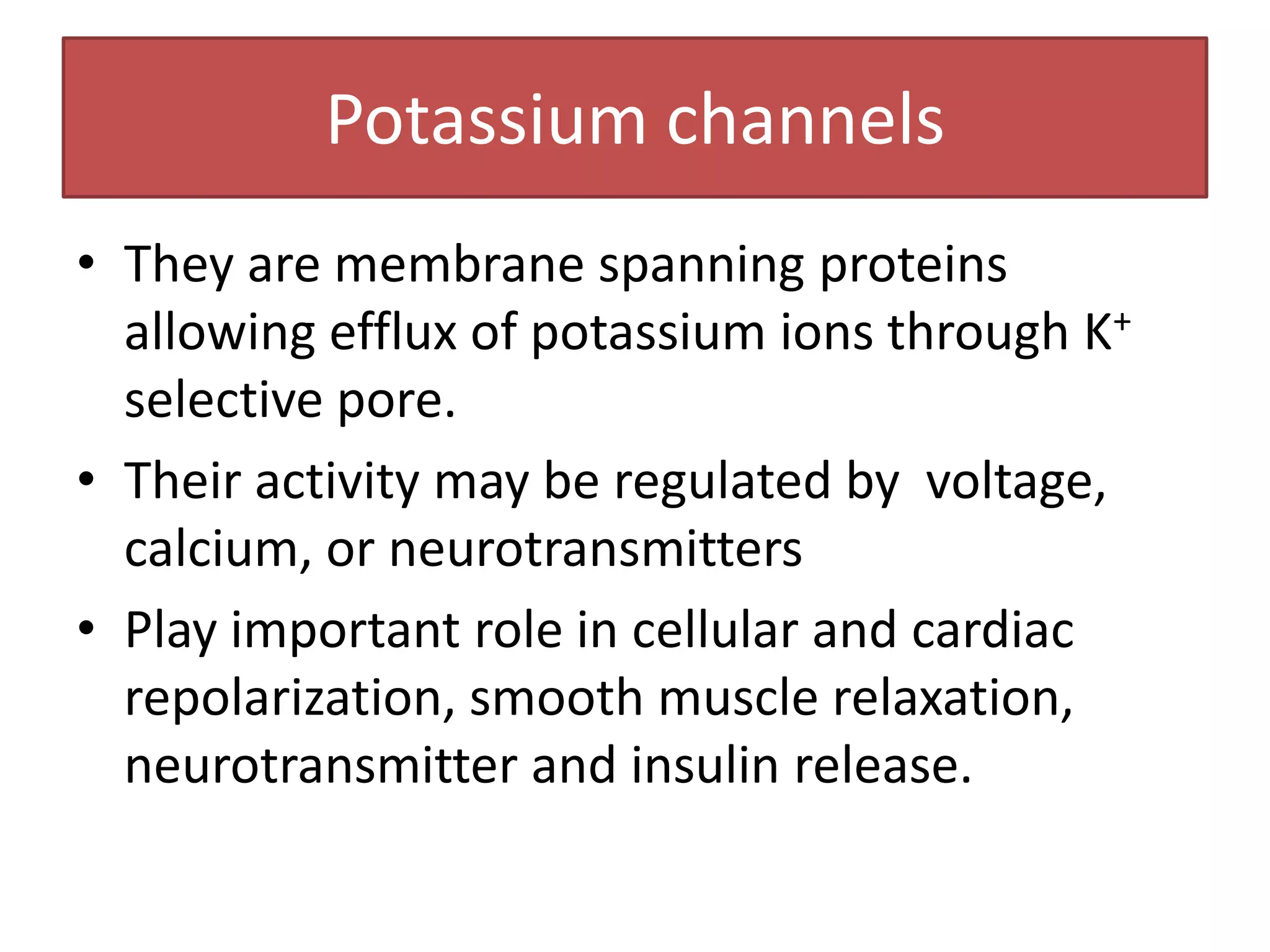
• Ion channels are protein molecules that form
  pores on the plasma membrane and intracellular
  organelle of all cells.
• They exploit the ionic gradient between cytosolic
  side and Extracellular space
• Responsible for transfer of ions
• Regulate the shape and frequency of Action
  potential
• Potassium channels form most abundant and
  diverse class of ion channels
Potassium channels
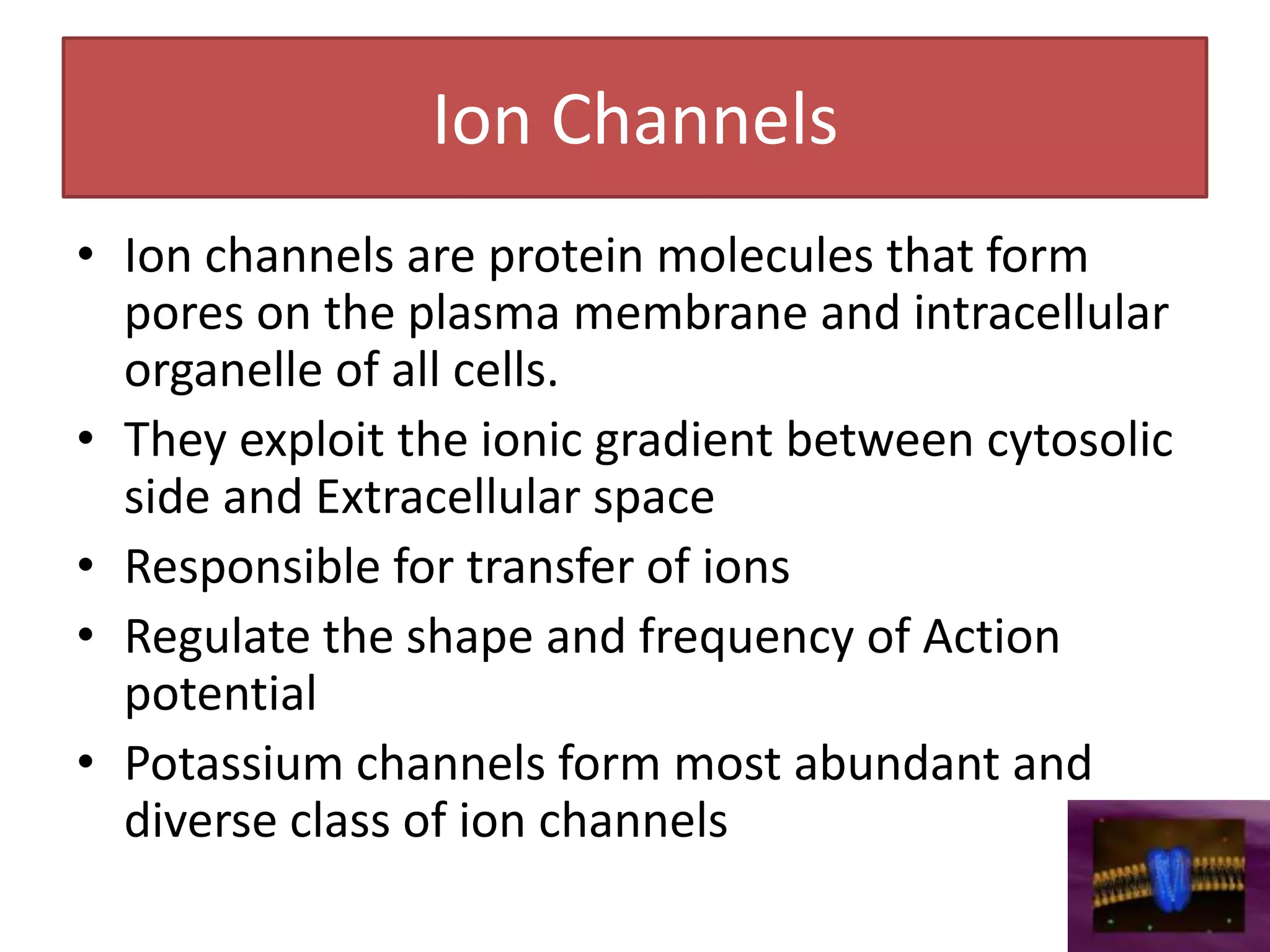
• They are membrane spanning proteins
  allowing efflux of potassium ions through K+
  selective pore.
• Their activity may be regulated by voltage,
  calcium, or neurotransmitters
• Play important role in cellular and cardiac
  repolarization, smooth muscle relaxation,
  neurotransmitter and insulin release.
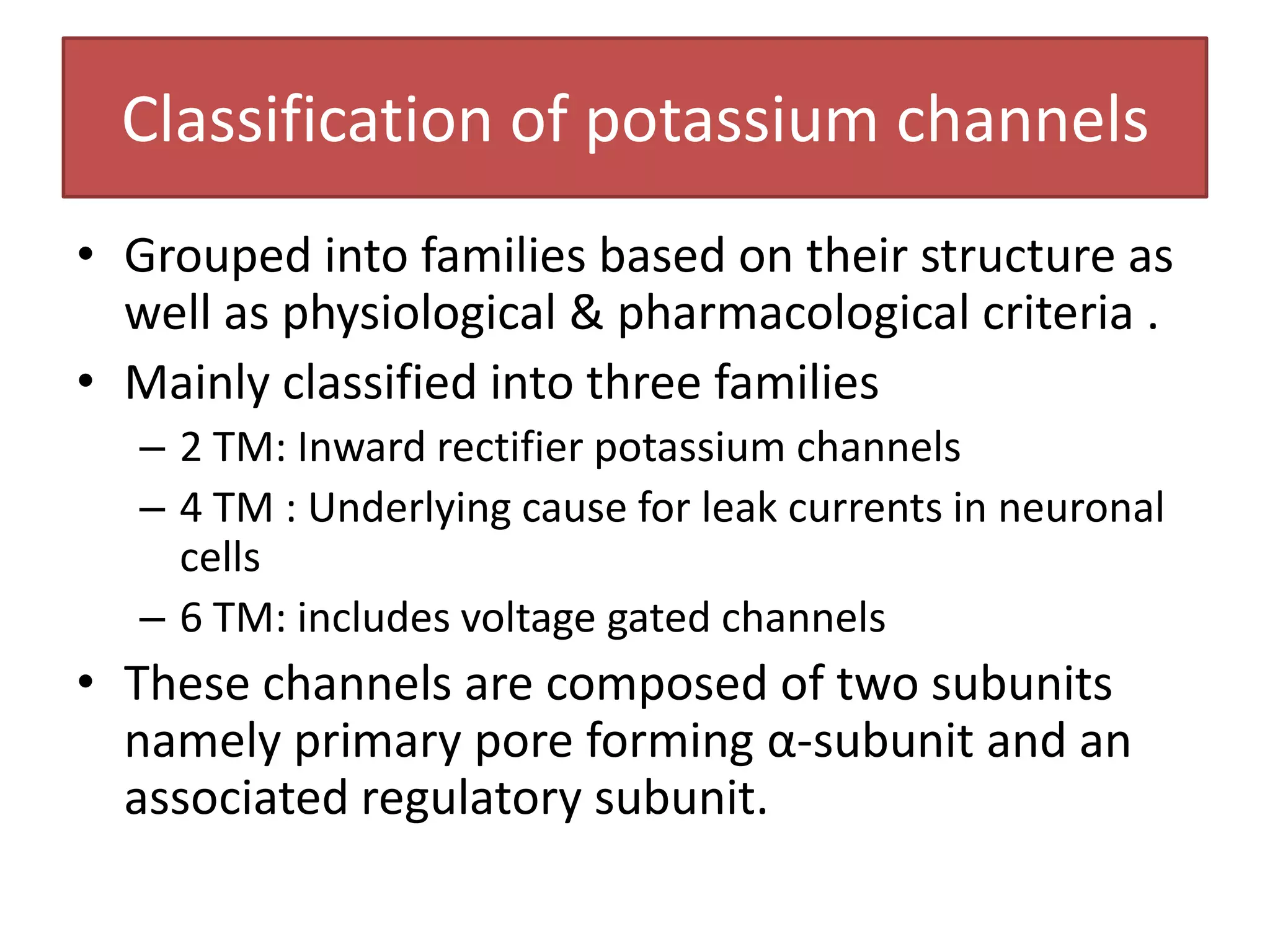
Classification of potassium channels
• Grouped into families based on their structure as
  well as physiological & pharmacological criteria .
• Mainly classified into three families
   – 2 TM: Inward rectifier potassium channels
   – 4 TM : Underlying cause for leak currents in neuronal
     cells
   – 6 TM: includes voltage gated channels
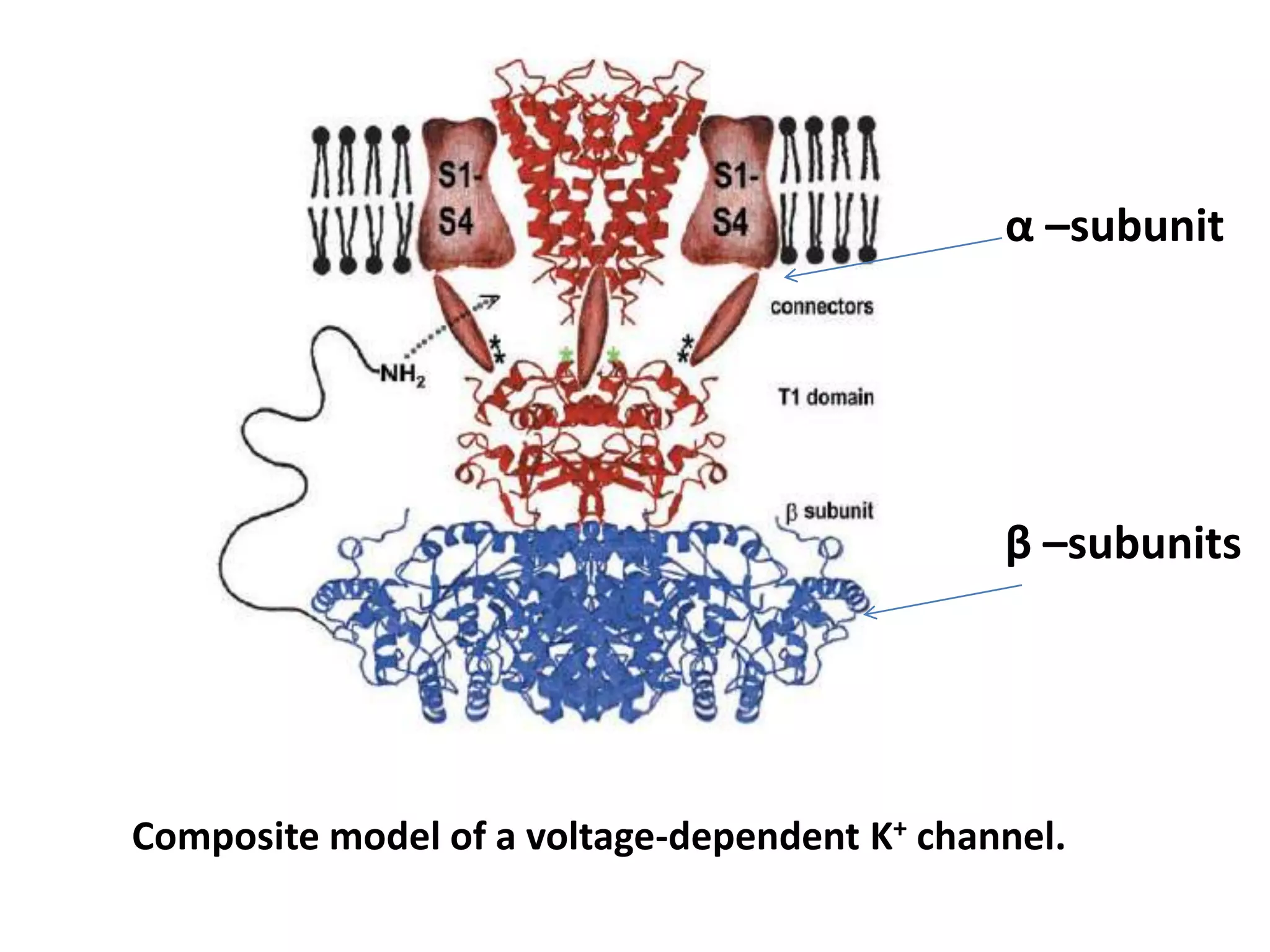
• These channels are composed of two subunits
  namely primary pore forming α-subunit and an
  associated regulatory subunit.
α –subunit


                                              β –subunits


Composite model of a voltage-dependent K+ channel.
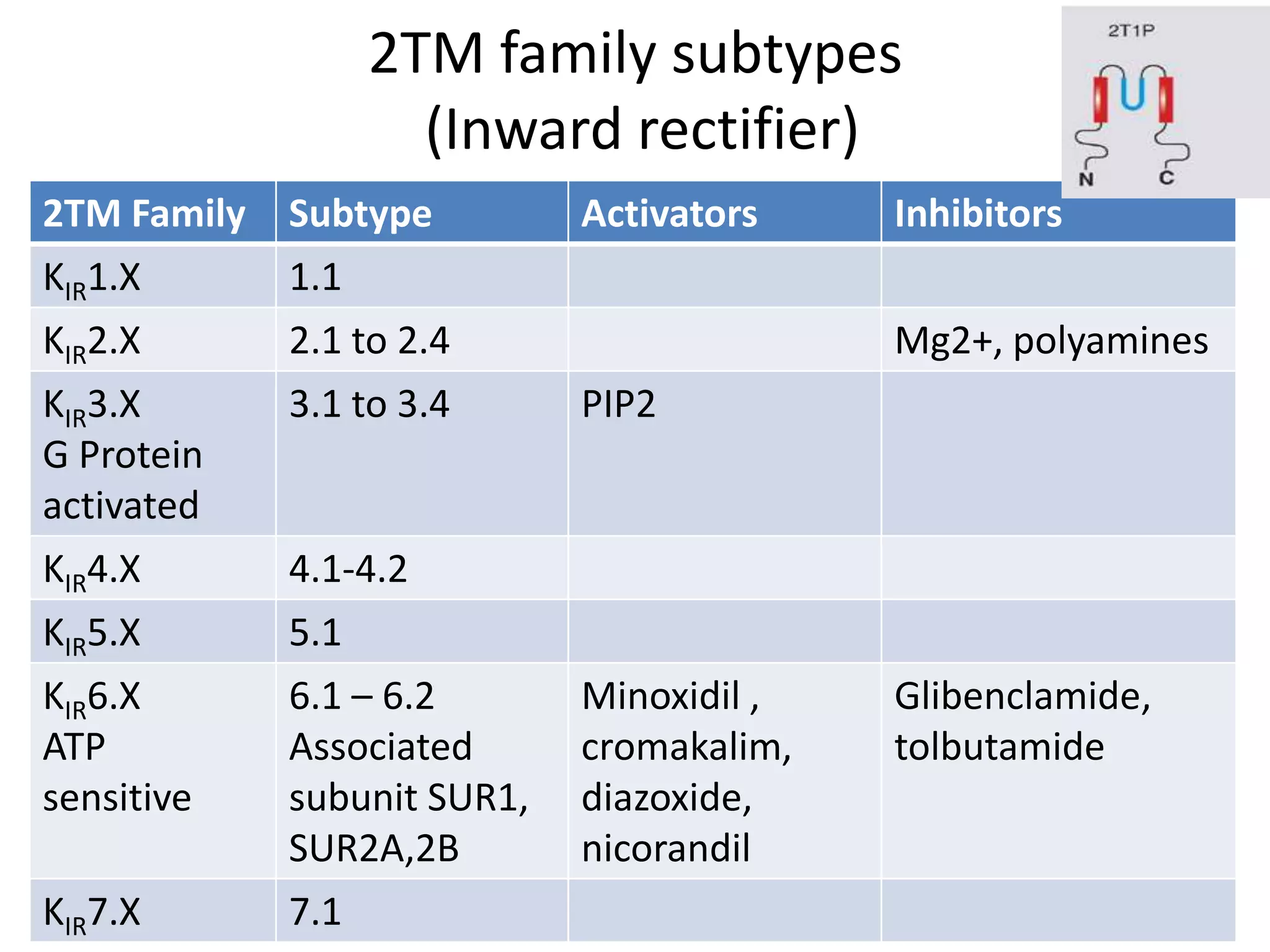
2TM family subtypes
                   (Inward rectifier)
2TM Family   Subtype         Activators    Inhibitors
KIR1.X       1.1
KIR2.X       2.1 to 2.4                    Mg2+, polyamines
KIR3.X       3.1 to 3.4      PIP2
G Protein
activated
KIR4.X       4.1-4.2
KIR5.X       5.1
KIR6.X       6.1 – 6.2       Minoxidil ,   Glibenclamide,
ATP          Associated      cromakalim,   tolbutamide
sensitive    subunit SUR1,   diazoxide,
             SUR2A,2B        nicorandil
KIR7.X       7.1
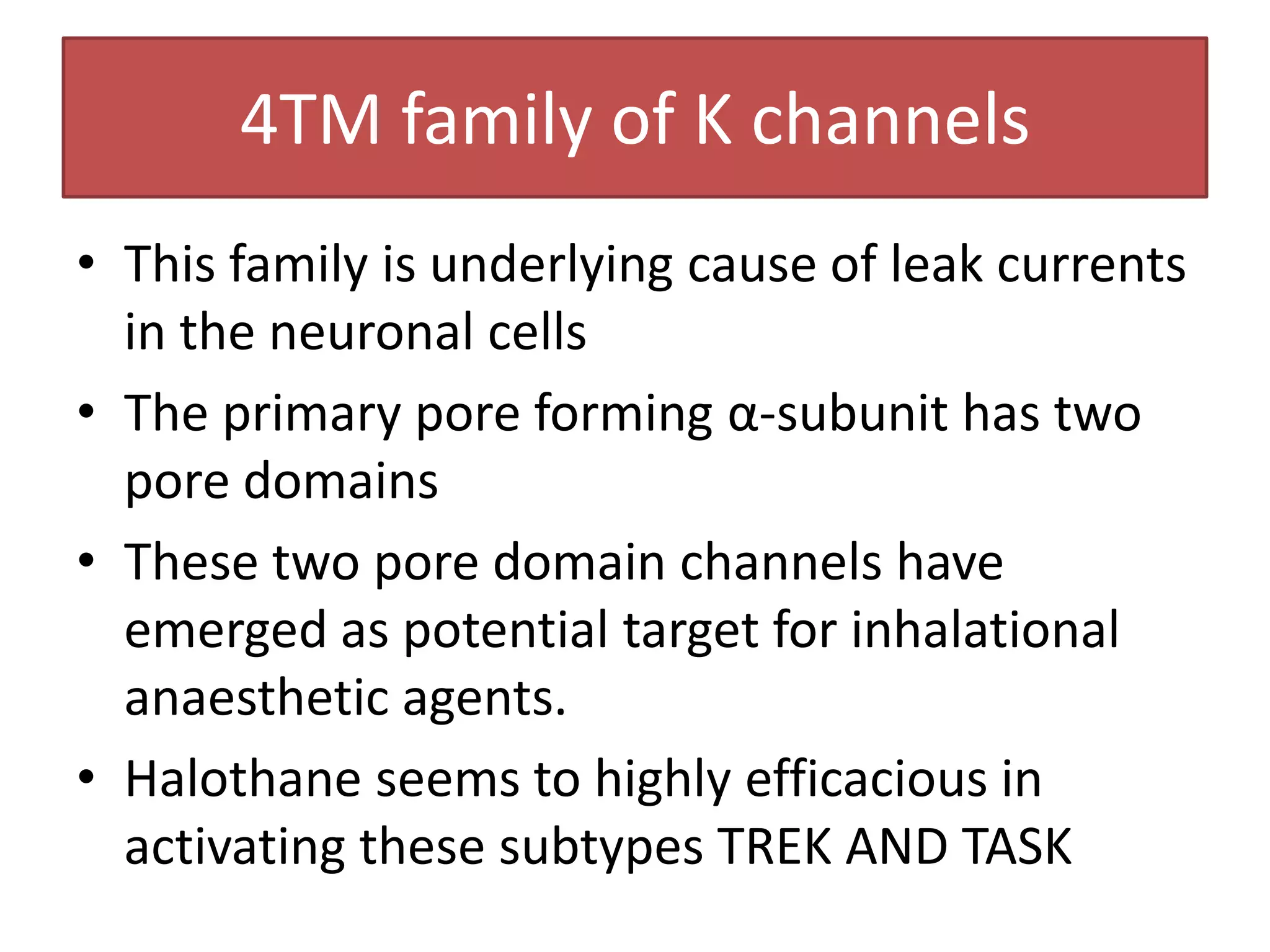
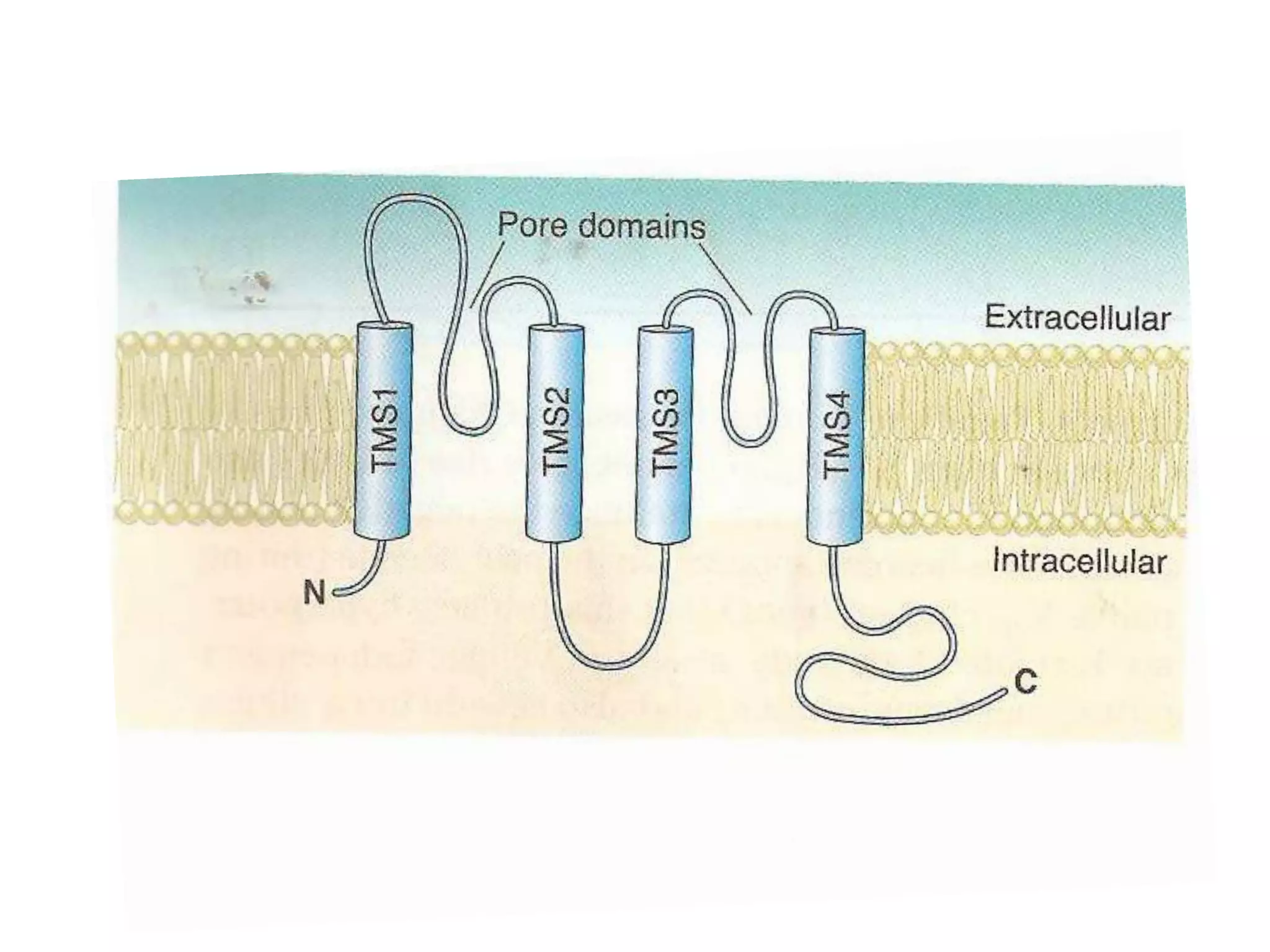
4TM family of K channels
• This family is underlying cause of leak currents
  in the neuronal cells
• The primary pore forming α-subunit has two
  pore domains
• These two pore domain channels have
  emerged as potential target for inhalational
  anaesthetic agents.
• Halothane seems to highly efficacious in
  activating these subtypes TREK AND TASK
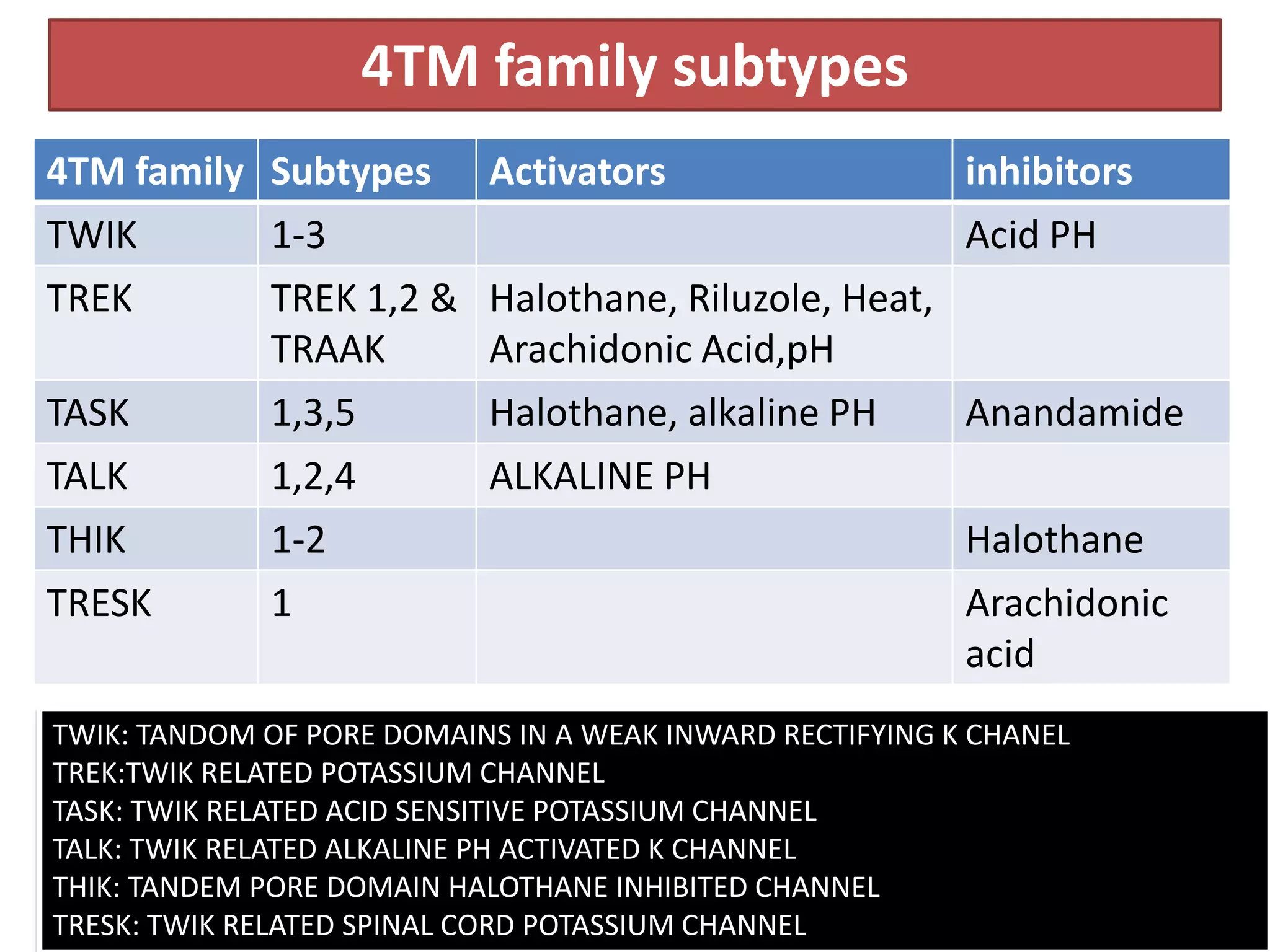
4TM family subtypes
4TM family Subtypes        Activators                     inhibitors
TWIK       1-3                                            Acid PH
TREK       TREK 1,2 &      Halothane, Riluzole, Heat,
           TRAAK           Arachidonic Acid,pH
TASK       1,3,5           Halothane, alkaline PH     Anandamide
TALK       1,2,4           ALKALINE PH
THIK       1-2                                        Halothane
TRESK        1                                            Arachidonic
                                                          acid
TWIK: TANDOM OF PORE DOMAINS IN A WEAK INWARD RECTIFYING K CHANEL
TREK:TWIK RELATED POTASSIUM CHANNEL
TASK: TWIK RELATED ACID SENSITIVE POTASSIUM CHANNEL
TALK: TWIK RELATED ALKALINE PH ACTIVATED K CHANNEL
THIK: TANDEM PORE DOMAIN HALOTHANE INHIBITED CHANNEL
TRESK: TWIK RELATED SPINAL CORD POTASSIUM CHANNEL
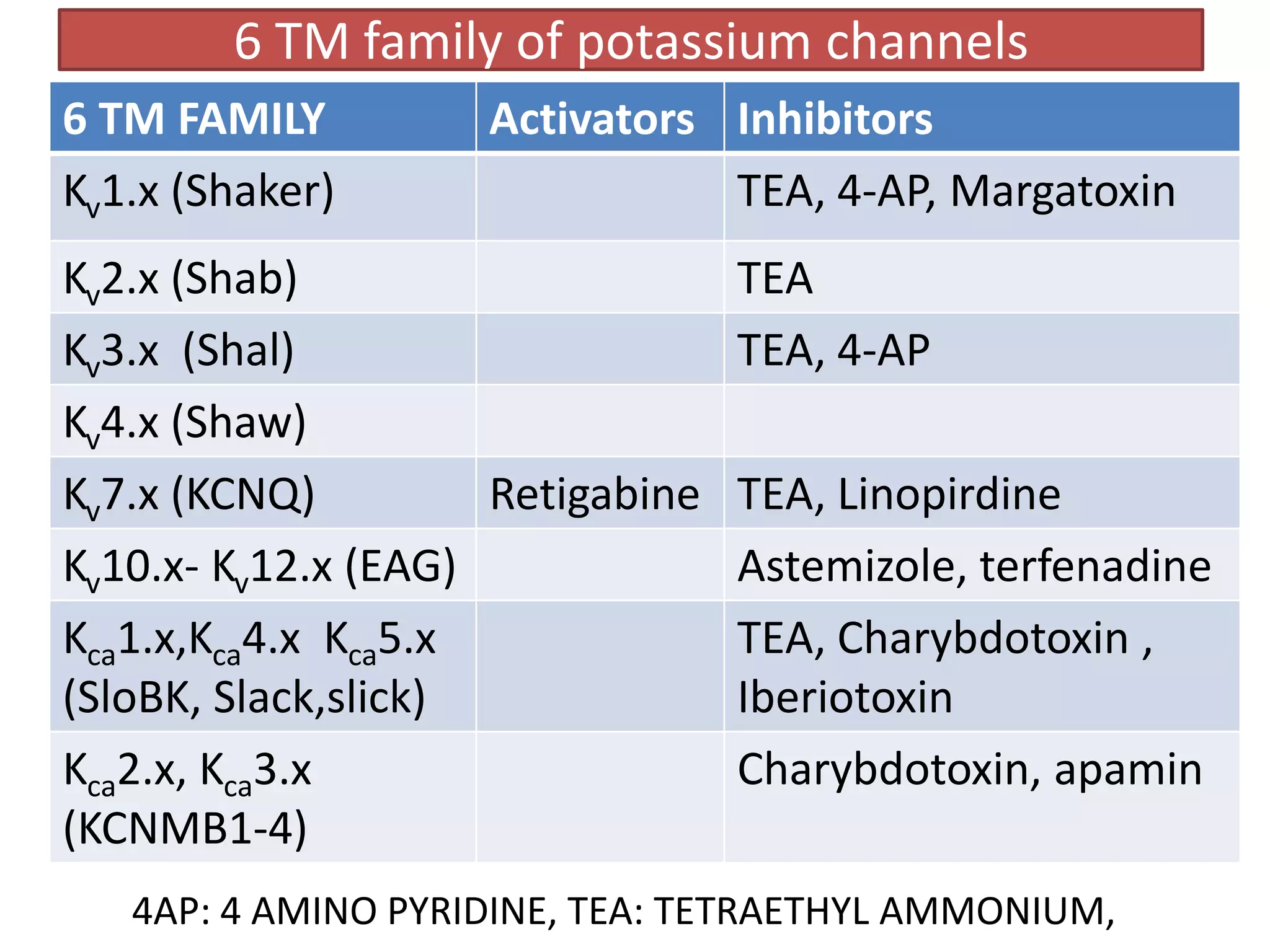
6 TM family of potassium channels
6 TM FAMILY         Activators Inhibitors
Kv1.x (Shaker)                 TEA, 4-AP, Margatoxin
Kv2.x (Shab)                    TEA
Kv3.x (Shal)                    TEA, 4-AP
Kv4.x (Shaw)
Kv7.x (KCNQ)         Retigabine TEA, Linopirdine
Kv10.x- Kv12.x (EAG)            Astemizole, terfenadine
Kca1.x,Kca4.x Kca5.x            TEA, Charybdotoxin ,
(SloBK, Slack,slick)            Iberiotoxin
Kca2.x, Kca3.x                  Charybdotoxin, apamin
(KCNMB1-4)
   4AP: 4 AMINO PYRIDINE, TEA: TETRAETHYL AMMONIUM,
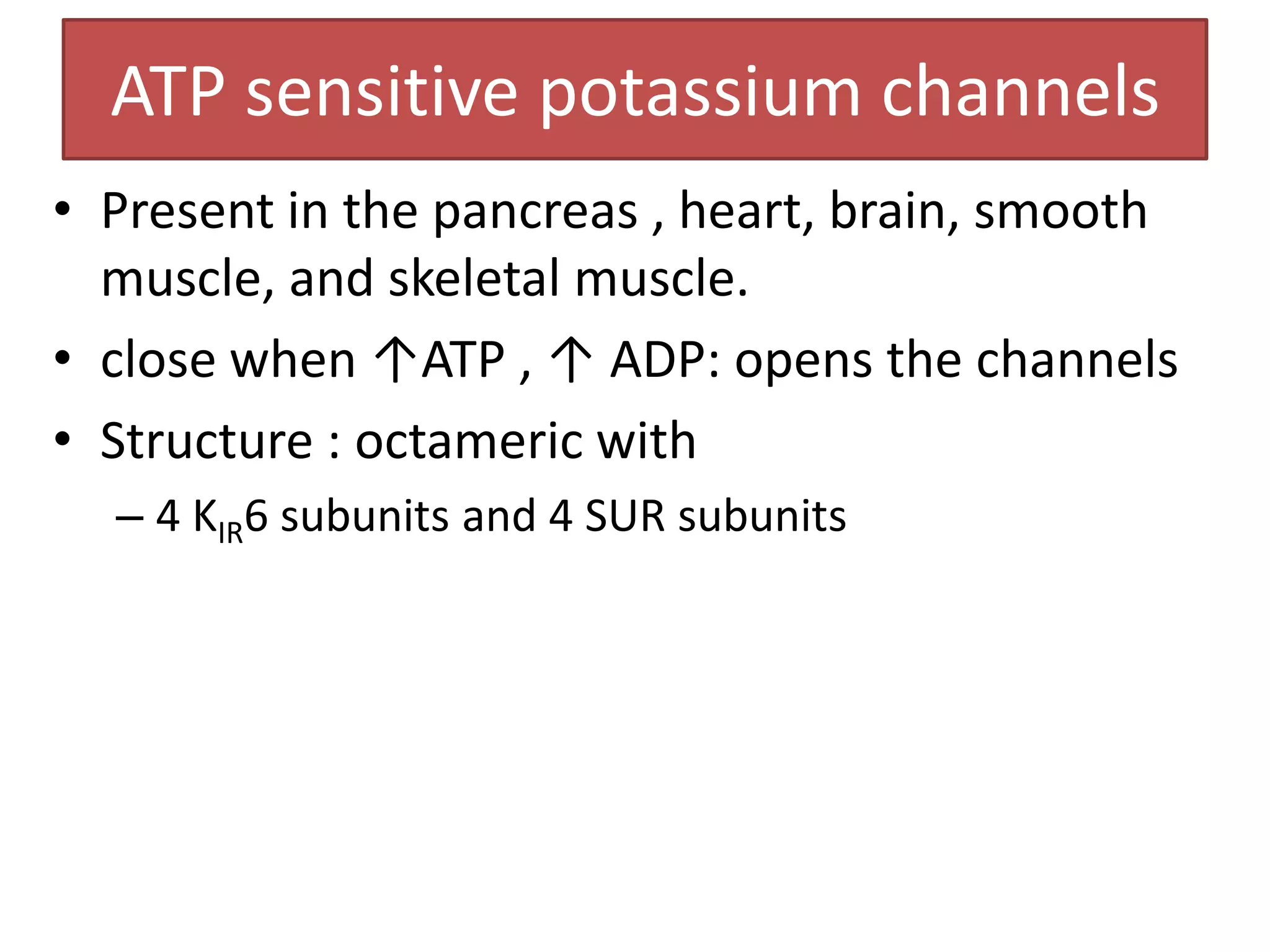
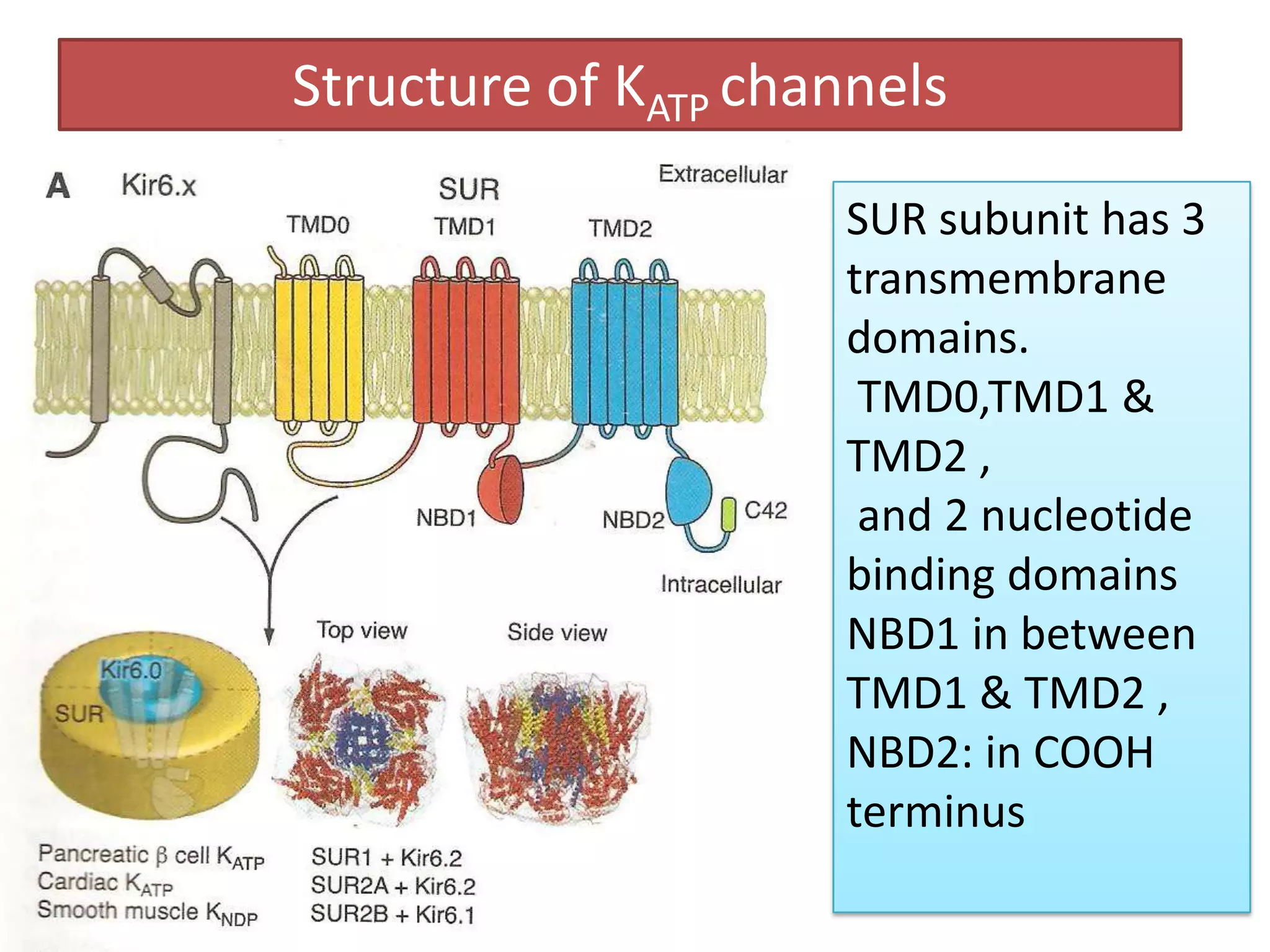
ATP sensitive potassium channels
• Present in the pancreas , heart, brain, smooth
  muscle, and skeletal muscle.
• close when ↑ATP , ↑ ADP: opens the channels
• Structure : octameric with
  – 4 KIR6 subunits and 4 SUR subunits
Structure of KATP channels

                     SUR subunit has 3
                     transmembrane
                     domains.
                      TMD0,TMD1 &
                     TMD2 ,
                      and 2 nucleotide
                     binding domains
                     NBD1 in between
                     TMD1 & TMD2 ,
                     NBD2: in COOH
                     terminus
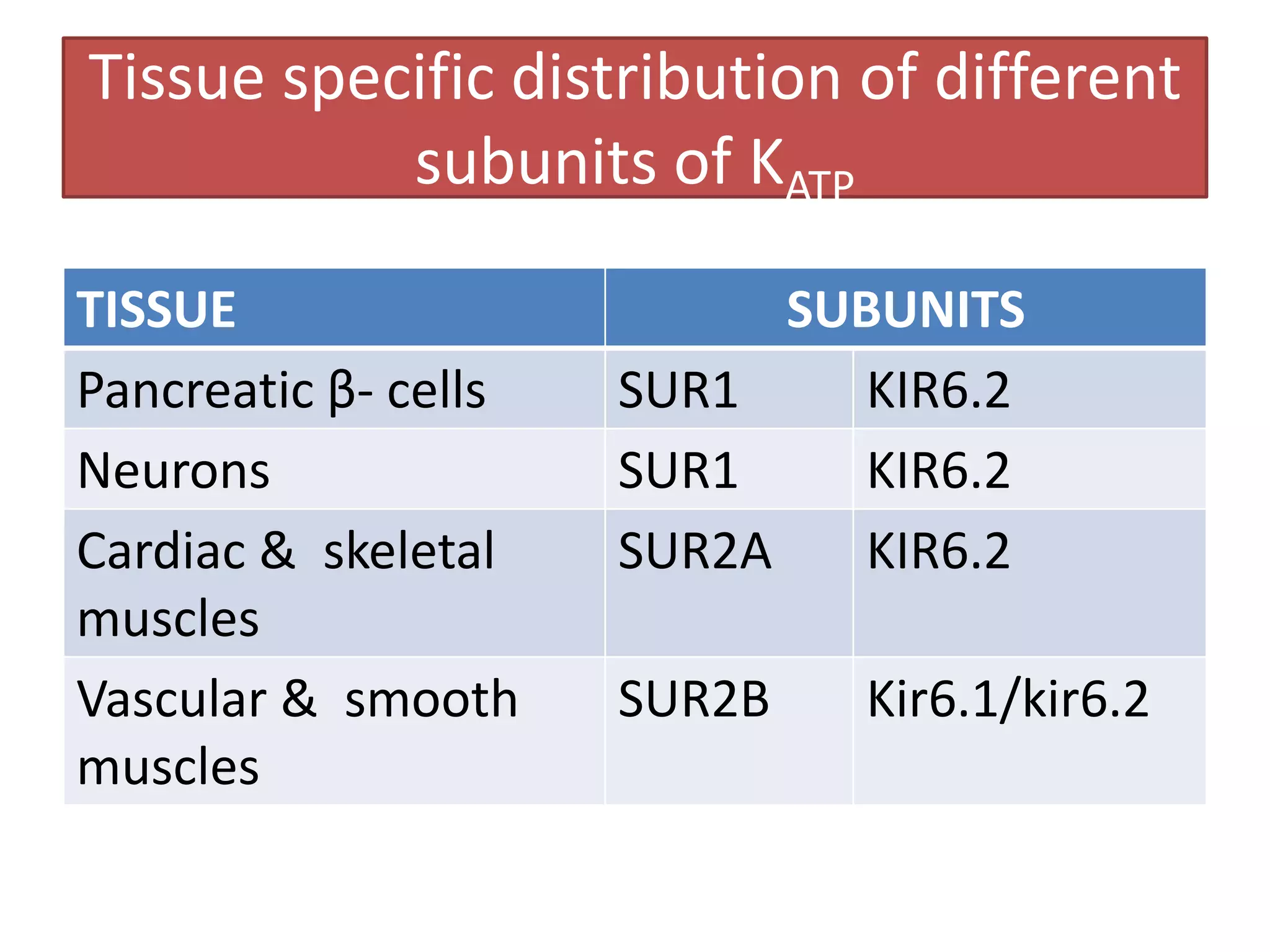
Tissue specific distribution of different
           subunits of KATP

TISSUE                      SUBUNITS
Pancreatic β- cells   SUR1     KIR6.2
Neurons               SUR1     KIR6.2
Cardiac & skeletal    SUR2A    KIR6.2
muscles
Vascular & smooth     SUR2B    Kir6.1/kir6.2
muscles
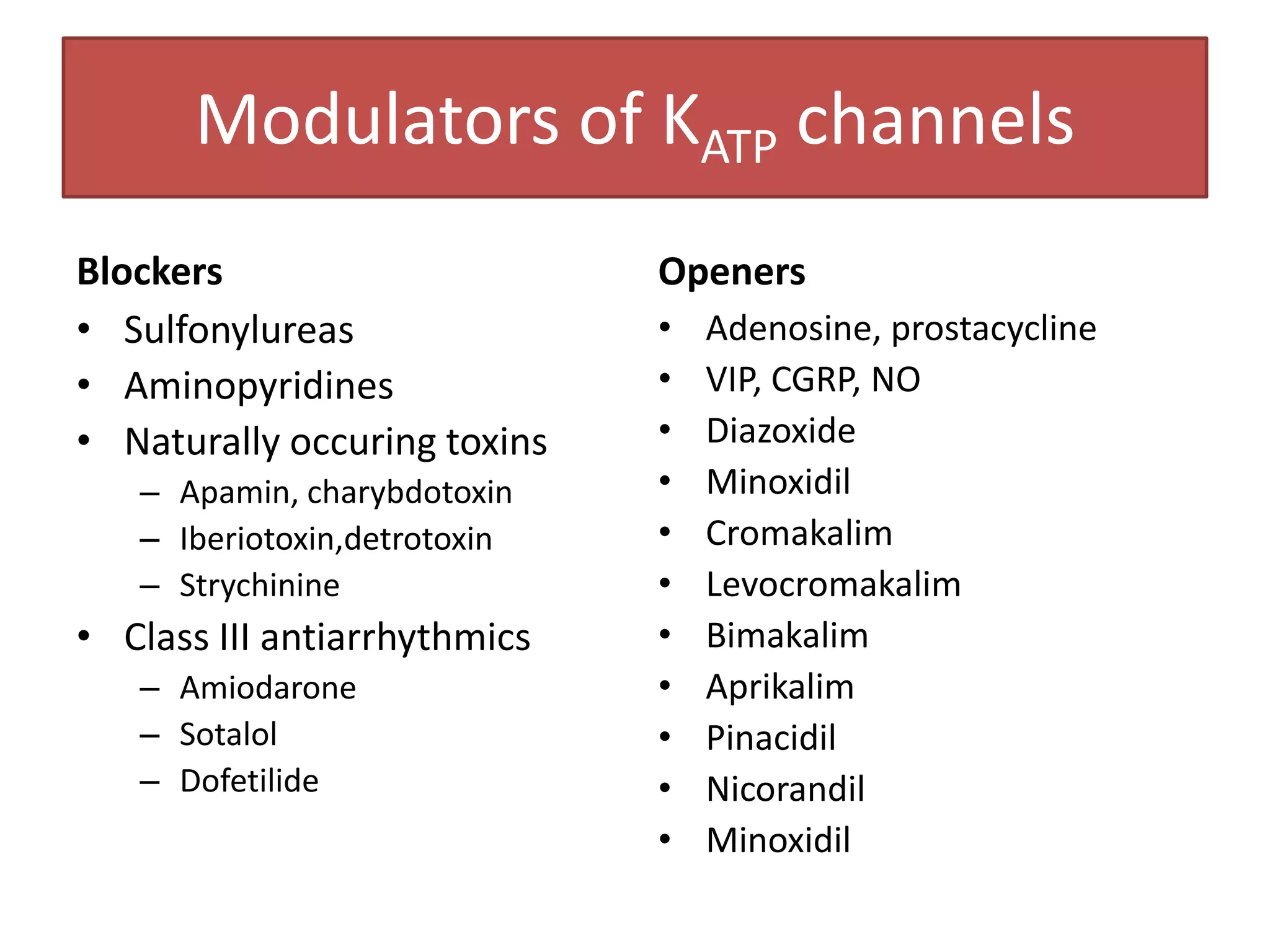
Modulators of KATP channels
Blockers                      Openers
• Sulfonylureas               •   Adenosine, prostacycline
• Aminopyridines              •   VIP, CGRP, NO
• Naturally occuring toxins   •   Diazoxide
   – Apamin, charybdotoxin    •   Minoxidil
   – Iberiotoxin,detrotoxin   •   Cromakalim
   – Strychinine              •   Levocromakalim
• Class III antiarrhythmics   •   Bimakalim
   – Amiodarone               •   Aprikalim
   – Sotalol                  •   Pinacidil
   – Dofetilide               •   Nicorandil
                              •   Minoxidil
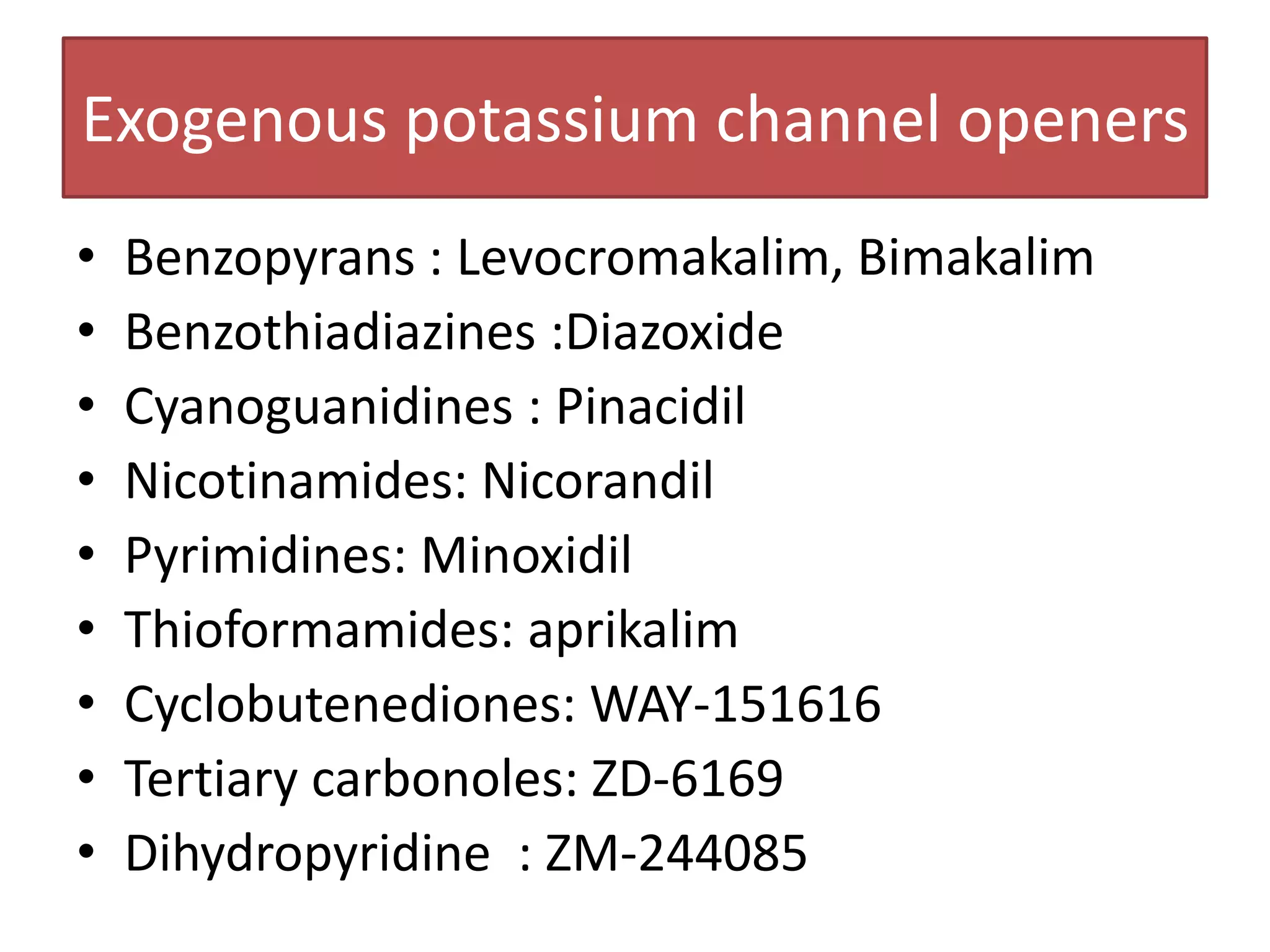
Exogenous potassium channel openers
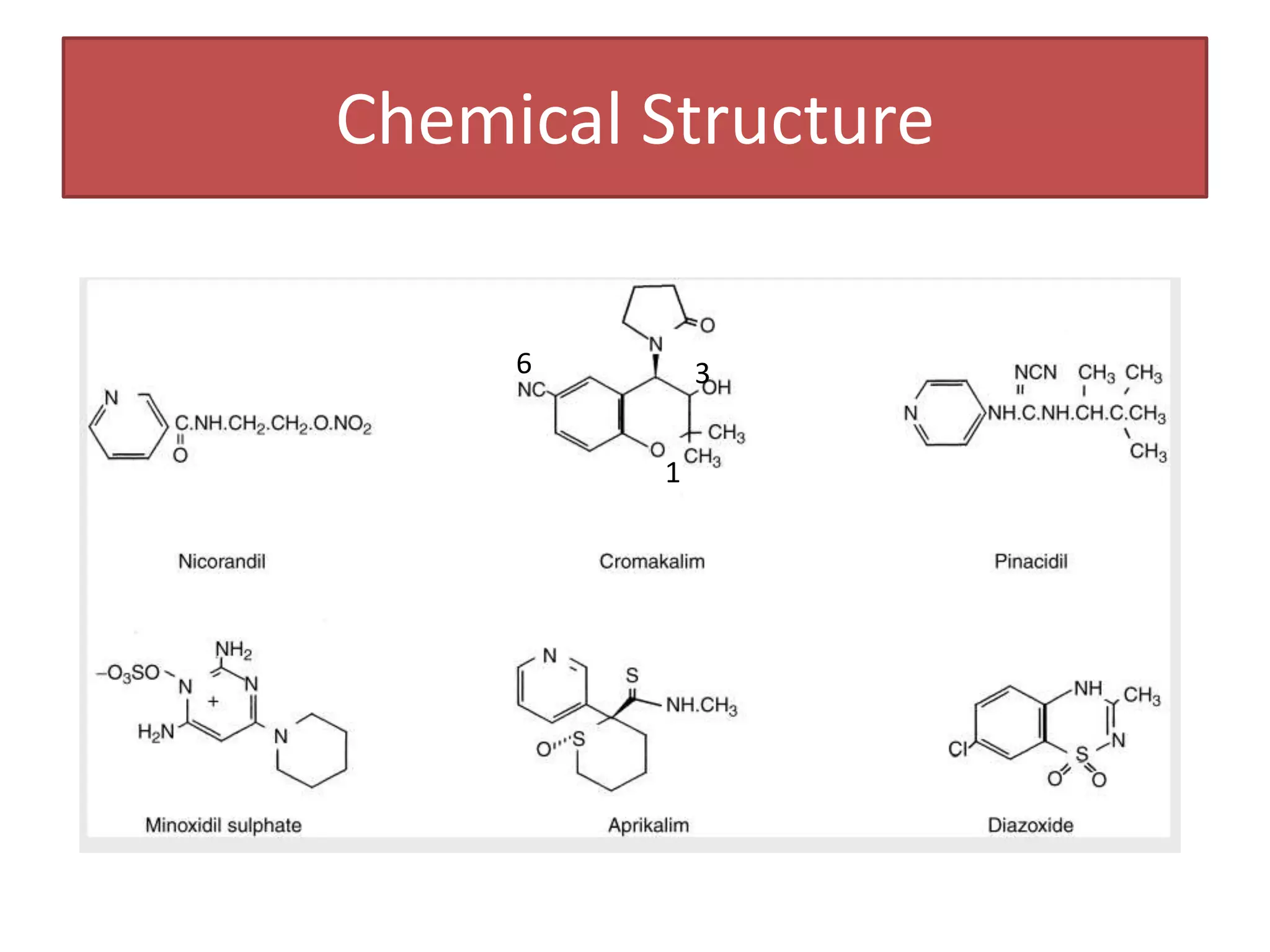
•   Benzopyrans : Levocromakalim, Bimakalim
•   Benzothiadiazines :Diazoxide
•   Cyanoguanidines : Pinacidil
•   Nicotinamides: Nicorandil
•   Pyrimidines: Minoxidil
•   Thioformamides: aprikalim
•   Cyclobutenediones: WAY-151616
•   Tertiary carbonoles: ZD-6169
•   Dihydropyridine : ZM-244085
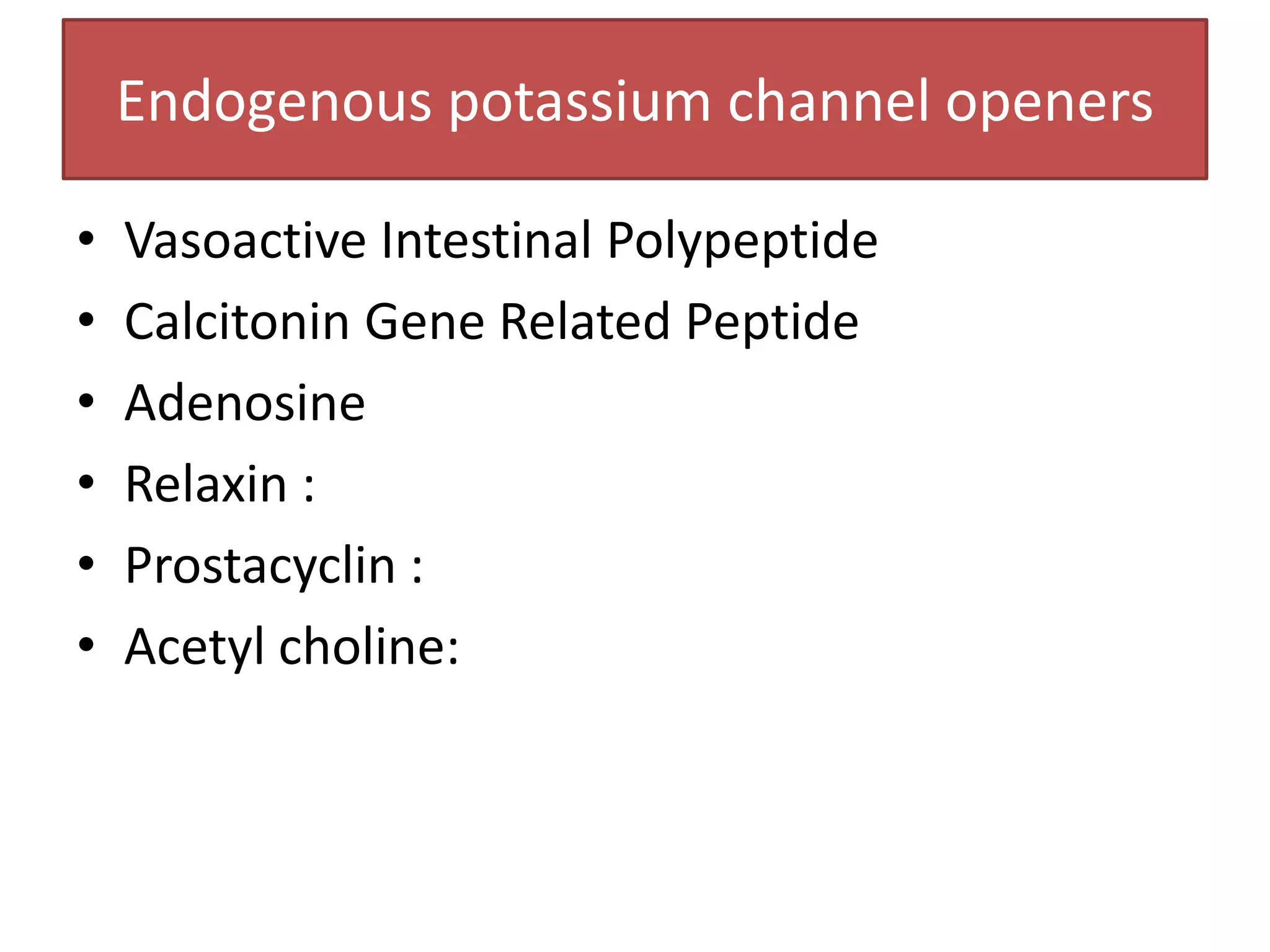
Endogenous potassium channel openers

•   Vasoactive Intestinal Polypeptide
•   Calcitonin Gene Related Peptide
•   Adenosine
•   Relaxin :
•   Prostacyclin :
•   Acetyl choline:
Chemical Structure

     6       3


         1
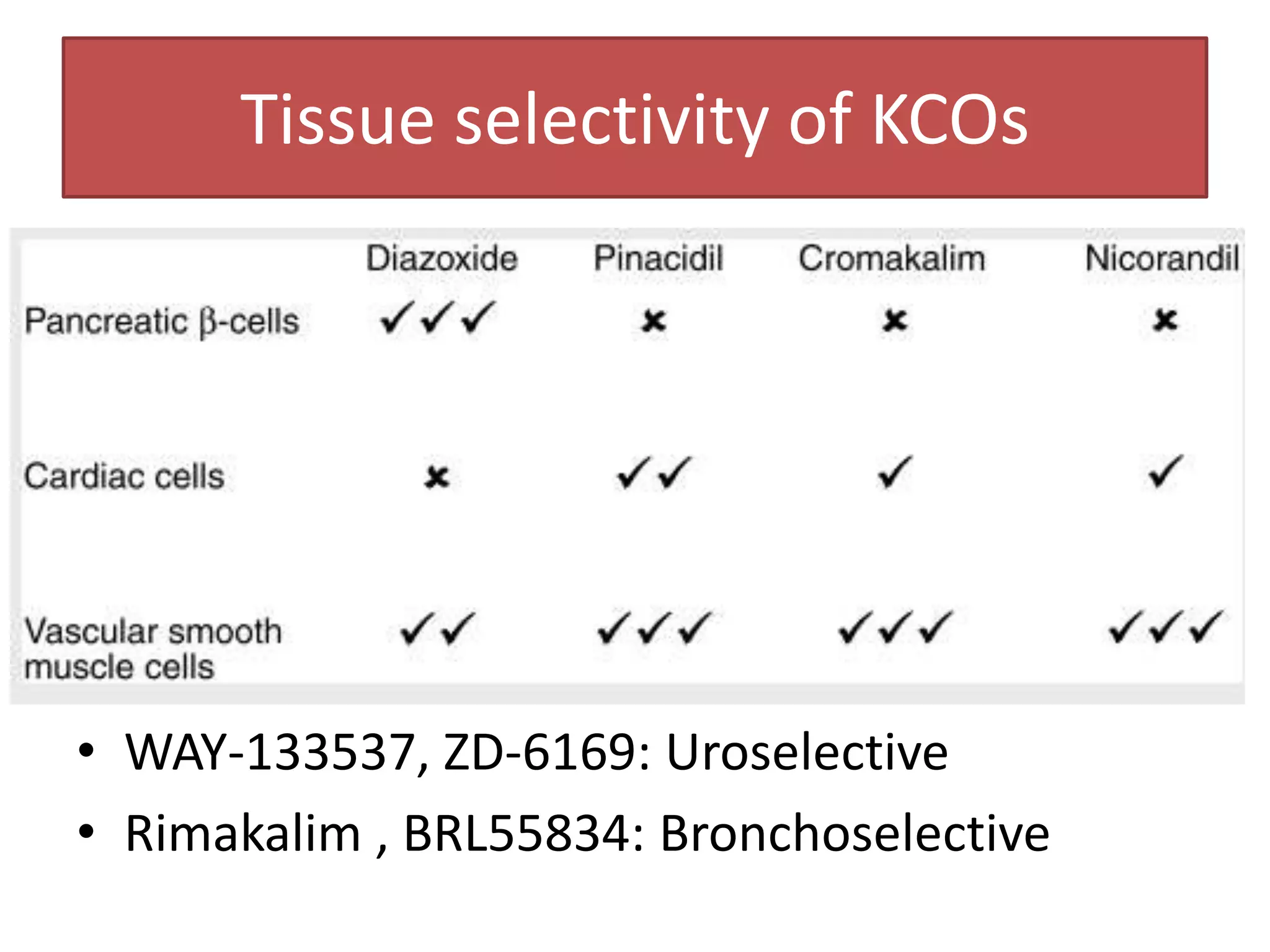
Tissue selectivity of KCOs


• WAY-133537, ZD-6169: Uroselective
• Rimakalim , BRL55834: Bronchoselective
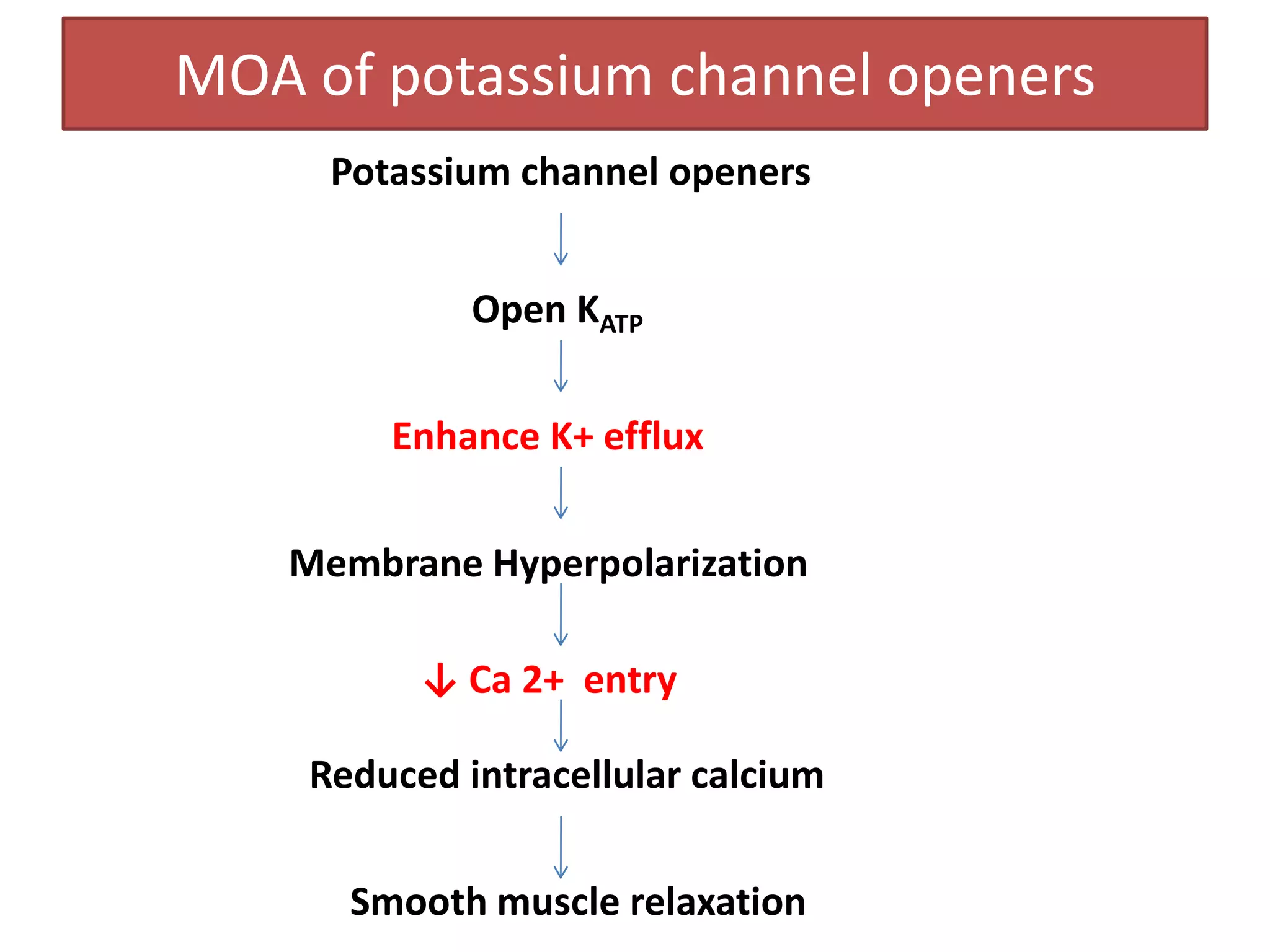
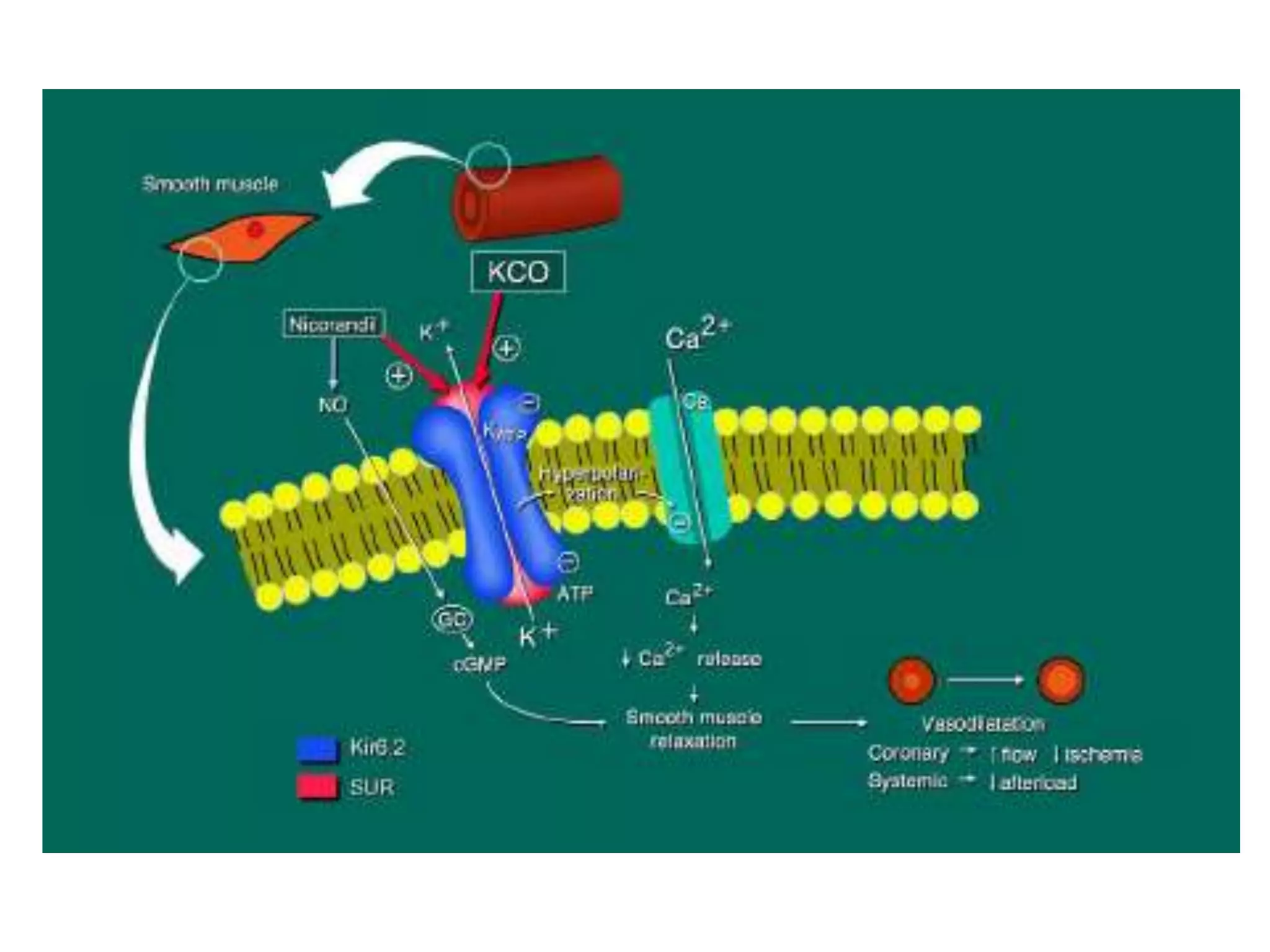
MOA of potassium channel openers
     Potassium channel openers


             Open KATP


        Enhance K+ efflux


   Membrane Hyperpolarization

          ↓ Ca 2+ entry

    Reduced intracellular calcium


      Smooth muscle relaxation
Other mechanisms of action of K+ channel
                  openers

• Hyperpolarization induced by K ATP CO inhibits
  production of 1,4,5 IP3and hence Ca2+ release
  from intracellular stores
• Hyperpolarization may also be linked with ↓
  sensitivity of contractile elements of vascular
  smooth muscles
• ↓ neurotransmitter release from nerve
  terminals
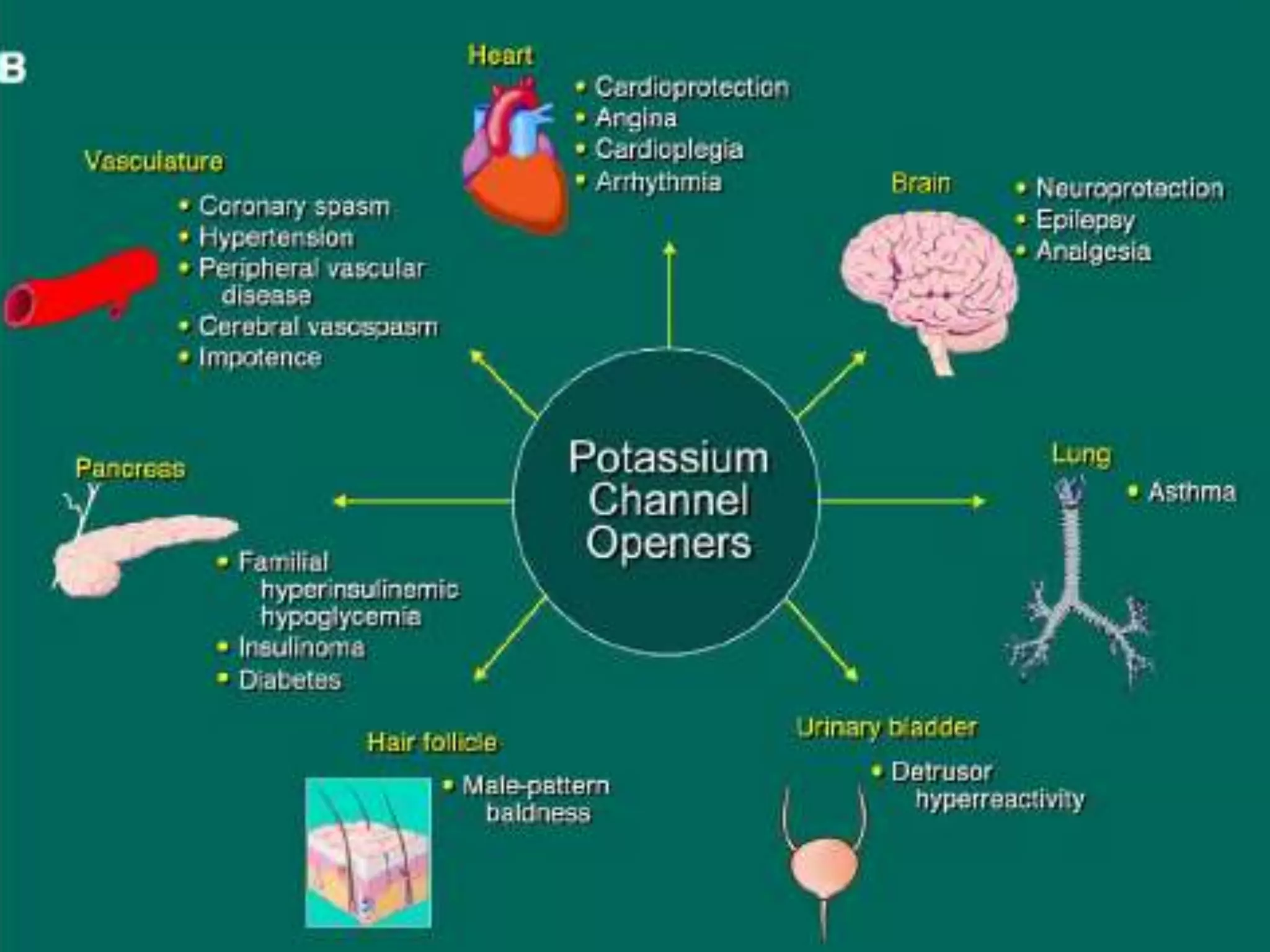
Pharmacological actions & Uses of
 potassium channel openers
Pharmacological actions
• Heart and blood vessels
• Smooth muscles
  – Respiratory
  – Intestine
  – Urinary bladder
  – Uterus
• Endocrine system
• Nervous system
• Hair growth
Actions on heart
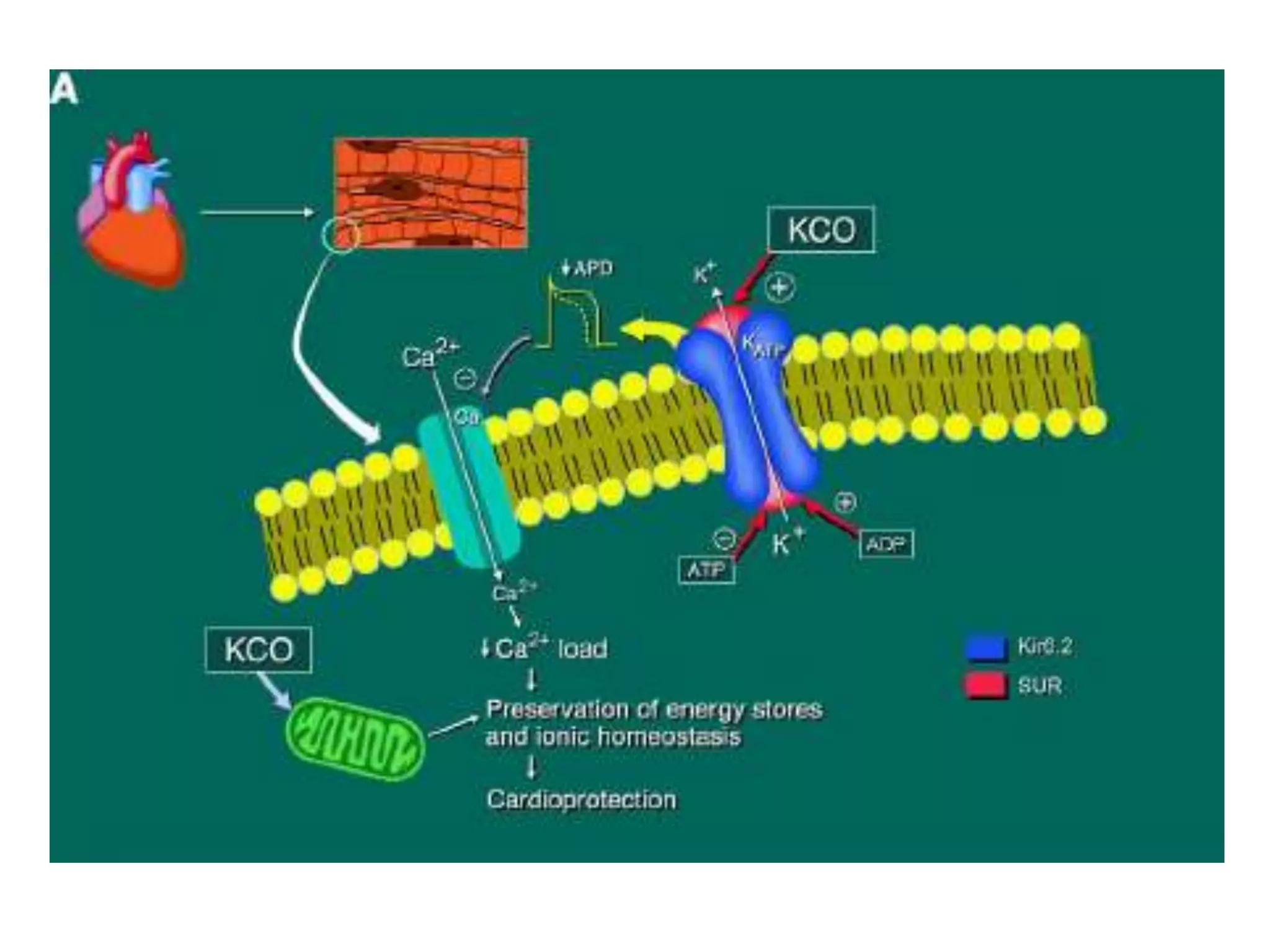
• Sarcolemmal KATP
  – shorten duration of cardiac action potential
  – Negative ionotrophic effect in cardiomyocytes and
    vasodilation of blood vessels
• Mitochondrial KATP
  – Channels open in response to ischemia
  – Trigger ↑mitochondrial ROS production amplify cell
    signalling pathway
  – Leads to gene transcription and cell growth
  – Also prevents disruption of mitochondrial structure
    and function
Actions on heart
• Cardiac preconditioning effect
  – Brief episode of ischemia can result in an increase
    resistance to subsequent more severe episodes of
    ischemia
  – This ischemic preconditioning to brief ischemia
    may occur due to adenosine by activation of KATP
Actions on heart
• Antiarrhythmic actions
  – Prevent arrhythmias related to triggered activity ,
    abnormal repolarization and early or delayed after
    depolarization
  – Prolonged QT syndrome, drug induced ventricular
    arrhythmias nicorandil and pinacidil were effective
  – ↑ K+ conductance shortens APD and contributes
    to extracellular K accumulation . This may be
    responsible for ischemia induced arrhythmias
  – May also facilitate re-entrant arrhythmias
Actions on blood vessels


• Mainly arteriolar vasodilation
Therapeutic uses in cardiovascular
               conditions
• Ishemic heart disease :
    – Angina , Myocardial infarction
• Hypertension
• Pulmonary hypertension
• Perioperative cardiac protection
• Organ perfusion and preservation for
  transplant
• Rhythm disturbances
• Peripheral vascular disease
Respiratory system
• In bronchial asthma
  – Hyperpolarization of smooth muscles, neurons
    and secretory cells
  – Reduce bronchial hyper-responsiveness by direct
    effect on smooth muscle relaxation and through
    inhibition of excitatory NANC transmission
Role in bronchial asthma
• Broncho-relaxation
• Prevention of bronchoconstriction
• ↓ microvascular leakage & goblet cell
  secretion
• ↓ dyspnoea evoked by inflammatory
  mediators & airway hyperesponsiveness
• Do not develop bronchial hyper-reactivity &
  tolerance on long term use
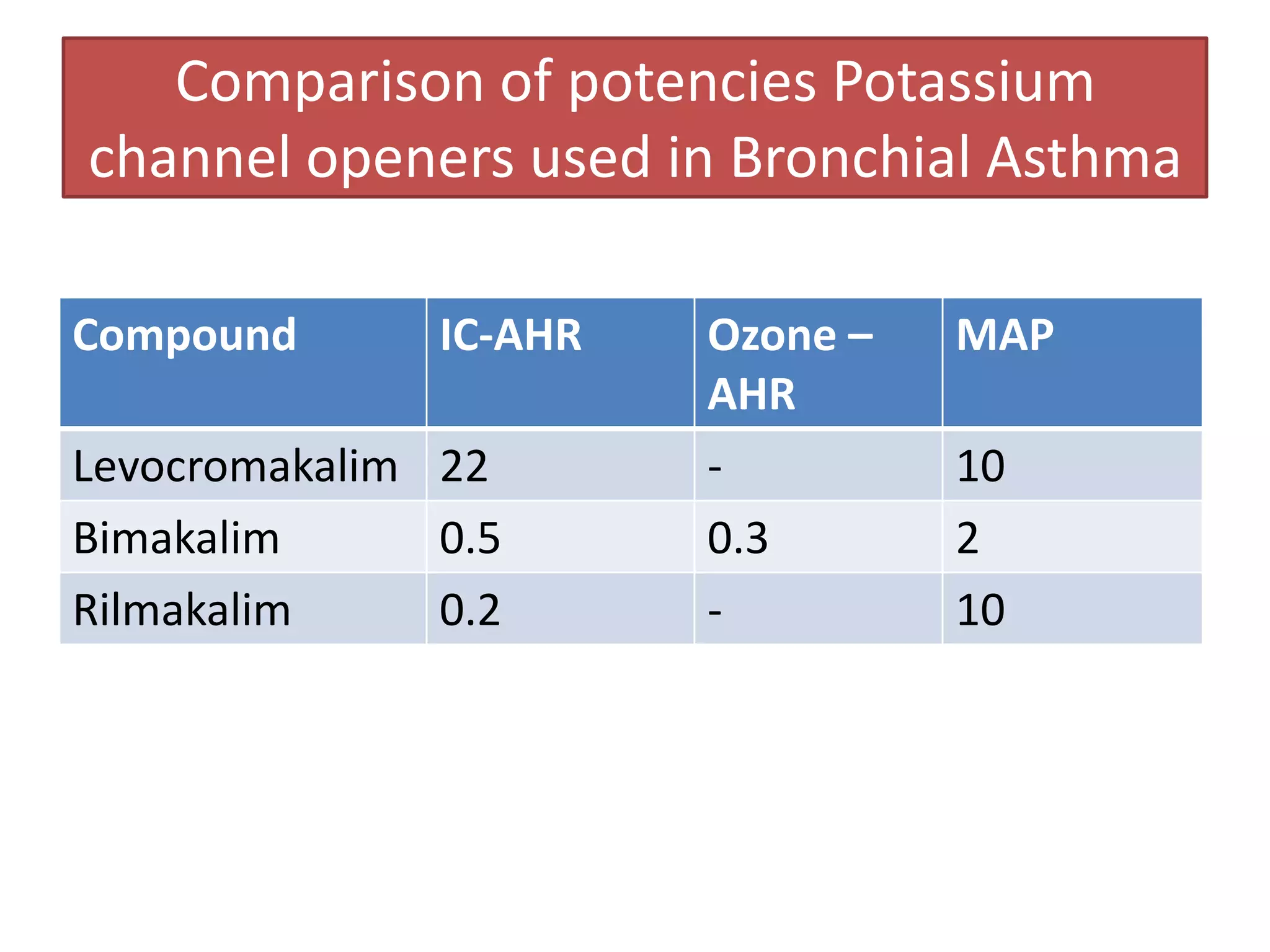
Comparison of potencies Potassium
channel openers used in Bronchial Asthma

Compound       IC-AHR   Ozone –   MAP
                        AHR
Levocromakalim 22       -         10
Bimakalim      0.5      0.3       2
Rilmakalim     0.2      -         10
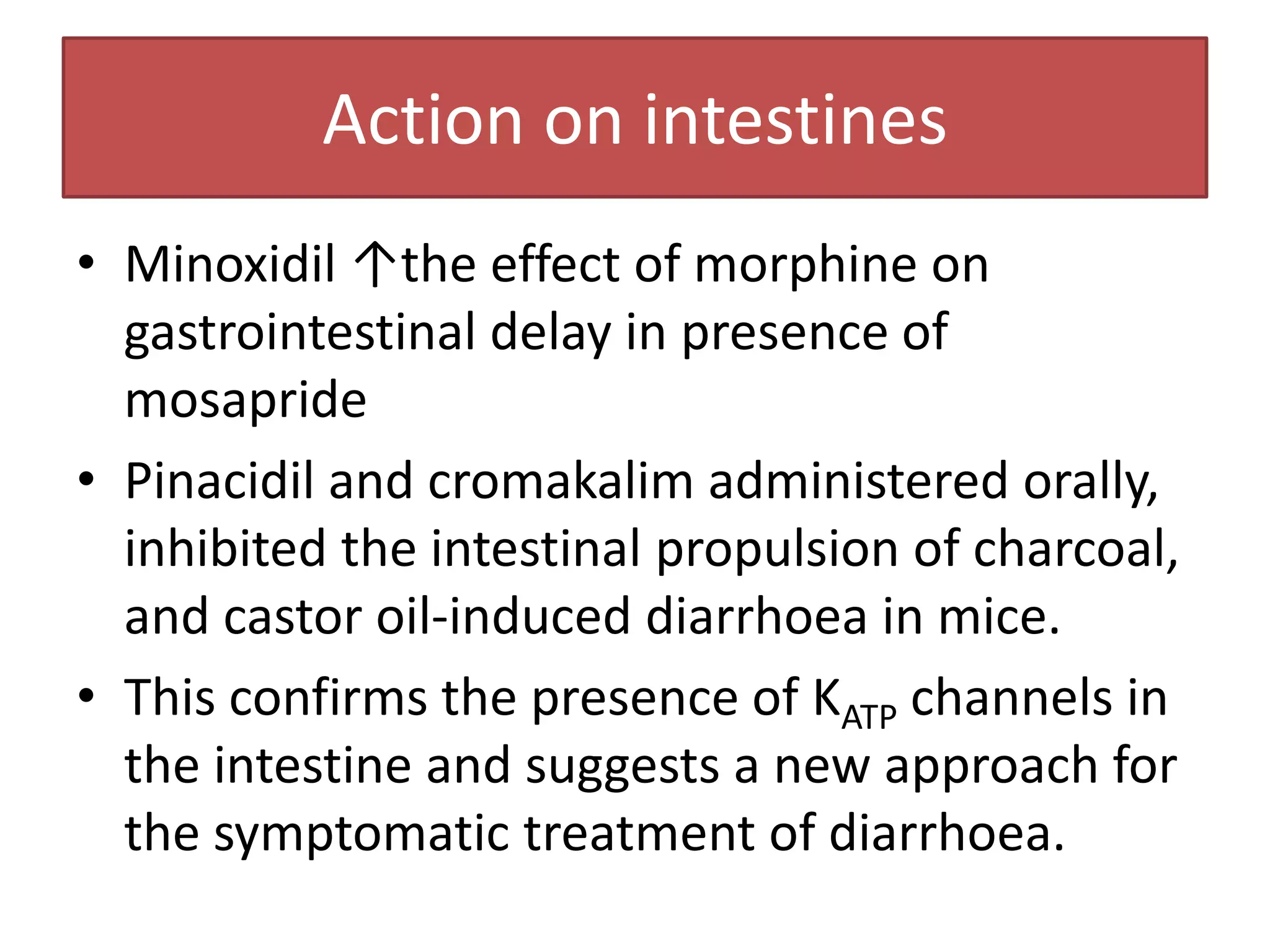
Action on intestines
• Minoxidil ↑the effect of morphine on
  gastrointestinal delay in presence of
  mosapride
• Pinacidil and cromakalim administered orally,
  inhibited the intestinal propulsion of charcoal,
  and castor oil-induced diarrhoea in mice.
• This confirms the presence of KATP channels in
  the intestine and suggests a new approach for
  the symptomatic treatment of diarrhoea.
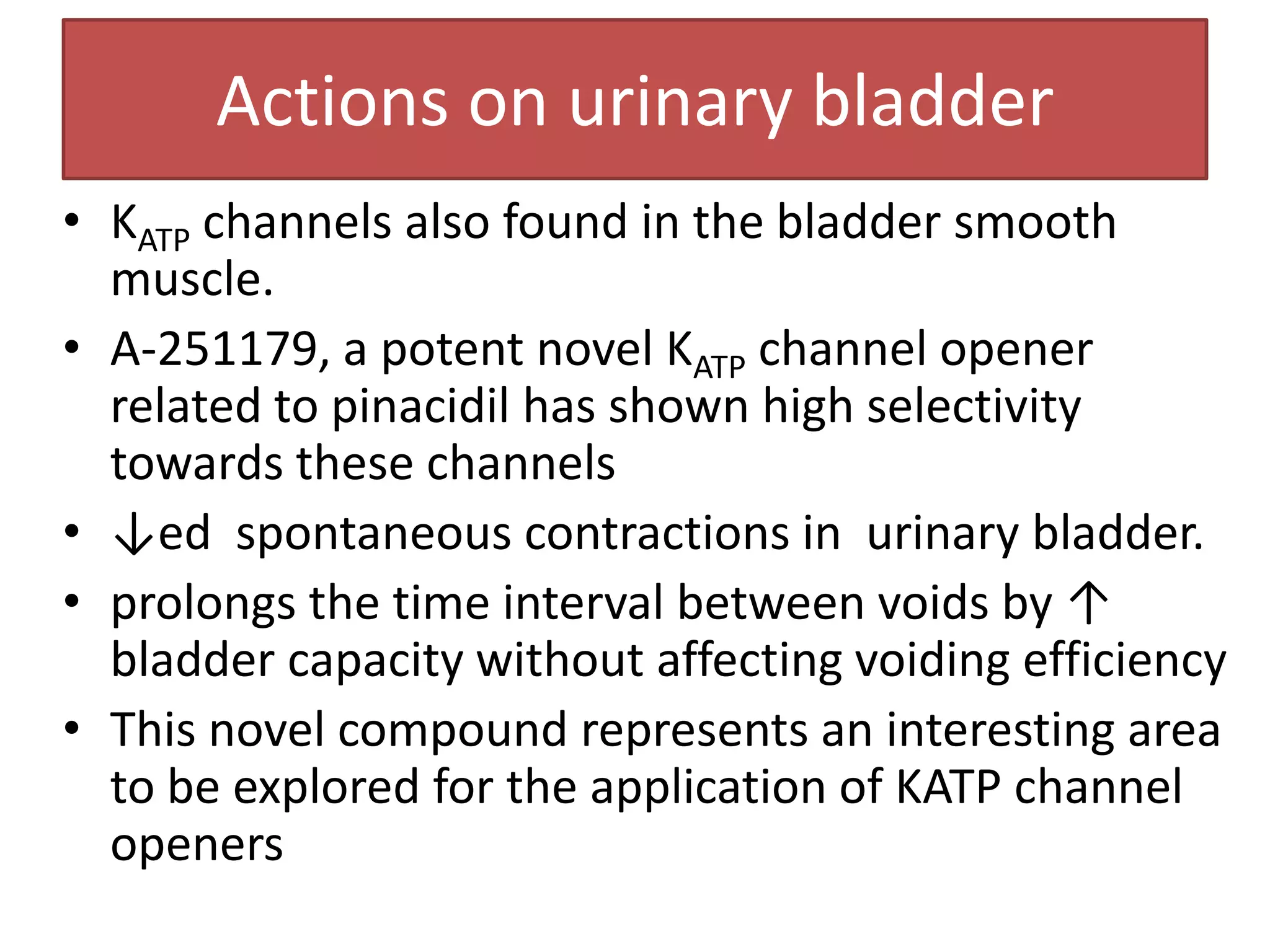
Actions on urinary bladder
• KATP channels also found in the bladder smooth
  muscle.
• A-251179, a potent novel KATP channel opener
  related to pinacidil has shown high selectivity
  towards these channels
• ↓ed spontaneous contractions in urinary bladder.
• prolongs the time interval between voids by ↑
  bladder capacity without affecting voiding efficiency
• This novel compound represents an interesting area
  to be explored for the application of KATP channel
  openers
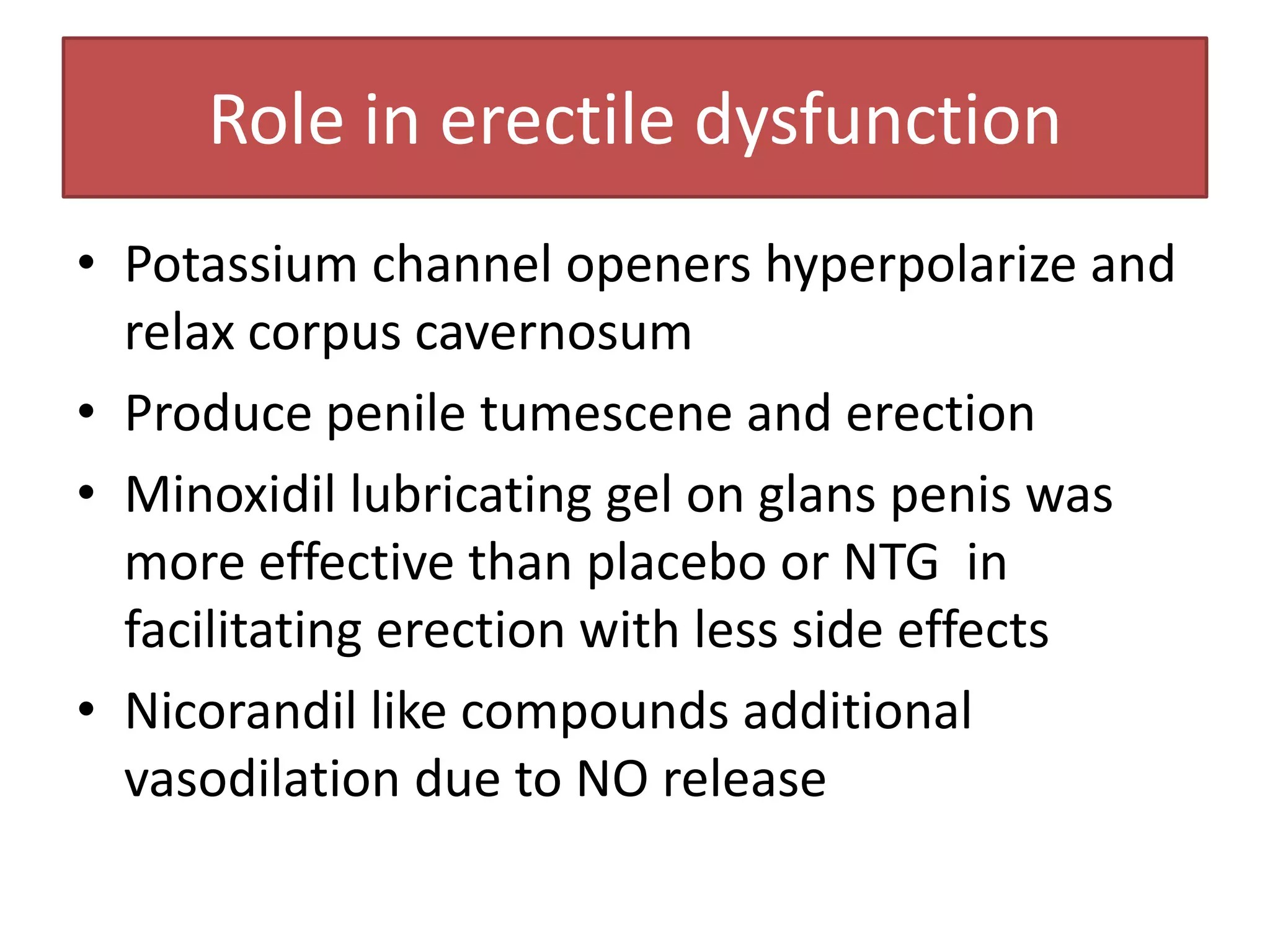
Role in erectile dysfunction
• Potassium channel openers hyperpolarize and
  relax corpus cavernosum
• Produce penile tumescene and erection
• Minoxidil lubricating gel on glans penis was
  more effective than placebo or NTG in
  facilitating erection with less side effects
• Nicorandil like compounds additional
  vasodilation due to NO release
Actions on uterus
• Capable of producing glibenclamide sensitive
  relaxation of uterine smooth muscle
• May be of used as uterine relaxants & have
  some place in treatment of dysmenorrhoea,
  and preterm labour
• Hypoxia may contribute to uterine dystocia
  KATP channels may be involved in this effect.
Actions on endocrine system
• KATP Channels essential in regulating insulin
  secretion from pancreatic β-cells
• Diazoxide used in management of
  hypoglycemia due to hyperinsulinemia in
  inoperable islet cell adenoma, & islet cell
  hyperplasia
• Interesting finding is that diazoxide has also
  demonstrated antidiabetic activity on
  prolonged use in type II diabetes
Actions on nervous system
• Strong neuroprotective effect when injected
  prior to ischemic or epileptic insult
• Inhibit release of Aspartate and glutamate,
  which are released during hypoxia with
  neuronal depolarization
• Also inhibit Ca2+ loading , decreases
  excitability and prevent neuronal injury
Uses of KCOs in neurological diseases
• Subarachnoid haemorrhage :
  – prevent and reverse vasospasm by relaxing basilar
    artery without affecting systemic hemodynamics
• Epilepsy
• Alzheimers disease
• Antinociceptive effect
  – Mediated through release of endorphins and
    enkephalins and activation of opioid receptors
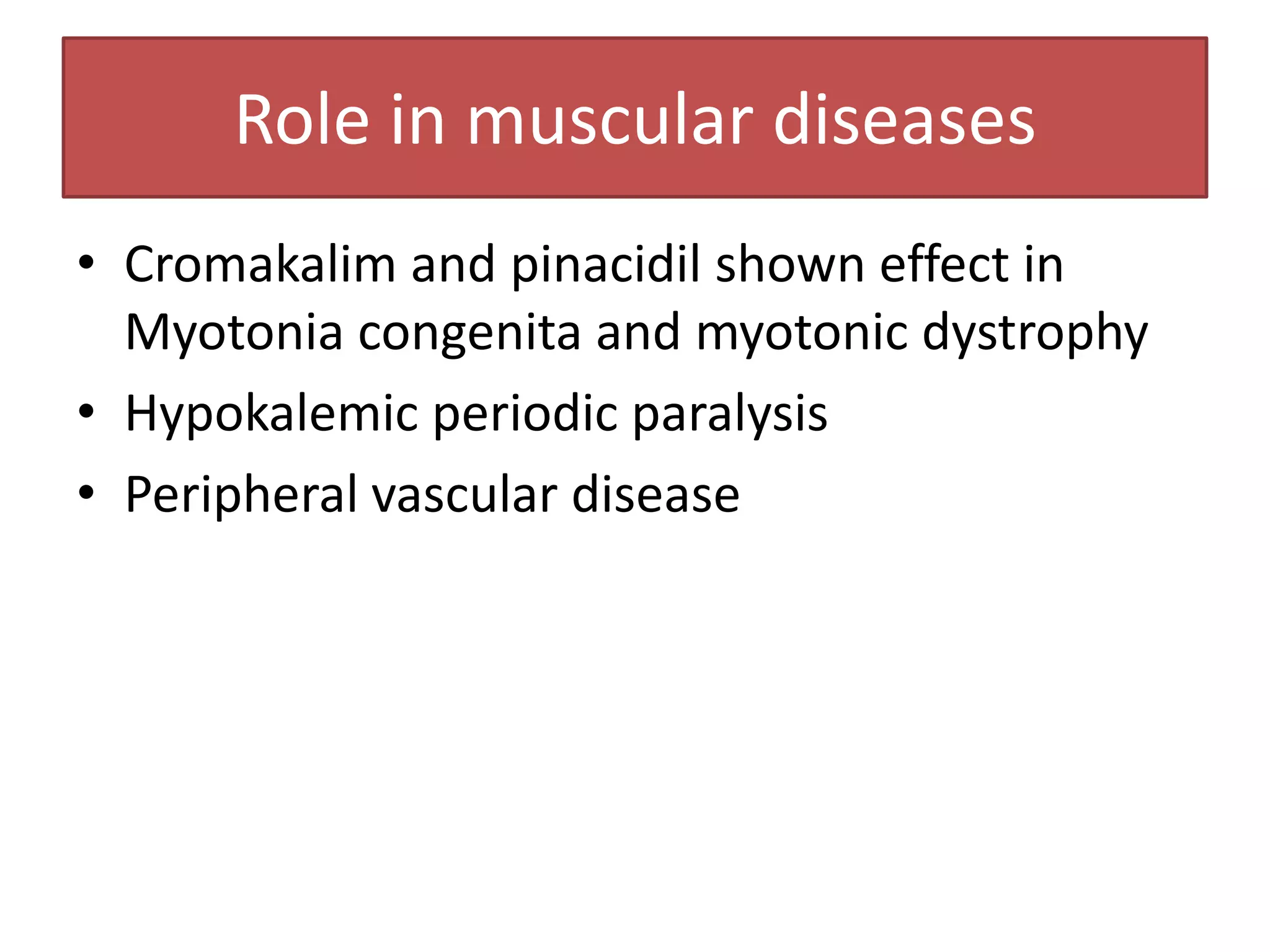
Role in muscular diseases
• Cromakalim and pinacidil shown effect in
  Myotonia congenita and myotonic dystrophy
• Hypokalemic periodic paralysis
• Peripheral vascular disease
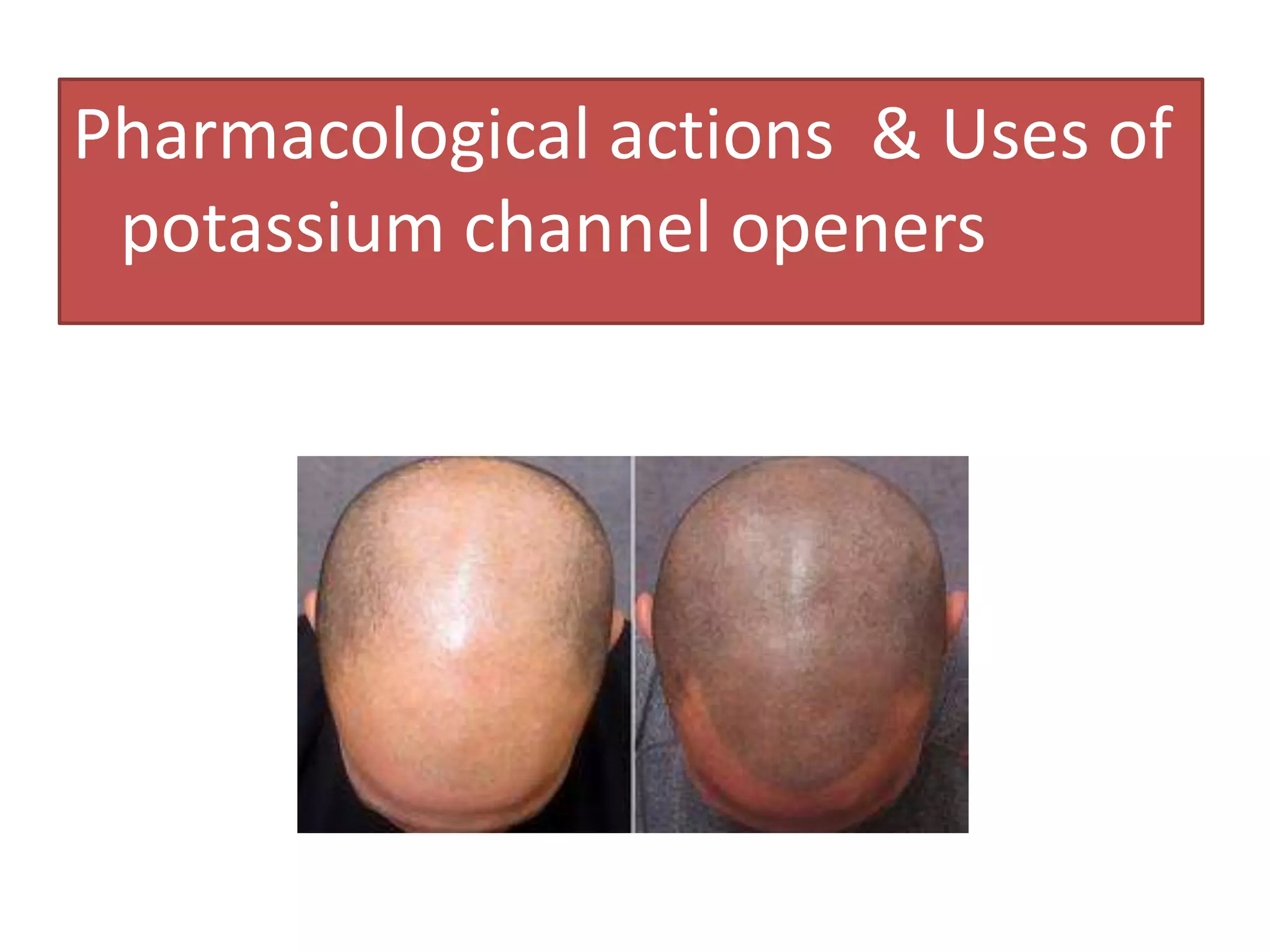
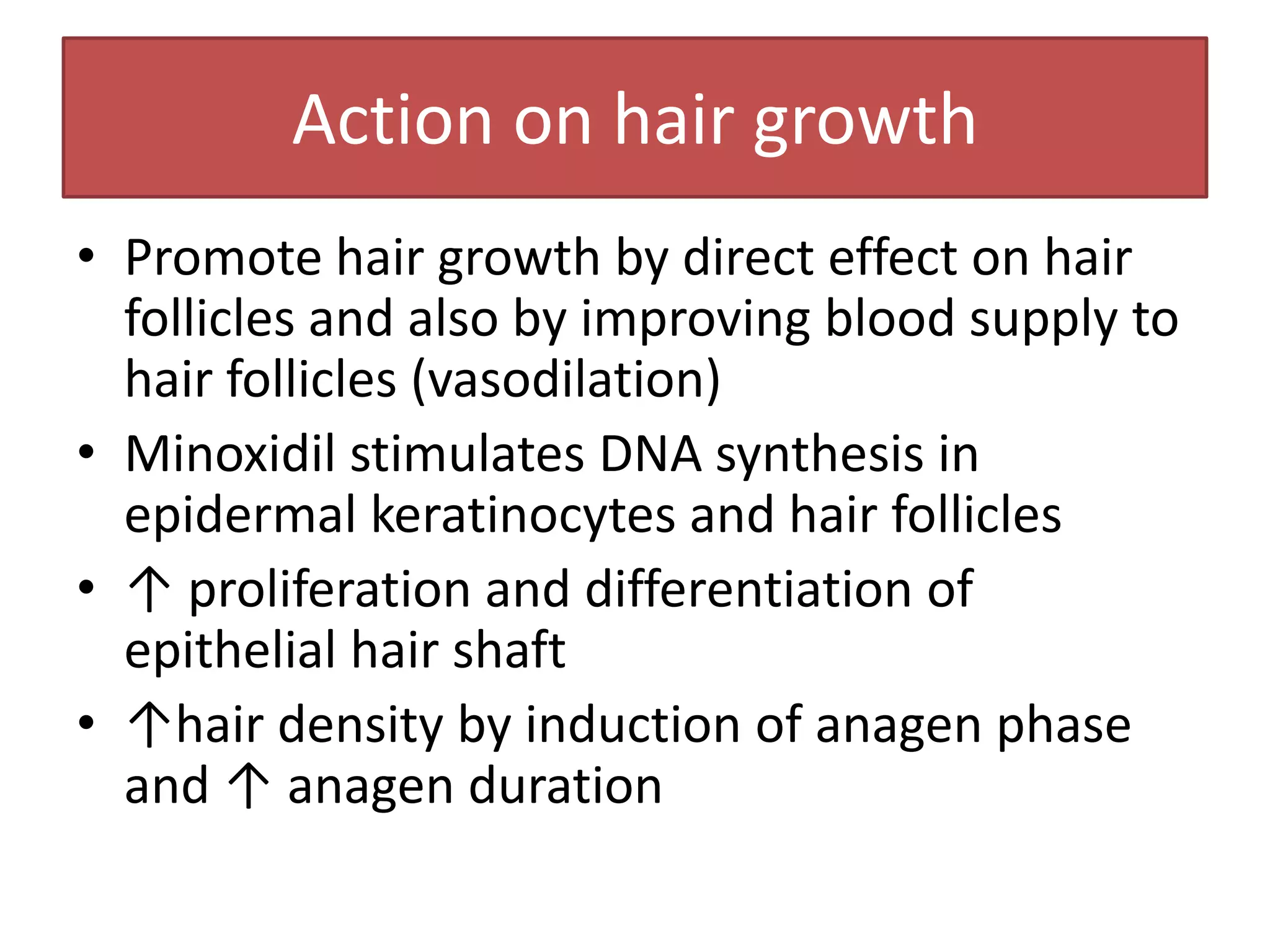
Action on hair growth
• Promote hair growth by direct effect on hair
  follicles and also by improving blood supply to
  hair follicles (vasodilation)
• Minoxidil stimulates DNA synthesis in
  epidermal keratinocytes and hair follicles
• ↑ proliferation and differentiation of
  epithelial hair shaft
• ↑hair density by induction of anagen phase
  and ↑ anagen duration
Important potassium
  channel openers
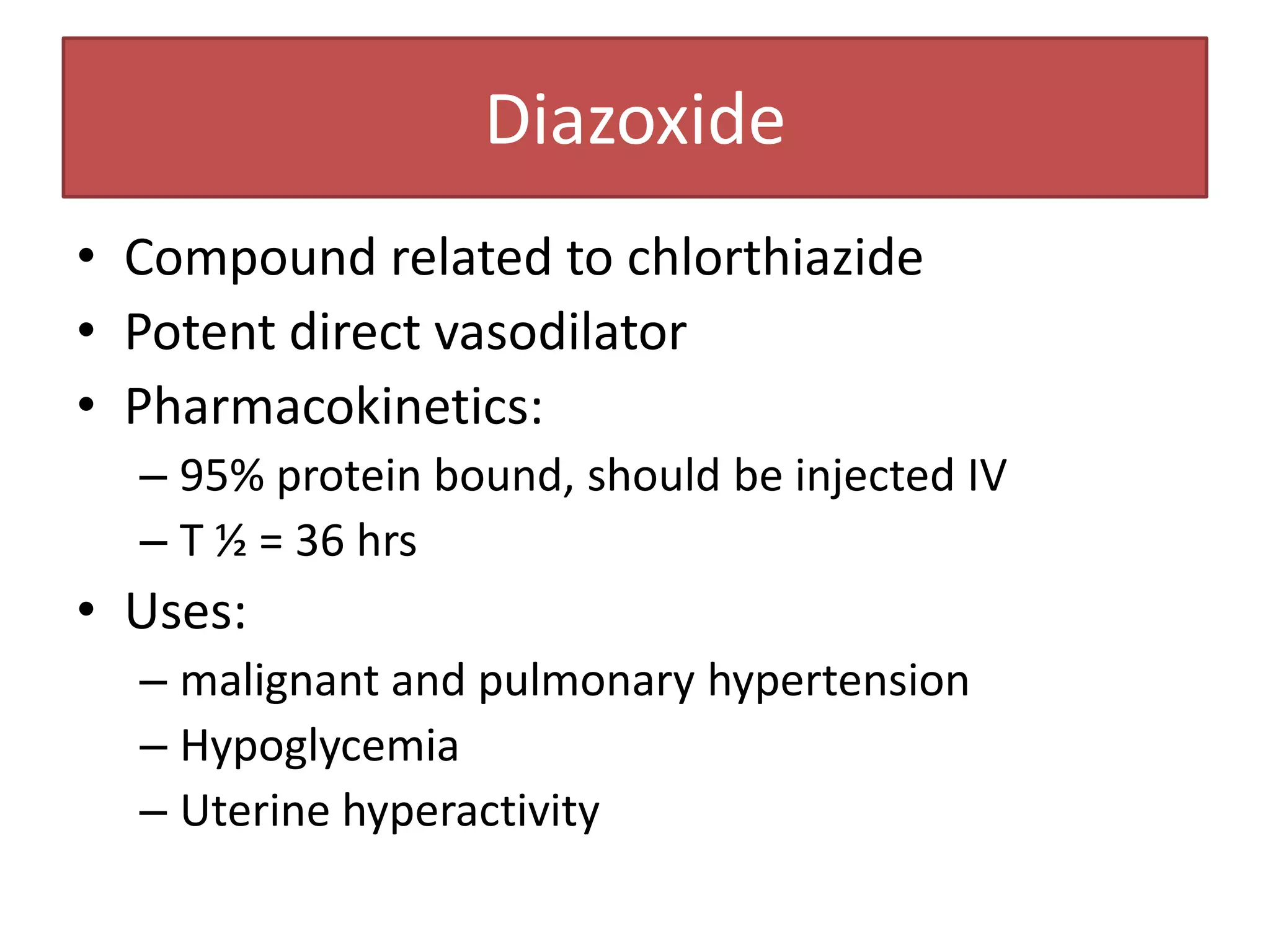
Diazoxide
• Compound related to chlorthiazide
• Potent direct vasodilator
• Pharmacokinetics:
  – 95% protein bound, should be injected IV
  – T ½ = 36 hrs
• Uses:
  – malignant and pulmonary hypertension
  – Hypoglycemia
  – Uterine hyperactivity
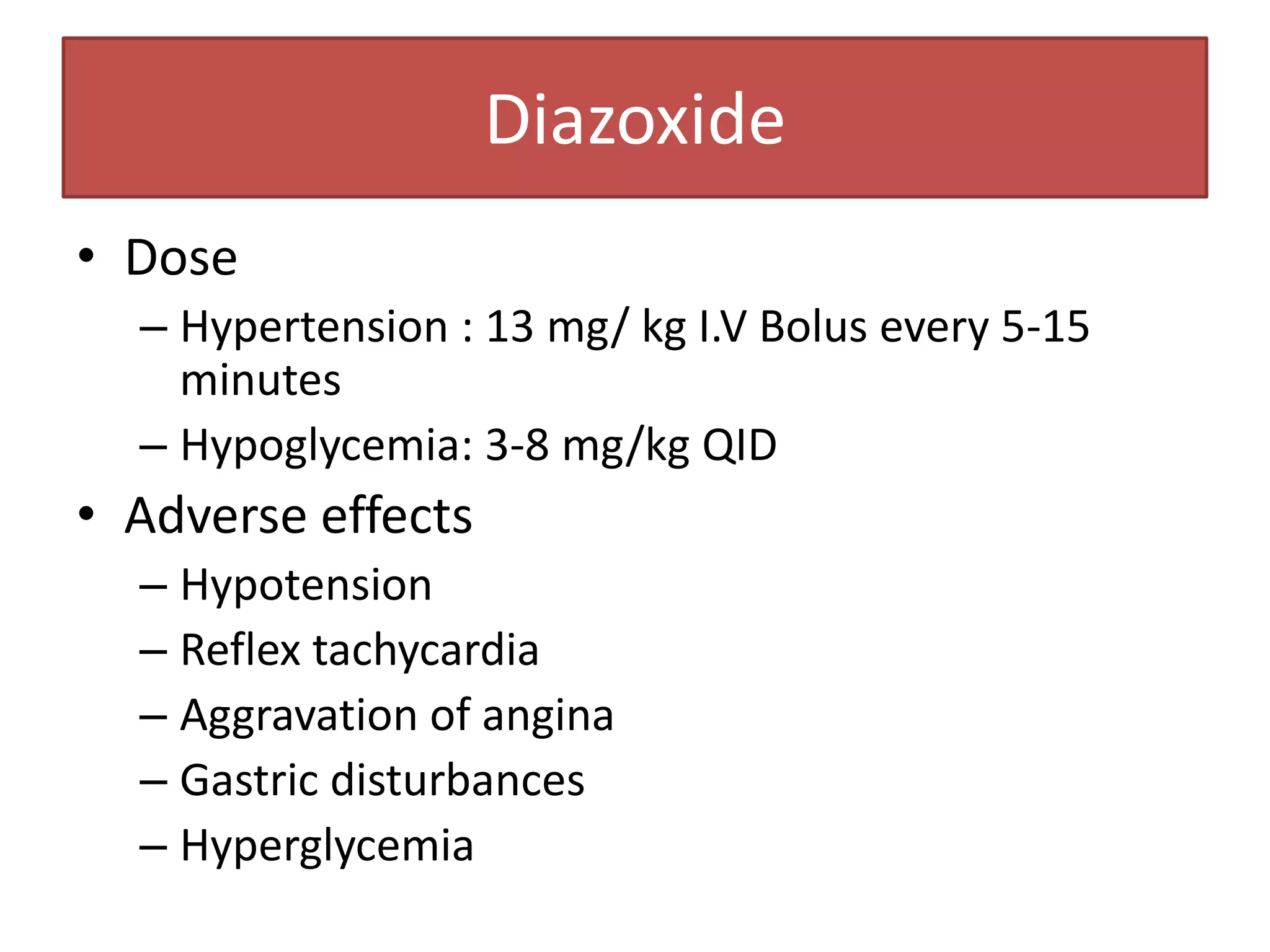
Diazoxide
• Dose
  – Hypertension : 13 mg/ kg I.V Bolus every 5-15
    minutes
  – Hypoglycemia: 3-8 mg/kg QID
• Adverse effects
  – Hypotension
  – Reflex tachycardia
  – Aggravation of angina
  – Gastric disturbances
  – Hyperglycemia
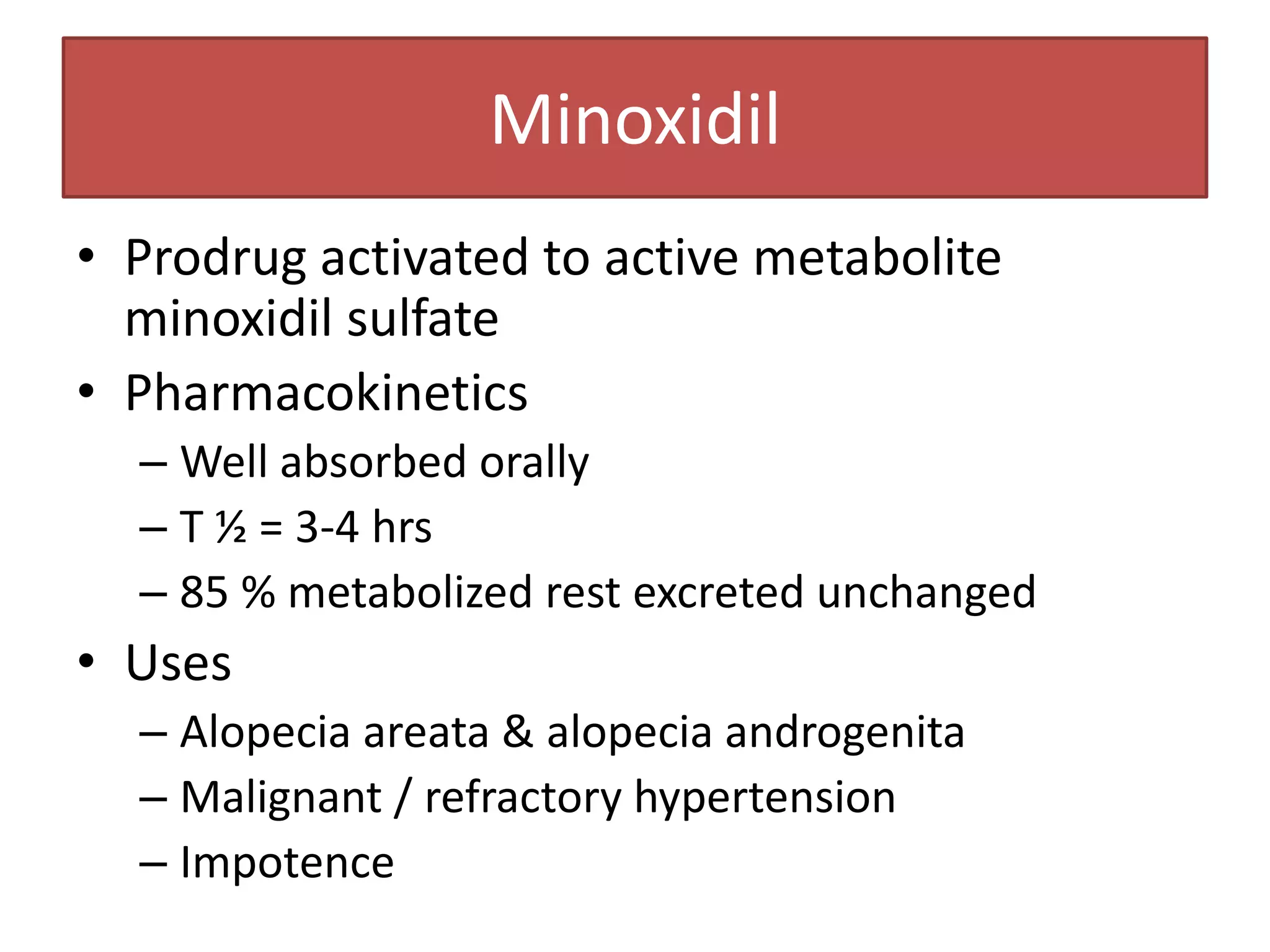
Minoxidil
• Prodrug activated to active metabolite
  minoxidil sulfate
• Pharmacokinetics
  – Well absorbed orally
  – T ½ = 3-4 hrs
  – 85 % metabolized rest excreted unchanged
• Uses
  – Alopecia areata & alopecia androgenita
  – Malignant / refractory hypertension
  – Impotence
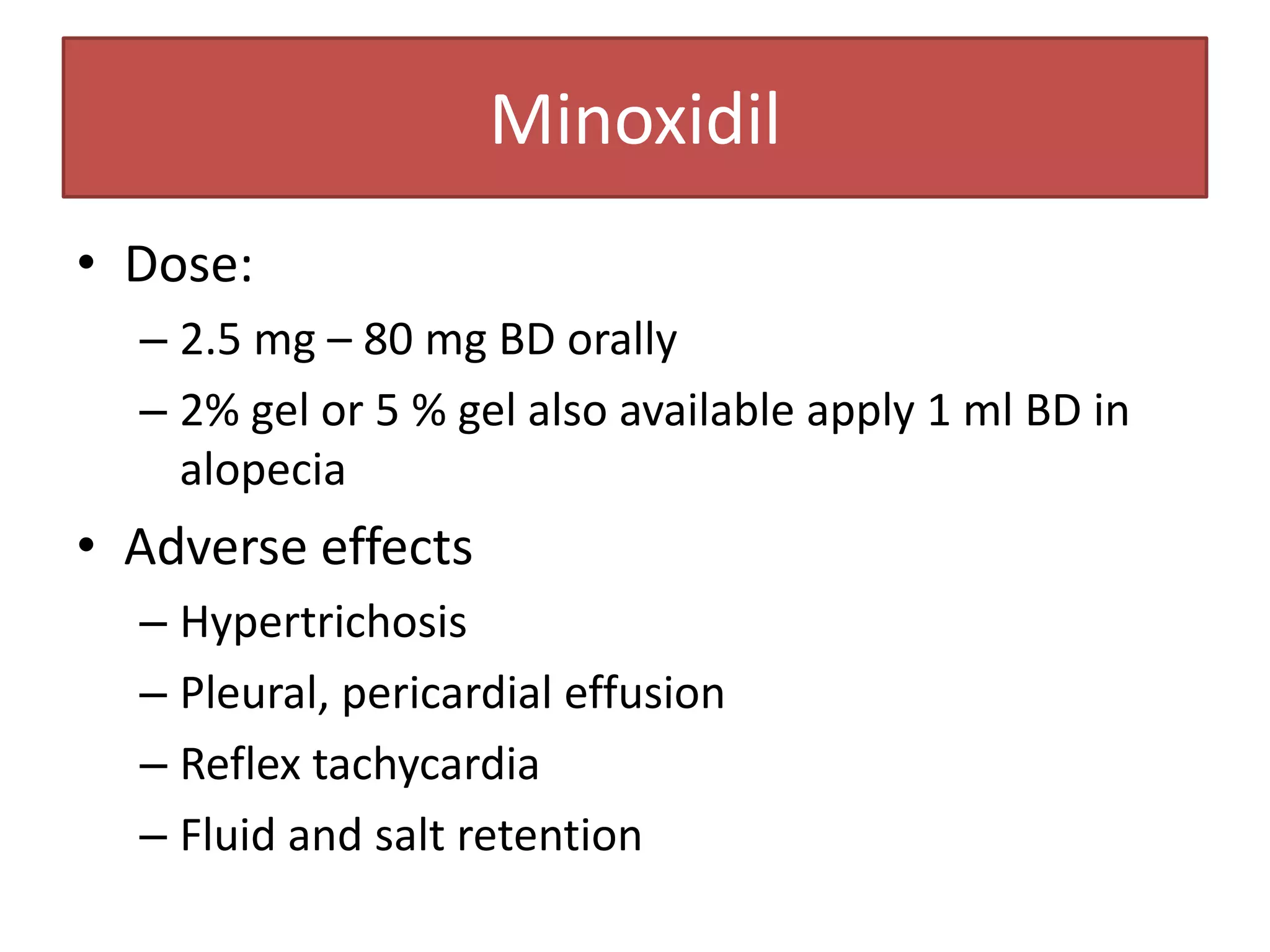
Minoxidil
• Dose:
  – 2.5 mg – 80 mg BD orally
  – 2% gel or 5 % gel also available apply 1 ml BD in
    alopecia
• Adverse effects
  – Hypertrichosis
  – Pleural, pericardial effusion
  – Reflex tachycardia
  – Fluid and salt retention
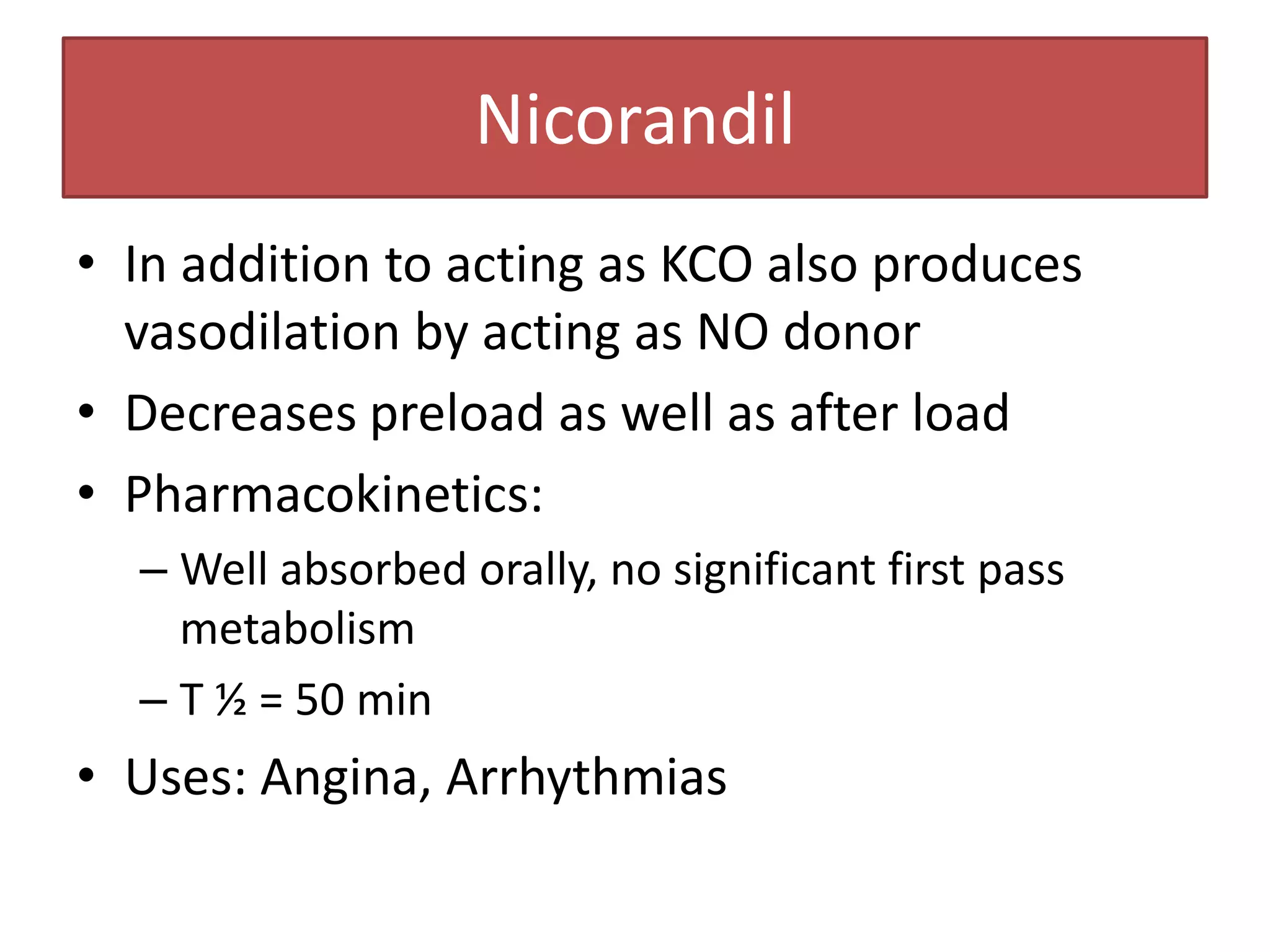
Nicorandil
• In addition to acting as KCO also produces
  vasodilation by acting as NO donor
• Decreases preload as well as after load
• Pharmacokinetics:
  – Well absorbed orally, no significant first pass
    metabolism
  – T ½ = 50 min
• Uses: Angina, Arrhythmias
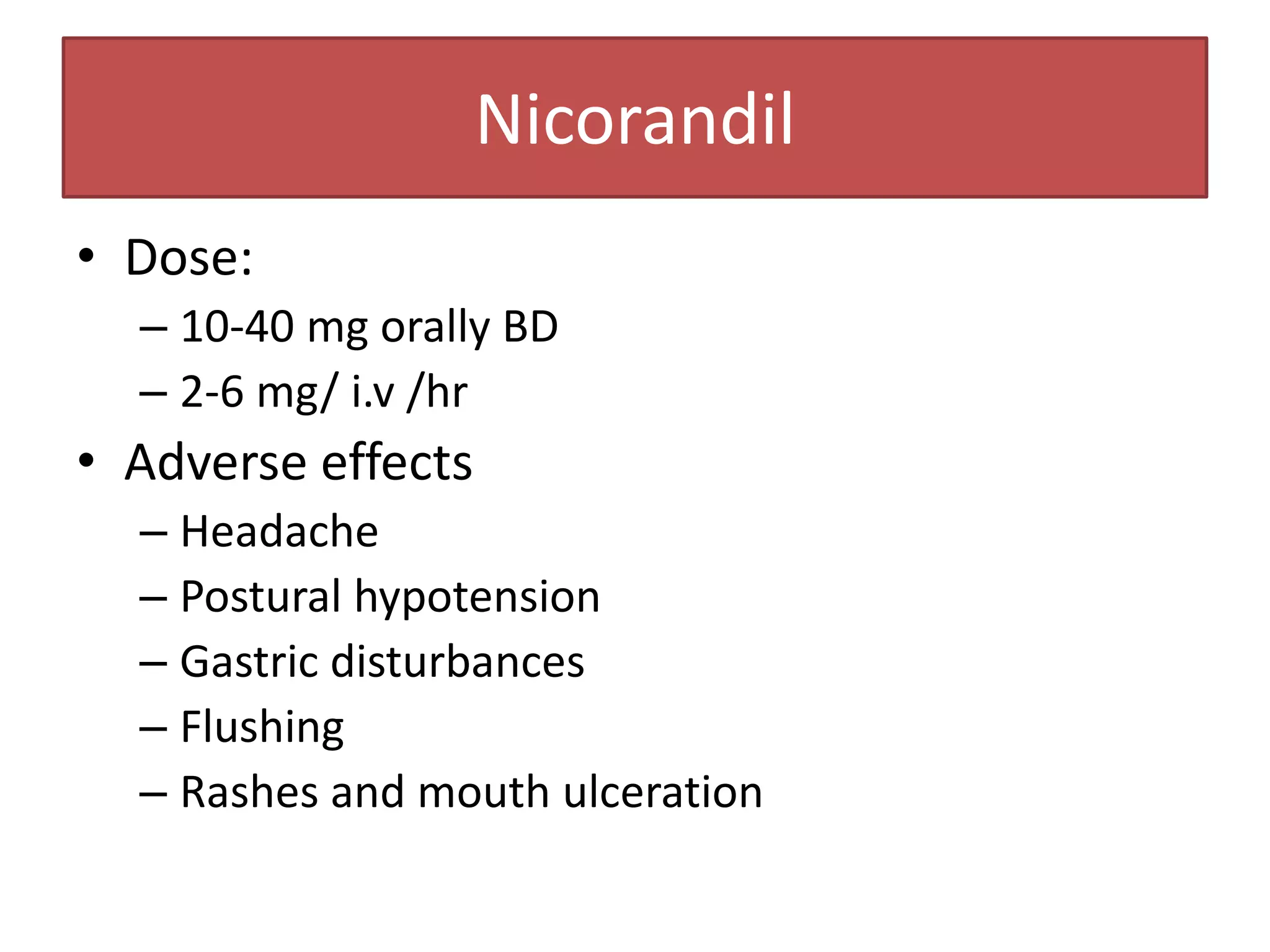
Nicorandil
• Dose:
  – 10-40 mg orally BD
  – 2-6 mg/ i.v /hr
• Adverse effects
  – Headache
  – Postural hypotension
  – Gastric disturbances
  – Flushing
  – Rashes and mouth ulceration
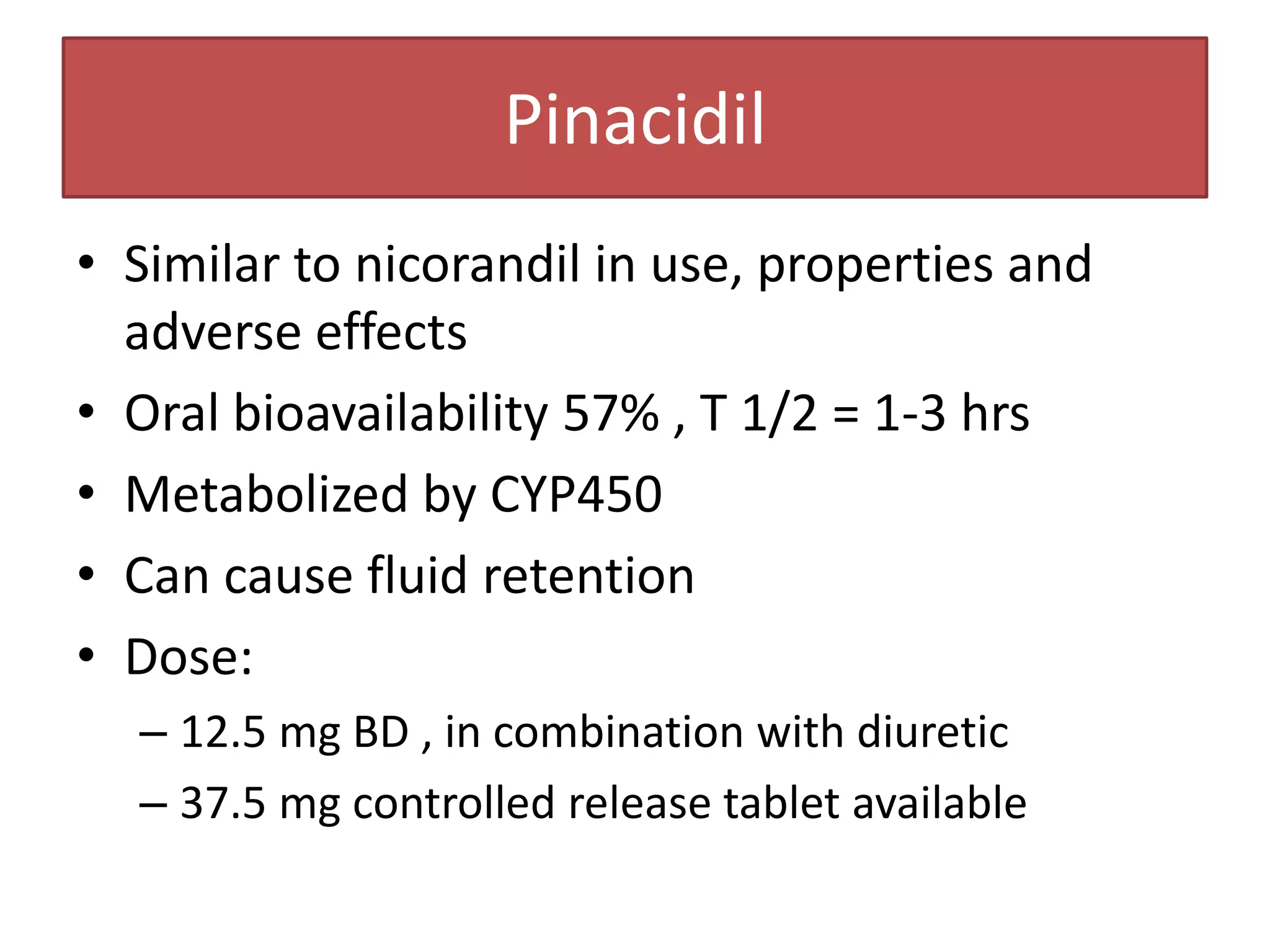
Pinacidil
• Similar to nicorandil in use, properties and
  adverse effects
• Oral bioavailability 57% , T 1/2 = 1-3 hrs
• Metabolized by CYP450
• Can cause fluid retention
• Dose:
  – 12.5 mg BD , in combination with diuretic
  – 37.5 mg controlled release tablet available
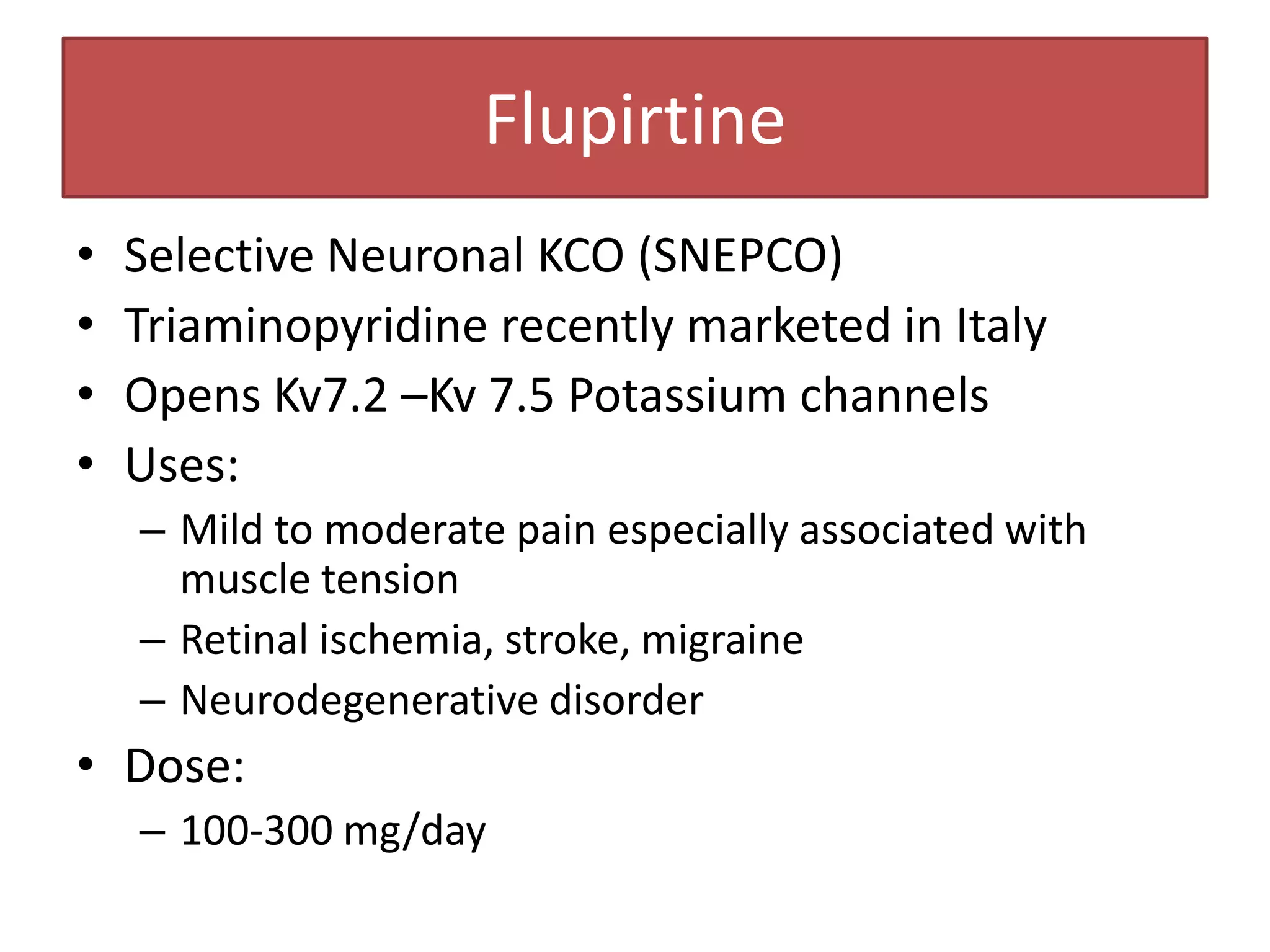
Flupirtine
•   Selective Neuronal KCO (SNEPCO)
•   Triaminopyridine recently marketed in Italy
•   Opens Kv7.2 –Kv 7.5 Potassium channels
•   Uses:
    – Mild to moderate pain especially associated with
      muscle tension
    – Retinal ischemia, stroke, migraine
    – Neurodegenerative disorder
• Dose:
    – 100-300 mg/day
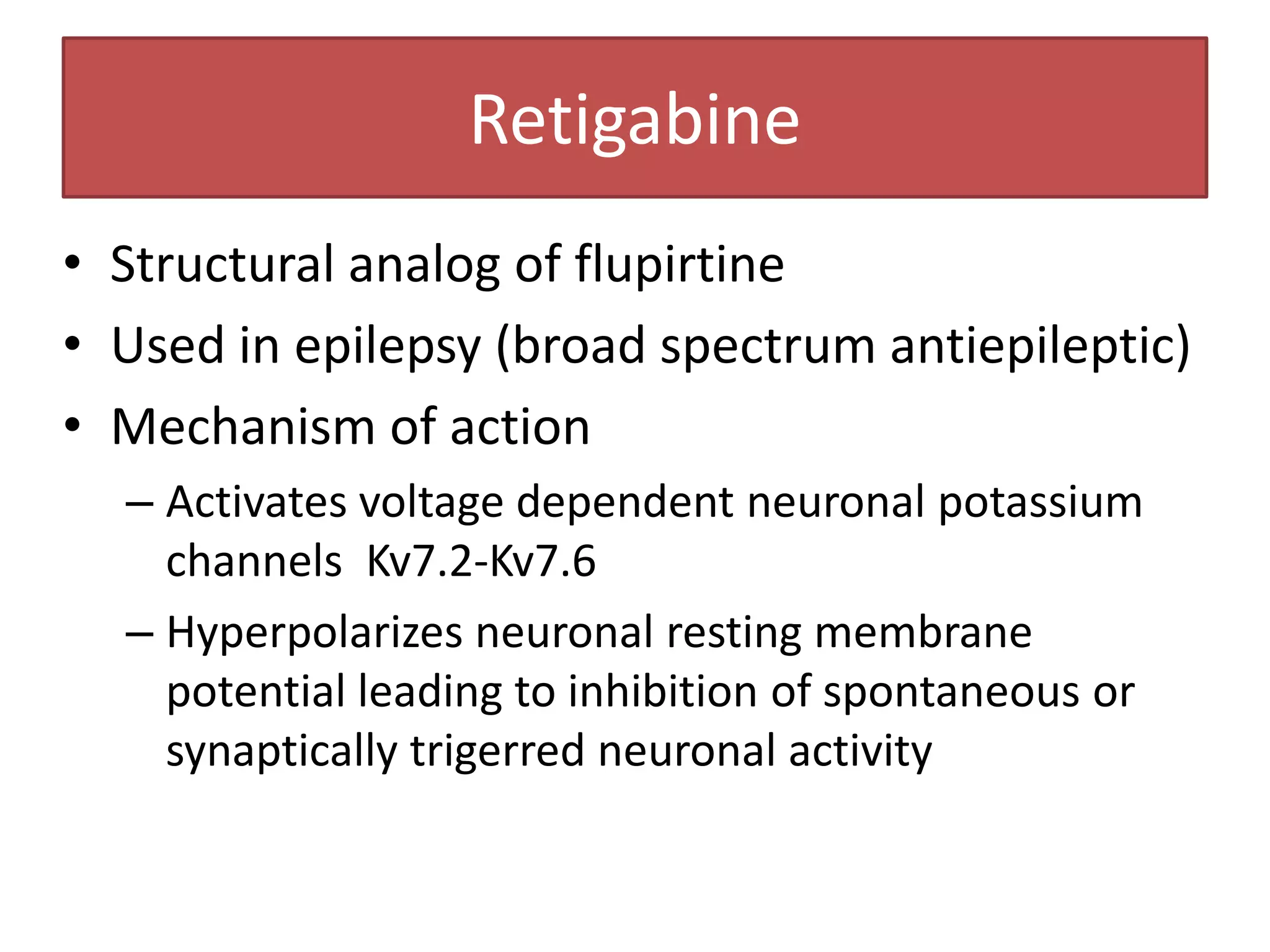
Retigabine
• Structural analog of flupirtine
• Used in epilepsy (broad spectrum antiepileptic)
• Mechanism of action
  – Activates voltage dependent neuronal potassium
    channels Kv7.2-Kv7.6
  – Hyperpolarizes neuronal resting membrane
    potential leading to inhibition of spontaneous or
    synaptically trigerred neuronal activity
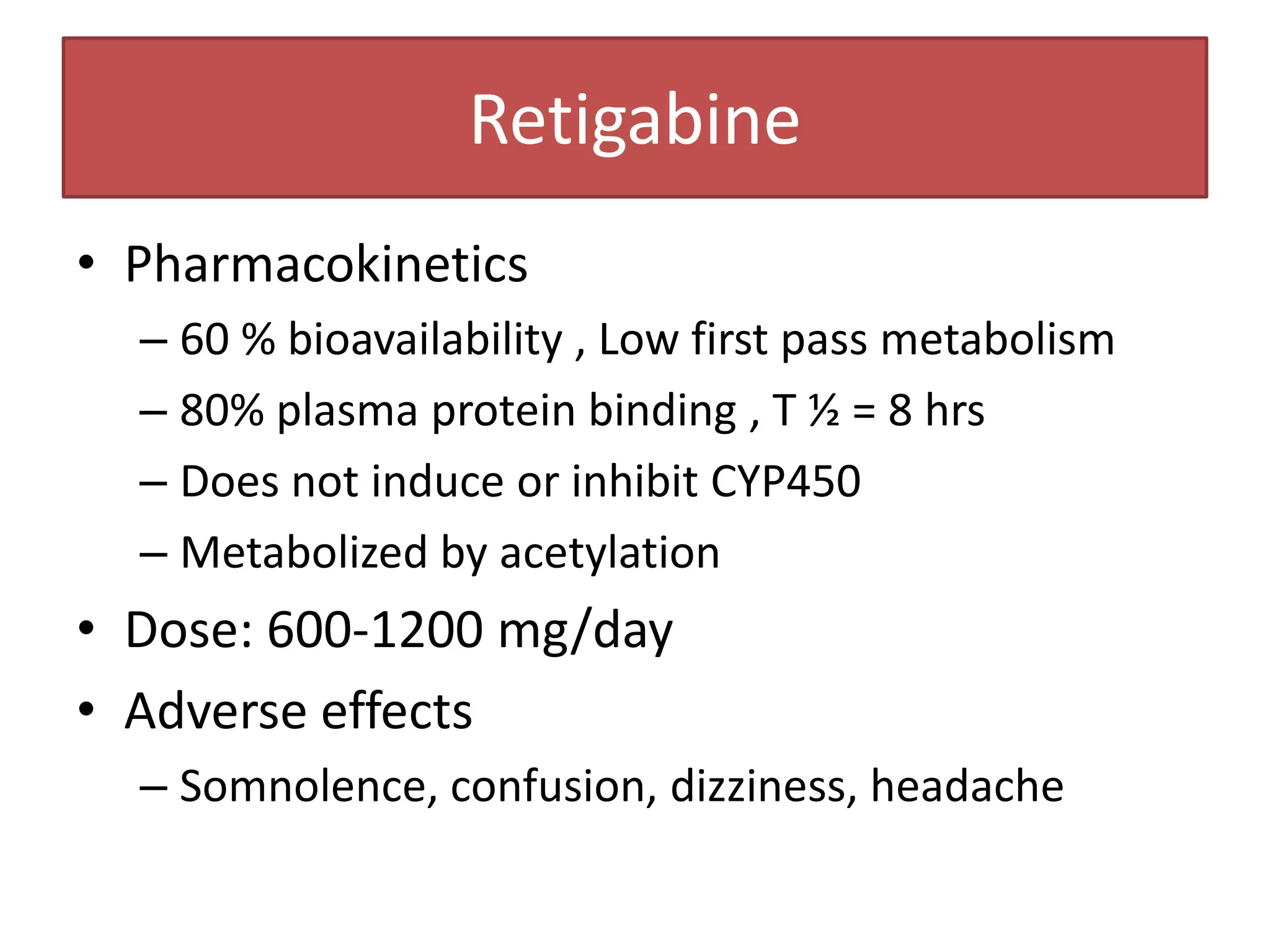
Retigabine
• Pharmacokinetics
  – 60 % bioavailability , Low first pass metabolism
  – 80% plasma protein binding , T ½ = 8 hrs
  – Does not induce or inhibit CYP450
  – Metabolized by acetylation
• Dose: 600-1200 mg/day
• Adverse effects
  – Somnolence, confusion, dizziness, headache
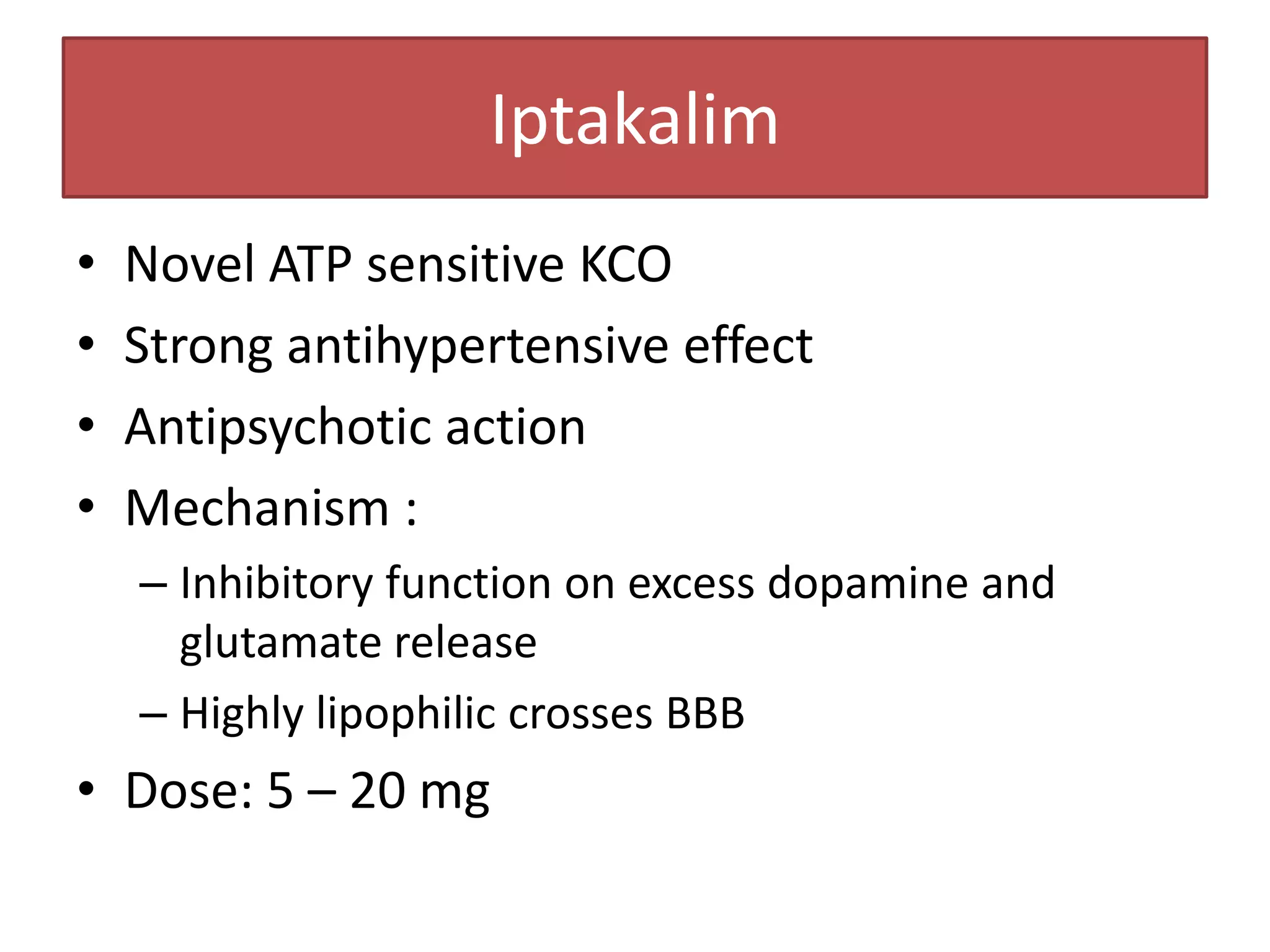
Iptakalim
•   Novel ATP sensitive KCO
•   Strong antihypertensive effect
•   Antipsychotic action
•   Mechanism :
    – Inhibitory function on excess dopamine and
      glutamate release
    – Highly lipophilic crosses BBB
• Dose: 5 – 20 mg
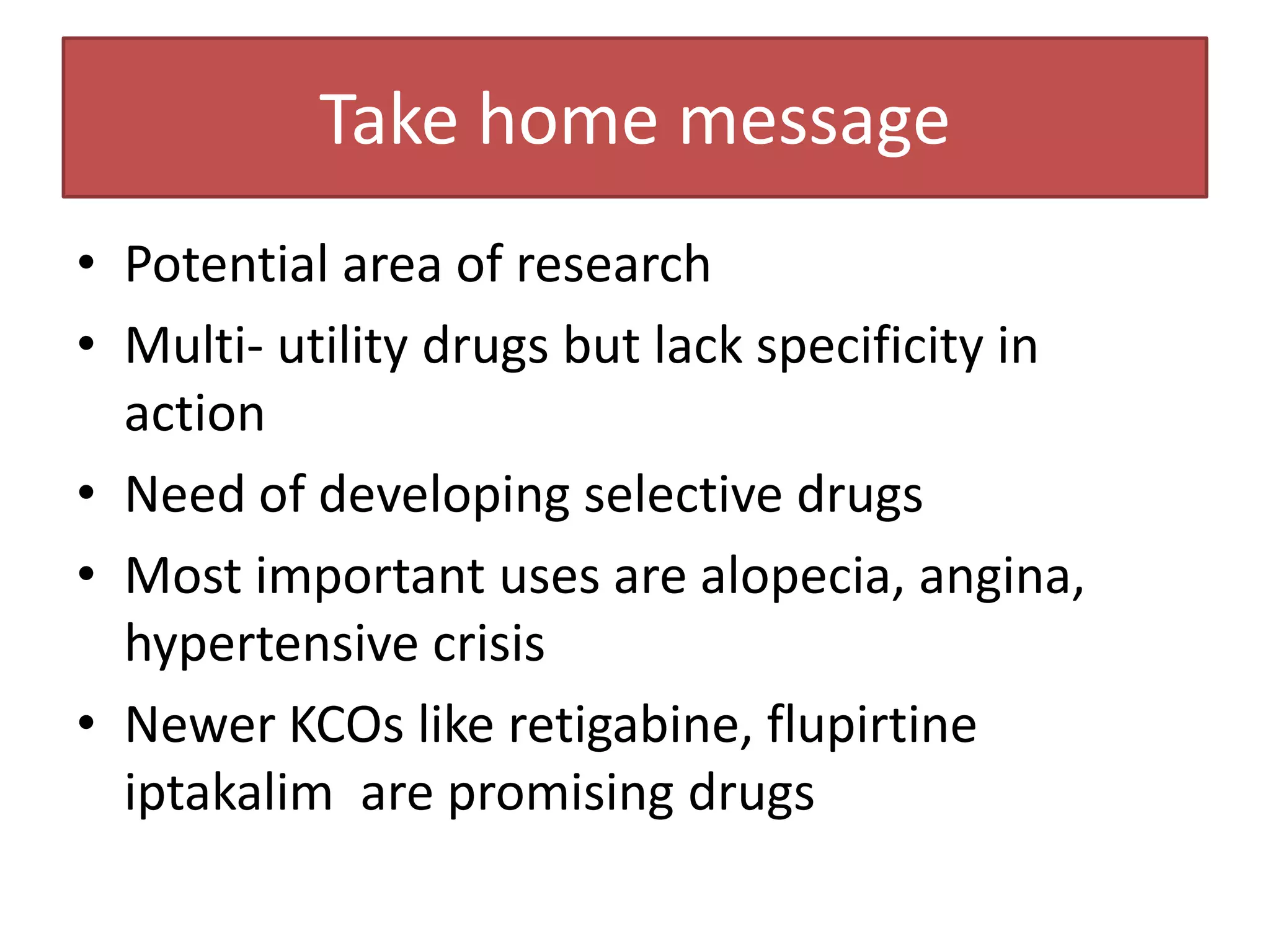
Take home message
• Potential area of research
• Multi- utility drugs but lack specificity in
  action
• Need of developing selective drugs
• Most important uses are alopecia, angina,
  hypertensive crisis
• Newer KCOs like retigabine, flupirtine
  iptakalim are promising drugs
Thank You
References
1. Hibino H, Inanobe A, Furutani K, Murukami S, Findlay
   I, Kurachi Y. Inwardly rectifying potassium channels:
   Their structure, function and physiological
   roles.Physiol Rev. 2010;90:291-366.
2. Enyedi P, Czirjak G. molecular background of leak K+
   currents: two pore domain potassium channels.
   Physiol Rev. 2010;90:559-605.
3. Barrese V, Miceli F, Soldovieri MV, Ambrosino P,
   Lannotti FA, Cilio MR, et.al. Neuronal Potassium
   channel openers in the management of epilepsy: Role
   potential of retigabine. Clinical Pharmacology:
   Advances and Applications. 2010;2:225-36.
References
4. Jahangir A, Terzie A. KATP channel therapeutics at
   bed side. Journal of Molecular and Cellular
   Cardiology . 2005;39:99-112.
5. Sandhiya S, Dkhar SA. Potassium channels in
   health disease and development of potassium
   channel modulators. Indian J Med Res.
   2009;129:223-32.
6. Lawson K. Potassium channel openers as
   potential therapeutic weapons in ion channel
   disease. Kidney International. 2000;57:838-45.
References
7. Pollesello P, Mebazaa A. ATP dependent
   potassium channels as key target for the
   treatment of myocardial and vascular
   dysfunction. Current Opinion in Critical Care.
   2004;10:436-41.
8. Challinor Rogers JL, McPherson GA. Potassium
   channel openers and other regulators of KATP
   channels. Clinical and Experimental
   Pharmacology and Physiology. 1994;21:583-97.
References
9. Fozart JR, Manley PW. Potassium channel openers:
    Agents for the treatment of airway hyperreactivity .
    Prog Respir Res. 2001;31:77-80.
10. Graffi M, Longobardi C, Giovannini A, Viscardi D,
    Costa F, Palomba R. Analgesia and S.N.E.P.C.O.
    (Selective Neuronal Potassium Channel Openers): our
    experience with flupirtine. 5th International Meeting
    - Dialogues on anaesthesia and intensive care (Napoli,
    18-19 november 2011).
11. Sun T, Zhao C, Gang Hu, Ming li. Iptakalim: A potential
    antipsychotic drug with novel mechanisms?.
    European Journal of Pharmacology. 2010; 634: 68–76.