ANTICOAGULANTS
Presented by: Mazhar
MS 1st Year Roll no. 08
Pharmacology & Toxicology
NIPER Hajipur
contents
• Coagulants
• Anticoagulants
• Oral anticoagulants (warfarin)
• Systemic anticoagulants (heparin)
• Novel anticoagulants
• Monitoring
• Drug interactions
• Therapeutic uses
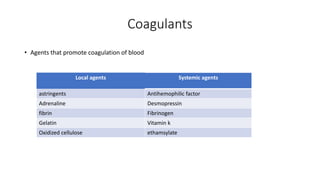
Coagulants
• Agents that promote coagulation of blood
Local agents Systemic agents
astringents Antihemophilic factor
Adrenaline Desmopressin
fibrin Fibrinogen
Gelatin Vitamin k
Oxidized cellulose ethamsylate
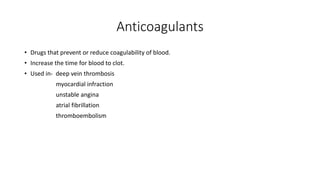
Anticoagulants
• Drugs that prevent or reduce coagulability of blood.
• Increase the time for blood to clot.
• Used in- deep vein thrombosis
myocardial infraction
unstable angina
atrial fibrillation
thromboembolism
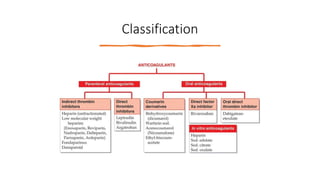
Classification
Warfarin
Mechanism of action:
Inhibit the activation of vitamin k dependent clotting factors by inhibiting vitamin k epoxide
reductase (VKOR).
gama-Carboxylase
II, VII, IX, X IIa, VIIa, IXa, Xa
VKOR warfarin
Side effects:
• Bleeding – (treatment of choice: fresh frozen plasma, specific antidote: Vit K1)
• Dermal vascular necrosis
• Teratogenic
Vit k epoxide
vit k
hydroquinone
x
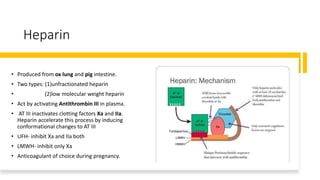
Heparin
• Produced from ox lung and pig intestine.
• Two types: (1)unfractionated heparin
• (2)low molecular weight heparin
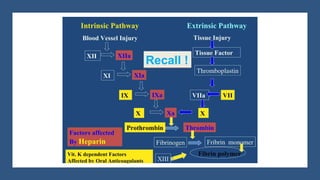
• Act by activating Antithrombin III in plasma.
• AT III inactivates clotting factors Xa and IIa.
Heparin accelerate this process by inducing
conformational changes to AT III
• UFH- inhibit Xa and IIa both
• LMWH- inhibit only Xa
• Anticoagulant of choice during pregnancy.
Advantage of LMWH over heparin
Advantage Consequence
• Better bioavailability & longer t1/2 Can be given SC once or twice daily
• Dose independent clearance Simplified clearance
• Predictable response Non need of monitoring
• Lower risk of HIT-syndrome Safer for long term use
• Lower risk of osteoporosis Safer for long term use
Side effects of heparin:
1. Bleeding (treated by fresh frozen plasma. Antidote- protamine)
2. Thrombocytopenia
3. Alopecia
4. Osteoporosis
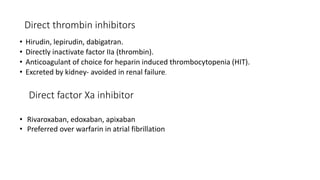
Direct thrombin inhibitors
• Hirudin, lepirudin, dabigatran.
• Directly inactivate factor IIa (thrombin).
• Anticoagulant of choice for heparin induced thrombocytopenia (HIT).
• Excreted by kidney- avoided in renal failure.
Direct factor Xa inhibitor
• Rivaroxaban, edoxaban, apixaban
• Preferred over warfarin in atrial fibrillation
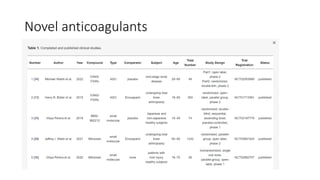
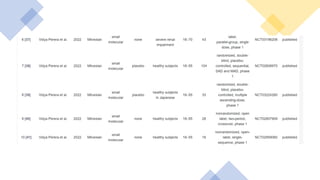
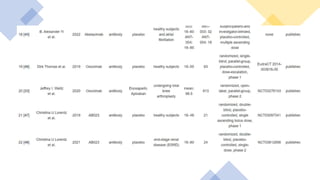
Novel anticoagulants
Monitoring of anticoagulants
Each type of anticoagulant has different methods for measuring its concentration in the blood
1. Warfarin:
Monitored using- International Normalized Ratio (INR). The INR is a standardized measurement of
how long it takes for the blood to clot compared to a control sample. The test is performed using a
blood sample, and the results are typically reported as a ratio (e.g., 2.0, 2.5). The target INR range
depends on the condition being treated.
2. Heparin:
Measured using- activated partial thromboplastin time (aPTT) or anti-Xa assay. The aPTT measures
the time it takes for the blood to clot after the addition of specific reagents. The anti-Xa assay
measures the activity of heparin by quantifying its ability to inhibit factor Xa, a clotting factor.
3. Direct Oral Anticoagulants (DOACs):
do not require monitoring.
Drug interactions
• Warfarin X cholestyramine: reduced absorption of warfarin from gut
• Oral anticoagulants X barbiturates/rifampicin: increase metabolic clearance of
anticoagulants – decrease effect
• Warfarin X salicylates/sulphonamide: these drugs displace warfarin from plasma
protein binding site – increase free plasma conc. of warfarin – bleeding
• Warfarin X alcohol, chloramphenicol, isoniazid: decrease metabolic clearance of
warfarin – increase effect
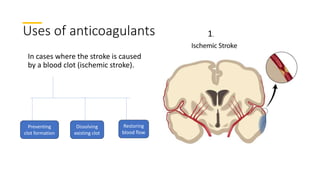
Uses of anticoagulants
In cases where the stroke is caused
by a blood clot (ischemic stroke).
Preventing
clot formation
Dissolving
existing clot
Restoring
blood flow
1.
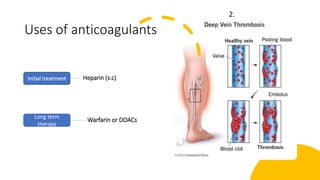
Uses of anticoagulants
Heparin (s.c)
Warfarin or DOACs
Initial treatment
Long term
therapy
2.
Uses of anticoagulants
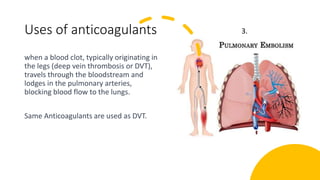
when a blood clot, typically originating in
the legs (deep vein thrombosis or DVT),
travels through the bloodstream and
lodges in the pulmonary arteries,
blocking blood flow to the lungs.
Same Anticoagulants are used as DVT.
3.
References
• Xia, Y., et al. (2023). "Factor XIa Inhibitors as a Novel Anticoagulation Target: Recent Clinical
Research Advances." Pharmaceuticals 16(6): 866.
• Essentials of medical pharmacology by KD Tripathi.
• Goodman & Gilman’s manual of Pharmacology and therapeutics.
• Review book of pharmacology by Govind Rai Garg and Sparsh Gupta.
• Google.com
• chatGPT
Thank you

Anticoagulants.pptx

  • 1.
    ANTICOAGULANTS Presented by: Mazhar MS1st Year Roll no. 08 Pharmacology & Toxicology NIPER Hajipur
  • 2.
    contents • Coagulants • Anticoagulants •Oral anticoagulants (warfarin) • Systemic anticoagulants (heparin) • Novel anticoagulants • Monitoring • Drug interactions • Therapeutic uses
  • 4.
    Coagulants • Agents thatpromote coagulation of blood Local agents Systemic agents astringents Antihemophilic factor Adrenaline Desmopressin fibrin Fibrinogen Gelatin Vitamin k Oxidized cellulose ethamsylate
  • 5.
    Anticoagulants • Drugs thatprevent or reduce coagulability of blood. • Increase the time for blood to clot. • Used in- deep vein thrombosis myocardial infraction unstable angina atrial fibrillation thromboembolism
  • 6.
  • 7.
    Warfarin Mechanism of action: Inhibitthe activation of vitamin k dependent clotting factors by inhibiting vitamin k epoxide reductase (VKOR). gama-Carboxylase II, VII, IX, X IIa, VIIa, IXa, Xa VKOR warfarin Side effects: • Bleeding – (treatment of choice: fresh frozen plasma, specific antidote: Vit K1) • Dermal vascular necrosis • Teratogenic Vit k epoxide vit k hydroquinone x
  • 8.
    Heparin • Produced fromox lung and pig intestine. • Two types: (1)unfractionated heparin • (2)low molecular weight heparin • Act by activating Antithrombin III in plasma. • AT III inactivates clotting factors Xa and IIa. Heparin accelerate this process by inducing conformational changes to AT III • UFH- inhibit Xa and IIa both • LMWH- inhibit only Xa • Anticoagulant of choice during pregnancy.
  • 9.
    Advantage of LMWHover heparin Advantage Consequence • Better bioavailability & longer t1/2 Can be given SC once or twice daily • Dose independent clearance Simplified clearance • Predictable response Non need of monitoring • Lower risk of HIT-syndrome Safer for long term use • Lower risk of osteoporosis Safer for long term use Side effects of heparin: 1. Bleeding (treated by fresh frozen plasma. Antidote- protamine) 2. Thrombocytopenia 3. Alopecia 4. Osteoporosis
  • 10.
    Direct thrombin inhibitors •Hirudin, lepirudin, dabigatran. • Directly inactivate factor IIa (thrombin). • Anticoagulant of choice for heparin induced thrombocytopenia (HIT). • Excreted by kidney- avoided in renal failure. Direct factor Xa inhibitor • Rivaroxaban, edoxaban, apixaban • Preferred over warfarin in atrial fibrillation
  • 11.
  • 14.
    Monitoring of anticoagulants Eachtype of anticoagulant has different methods for measuring its concentration in the blood 1. Warfarin: Monitored using- International Normalized Ratio (INR). The INR is a standardized measurement of how long it takes for the blood to clot compared to a control sample. The test is performed using a blood sample, and the results are typically reported as a ratio (e.g., 2.0, 2.5). The target INR range depends on the condition being treated. 2. Heparin: Measured using- activated partial thromboplastin time (aPTT) or anti-Xa assay. The aPTT measures the time it takes for the blood to clot after the addition of specific reagents. The anti-Xa assay measures the activity of heparin by quantifying its ability to inhibit factor Xa, a clotting factor. 3. Direct Oral Anticoagulants (DOACs): do not require monitoring.
  • 15.
    Drug interactions • WarfarinX cholestyramine: reduced absorption of warfarin from gut • Oral anticoagulants X barbiturates/rifampicin: increase metabolic clearance of anticoagulants – decrease effect • Warfarin X salicylates/sulphonamide: these drugs displace warfarin from plasma protein binding site – increase free plasma conc. of warfarin – bleeding • Warfarin X alcohol, chloramphenicol, isoniazid: decrease metabolic clearance of warfarin – increase effect
  • 16.
    Uses of anticoagulants Incases where the stroke is caused by a blood clot (ischemic stroke). Preventing clot formation Dissolving existing clot Restoring blood flow 1.
  • 17.
    Uses of anticoagulants Heparin(s.c) Warfarin or DOACs Initial treatment Long term therapy 2.
  • 18.
    Uses of anticoagulants whena blood clot, typically originating in the legs (deep vein thrombosis or DVT), travels through the bloodstream and lodges in the pulmonary arteries, blocking blood flow to the lungs. Same Anticoagulants are used as DVT. 3.
  • 19.
    References • Xia, Y.,et al. (2023). "Factor XIa Inhibitors as a Novel Anticoagulation Target: Recent Clinical Research Advances." Pharmaceuticals 16(6): 866. • Essentials of medical pharmacology by KD Tripathi. • Goodman & Gilman’s manual of Pharmacology and therapeutics. • Review book of pharmacology by Govind Rai Garg and Sparsh Gupta. • Google.com • chatGPT
  • 20.