Protein
                                Kinase A


                                    cAMP-
                                 Dependent
                                Protein Kinase

      By: Vahid Nikoui
Email: nikoui@razi.tums.ac.ir
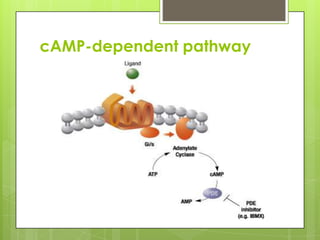
cAMP-dependent pathway
cAMP
 Cyclic   nucleotide-gated ion    channels
 (CNG)

 Exchange   proteins activated by cAMP
 (EPAC)

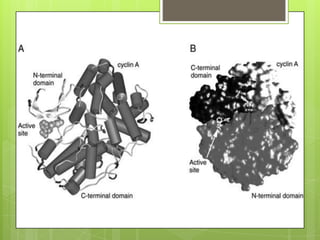
 An enzyme     called   protein   kinase   A
 (PKA)
Activators of cAMP pathway

•   Cholera toxin:
    •   Increase cAMP levels

•   Forskolin and fluoride:
    •   Activate adenylyl cyclase

•   Caffeine, theophylline and bucladesine:
    •   Inhibit cAMP phosphodiesterase

•   Pertussis toxin:
    •   Increase cAMP levels
Deactivators of cAMP
pathway

 cAMP    phosphodiesterase

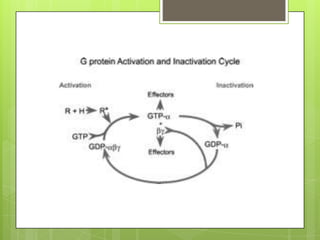
 Gi   protein
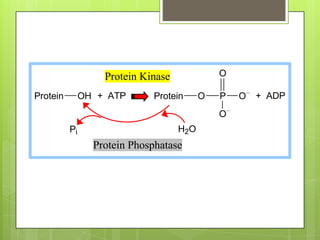
Protein Kinase             O

Protein        OH + ATP      Protein      O   P   O   + ADP
                                              O
          Pi                        H2O
                 Protein Phosphatase
PKA
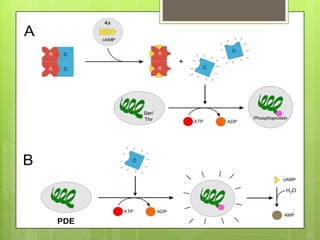
•   Direct protein phosphorylation
    •   PKA directly either increases or decreases
        the activity of a protein (Rapid)


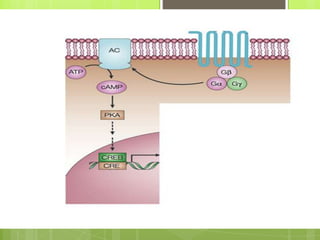
•   Protein synthesis
    •   PKA first directly activates CREB, which
        binds the cAMP response element (CRE)
        (Slow)
Inactivation

 Catalyticsubunit itself can be down-
 regulated by phosphorylation.

A  feedback mechanism: One of the
 substrates that are activated by the
 kinase is a phosphodiesterase.
Anchorage

 A-kinase     anchor protein (AKAP)

 As   a localizer:
    Regulatory subunits
    Cytoskeleton

 As   a signal modulator:
    Catalytic subunits
    Phosphodiesterase
Heart

Vessels

Skeletal muscles
Adipocytes and hepatocytes

 Adrenaline   and glucagon

 Phosphorylationof acetyl-CoA carboxylase and
  pyruvate dehydrogenase

 Inhibition
           of lipogenesis and promoting net
  gluconeogenesis

 Insulin
        decreases the level of phosphorylation of
  these enzymes
Nucleus accumbens


 Helps   transfer/translate the dopamine signal into
 cells

 Reward    and motivation

 Smokers
Principal cells in kidney

•   V2 receptor

•   Exocytosis of aquaporin 2 to apical membrane

•   Synthesis of aquaporin 2

•   Phosphorylation of aquaporin 2
Medullary collecting duct


 V2   receptor

 Stimulate   urea transporter 1

 Urea   transporter 1 exocytosis
Proximal convoluted tubule

 PTH   receptor 1

 Inhibit   NHE3     ↓ H+ secretion
Juxtaglomerular cell

 β-receptor


 Dopamine     receptor

 Glucagon     receptor


 Renin   secretion
Thank
You!

Protein Kinase A

  • 1.
    Protein Kinase A cAMP- Dependent Protein Kinase By: Vahid Nikoui Email: nikoui@razi.tums.ac.ir
  • 2.
  • 4.
    cAMP  Cyclic nucleotide-gated ion channels (CNG)  Exchange proteins activated by cAMP (EPAC)  An enzyme called protein kinase A (PKA)
  • 5.
    Activators of cAMPpathway • Cholera toxin: • Increase cAMP levels • Forskolin and fluoride: • Activate adenylyl cyclase • Caffeine, theophylline and bucladesine: • Inhibit cAMP phosphodiesterase • Pertussis toxin: • Increase cAMP levels
  • 6.
    Deactivators of cAMP pathway cAMP phosphodiesterase  Gi protein
  • 7.
    Protein Kinase O Protein OH + ATP Protein O P O + ADP O Pi H2O Protein Phosphatase
  • 8.
    PKA • Direct protein phosphorylation • PKA directly either increases or decreases the activity of a protein (Rapid) • Protein synthesis • PKA first directly activates CREB, which binds the cAMP response element (CRE) (Slow)
  • 11.
    Inactivation  Catalyticsubunit itselfcan be down- regulated by phosphorylation. A feedback mechanism: One of the substrates that are activated by the kinase is a phosphodiesterase.
  • 12.
    Anchorage  A-kinase anchor protein (AKAP)  As a localizer:  Regulatory subunits  Cytoskeleton  As a signal modulator:  Catalytic subunits  Phosphodiesterase
  • 13.
  • 14.
    Adipocytes and hepatocytes Adrenaline and glucagon  Phosphorylationof acetyl-CoA carboxylase and pyruvate dehydrogenase  Inhibition of lipogenesis and promoting net gluconeogenesis  Insulin decreases the level of phosphorylation of these enzymes
  • 15.
    Nucleus accumbens  Helps transfer/translate the dopamine signal into cells  Reward and motivation  Smokers
  • 16.
    Principal cells inkidney • V2 receptor • Exocytosis of aquaporin 2 to apical membrane • Synthesis of aquaporin 2 • Phosphorylation of aquaporin 2
  • 17.
    Medullary collecting duct V2 receptor  Stimulate urea transporter 1  Urea transporter 1 exocytosis
  • 18.
    Proximal convoluted tubule PTH receptor 1  Inhibit NHE3 ↓ H+ secretion
  • 19.
    Juxtaglomerular cell  β-receptor Dopamine receptor  Glucagon receptor  Renin secretion
  • 21.