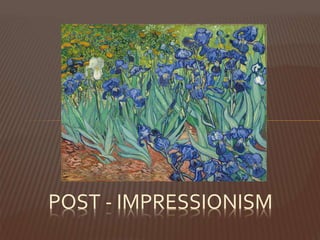




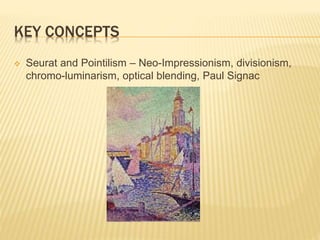


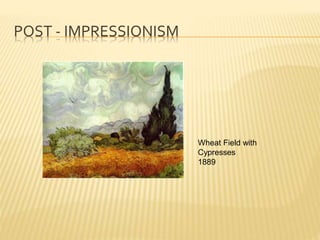


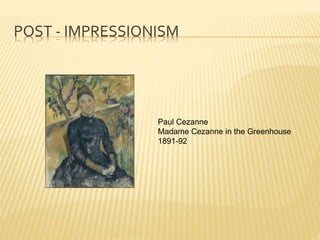


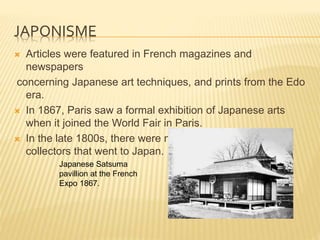




Post-Impressionism emerged in the late 1880s as younger artists rejected Impressionism's emphasis on light and color over subject matter. The term was coined by art critic Roger Fry in 1910 to describe diverse styles including Pointillism, Cloisonnism, Synthetism and others. Key figures included Paul Cezanne, Vincent van Gogh, Paul Gauguin and Georges Seurat, who concentrated on subjective expression over optical effects. Their works laid the foundation for later avant-garde styles like Cubism and Expressionism. Japanese woodblock prints also strongly influenced these artists through their asymmetrical designs, flat forms and emphasis on nature.


