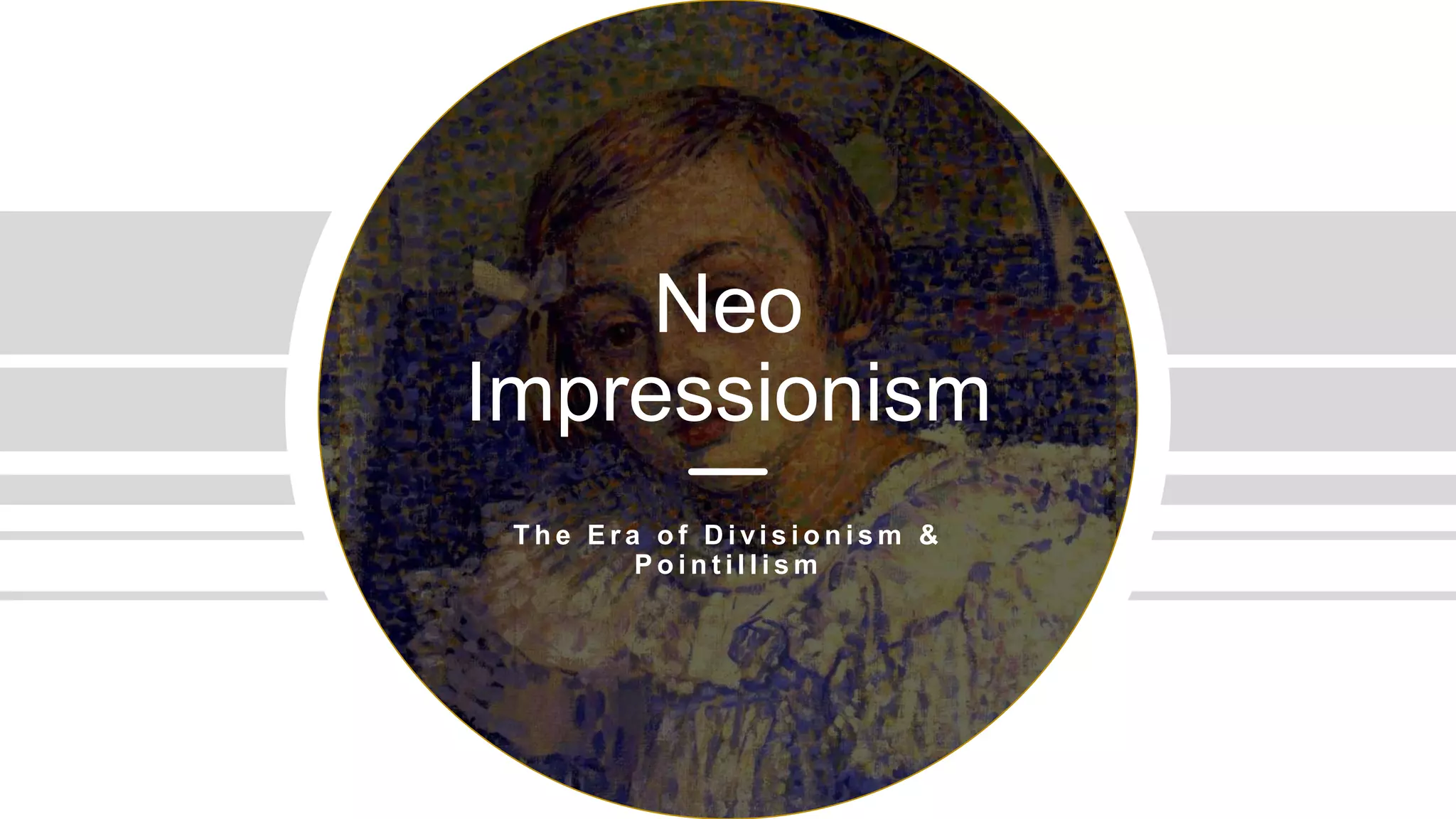
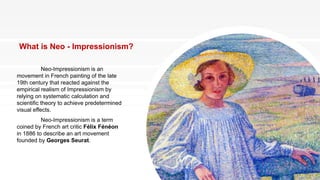
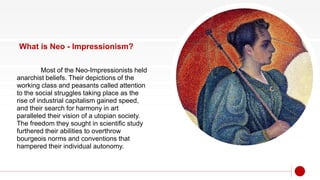
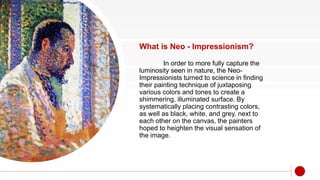
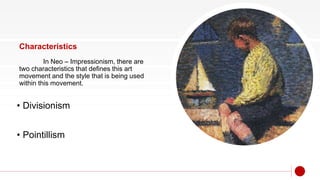
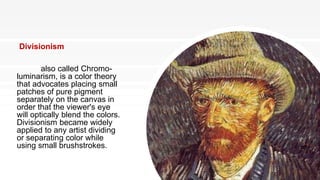
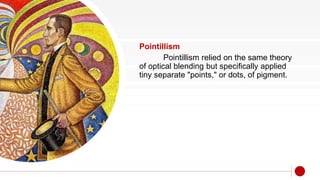
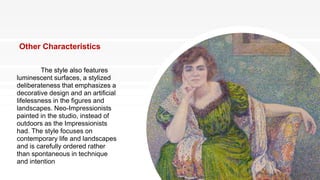
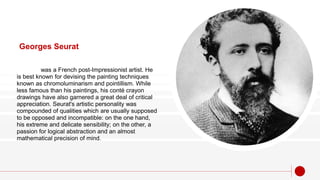
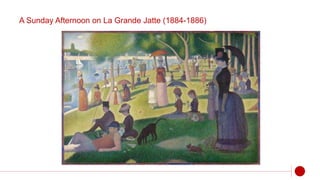
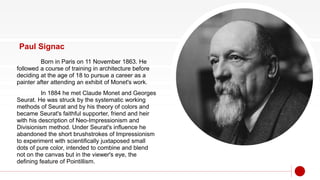
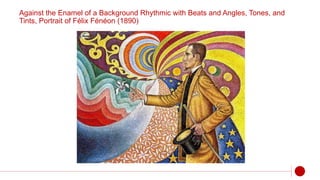
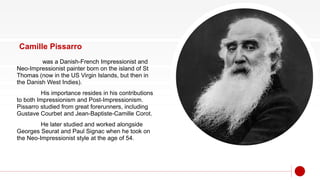
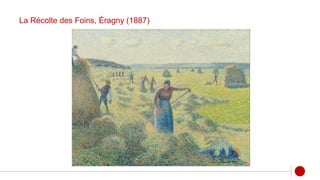
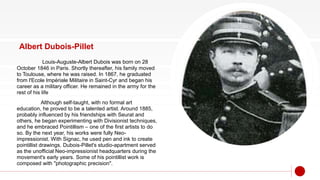
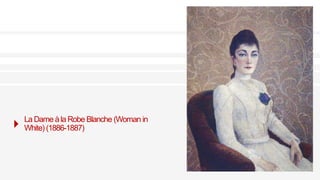
Neo-Impressionism was a late 19th century movement that reacted against Impressionism. It relied on scientific theory and calculation to achieve visual effects. Georges Seurat founded the movement and divided colors on the canvas to create luminosity. The two main characteristics were Divisionism, placing small color patches to blend optically, and Pointillism, using tiny color dots. Major proponents included Seurat, Signac, Pissarro, and Dubois-Pillet. They painted with small dots of pure color that blended in the eye rather than on the canvas.