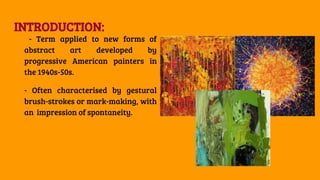
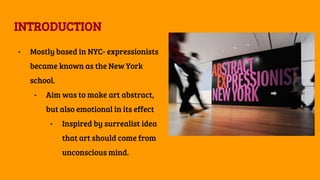
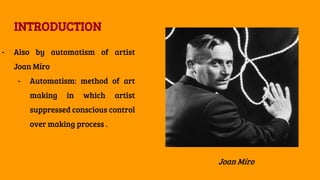
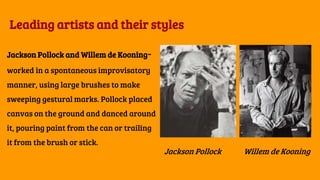
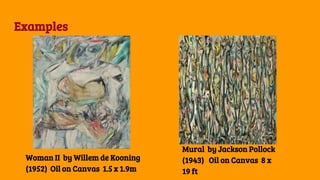
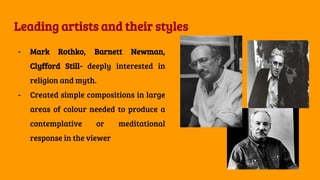
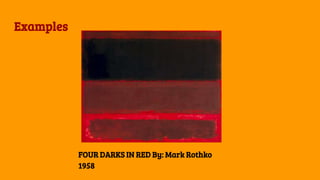
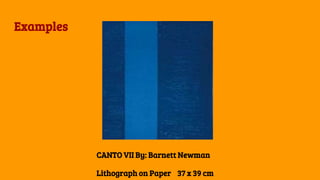
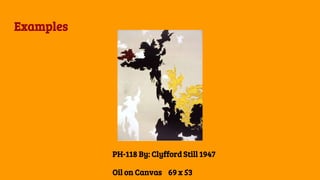
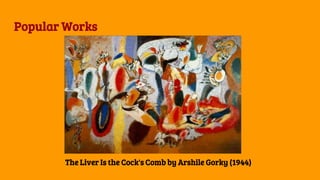
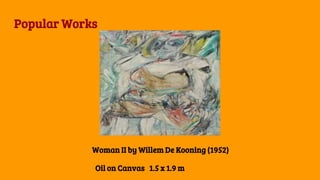
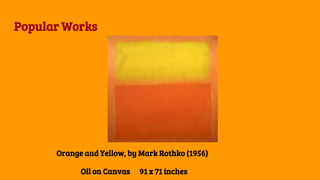
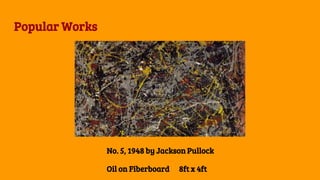
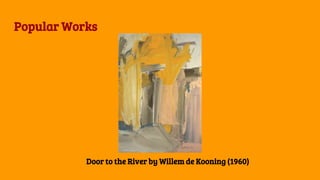
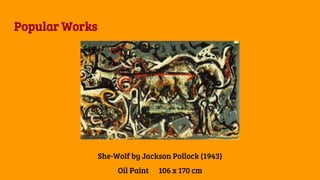

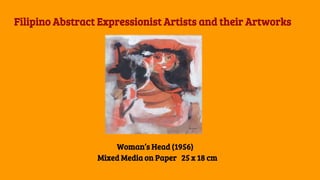
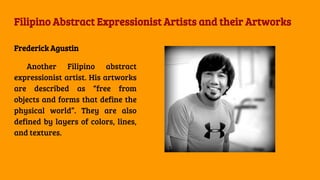

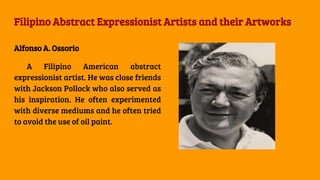
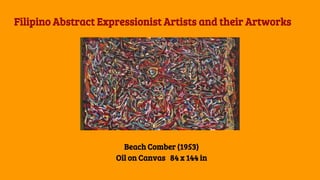
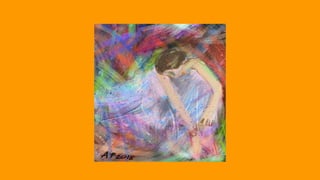

Abstract Expressionism was a post-World War II art movement developed by American painters in New York in the 1940s-1950s. It emphasized spontaneous, emotional expression and the unconscious through gestural brushstrokes and pouring paint onto large canvases. Leading artists included Jackson Pollock, Willem de Kooning, Mark Rothko, and Barnett Newman. Their works, such as Pollock's No. 5, 1948 and de Kooning's Woman II, had a significant impact and established New York as the new center of modern art. Filipino artists like Jose Joya and Frederick Agustin also participated in the abstract expressionist movement.


