Impressionism and
Post-impressionism
What is Impressionism?
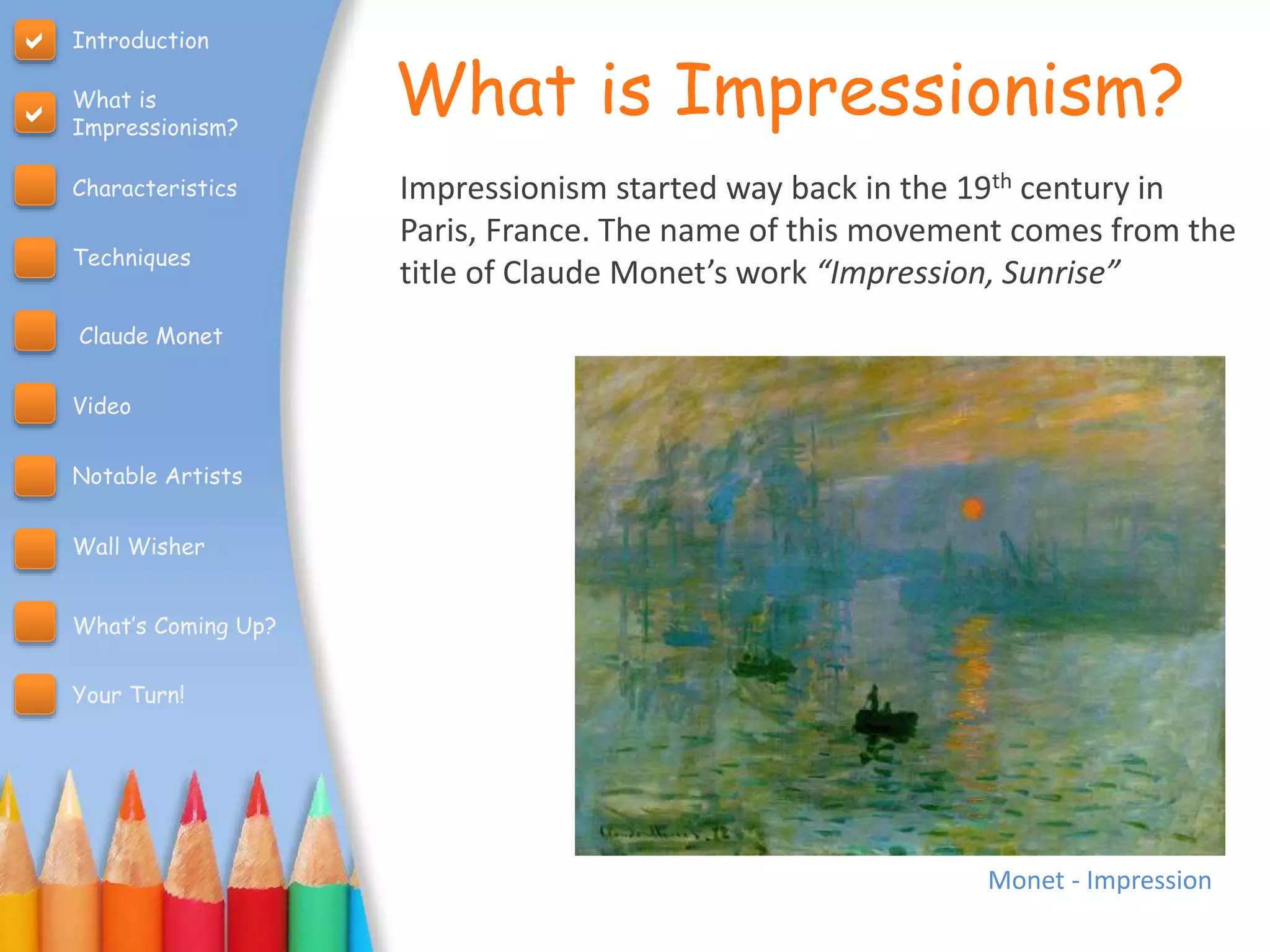
Impressionism started way back in the 19th century in
Paris, France. The name of this movement comes from the
title of Claude Monet’s work “Impression, Sunrise”
Introduction
What is
Impressionism?
Characteristics
Techniques
Claude Monet
Video
Notable Artists
Wall Wisher
What’s Coming Up?
Your Turn!


Monet - Impression
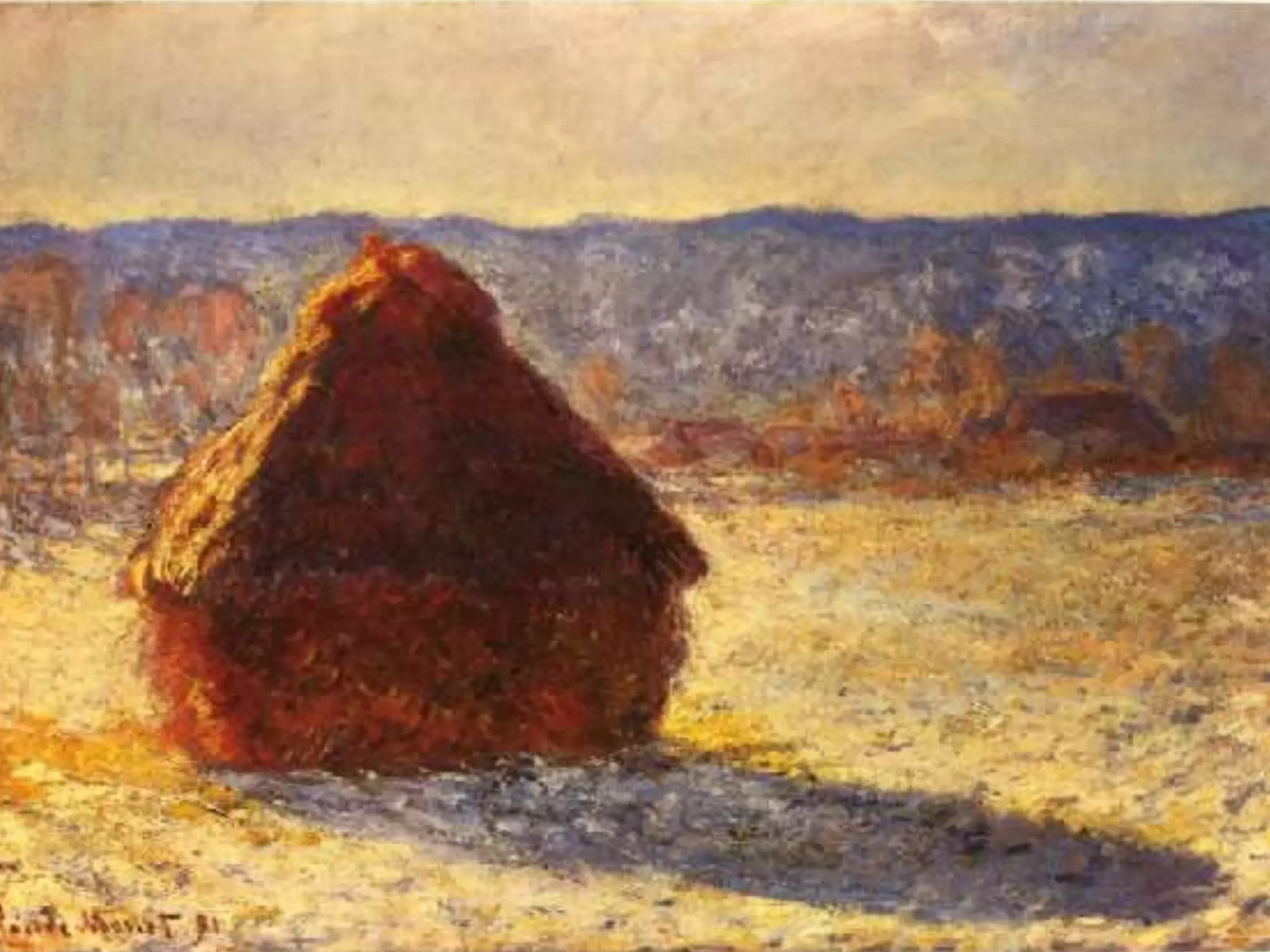
Characteristics
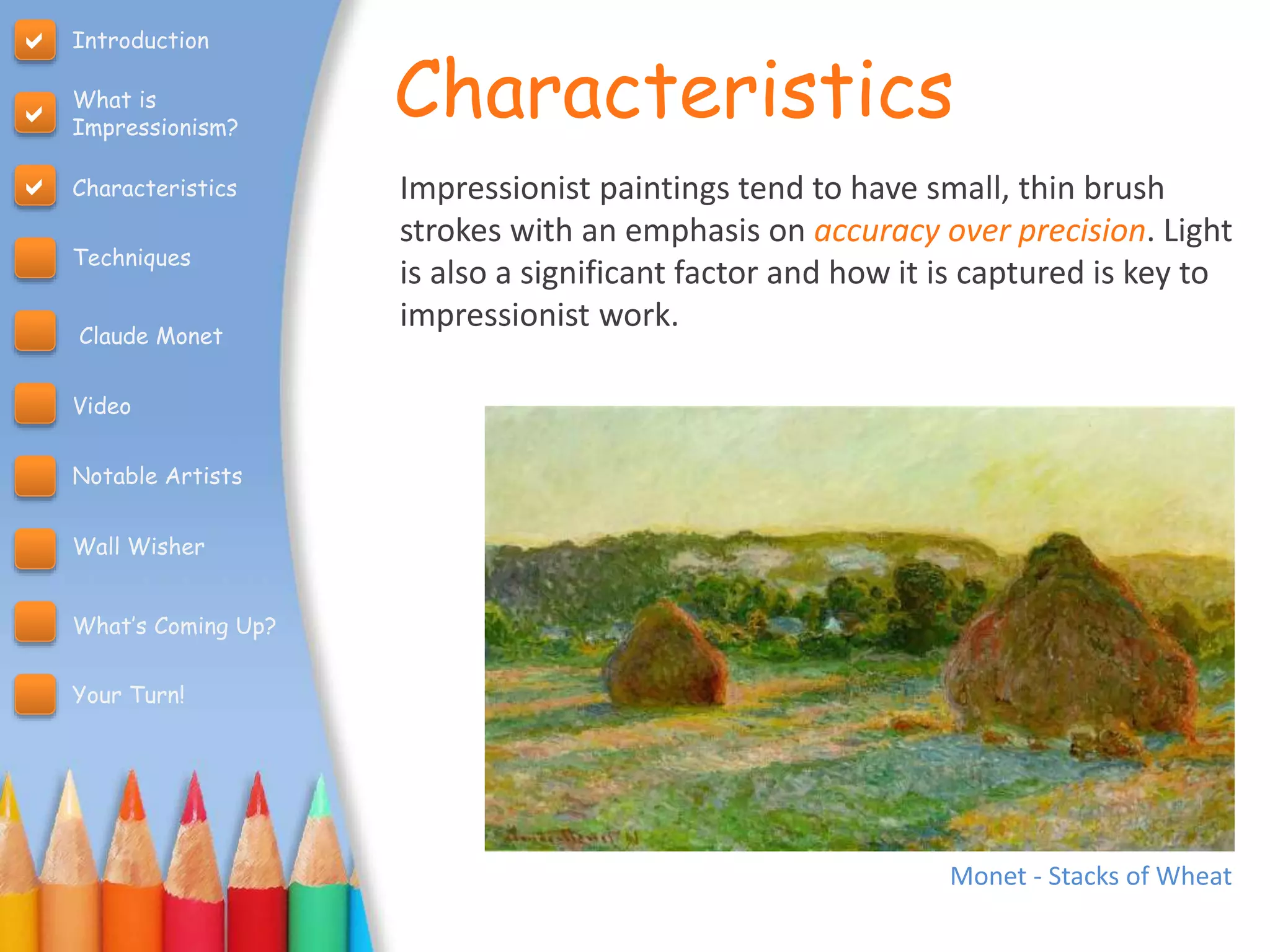
Impressionist paintings tend to have small, thin brush
strokes with an emphasis on accuracy over precision. Light
is also a significant factor and how it is captured is key to
impressionist work.
Introduction
What is
Impressionism?
Characteristics
Techniques
Claude Monet
Video
Notable Artists
Wall Wisher
What’s Coming Up?
Your Turn!


Monet - Stacks of Wheat

Techniques
Short, thick strokes of paint are used to quickly capture the essence of
the subject, rather than its details.
Colours are applied side-by-side with as little mixing as possible,
Grays and dark tones are produced by mixing complementary colours.
In pure Impressionism the use of black paint is avoided.
The play of natural light is emphasized. Close attention is paid to the
reflection of colours from object to object.
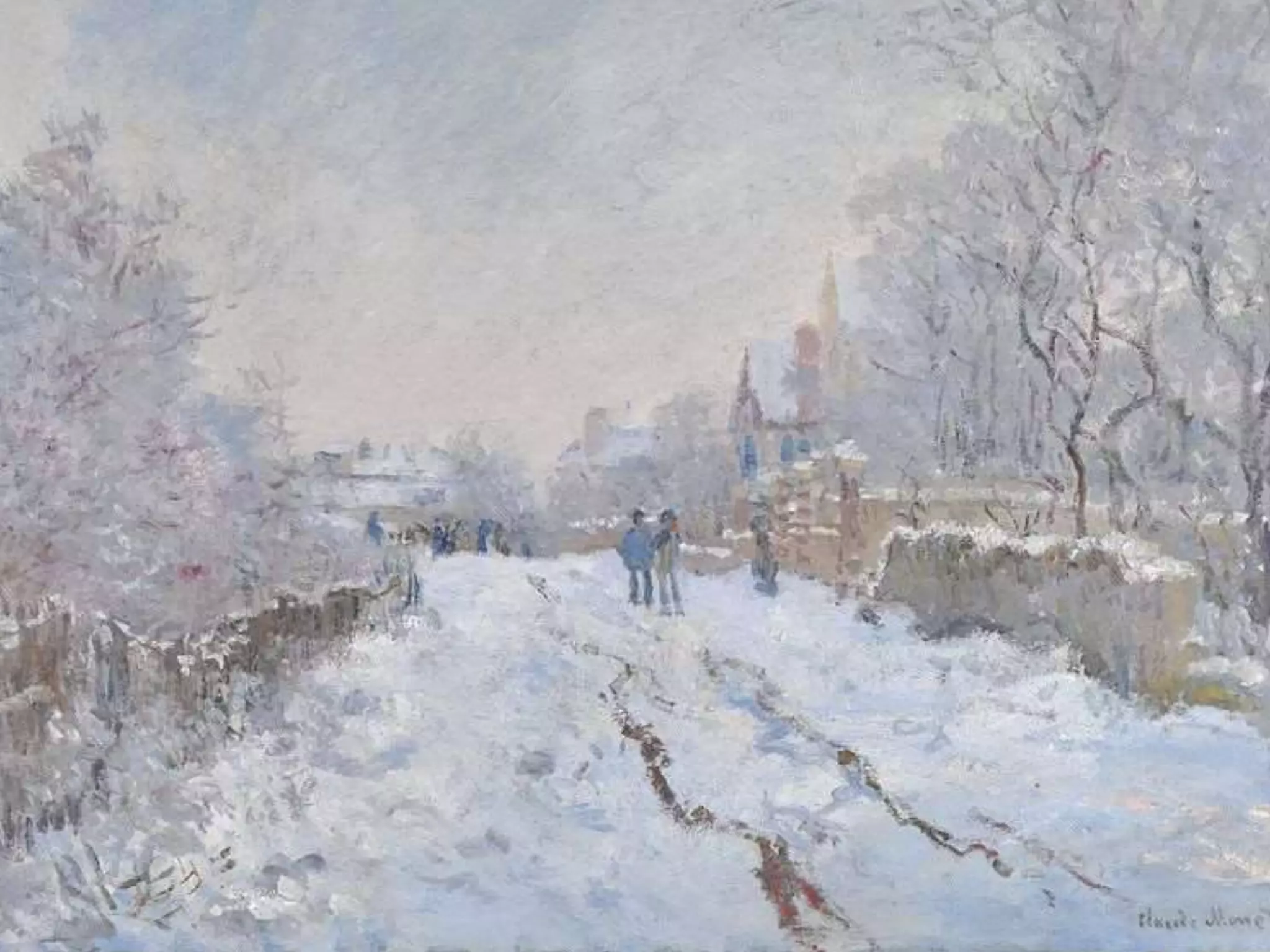
In paintings made en plein air (outdoors), shadows are boldly painted
with the blue of the sky as it is reflected onto surfaces, giving a sense of
freshness and openness that was not captured in painting previously.
(Blue shadows on snow inspired the technique.)
Introduction
What is
Impressionism?
Characteristics
Techniques
Claude Monet
Video
Notable Artists
Wall Wisher
What’s Coming Up?
Your Turn!




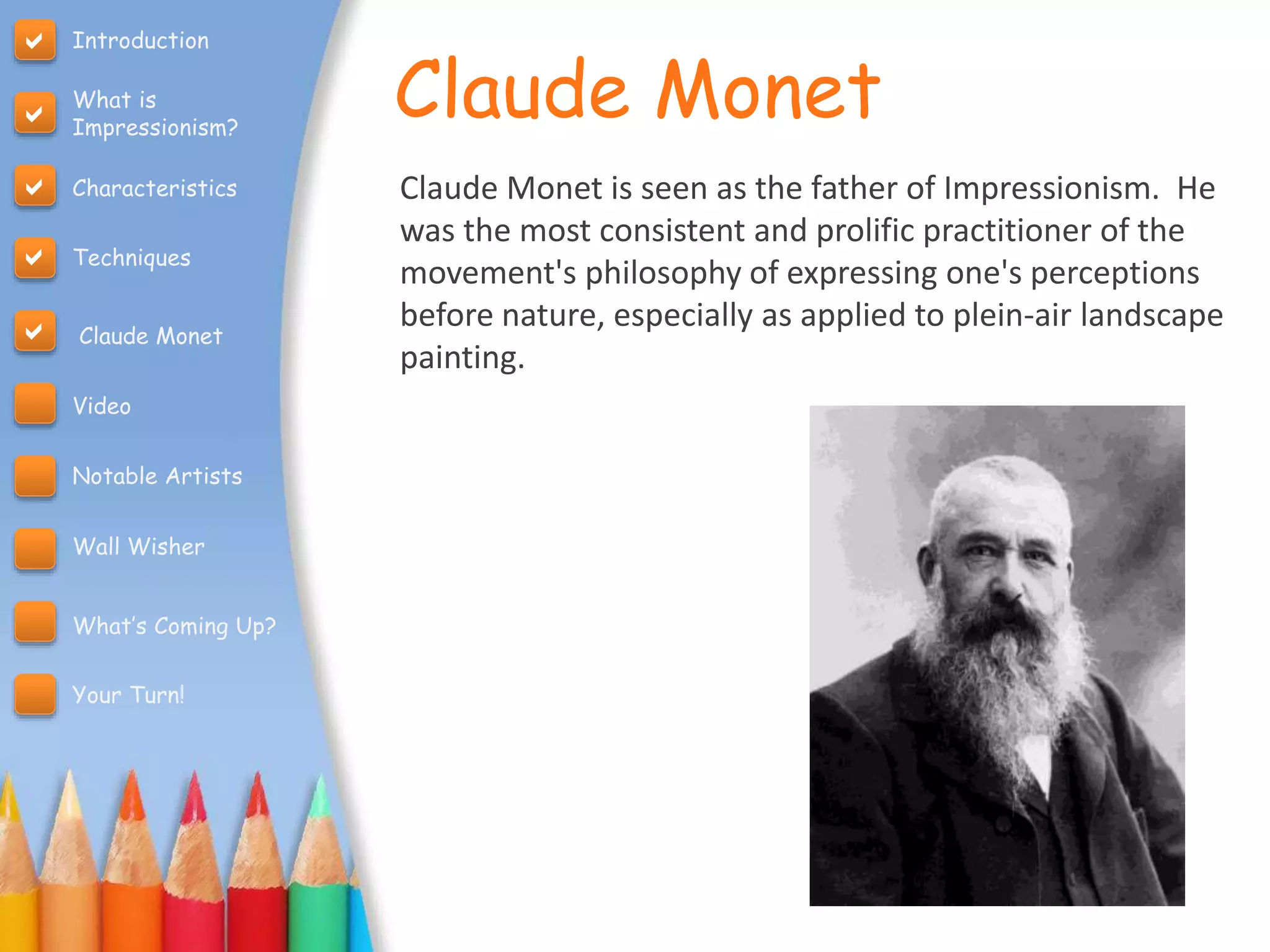
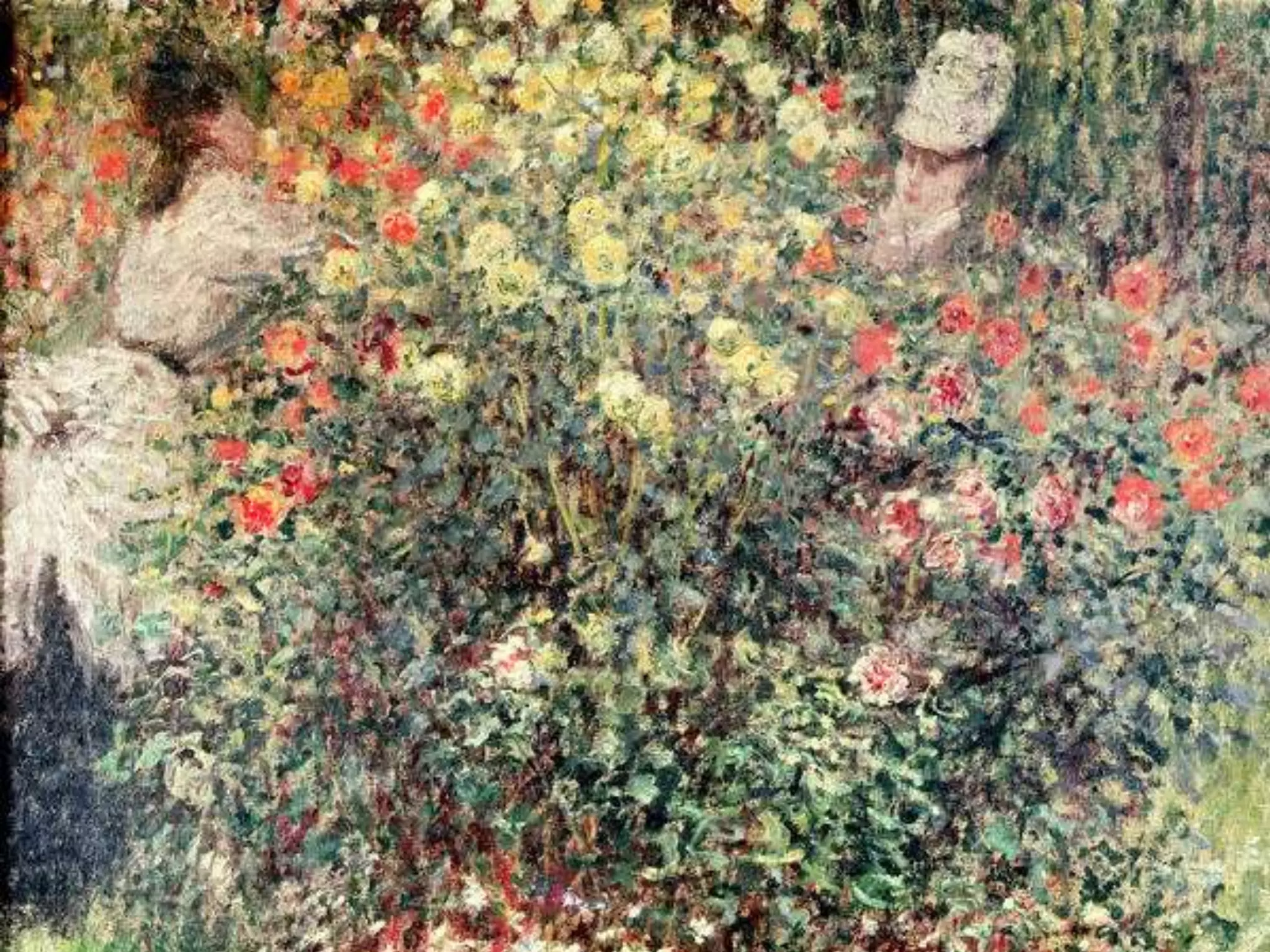
Claude Monet
Claude Monet is seen as the father of Impressionism. He
was the most consistent and prolific practitioner of the
movement's philosophy of expressing one's perceptions
before nature, especially as applied to plein-air landscape
painting.
Introduction
What is
Impressionism?
Characteristics
Techniques
Claude Monet
Video
Notable Artists
Wall Wisher
What’s Coming Up?
Your Turn!





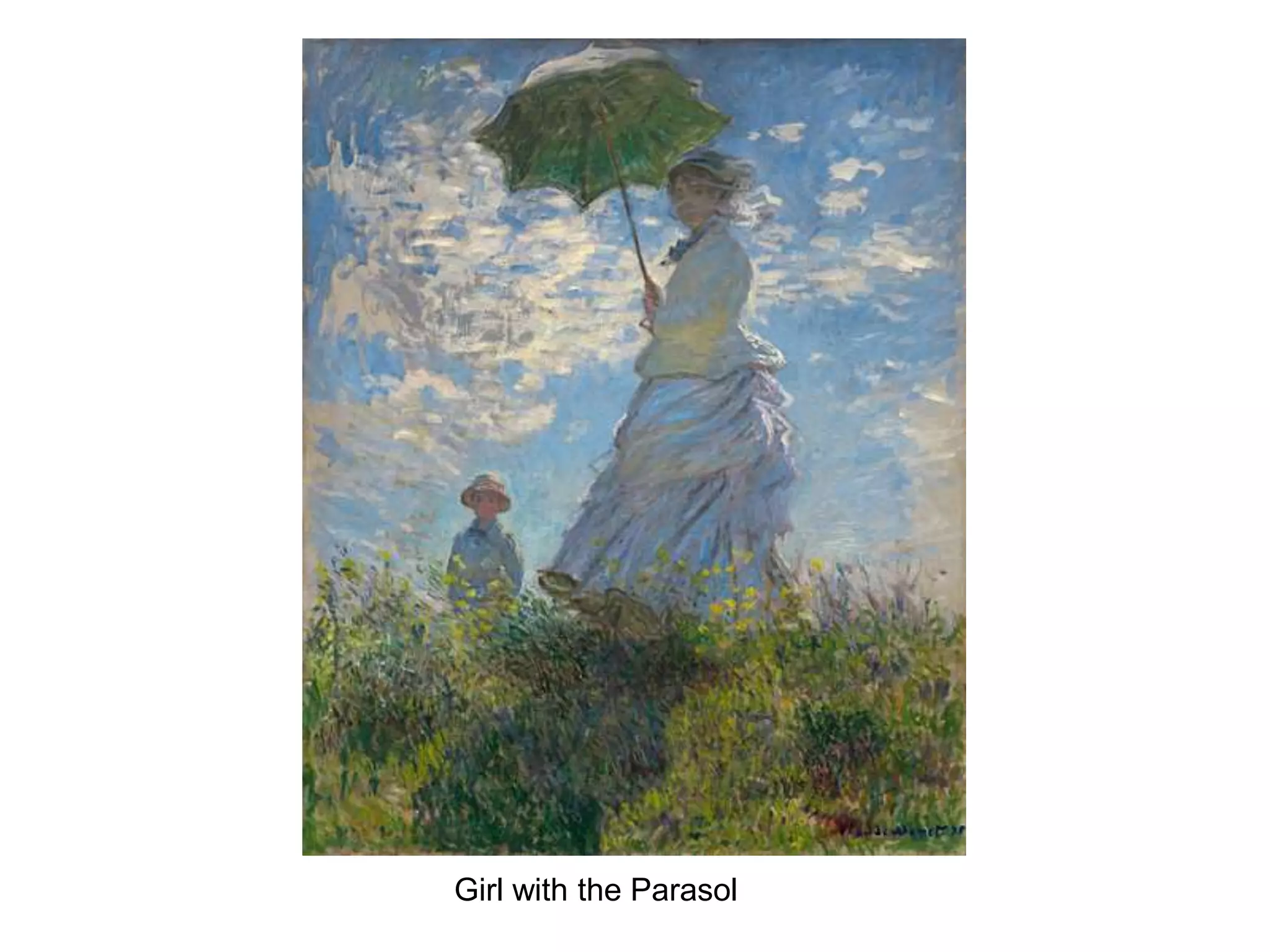
Girl with the Parasol
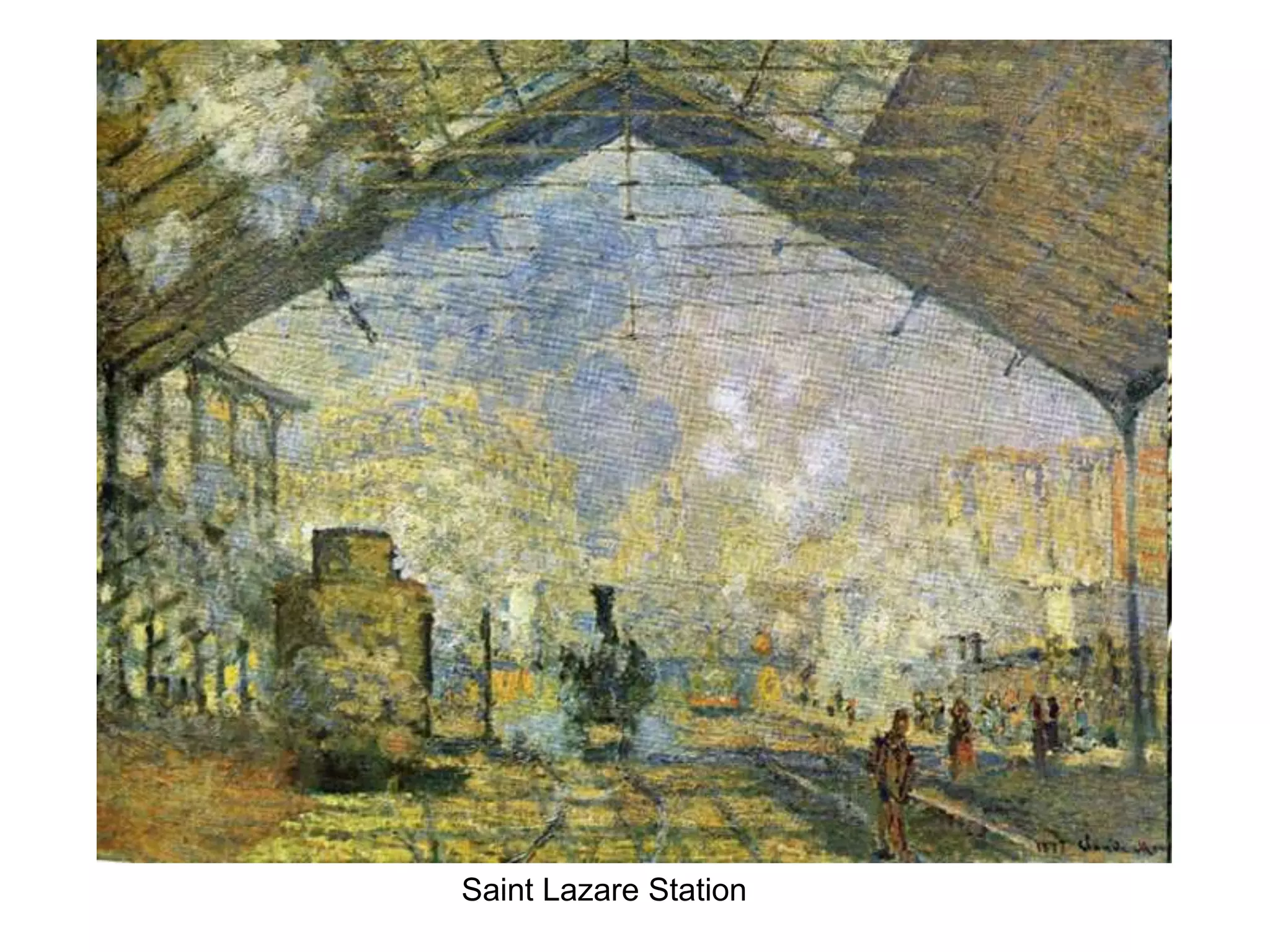
Saint Lazare Station
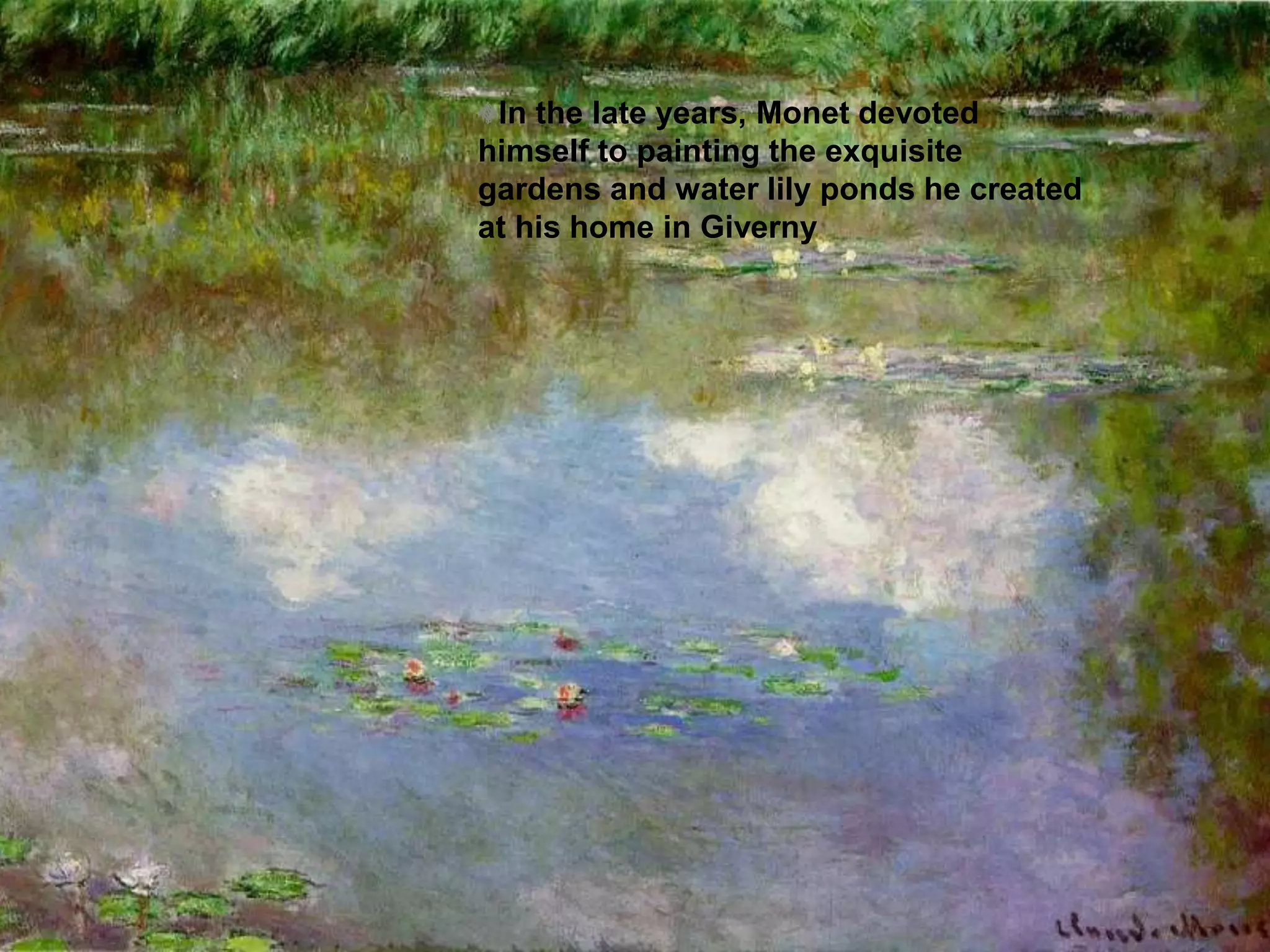
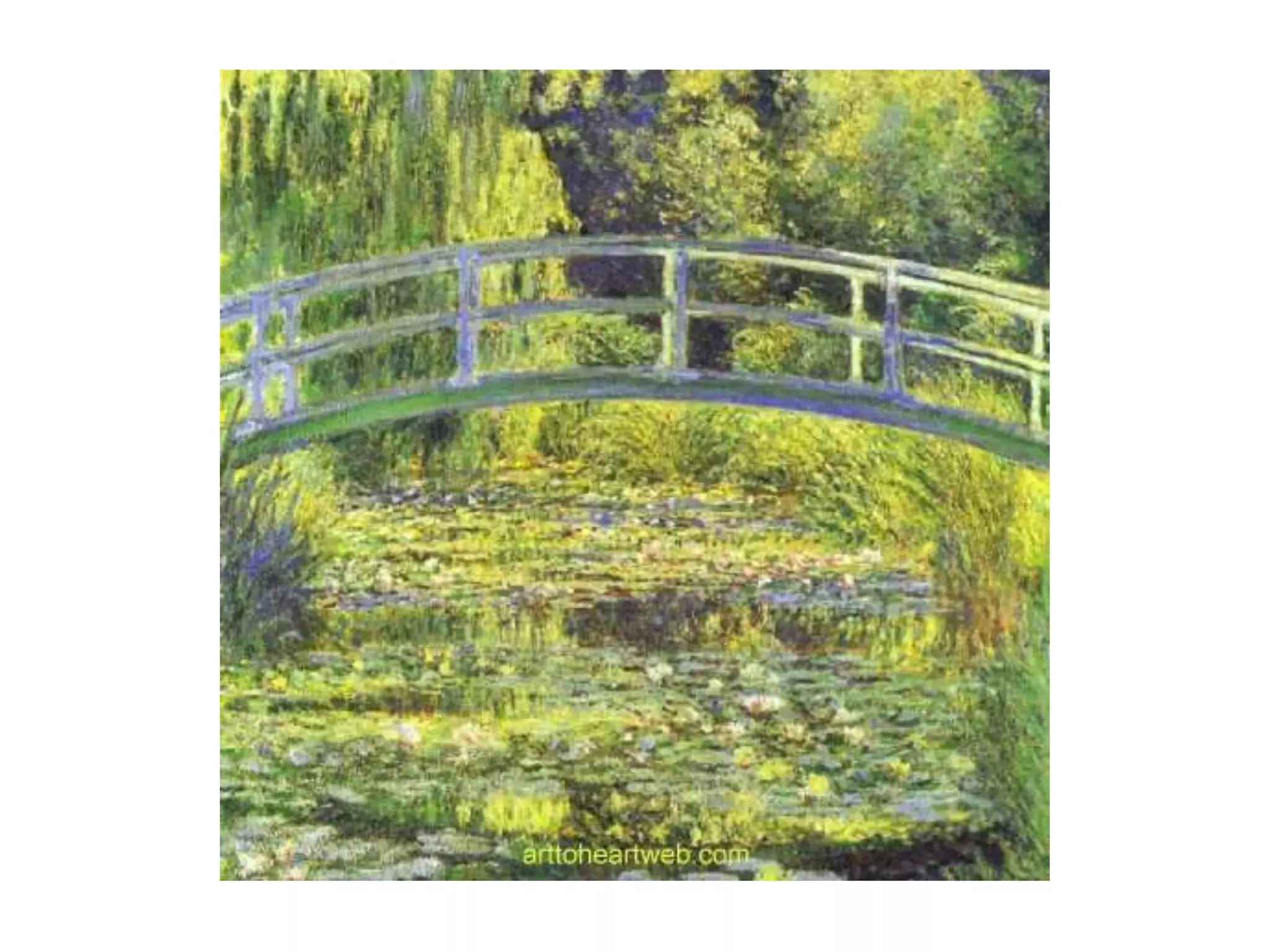
In the late years, Monet devoted
himself to painting the exquisite
gardens and water lily ponds he created
at his home in Giverny
Other Notable Artists
Pierre-Auguste Renoir Frédéric Bazille
Gustave Caillebotte Mary Cassatt
Introduction
What is
Impressionism?
Characteristics
Techniques
Claude Monet
Video
Notable Artists
Wall Wisher
What’s Coming Up?
Your Turn!







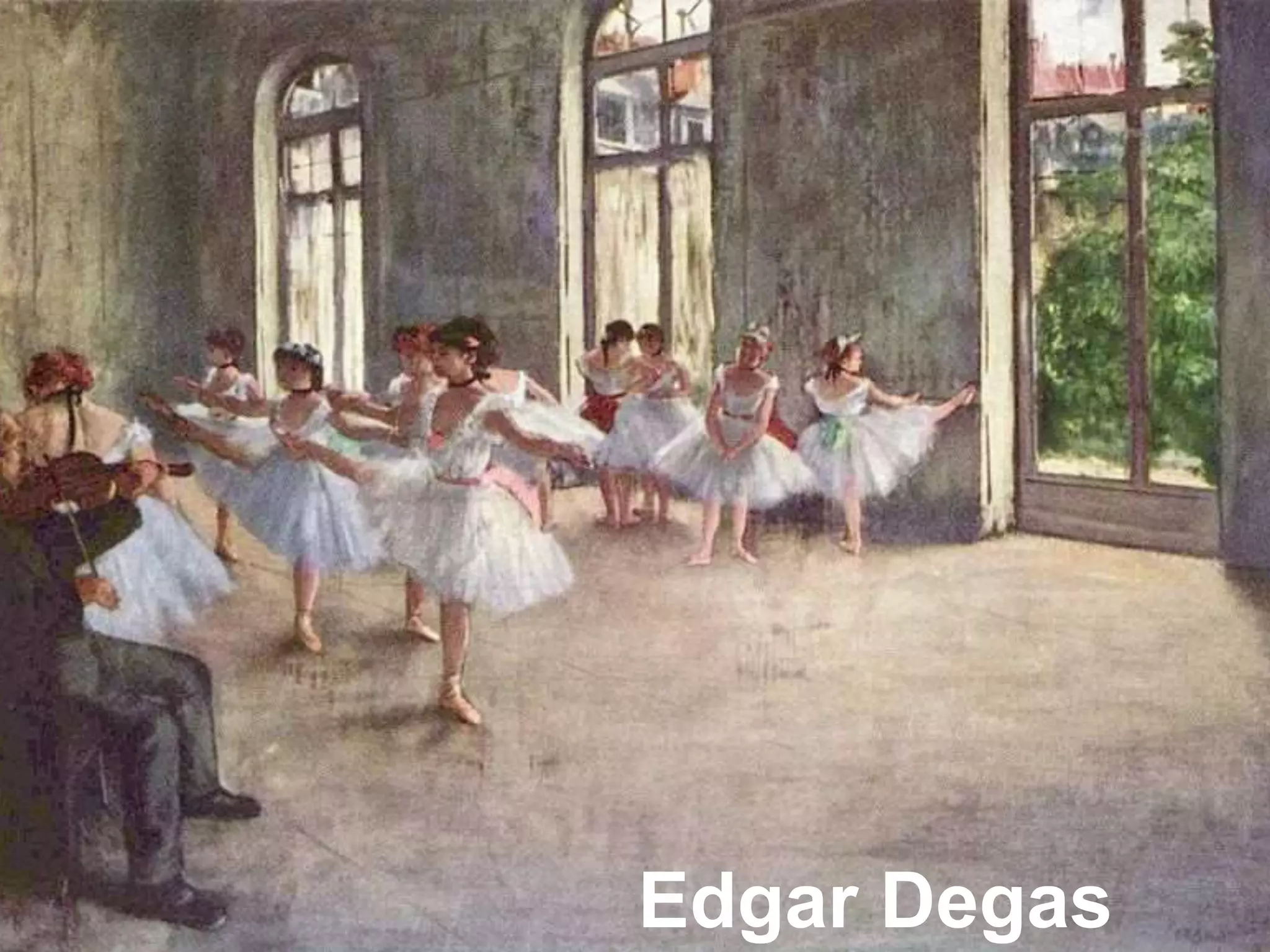
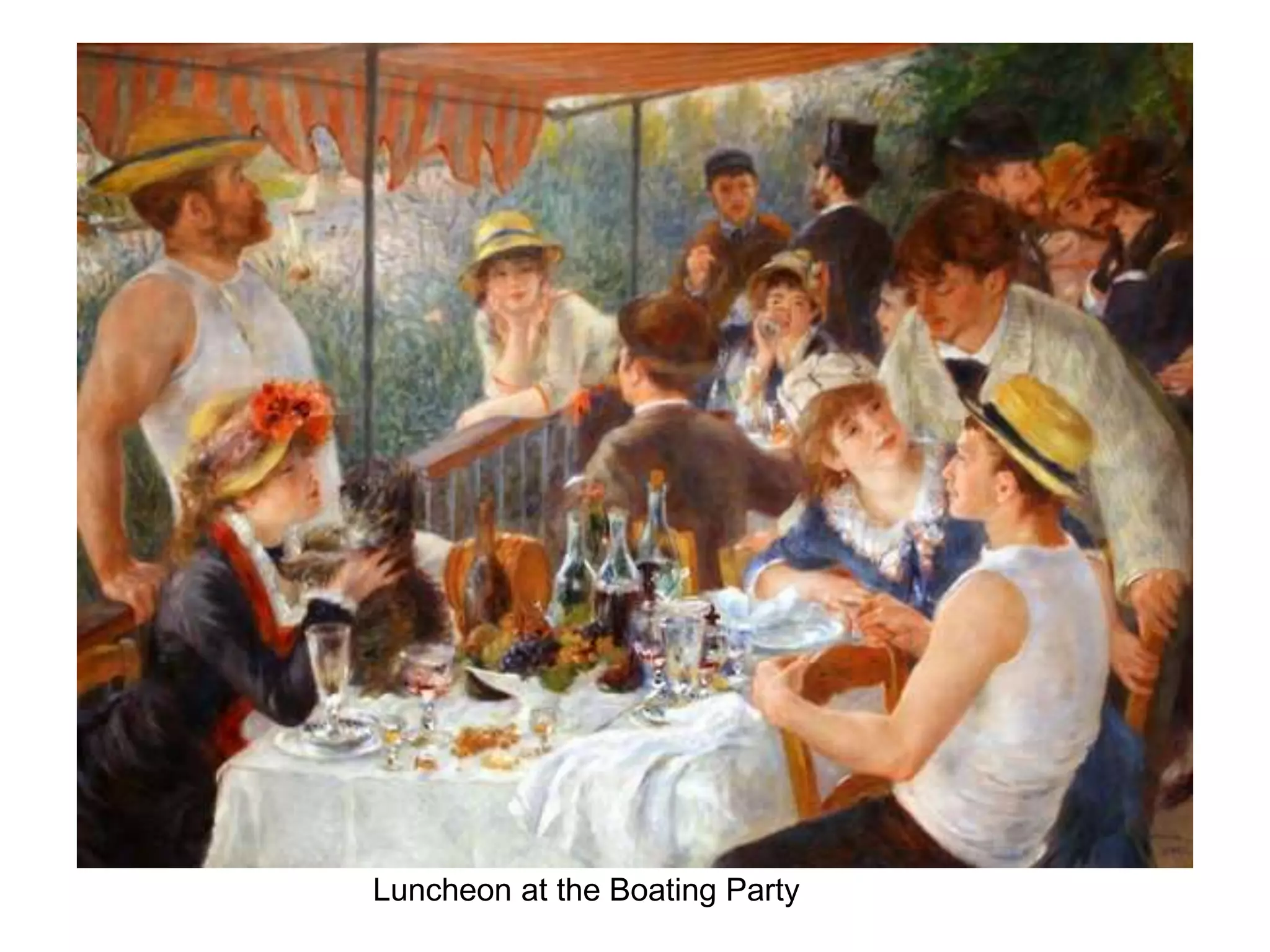
Edgar Degas
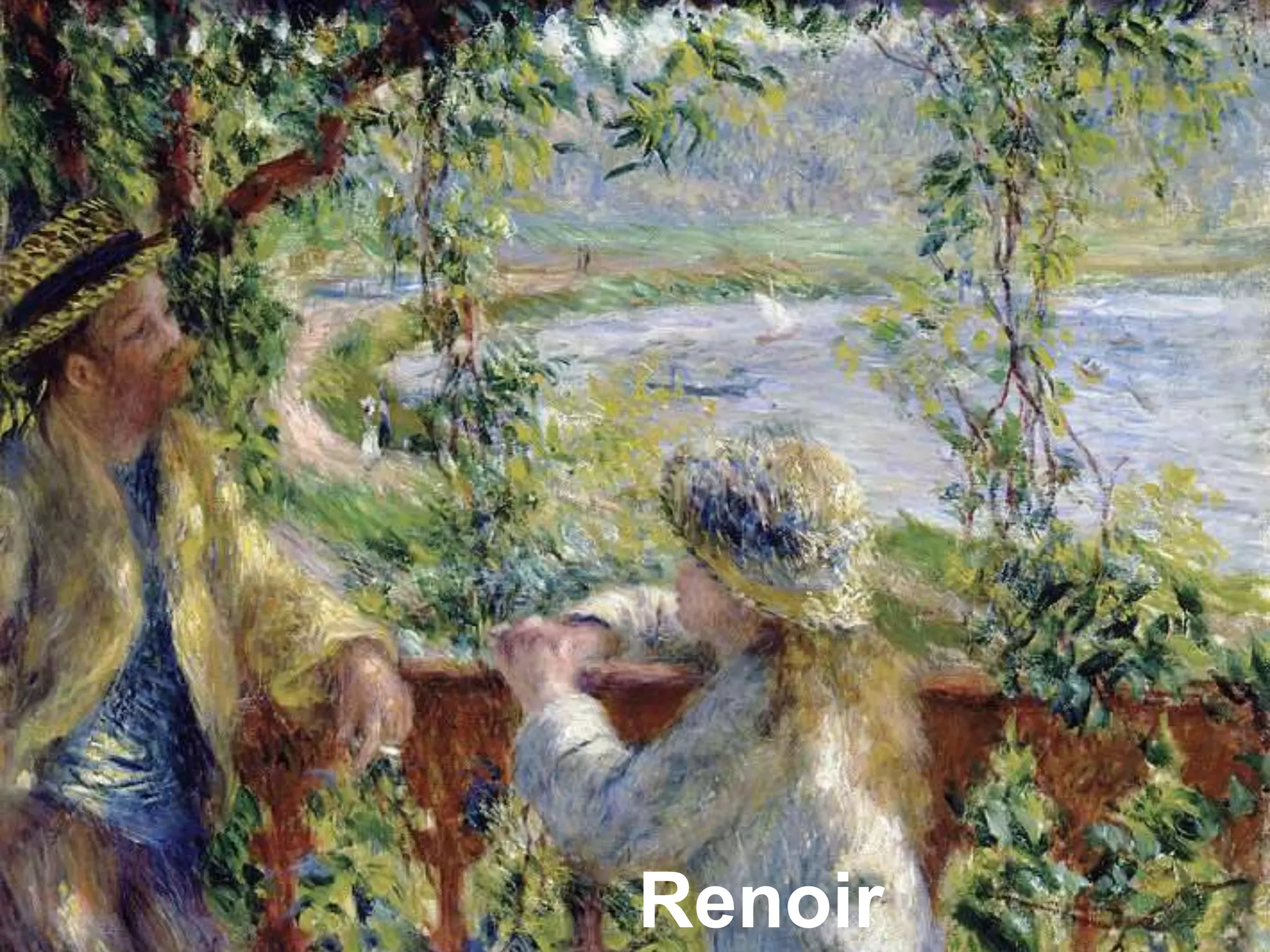
Renoir
Luncheon at the Boating Party
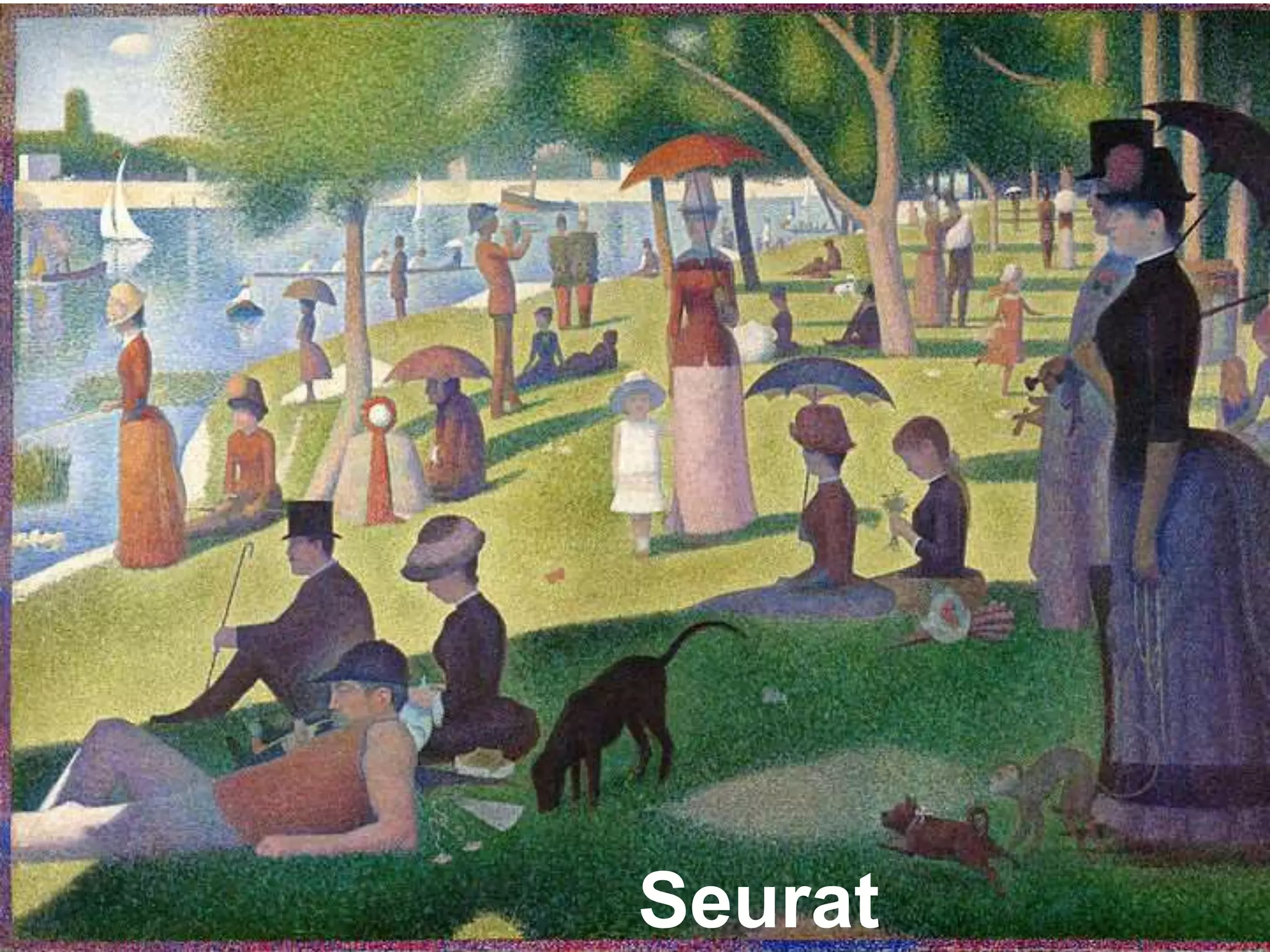
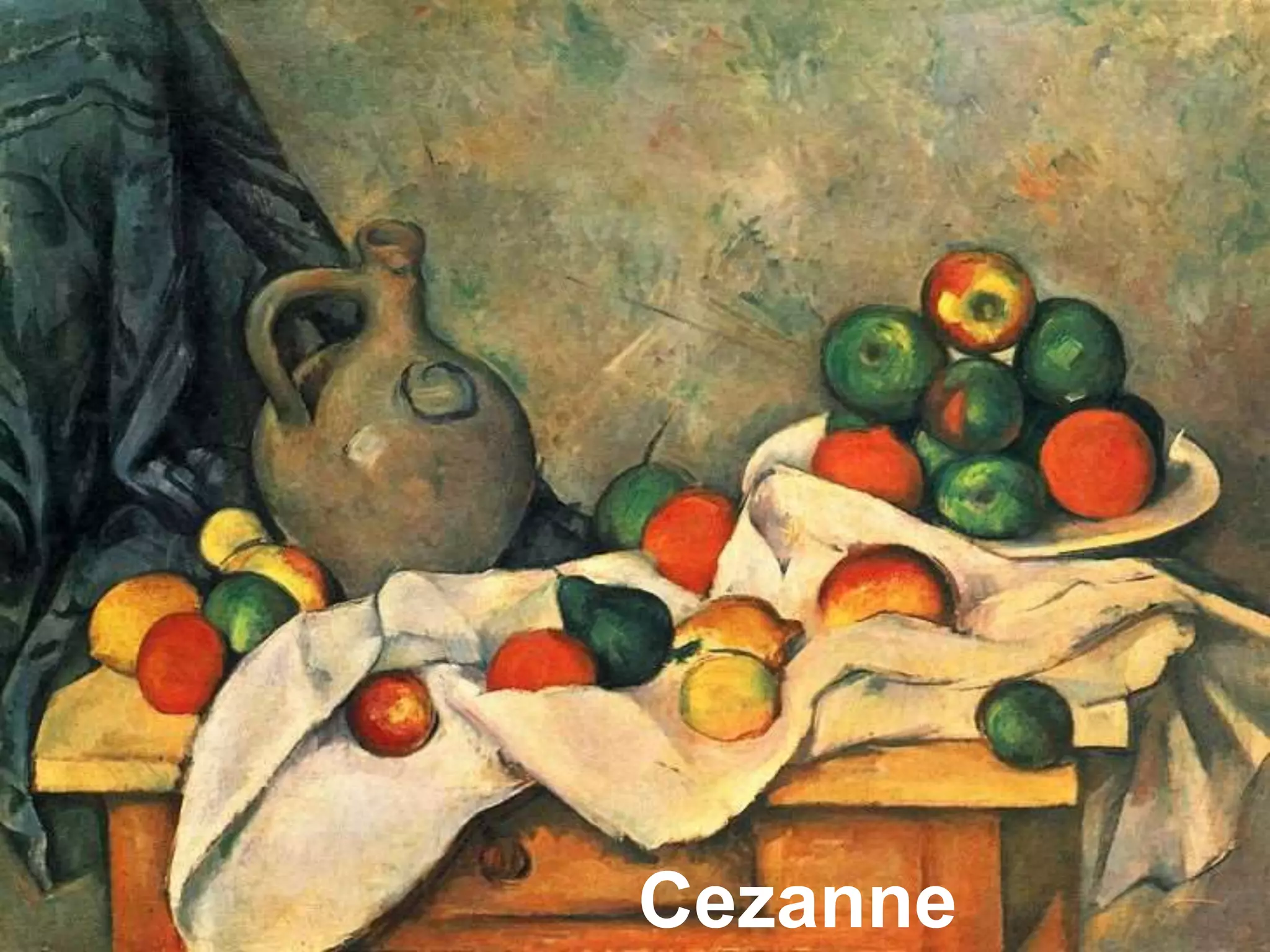
Post-impressionism
Postimpressionism, movement in late-19th-century
French painting that emphasized the artist’s personal
response to a subject.
Postimpressionists focused on emotional or spiritual
meanings that the subject might convey.
Postimpressionists conveyed their personal
responses to the world around them through the use
of strong, unnatural colors and exaggeration or slight
distortion of forms.
Seurat
Cezanne
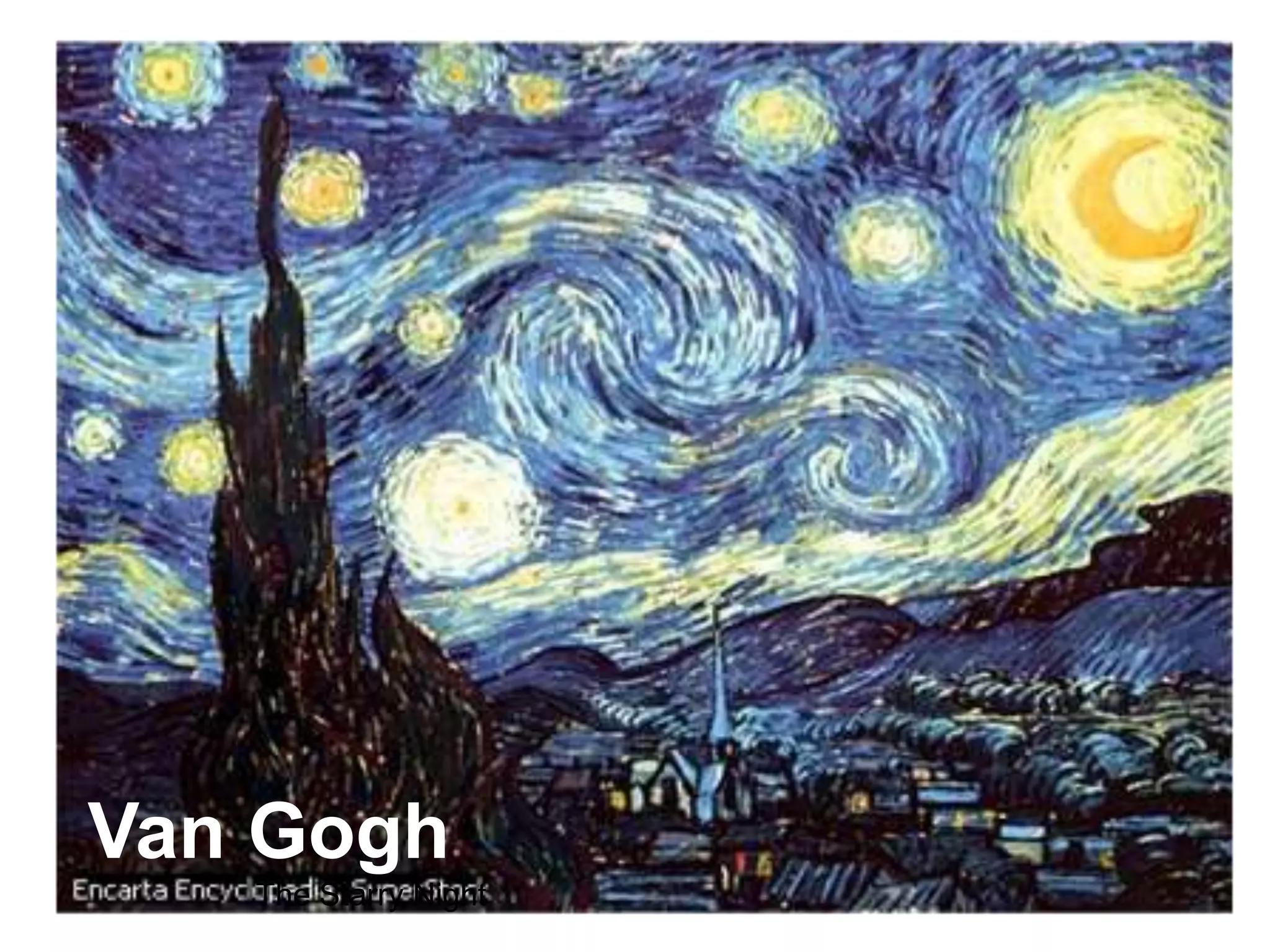
The Starry Night
Van Gogh
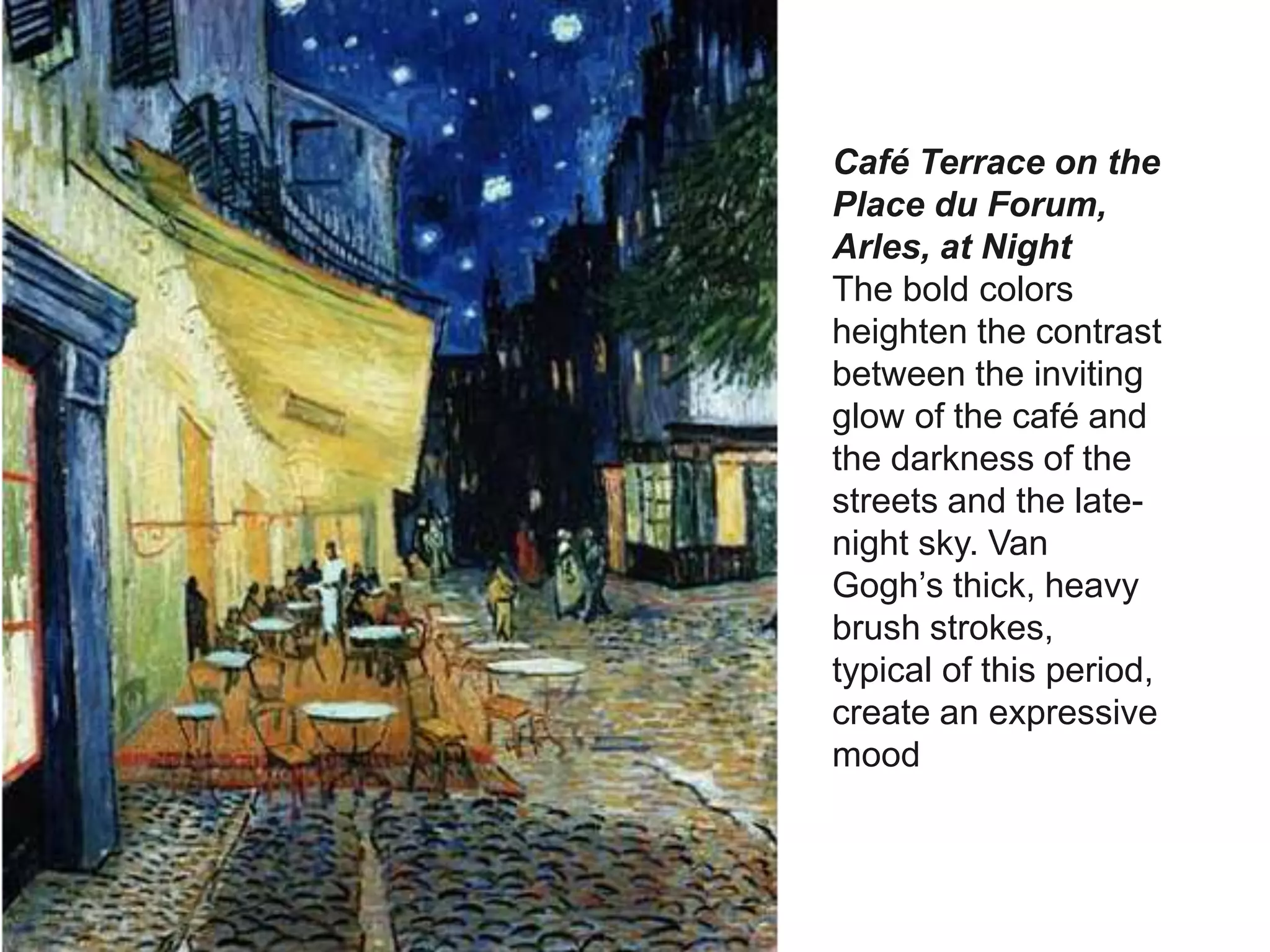
Café Terrace on the
Place du Forum,
Arles, at Night
The bold colors
heighten the contrast
between the inviting
glow of the café and
the darkness of the
streets and the late-
night sky. Van
Gogh’s thick, heavy
brush strokes,
typical of this period,
create an expressive
mood
He remained in the Tropics for the rest of his life, first in
Tahiti and later in the Marquesas Islands. The essential
characteristics of his style changed little in the South Seas;
he retained the qualities of expressive color, denial of
perspective, and thick, flat forms.
Gaugin

Impressionism and Post-impressionism

  • 1.
  • 2.
    What is Impressionism? Impressionismstarted way back in the 19th century in Paris, France. The name of this movement comes from the title of Claude Monet’s work “Impression, Sunrise” Introduction What is Impressionism? Characteristics Techniques Claude Monet Video Notable Artists Wall Wisher What’s Coming Up? Your Turn!   Monet - Impression
  • 3.
    Characteristics Impressionist paintings tendto have small, thin brush strokes with an emphasis on accuracy over precision. Light is also a significant factor and how it is captured is key to impressionist work. Introduction What is Impressionism? Characteristics Techniques Claude Monet Video Notable Artists Wall Wisher What’s Coming Up? Your Turn!   Monet - Stacks of Wheat 
  • 4.
    Techniques Short, thick strokesof paint are used to quickly capture the essence of the subject, rather than its details. Colours are applied side-by-side with as little mixing as possible, Grays and dark tones are produced by mixing complementary colours. In pure Impressionism the use of black paint is avoided. The play of natural light is emphasized. Close attention is paid to the reflection of colours from object to object. In paintings made en plein air (outdoors), shadows are boldly painted with the blue of the sky as it is reflected onto surfaces, giving a sense of freshness and openness that was not captured in painting previously. (Blue shadows on snow inspired the technique.) Introduction What is Impressionism? Characteristics Techniques Claude Monet Video Notable Artists Wall Wisher What’s Coming Up? Your Turn!    
  • 5.
    Claude Monet Claude Monetis seen as the father of Impressionism. He was the most consistent and prolific practitioner of the movement's philosophy of expressing one's perceptions before nature, especially as applied to plein-air landscape painting. Introduction What is Impressionism? Characteristics Techniques Claude Monet Video Notable Artists Wall Wisher What’s Coming Up? Your Turn!     
  • 6.
  • 10.
  • 11.
    In the lateyears, Monet devoted himself to painting the exquisite gardens and water lily ponds he created at his home in Giverny
  • 14.
    Other Notable Artists Pierre-AugusteRenoir Frédéric Bazille Gustave Caillebotte Mary Cassatt Introduction What is Impressionism? Characteristics Techniques Claude Monet Video Notable Artists Wall Wisher What’s Coming Up? Your Turn!       
  • 15.
  • 16.
  • 17.
    Luncheon at theBoating Party
  • 18.
    Post-impressionism Postimpressionism, movement inlate-19th-century French painting that emphasized the artist’s personal response to a subject. Postimpressionists focused on emotional or spiritual meanings that the subject might convey. Postimpressionists conveyed their personal responses to the world around them through the use of strong, unnatural colors and exaggeration or slight distortion of forms.
  • 19.
  • 20.
  • 21.
  • 22.
    Café Terrace onthe Place du Forum, Arles, at Night The bold colors heighten the contrast between the inviting glow of the café and the darkness of the streets and the late- night sky. Van Gogh’s thick, heavy brush strokes, typical of this period, create an expressive mood
  • 23.
    He remained inthe Tropics for the rest of his life, first in Tahiti and later in the Marquesas Islands. The essential characteristics of his style changed little in the South Seas; he retained the qualities of expressive color, denial of perspective, and thick, flat forms. Gaugin

Editor's Notes

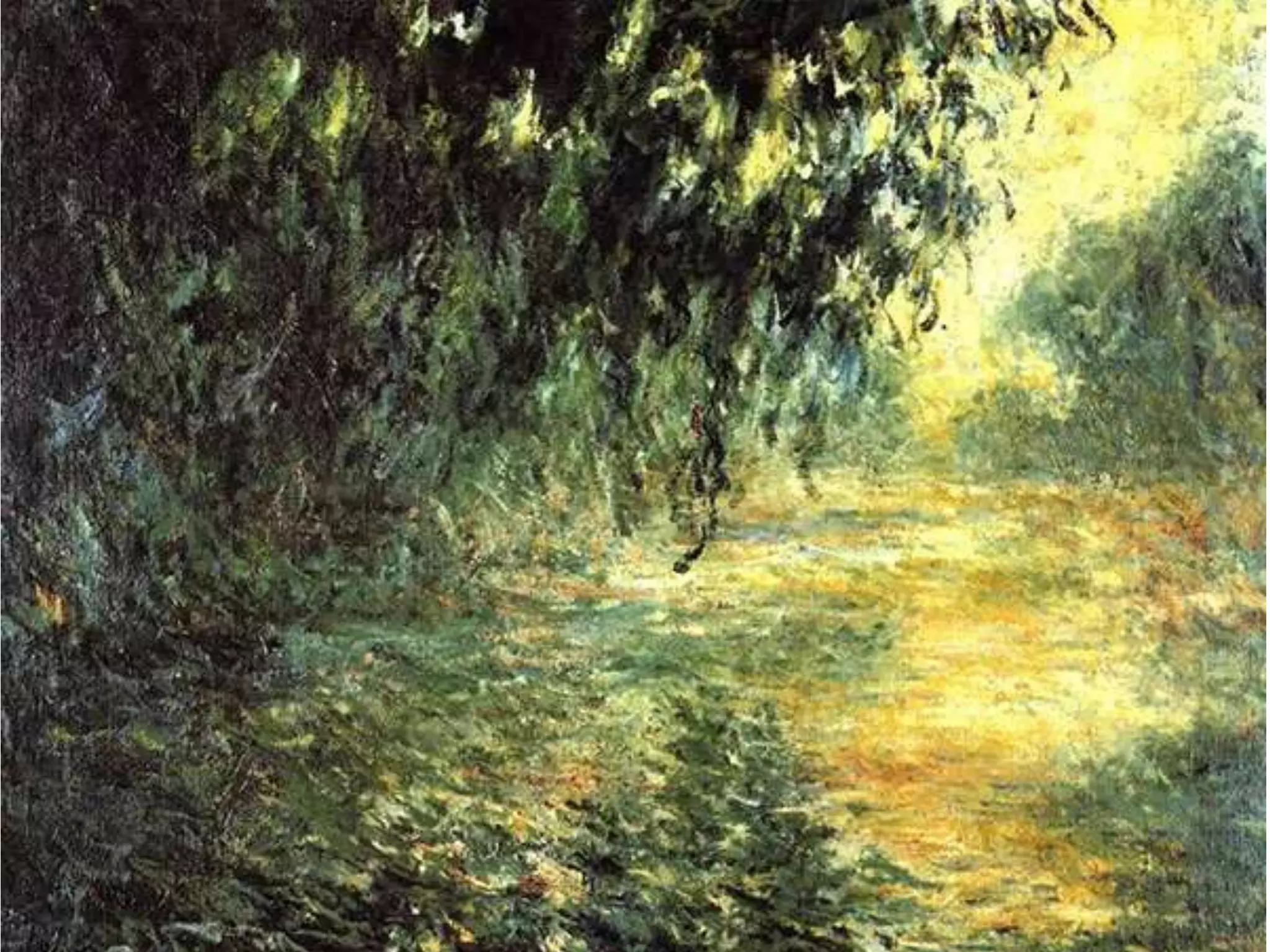
  • #10 captured sparkling effects of sunlight on trees and drab light of winter on snow tracked ground
  • #22 Thick, swirling brushstrokes and contrasting colors charge the work with emotional intensity. Van Gogh transformed the setting of a quiet village at night into a dazzling portrait of the inherent power of the natural world.