Downloaded 158 times


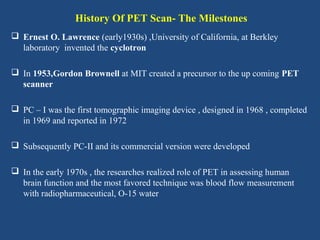
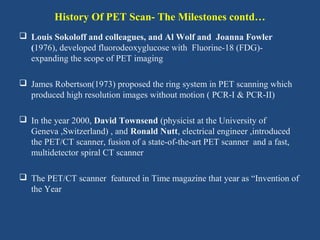


PET scans use radioactive tracers and detectors to generate 3D images of metabolic processes in the body. They have various applications in neurology for diagnosing and monitoring conditions like dementia, epilepsy, movement disorders, and brain tumors. For example, PET can help differentiate Alzheimer's from other dementias based on patterns of hypometabolism in temporal and parietal lobes. It is also useful for localizing epileptic foci before epilepsy surgery. The document discusses the history, mechanisms, common tracers, and limitations of PET scanning as well as its role in evaluating specific neurological conditions and potential future applications.


![Imaging in Neurovascular conflicts [Neurovascular compression syndrome ]](https://cdn.slidesharecdn.com/ss_thumbnails/cnv-141013092247-conversion-gate01-thumbnail.jpg?width=640&height=640&fit=bounds)


