What is PCR?What is PCR?
It was invented in 1983 by Dr. Kary Mullis,
for which he received the Nobel Prize in
Chemistry in 1993.
PCR is an exponentially progressing
synthesis of the defined target DNA
sequences in vitro.
What is PCR? :What is PCR? :
Why “Polymerase”?Why “Polymerase”?
It is called “polymerase” because the only
enzyme used in this reaction is DNA
polymerase.
What is PCR? :What is PCR? :
Why “Chain”?Why “Chain”?
It is called “chain” because the products
of the first reaction become substrates of
the following one, and so on.
What is PCR? :What is PCR? :
The “Reaction” ComponentsThe “Reaction” Components
1) Target DNA - contains the sequence to be amplified.
2) Pair of Primers - oligonucleotides that define the sequence
to be amplified.
3) dNTPs - deoxynucleotidetriphosphates: DNA building blocks.
4) Thermostable DNA Polymerase - enzyme that
catalyzes the reaction
5) Mg++
ions - cofactor of the enzyme
6) Buffer solution – maintains pH and ionic strength of
the reaction solution suitable for the activity of the
enzyme
THERMOCYCLERPCR tube
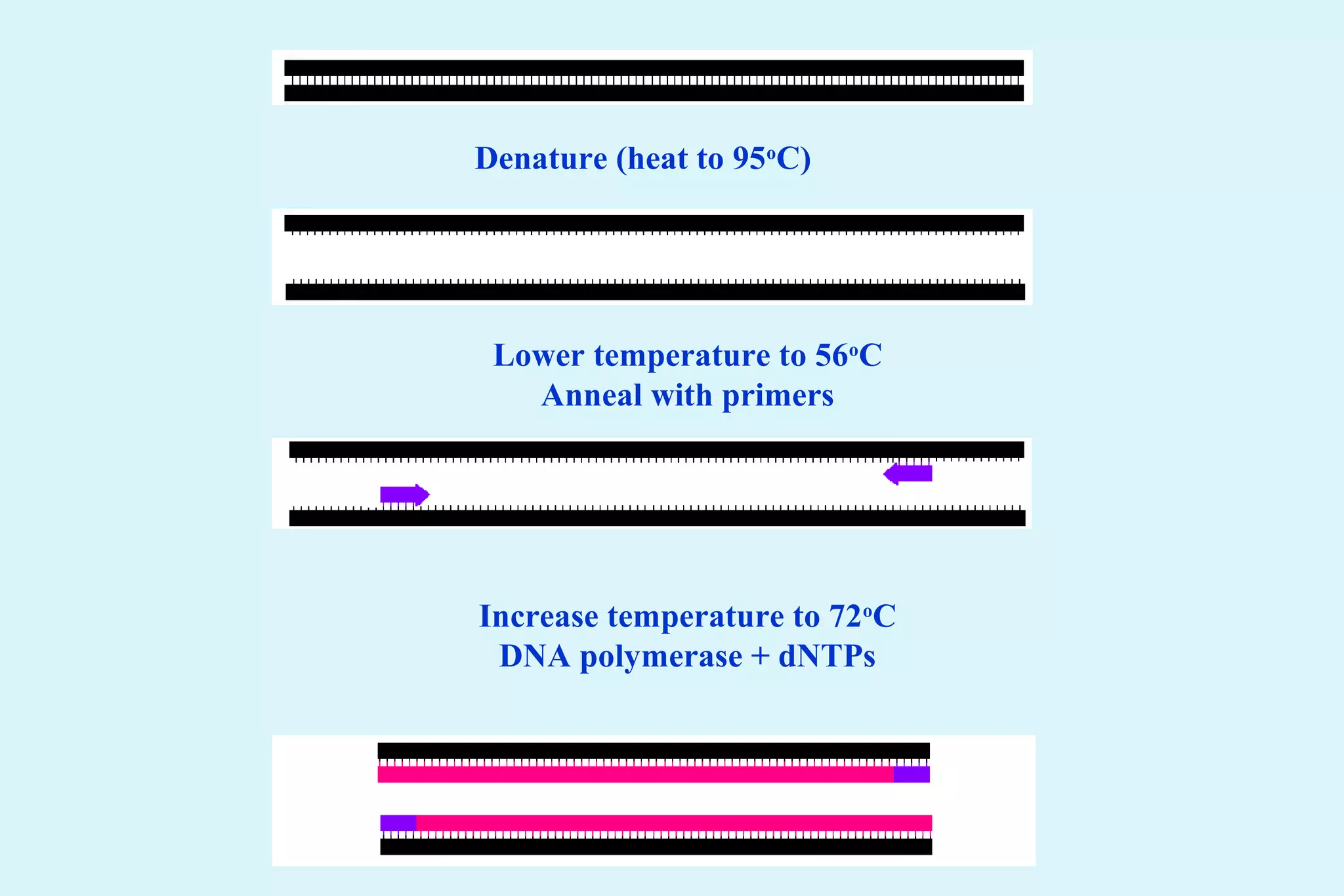
Denature (heat to 95o
C)
Lower temperature to 56o
C
Anneal with primers
Increase temperature to 72o
C
DNA polymerase + dNTPs
DNA copies vs Cycle number
0
500000
1000000
1500000
2000000
2500000
0 1 2 3 4 5 6 7 8 9 10 11 12 13 14 15 16 17 18 19 20 21 22 23
Cycle number
DNAcopies
Applications of PCRApplications of PCR
Classification of
organisms
Genotyping
Molecular
archaeology
Mutagenesis
Mutation detection
Sequencing
Cancer research
Detection of
pathogens
DNA fingerprinting
Drug discovery
Genetic matching
Genetic engineering
Pre-natal diagnosis
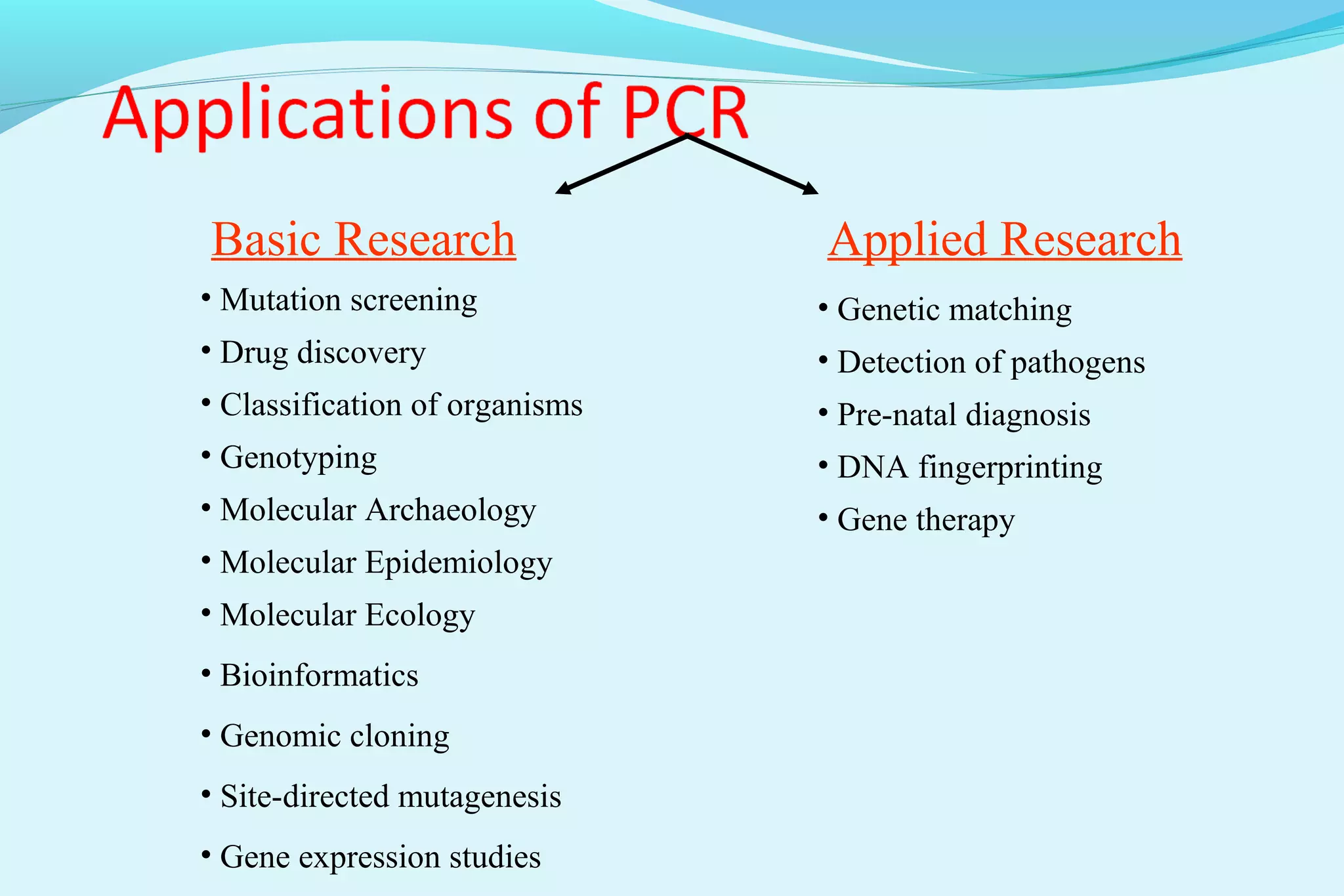
Basic Research Applied Research
• Genetic matching
• Detection of pathogens
• Pre-natal diagnosis
• DNA fingerprinting
• Gene therapy
• Mutation screening
• Drug discovery
• Classification of organisms
• Genotyping
• Molecular Archaeology
• Molecular Epidemiology
• Molecular Ecology
• Bioinformatics
• Genomic cloning
• Site-directed mutagenesis
• Gene expression studies
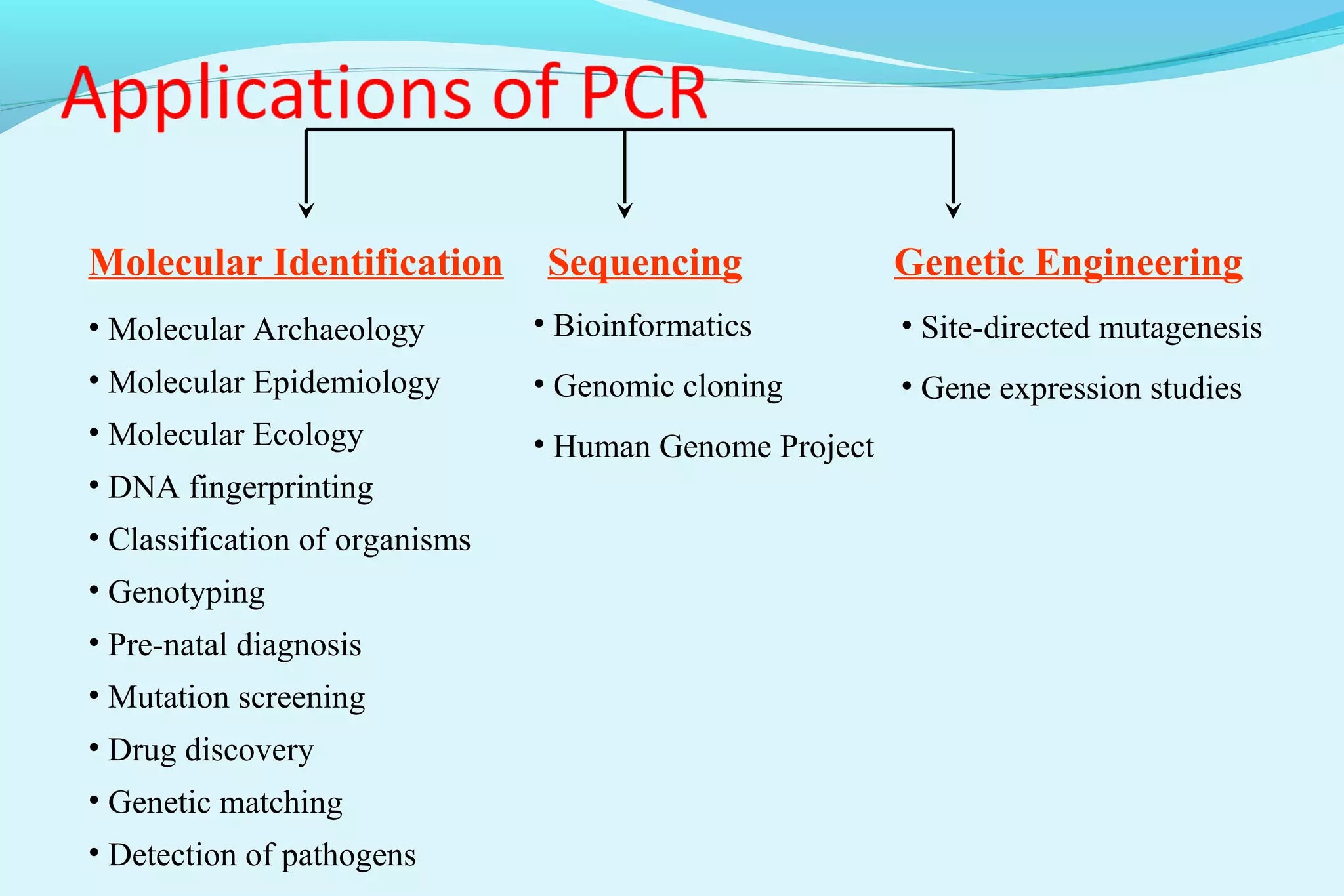
Molecular Identification Sequencing Genetic Engineering
• Molecular Archaeology
• Molecular Epidemiology
• Molecular Ecology
• DNA fingerprinting
• Classification of organisms
• Genotyping
• Pre-natal diagnosis
• Mutation screening
• Drug discovery
• Genetic matching
• Detection of pathogens
• Bioinformatics
• Genomic cloning
• Human Genome Project
• Site-directed mutagenesis
• Gene expression studies
MMOLECULAROLECULAR IIDENTIFICATION:DENTIFICATION:
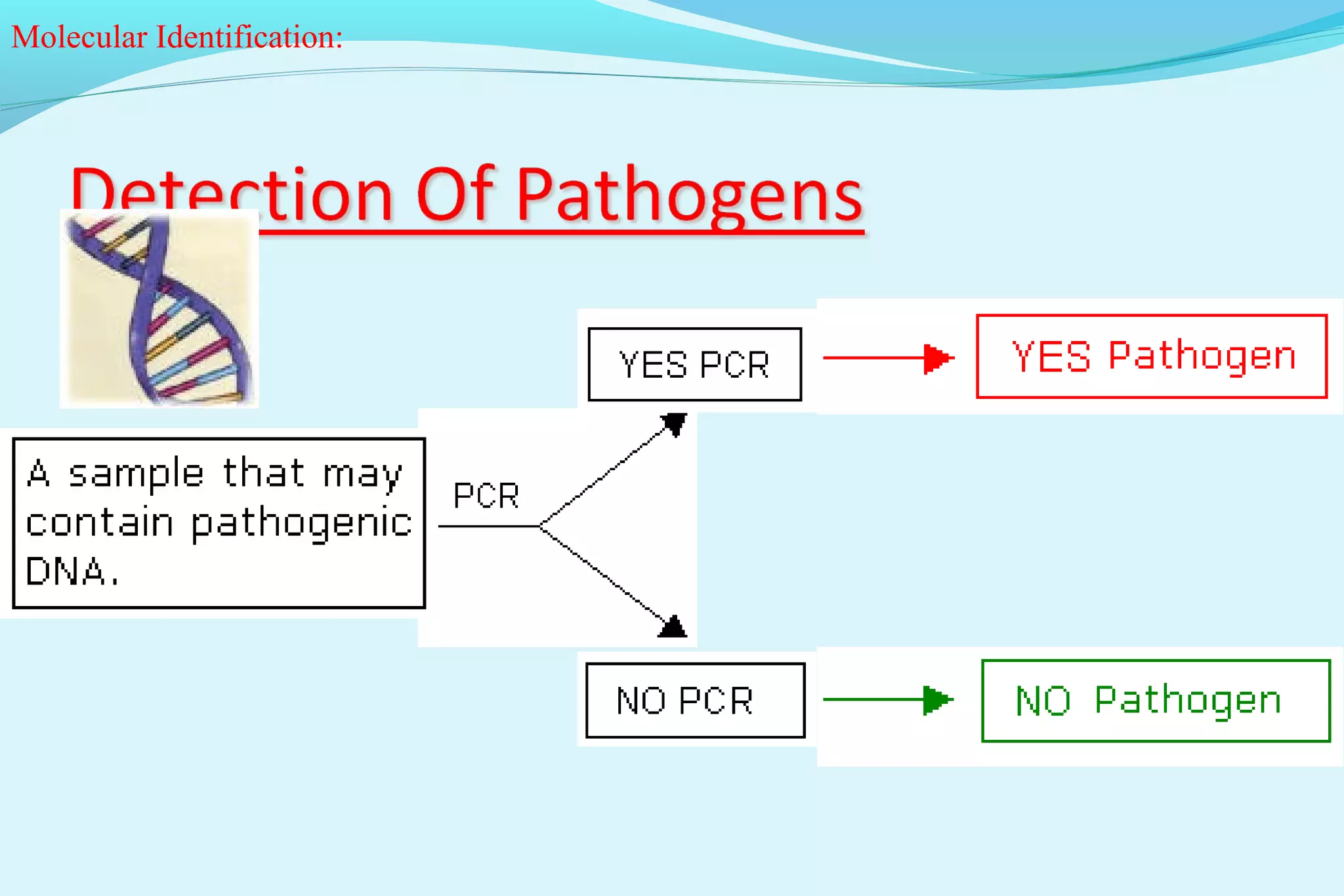
Molecular Identification:
Sensitivity of detection of PCR-amplified M. tuberculosis DNA. (Kaul et al.1994)
Molecular Identification:
blood, chorionic villus,
amniotic fluid, semen,
hair root, saliva
68,719,476,736 copies Gel Analysis,
Restriction Digestion,
Sequencing
The speedspeed and easeease of use, sensitivitysensitivity, specificityspecificity and
robustnessrobustness of PCR has revolutionised molecular biology
and made PCR the most widely used and powerful
technique with great spectrum of research and
diagnostic applications.

POLYMERASE CHAIN REACTION ( PCR)

  • 2.
    What is PCR?Whatis PCR? It was invented in 1983 by Dr. Kary Mullis, for which he received the Nobel Prize in Chemistry in 1993. PCR is an exponentially progressing synthesis of the defined target DNA sequences in vitro.
  • 3.
    What is PCR?:What is PCR? : Why “Polymerase”?Why “Polymerase”? It is called “polymerase” because the only enzyme used in this reaction is DNA polymerase.
  • 4.
    What is PCR?:What is PCR? : Why “Chain”?Why “Chain”? It is called “chain” because the products of the first reaction become substrates of the following one, and so on.
  • 5.
    What is PCR?:What is PCR? : The “Reaction” ComponentsThe “Reaction” Components 1) Target DNA - contains the sequence to be amplified. 2) Pair of Primers - oligonucleotides that define the sequence to be amplified. 3) dNTPs - deoxynucleotidetriphosphates: DNA building blocks. 4) Thermostable DNA Polymerase - enzyme that catalyzes the reaction 5) Mg++ ions - cofactor of the enzyme 6) Buffer solution – maintains pH and ionic strength of the reaction solution suitable for the activity of the enzyme
  • 6.
  • 7.
    Denature (heat to95o C) Lower temperature to 56o C Anneal with primers Increase temperature to 72o C DNA polymerase + dNTPs
  • 10.
    DNA copies vsCycle number 0 500000 1000000 1500000 2000000 2500000 0 1 2 3 4 5 6 7 8 9 10 11 12 13 14 15 16 17 18 19 20 21 22 23 Cycle number DNAcopies
  • 11.
    Applications of PCRApplicationsof PCR Classification of organisms Genotyping Molecular archaeology Mutagenesis Mutation detection Sequencing Cancer research Detection of pathogens DNA fingerprinting Drug discovery Genetic matching Genetic engineering Pre-natal diagnosis
  • 12.
    Basic Research AppliedResearch • Genetic matching • Detection of pathogens • Pre-natal diagnosis • DNA fingerprinting • Gene therapy • Mutation screening • Drug discovery • Classification of organisms • Genotyping • Molecular Archaeology • Molecular Epidemiology • Molecular Ecology • Bioinformatics • Genomic cloning • Site-directed mutagenesis • Gene expression studies
  • 13.
    Molecular Identification SequencingGenetic Engineering • Molecular Archaeology • Molecular Epidemiology • Molecular Ecology • DNA fingerprinting • Classification of organisms • Genotyping • Pre-natal diagnosis • Mutation screening • Drug discovery • Genetic matching • Detection of pathogens • Bioinformatics • Genomic cloning • Human Genome Project • Site-directed mutagenesis • Gene expression studies
  • 14.
  • 17.
  • 18.
    Sensitivity of detectionof PCR-amplified M. tuberculosis DNA. (Kaul et al.1994) Molecular Identification:
  • 19.
    blood, chorionic villus, amnioticfluid, semen, hair root, saliva 68,719,476,736 copies Gel Analysis, Restriction Digestion, Sequencing
  • 20.
    The speedspeed andeaseease of use, sensitivitysensitivity, specificityspecificity and robustnessrobustness of PCR has revolutionised molecular biology and made PCR the most widely used and powerful technique with great spectrum of research and diagnostic applications.