Presentation on Basic
Molecular Techniques
• Blotting
• Probe
• Polymerase Chain Reaction & It’s Application
Prepared By:
Rupal Agrawal
16SOSMB21001
BLOTTING
•Defination:
Visualization of specific DNA, RNA &
protein among many thousands of other
molecules requires the convergence of
number of techniques which are
collectively termed as BLOT transfer.
Types of blotting techniques
1) Southern blotting ( to detect DNA)
2) Northern blotting ( to detect RNA)
3) Western blotting (to detect protein)
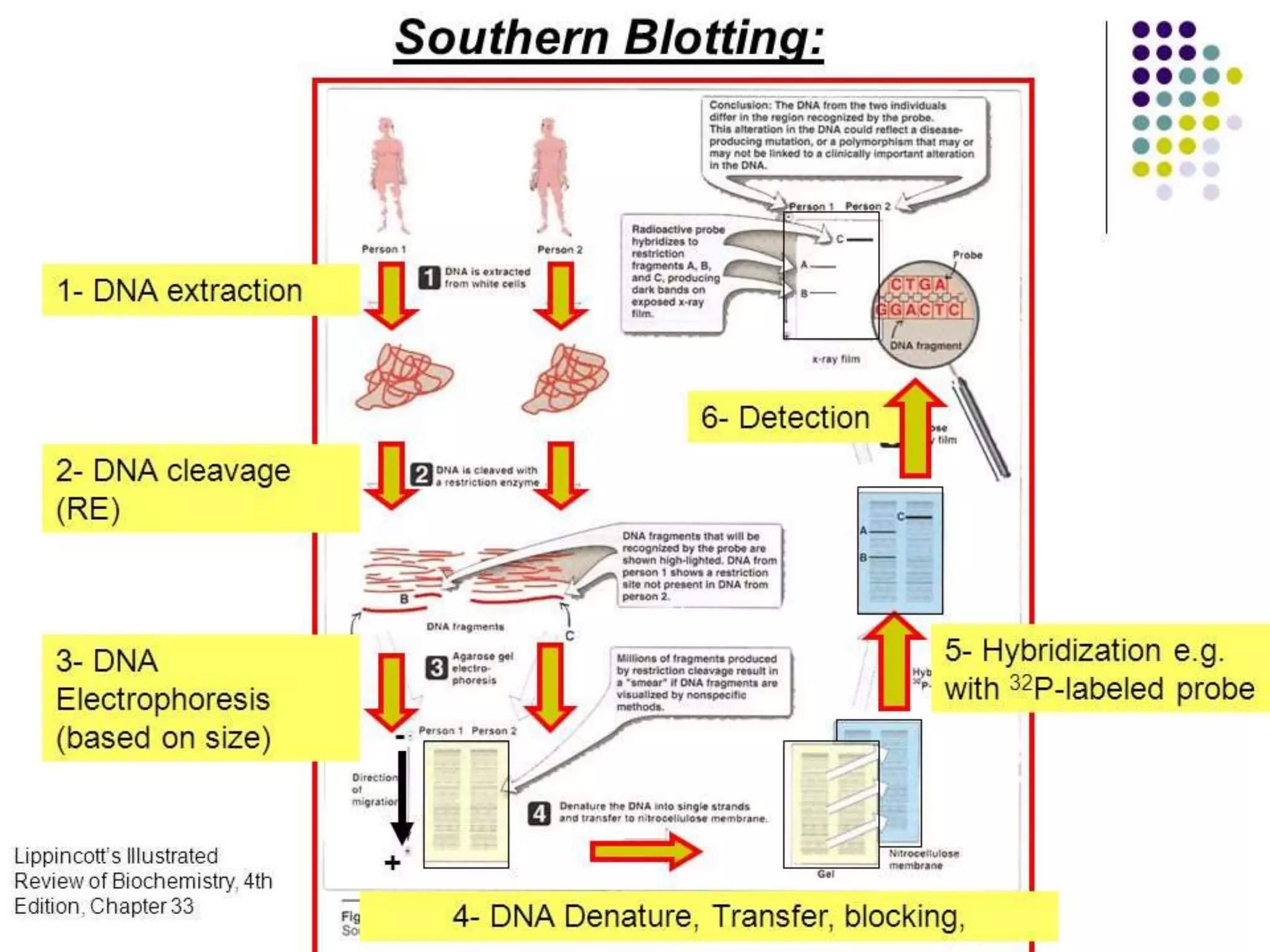
SOUTHERN BLOTTING
Defination:
• Southern blotting is a method of transferring
DNA from an agarose gel to nitrocellulose
filter, on which the DNA can be detected by
suitable probe (eg: complementary DNA or
RNA).
• The technique was developed by E.M.
Southern in 1975.
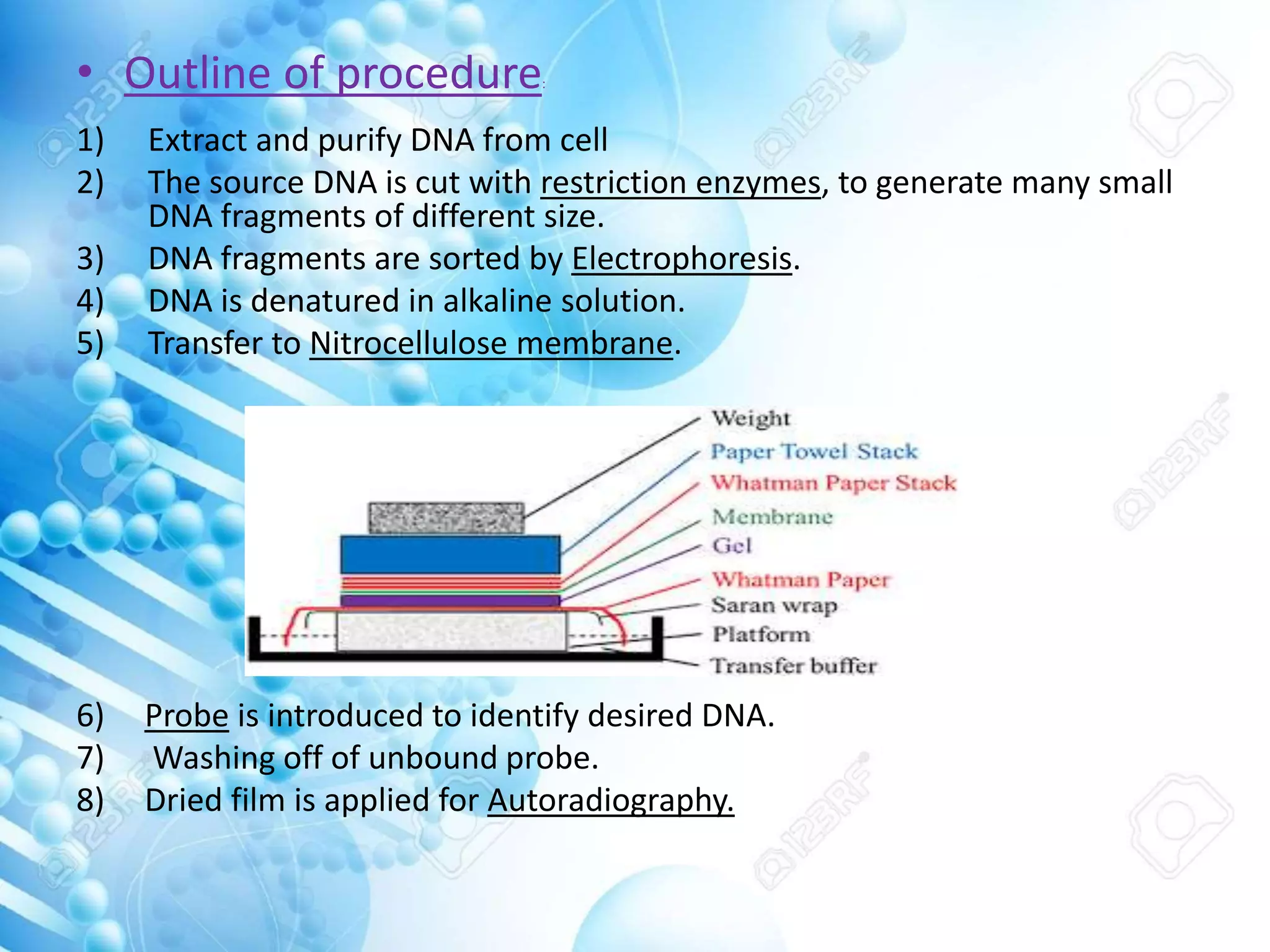
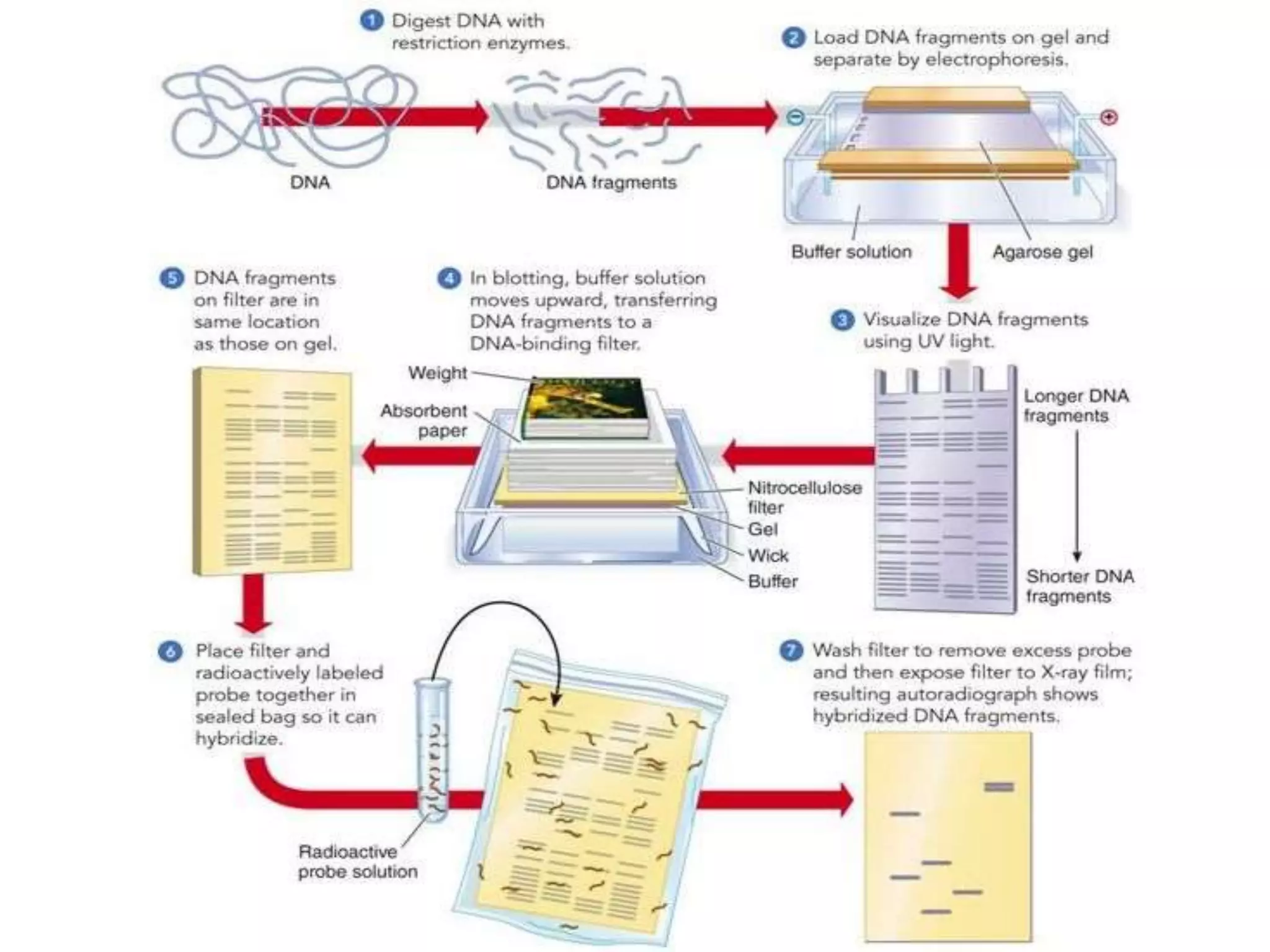
• Outline of procedure:
1) Extract and purify DNA from cell
2) The source DNA is cut with restriction enzymes, to generate many small
DNA fragments of different size.
3) DNA fragments are sorted by Electrophoresis.
4) DNA is denatured in alkaline solution.
5) Transfer to Nitrocellulose membrane.
6) Probe is introduced to identify desired DNA.
7) Washing off of unbound probe.
8) Dried film is applied for Autoradiography.
Contents
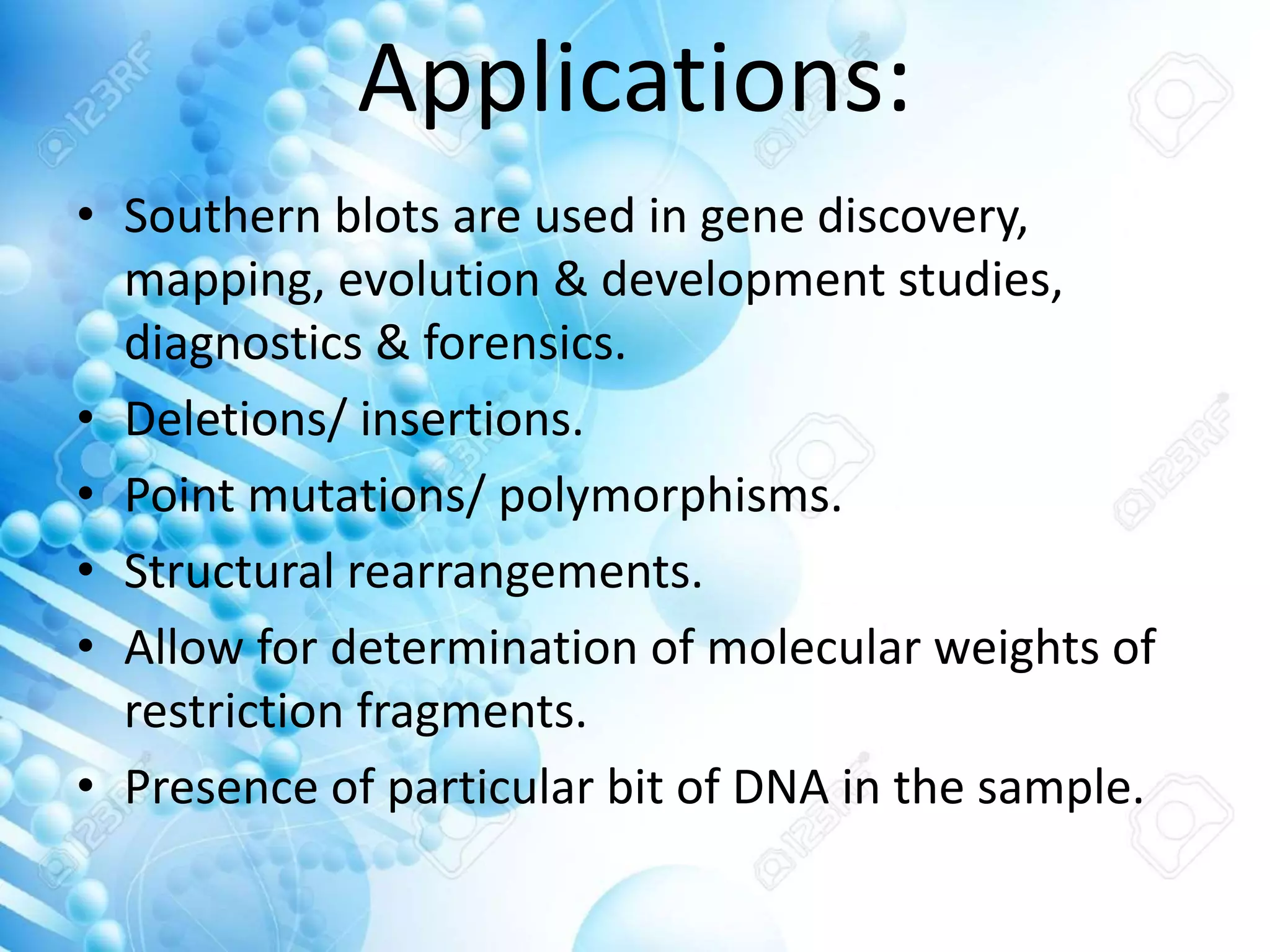
Applications:
• Southern blots are used in gene discovery,
mapping, evolution & development studies,
diagnostics & forensics.
• Deletions/ insertions.
• Point mutations/ polymorphisms.
• Structural rearrangements.
• Allow for determination of molecular weights of
restriction fragments.
• Presence of particular bit of DNA in the sample.
NORTHERN BLOTTING
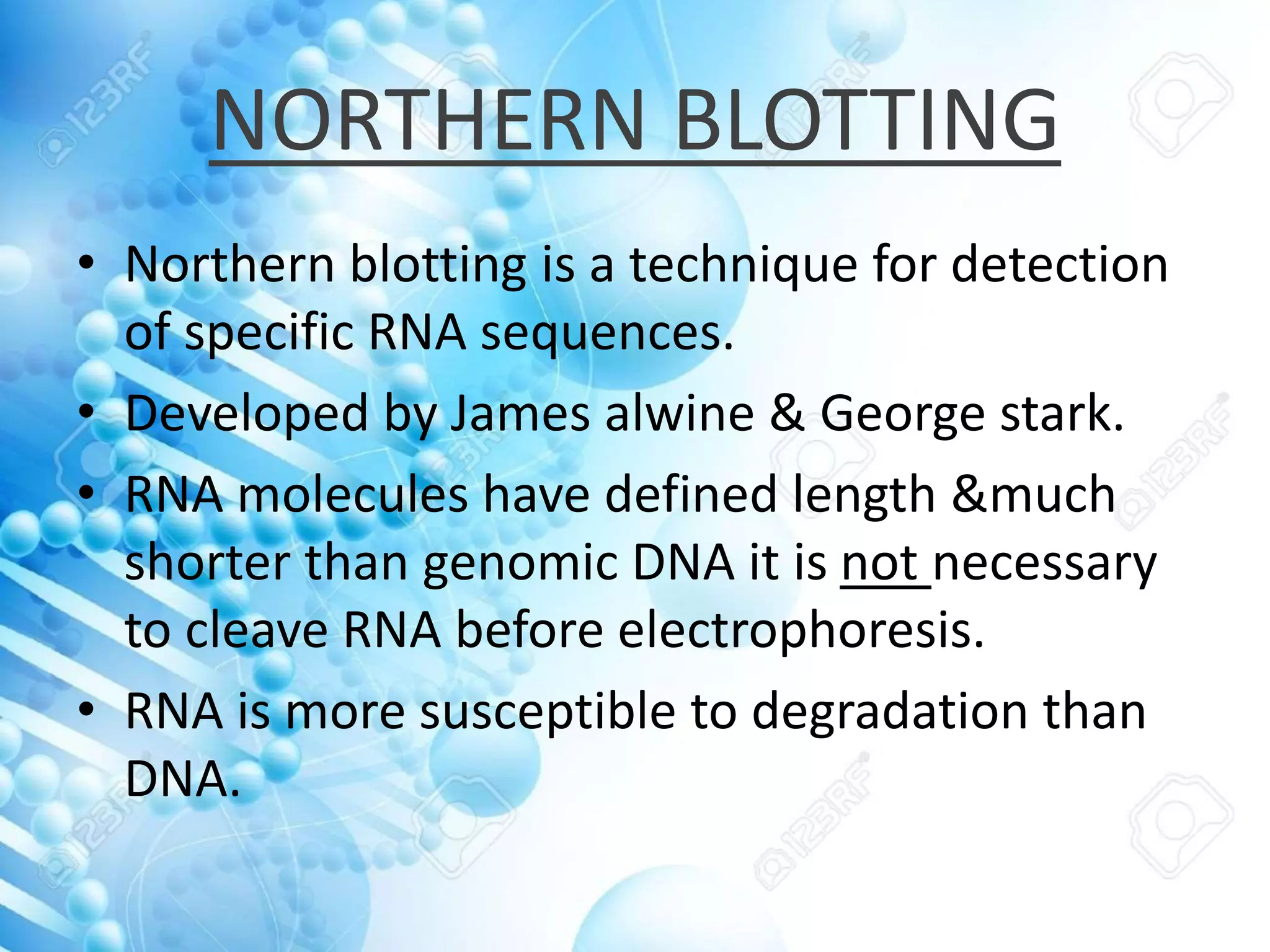
• Northern blotting is a technique for detection
of specific RNA sequences.
• Developed by James alwine & George stark.
• RNA molecules have defined length &much
shorter than genomic DNA it is not necessary
to cleave RNA before electrophoresis.
• RNA is more susceptible to degradation than
DNA.
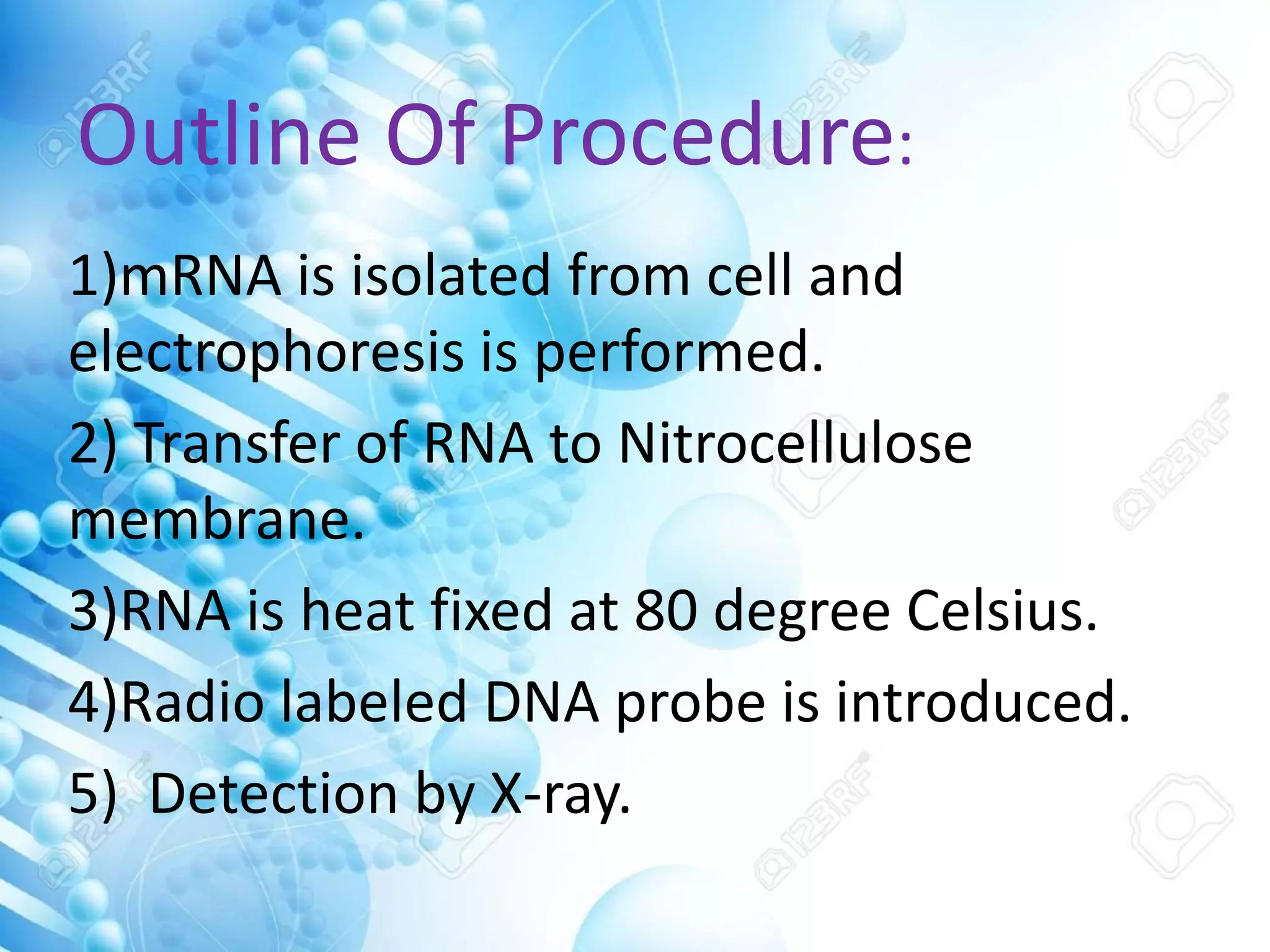
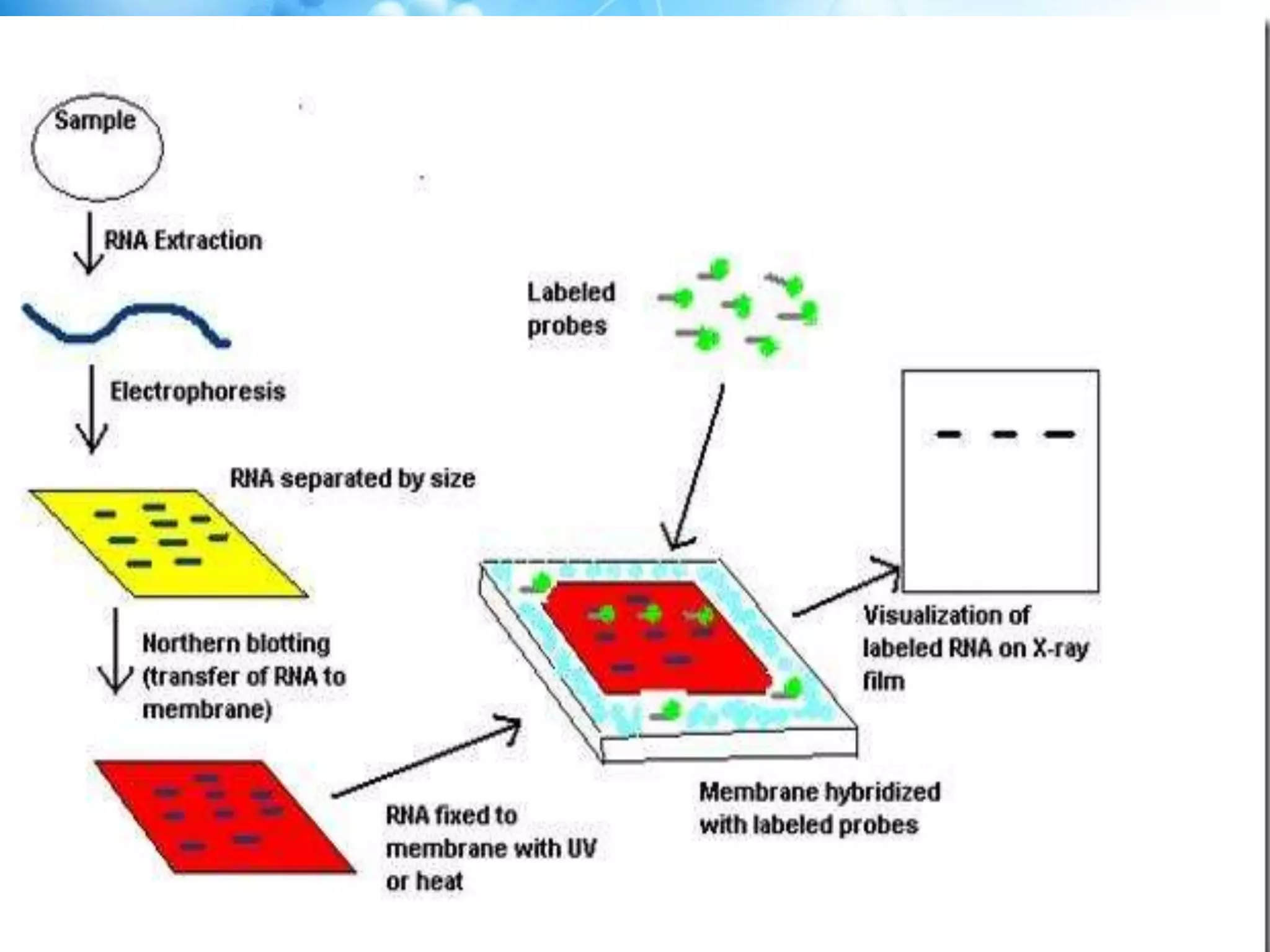
Outline Of Procedure:
1)mRNA is isolated from cell and
electrophoresis is performed.
2) Transfer of RNA to Nitrocellulose
membrane.
3)RNA is heat fixed at 80 degree Celsius.
4)Radio labeled DNA probe is introduced.
5) Detection by X-ray.
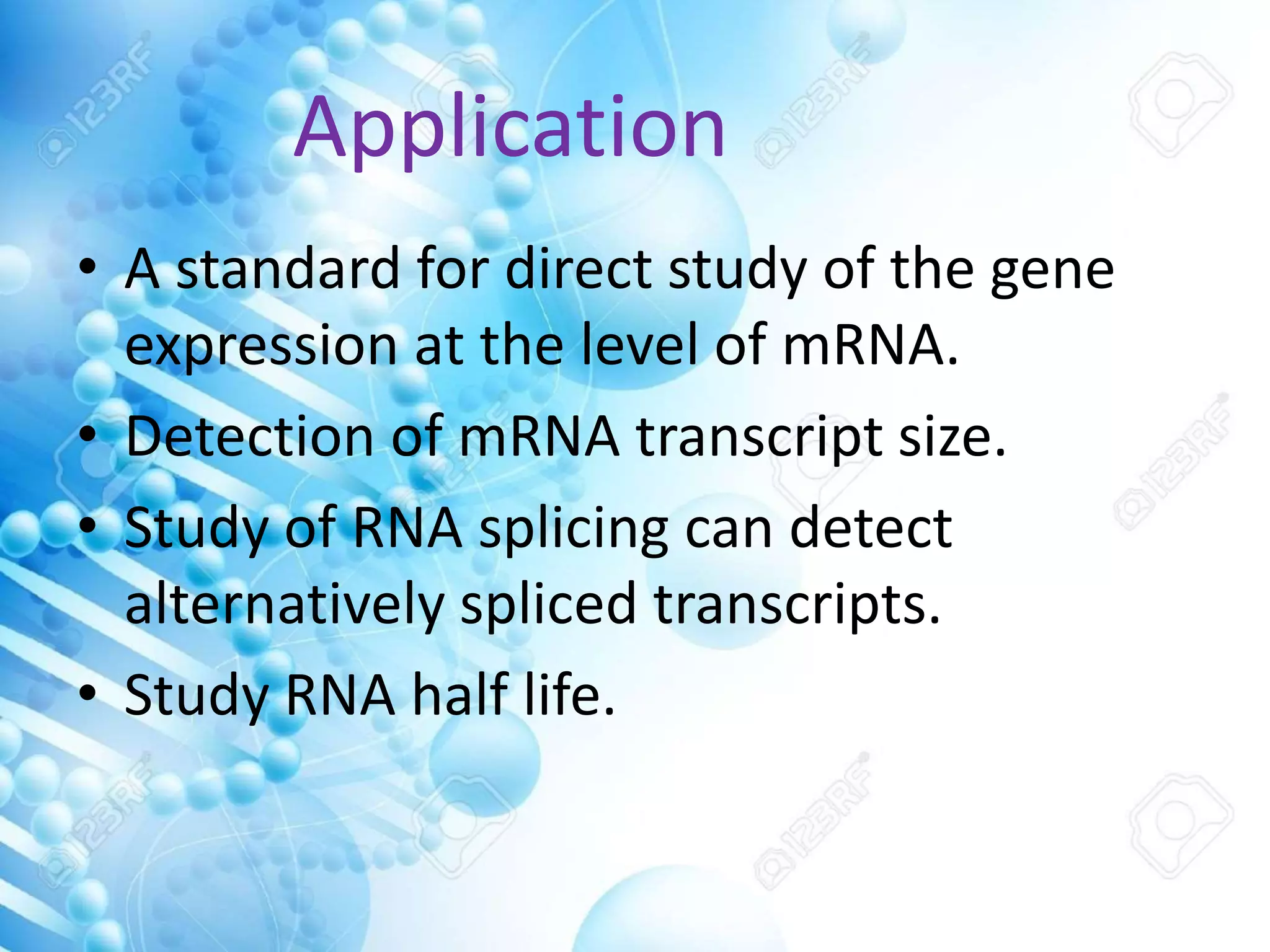
Application
• A standard for direct study of the gene
expression at the level of mRNA.
• Detection of mRNA transcript size.
• Study of RNA splicing can detect
alternatively spliced transcripts.
• Study RNA half life.
DISADVANTAGES:
• Time consuming procedure.
• RNA samples can be degraded by RNAses.
• Use of radioactive probes.
• Detection with multiple probes is a problem.
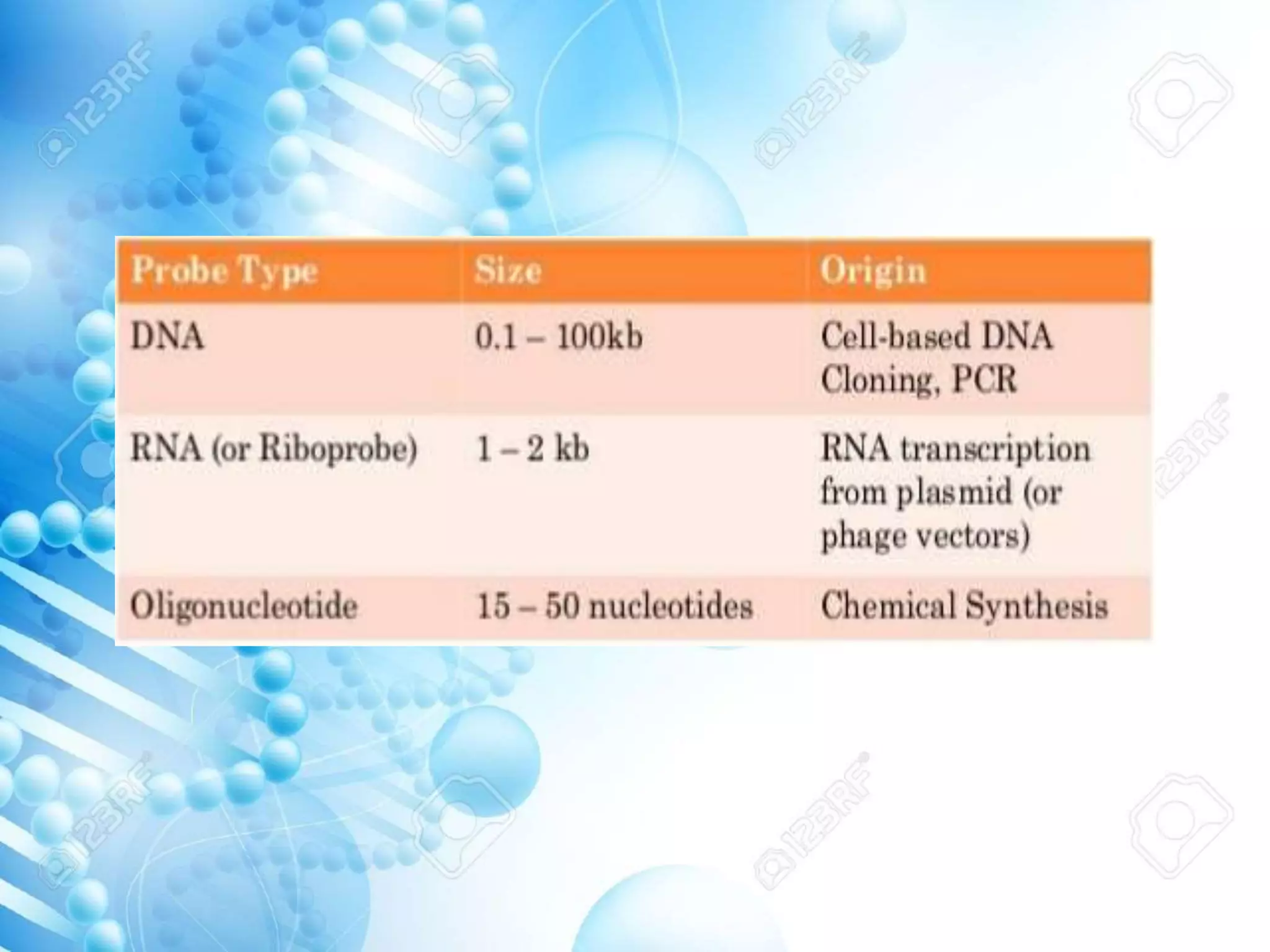
DNA Probe:
• A probe is defined as a single stranded piece of
DNA, labelled (either with radioisotope or with
non- radioactive label), the nucleotide sequence
of which is complementary to the target DNA.
• It is a single stranded piece of DNA ( sometimes
RNA), which can range in size from as little as 15
bp to several hundered kilobases.
• A DNA probe DNA will form complementary base
pairing with another DNA strand.
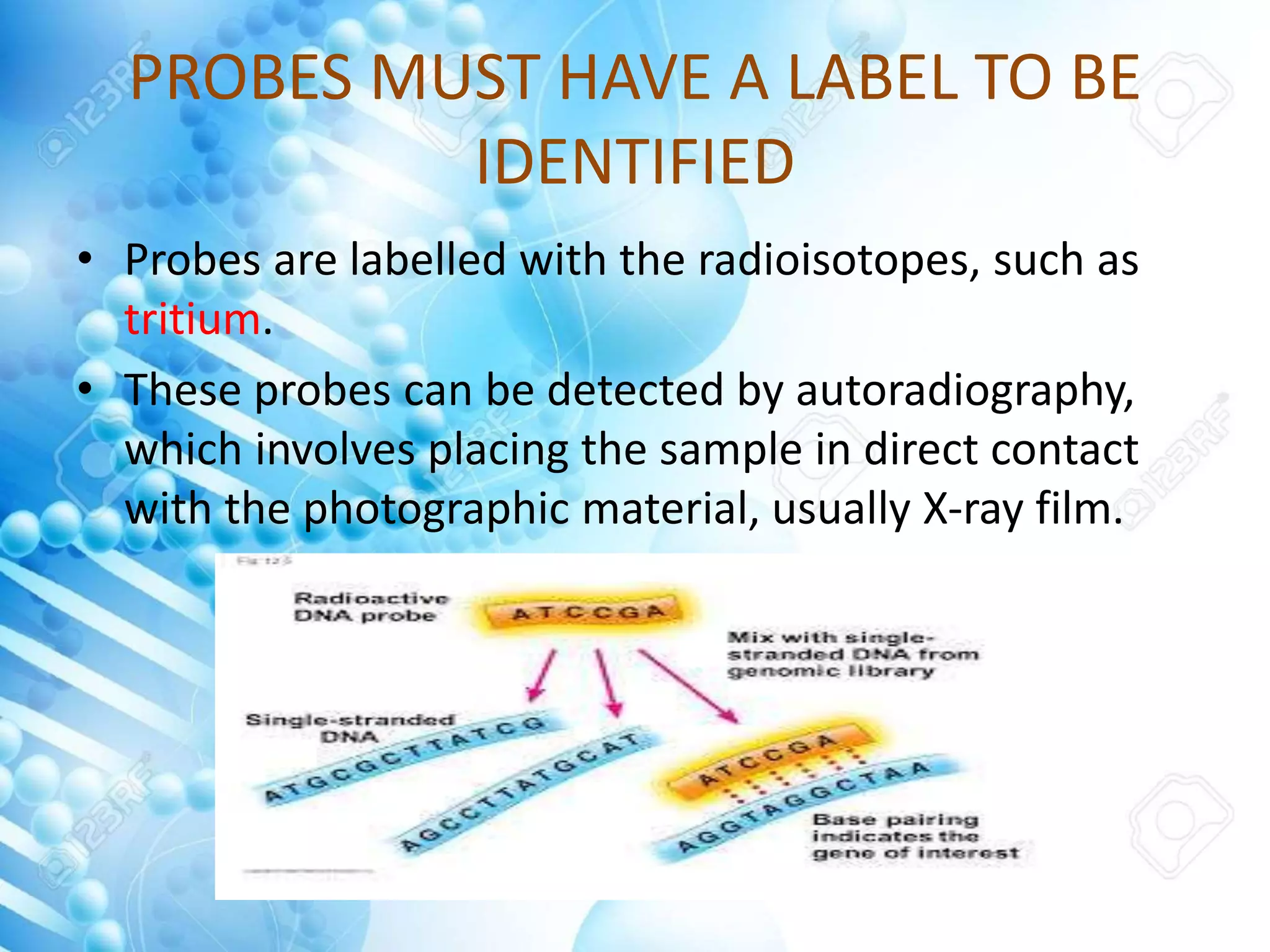
PROBES MUST HAVE A LABEL TO BE
IDENTIFIED
• Probes are labelled with the radioisotopes, such as
tritium.
• These probes can be detected by autoradiography,
which involves placing the sample in direct contact
with the photographic material, usually X-ray film.
USES OF DNA PROBES:
• To search specific DNA sequences of DNA
library.
• In southern and northern blot techniques,
probes are used to identify DNA or RNA
fragments respectively.
• In diagnosis of genetic disorders, such as sickle
cell anaemia, thalassemia, cystic fibrosis, etc.
PCR
(POLYMERASE
CHAIN REACTION)
What is PCR?
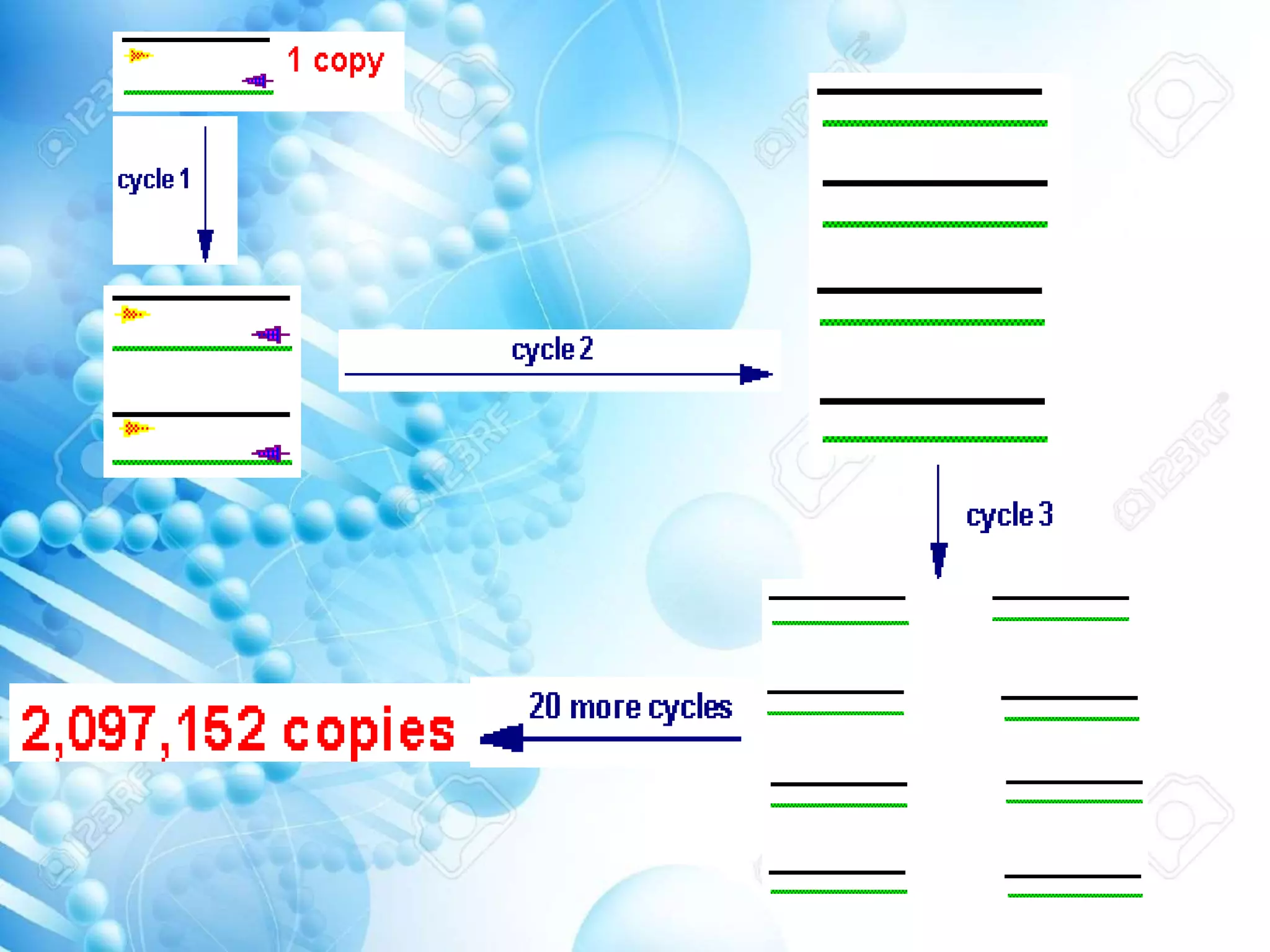
• PCR is exponentially Progressing
synthesis of the defined target DNA
sequences invitro.
• It was involved in 1983 by Dr. Kary
Mullis, for which he received the
Nobel prize in chemistry in 1993.
Why “Polymerase”?
• It is called “polymerase”
because the only enzyme used
in this reaction is DNA
polymerase.
Why “Chain”?
• It is called “chain” because the
products of the first reaction
become substrates of the
following one, and soon.
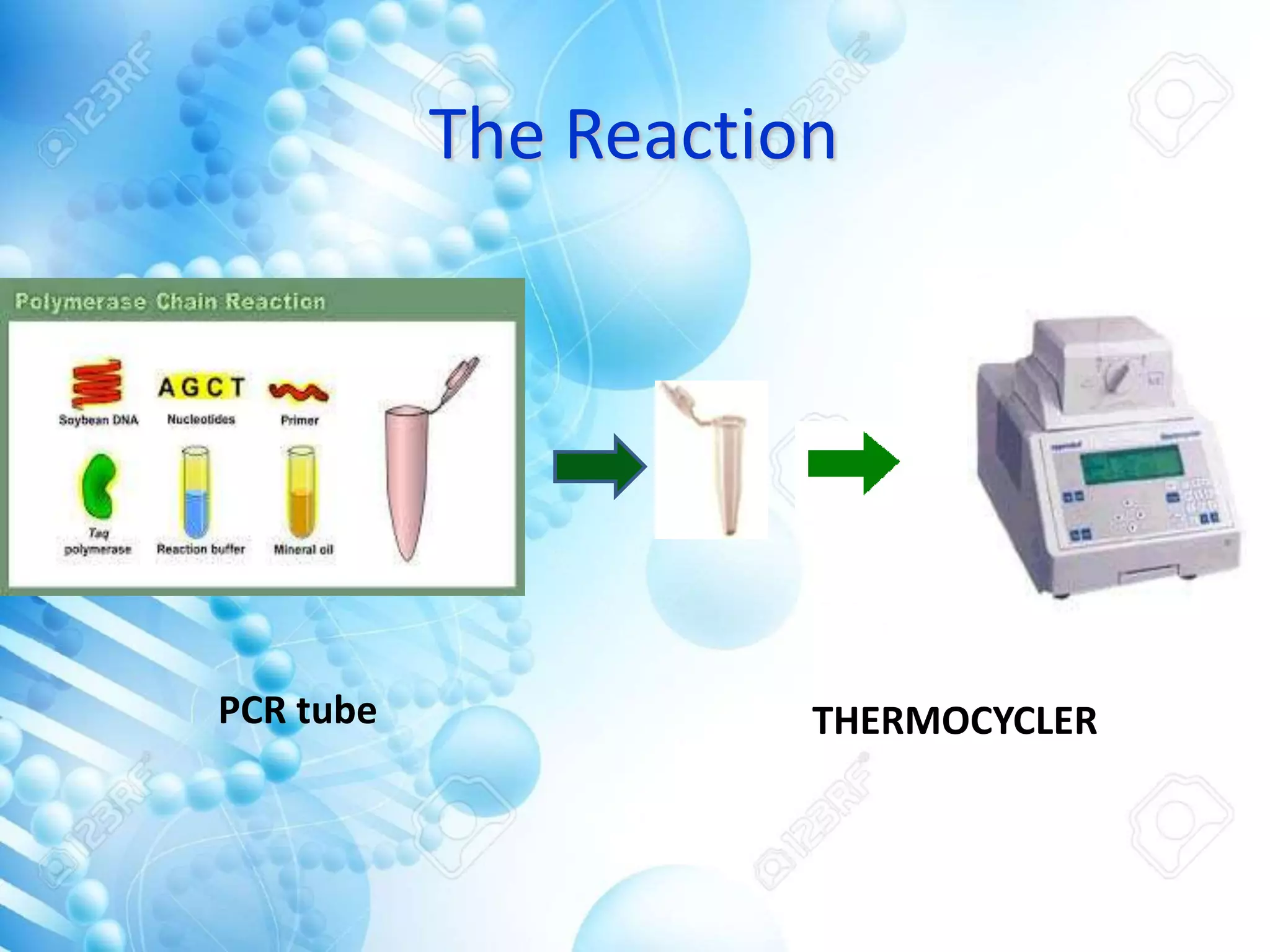
The “Reaction” Components
1) Target DNA - contains the sequence to be amplified.
2) Pair of Primers - oligonucleotides that define the sequence
to be amplified.
3) dNTPs - deoxynucleotidetriphosphates: DNA building blocks.
4) Thermostable DNA Polymerase - enzyme that
catalyzes the reaction
5) Mg++ ions - cofactor of the enzyme
6) Buffer solution – maintains pH and ionic strength
of the reaction solution suitable for the activity of
the enzyme
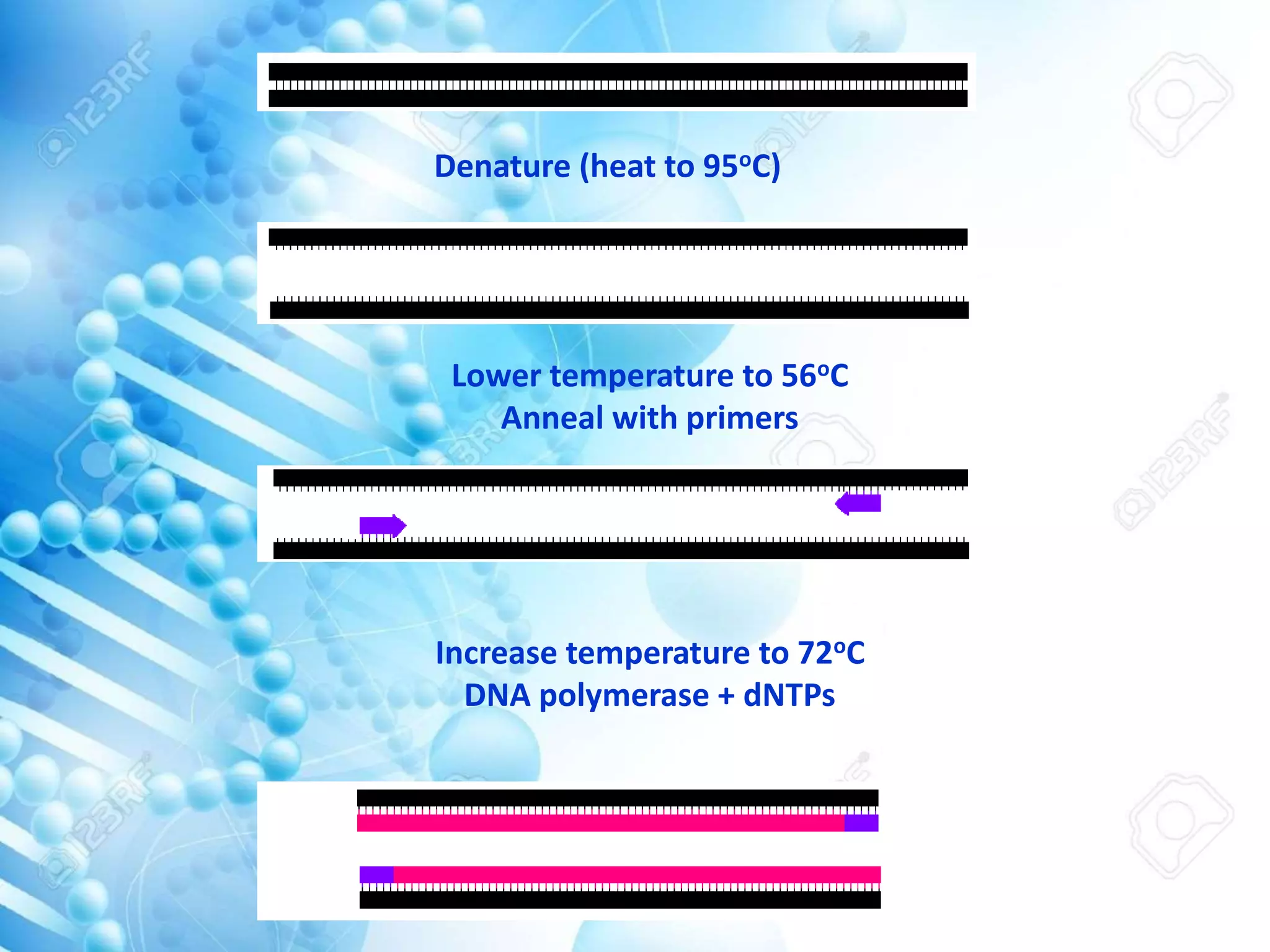
Basic steps :
1)Denaturation of ds DNA template.
2)Annealing of primers.
3)Extension of ds DNA molecules.
Chemical Components:
• Magnesium chloride = .5-2.5mM
• Buffer =pH 8.3-8.8
• dNTPs= 20-200μM
• Primers= 0.1-0.5μM
• DNA polymerase= 1-2.5 units
• Target DNA= ≤ 1μg
Basic Requirements for PCR reaction
• 1)DNA sequence of target region must be
known.
• 2)Primers- typically 20-30bases in size.
• 3)Thermo-stable DNA polymerase- eg Taq
polymerase which is not inactivated by
heating to 95C.
• 4)DNA thermal cycler-machine which can be
programmed to carry out heating and cooling
of samples over a number of cycles.
Instrumentation
The Reaction
THERMOCYCLERPCR tube
Denature (heat to 95oC)
Lower temperature to 56oC
Anneal with primers
Increase temperature to 72oC
DNA polymerase + dNTPs
DNA copies vs Cycle number
0
500000
1000000
1500000
2000000
2500000
0 1 2 3 4 5 6 7 8 9 10 11 12 13 14 15 16 17 18 19 20 21 22 23
Cycle number
DNAcopies
APPLICATIONS OF PCR:
• Gene therapy
• PCR in forensic medicine
 Criminal identification
 DNA fingerprinting
• DNA sequencing
• PCR in clinical diagnosis
 Prenatal diagnosis of inherited diseases
PCR in sex determination of embryos
 Diagnosis of retroviral infections
 Diagnosis of bacterial infections
 Diagnosis of cancer
- Eg: cervical cancer on chromosome 14 – 18
• PCR in comparative studies of genomes
- Study of evolutionary biology
• Recombinant DNA technology
- Eg: Insulin production
• Preparation of vaccines
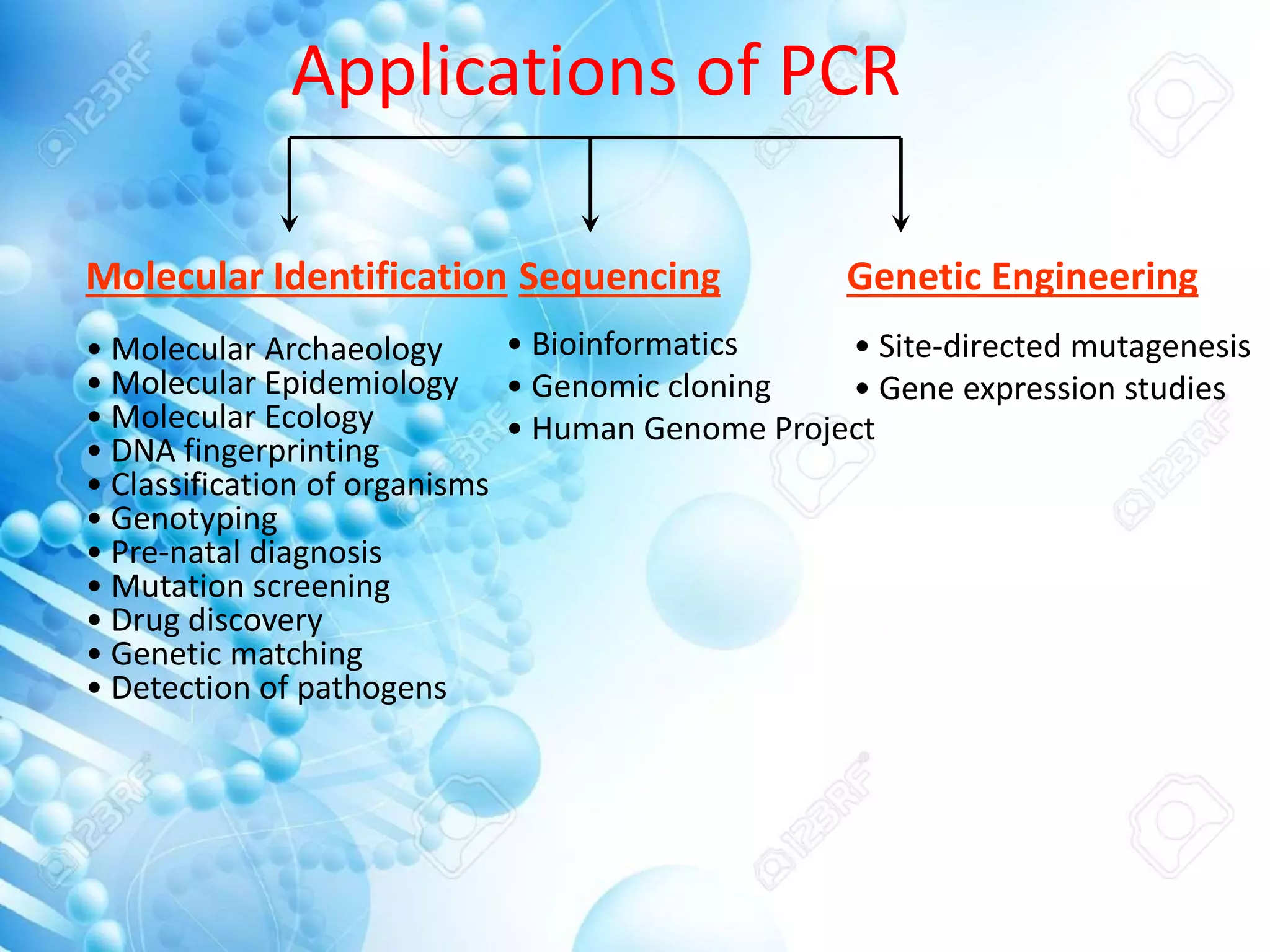
Applications of PCR
Molecular Identification Sequencing Genetic Engineering
• Molecular Archaeology
• Molecular Epidemiology
• Molecular Ecology
• DNA fingerprinting
• Classification of organisms
• Genotyping
• Pre-natal diagnosis
• Mutation screening
• Drug discovery
• Genetic matching
• Detection of pathogens
• Bioinformatics
• Genomic cloning
• Human Genome Project
• Site-directed mutagenesis
• Gene expression studies
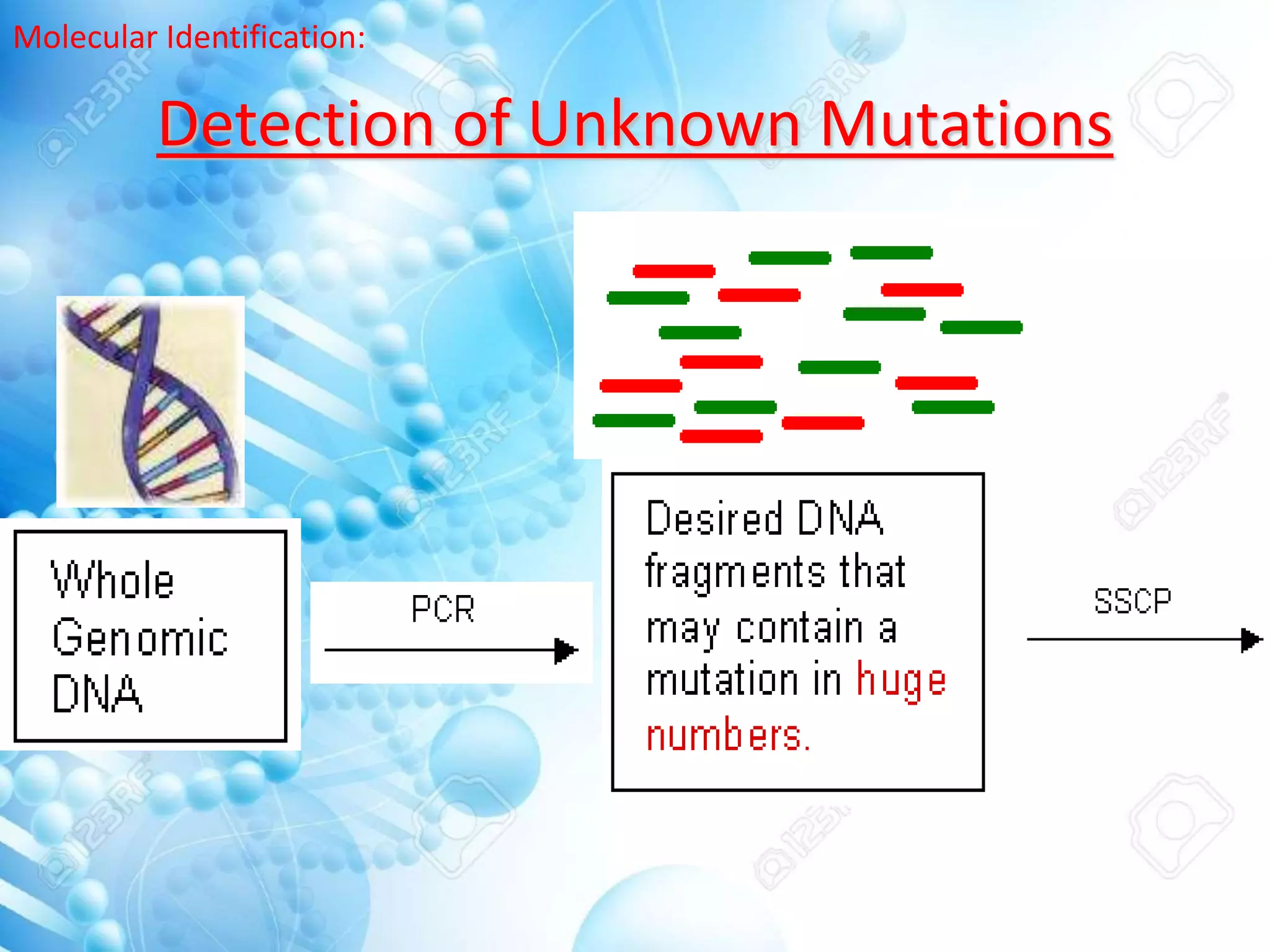
MOLECULAR IDENTIFICATION:
Detection of Unknown Mutations
Molecular Identification:
Detection Of Pathogens
Molecular Identification:
Genotyping by STR markers
Molecular Identification:
Parenatal Diagnosis
644 bp
440 bp
204 bp
Molecular analysis of a family with an autosomal recessive disease.
Molecular Identification:
• Chorionic Villus
• Amniotic Fluid
Advantages of PCR
• Quick, Reliable, Sensitive, Relatively easy, Specific
• Small amount of DNA is required per test
• Result obtained more quickly- usually within 1
day for PCR
• Usually not necessary to use radioactive material
(32P) for PCR
• PCR is much more precise in determining the
sizes of alleles- essential for some disorders.
• PCR can be used to detect point mutations.
Disadvantages of PCR
• Taq polymerase is expensive
• Contamination
• False reactions
• Internal control
• Capacity building needed
• Unspecific amplification
Conclusion
The speed and ease of use, sensitivity,
specificity and robustness of PCR has
revolutionised molecular biology
and made PCR the most widely used and
powerful technique with great spectrum of
research and diagnostic applications.
Presentation blotting

Presentation blotting

  • 1.
    Presentation on Basic MolecularTechniques • Blotting • Probe • Polymerase Chain Reaction & It’s Application Prepared By: Rupal Agrawal 16SOSMB21001
  • 2.
    BLOTTING •Defination: Visualization of specificDNA, RNA & protein among many thousands of other molecules requires the convergence of number of techniques which are collectively termed as BLOT transfer.
  • 3.
    Types of blottingtechniques 1) Southern blotting ( to detect DNA) 2) Northern blotting ( to detect RNA) 3) Western blotting (to detect protein)
  • 4.
    SOUTHERN BLOTTING Defination: • Southernblotting is a method of transferring DNA from an agarose gel to nitrocellulose filter, on which the DNA can be detected by suitable probe (eg: complementary DNA or RNA). • The technique was developed by E.M. Southern in 1975.
  • 6.
    • Outline ofprocedure: 1) Extract and purify DNA from cell 2) The source DNA is cut with restriction enzymes, to generate many small DNA fragments of different size. 3) DNA fragments are sorted by Electrophoresis. 4) DNA is denatured in alkaline solution. 5) Transfer to Nitrocellulose membrane. 6) Probe is introduced to identify desired DNA. 7) Washing off of unbound probe. 8) Dried film is applied for Autoradiography.
  • 7.
  • 8.
    Applications: • Southern blotsare used in gene discovery, mapping, evolution & development studies, diagnostics & forensics. • Deletions/ insertions. • Point mutations/ polymorphisms. • Structural rearrangements. • Allow for determination of molecular weights of restriction fragments. • Presence of particular bit of DNA in the sample.
  • 9.
    NORTHERN BLOTTING • Northernblotting is a technique for detection of specific RNA sequences. • Developed by James alwine & George stark. • RNA molecules have defined length &much shorter than genomic DNA it is not necessary to cleave RNA before electrophoresis. • RNA is more susceptible to degradation than DNA.
  • 10.
    Outline Of Procedure: 1)mRNAis isolated from cell and electrophoresis is performed. 2) Transfer of RNA to Nitrocellulose membrane. 3)RNA is heat fixed at 80 degree Celsius. 4)Radio labeled DNA probe is introduced. 5) Detection by X-ray.
  • 12.
    Application • A standardfor direct study of the gene expression at the level of mRNA. • Detection of mRNA transcript size. • Study of RNA splicing can detect alternatively spliced transcripts. • Study RNA half life.
  • 13.
    DISADVANTAGES: • Time consumingprocedure. • RNA samples can be degraded by RNAses. • Use of radioactive probes. • Detection with multiple probes is a problem.
  • 14.
    DNA Probe: • Aprobe is defined as a single stranded piece of DNA, labelled (either with radioisotope or with non- radioactive label), the nucleotide sequence of which is complementary to the target DNA. • It is a single stranded piece of DNA ( sometimes RNA), which can range in size from as little as 15 bp to several hundered kilobases. • A DNA probe DNA will form complementary base pairing with another DNA strand.
  • 16.
    PROBES MUST HAVEA LABEL TO BE IDENTIFIED • Probes are labelled with the radioisotopes, such as tritium. • These probes can be detected by autoradiography, which involves placing the sample in direct contact with the photographic material, usually X-ray film.
  • 17.
    USES OF DNAPROBES: • To search specific DNA sequences of DNA library. • In southern and northern blot techniques, probes are used to identify DNA or RNA fragments respectively. • In diagnosis of genetic disorders, such as sickle cell anaemia, thalassemia, cystic fibrosis, etc.
  • 18.
  • 19.
    What is PCR? •PCR is exponentially Progressing synthesis of the defined target DNA sequences invitro. • It was involved in 1983 by Dr. Kary Mullis, for which he received the Nobel prize in chemistry in 1993.
  • 20.
    Why “Polymerase”? • Itis called “polymerase” because the only enzyme used in this reaction is DNA polymerase.
  • 21.
    Why “Chain”? • Itis called “chain” because the products of the first reaction become substrates of the following one, and soon.
  • 22.
    The “Reaction” Components 1)Target DNA - contains the sequence to be amplified. 2) Pair of Primers - oligonucleotides that define the sequence to be amplified. 3) dNTPs - deoxynucleotidetriphosphates: DNA building blocks. 4) Thermostable DNA Polymerase - enzyme that catalyzes the reaction 5) Mg++ ions - cofactor of the enzyme 6) Buffer solution – maintains pH and ionic strength of the reaction solution suitable for the activity of the enzyme
  • 23.
    Basic steps : 1)Denaturationof ds DNA template. 2)Annealing of primers. 3)Extension of ds DNA molecules. Chemical Components: • Magnesium chloride = .5-2.5mM • Buffer =pH 8.3-8.8 • dNTPs= 20-200μM • Primers= 0.1-0.5μM • DNA polymerase= 1-2.5 units • Target DNA= ≤ 1μg
  • 24.
    Basic Requirements forPCR reaction • 1)DNA sequence of target region must be known. • 2)Primers- typically 20-30bases in size. • 3)Thermo-stable DNA polymerase- eg Taq polymerase which is not inactivated by heating to 95C. • 4)DNA thermal cycler-machine which can be programmed to carry out heating and cooling of samples over a number of cycles.
  • 25.
  • 26.
  • 27.
    Denature (heat to95oC) Lower temperature to 56oC Anneal with primers Increase temperature to 72oC DNA polymerase + dNTPs
  • 29.
    DNA copies vsCycle number 0 500000 1000000 1500000 2000000 2500000 0 1 2 3 4 5 6 7 8 9 10 11 12 13 14 15 16 17 18 19 20 21 22 23 Cycle number DNAcopies
  • 30.
    APPLICATIONS OF PCR: •Gene therapy • PCR in forensic medicine  Criminal identification  DNA fingerprinting • DNA sequencing • PCR in clinical diagnosis  Prenatal diagnosis of inherited diseases PCR in sex determination of embryos  Diagnosis of retroviral infections  Diagnosis of bacterial infections  Diagnosis of cancer - Eg: cervical cancer on chromosome 14 – 18
  • 31.
    • PCR incomparative studies of genomes - Study of evolutionary biology • Recombinant DNA technology - Eg: Insulin production • Preparation of vaccines
  • 32.
    Applications of PCR MolecularIdentification Sequencing Genetic Engineering • Molecular Archaeology • Molecular Epidemiology • Molecular Ecology • DNA fingerprinting • Classification of organisms • Genotyping • Pre-natal diagnosis • Mutation screening • Drug discovery • Genetic matching • Detection of pathogens • Bioinformatics • Genomic cloning • Human Genome Project • Site-directed mutagenesis • Gene expression studies
  • 33.
  • 34.
    Detection of UnknownMutations Molecular Identification:
  • 35.
  • 36.
    Genotyping by STRmarkers Molecular Identification:
  • 37.
    Parenatal Diagnosis 644 bp 440bp 204 bp Molecular analysis of a family with an autosomal recessive disease. Molecular Identification: • Chorionic Villus • Amniotic Fluid
  • 38.
    Advantages of PCR •Quick, Reliable, Sensitive, Relatively easy, Specific • Small amount of DNA is required per test • Result obtained more quickly- usually within 1 day for PCR • Usually not necessary to use radioactive material (32P) for PCR • PCR is much more precise in determining the sizes of alleles- essential for some disorders. • PCR can be used to detect point mutations.
  • 39.
    Disadvantages of PCR •Taq polymerase is expensive • Contamination • False reactions • Internal control • Capacity building needed • Unspecific amplification
  • 40.
    Conclusion The speed andease of use, sensitivity, specificity and robustness of PCR has revolutionised molecular biology and made PCR the most widely used and powerful technique with great spectrum of research and diagnostic applications.