POLIOMYELITIS
T. Ramesh
Assistant Professor of Zoology
Vivekananda College
Tiruvedakam
CONTENTS
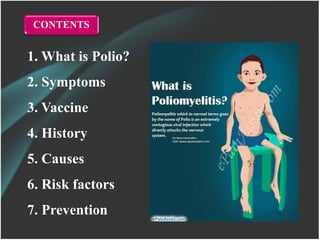
1. What is Polio?
2. Symptoms
3. Vaccine
4. History
5. Causes
6. Risk factors
7. Prevention
POLIO
Poliomyelitis
Infectious virus- Genus- Enterovirus
Family- Picornaviridae
Spread easily from person to person
Viral infection that can cause paralysis and death
Destruction of motor neurons in the central nervous
system
Polio infections: Sub-Clinical, Non-Paralytic &
Paralytic
SUB CLINICAL FORMS
The most common Polio Infection
Approximately- 95 % of all cases
Asymptomatic and does not Central Nervous System
NON PARALYTIC
Mild symptoms without paralysis
Approximately- 1-5 % of all cases
Affects Central Nervous System
PARALYTIC
The most serious cases and rare
 Full or partial Paralysis
Three forms of paralysis
i . Spinal polio- Affects the spinal
ii. Bubar polio- Affects brain stem
iii. Bulbospinal polio- Affects both
Post polio syndrome- Symptoms after 35 years
A TEM micrograph of poliovirus
Transmission
 Very Contagious
 Infectious Diseases
 Person-to-Person
 Oral- Fecal Route
 Oral-Oral route
 Poor Sanitation
 Contaminated Water & Food
Incubation period 6 to 20 days
A blockage of the lumbar
anterior spinal cord artery
due to polio (PV3)
Poliomyelitis pathogenesis
Reservoirs
 Humans are the only known carrier
 Subclinical- asymptomatic
 Infected do not know that they have the virus and spread it.
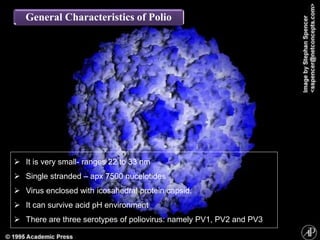
General Characteristics of Polio
 It is very small- ranges 22 to 33 nm
 Single stranded – apx 7500 nucelotides
 Virus enclosed with icosahedral protein capsid.
 It can survive acid pH environment
 There are three serotypes of poliovirus: namely PV1, PV2 and PV3
Key test for Identification
 A stool or pharynx sample from suspected/infected persons
 Cerebrospinal fluid
Signs and Symptoms of
Disease
Non-paralytic : Fever, Sore throat, headache, vomiting, pain in limbs,
stiffness in the neck.
Paralytic: Very similar symptoms like non-paralytic; with in a week
loss of reflexes, severe muscle aches, Weakness, flaccid paralysis-
one side
Post Polio: Muscle or joint weakness and pain; exhaustion after
minimal activity; difficult to breathing; swallowing, intolerance of cold
temeparture; concentration and memory difficulties, depression etc.
Historical Information
 1789- Michael Underwood –first record
 1930- three strains were discovered
 1953- Dr. Jonas Salk developed inactivated polio vaccine
 1980- post polio symptoms identified
 1981- Genome sequence
 1999- inactivated polio vaccine replaced by oral polio vaccine
Case Reported in 2017
Country Wild cases
Circulating vaccine-
derived cases
Transmission Status Type(s)
Afghanista
n
14 0 endemic WPV1
Pakistan 8 0 endemic WPV1
DRC 0 17 cVDPV only cVDPV2
Syria 0 74 cVDPV only cVDPV2
Total 22 91
Virulence factors
 Virus enters- mouth and nose
 Begins replication in the throat and intestines
 Poliovirus use immunoglobulin like a molecules- receptor for recognizing host
cells
 CD155 hosts motor neurons allow virus to attach
 After attached these virus hijacks the cell assembly- cytolysis
Thank you

Poliomyelitis

  • 1.
    POLIOMYELITIS T. Ramesh Assistant Professorof Zoology Vivekananda College Tiruvedakam
  • 2.
    CONTENTS 1. What isPolio? 2. Symptoms 3. Vaccine 4. History 5. Causes 6. Risk factors 7. Prevention
  • 3.
    POLIO Poliomyelitis Infectious virus- Genus-Enterovirus Family- Picornaviridae Spread easily from person to person Viral infection that can cause paralysis and death Destruction of motor neurons in the central nervous system Polio infections: Sub-Clinical, Non-Paralytic & Paralytic
  • 4.
    SUB CLINICAL FORMS Themost common Polio Infection Approximately- 95 % of all cases Asymptomatic and does not Central Nervous System NON PARALYTIC Mild symptoms without paralysis Approximately- 1-5 % of all cases Affects Central Nervous System
  • 5.
    PARALYTIC The most seriouscases and rare  Full or partial Paralysis Three forms of paralysis i . Spinal polio- Affects the spinal ii. Bubar polio- Affects brain stem iii. Bulbospinal polio- Affects both Post polio syndrome- Symptoms after 35 years A TEM micrograph of poliovirus
  • 6.
    Transmission  Very Contagious Infectious Diseases  Person-to-Person  Oral- Fecal Route  Oral-Oral route  Poor Sanitation  Contaminated Water & Food Incubation period 6 to 20 days A blockage of the lumbar anterior spinal cord artery due to polio (PV3) Poliomyelitis pathogenesis
  • 7.
    Reservoirs  Humans arethe only known carrier  Subclinical- asymptomatic  Infected do not know that they have the virus and spread it.
  • 8.
    General Characteristics ofPolio  It is very small- ranges 22 to 33 nm  Single stranded – apx 7500 nucelotides  Virus enclosed with icosahedral protein capsid.  It can survive acid pH environment  There are three serotypes of poliovirus: namely PV1, PV2 and PV3
  • 9.
    Key test forIdentification  A stool or pharynx sample from suspected/infected persons  Cerebrospinal fluid Signs and Symptoms of Disease Non-paralytic : Fever, Sore throat, headache, vomiting, pain in limbs, stiffness in the neck. Paralytic: Very similar symptoms like non-paralytic; with in a week loss of reflexes, severe muscle aches, Weakness, flaccid paralysis- one side Post Polio: Muscle or joint weakness and pain; exhaustion after minimal activity; difficult to breathing; swallowing, intolerance of cold temeparture; concentration and memory difficulties, depression etc.
  • 10.
    Historical Information  1789-Michael Underwood –first record  1930- three strains were discovered  1953- Dr. Jonas Salk developed inactivated polio vaccine  1980- post polio symptoms identified  1981- Genome sequence  1999- inactivated polio vaccine replaced by oral polio vaccine
  • 11.
    Case Reported in2017 Country Wild cases Circulating vaccine- derived cases Transmission Status Type(s) Afghanista n 14 0 endemic WPV1 Pakistan 8 0 endemic WPV1 DRC 0 17 cVDPV only cVDPV2 Syria 0 74 cVDPV only cVDPV2 Total 22 91
  • 12.
    Virulence factors  Virusenters- mouth and nose  Begins replication in the throat and intestines  Poliovirus use immunoglobulin like a molecules- receptor for recognizing host cells  CD155 hosts motor neurons allow virus to attach  After attached these virus hijacks the cell assembly- cytolysis
  • 13.