Streptococcus pneumoniae   Staphylococci   Faculty:  Dr. Alvin Fox www.freelivedoctor.com
S. pneumoniae diplococci Pneumococcus autolysin bile solubility test optochin susceptibility capsule Quellung reaction Staphylococcus aureus opportunistic diseases food poisoning/enterotoxins toxic shock syndrome toxic shock toxin exfoliative toxin/scalded skin syndrome  ,  ,  ,    cytotoxins leucocidin lipase hyaluronidase protein A  coagulase (+) or coagulase (–) Staphylococcus epidermidis KEYWORDS www.freelivedoctor.com
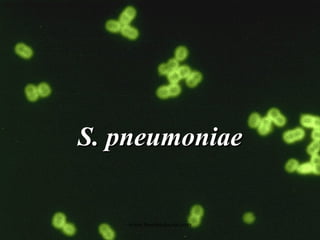
S. pneumoniae www.freelivedoctor.com
S. pneumoniae   leading cause of pneumonia particularly young and old after damage to upper respiratory tract * e.g. following viral infection bacteremia meningitis middle ear infections (otitis media) www.freelivedoctor.com
S. pneumoniae    hemolytic pneumolysin  degrades red blood cells under aerobic conditions  grows well on sheep blood agar no group antigen  www.freelivedoctor.com
Diagnosis - spinal fluid direct Gram staining detection of capsular antigen www.freelivedoctor.com
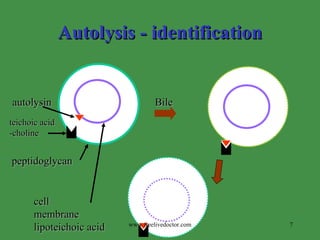
Autolysis - identification Bile peptidoglycan cell  membrane lipoteichoic acid teichoic acid -choline autolysin www.freelivedoctor.com
C polysaccharide Teichoic acid Precipitates in serum C-reactive protein   www.freelivedoctor.com
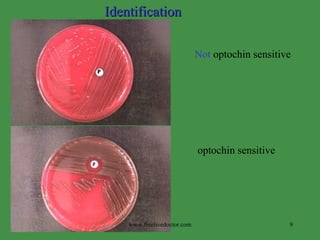
Not  optochin sensitive optochin sensitive Identification www.freelivedoctor.com
Capsule prominent  virulent strains  anti-phagocytic carbohydrate antigens  vary among strains www.freelivedoctor.com
Capsule immunity  serotype specific vaccine contains multiple serotypes only for susceptible population www.freelivedoctor.com
Quellung reaction using antisera  capsule "fixed"  visible microscopically www.freelivedoctor.com
Pathogenesis Teichoic acid complement activation  large numbers of inflammatory cells at infection site www.freelivedoctor.com
Therapy S. pneumoniae   most strains susceptible to penicillin  resistance is common www.freelivedoctor.com
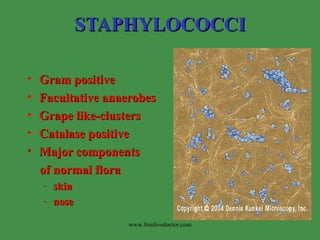
STAPHYLOCOCCI Gram positive Facultative anaerobes Grape like-clusters Catalase positive Major components  of normal flora  skin nose www.freelivedoctor.com
Staphylococcus aureus www.freelivedoctor.com
One of commonest opportunistic  infections - hospital and community : pneumonia osteomyelitis septic arthritis bacteremia endocarditis abscesses/boils other skin infections www.freelivedoctor.com
Food poisoning not an infection food contaminated by humans  growth of bacteria production of enterotoxin onset and recovery both occur within few hours www.freelivedoctor.com
Food poisoning Vomiting nausea diarrhea abdominal pain www.freelivedoctor.com
Toxic shock syndrome fever rash desquamation vomiting diarrhea www.freelivedoctor.com
Toxic shock syndrome Toxic shock toxin  Dissemination Organism no dissemination  www.freelivedoctor.com
S. aureus babies scalded skin syndrome exfoliatin www.freelivedoctor.com
Lytic exotoxins:    toxin    (sphingomyelinase C)    toxin    toxins detergent-like leucocidins www.freelivedoctor.com
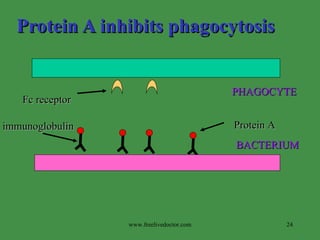
Protein A inhibits phagocytosis Protein A immunoglobulin Fc receptor BACTERIUM  PHAGOCYTE www.freelivedoctor.com
Spread   tissue-degrading enzymes lipase  hyaluronidase www.freelivedoctor.com
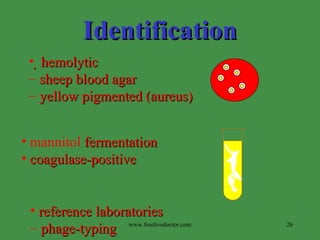
Identification    hemolytic  sheep blood agar yellow pigmented   (aureus) mannitol  fermentation coagulase-positive reference laboratories  phage-typing  www.freelivedoctor.com
Staphylococcus epidermidis major component, skin flora opportunistic infection - less common than S.aureus nosomial infections  shunts, catheters artificial heart valves/joints  www.freelivedoctor.com
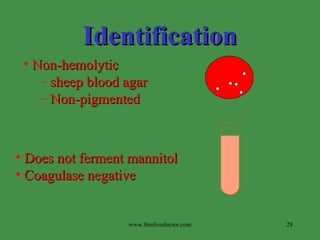
Identification Non-hemolytic  sheep blood agar Non-pigmented Does not ferment mannitol Coagulase negative www.freelivedoctor.com
Staphylococcus saprophyticus urinary tract infections coagulase-negative  not usually differentiated from S. epidermidis  www.freelivedoctor.com
Antibiotic therapy Resistance to penicillin penicillinase    lactam antibiotics (including methicillin [MRSA])  often ineffective modified penicillin binding proteins Vancomycin  current drug of choice resistance has been observed www.freelivedoctor.com
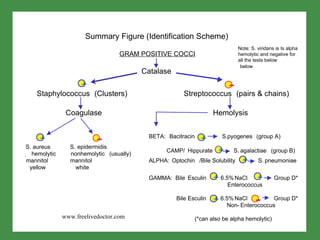
GRAM POSITIVE COCCI S. aureus  hemolytic mannitol yellow + - Staphylococcus (Clusters) Streptococcus (pairs & chains) Catalase BETA:  Bacitracin S. pyogenes (group A) CAMP/ Hippurate  S.  agalactiae (group B) Hemolysis Coagulase S.  epidermidis nonhemolytic (usually) mannitol white ALPHA:  Optochin /Bile Solubility  S. pneumoniae GAMMA:  Bile  Esculin  6.5%  NaCl  Group D* Enterococcus Bile  Esculin  6.5%  NaCl  Group D* Non- Enterococcus (*can also be alpha hemolytic) Note: S. viridans is Is alpha hemolytic and negative for all the tests below below + + + + + + + - - Summary Figure (Identification Scheme) www.freelivedoctor.com

Pneumostaph45

  • 1.
    Streptococcus pneumoniae Staphylococci Faculty: Dr. Alvin Fox www.freelivedoctor.com
  • 2.
    S. pneumoniae diplococciPneumococcus autolysin bile solubility test optochin susceptibility capsule Quellung reaction Staphylococcus aureus opportunistic diseases food poisoning/enterotoxins toxic shock syndrome toxic shock toxin exfoliative toxin/scalded skin syndrome  ,  ,  ,  cytotoxins leucocidin lipase hyaluronidase protein A coagulase (+) or coagulase (–) Staphylococcus epidermidis KEYWORDS www.freelivedoctor.com
  • 3.
  • 4.
    S. pneumoniae leading cause of pneumonia particularly young and old after damage to upper respiratory tract * e.g. following viral infection bacteremia meningitis middle ear infections (otitis media) www.freelivedoctor.com
  • 5.
    S. pneumoniae  hemolytic pneumolysin degrades red blood cells under aerobic conditions grows well on sheep blood agar no group antigen www.freelivedoctor.com
  • 6.
    Diagnosis - spinalfluid direct Gram staining detection of capsular antigen www.freelivedoctor.com
  • 7.
    Autolysis - identificationBile peptidoglycan cell membrane lipoteichoic acid teichoic acid -choline autolysin www.freelivedoctor.com
  • 8.
    C polysaccharide Teichoicacid Precipitates in serum C-reactive protein www.freelivedoctor.com
  • 9.
    Not optochinsensitive optochin sensitive Identification www.freelivedoctor.com
  • 10.
    Capsule prominent virulent strains anti-phagocytic carbohydrate antigens vary among strains www.freelivedoctor.com
  • 11.
    Capsule immunity serotype specific vaccine contains multiple serotypes only for susceptible population www.freelivedoctor.com
  • 12.
    Quellung reaction usingantisera capsule "fixed" visible microscopically www.freelivedoctor.com
  • 13.
    Pathogenesis Teichoic acidcomplement activation large numbers of inflammatory cells at infection site www.freelivedoctor.com
  • 14.
    Therapy S. pneumoniae most strains susceptible to penicillin resistance is common www.freelivedoctor.com
  • 15.
    STAPHYLOCOCCI Gram positiveFacultative anaerobes Grape like-clusters Catalase positive Major components of normal flora skin nose www.freelivedoctor.com
  • 16.
  • 17.
    One of commonestopportunistic infections - hospital and community : pneumonia osteomyelitis septic arthritis bacteremia endocarditis abscesses/boils other skin infections www.freelivedoctor.com
  • 18.
    Food poisoning notan infection food contaminated by humans growth of bacteria production of enterotoxin onset and recovery both occur within few hours www.freelivedoctor.com
  • 19.
    Food poisoning Vomitingnausea diarrhea abdominal pain www.freelivedoctor.com
  • 20.
    Toxic shock syndromefever rash desquamation vomiting diarrhea www.freelivedoctor.com
  • 21.
    Toxic shock syndromeToxic shock toxin Dissemination Organism no dissemination www.freelivedoctor.com
  • 22.
    S. aureus babiesscalded skin syndrome exfoliatin www.freelivedoctor.com
  • 23.
    Lytic exotoxins:  toxin  (sphingomyelinase C)  toxin  toxins detergent-like leucocidins www.freelivedoctor.com
  • 24.
    Protein A inhibitsphagocytosis Protein A immunoglobulin Fc receptor BACTERIUM PHAGOCYTE www.freelivedoctor.com
  • 25.
    Spread tissue-degrading enzymes lipase hyaluronidase www.freelivedoctor.com
  • 26.
    Identification  hemolytic sheep blood agar yellow pigmented (aureus) mannitol fermentation coagulase-positive reference laboratories phage-typing www.freelivedoctor.com
  • 27.
    Staphylococcus epidermidis majorcomponent, skin flora opportunistic infection - less common than S.aureus nosomial infections shunts, catheters artificial heart valves/joints www.freelivedoctor.com
  • 28.
    Identification Non-hemolytic sheep blood agar Non-pigmented Does not ferment mannitol Coagulase negative www.freelivedoctor.com
  • 29.
    Staphylococcus saprophyticus urinarytract infections coagulase-negative not usually differentiated from S. epidermidis www.freelivedoctor.com
  • 30.
    Antibiotic therapy Resistanceto penicillin penicillinase  lactam antibiotics (including methicillin [MRSA]) often ineffective modified penicillin binding proteins Vancomycin current drug of choice resistance has been observed www.freelivedoctor.com
  • 31.
    GRAM POSITIVE COCCIS. aureus  hemolytic mannitol yellow + - Staphylococcus (Clusters) Streptococcus (pairs & chains) Catalase BETA: Bacitracin S. pyogenes (group A) CAMP/ Hippurate S. agalactiae (group B) Hemolysis Coagulase S. epidermidis nonhemolytic (usually) mannitol white ALPHA: Optochin /Bile Solubility S. pneumoniae GAMMA: Bile Esculin 6.5% NaCl Group D* Enterococcus Bile Esculin 6.5% NaCl Group D* Non- Enterococcus (*can also be alpha hemolytic) Note: S. viridans is Is alpha hemolytic and negative for all the tests below below + + + + + + + - - Summary Figure (Identification Scheme) www.freelivedoctor.com