Prepared by:
Ms. Jasmine Nikki M. Versoza
TOPIC OUTLINE
CHAPTER 2. Plates Move in Mysterious
Ways
L3. The Theory of Plate Tectonics
L4. Formation of Landforms and the
Ocean Floor
LESSON 3:
THE THEORY OF PLATE TECTONICS
PLATE TECTONICS
 “Tektonikos”
 Building or Construction
 The continuous creation and
destruction of plates
Tectonic Plates
Gigantic segments of rock that
are in constant motion relative
to each other
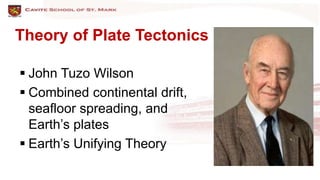
Theory of Plate Tectonics
 John Tuzo Wilson
 Combined continental drift,
seafloor spreading, and
Earth’s plates
 Earth’s Unifying Theory
Theory of Plate Tectonics
 The pieces of the Earth’s lithosphere
are in constant motion.
 This movement has caused
interactions, formations, and
destructions on land and seafloors.
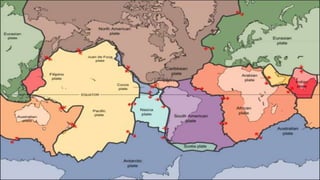
MAJOR PLATES
 There are seven major plates
1. Pacific Plate
2. North American Plate
3. Eurasian Plate
4. African Plate
5. Antarctic Plate
6. Indo-Australian Plate
7. South American Plate
SCILAB NO. 1-3
The Hot Earth’s Plates Model
In this activity, you will be able to:
1. simulate how Earth’s plates move on
the asthenosphere.
Theory of Convection
Arthur Holmes
Convection is responsible for
the movement of the earth’s
continent.
What is Convection?
Convection is a process in which
hot materials float because of its
low density and cold materials
sink due to its high density
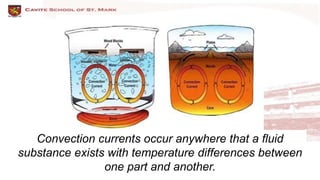
Convection currents occur anywhere that a fluid
substance exists with temperature differences between
one part and another.
Theory of Convection
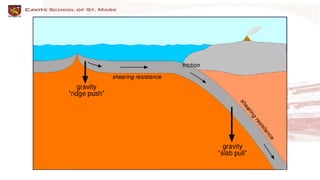
 Ridge Push
• Gravitational force that causes a
plate to move away from the crest
of an ocean ridge, and into a
subduction zone.
Theory of Convection
 Slab Pull
• Portion of motion of a tectonic
plate that can be accounted by
its subduction.
Theory of Convection
The cycle of the continuous rising,
sinking, and spreading in the
asthenosphere move the tectonic
plates.
LESSON 4:
FORMATION OF LANDFORMS
AND THE OCEAN FLOOR
TWO TYPES OF CRUSTAL
PLATES
 Continental
Granite
Less Dense
 Oceanic
Basalt
Denser
What happens when the
Earth’s crustal plates
move?
PLATE BOUNDARIES
Plate Boundaries
Regions where the edges of the
tectonic plates meet, move
away, or slide past each other
Plate Boundaries
 Divergent Boundaries
 Convergent Boundaries
 Transform Boundaries
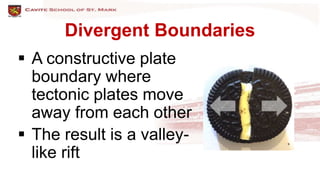
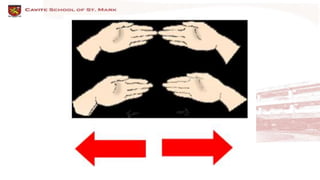
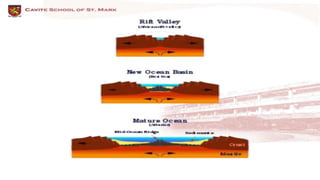
Divergent Boundaries
 A constructive plate
boundary where
tectonic plates move
away from each other
 The result is a valley-
like rift
The Formation of Divergent
Boundaries
1. Rising mantle plume forms a dome which
fractures the earth’s surface
2. Fractures spread apart forming narrow rift
valley
3. Magma comes out from the asthenosphere
4. The magma forms the new oceanic crust
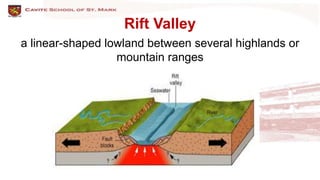
Rift Valley
a linear-shaped lowland between several highlands or
mountain ranges
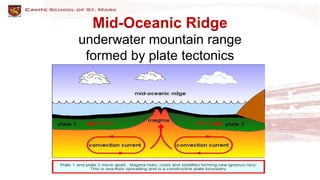
Mid-Oceanic Ridge
underwater mountain range
formed by plate tectonics
EXAMPLE OF DIVERGENT BOUNDARY
Red Sea
Between Saudi Arabia and Egypt
Lake Tanganyika and Lake Nyasa
Eastern side of Africa
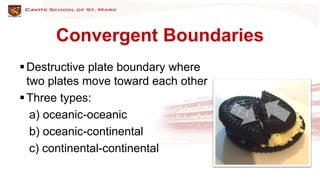
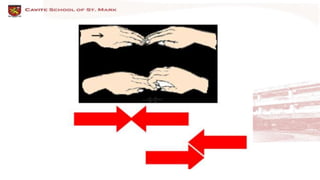
Convergent Boundaries
Destructive plate boundary where
two plates move toward each other
Three types:
a) oceanic-oceanic
b) oceanic-continental
c) continental-continental
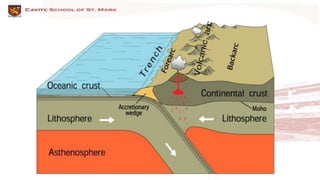
Oceanic-Oceanic Convergence
 Subduction zone
 Trench and Island arc/Oceanic
volcanic arc
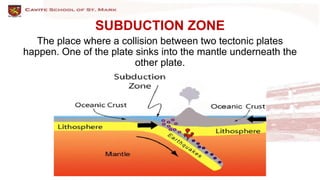
SUBDUCTION ZONE
The place where a collision between two tectonic plates
happen. One of the plate sinks into the mantle underneath the
other plate.
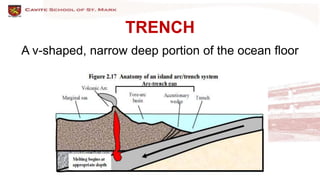
TRENCH
A v-shaped, narrow deep portion of the ocean floor
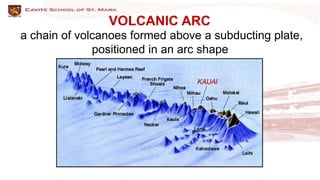
VOLCANIC ARC
a chain of volcanoes formed above a subducting plate,
positioned in an arc shape
Oceanic-Continental Convergence
 Subduction zone
 Ocean trench
 Continental volcanic arc
 Large magnitude earthquake
Continental-Continental
Convergence
 No subduction occurs
 Forms mountain ranges
Mountain Ranges
A chain of mountains that are
close together
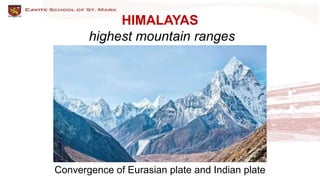
HIMALAYAS
highest mountain ranges
Convergence of Eurasian plate and Indian plate
EXAMPLE OF CONVERGENT
BOUNDARY
The plate where India is located is
crashing into the Asian continent
building up in the Himalayas.
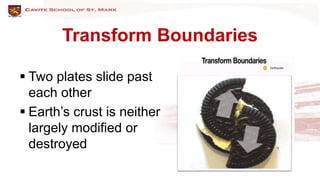
Transform Boundaries
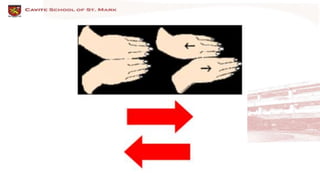
 Two plates slide past
each other
 Earth’s crust is neither
largely modified or
destroyed
EXAMPLE OF TRANSFORM
BOUNDARY
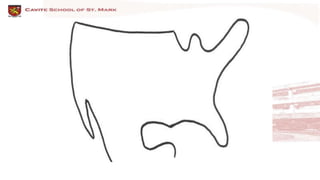
San Andreas Fault
West Valley Fault
CONTINENTAL vs. OCEANIC
DESCRIPTION CONTINENTAL OCEANIC
Low land
between hills
or mountains
Valley Rift-Valley
CONTINENTAL vs. OCEANIC
DESCRIPTION CONTINENTAL OCEANIC
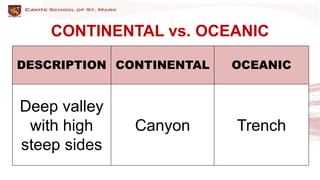
Deep valley
with high
steep sides
Canyon Trench
CONTINENTAL vs. OCEANIC
DESCRIPTION CONTINENTAL OCEANIC
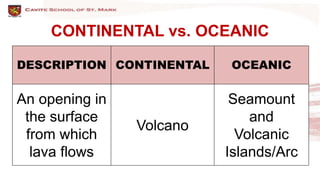
An opening in
the surface
from which
lava flows
Volcano
Seamount
and
Volcanic
Islands/Arc
CONTINENTAL vs. OCEANIC
DESCRIPTION CONTINENTAL OCEANIC
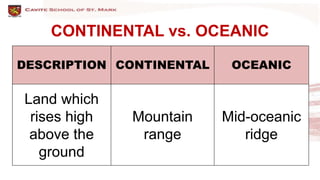
Land which
rises high
above the
ground
Mountain
range
Mid-oceanic
ridge
CONTINENTAL vs. OCEANIC
DESCRIPTION CONTINENTAL OCEANIC
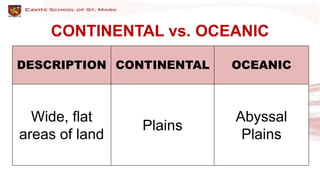
Wide, flat
areas of land
Plains
Abyssal
Plains
ISOSTASY
The state of balance between
the thickness of the crust and
the depth at which it floats on
the asthenosphere.
IGNEOUS ROCK
The type of rock which forms
from magma that cools and
hardens

Plate Boundaries