Kaustubh J. Sane
HJD Institute of Technical
Education & Research
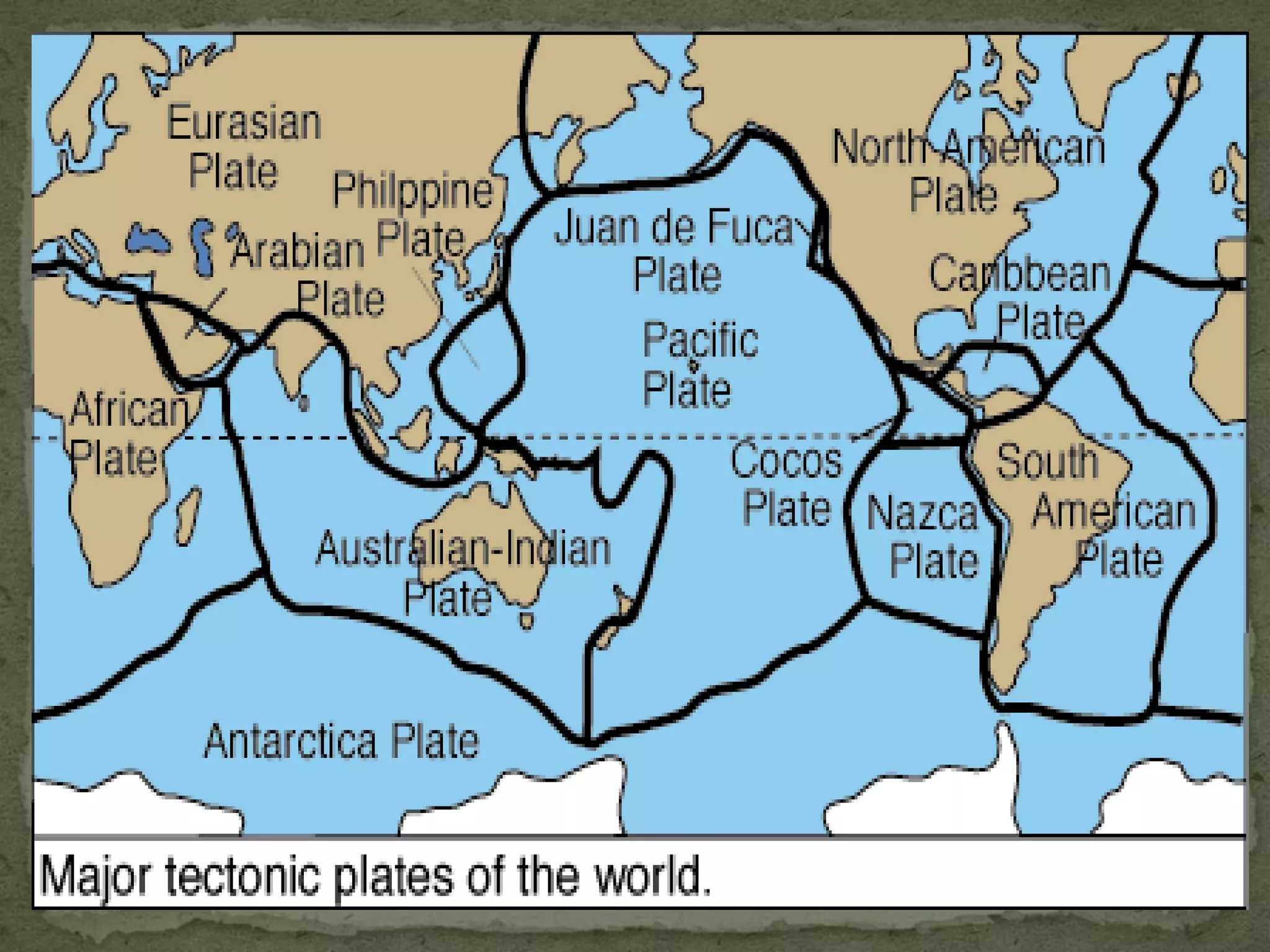
 Theory of plate tectonics
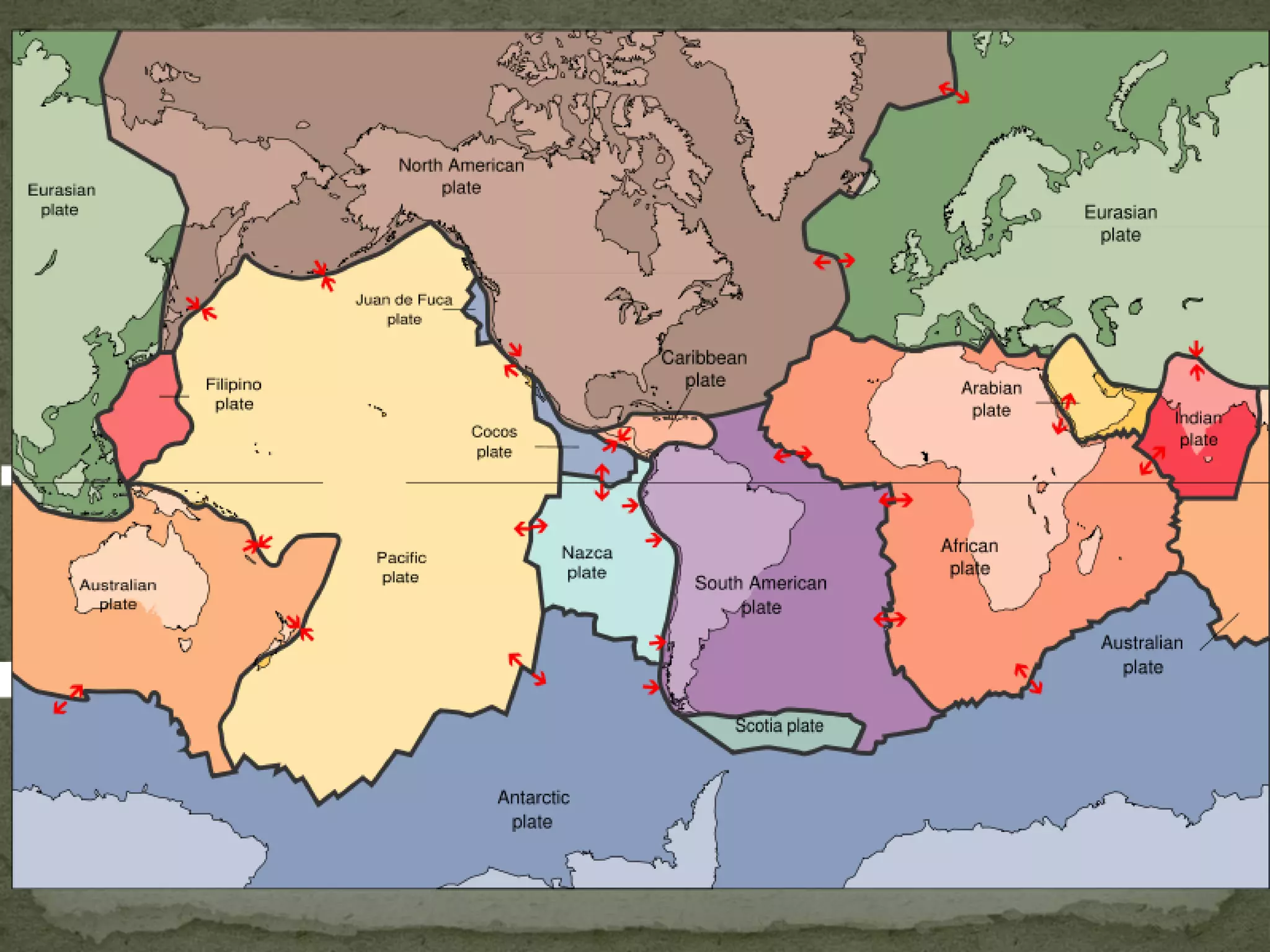
 Types of plates
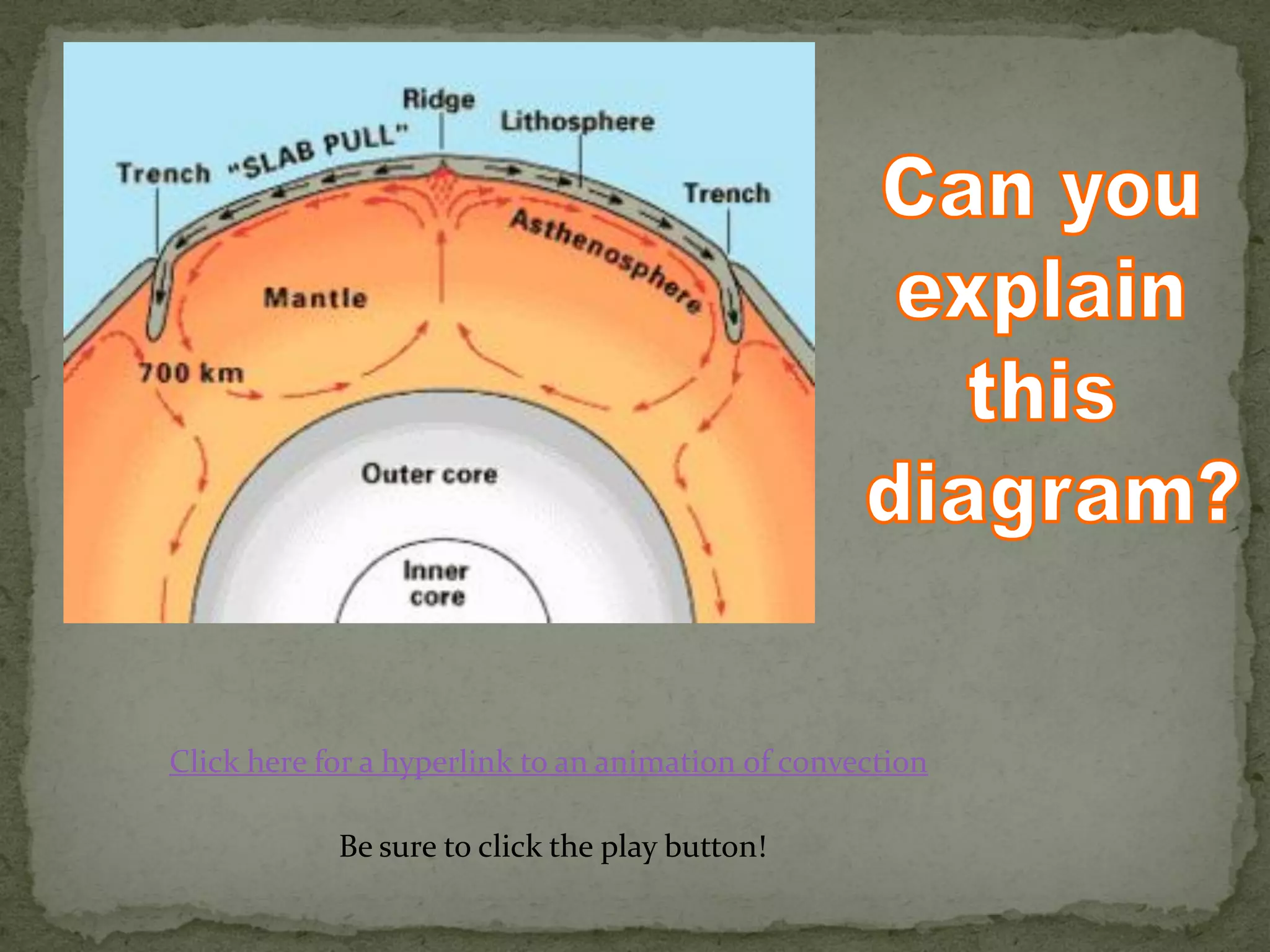
 Causes of plate motion
 Importance of plate tectonics
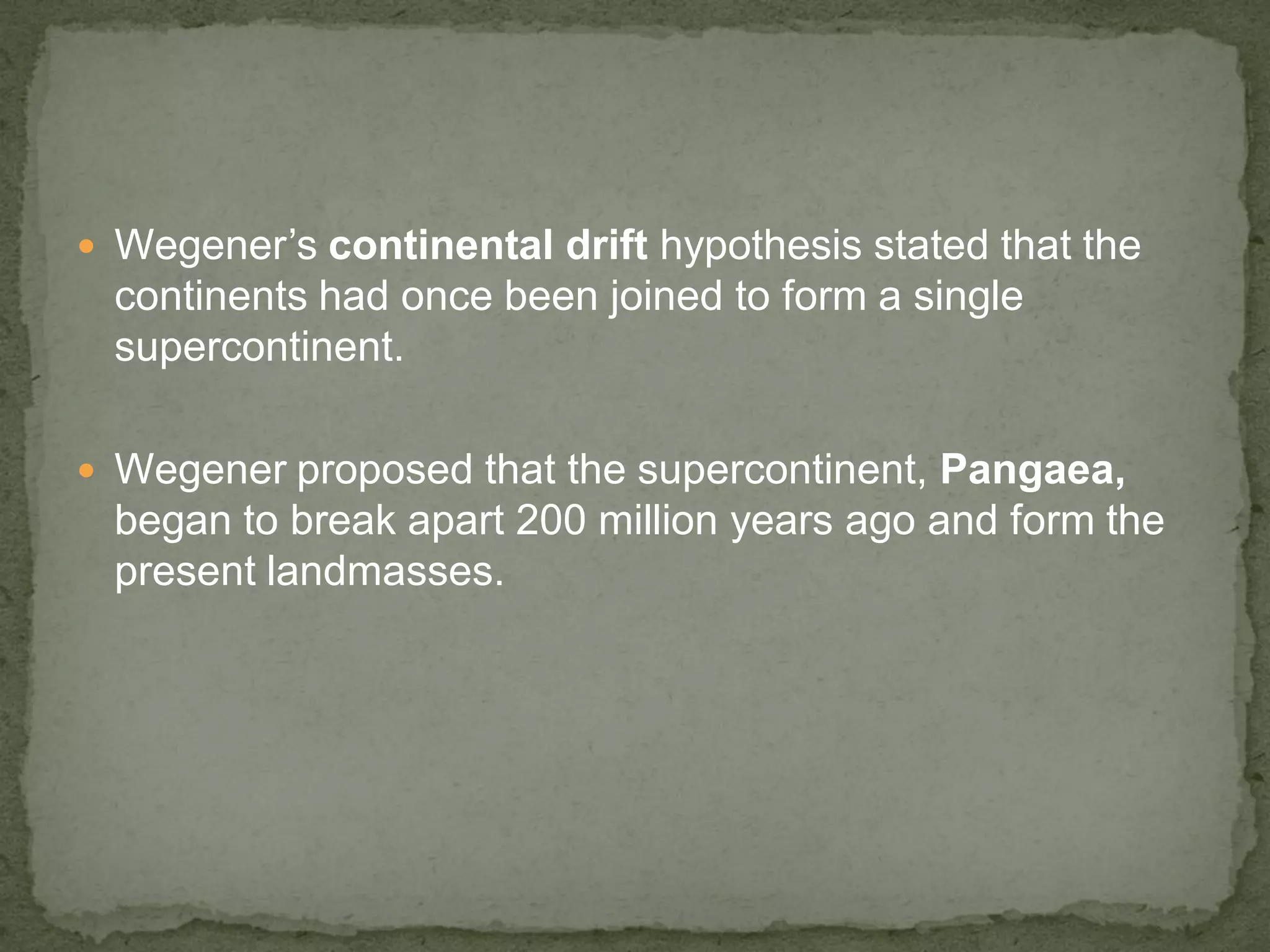
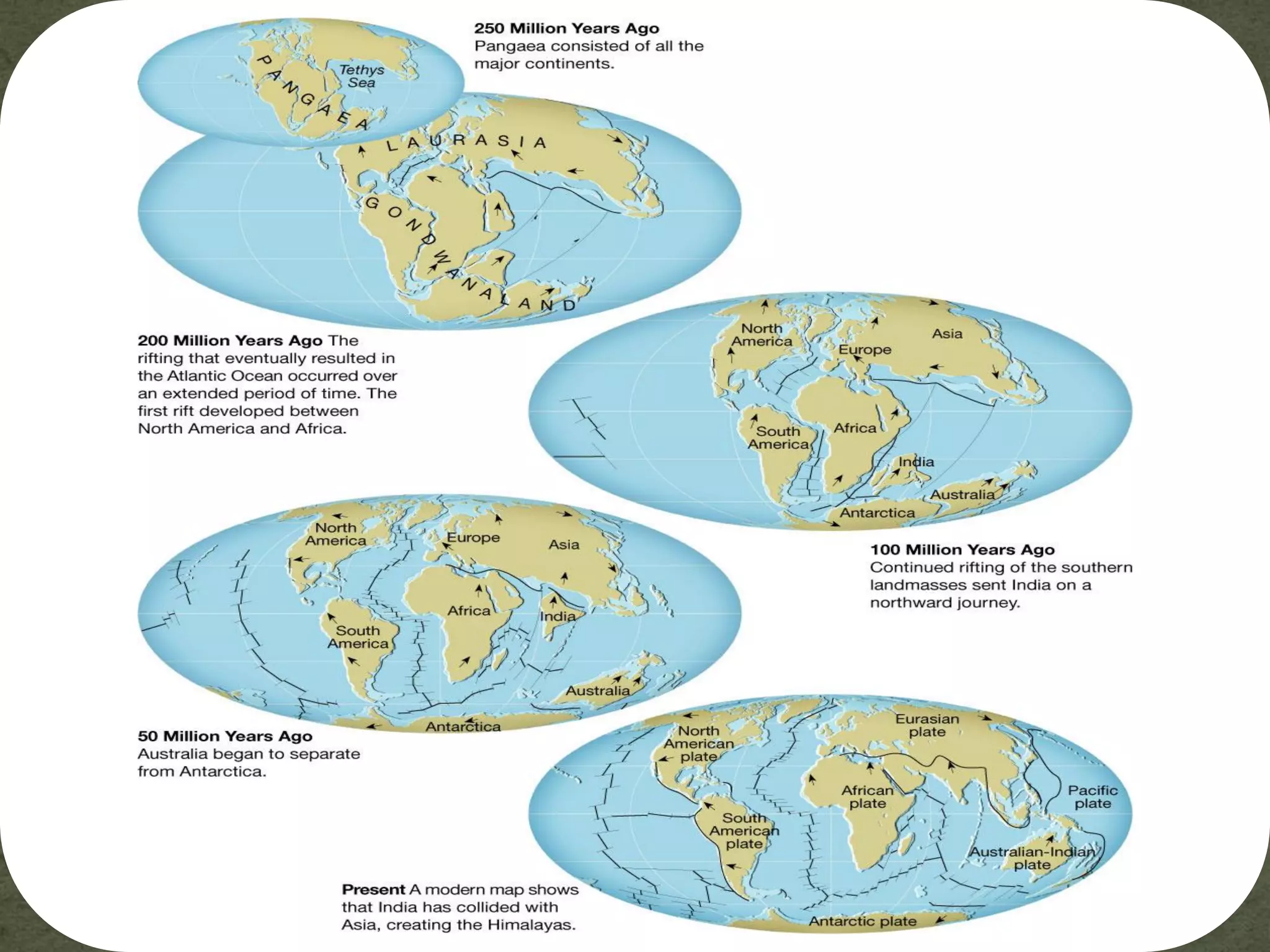
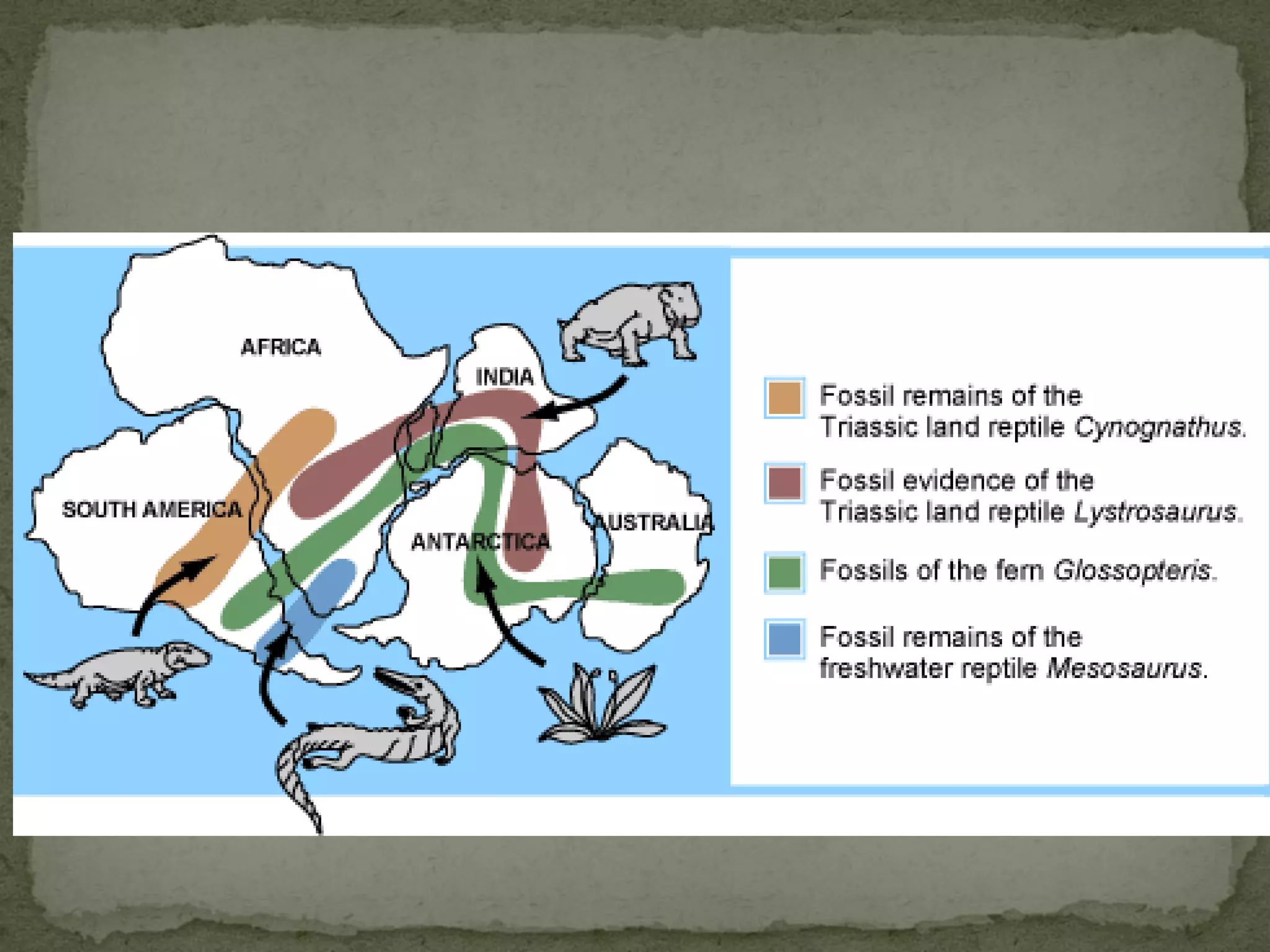
 Wegener’s continental drift hypothesis stated that the
continents had once been joined to form a single
supercontinent.
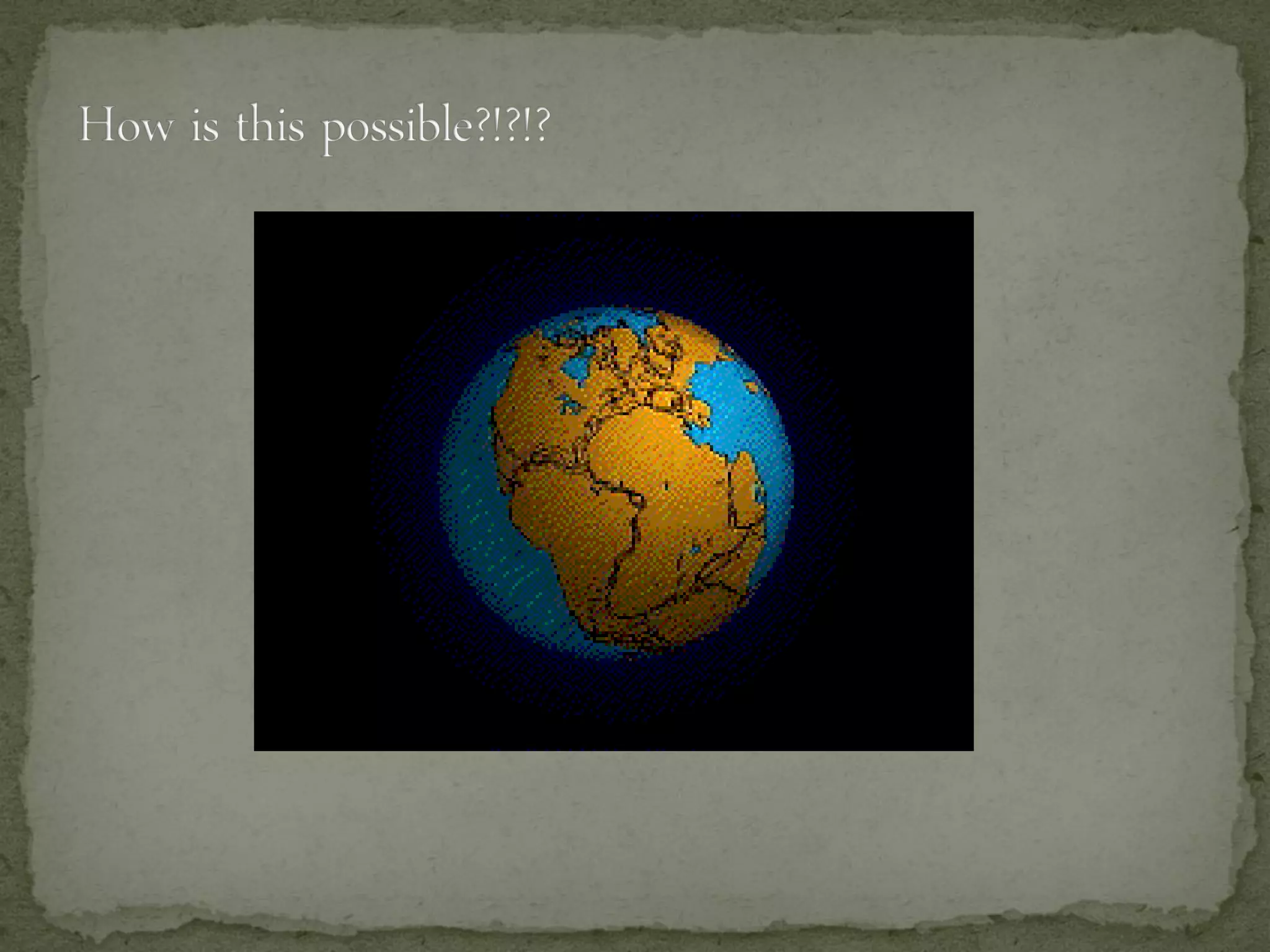
 Wegener proposed that the supercontinent, Pangaea,
began to break apart 200 million years ago and form the
present landmasses.
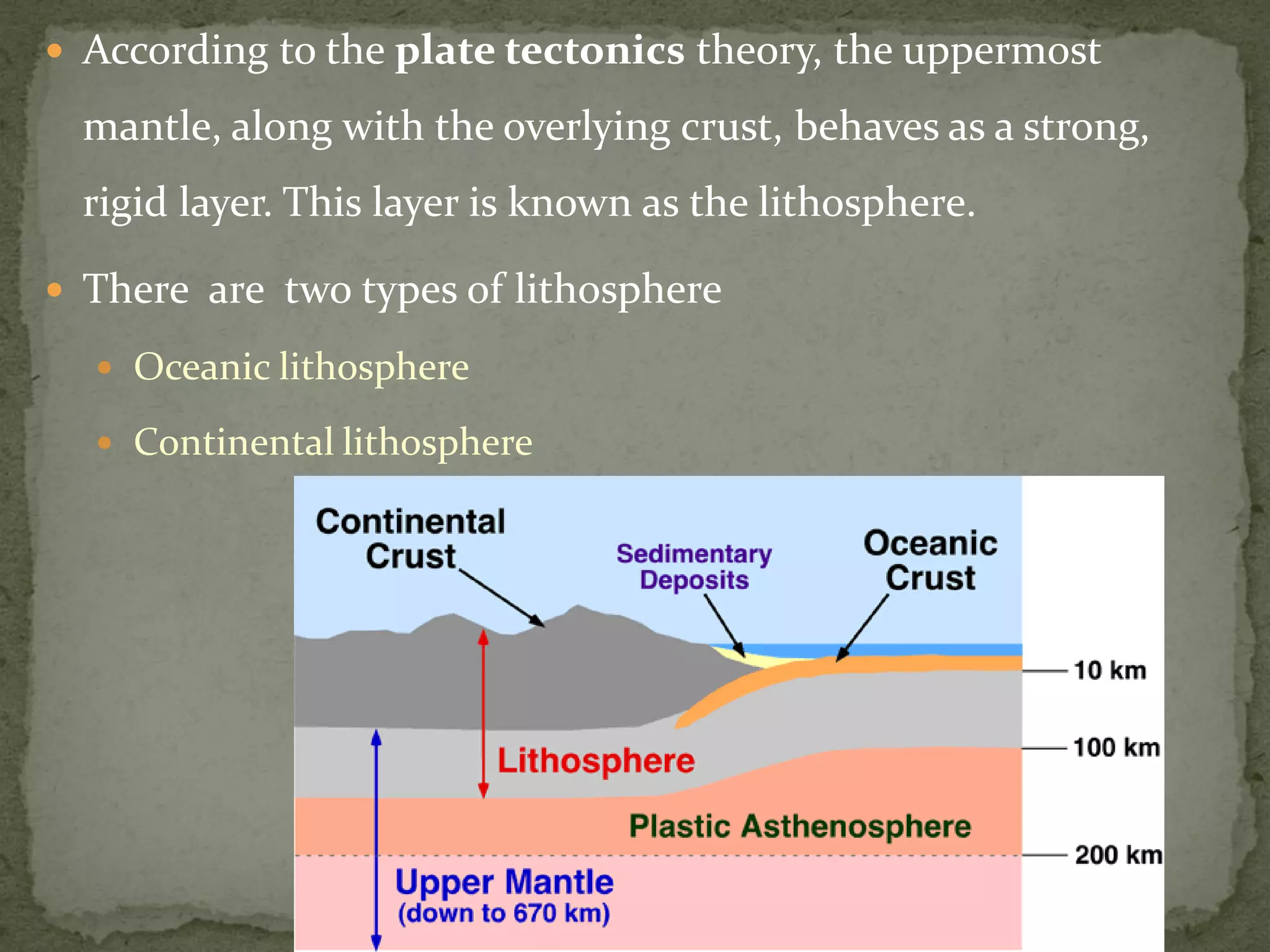
 According to the plate tectonics theory, the uppermost
mantle, along with the overlying crust, behaves as a strong,
rigid layer. This layer is known as the lithosphere.
 There are two types of lithosphere
 Oceanic lithosphere
 Continental lithosphere
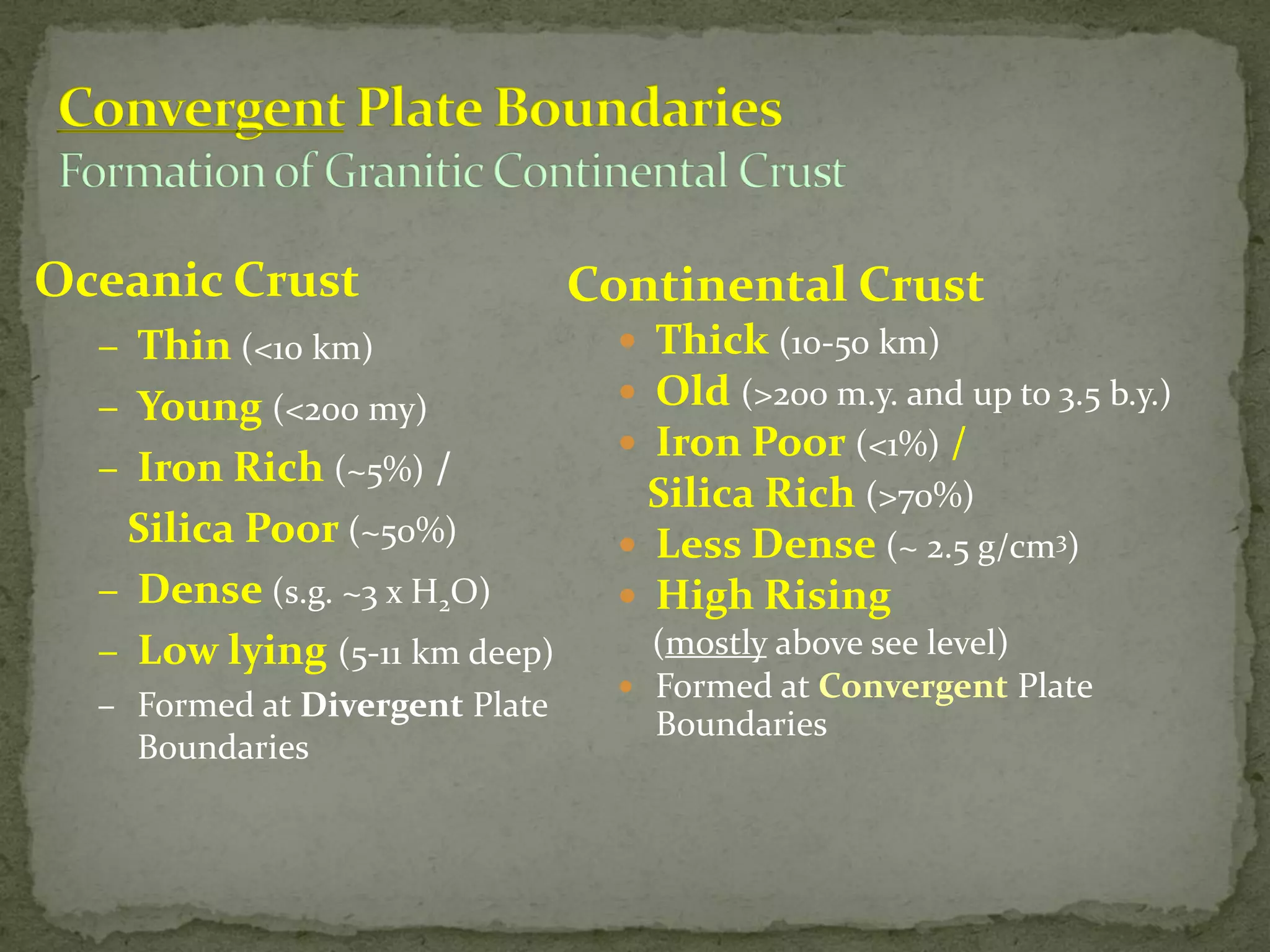
Continental Crust
 Thick (10-50 km)
 Old (>200 m.y. and up to 3.5 b.y.)
 Iron Poor (<1%) /
Silica Rich (>70%)
 Less Dense (~ 2.5 g/cm3)
 High Rising
(mostly above see level)
 Formed at Convergent Plate
Boundaries
Oceanic Crust
– Thin (<10 km)
– Young (<200 my)
– Iron Rich (~5%) /
Silica Poor (~50%)
– Dense (s.g. ~3 x H2O)
– Low lying (5-11 km deep)
– Formed at Divergent Plate
Boundaries
 Types of plate boundaries
 Depending on the motion of the plate they are grouped
into 3 major types viz,
1. Divergent plate (constructive plate boundary)
2. Convergent plate ( destructive plate boundary)
3. Transform plate
Click here for a hyperlink to an animation of convection
Be sure to click the play button!
o Plates are moving away from each other
o Midocean ridges are created and new ocean
floor plates are created.
o The plate gives birth to new earth surface
hence it is also called as constructive plate
boundary.
o As new material comes on surface mostly in
sea and increases the sea floor hence it is
called as sea floor spreading.
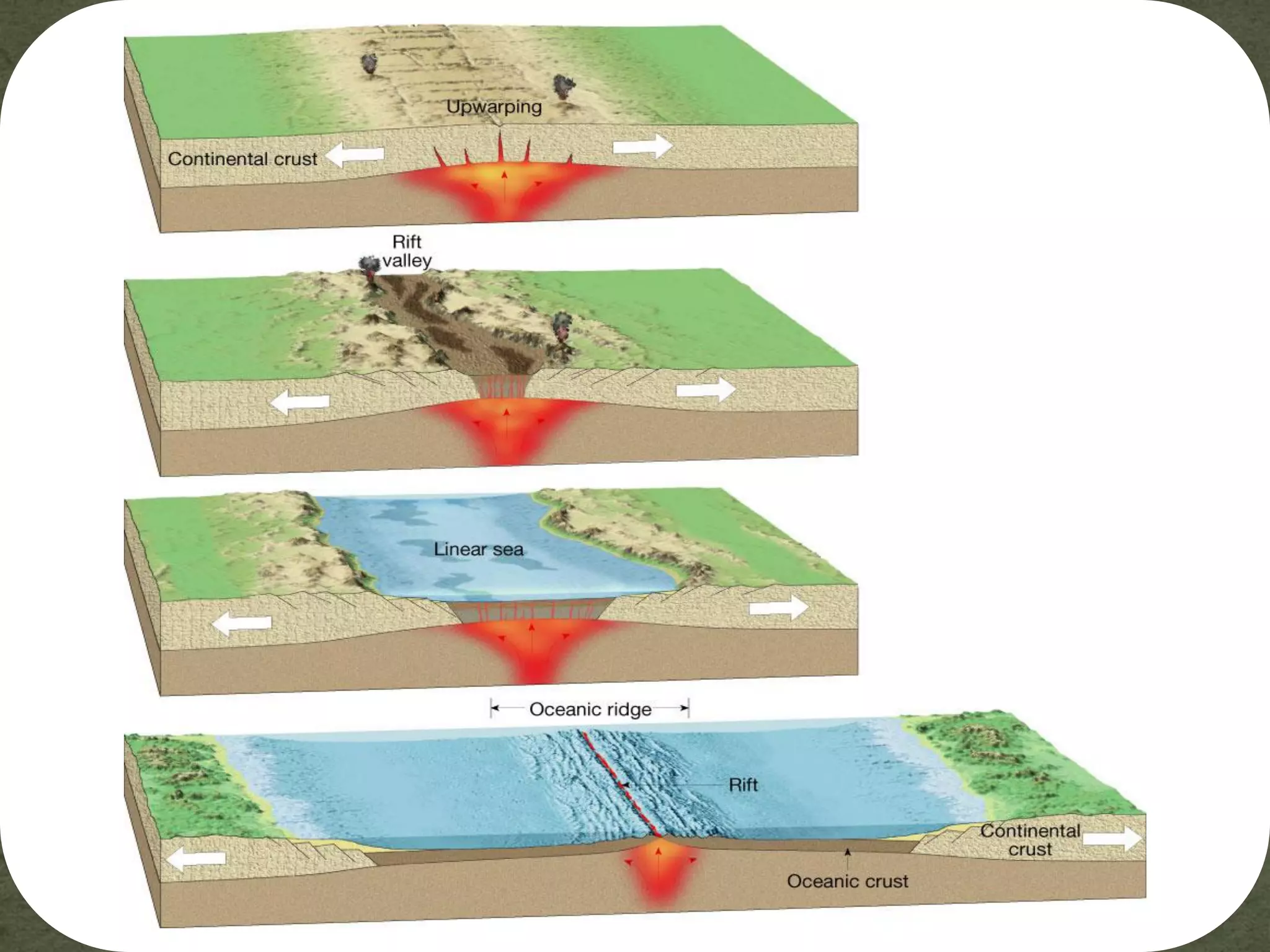
• Oceanic ridges are continuous elevated zones on the floor of
all major ocean basins. The rifts at the crest of ridges represent
divergent plate boundaries.
• Rift valleys are deep faulted structures found along the axes of
divergent plate boundaries. They can develop on the seafloor or
on land.
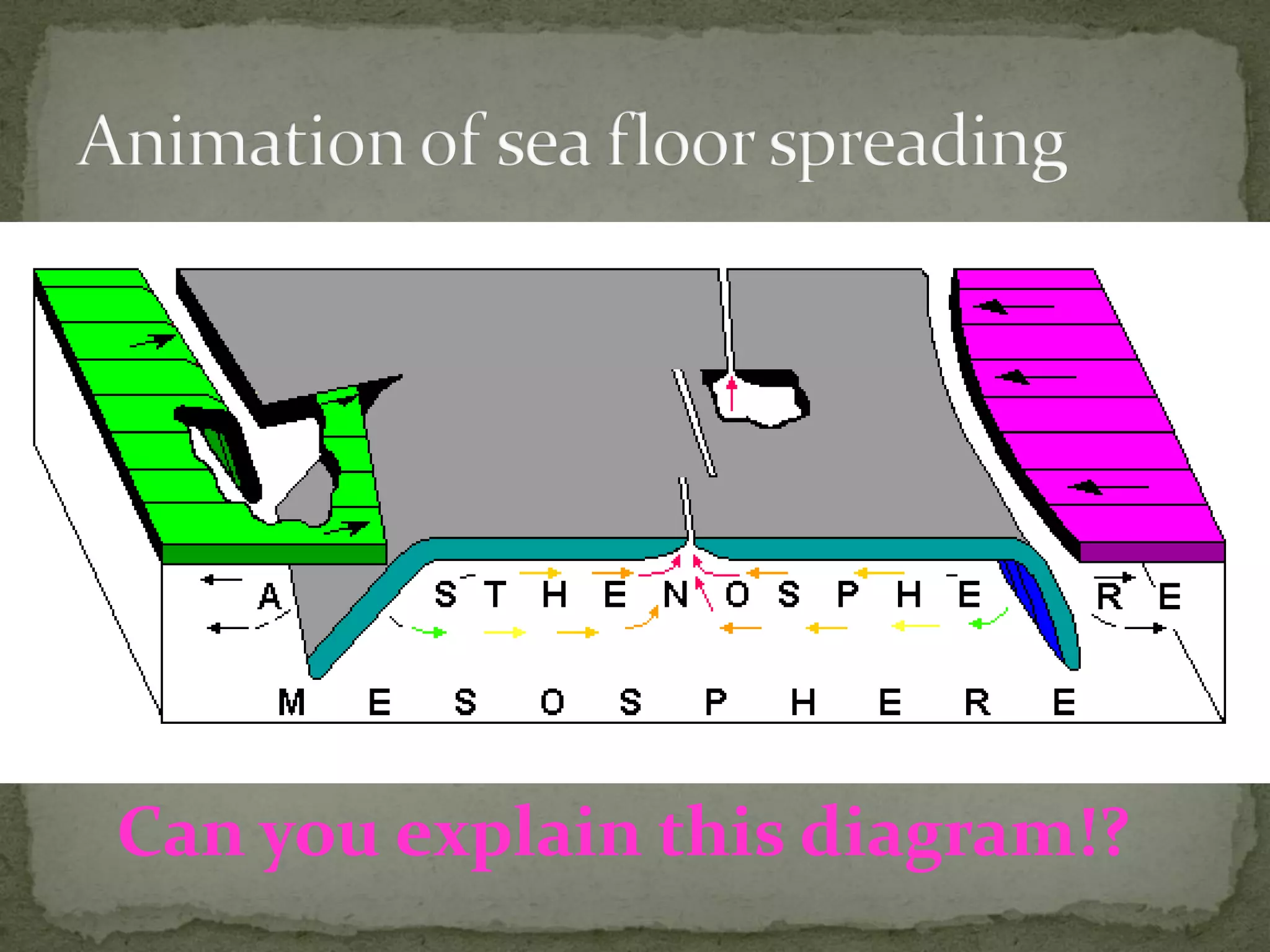
Can you explain this diagram!?
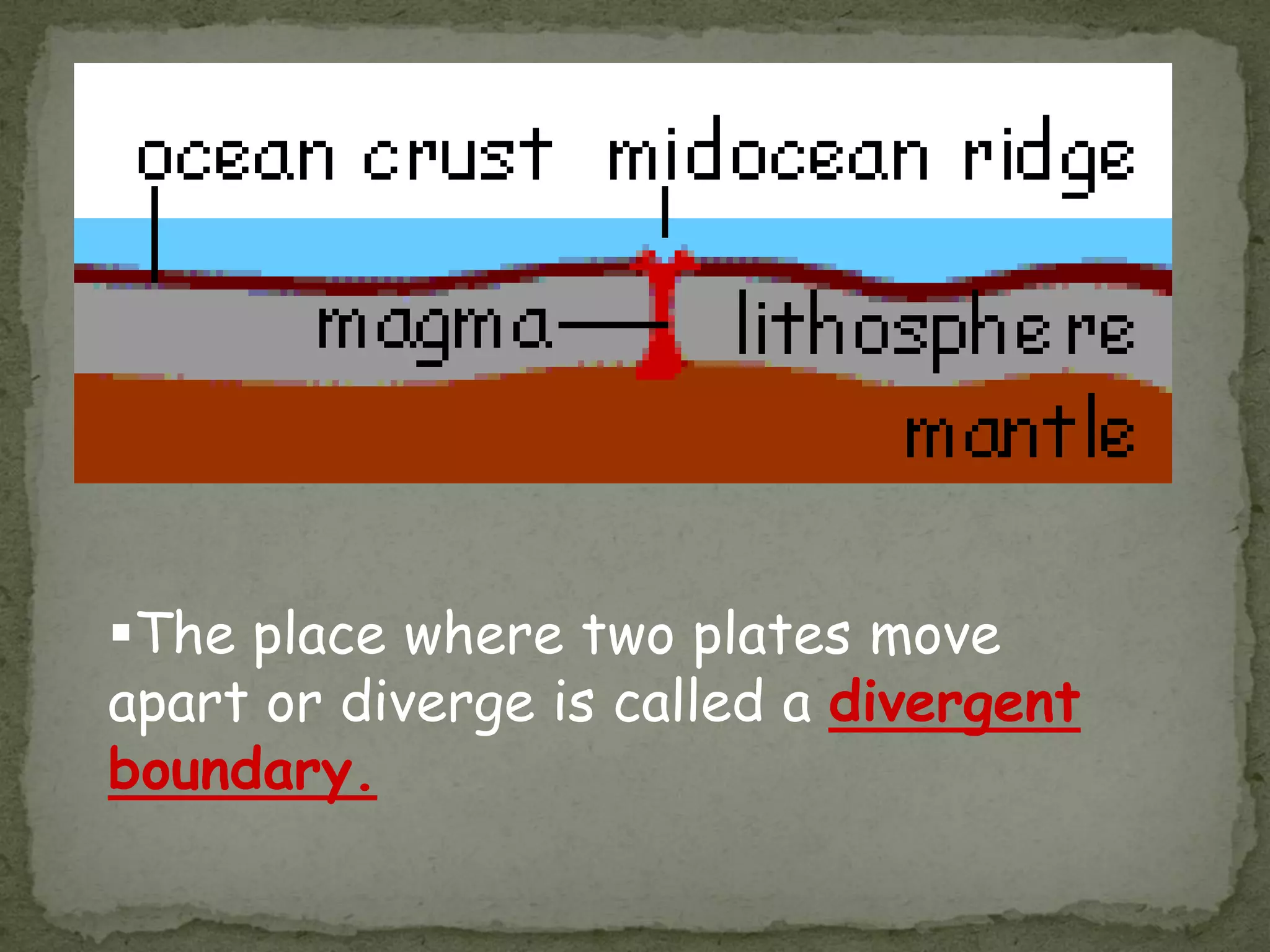
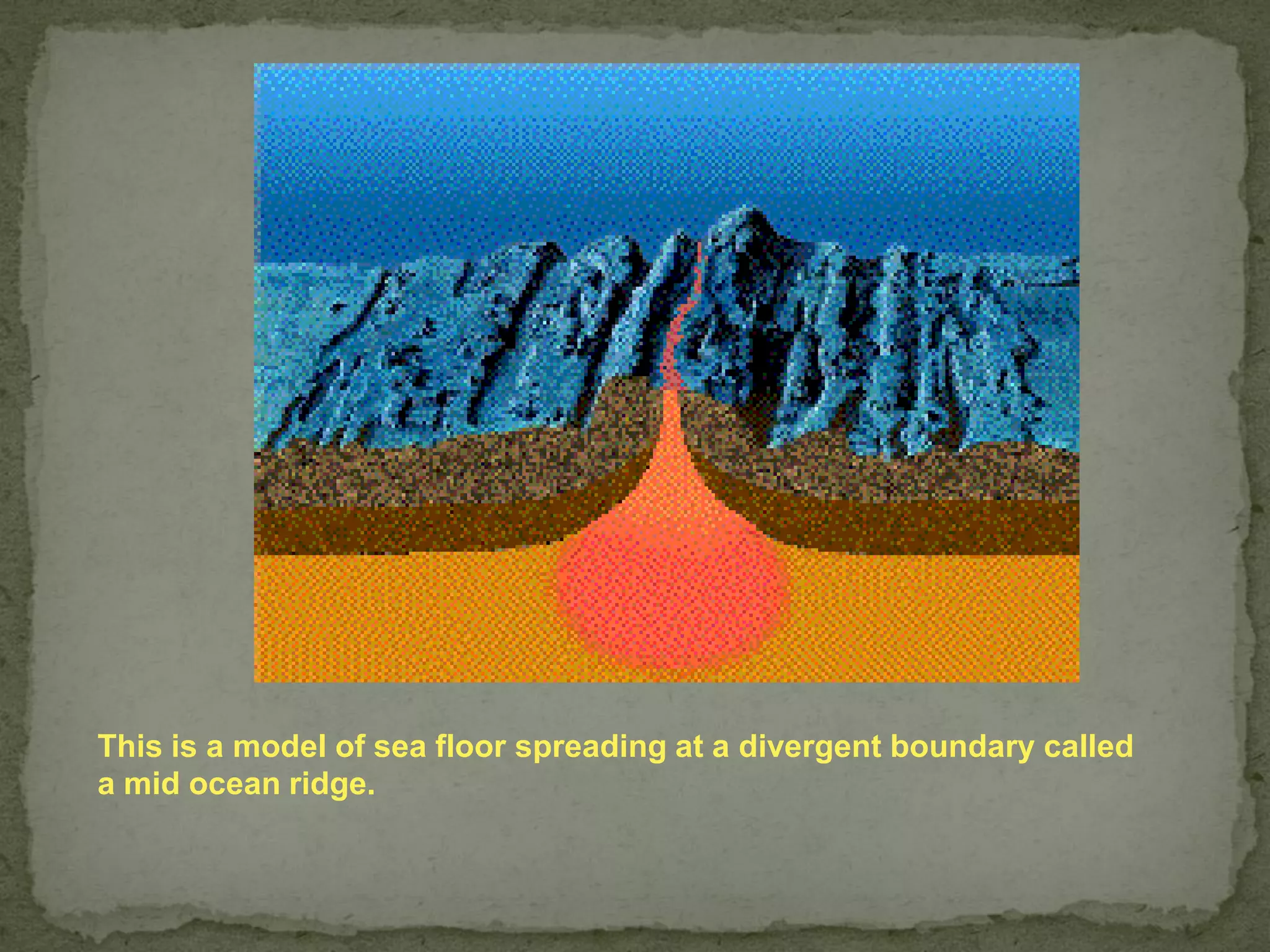
The place where two plates move
apart or diverge is called a divergent
boundary.
This is a model of sea floor spreading at a divergent boundary called
a mid ocean ridge.
Did you know that the Earth’s longest mountain range is underwater and
is called the mid-ocean ridge?
: www.ocean.udel.edu
The Mid-Ocean Ridge system, shown above snaking its way
between the continents, is more than 56,000 kilometers (35,000 mi)
long. It circles the earth like the stitching on a baseball!
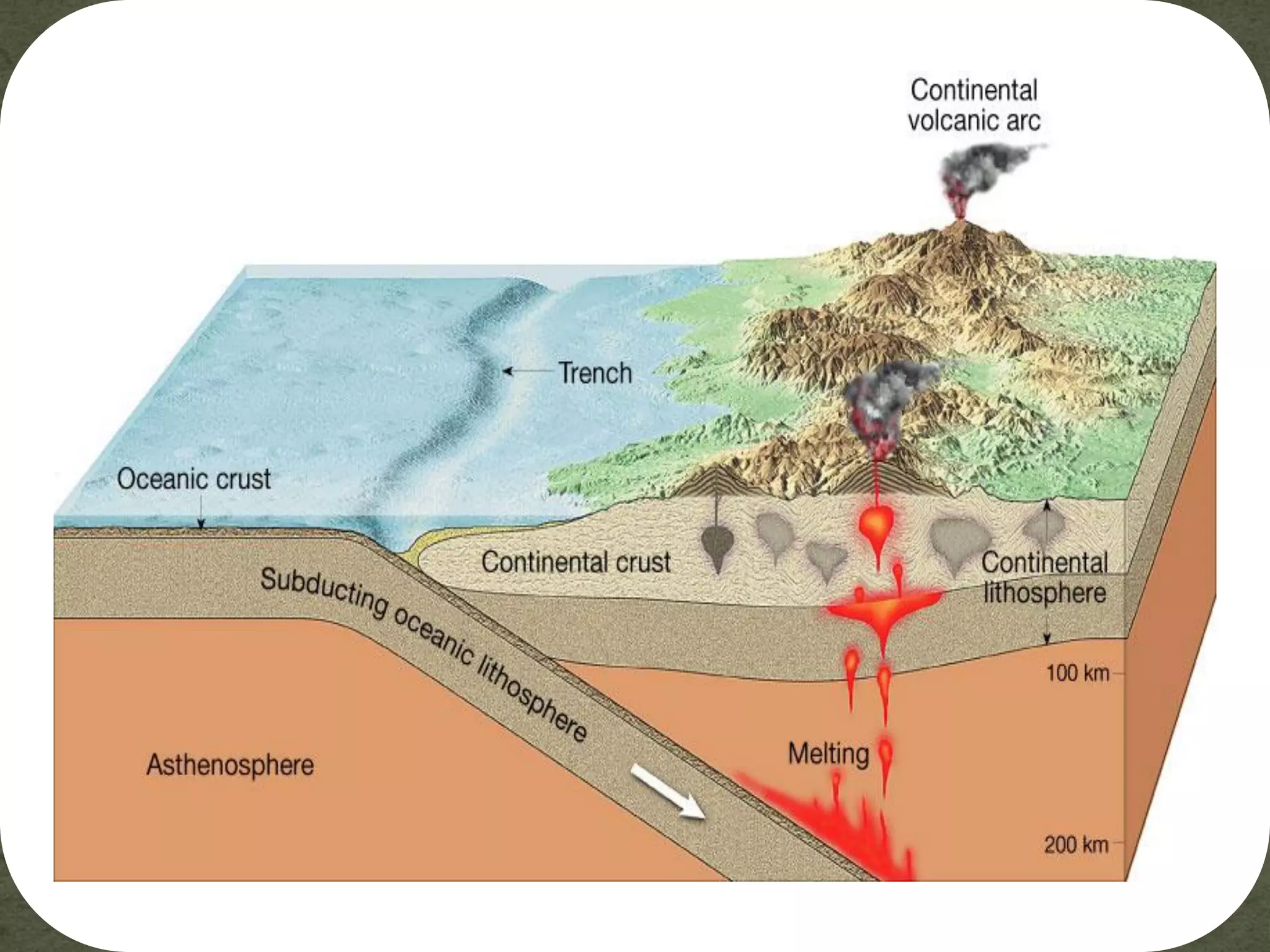
 A subduction zone occurs when one oceanic plate is
forced down into the mantle beneath a second plate
 Oceanic-Continental
• Denser oceanic slab sinks into the asthenosphere.
• Pockets of magma develop and rise.
• Continental volcanic arcs form in part by volcanic activity
caused by the subduction of oceanic lithosphere beneath a
continent.
• Examples include the Andes, Cascades, and the Sierra
Nevadas.
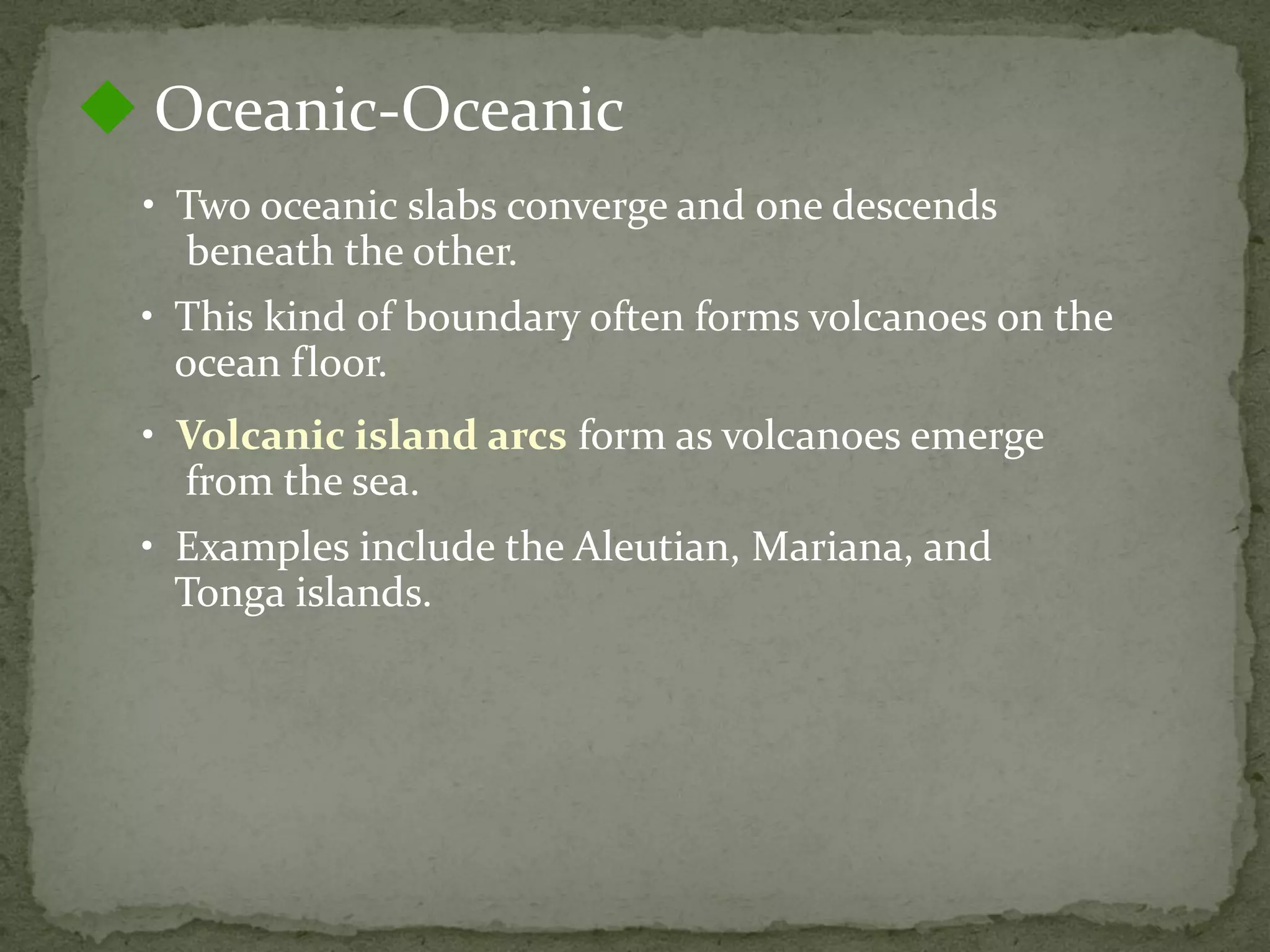
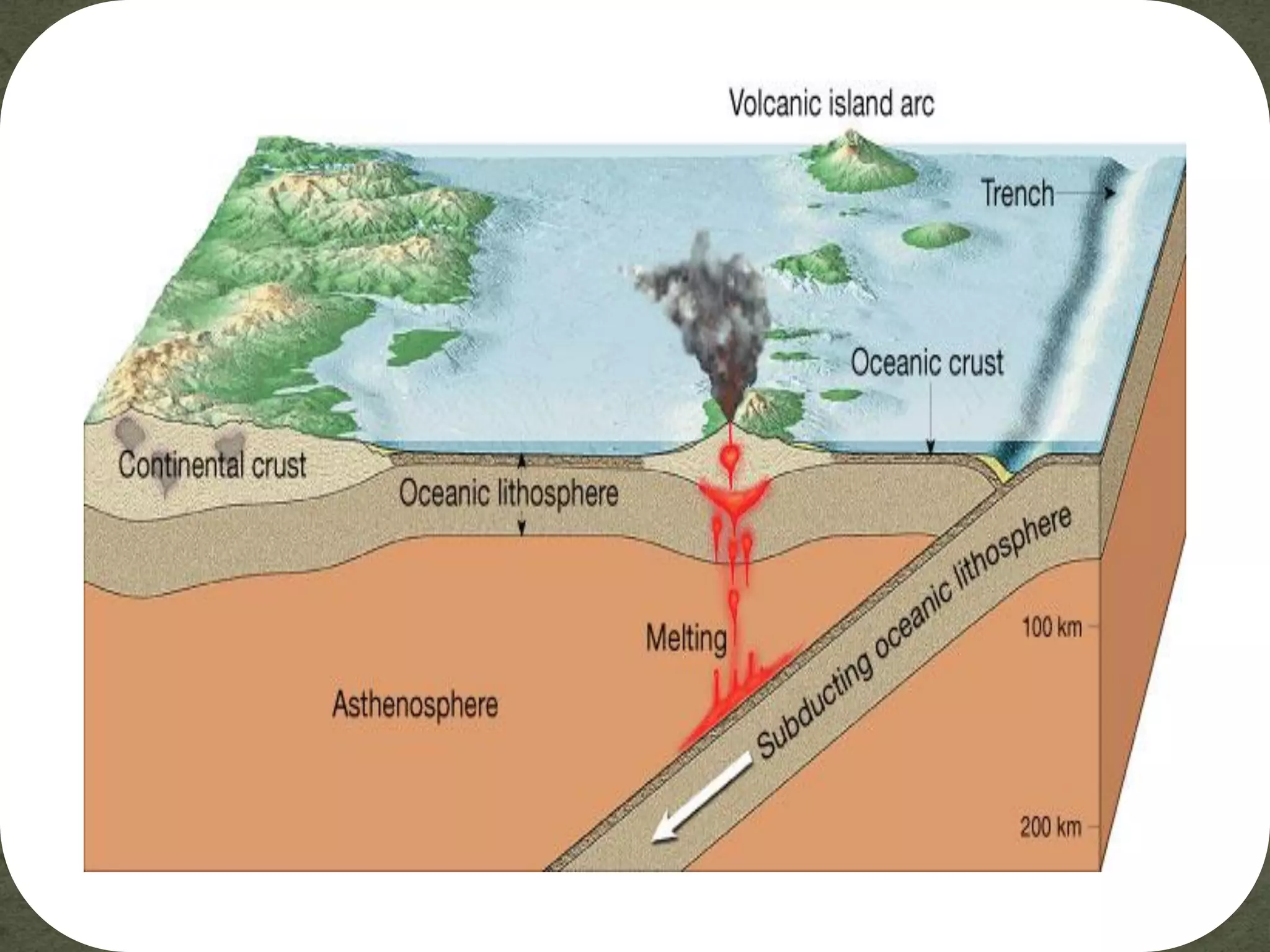
• Two oceanic slabs converge and one descends
beneath the other.
 Oceanic-Oceanic
• This kind of boundary often forms volcanoes on the
ocean floor.
• Volcanic island arcs form as volcanoes emerge
from the sea.
• Examples include the Aleutian, Mariana, and
Tonga islands.
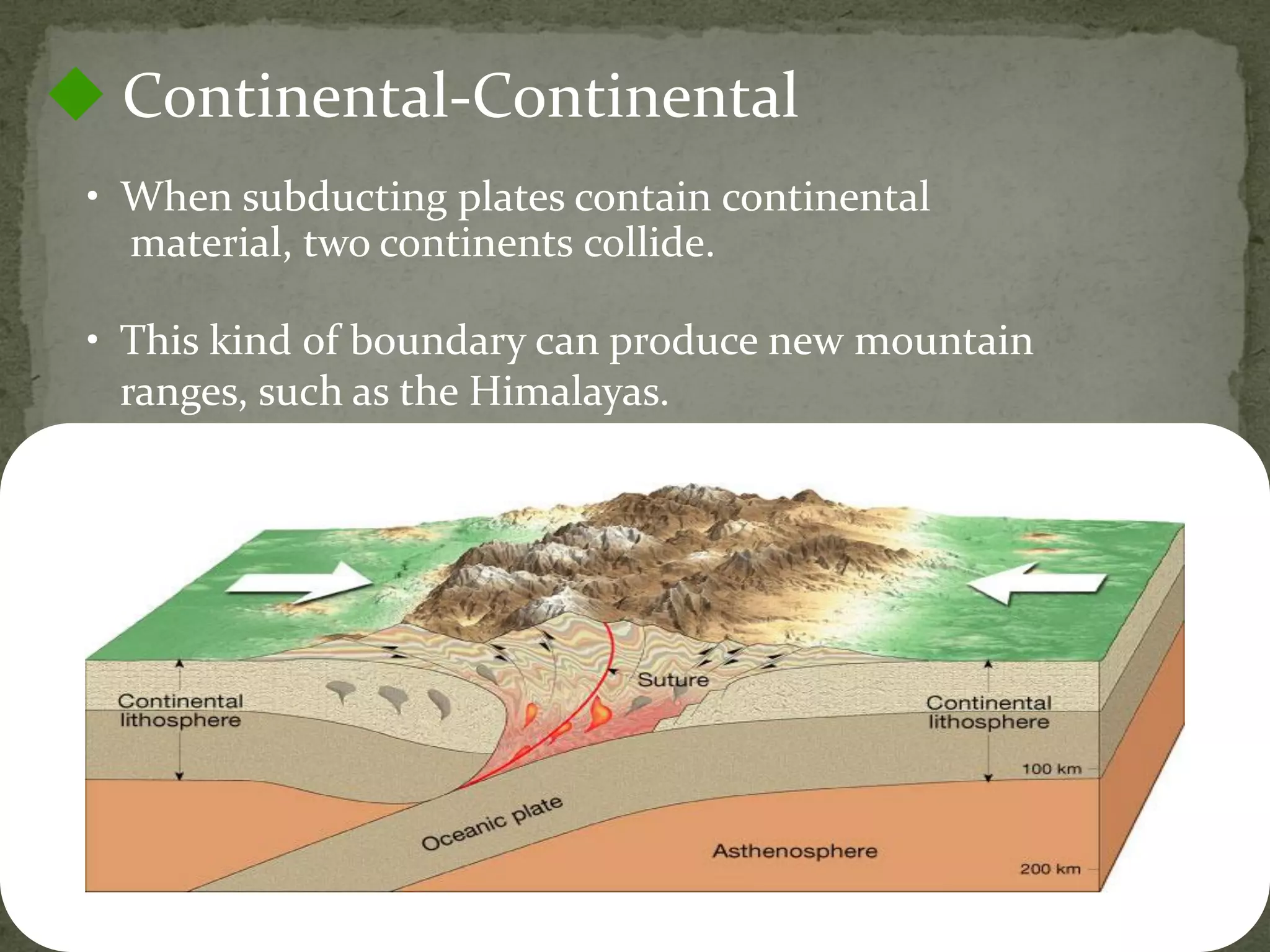
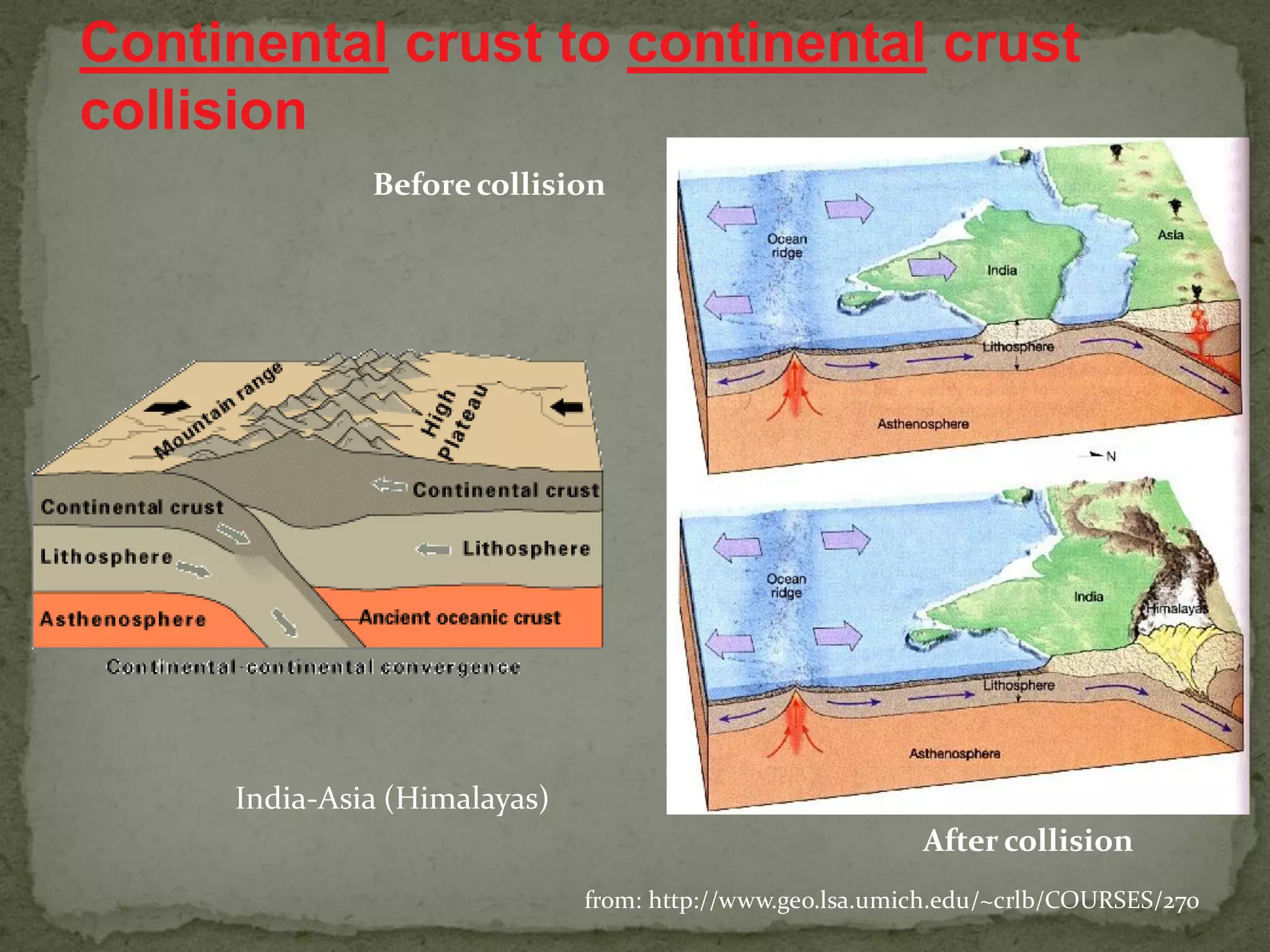
• When subducting plates contain continental
material, two continents collide.
 Continental-Continental
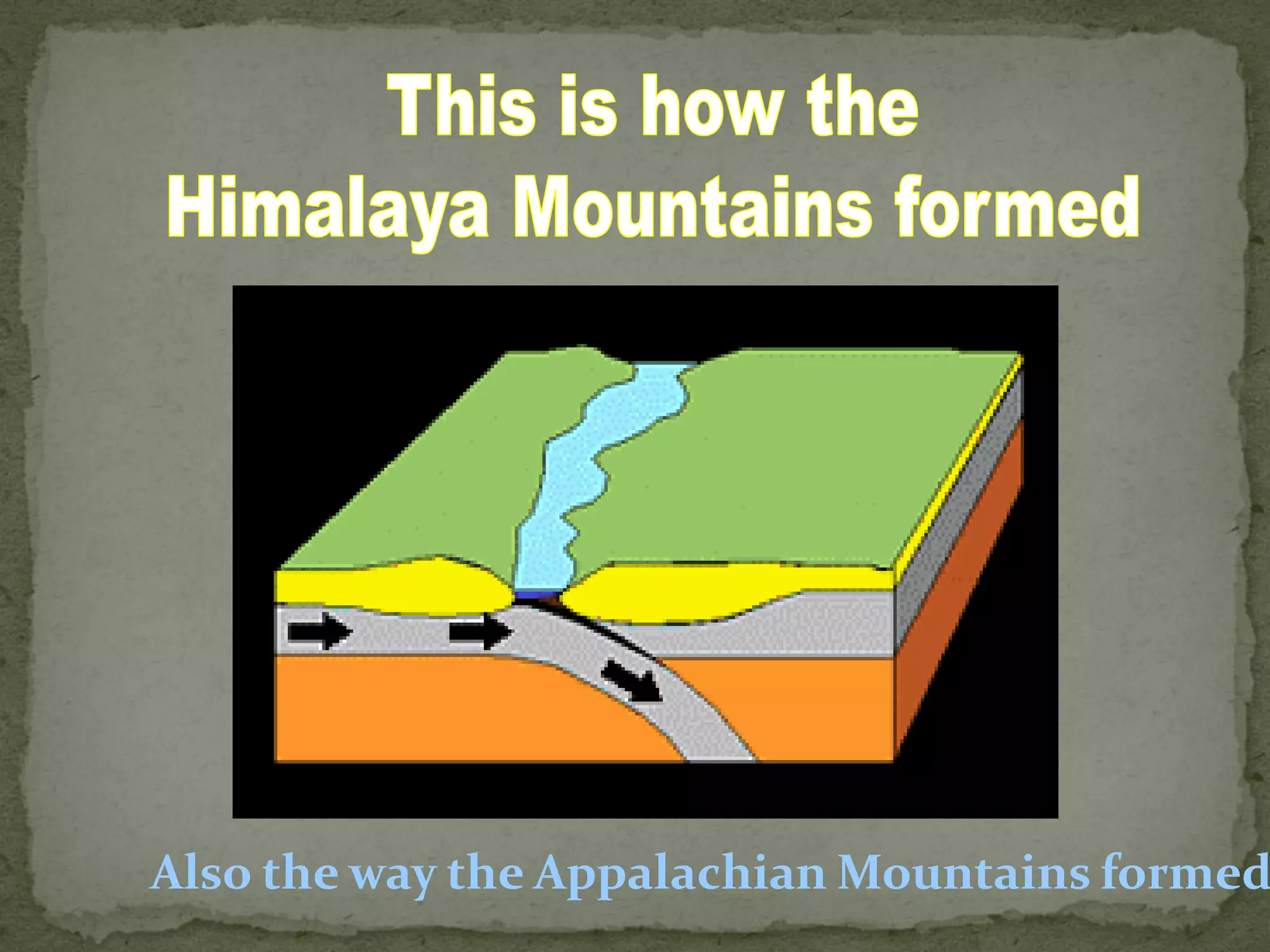
• This kind of boundary can produce new mountain
ranges, such as the Himalayas.
Also the way the Appalachian Mountains formed
from: http://www.geo.lsa.umich.edu/~crlb/COURSES/270
Continental crust to continental crust
collision
India-Asia (Himalayas)
Before collision
After collision
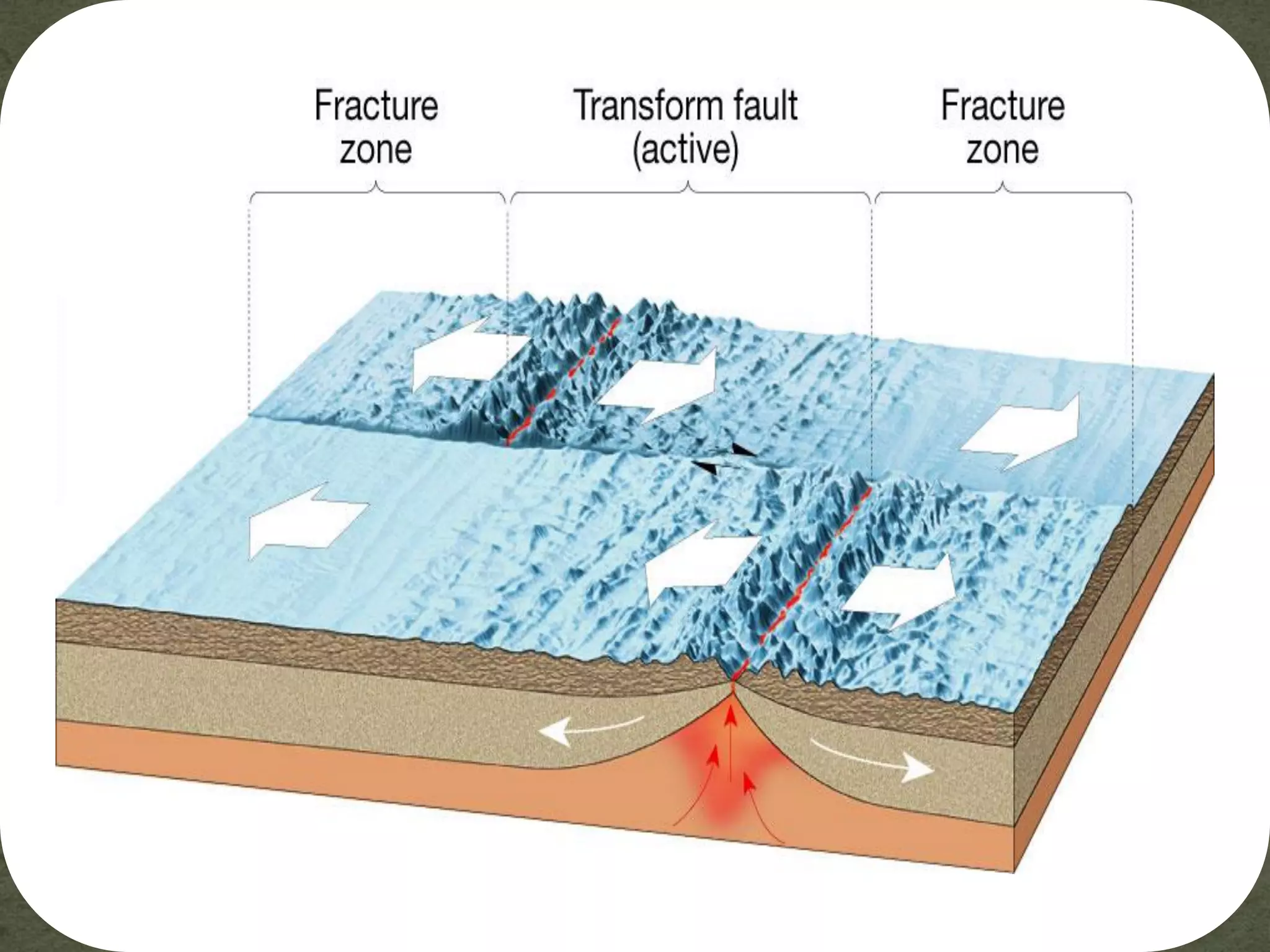
 At a transform fault boundary, plates grind past
each other without destroying the lithosphere.
 Transform faults
• Most join two segments of a mid-ocean ridge.
• At the time of formation, they roughly parallel the
direction of plate movement.
• They aid the movement of oceanic crustal material.
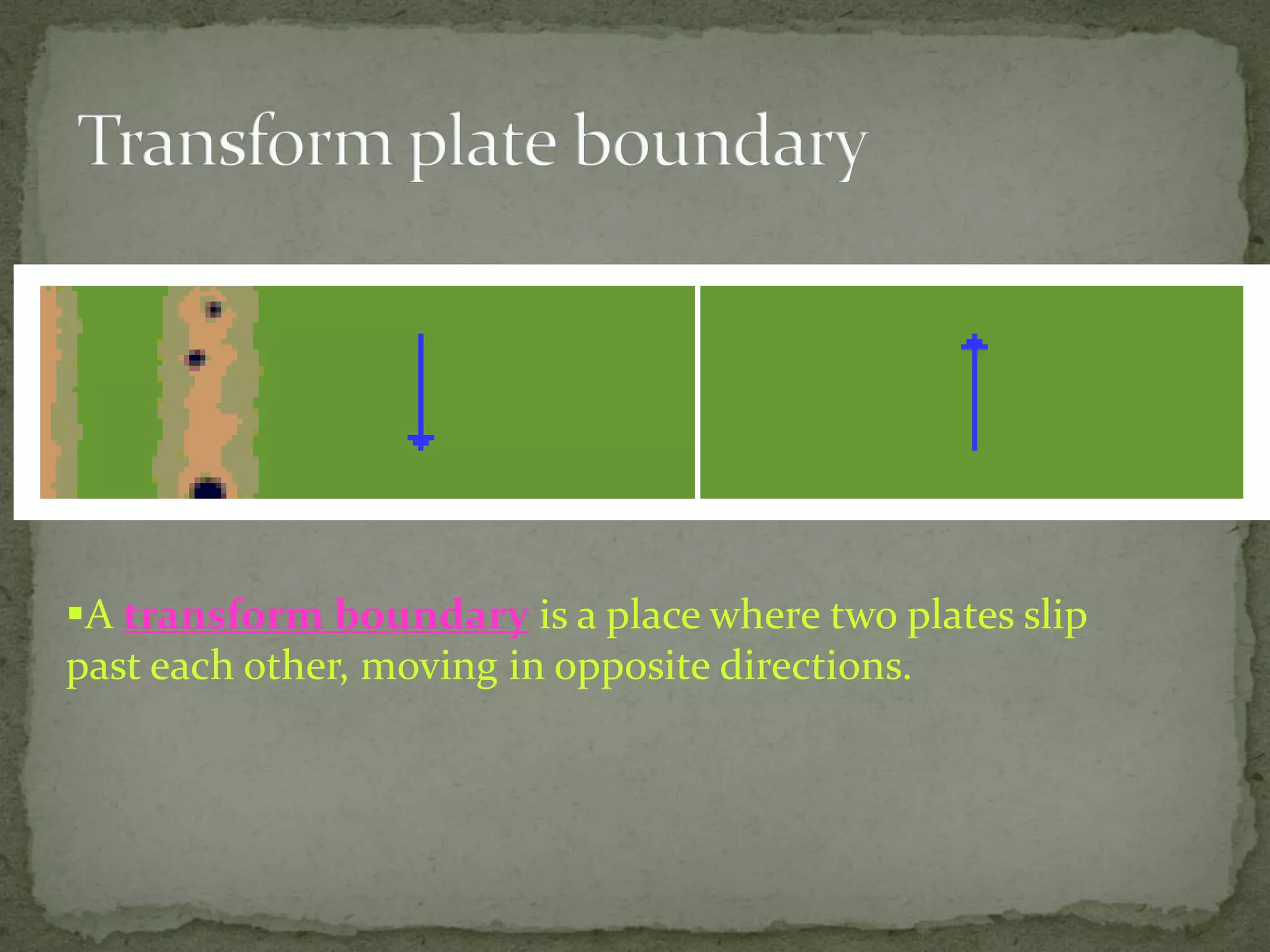
A transform boundary is a place where two plates slip
past each other, moving in opposite directions.
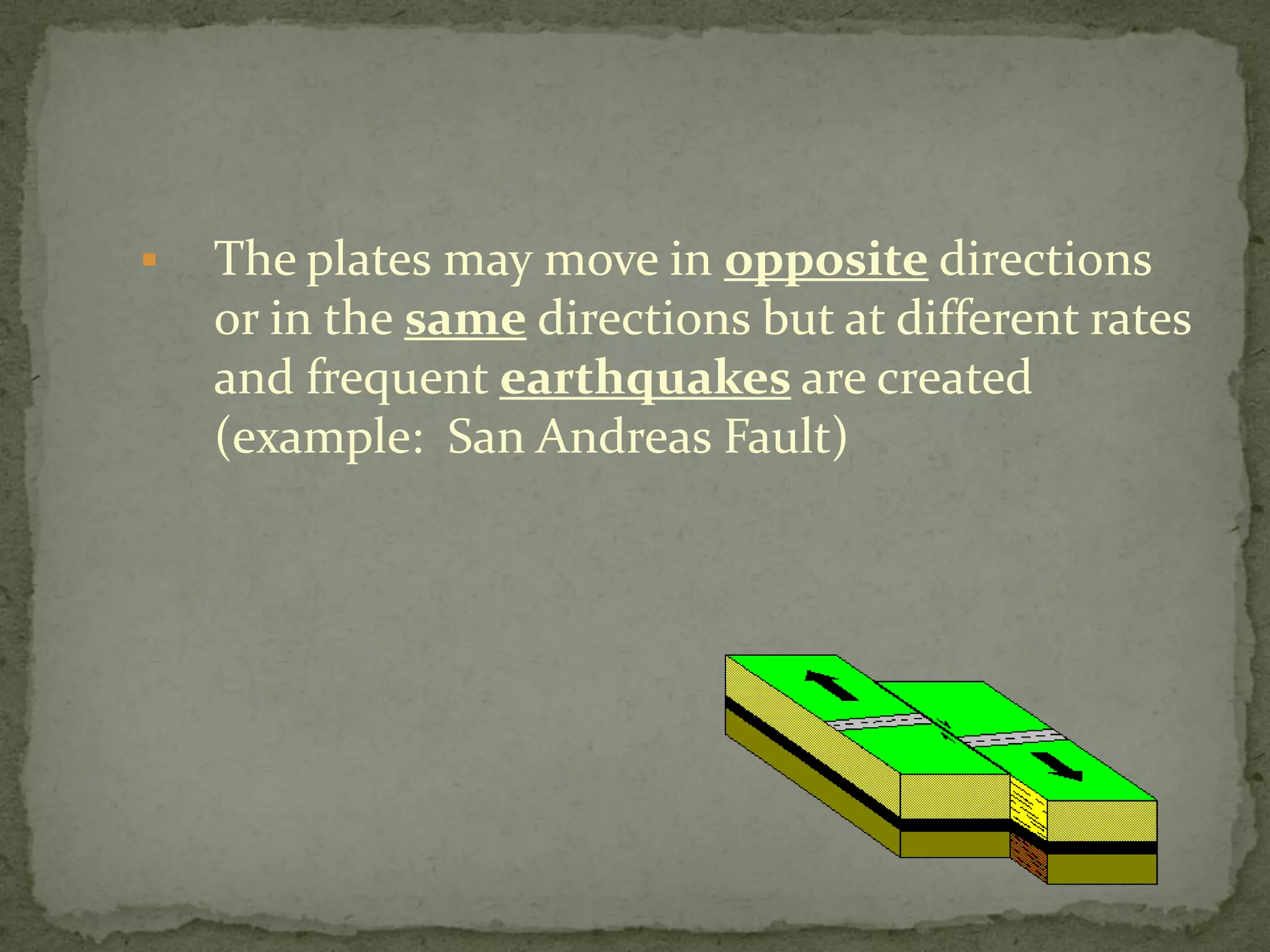
 The plates may move in opposite directions
or in the same directions but at different rates
and frequent earthquakes are created
(example: San Andreas Fault)

Plate tectonics

  • 1.
    Kaustubh J. Sane HJDInstitute of Technical Education & Research
  • 2.
     Theory ofplate tectonics  Types of plates  Causes of plate motion  Importance of plate tectonics
  • 3.
     Wegener’s continentaldrift hypothesis stated that the continents had once been joined to form a single supercontinent.  Wegener proposed that the supercontinent, Pangaea, began to break apart 200 million years ago and form the present landmasses.
  • 7.
     According tothe plate tectonics theory, the uppermost mantle, along with the overlying crust, behaves as a strong, rigid layer. This layer is known as the lithosphere.  There are two types of lithosphere  Oceanic lithosphere  Continental lithosphere
  • 8.
    Continental Crust  Thick(10-50 km)  Old (>200 m.y. and up to 3.5 b.y.)  Iron Poor (<1%) / Silica Rich (>70%)  Less Dense (~ 2.5 g/cm3)  High Rising (mostly above see level)  Formed at Convergent Plate Boundaries Oceanic Crust – Thin (<10 km) – Young (<200 my) – Iron Rich (~5%) / Silica Poor (~50%) – Dense (s.g. ~3 x H2O) – Low lying (5-11 km deep) – Formed at Divergent Plate Boundaries
  • 11.
     Types ofplate boundaries  Depending on the motion of the plate they are grouped into 3 major types viz, 1. Divergent plate (constructive plate boundary) 2. Convergent plate ( destructive plate boundary) 3. Transform plate
  • 12.
    Click here fora hyperlink to an animation of convection Be sure to click the play button!
  • 13.
    o Plates aremoving away from each other o Midocean ridges are created and new ocean floor plates are created. o The plate gives birth to new earth surface hence it is also called as constructive plate boundary. o As new material comes on surface mostly in sea and increases the sea floor hence it is called as sea floor spreading.
  • 14.
    • Oceanic ridgesare continuous elevated zones on the floor of all major ocean basins. The rifts at the crest of ridges represent divergent plate boundaries. • Rift valleys are deep faulted structures found along the axes of divergent plate boundaries. They can develop on the seafloor or on land.
  • 15.
    Can you explainthis diagram!?
  • 16.
    The place wheretwo plates move apart or diverge is called a divergent boundary.
  • 17.
    This is amodel of sea floor spreading at a divergent boundary called a mid ocean ridge.
  • 18.
    Did you knowthat the Earth’s longest mountain range is underwater and is called the mid-ocean ridge? : www.ocean.udel.edu The Mid-Ocean Ridge system, shown above snaking its way between the continents, is more than 56,000 kilometers (35,000 mi) long. It circles the earth like the stitching on a baseball!
  • 19.
     A subductionzone occurs when one oceanic plate is forced down into the mantle beneath a second plate  Oceanic-Continental • Denser oceanic slab sinks into the asthenosphere. • Pockets of magma develop and rise. • Continental volcanic arcs form in part by volcanic activity caused by the subduction of oceanic lithosphere beneath a continent. • Examples include the Andes, Cascades, and the Sierra Nevadas.
  • 21.
    • Two oceanicslabs converge and one descends beneath the other.  Oceanic-Oceanic • This kind of boundary often forms volcanoes on the ocean floor. • Volcanic island arcs form as volcanoes emerge from the sea. • Examples include the Aleutian, Mariana, and Tonga islands.
  • 23.
    • When subductingplates contain continental material, two continents collide.  Continental-Continental • This kind of boundary can produce new mountain ranges, such as the Himalayas.
  • 24.
    Also the waythe Appalachian Mountains formed
  • 25.
    from: http://www.geo.lsa.umich.edu/~crlb/COURSES/270 Continental crustto continental crust collision India-Asia (Himalayas) Before collision After collision
  • 26.
     At atransform fault boundary, plates grind past each other without destroying the lithosphere.  Transform faults • Most join two segments of a mid-ocean ridge. • At the time of formation, they roughly parallel the direction of plate movement. • They aid the movement of oceanic crustal material.
  • 28.
    A transform boundaryis a place where two plates slip past each other, moving in opposite directions.
  • 29.
     The platesmay move in opposite directions or in the same directions but at different rates and frequent earthquakes are created (example: San Andreas Fault)