Communicable Disease
Definition. Causes. Symptoms.
Treatment or Prevention
Disease that is spread from one person to
another through a variety of ways that
include:
contact with blood and bodily fluids
breathing in an airborne virus
by being bitten by an insect
How do these communicable
diseases spread?
•physical contact with an infected person
•contact with a contaminated surface or
object, food, blood, or water
•bites from insects or animals capable of
transmitting the disease
•travel through the air
Dengue Fever
 A painful, debilitating
mosquito-borne disease
caused by any one of four
closely related dengue
viruses.
 Most cases occur in
tropical areas of the world
Dengue Fever
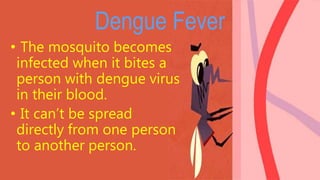
• The mosquito becomes
infected when it bites a
person with dengue virus
in their blood.
• It can’t be spread
directly from one person
to another person.
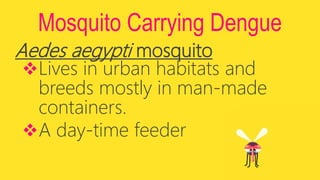
Mosquito Carrying Dengue
Aedes aegypti mosquito
Lives in urban habitats and
breeds mostly in man-made
containers.
A day-time feeder
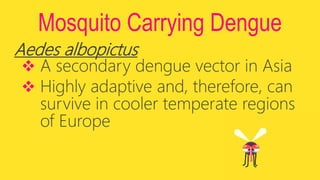
Mosquito Carrying Dengue
Aedes albopictus
 A secondary dengue vector in Asia
 Highly adaptive and, therefore, can
survive in cooler temperate regions
of Europe
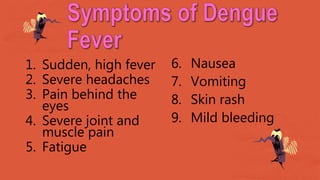
6. Nausea
7. Vomiting
8. Skin rash
9. Mild bleeding
1. Sudden, high fever
2. Severe headaches
3. Pain behind the
eyes
4. Severe joint and
muscle pain
5. Fatigue
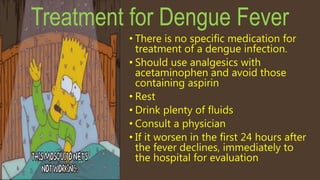
Treatment for Dengue Fever
• There is no specific medication for
treatment of a dengue infection.
• Should use analgesics with
acetaminophen and avoid those
containing aspirin
• Rest
• Drink plenty of fluids
• Consult a physician
• If it worsen in the first 24 hours after
the fever declines, immediately to
the hospital for evaluation
Immunization
Dengvaxia
 Late 2015 and early 2016
 First dengue vaccine
 Sanofi Pasteur
 Registered in several countries for
in individuals 9-45 years of age living
in endemic areas
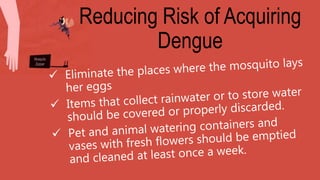
Reducing Risk of Acquiring
Dengue
Reducing Risk of
Acquiring Dengue
 Using air conditioning or
window and door screens
 Proper application of
mosquito repellents
containing 20 to 30% DEET as
the active ingredient on
exposed skin and clothing
HOMEWORK
Find some updates about
Dengvaxia and its side
effects.
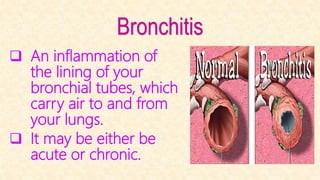
Bronchitis
 An inflammation of
the lining of your
bronchial tubes, which
carry air to and from
your lungs.
 It may be either be
acute or chronic.
Bronchitis
 Acute bronchitis usually improves within
a week to 10 days without lasting effects,
although the cough may linger for
 Chronic bronchitis is a constant irritation
or inflammation of the lining of the
bronchial tubes, often due to smoking.
Symptoms of Bronchitis
 Cough
 Production of mucus
(sputum)
 Fatigue
 Shortness of breath
 Slight fever and chills
 Chest discomfort
When to see a doctor
If your COUGH:
 Lasts more than three weeks
 Prevents you from sleeping
 Is accompanied by fever higher than 38 ̊C
 Produces discolored mucus
 Produces blood
 Is associated with wheezing or shortness of
breath
Causes
 Acute bronchitis is usually caused by viruses,
typically the same viruses that cause colds and
flu
 The most common cause of chronic bronchitis
is cigarette smoking.
 Air pollution and dust or toxic gases in the
environment or workplace also can contribute
to the condition.
Risk Factors
 Cigarette Smoke
 Low Resistance
 Exposure to irritants of job
 Gastric Reflux
Prevention
 Avoid cigarette smoke
 Get vaccinated
 Wash your hands
 Wear surgical mask

Dengue and Bronchitis

  • 1.
    Communicable Disease Definition. Causes.Symptoms. Treatment or Prevention
  • 2.
    Disease that isspread from one person to another through a variety of ways that include: contact with blood and bodily fluids breathing in an airborne virus by being bitten by an insect
  • 3.
    How do thesecommunicable diseases spread? •physical contact with an infected person •contact with a contaminated surface or object, food, blood, or water •bites from insects or animals capable of transmitting the disease •travel through the air
  • 4.
    Dengue Fever  Apainful, debilitating mosquito-borne disease caused by any one of four closely related dengue viruses.  Most cases occur in tropical areas of the world
  • 5.
    Dengue Fever • Themosquito becomes infected when it bites a person with dengue virus in their blood. • It can’t be spread directly from one person to another person.
  • 6.
    Mosquito Carrying Dengue Aedesaegypti mosquito Lives in urban habitats and breeds mostly in man-made containers. A day-time feeder
  • 7.
    Mosquito Carrying Dengue Aedesalbopictus  A secondary dengue vector in Asia  Highly adaptive and, therefore, can survive in cooler temperate regions of Europe
  • 8.
    6. Nausea 7. Vomiting 8.Skin rash 9. Mild bleeding 1. Sudden, high fever 2. Severe headaches 3. Pain behind the eyes 4. Severe joint and muscle pain 5. Fatigue
  • 9.
    Treatment for DengueFever • There is no specific medication for treatment of a dengue infection. • Should use analgesics with acetaminophen and avoid those containing aspirin • Rest • Drink plenty of fluids • Consult a physician • If it worsen in the first 24 hours after the fever declines, immediately to the hospital for evaluation
  • 10.
    Immunization Dengvaxia  Late 2015and early 2016  First dengue vaccine  Sanofi Pasteur  Registered in several countries for in individuals 9-45 years of age living in endemic areas
  • 11.
    Reducing Risk ofAcquiring Dengue
  • 12.
    Reducing Risk of AcquiringDengue  Using air conditioning or window and door screens  Proper application of mosquito repellents containing 20 to 30% DEET as the active ingredient on exposed skin and clothing
  • 13.
    HOMEWORK Find some updatesabout Dengvaxia and its side effects.
  • 14.
    Bronchitis  An inflammationof the lining of your bronchial tubes, which carry air to and from your lungs.  It may be either be acute or chronic.
  • 15.
    Bronchitis  Acute bronchitisusually improves within a week to 10 days without lasting effects, although the cough may linger for  Chronic bronchitis is a constant irritation or inflammation of the lining of the bronchial tubes, often due to smoking.
  • 16.
    Symptoms of Bronchitis Cough  Production of mucus (sputum)  Fatigue  Shortness of breath  Slight fever and chills  Chest discomfort
  • 17.
    When to seea doctor If your COUGH:  Lasts more than three weeks  Prevents you from sleeping  Is accompanied by fever higher than 38 ̊C  Produces discolored mucus  Produces blood  Is associated with wheezing or shortness of breath
  • 18.
    Causes  Acute bronchitisis usually caused by viruses, typically the same viruses that cause colds and flu  The most common cause of chronic bronchitis is cigarette smoking.  Air pollution and dust or toxic gases in the environment or workplace also can contribute to the condition.
  • 19.
    Risk Factors  CigaretteSmoke  Low Resistance  Exposure to irritants of job  Gastric Reflux
  • 20.
    Prevention  Avoid cigarettesmoke  Get vaccinated  Wash your hands  Wear surgical mask

Editor's Notes

  • #4 How these diseases spread depends on the specific disease or infectious agent. touch (staphylococcus) sexual intercourse (gonorrhea, HIV) fecal/oral transmission (hepatitis A) droplets (influenza, TB) contact with a contaminated surface or object (Norwalk virus) food (salmonella, E. coli) blood (HIV, hepatitis B) water (cholera) bites from insects or animals (mosquito: malaria and yellow fever; flea: plague) travel through the air, such as tuberculosis or measles
  • #5 Debilitate- to make weak Aedis aegypti dengue viruses (DENV 1, DENV 2, DENV 3, or DENV 4)
  • #7 its peak biting periods are early in the morning and in the evening before dusk
  • #9 usually begin 4 to 6 days after infection; can last for up to 10 days High fever = 40 degrees Celsius Skin rash, which appears 2 to 5days after the onset of fever Mild bleeding (such a nose bleed, bleeding gums, or easy bruising)
  • #10 Analgesic = pain killer Acetaminophen or paracetamol Aspirin = treat mild to moderate pain and to reduce fever or inflammation If they feel worse (e.g., develop vomiting and severe abdominal pain) in the first 24 hours after the fever declines, they should go immediately to the hospital for evaluation.
  • #13 DEET (N,N-diethyl-meta-toluamide) is the active ingredient in many repellent products. It is widely used to repel biting pests such as mosquitoes and ticks
  • #16 Acute bronchitis, also called a chest cold Chronic bronchitis, a more serious condition
  • #17 PRODUCTION OF MUCUS, which can be clear, white, yellowish-gray or green in color — rarely, it may be streaked with blood
  • #18 Wheezing or whistling sound when breathing
  • #19  Antibiotics don't kill viruses, so this type of medication isn't useful in most cases of bronchitis.
  • #20 if you work around certain lung irritants, such as grains or textiles, or are exposed to chemical fumes. Repeated bouts of severe heartburn can irritate your throat and make you more prone to developing bronchitis.