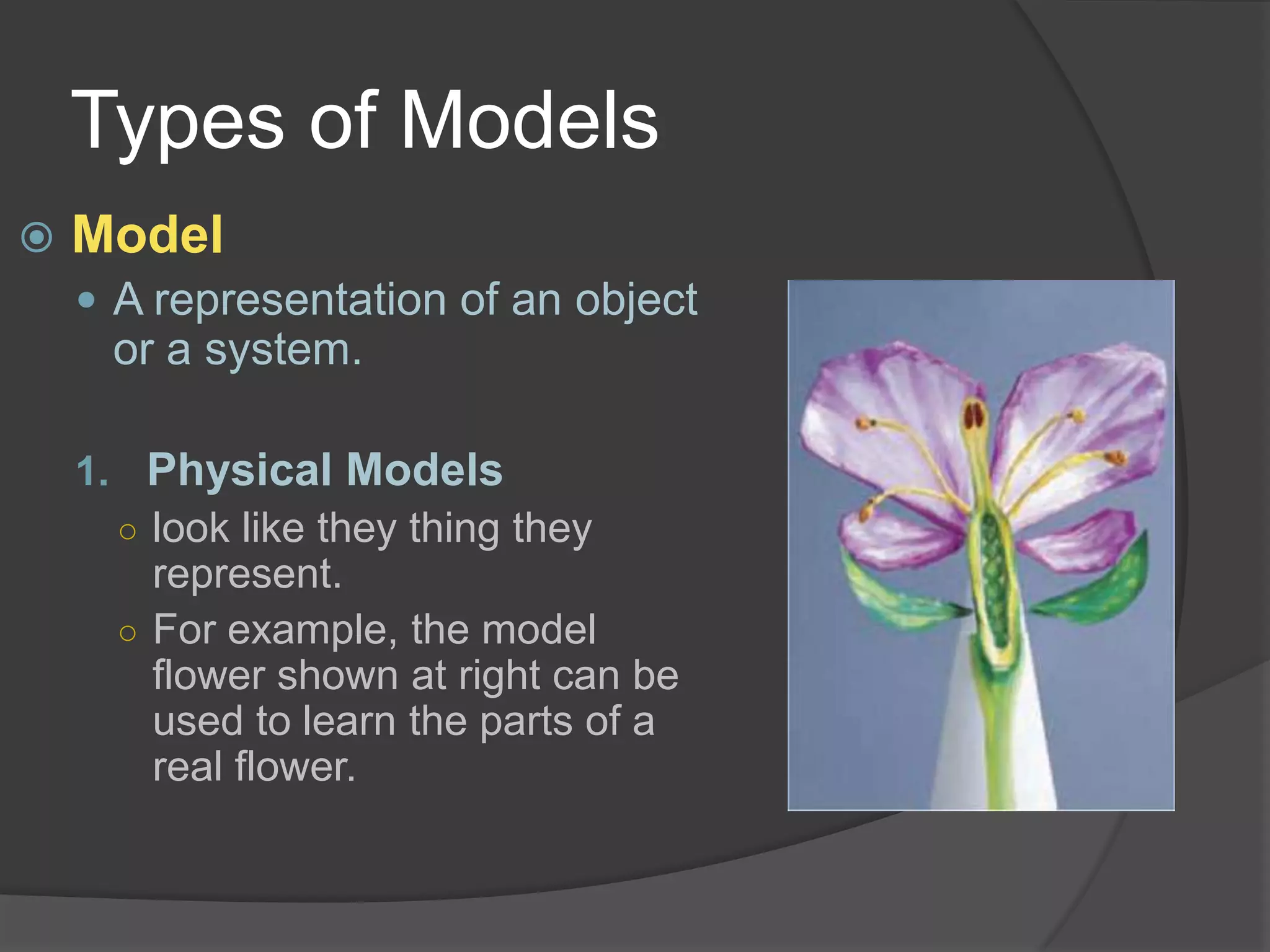
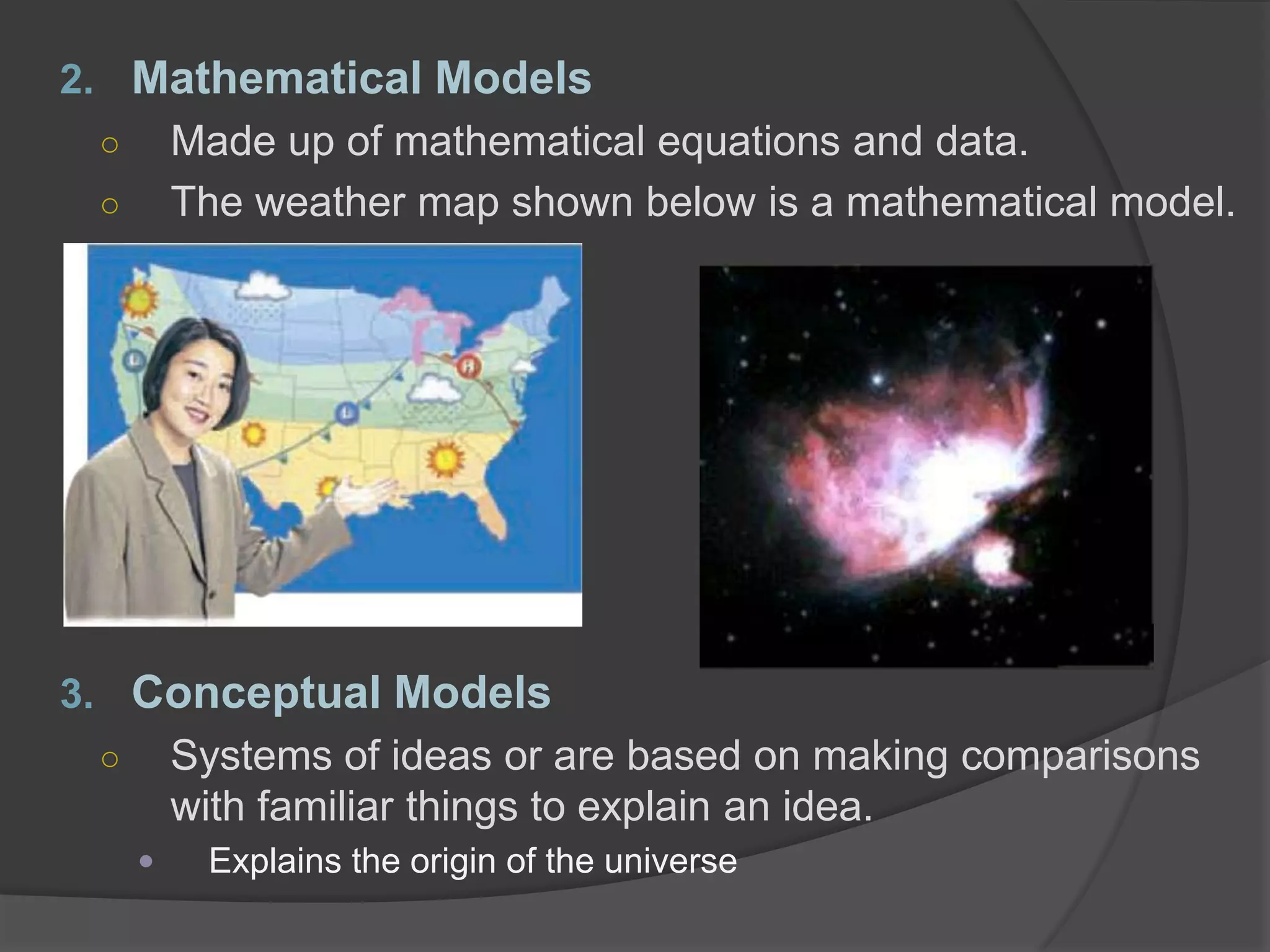
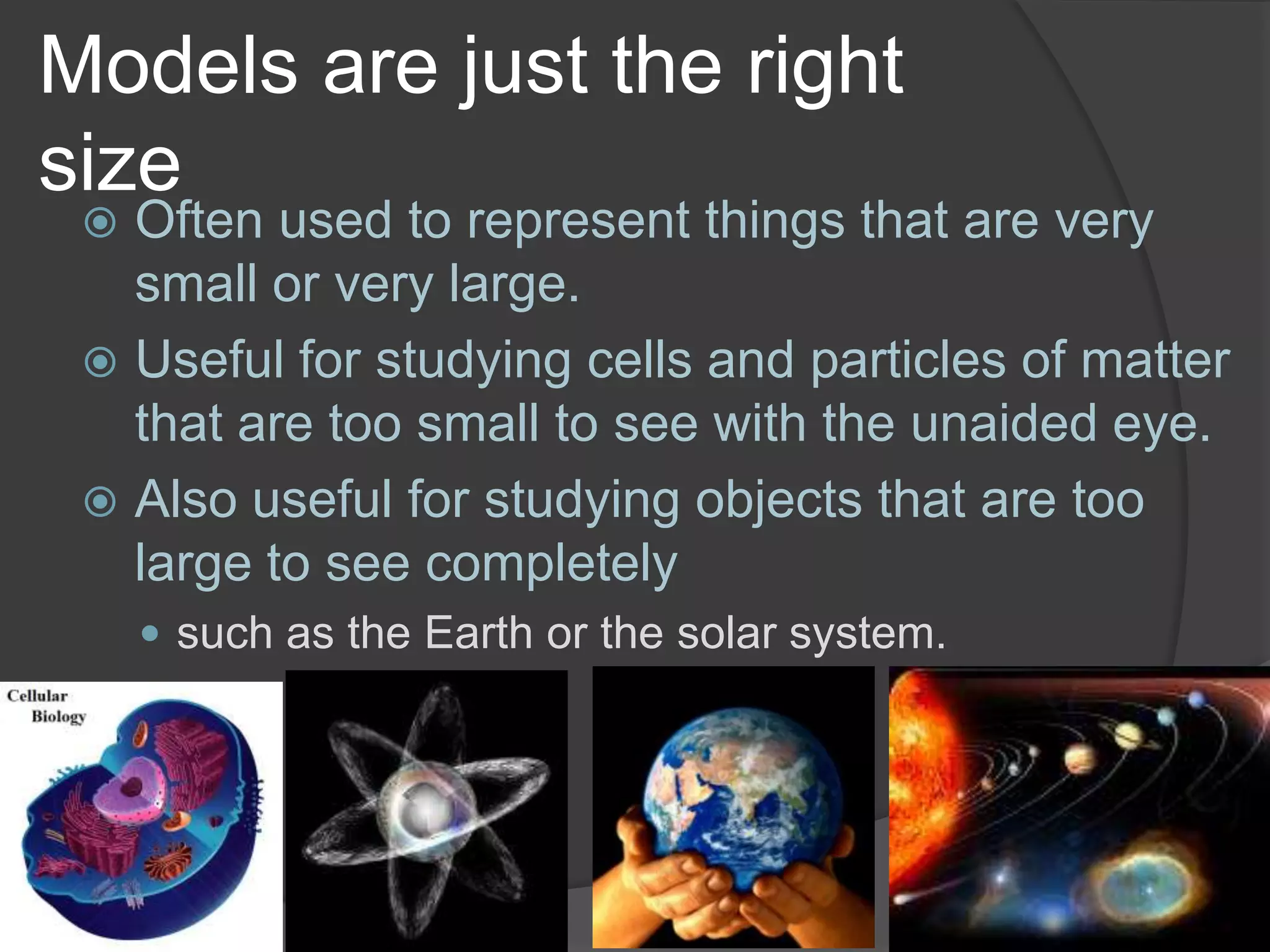
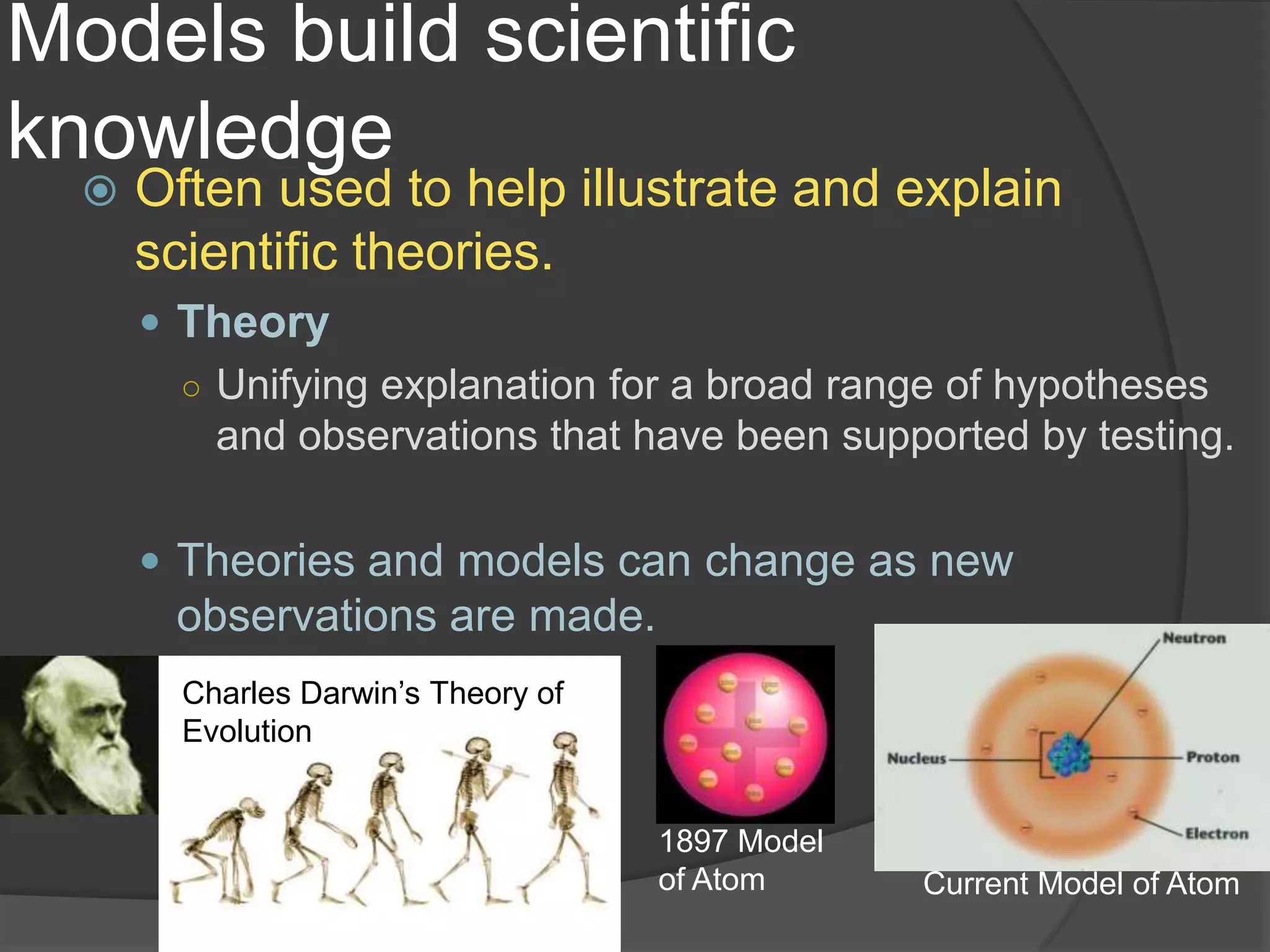
Scientific models are used to represent objects or systems in the natural world. There are three main types of scientific models: physical models, which resemble the actual object; mathematical models, which use equations and data; and conceptual models, which explain ideas through comparisons. Models allow scientists to study things that are too small, like cells, or too large, like the solar system. Models help illustrate scientific theories and build knowledge, though theories and models may change as new evidence is discovered. Scientific laws are formed when a theory's models consistently predict experimental results and summarize what is observed.