PLANT SWEETENERS
DR. SIDDHI UPADHYAY
H.O.D. & ASSOCIATE PROFESSOR
Dept. of Pharmacognosy and Phytochemistry
SIGMA INSTITUTE OF PHARMACY
Content
•Introduction
•Classification
•Advantages of natural sweeteners
•Zero Calorie Sweeteners
•Tastemodifying sugar substitutes
INTRODUCTION
 Sweet taste …. Interest to humankind long
before written history
 Understanding of sweet taste still very
elementary
 Ideal substitute for sucrose has yet to
discover, matching sweet taste
Researchfindingsabout SUGAR
 New MRI research reveals cancer cells
thrive on processed sugar
 Excess sugar & refined carbohydrates
found to significantly increase risk of
heart failure
 Studies link sugary drink consumption to
heart disease
R& D about SUGAR
drinks Consumption of carbonated soft
significantly increase risk of stroke
blood
 Sugar is main cause of Type II Diabetes
 Sugar sweetened drinks cause high
pressure
 Added sugars linked to risks of heart disease
in teenagers
Cost
Dental
care
Diabetis
mellitus
No
calories
Don't
raise
blood
sugar
levels
Lower
Not
fermented
ex.,
Xylitol works to
prevent bacteria
from adhering to
the tooth surface
Weight
control
CLASSIFICATION
Acesulfame potassium
Aspartame
Saccharin
Sweetners
Natural Artificial
Not synsetic
Honey
Maple syrup
Molases
Sucralose
Extracted,
synsetic
Polyols
Stevioside
Thaumatin
Sucrose
sodium cyclamate
Neotame
CLASSIFICATIONOFSWEETENERSBASEDON
Form& use ofsugar
FORM USE
Granulated
• To sprinkle on food, hot drinks, cooked foods
• As preservative to prevent micro-organisms
Milled
• Icing sugar
• For dusting food baking confectionary
Screened
• Crystalline form
• To decorate table sugars
• For blending in dry mixes & baking confectionary
FORM USE
Brown In baking goods confectionary &toffees
Sugar cubes To sweeten drinks
Liquid sugar In beverages, ice-creams, jam
Syrups In baked goods, confectionary, toffee
Advantages of natural
sweeteners
AdvAntAges o f n A t u r A l s w e e t e n e r s
No calorific value
Causethe least possible side-effect
Qualitative & quantitative improvement of
sweeteners is within the reach of biologists
through modern breeding and biotechnology
techniques.
EXAMPLES OF NATURAL SWEETENERS
Examples of high-potency sweeteners of plant origin
Sweetener Structural class Plant source Country of origin
Brazzein Protein Pentadiplandra brazzeana West Africa
Curculin Protein Curculigo latifolia Malaysia
Mabinlin Protein Capparis masakai China
Monellin Protein Discoreophyllum cumminsii West Africa
Pentadin Protein Pentadiplandra brazzeana West Africa
Thaumatin Protein Thaumatococcus daniellii West Africa
Monatin Amino acid Schlerochiton ilicifolius SouthAfrica
Abrusoside Glycoside Abrus precatorius Thailand
Albiziasaponins Glycoside Albizia myriophylla Thailand
Baiyunoside Glycoside Phlomis betonicoides China
Bryoside Glycoside Bryonia dioica Italy
Cussoracosides Glycoside Cussonia racemosa Madagascar
Cyclocarioside Glycoside Cyclocarya paliurus China
Glycyrrhizin Glycoside Glycyrrhiza glabra China
Lo han guo Glycoside Siratia grosvenorii China
Mukurozioside Glycoside Sapindus mukurossi China
Osladin Glycoside Polypodium vulgare USA, Eur.
Periandrin Glycoside Periandra dulcis Brazil
Phlomisoside Glycoside Phlomis younghusbandii China
Polypodoside Glycoside Polypodium glycyrrhiza USA
Pterocaryoside Glycoside Pterocarya paliurus China
Rubusoside Glycoside Rubus suavissimus China
Steviol Glycoside Stevia rebaudiana Paraguay
Telosmosides Glycoside Telosma procumbens Philippines
Selligueain A Proanthocyanidin Selliguea feei Indonesia
Hernandulcin Bisabolane sesquiterpene Lippia dulcis Mexico
Phlorizin Dihydrochalcone Lithocarpus litseifolius China
Trilobatin Dihydrochalcone Lithocarpus litseifolius China
Phyllodulcin Flavonoid Hydrangea macrophylla Japan
It is origin of Paraguay and Brazil. Stevia is cultivated primarily in
USA, Canada, Korea, Japan, Taiwan, china, and United Kingdom.
In September 1995 the USA FDA allowed Stevia and it is extracted to be
imported as a food supplement but not as a sweetener. Major food
companies like coca cola and beatrice foods used Stevia extracts to
sweeten the foods for sale in Japan, Brazil and other countries.
The plant grows up to range 65-180 centimeters when cultivated or
growing naturally in fertile soil. It is a short day plant and flowering from
January to March in the southern hemisphere. The suitable natural climate
is semi humid subtropical with temperature extremes from 21 to 43°C.
The steviol glycoside sweeteners share a common aglycone, steviol.
Linked to steviol are carbohydrate moieties and it is the number and
linkages of these that differentiate the steviol glycosidesweeteners
Stevioside (Stevia rebaudiana)
leafs considered the most parts of plant which is rich with stevia
rebaudiana A, and can be used these techniques to preparation of
sweetener from the leaves typically involves some or all of the
following unit operations: aqueous extraction reached by selective
extraction into a polar organic solvent, decolourisation, removalof
impurities through flocculation and filtration, ion exchange and
finally crystallization.
A research report suggests rebaudioside A is less sweet than stevioside
that may be a significant of the methodologies employed or due to the
actual materials evaluated being mixtures of steviol glycosides rather than
the pure glycoside.
Sweetness potencies of
steviol glycosides.
Sensory properties
Compound Relative sweetnessa
Stevioside 300
RebaudiosideA 250-450
Rebaudioside B 300-350
Rebaudioside C 50-120
Rebaudioside D 250-450
Rebaudioside E 150-300
DulcosideA 50-120
Steviolbioside 100-125
aSweetness potency measured relative to 0.4% (w/v) sucrose.
* Adapted from (Kim and DuBois, 1991)
Physical and chemical properties
Both stevioside and rebaudioside A appear to be stable sweeteners.
One study was observed in carbonated beverages buffered with either
phosphoric acid or citric acid. After 2 months storage at 37◦C, some
degradation was reported, but no significant changes were seen when
formulated beverage products were stored at room temperature and below
for 5 months. Some shakiness (20% loss) of rebaudioside A on exposure to UV
light was mentioned following 1 week of exposure to sunshine, but stevioside
be completely stable under the same conditions.
The authors conclude that these sweeteners are viable as commercial products
in that they show adequate hydrolytic stability. The solubility of stevioside in
water has been measured and found to be just less than 1% (w/v).
Physiological properties
rebaudiana A leaves contain ent-kaurene diterpene glycosides (stevioside and
the rebaudiosides) 300 times sweeter than sucrose with superior solubility in
water and a positive taste profile that are safely metabolized by the body
without any side effect.
Rebaudioside A in the digestive tract is first metabolized by microbes in the
colon to stevioside which is further converted into glucose molecule and
steviol. The released glucose molecule is used by the bacteria in the colonand
is not absorbed into the blood stream.
,
Steviol glycosides are not readily absorbed from the upper small intestine
of the rat or human following oral administration. As human digestive
enzymes do not hydrolyse β-glycosidic linkages, digestion in the small
intestine is limited. Microbial fermentation occurs in the large intestine of
both rat and human, releasing the aglycone steviol. Steviol is then absorbed
conjugated with glucuronic acid and excreted as steviol glucuronide, the
primary route being in feces for the rat and urine for humans.
The study also showed that the majority of steviol glycosides are absorbed and
glucuronidated in the liver. The newly bonded glucuronidate is released in the
blood and filtered by the kidneys into the urine. Small amounts of glucuronide
that remain in the colon are excreted through fecal matter.
Applications
In Korea, stevioside is an accepted sweetener in baked products, table-top
sweeteners, beverages and seasonings.
steviol glycoside sweeteners have acceptance across the range of food and
beverage applications normally associated with the use of high-potency
sweeteners.
particularly in Japan where it is considered a 'food’ because of itsnatural
origin.
It is now accepted that whenever safety studies have been carried out using
purified and fully characterised steviol glycosides, the reproductive safety
of these sweetener materials has been fully demonstrated.
A number of sub-chronic (13-week) toxicity studies have been completed in
recent years, these studies have all reported no statistically significant effects
in the great majority of cases; although some impact on body-weight gains for
groups receiving the highest doses tested .
Matsui(1996). examined the genetic toxicity of stevioside and steviol in a
range of mutagenicity tests with metabolic activation. Stevioside was not
found to be mutagenic in any of the assays examined. Steviol, however,
produced dose-related positive responses in some mutagenicity tests.
Other workers reported no compound-related alterations of blood, clinical
chemistry or urinalysis parameters. Although stevioside is not mutagenic, its
aglycone, steviol (13-hydroxy-ent-kaurenoic acid) has been shown to be
mutagenic in some tests with S. typhimurium strains.
Safety
In July 2008, JECFA found steviol glycosides safe for use in food and
beverages.
Also, the US Food and Drug Administration (FDA) announced in December
2008 that it had no objection to the use of rebiana in food and beverages in
the United States.
In 2009, the French government was the first in the EU to approve the use of
rebausioside A in food and beverages in France.
In 2010, the European Food Safety Authority published a ScientificOpinion
confirming that steviol glycosides are safe for use in foods and beverages.
Approval throughout the EU is anticipated, although the precise timing is
currently uncertain.
Regulatory status
Thaumatin (Thaumatococcus daniellii)
Thaumatin is the common name for a mixture of potently sweet proteins
that can be extracted from the WestAfrican plant Thaumatococcus
daniellii (Bennett), known locally as the katemfe berry.
The plant divided in two kinds, Thaumatins I and II being the major
constituents, each with almost identical molecular weight of 22,000 Daltons.
Thaumatins I and II have very similar amino acid sequences, differing only in
five residues.
The protein is stabilized by eight disulphide bridges, thus conferring a greater
stability to heat and pH denaturation to the molecule than might be expected
for a protein.
Thaumatin was used as a tool in early studies that sought to understand the
structure of the mammalian receptor for sweetness .
Sensory properties
Thaumatin is normally described as being approx. 2000 times the sweetness
of sucrose.
The temporal taste profile of Thaumatin is characterised by a delay in
perceiving sweetness, a lengthy sweetness growth phase until maximum
sweetness is perceived, followed by a lingering sweet/liquorice after taste.
Physical and chemical properties
Thaumatin is stabilized by the eight disulphide bridges that result in a cross-
linked network of amino acid chains. This confers a measure of stability to
heat and extremes of pH.
These disulphide bridges are also responsible for holding the protein chain in
the correct conformation to elicit sweetness, as has been confirmed by
demonstrating that cleavage of a single disulphide bridge results in loss of
sweetness.
Physiological properties
Thaumatin is a natural plant protein of known structure containing normal amino
acids.
Applications
The main commercial applications for Thaumatin its claimed flavor modifying
and enhancing functionalities.
Thaumatin has found application in liquid medicines.
The oral care products and in the nutraceutical/fortified foods industries.
increasing concentrations of Thaumatin appear to have increasing effects on the
bitterness associated with vitamin B complex preparations, caffeine and soybean
peptides.
Thaumatin was studied for its sub-acute toxicity in rats and dogs and its
ability to produce anaphylactic antibodies following oral administration to
rats and normal human subjects. It was found to be readily digested prior to
absorption in rats and no adverse effects resulted from its continuous
administration to rats and dogs at dietary concentrations of 0%, 0.3%, 1.0%
and 3.0% for 13 weeks.
Also, it was shown to be non-teratogenic when administered orally to rats at
0, 200, 600 and 2000 mg/kg body weight/day from day 6 to 15 of gestation
and was without effect on the incidence of dominant lethal mutations when
administered on five consecutive days to male mice at 200 and 2000 mg/kg
per day.
The results indicate that Thaumatin when used as a flavor modifier and
extender, and partial sweetener, is unlikely to be hazardous at the expected
level of consumption.
Safety
Regulatory status
Sweetener Product category Maximum usable dose
Thaumatin (E957) Confectionery
 Confectionery with no added sugar
 Cocoa or dried fruit based
 Confectionery; energy reduced or with no
added sugar
 Chewing gum with no added sugar
50 mg/kg
50 mg/kg
50 mg/kg
Food supplements
Edible ices, energy reduced or with noadded
sugar
400 mg/kg
50 mg/kg
Thaumatin was originally permitted as a natural food additive in Japan in
1979.
It was approved as a sweetener in the United Kingdom andAustralia.
In the United States, Thaumatin was accorded GRAS status as a flavor
adjunct for chewing gum in 1984 and this has since been extended by FEMA
to general use across all food categories.
Table shows regulatory approval of Thaumatin in the EU
The Chinese plant Siraitia grosvenorii family that grows mainly in Guangxi
Province, with most of the product from the mountains of Guilin. Siraitia
fruits are used both inside and outside the People’s Republic of China as a
food, beverage, and traditional medicine.
The sweet constituents of the plant are triterpene glycosides, known as mogrosides.
Common names for the plant include: lo han guo, lo han kuo, Arhat fruit, Monk
Fruit, Fructus momordicae and Momordicae grosvenori fructus.
Subsequent isolation of two sweet components (named mogrosides IV and V) was
completed successfully and their sensory properties described. Mogroside V is the
most abundant component, occurring at around 1% in the dried fruits.
Morgroside (Lo Han Guo - Siraitia grosvenorii )
Structure of morgrosideV
t
Sensory properties
In study was described the sweetness of mogroside as being 150 times as
potent as sucrose. In other report estimated the potency of mogroside V
as approximately 250 times as sweet as sucrose at a 5% sucrose equivalen
concentration.
the sweetener is known to deliver a taste profile that contains taste
elements commonly seen in natural potent sweeteners, such as a slight
delay to reaching maximum sweetness intensity and an aftertaste that
contains liquorice and cooling elements.
Physical and chemical properties
There are no study reports detailing the stability of mogroside.
In addition, the indigenous use of the lo han guo fruit involves drying the
fruit and then preparing an aqueous decoction that also indicates that the
sweet principle is likely to be a relatively stable molecule.
Aqueous solutions containing mogroside V are reported to be stable, even
under boiling conditions.
the β-linkages of the carbohydrate moieties are intrinsically resistant to
hydrolysis.
Extracts of lo han guo fruit have long been used indigenously to treat
colds, sore throats and minor stomach and intestinal complaints.
Recent studies suggest that the mogrosides may exhibit anti-cancer
properties, possibly based on their researches anti-oxidant characteristics.
Physiological properties
Applications
The traditional use of the lo han guo fruit has been to prepare an aqueous extract
that is then consumed as a tea or tonic drink.
There have been some minor beverage products on the market in USA that have
contained (lo han fruit extract) as a part of the overall sweetening system.
In addition, can be used as table-top sweeteners will be a target.
In safety studies that have been completed, it has been shown to be non-
mutagenic in short-term predictive tests and to produce no mortalities
when administered to mice at doses up to 2 g/kg body weight.
Safety
Regulatory status
Lo han guo fruits and extracts are considered to be foods in China.
A GRAS petition has been reviewed by FDA which issued a‘no
objection’ letter, thus confirming its GRAS status within the USmarket.
Dioscoreophyllum cumminsii
 Family: Menispermaceae
 Berry from WestAfrica
 Sweetening principle: Protein – Monellin
 Sweetening intensity: 1500– 3000 times
sweeter than sugar
 Tastelife: max 24 hrs.
Citrusgrandis, Citrus paradisii
 From Malaysia, N.E. India
 Common names:Seville orange or Shaddock,
Grapefruit
 Part: Fruit
 Sweetening principle: Flavonoid derivatives,
Neohesperidin dihydrochalcones
 Sweetening intensity: 600 – 1000times
sweeter than sugar
ZERO CALORIE SWEETENERS
 Brazzein: WestAfrica
 Curculin: Fruit of Curculigo latifolia from
Malaysia
 Lue Han Cuo:Monk fruit in China
 Miraculin: WestAfrica
 Monellin: Berry from Central & WestAfrica
 Penadin: Climbing plant from WestAfrica
from South
 Stevia: Native to SouthAmerica
 Stevioside: Extract of plant
America
Polypodium glycyrrhiza
 Family: Polypodiaceae
 Known asLiquoricefern
 Distribution: CoastalAlaska, Central
California
 Plant part: Rhizome
 Sweetening principle: Triterpene glycoside-
glycyrrhizin
 Sweetening intensity: 50 – 100times assweet
assugar
Polypodium vulgare
 Family: Polypodiaceae
 Wall fern, European polypody
 Useful plant part: rhizome
 Sweetening principle: steroid saponin, osladin
 Sweetening intensity: 3000 times assweet as
sucrose
 Very low yield
Myrrhis odorata
 Family: Apiaceae
 Known assweet cicely, sweetcheroil
 Distributed in Europe, WestAsia
 Freshwhole plant useful
 Sweetening principle: phenylpropanoid-trans anethole
 Sweetening intensity: 13times sweeter than sugar
Hydrangea macrophylla
 Tea of heaven
 Distributed in Japan,Korea
 Useful plant part: Leaves
 Sweetening principle: Phyllodulcin, hydrangenol
 Sweetening intensity: 400 times sweeter than
sugar
Perilla frutescens
 Family: Lamiaceae
 Known asPerilla mint, wildcoleus
 Whole plant isuseful
 Sweetening principle: Monoterpene-perillartine
(Perillaldehyde)
 Sweetening intensity: 2000 times assweet as
sugar
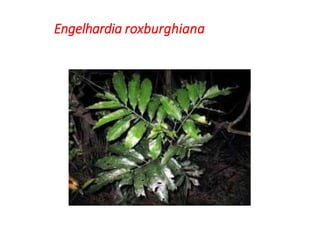
Engelhardia roxburghiana
 Family: Juglandoceae
 E.chrysolepisHance
 Known asHuang-qui(Chinese)
 Distributed in India, China,Indo-china,
Malaysia
 Leavesare useful
 Sweetening principle: Dihydroflavonol
glycoside-neoastibine huangqioside,
neohuangquiside
 Leavesusedto make sweet tea
 Sweetnessincreaseson heating
Periandra dulcis
 Family: Fabiaceae
 Distributed in Brazil
 Root useful part
 Sweetening principle: Periandrin I-IV
Glycorrhizin
 UsedasLiquorice substitute
Tessaria dodoneifolia
 Family: Asteraceae
 Arrow weed
 Distributed in Paraguay, TropicalAmerica
 Young shorts useful
 Sweetening principle: Dihydroflavanol
(Dihydroquercetin-3-acetate)
 Sweetening intensity: 80 times sweeter than sugar
Abrus precatorius
 Family: Fabaceae
 Known asCrab’s eye, Indian Liquorice
 Distributed in tropics
 Leaves are useful part
 Sweetening principle: Cycloartane glycoside
Glycorrhizin
 Sweetening intensity: 30 – 100times sweeter
than sugar
Lippia dulci
 Family: Verbenaceae
 Known asHoneyherb
 Distributed in Central America, WestIndies
 A small shrubby herb, flowers are white
 Aerial parts useful
 Sweetening principle: Sesquiterpene-
hernandulcin
 Sweetening intensity: 1000 times sweeter
than sugar
Illicium verum
 Family: Illicinaceae
 Distributed in South China
 A slow growing tree
 Useful plant part: dried fruits
 Usedin flavouring liquors and medicines
 Sweetening principle: Phenyl propanoid-
trans-Anethole
 Sweetening intensity: 13times sweeter than
sugar
Piper marginatum
 Family: Piperaceae
 Dried leaves are useful
 Sweetening principle: Phenyl propanoid-
trans-Anethole
 Sweetening intensity: 13times sweeter than
sugar
Curculigolatifolia
 Family: Hypoxidaceae
 Distributed in India and Malaysia
 A rhizomatous polygamous herb
 Useful part: Fruit
 Sweetening principle: Protein “Curculin”
Foeniculumvulgare
 Family: Apiaceae
 Known asFennel
 Distributed in Europe,Mediterranean regions
 A perennial herb
 Freshaerial parts are useful
 Sweeteningprinciple: Phenyl propanoid-trans-
Anethole
Osmorhiza longistylis
 Family: Apiaceae
 Alsoknown asSmooth sweetcicely
 Distributed in North and SouthAmerica
 A perennial herb
 Sweetening principle: Phenylpropanoid-
trans-Anethole
 Sweetening intensity: 13times sweeter than
sugar
Fraxinus spp.
 Family: Oleaceae
 European ash
 Distributed in EastAsia, North America,
Mediterranean regions
 A small tree
 Useful part: Stem
 Sweetening principle: Mannitol
Thladiantha grosvenori
 Family: Cucurbitaceae
 Distributed in China
 Tendril climber with root tubers
 Sweetening principle: Cucurbitane glycoside -
mogroside V.
Tagetes filifolia
 Family: Asteraceae
 Known asIrishlace
 Distributed in Mexico
 Freshwhole much branched annual herb
propanoids- Sweetening principle: Phenyl
trans-Anethole and Estragole
 Sweetening intensity: trans-Anethole is
13times sweeter than sugar
Ocimum basilicum
 Family: Lamiaceae
 Known asSweetBasil
 Distributed in old world tropics
 An aromatic herb
 Freshaerial parts are useful
 Sweetening principle: Phenyl propanoids-
trans-Anethole and Estragolein volatileoil
 Sweetening intensity: 13 times sweeter than
sugar
Taste modifying sugar substitutes
These plants have certain chemical principles
which have the property of modifying the taste
of foods, making sour or bitter foods taste
sweet.
They temporarily suppress the sensitivity to
sweet substances
Synsepalum dulcificum
 Family: Sapotaceae
 Miraculous berry / fruit
 Found in Westtropical Africa
 Limited food application
 Extraction difficult
 The fruits contain a glycoprotein – Miraculin
which is taste modifier of sour foods with the
sweet taste persisting for 1– 2 hours
Gymnema sylvestre
 Family: Asclepiadaceae
 A large woody climber of Asia, Africa and
Australia
 Ovate leaves, yellow flowers, follicles large
seedswinged
 Leaves contain “gymnemic acid” a taste
modifying substance
Cynara scolymus
 Family: Asteraceae
 A coarseperennial herb
 Pinnate leaves, purple flowers
 Native of Mediterranean region
 Tastemodifying substance Caffeolocunic acid,
Chlorogenic acid, Cynarin
 Sweet taste persistsfor 4 – 5 hours
Larix decidua
 Family: Pinaceae
 A tall conifer of CentralEurope
 Tastemodifying substance: “Melezitore”
 Roots and tubers of some plants contain high
quantity of Insulin which is converted to D-
Fructose, basically better tolerated by Diabetes
than any other carbohydrate
 Therefore, high fructose sweeteners (HFS) are
being developed to suit diabetic nutrition charts
 Diabetic bread, other confectionary using insulin
/ HFSare beingmanufactured
Dahlia
Helianthus
Inula
Cichorium
Castanea
Carpesium
Campanula
THANK YOU !!!
siupa.pharma@gmail.com

Plant_Sweeteners

  • 1.
    PLANT SWEETENERS DR. SIDDHIUPADHYAY H.O.D. & ASSOCIATE PROFESSOR Dept. of Pharmacognosy and Phytochemistry SIGMA INSTITUTE OF PHARMACY
  • 2.
    Content •Introduction •Classification •Advantages of naturalsweeteners •Zero Calorie Sweeteners •Tastemodifying sugar substitutes
  • 3.
  • 4.
     Sweet taste…. Interest to humankind long before written history  Understanding of sweet taste still very elementary  Ideal substitute for sucrose has yet to discover, matching sweet taste
  • 5.
    Researchfindingsabout SUGAR  NewMRI research reveals cancer cells thrive on processed sugar  Excess sugar & refined carbohydrates found to significantly increase risk of heart failure  Studies link sugary drink consumption to heart disease
  • 6.
    R& D aboutSUGAR drinks Consumption of carbonated soft significantly increase risk of stroke blood  Sugar is main cause of Type II Diabetes  Sugar sweetened drinks cause high pressure  Added sugars linked to risks of heart disease in teenagers
  • 7.
  • 8.
  • 9.
    Acesulfame potassium Aspartame Saccharin Sweetners Natural Artificial Notsynsetic Honey Maple syrup Molases Sucralose Extracted, synsetic Polyols Stevioside Thaumatin Sucrose sodium cyclamate Neotame
  • 11.
    CLASSIFICATIONOFSWEETENERSBASEDON Form& use ofsugar FORMUSE Granulated • To sprinkle on food, hot drinks, cooked foods • As preservative to prevent micro-organisms Milled • Icing sugar • For dusting food baking confectionary Screened • Crystalline form • To decorate table sugars • For blending in dry mixes & baking confectionary
  • 12.
    FORM USE Brown Inbaking goods confectionary &toffees Sugar cubes To sweeten drinks Liquid sugar In beverages, ice-creams, jam Syrups In baked goods, confectionary, toffee
  • 13.
  • 14.
    AdvAntAges o fn A t u r A l s w e e t e n e r s No calorific value Causethe least possible side-effect Qualitative & quantitative improvement of sweeteners is within the reach of biologists through modern breeding and biotechnology techniques.
  • 15.
  • 16.
    Examples of high-potencysweeteners of plant origin Sweetener Structural class Plant source Country of origin Brazzein Protein Pentadiplandra brazzeana West Africa Curculin Protein Curculigo latifolia Malaysia Mabinlin Protein Capparis masakai China Monellin Protein Discoreophyllum cumminsii West Africa Pentadin Protein Pentadiplandra brazzeana West Africa Thaumatin Protein Thaumatococcus daniellii West Africa Monatin Amino acid Schlerochiton ilicifolius SouthAfrica Abrusoside Glycoside Abrus precatorius Thailand Albiziasaponins Glycoside Albizia myriophylla Thailand Baiyunoside Glycoside Phlomis betonicoides China Bryoside Glycoside Bryonia dioica Italy Cussoracosides Glycoside Cussonia racemosa Madagascar Cyclocarioside Glycoside Cyclocarya paliurus China Glycyrrhizin Glycoside Glycyrrhiza glabra China Lo han guo Glycoside Siratia grosvenorii China Mukurozioside Glycoside Sapindus mukurossi China Osladin Glycoside Polypodium vulgare USA, Eur. Periandrin Glycoside Periandra dulcis Brazil Phlomisoside Glycoside Phlomis younghusbandii China Polypodoside Glycoside Polypodium glycyrrhiza USA Pterocaryoside Glycoside Pterocarya paliurus China Rubusoside Glycoside Rubus suavissimus China Steviol Glycoside Stevia rebaudiana Paraguay Telosmosides Glycoside Telosma procumbens Philippines Selligueain A Proanthocyanidin Selliguea feei Indonesia Hernandulcin Bisabolane sesquiterpene Lippia dulcis Mexico Phlorizin Dihydrochalcone Lithocarpus litseifolius China Trilobatin Dihydrochalcone Lithocarpus litseifolius China Phyllodulcin Flavonoid Hydrangea macrophylla Japan
  • 17.
    It is originof Paraguay and Brazil. Stevia is cultivated primarily in USA, Canada, Korea, Japan, Taiwan, china, and United Kingdom. In September 1995 the USA FDA allowed Stevia and it is extracted to be imported as a food supplement but not as a sweetener. Major food companies like coca cola and beatrice foods used Stevia extracts to sweeten the foods for sale in Japan, Brazil and other countries. The plant grows up to range 65-180 centimeters when cultivated or growing naturally in fertile soil. It is a short day plant and flowering from January to March in the southern hemisphere. The suitable natural climate is semi humid subtropical with temperature extremes from 21 to 43°C. The steviol glycoside sweeteners share a common aglycone, steviol. Linked to steviol are carbohydrate moieties and it is the number and linkages of these that differentiate the steviol glycosidesweeteners Stevioside (Stevia rebaudiana)
  • 18.
    leafs considered themost parts of plant which is rich with stevia rebaudiana A, and can be used these techniques to preparation of sweetener from the leaves typically involves some or all of the following unit operations: aqueous extraction reached by selective extraction into a polar organic solvent, decolourisation, removalof impurities through flocculation and filtration, ion exchange and finally crystallization.
  • 19.
    A research reportsuggests rebaudioside A is less sweet than stevioside that may be a significant of the methodologies employed or due to the actual materials evaluated being mixtures of steviol glycosides rather than the pure glycoside. Sweetness potencies of steviol glycosides. Sensory properties Compound Relative sweetnessa Stevioside 300 RebaudiosideA 250-450 Rebaudioside B 300-350 Rebaudioside C 50-120 Rebaudioside D 250-450 Rebaudioside E 150-300 DulcosideA 50-120 Steviolbioside 100-125 aSweetness potency measured relative to 0.4% (w/v) sucrose. * Adapted from (Kim and DuBois, 1991)
  • 20.
    Physical and chemicalproperties Both stevioside and rebaudioside A appear to be stable sweeteners. One study was observed in carbonated beverages buffered with either phosphoric acid or citric acid. After 2 months storage at 37◦C, some degradation was reported, but no significant changes were seen when formulated beverage products were stored at room temperature and below for 5 months. Some shakiness (20% loss) of rebaudioside A on exposure to UV light was mentioned following 1 week of exposure to sunshine, but stevioside be completely stable under the same conditions. The authors conclude that these sweeteners are viable as commercial products in that they show adequate hydrolytic stability. The solubility of stevioside in water has been measured and found to be just less than 1% (w/v). Physiological properties rebaudiana A leaves contain ent-kaurene diterpene glycosides (stevioside and the rebaudiosides) 300 times sweeter than sucrose with superior solubility in water and a positive taste profile that are safely metabolized by the body without any side effect. Rebaudioside A in the digestive tract is first metabolized by microbes in the colon to stevioside which is further converted into glucose molecule and steviol. The released glucose molecule is used by the bacteria in the colonand is not absorbed into the blood stream.
  • 21.
    , Steviol glycosides arenot readily absorbed from the upper small intestine of the rat or human following oral administration. As human digestive enzymes do not hydrolyse β-glycosidic linkages, digestion in the small intestine is limited. Microbial fermentation occurs in the large intestine of both rat and human, releasing the aglycone steviol. Steviol is then absorbed conjugated with glucuronic acid and excreted as steviol glucuronide, the primary route being in feces for the rat and urine for humans. The study also showed that the majority of steviol glycosides are absorbed and glucuronidated in the liver. The newly bonded glucuronidate is released in the blood and filtered by the kidneys into the urine. Small amounts of glucuronide that remain in the colon are excreted through fecal matter. Applications In Korea, stevioside is an accepted sweetener in baked products, table-top sweeteners, beverages and seasonings. steviol glycoside sweeteners have acceptance across the range of food and beverage applications normally associated with the use of high-potency sweeteners.
  • 22.
    particularly in Japanwhere it is considered a 'food’ because of itsnatural origin. It is now accepted that whenever safety studies have been carried out using purified and fully characterised steviol glycosides, the reproductive safety of these sweetener materials has been fully demonstrated. A number of sub-chronic (13-week) toxicity studies have been completed in recent years, these studies have all reported no statistically significant effects in the great majority of cases; although some impact on body-weight gains for groups receiving the highest doses tested . Matsui(1996). examined the genetic toxicity of stevioside and steviol in a range of mutagenicity tests with metabolic activation. Stevioside was not found to be mutagenic in any of the assays examined. Steviol, however, produced dose-related positive responses in some mutagenicity tests. Other workers reported no compound-related alterations of blood, clinical chemistry or urinalysis parameters. Although stevioside is not mutagenic, its aglycone, steviol (13-hydroxy-ent-kaurenoic acid) has been shown to be mutagenic in some tests with S. typhimurium strains. Safety
  • 23.
    In July 2008,JECFA found steviol glycosides safe for use in food and beverages. Also, the US Food and Drug Administration (FDA) announced in December 2008 that it had no objection to the use of rebiana in food and beverages in the United States. In 2009, the French government was the first in the EU to approve the use of rebausioside A in food and beverages in France. In 2010, the European Food Safety Authority published a ScientificOpinion confirming that steviol glycosides are safe for use in foods and beverages. Approval throughout the EU is anticipated, although the precise timing is currently uncertain. Regulatory status
  • 25.
    Thaumatin (Thaumatococcus daniellii) Thaumatinis the common name for a mixture of potently sweet proteins that can be extracted from the WestAfrican plant Thaumatococcus daniellii (Bennett), known locally as the katemfe berry. The plant divided in two kinds, Thaumatins I and II being the major constituents, each with almost identical molecular weight of 22,000 Daltons. Thaumatins I and II have very similar amino acid sequences, differing only in five residues. The protein is stabilized by eight disulphide bridges, thus conferring a greater stability to heat and pH denaturation to the molecule than might be expected for a protein. Thaumatin was used as a tool in early studies that sought to understand the structure of the mammalian receptor for sweetness . Sensory properties Thaumatin is normally described as being approx. 2000 times the sweetness of sucrose. The temporal taste profile of Thaumatin is characterised by a delay in perceiving sweetness, a lengthy sweetness growth phase until maximum sweetness is perceived, followed by a lingering sweet/liquorice after taste.
  • 26.
    Physical and chemicalproperties Thaumatin is stabilized by the eight disulphide bridges that result in a cross- linked network of amino acid chains. This confers a measure of stability to heat and extremes of pH. These disulphide bridges are also responsible for holding the protein chain in the correct conformation to elicit sweetness, as has been confirmed by demonstrating that cleavage of a single disulphide bridge results in loss of sweetness. Physiological properties Thaumatin is a natural plant protein of known structure containing normal amino acids. Applications The main commercial applications for Thaumatin its claimed flavor modifying and enhancing functionalities. Thaumatin has found application in liquid medicines. The oral care products and in the nutraceutical/fortified foods industries. increasing concentrations of Thaumatin appear to have increasing effects on the bitterness associated with vitamin B complex preparations, caffeine and soybean peptides.
  • 27.
    Thaumatin was studiedfor its sub-acute toxicity in rats and dogs and its ability to produce anaphylactic antibodies following oral administration to rats and normal human subjects. It was found to be readily digested prior to absorption in rats and no adverse effects resulted from its continuous administration to rats and dogs at dietary concentrations of 0%, 0.3%, 1.0% and 3.0% for 13 weeks. Also, it was shown to be non-teratogenic when administered orally to rats at 0, 200, 600 and 2000 mg/kg body weight/day from day 6 to 15 of gestation and was without effect on the incidence of dominant lethal mutations when administered on five consecutive days to male mice at 200 and 2000 mg/kg per day. The results indicate that Thaumatin when used as a flavor modifier and extender, and partial sweetener, is unlikely to be hazardous at the expected level of consumption. Safety
  • 28.
    Regulatory status Sweetener Productcategory Maximum usable dose Thaumatin (E957) Confectionery  Confectionery with no added sugar  Cocoa or dried fruit based  Confectionery; energy reduced or with no added sugar  Chewing gum with no added sugar 50 mg/kg 50 mg/kg 50 mg/kg Food supplements Edible ices, energy reduced or with noadded sugar 400 mg/kg 50 mg/kg Thaumatin was originally permitted as a natural food additive in Japan in 1979. It was approved as a sweetener in the United Kingdom andAustralia. In the United States, Thaumatin was accorded GRAS status as a flavor adjunct for chewing gum in 1984 and this has since been extended by FEMA to general use across all food categories. Table shows regulatory approval of Thaumatin in the EU
  • 30.
    The Chinese plantSiraitia grosvenorii family that grows mainly in Guangxi Province, with most of the product from the mountains of Guilin. Siraitia fruits are used both inside and outside the People’s Republic of China as a food, beverage, and traditional medicine. The sweet constituents of the plant are triterpene glycosides, known as mogrosides. Common names for the plant include: lo han guo, lo han kuo, Arhat fruit, Monk Fruit, Fructus momordicae and Momordicae grosvenori fructus. Subsequent isolation of two sweet components (named mogrosides IV and V) was completed successfully and their sensory properties described. Mogroside V is the most abundant component, occurring at around 1% in the dried fruits. Morgroside (Lo Han Guo - Siraitia grosvenorii ) Structure of morgrosideV
  • 31.
    t Sensory properties In studywas described the sweetness of mogroside as being 150 times as potent as sucrose. In other report estimated the potency of mogroside V as approximately 250 times as sweet as sucrose at a 5% sucrose equivalen concentration. the sweetener is known to deliver a taste profile that contains taste elements commonly seen in natural potent sweeteners, such as a slight delay to reaching maximum sweetness intensity and an aftertaste that contains liquorice and cooling elements. Physical and chemical properties There are no study reports detailing the stability of mogroside. In addition, the indigenous use of the lo han guo fruit involves drying the fruit and then preparing an aqueous decoction that also indicates that the sweet principle is likely to be a relatively stable molecule. Aqueous solutions containing mogroside V are reported to be stable, even under boiling conditions. the β-linkages of the carbohydrate moieties are intrinsically resistant to hydrolysis.
  • 32.
    Extracts of lohan guo fruit have long been used indigenously to treat colds, sore throats and minor stomach and intestinal complaints. Recent studies suggest that the mogrosides may exhibit anti-cancer properties, possibly based on their researches anti-oxidant characteristics. Physiological properties Applications The traditional use of the lo han guo fruit has been to prepare an aqueous extract that is then consumed as a tea or tonic drink. There have been some minor beverage products on the market in USA that have contained (lo han fruit extract) as a part of the overall sweetening system. In addition, can be used as table-top sweeteners will be a target.
  • 33.
    In safety studiesthat have been completed, it has been shown to be non- mutagenic in short-term predictive tests and to produce no mortalities when administered to mice at doses up to 2 g/kg body weight. Safety Regulatory status Lo han guo fruits and extracts are considered to be foods in China. A GRAS petition has been reviewed by FDA which issued a‘no objection’ letter, thus confirming its GRAS status within the USmarket.
  • 34.
  • 35.
     Family: Menispermaceae Berry from WestAfrica  Sweetening principle: Protein – Monellin  Sweetening intensity: 1500– 3000 times sweeter than sugar  Tastelife: max 24 hrs.
  • 36.
  • 37.
     From Malaysia,N.E. India  Common names:Seville orange or Shaddock, Grapefruit  Part: Fruit
  • 38.
     Sweetening principle:Flavonoid derivatives, Neohesperidin dihydrochalcones  Sweetening intensity: 600 – 1000times sweeter than sugar
  • 39.
  • 40.
     Brazzein: WestAfrica Curculin: Fruit of Curculigo latifolia from Malaysia  Lue Han Cuo:Monk fruit in China  Miraculin: WestAfrica
  • 41.
     Monellin: Berryfrom Central & WestAfrica  Penadin: Climbing plant from WestAfrica from South  Stevia: Native to SouthAmerica  Stevioside: Extract of plant America
  • 42.
  • 43.
     Family: Polypodiaceae Known asLiquoricefern  Distribution: CoastalAlaska, Central California  Plant part: Rhizome
  • 44.
     Sweetening principle:Triterpene glycoside- glycyrrhizin  Sweetening intensity: 50 – 100times assweet assugar
  • 45.
  • 46.
     Family: Polypodiaceae Wall fern, European polypody  Useful plant part: rhizome  Sweetening principle: steroid saponin, osladin  Sweetening intensity: 3000 times assweet as sucrose  Very low yield
  • 47.
  • 48.
     Family: Apiaceae Known assweet cicely, sweetcheroil  Distributed in Europe, WestAsia  Freshwhole plant useful  Sweetening principle: phenylpropanoid-trans anethole  Sweetening intensity: 13times sweeter than sugar
  • 49.
  • 50.
     Tea ofheaven  Distributed in Japan,Korea  Useful plant part: Leaves  Sweetening principle: Phyllodulcin, hydrangenol  Sweetening intensity: 400 times sweeter than sugar
  • 51.
  • 52.
     Family: Lamiaceae Known asPerilla mint, wildcoleus  Whole plant isuseful  Sweetening principle: Monoterpene-perillartine (Perillaldehyde)  Sweetening intensity: 2000 times assweet as sugar
  • 53.
  • 54.
     Family: Juglandoceae E.chrysolepisHance  Known asHuang-qui(Chinese)  Distributed in India, China,Indo-china, Malaysia  Leavesare useful
  • 55.
     Sweetening principle:Dihydroflavonol glycoside-neoastibine huangqioside, neohuangquiside  Leavesusedto make sweet tea  Sweetnessincreaseson heating
  • 56.
  • 57.
     Family: Fabiaceae Distributed in Brazil  Root useful part  Sweetening principle: Periandrin I-IV Glycorrhizin  UsedasLiquorice substitute
  • 58.
  • 59.
     Family: Asteraceae Arrow weed  Distributed in Paraguay, TropicalAmerica  Young shorts useful  Sweetening principle: Dihydroflavanol (Dihydroquercetin-3-acetate)  Sweetening intensity: 80 times sweeter than sugar
  • 60.
  • 61.
     Family: Fabaceae Known asCrab’s eye, Indian Liquorice  Distributed in tropics  Leaves are useful part
  • 62.
     Sweetening principle:Cycloartane glycoside Glycorrhizin  Sweetening intensity: 30 – 100times sweeter than sugar
  • 63.
  • 64.
     Family: Verbenaceae Known asHoneyherb  Distributed in Central America, WestIndies  A small shrubby herb, flowers are white  Aerial parts useful
  • 65.
     Sweetening principle:Sesquiterpene- hernandulcin  Sweetening intensity: 1000 times sweeter than sugar
  • 66.
  • 67.
     Family: Illicinaceae Distributed in South China  A slow growing tree  Useful plant part: dried fruits  Usedin flavouring liquors and medicines
  • 68.
     Sweetening principle:Phenyl propanoid- trans-Anethole  Sweetening intensity: 13times sweeter than sugar
  • 69.
  • 70.
     Family: Piperaceae Dried leaves are useful  Sweetening principle: Phenyl propanoid- trans-Anethole  Sweetening intensity: 13times sweeter than sugar
  • 71.
  • 72.
     Family: Hypoxidaceae Distributed in India and Malaysia  A rhizomatous polygamous herb  Useful part: Fruit  Sweetening principle: Protein “Curculin”
  • 73.
  • 74.
     Family: Apiaceae Known asFennel  Distributed in Europe,Mediterranean regions  A perennial herb  Freshaerial parts are useful  Sweeteningprinciple: Phenyl propanoid-trans- Anethole
  • 75.
  • 76.
     Family: Apiaceae Alsoknown asSmooth sweetcicely  Distributed in North and SouthAmerica  A perennial herb
  • 77.
     Sweetening principle:Phenylpropanoid- trans-Anethole  Sweetening intensity: 13times sweeter than sugar
  • 78.
  • 79.
     Family: Oleaceae European ash  Distributed in EastAsia, North America, Mediterranean regions  A small tree  Useful part: Stem  Sweetening principle: Mannitol
  • 80.
  • 81.
     Family: Cucurbitaceae Distributed in China  Tendril climber with root tubers  Sweetening principle: Cucurbitane glycoside - mogroside V.
  • 82.
  • 83.
     Family: Asteraceae Known asIrishlace  Distributed in Mexico  Freshwhole much branched annual herb
  • 84.
    propanoids- Sweetening principle:Phenyl trans-Anethole and Estragole  Sweetening intensity: trans-Anethole is 13times sweeter than sugar
  • 85.
  • 86.
     Family: Lamiaceae Known asSweetBasil  Distributed in old world tropics  An aromatic herb  Freshaerial parts are useful
  • 87.
     Sweetening principle:Phenyl propanoids- trans-Anethole and Estragolein volatileoil  Sweetening intensity: 13 times sweeter than sugar
  • 88.
  • 89.
    These plants havecertain chemical principles which have the property of modifying the taste of foods, making sour or bitter foods taste sweet. They temporarily suppress the sensitivity to sweet substances
  • 90.
  • 91.
     Family: Sapotaceae Miraculous berry / fruit  Found in Westtropical Africa  Limited food application  Extraction difficult
  • 92.
     The fruitscontain a glycoprotein – Miraculin which is taste modifier of sour foods with the sweet taste persisting for 1– 2 hours
  • 93.
  • 94.
     Family: Asclepiadaceae A large woody climber of Asia, Africa and Australia  Ovate leaves, yellow flowers, follicles large seedswinged  Leaves contain “gymnemic acid” a taste modifying substance
  • 95.
  • 96.
     Family: Asteraceae A coarseperennial herb  Pinnate leaves, purple flowers  Native of Mediterranean region
  • 97.
     Tastemodifying substanceCaffeolocunic acid, Chlorogenic acid, Cynarin  Sweet taste persistsfor 4 – 5 hours
  • 98.
  • 99.
     Family: Pinaceae A tall conifer of CentralEurope  Tastemodifying substance: “Melezitore”
  • 100.
     Roots andtubers of some plants contain high quantity of Insulin which is converted to D- Fructose, basically better tolerated by Diabetes than any other carbohydrate  Therefore, high fructose sweeteners (HFS) are being developed to suit diabetic nutrition charts  Diabetic bread, other confectionary using insulin / HFSare beingmanufactured
  • 101.
  • 102.
  • 103.
  • 104.
  • 105.
  • 106.
  • 107.
  • 108.