Anchal,18
Food tech
 The colors of foods are the result of natural
pigments or of added colorants.
 Colorant : general term referring to any
chemical compound (synthetically made) that
impart color i.e. dye & lake
 Natural pigments (non-certified colors) :are a
group of substances extracted from animal,
vegetable or mineral sources.
 Non-Certified Colors (natural colors)
 Do not need certificate to sell or use.
 Most are from nature (Natural Colors)
 Composition of natural colours varies with:
 Plant variety
 Geographical region
 Season
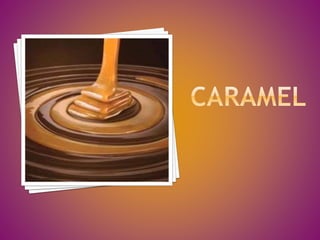
 Caramel
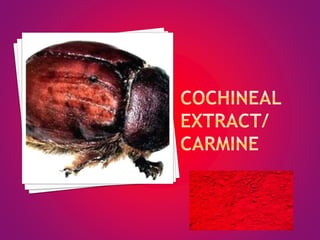
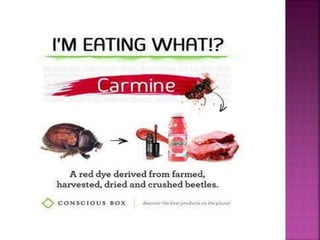
 Cochineal
extract/carmine
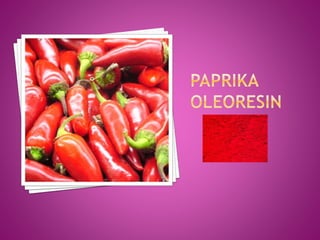
 Paprika oleoresin
 Riboflavin
 Titanium dioxide
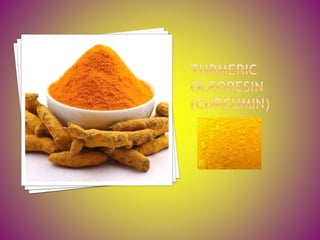
 Turmeric oleoresin
 Anthocyanins
 Betalains
 Carotenoids
 Chlorophylls
 Reaction products of
carbohydrates during
controlled heating
 Usually ammonia and
sulfate are added
 Negatively charged
(pI 4-6)
 Positively charged
(pI 5-7)
 Light: very stable
 Heat: very stable
 Acid: use acid type
 Water soluble
Source Stability
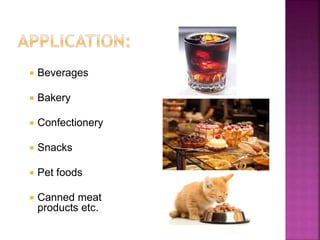
 Beverages
 Bakery
 Confectionery
 Snacks
 Pet foods
 Canned meat
products etc.
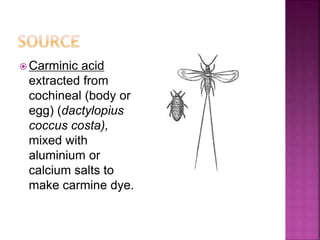
 Carminic acid
extracted from
cochineal (body or
egg) (dactylopius
coccus costa),
mixed with
aluminium or
calcium salts to
make carmine dye.
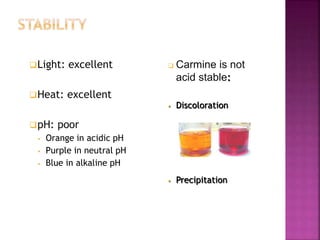
Light: excellent
Heat: excellent
pH: poor
 Orange in acidic pH
 Purple in neutral pH
 Blue in alkaline pH
 Carmine is not
acid stable:
 Discoloration
 Precipitation
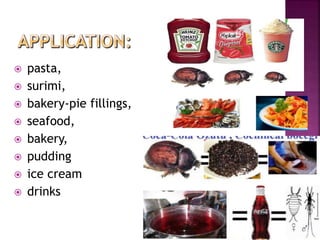
 pasta,
 surimi,
 bakery-pie fillings,
 seafood,
 bakery,
 pudding
 ice cream
 drinks
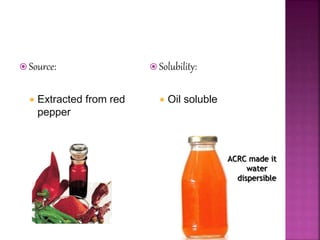
 Source:
 Extracted from red
pepper
 Solubility:
 Oil soluble
ACRC made it
water
dispersible
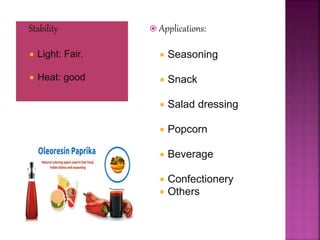
 Stability
 Light: Fair.
 Heat: good
 Applications:
 Seasoning
 Snack
 Salad dressing
 Popcorn
 Beverage
 Confectionery
 Others
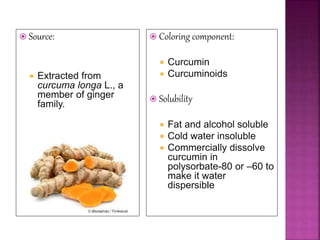
 Source:
 Extracted from
curcuma longa L., a
member of ginger
family.
 Coloring component:
 Curcumin
 Curcuminoids
 Solubility
 Fat and alcohol soluble
 Cold water insoluble
 Commercially dissolve
curcumin in
polysorbate-80 or –60 to
make it water
dispersible
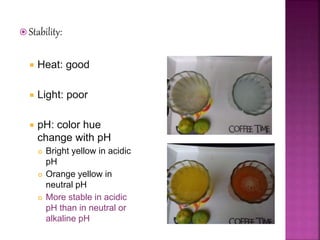
 Stability:
 Heat: good
 Light: poor
 pH: color hue
change with pH
 Bright yellow in acidic
pH
 Orange yellow in
neutral pH
 More stable in acidic
pH than in neutral or
alkaline pH
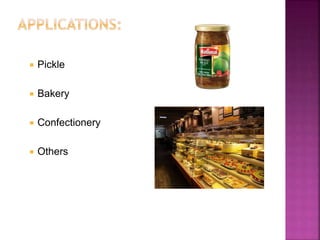
 Pickle
 Bakery
 Confectionery
 Others
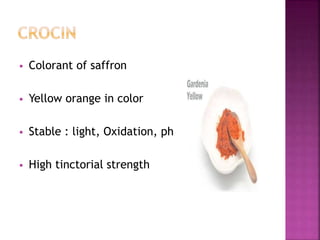
 Colorant of saffron
 Yellow orange in color
 Stable : light, Oxidation, ph
 High tinctorial strength
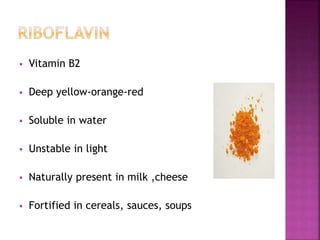
 Vitamin B2
 Deep yellow-orange-red
 Soluble in water
 Unstable in light
 Naturally present in milk ,cheese
 Fortified in cereals, sauces, soups
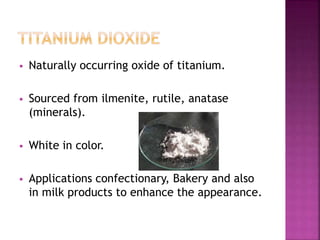
 Naturally occurring oxide of titanium.
 Sourced from ilmenite, rutile, anatase
(minerals).
 White in color.
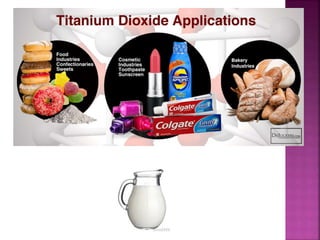
 Applications confectionary, Bakery and also
in milk products to enhance the appearance.
 Artificial Colors
 Obtained by chemical
reactions
 Relatively stable
 Less costly to use
 Health concerns
 Allergens
 Consumer acceptability:
Questionable
 Natural Colors
 Obtained from nature,
Processed by physical
means
 May be less stable than
synthetic ones
 More costly to use.
 No health concerns
 Benefits to health
_ Consumer acceptability:
Good
 DeeMan
 Rosetta L. Newsome
 www.foodconstructed.com
 www.ncbi.nlm.nih.gov
 Wikipedia

Natural colours

  • 1.
  • 2.
     The colorsof foods are the result of natural pigments or of added colorants.  Colorant : general term referring to any chemical compound (synthetically made) that impart color i.e. dye & lake  Natural pigments (non-certified colors) :are a group of substances extracted from animal, vegetable or mineral sources.
  • 3.
     Non-Certified Colors(natural colors)  Do not need certificate to sell or use.  Most are from nature (Natural Colors)  Composition of natural colours varies with:  Plant variety  Geographical region  Season
  • 4.
     Caramel  Cochineal extract/carmine Paprika oleoresin  Riboflavin  Titanium dioxide  Turmeric oleoresin  Anthocyanins  Betalains  Carotenoids  Chlorophylls
  • 6.
     Reaction productsof carbohydrates during controlled heating  Usually ammonia and sulfate are added  Negatively charged (pI 4-6)  Positively charged (pI 5-7)  Light: very stable  Heat: very stable  Acid: use acid type  Water soluble Source Stability
  • 7.
     Beverages  Bakery Confectionery  Snacks  Pet foods  Canned meat products etc.
  • 9.
     Carminic acid extractedfrom cochineal (body or egg) (dactylopius coccus costa), mixed with aluminium or calcium salts to make carmine dye.
  • 11.
    Light: excellent Heat: excellent pH:poor  Orange in acidic pH  Purple in neutral pH  Blue in alkaline pH  Carmine is not acid stable:  Discoloration  Precipitation
  • 12.
     pasta,  surimi, bakery-pie fillings,  seafood,  bakery,  pudding  ice cream  drinks
  • 14.
     Source:  Extractedfrom red pepper  Solubility:  Oil soluble ACRC made it water dispersible
  • 15.
     Stability  Light:Fair.  Heat: good  Applications:  Seasoning  Snack  Salad dressing  Popcorn  Beverage  Confectionery  Others
  • 17.
     Source:  Extractedfrom curcuma longa L., a member of ginger family.  Coloring component:  Curcumin  Curcuminoids  Solubility  Fat and alcohol soluble  Cold water insoluble  Commercially dissolve curcumin in polysorbate-80 or –60 to make it water dispersible
  • 18.
     Stability:  Heat:good  Light: poor  pH: color hue change with pH  Bright yellow in acidic pH  Orange yellow in neutral pH  More stable in acidic pH than in neutral or alkaline pH
  • 19.
     Pickle  Bakery Confectionery  Others
  • 20.
     Colorant ofsaffron  Yellow orange in color  Stable : light, Oxidation, ph  High tinctorial strength
  • 21.
     Vitamin B2 Deep yellow-orange-red  Soluble in water  Unstable in light  Naturally present in milk ,cheese  Fortified in cereals, sauces, soups
  • 22.
     Naturally occurringoxide of titanium.  Sourced from ilmenite, rutile, anatase (minerals).  White in color.  Applications confectionary, Bakery and also in milk products to enhance the appearance.
  • 24.
     Artificial Colors Obtained by chemical reactions  Relatively stable  Less costly to use  Health concerns  Allergens  Consumer acceptability: Questionable  Natural Colors  Obtained from nature, Processed by physical means  May be less stable than synthetic ones  More costly to use.  No health concerns  Benefits to health _ Consumer acceptability: Good
  • 25.
     DeeMan  RosettaL. Newsome  www.foodconstructed.com  www.ncbi.nlm.nih.gov  Wikipedia