
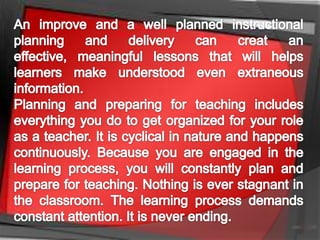

Planning for effective learning
experiences is one of the skills the
teacher has to develop. Also insures
more or less the direction that his
efforts will take. It helps create whole-
some discipline, a pleasant classroom
atmosphere, and purposeful teaching-
learning activities that are free from
waste in terms of time and effort.
Careful planning can give the teacher a
sense of confidence and ensure
effective learning.
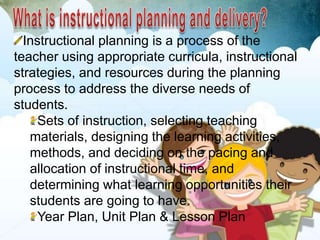
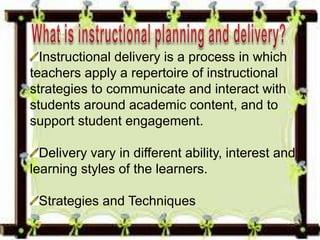
What is instructional planning and
delivery?
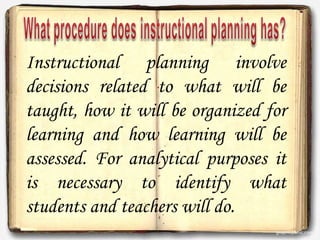
What procedure does
instructional planning has?
Instructional planning is a process of the
teacher using appropriate curricula, instructional
strategies, and resources during the planning
process to address the diverse needs of
students.
Sets of instruction, selecting teaching
materials, designing the learning activities,
methods, and deciding on the pacing and
allocation of instructional time, and
determining what learning opportunities their
students are going to have.
Year Plan, Unit Plan & Lesson Plan
Instructional delivery is a process in which
teachers apply a repertoire of instructional
strategies to communicate and interact with
students around academic content, and to
support student engagement.
Delivery vary in different ability, interest and
learning styles of the learners.
Strategies and Techniques
Instructional planning involve
decisions related to what will be
taught, how it will be organized for
learning and how learning will be
assessed. For analytical purposes it
is necessary to identify what
students and teachers will do.
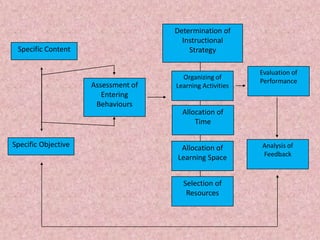
Specific Content
Assessment of
Entering
Behaviours
Evaluation of
Performance
Analysis of
Feedback
Specific Objective
Determination of
Instructional
Strategy
Organizing of
Learning Activities
Allocation of
Time
Allocation of
Learning Space
Selection of
Resources
To make effective our instructional
delivery the following area and
focus must be considered.
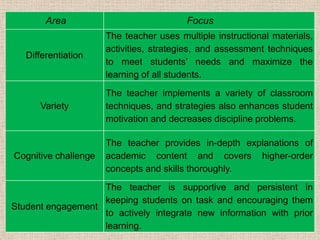
Area Focus
Differentiation
The teacher uses multiple instructional materials,
activities, strategies, and assessment techniques
to meet students’ needs and maximize the
learning of all students.
Variety
The teacher implements a variety of classroom
techniques, and strategies also enhances student
motivation and decreases discipline problems.
Cognitive challenge
The teacher provides in-depth explanations of
academic content and covers higher-order
concepts and skills thoroughly.
Student engagement
The teacher is supportive and persistent in
keeping students on task and encouraging them
to actively integrate new information with prior
learning.
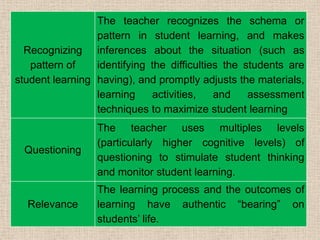
Recognizing
pattern of
student learning
The teacher recognizes the schema or
pattern in student learning, and makes
inferences about the situation (such as
identifying the difficulties the students are
having), and promptly adjusts the materials,
learning activities, and assessment
techniques to maximize student learning
Questioning
The teacher uses multiples levels
(particularly higher cognitive levels) of
questioning to stimulate student thinking
and monitor student learning.
Relevance
The learning process and the outcomes of
learning have authentic “bearing” on
students’ life.
http://www.ask.com/wiki/Planning
http://www.apsva.us/cms/lib2/VA01000586/Centric
ity/Domain/25/Brief%204%20%20Performanc
e%20Standard%202%20Instructional%20Pla
nning.pdf
http://www.apsva.us/cms/lib2/VA01000586/Centric
ity/Domain/25/Brief%205%20Performance%2
0Standard%203%20Instructional%20Delivery.
pdf
http://www.uwplatt.edu/~steck/Petrina%20Text/Ch
apter%204.pdf
Planning Instructional Delivery

Planning Instructional Delivery

  • 3.
    Planning for effectivelearning experiences is one of the skills the teacher has to develop. Also insures more or less the direction that his efforts will take. It helps create whole- some discipline, a pleasant classroom atmosphere, and purposeful teaching- learning activities that are free from waste in terms of time and effort. Careful planning can give the teacher a sense of confidence and ensure effective learning.
  • 4.
    What is instructionalplanning and delivery? What procedure does instructional planning has?
  • 5.
    Instructional planning isa process of the teacher using appropriate curricula, instructional strategies, and resources during the planning process to address the diverse needs of students. Sets of instruction, selecting teaching materials, designing the learning activities, methods, and deciding on the pacing and allocation of instructional time, and determining what learning opportunities their students are going to have. Year Plan, Unit Plan & Lesson Plan
  • 6.
    Instructional delivery isa process in which teachers apply a repertoire of instructional strategies to communicate and interact with students around academic content, and to support student engagement. Delivery vary in different ability, interest and learning styles of the learners. Strategies and Techniques
  • 7.
    Instructional planning involve decisionsrelated to what will be taught, how it will be organized for learning and how learning will be assessed. For analytical purposes it is necessary to identify what students and teachers will do.
  • 8.
    Specific Content Assessment of Entering Behaviours Evaluationof Performance Analysis of Feedback Specific Objective Determination of Instructional Strategy Organizing of Learning Activities Allocation of Time Allocation of Learning Space Selection of Resources
  • 9.
    To make effectiveour instructional delivery the following area and focus must be considered.
  • 10.
    Area Focus Differentiation The teacheruses multiple instructional materials, activities, strategies, and assessment techniques to meet students’ needs and maximize the learning of all students. Variety The teacher implements a variety of classroom techniques, and strategies also enhances student motivation and decreases discipline problems. Cognitive challenge The teacher provides in-depth explanations of academic content and covers higher-order concepts and skills thoroughly. Student engagement The teacher is supportive and persistent in keeping students on task and encouraging them to actively integrate new information with prior learning.
  • 11.
    Recognizing pattern of student learning Theteacher recognizes the schema or pattern in student learning, and makes inferences about the situation (such as identifying the difficulties the students are having), and promptly adjusts the materials, learning activities, and assessment techniques to maximize student learning Questioning The teacher uses multiples levels (particularly higher cognitive levels) of questioning to stimulate student thinking and monitor student learning. Relevance The learning process and the outcomes of learning have authentic “bearing” on students’ life.
  • 14.