





multiple
INTELLIGENCES
Prepared and presented by: FAUSTINO, JOY CAMILLE M.
III- B BSMT
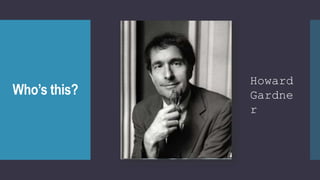
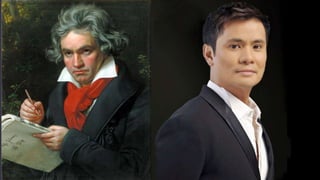
Who’s this?
Howard
Gardne
r
The theory of multiple intelligences suggests
that the traditional notion of intelligence, based on
I.Q. testing, is far too limited. Instead, Dr. Gardner
proposes eight different intelligences to account
for a broader range of human potential in children
and adults.
Thomas Armstrong - www.ThomasArmstrong.com
Verbal/Linguistic Intelligence
“word smart”
People who are “word
smart” are typically
good at reading,
writing, telling
stories and memorizing
words along with
dates.
They can be taught by
encouraging them to say and see
words, read books together.
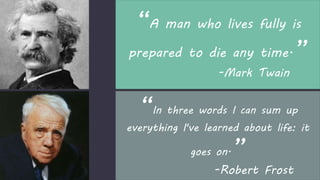
“A man who lives fully is
prepared to die any time.”
-Mark Twain
“In three words I can sum up
everything I've learned about life: it
goes on.”
-Robert Frost
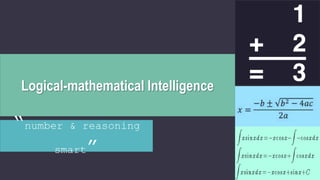
Logical-mathematical Intelligence
“number & reasoning
smart”
People who are
“number & reasoning
smart” are good in
logic,
abstractions,
reasoning, numbers
and critical
thinking. They can be taught through
logic games, investigations,
mysteries.
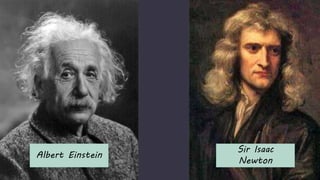
Albert Einstein
Sir Isaac
Newton
Visual/Spatial Intelligence
“picture smart”
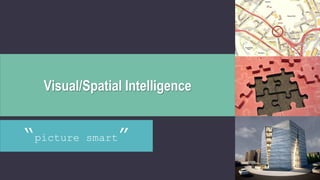
People who are
“picture smart” think in
terms of physical space,
as do architects and
sailors. They are very
aware of their
environments.
They can be taught through
drawings, verbal and physical imagery.
Bodily/Kinesthetic
Intelligence
“body smart”
They can be taught through physical
activity, hands-on learning, acting out,
role playing.
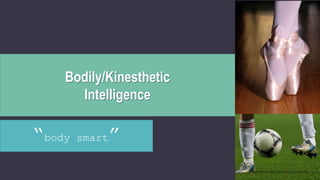
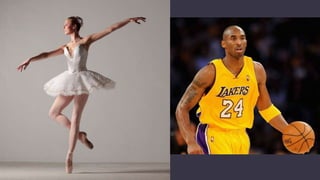
People who are “body
smart” can control of
one's bodily motions and
the capacity to handle
objects skillfully.
Musical/Rhythmic
Intelligence
“music smart”
They can be taught by turning
lessons into lyrics, speaking
rhythmically, tapping out time.
People who are “music
smart” have good pitch
and may even
have absolute pitch, and
are able to sing, play
musical instruments, and
compose music.
BIBS!?!?
HELL NO!!
Interpersonal Intelligence
“people smart”
They can be taught through group
activities, seminars, dialogues.
People who are “people
smart” characterized by
their sensitivity to
others' moods, feelings,
temperaments and
motivations, and their
ability to cooperate in
order to work as part of
a group.
Intrapersonal Intelligence
“self smart”
They can be taught
through independent study and
introspection.
People who are “self
smart” have a deep
understanding of the
self; what one's
strengths & weaknesses
are, what makes one
unique, being able to
predict one's own
reactions & emotions.
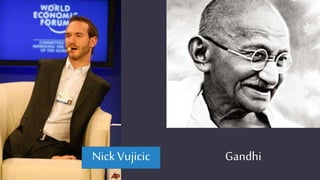
Nick Vujicic Gandhi
Naturalist Intelligence
“nature smart”
They can be taught through
conducting fieldtrips, observing nature
and keeping nature journals.
People who are “nature
smart” are sensitive
towards nature and the
world around them. They
are good in classifying
natural forms such as
animal and plant species
and rocks and mountain
types.
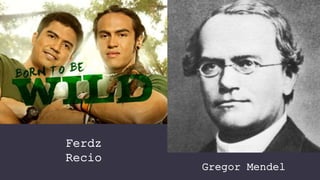
Ferdz
Recio
Gregor Mendel
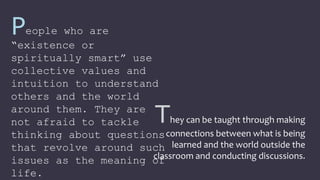
Existential Intelligence
“existence or
spiritually smart”
They can be taught through making
connections between what is being
learned and the world outside the
classroom and conducting discussions.
People who are
“existence or
spiritually smart” use
collective values and
intuition to understand
others and the world
around them. They are
not afraid to tackle
thinking about questions
that revolve around such
issues as the meaning of
life.
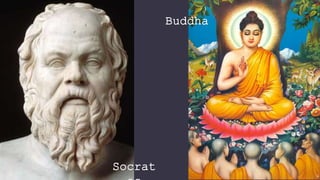
Socrat
Buddha
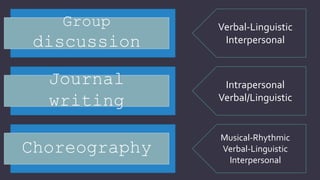
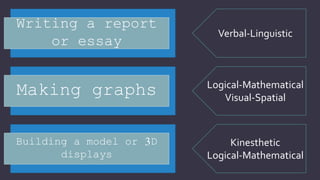
Classroom Activities
Group
discussion
Choreography
Journal
writing
Verbal-Linguistic
Interpersonal
Intrapersonal
Verbal/Linguistic
Musical-Rhythmic
Verbal-Linguistic
Interpersonal
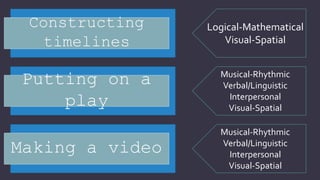
Constructing
timelines
Making a video
Putting on a
play
Logical-Mathematical
Visual-Spatial
Musical-Rhythmic
Verbal/Linguistic
Interpersonal
Visual-Spatial
Musical-Rhythmic
Verbal/Linguistic
Interpersonal
Visual-Spatial
Writing a report
or essay
Building a model or 3D
displays
Making graphs
Verbal-Linguistic
Logical-Mathematical
Visual-Spatial
Kinesthetic
Logical-Mathematical
REFERENCES:
 http://en.wikipedia.org/wiki/Theory_of_multipl
e_intelligences#Verbal.E2.80.93linguistic
 http://www.tecweb.org/styles/gardner.html
 http://712educators.about.com/od/multipleint/
p/existential-Intelligence.htm
 http://thesecondprinciple.com/optimal-
learning/ninth-intelligence-existential-cosmic-
smarts-2/
Thank you...

Multiple Intelligence Learning Approach