Developing
a lesson
“Instructional
Planning”
By: Rea R. Tiangson
Learning Objectives: At the end of
the lesson, the students are
expected to:
1. Define lesson and linstructional planning;
2. Identify the instructional planning sequence;
3.Enumerate the functions and phases of
instructional planning;
4. Name the levels of instructional planning
types of lesson plan, and
5. Write a lesson plan .
Motive Question: What is
a lesson?
 A lesson is:
* a piece of
instruction;
• A reading or
exercise to be
studied by a
pupil;
• * something
learned by study
or experience
• First Use: 13th
century
Synonyms:
assignment;reading
Developing a lesson takes the process of
planning: what to to teach, how to teach and
how to evaluate learning. As mentioned earlier
in our discussion effective teaching aligns the
three major components of instruction namely:
learning objectives;instructional activities and
assessment. Therefore, in the planning or
process of developing a lesson these three
should be taken into consideration.
Introduction:
What is instructional
planning ?
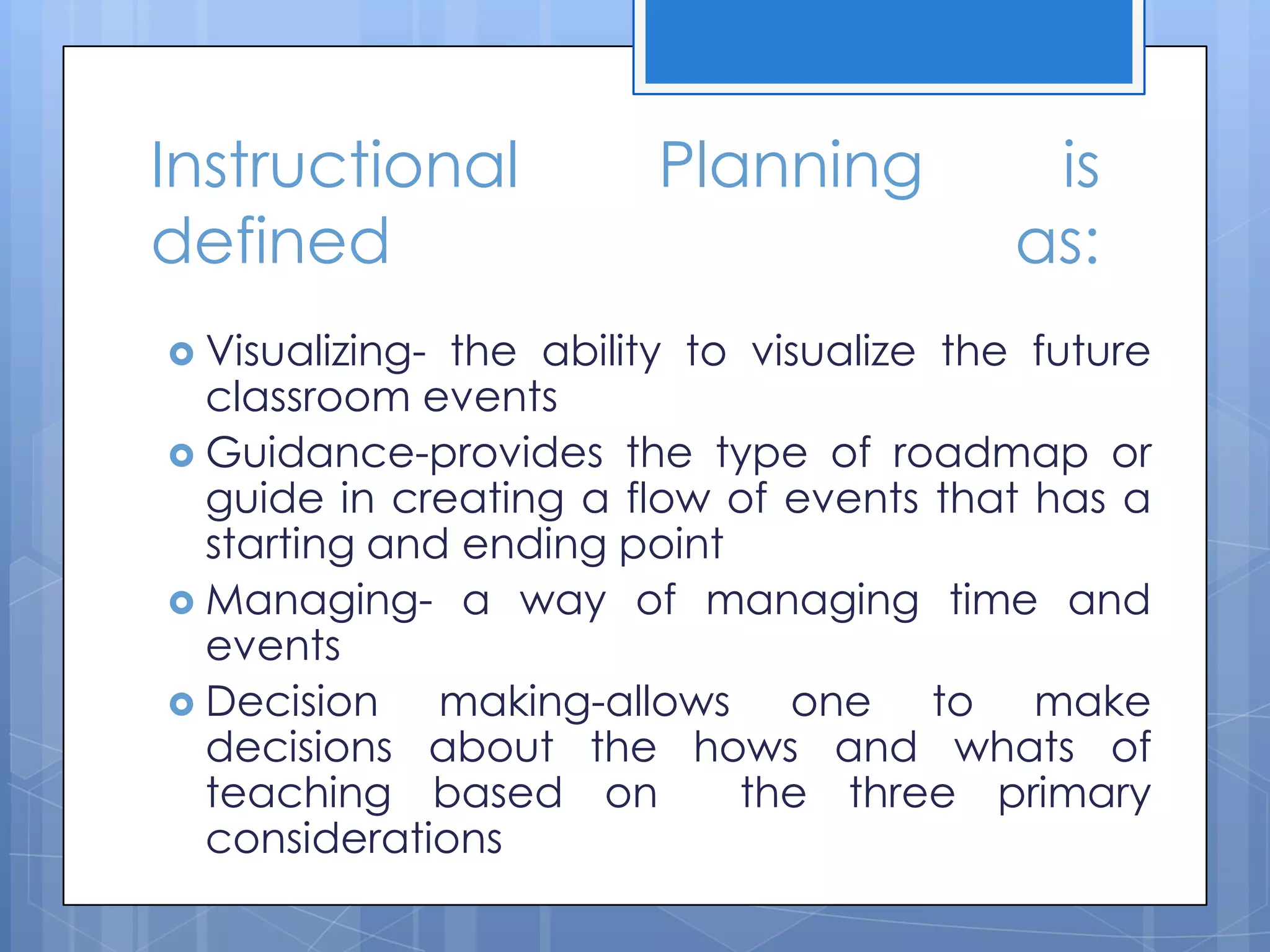
Instructional Planning is
defined as:
 Visualizing- the ability to visualize the future
classroom events
 Guidance-provides the type of roadmap or
guide in creating a flow of events that has a
starting and ending point
 Managing- a way of managing time and
events
 Decision making-allows one to make
decisions about the hows and whats of
teaching based on the three primary
considerations
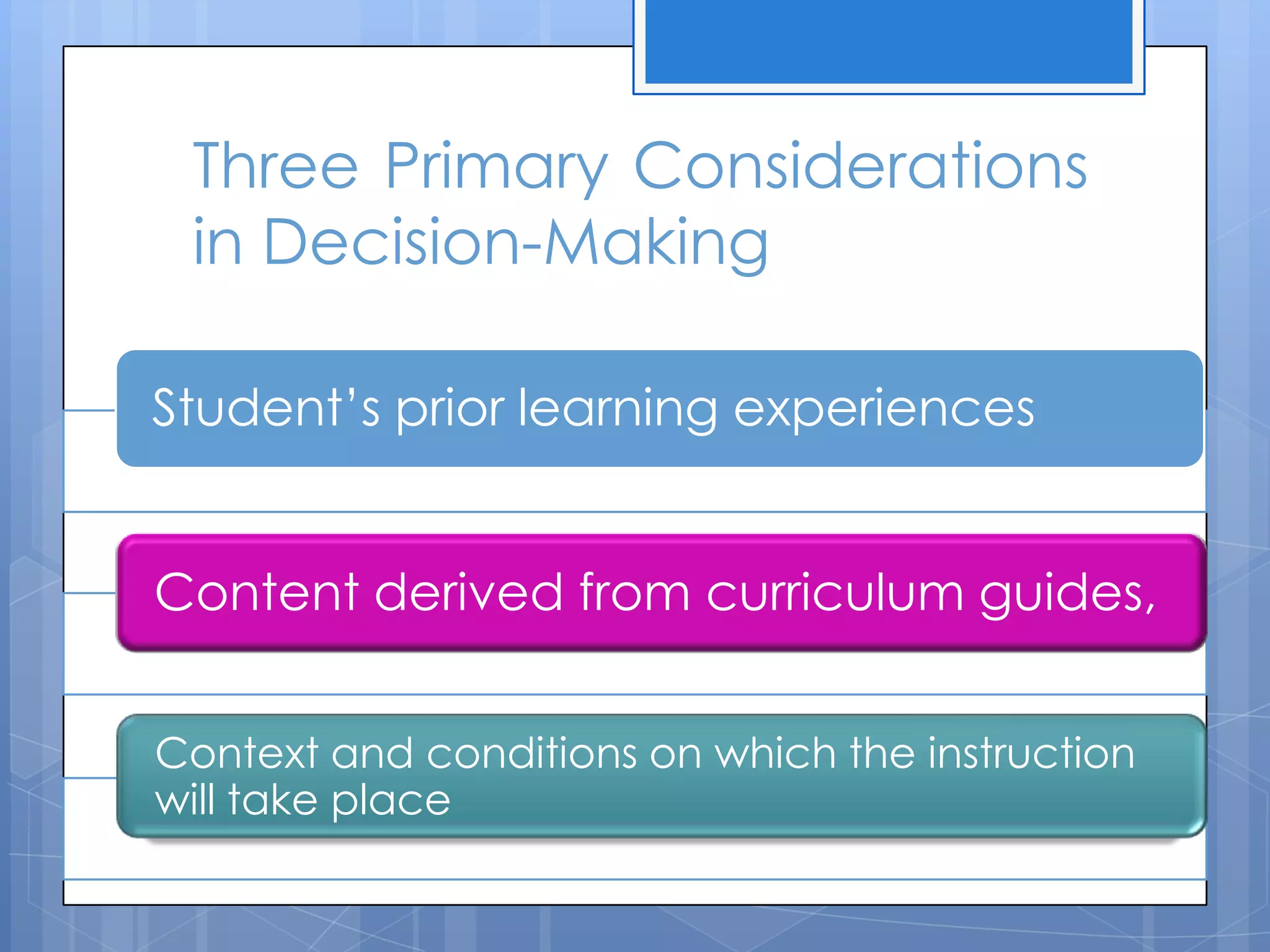
Three Primary Considerations
in Decision-Making
Student’s prior learning experiences
Content derived from curriculum guides,
Context and conditions on which the instruction
will take place
Functions of Planning
1. To give an overview of the instruction
2. To facilitate good management of
instruction
3. To make learning purposeful
4. To tie instructional events with
community services
4. To provide sequencing and pacing
5. To economize time
6. To provide for a variety of instructional activities
7. To make learner’s success more measurable
which assists in re-teaching
8. To create the opportunity for higher-level
questioning
9. To assist in ordering supplies
10. To guide substitute teachers
11.To provide opportunities for an
individual student or a group of
students to benefit maximmally from
participation in selected learning
activities
12. To provide teachers an opportunity
to rehearse mentally and on paper
what will take place when they teach.
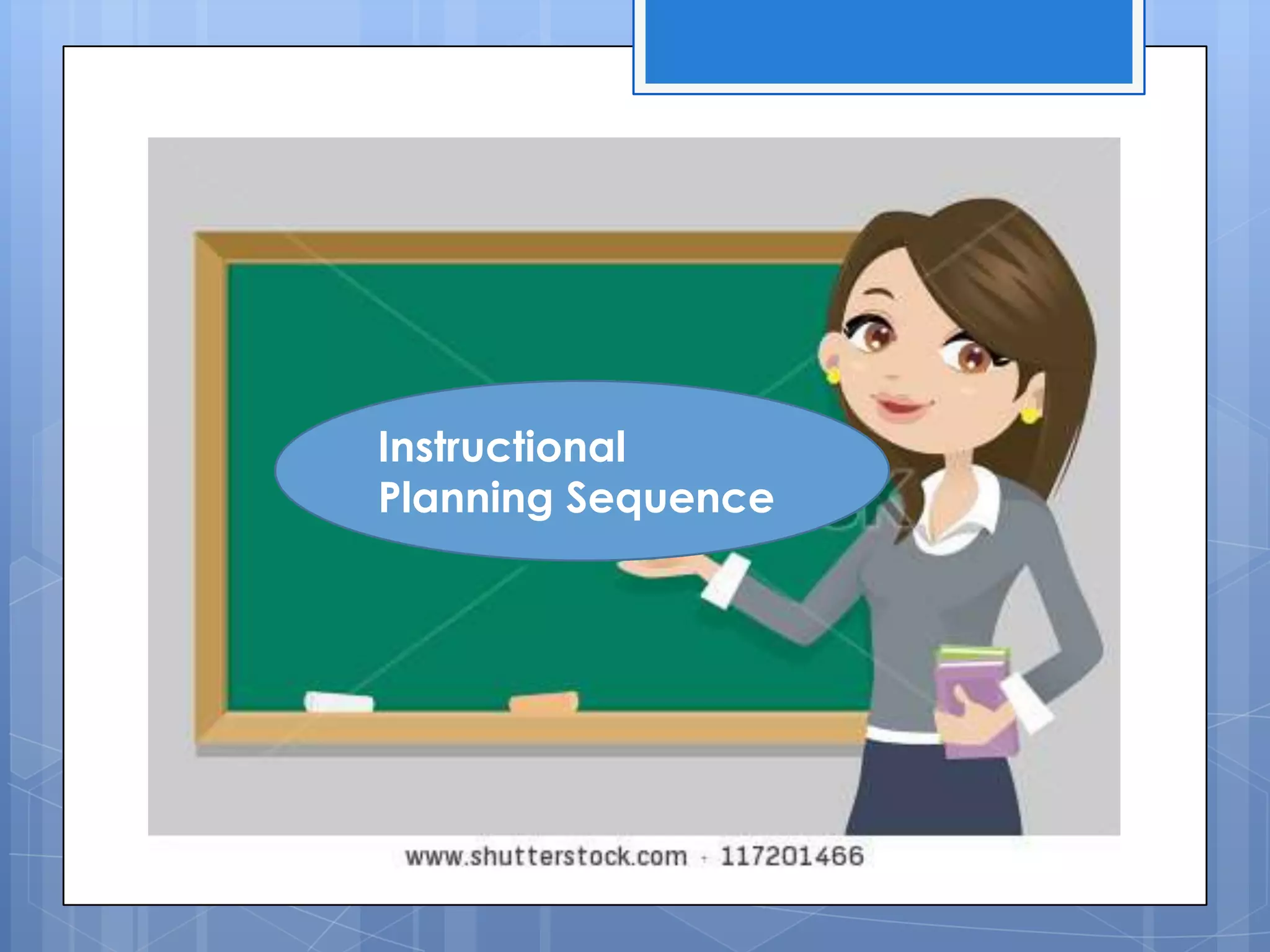
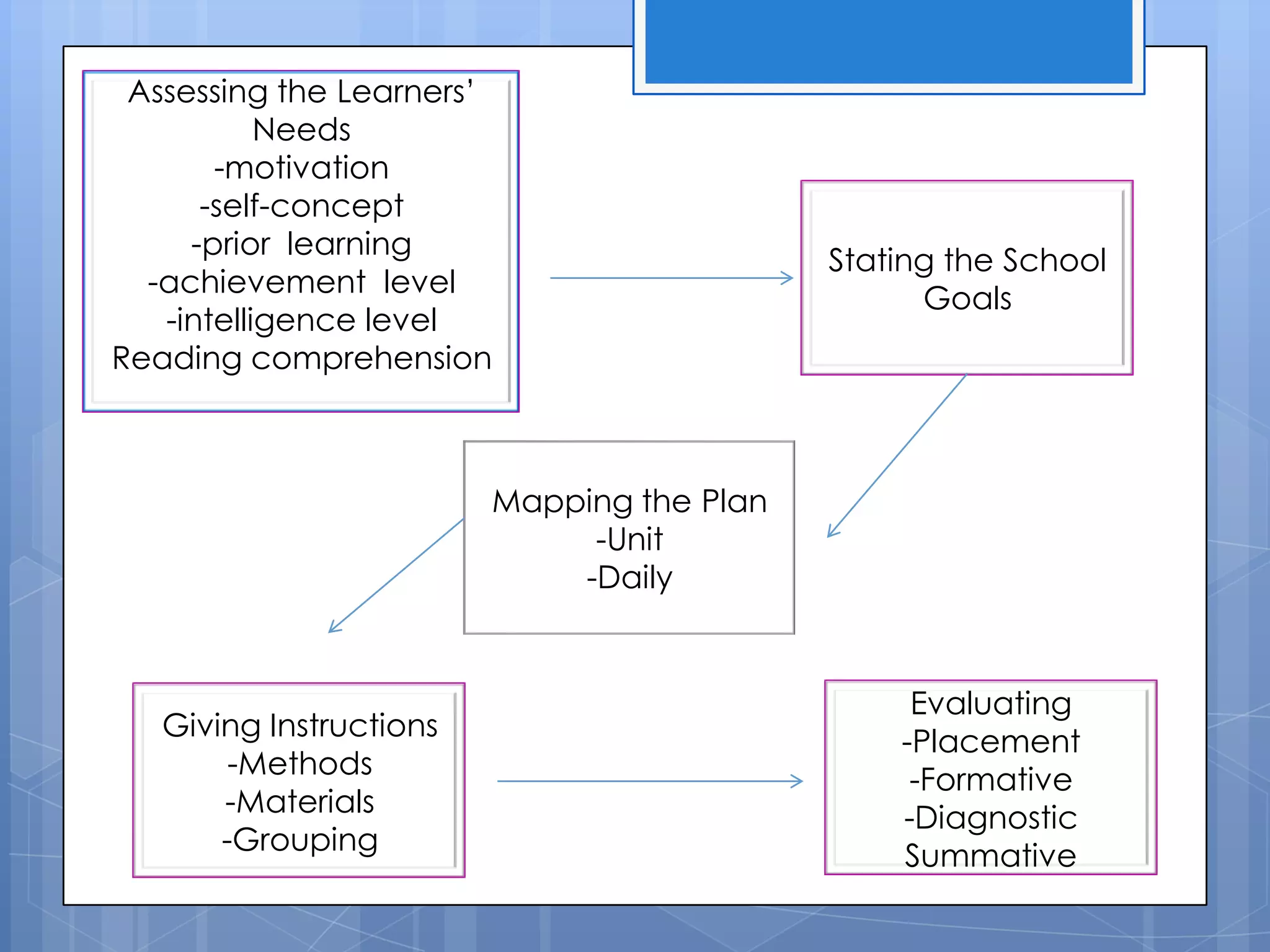
Instructional
Planning Sequence
Assessing the Learners’
Needs
-motivation
-self-concept
-prior learning
-achievement level
-intelligence level
Reading comprehension
Mapping the Plan
-Unit
-Daily
Giving Instructions
-Methods
-Materials
-Grouping
Evaluating
-Placement
-Formative
-Diagnostic
Summative
Stating the School
Goals
PLANNING PHASES
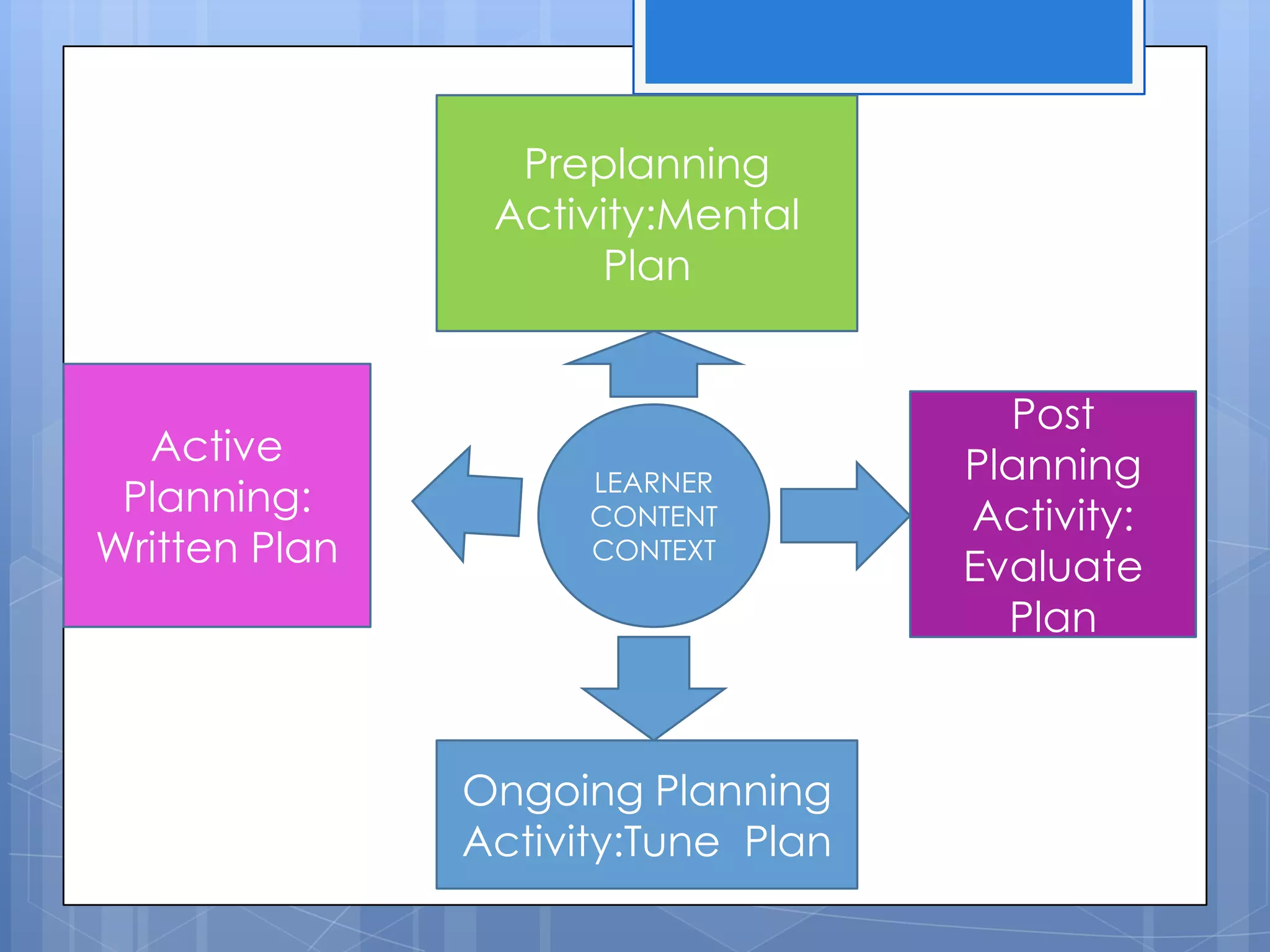
Preplanning
Activity:Mental
Plan
Post
Planning
Activity:
Evaluate
Plan
Active
Planning:
Written Plan
Ongoing Planning
Activity:Tune Plan
LEARNER
CONTENT
CONTEXT
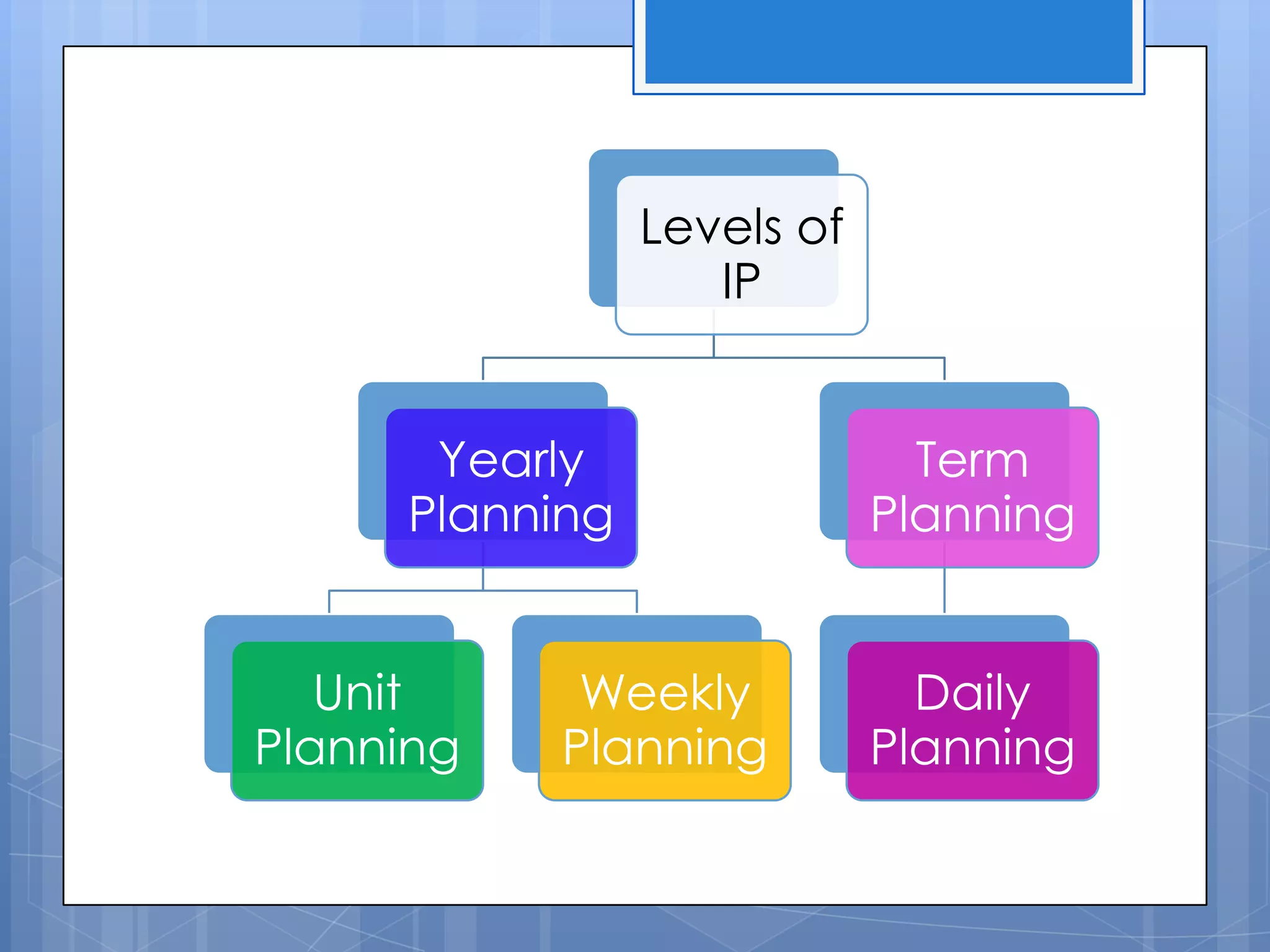
Levels of
Instructional
Planning
Levels of
IP
Yearly
Planning
Unit
Planning
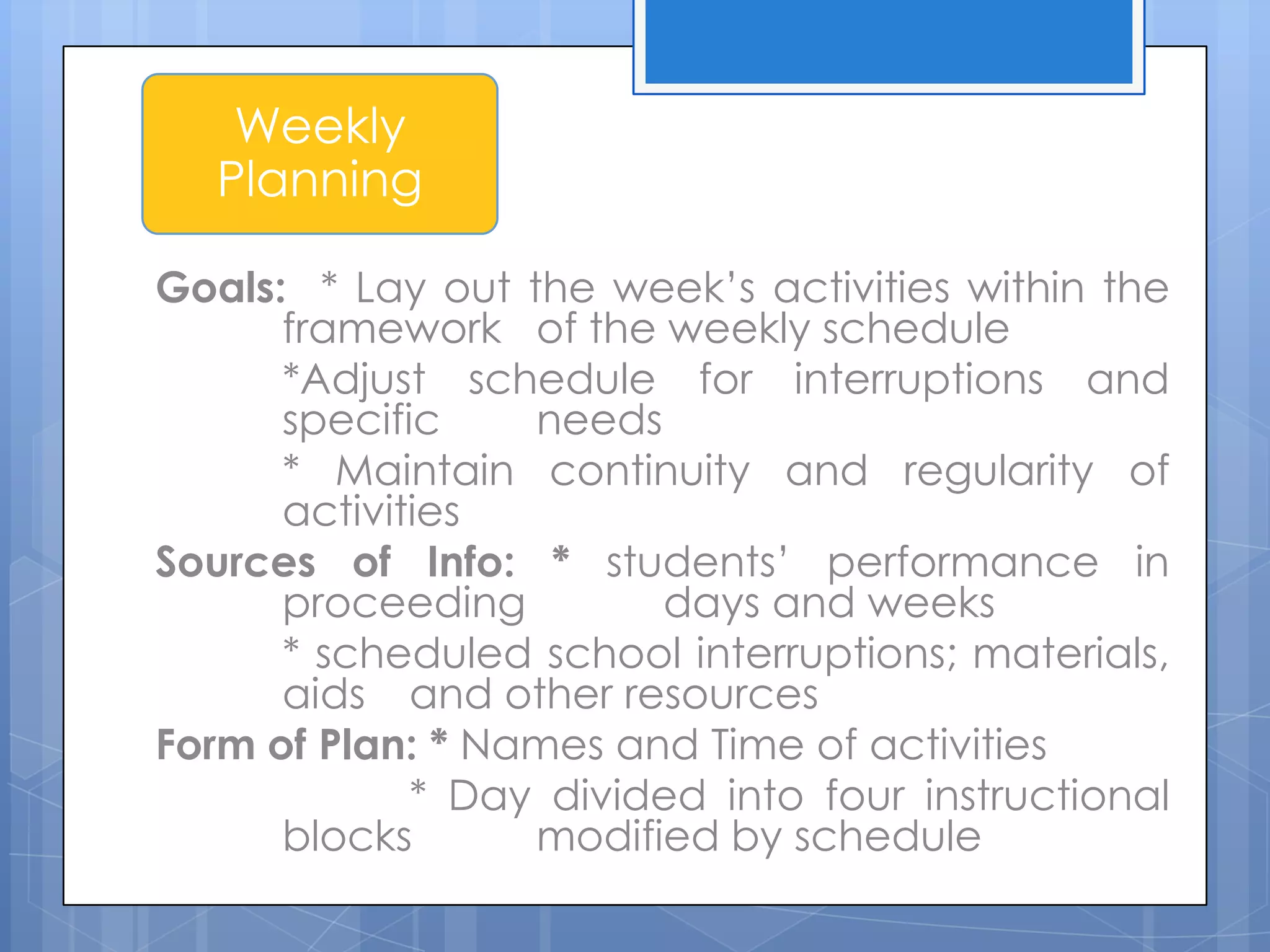
Weekly
Planning
Term
Planning
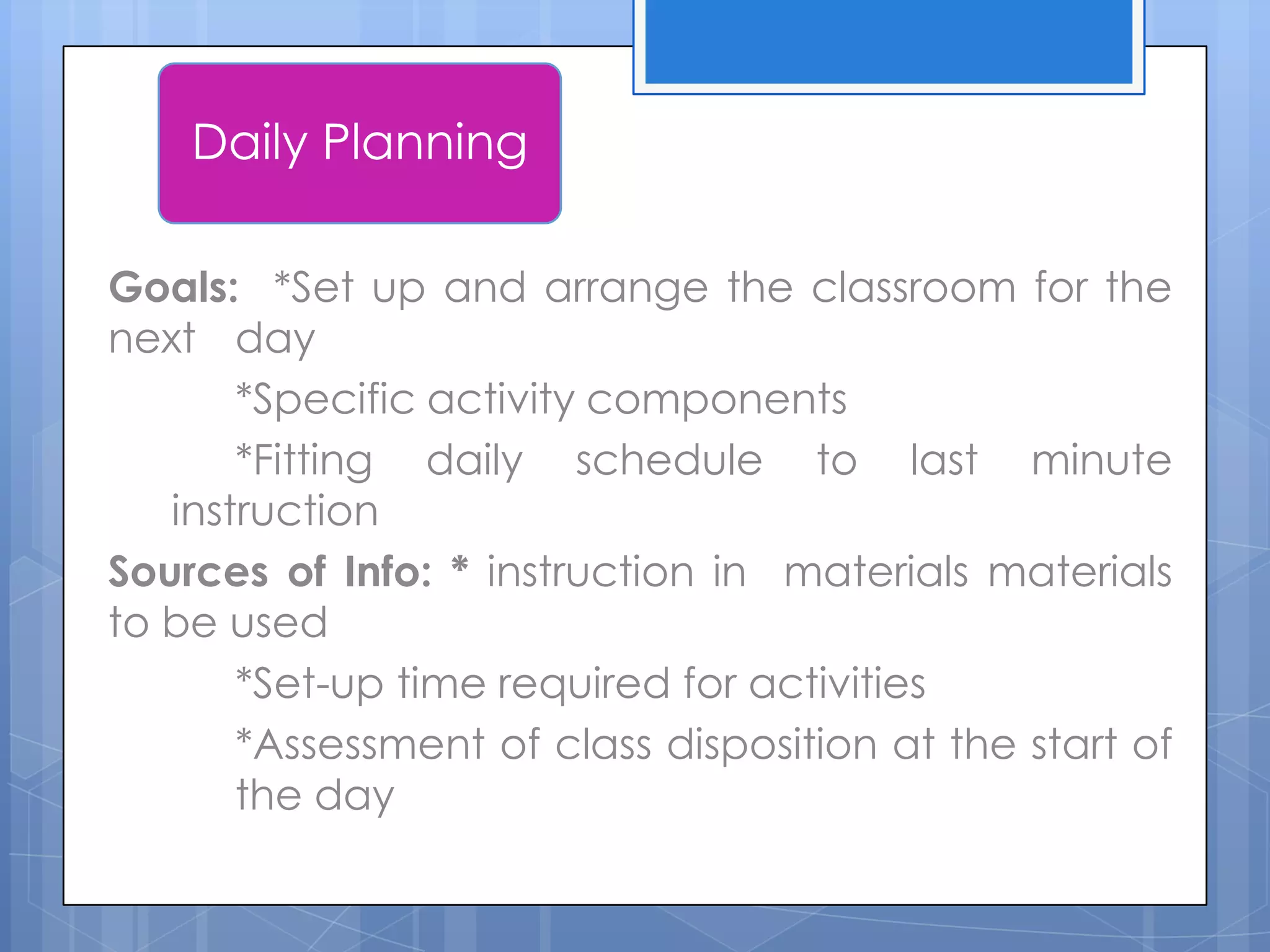
Daily
Planning
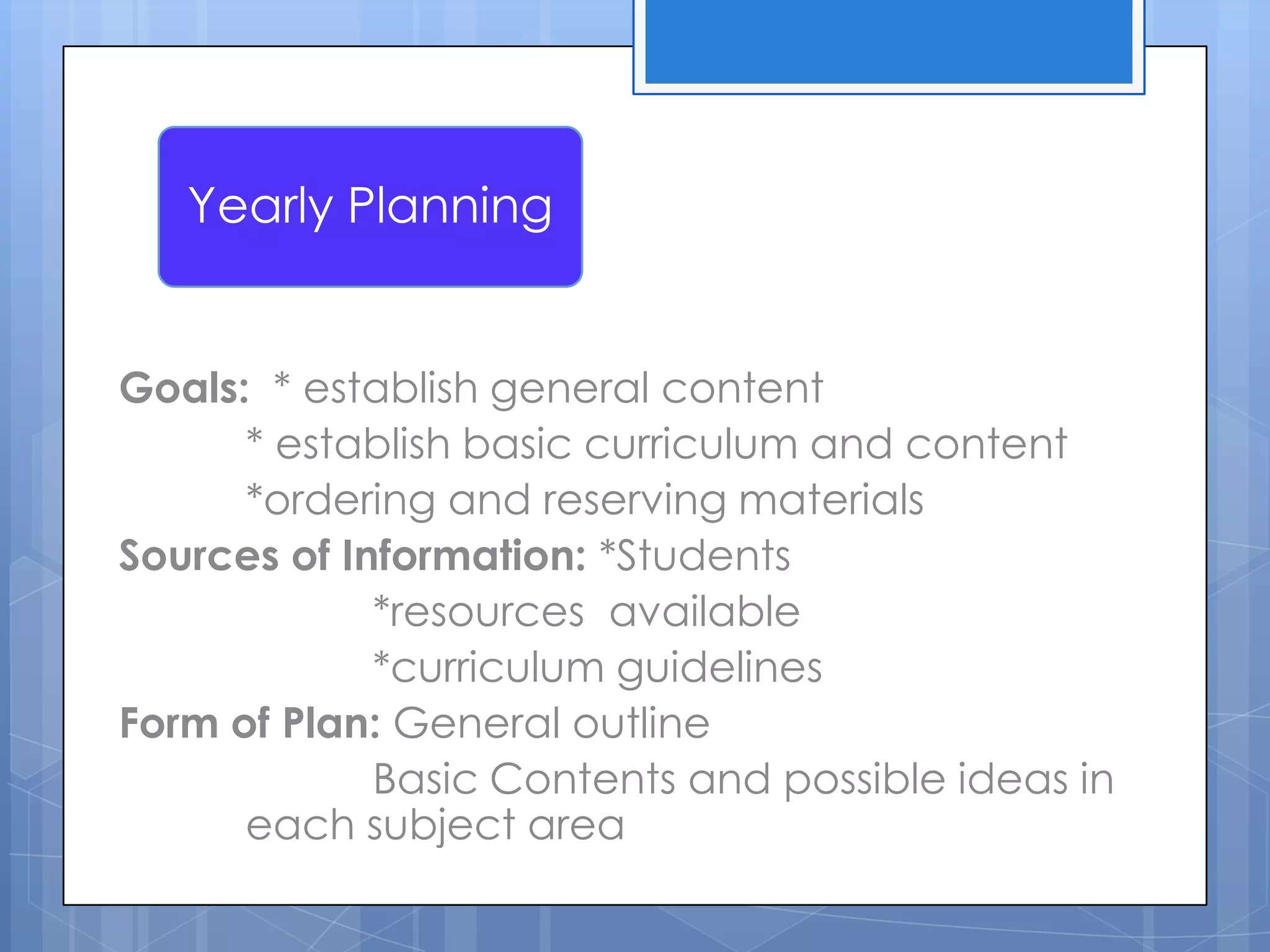
Goals: * establish general content
* establish basic curriculum and content
*ordering and reserving materials
Sources of Information: *Students
*resources available
*curriculum guidelines
Form of Plan: General outline
Basic Contents and possible ideas in
each subject area
Yearly Planning
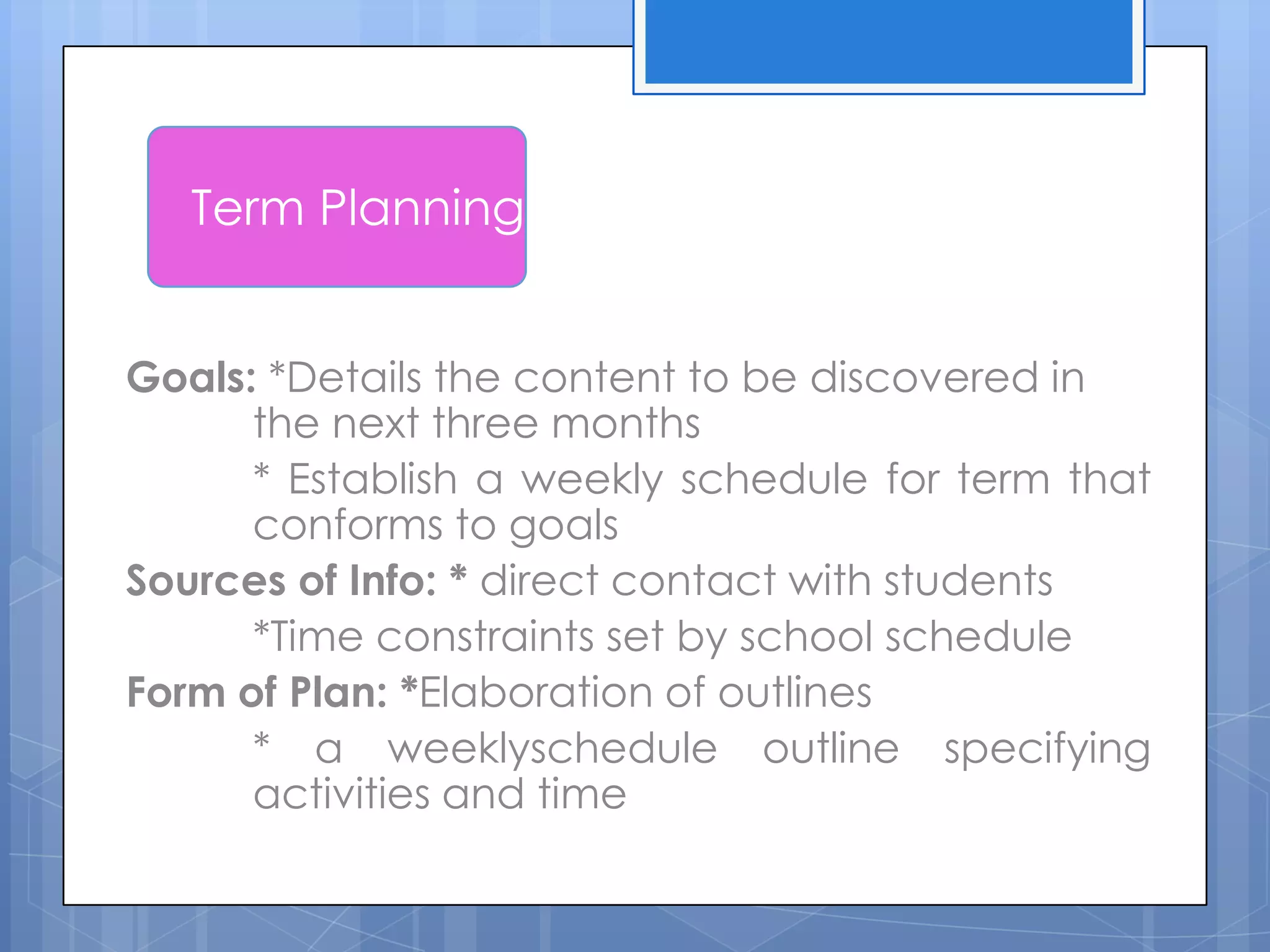
Goals: *Details the content to be discovered in
the next three months
* Establish a weekly schedule for term that
conforms to goals
Sources of Info: * direct contact with students
*Time constraints set by school schedule
Form of Plan: *Elaboration of outlines
* a weeklyschedule outline specifying
activities and time
Term Planning
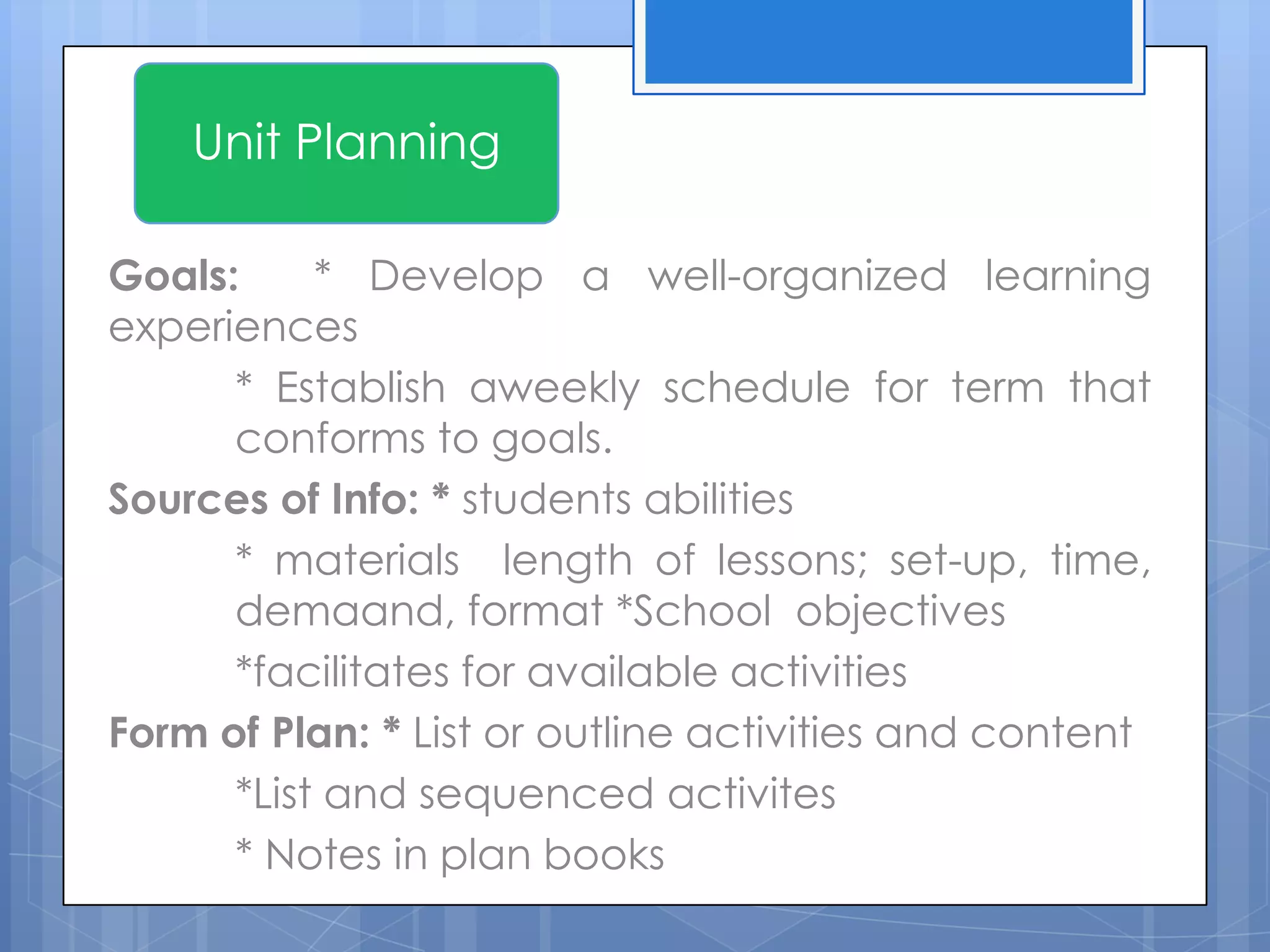
Goals: * Develop a well-organized learning
experiences
* Establish aweekly schedule for term that
conforms to goals.
Sources of Info: * students abilities
* materials length of lessons; set-up, time,
demaand, format *School objectives
*facilitates for available activities
Form of Plan: * List or outline activities and content
*List and sequenced activites
* Notes in plan books
Unit Planning
Goals: * Lay out the week’s activities within the
framework of the weekly schedule
*Adjust schedule for interruptions and
specific needs
* Maintain continuity and regularity of
activities
Sources of Info: * students’ performance in
proceeding days and weeks
* scheduled school interruptions; materials,
aids and other resources
Form of Plan: * Names and Time of activities
* Day divided into four instructional
blocks modified by schedule
Weekly
Planning
Goals: *Set up and arrange the classroom for the
next day
*Specific activity components
*Fitting daily schedule to last minute
instruction
Sources of Info: * instruction in materials materials
to be used
*Set-up time required for activities
*Assessment of class disposition at the start of
the day
Daily Planning
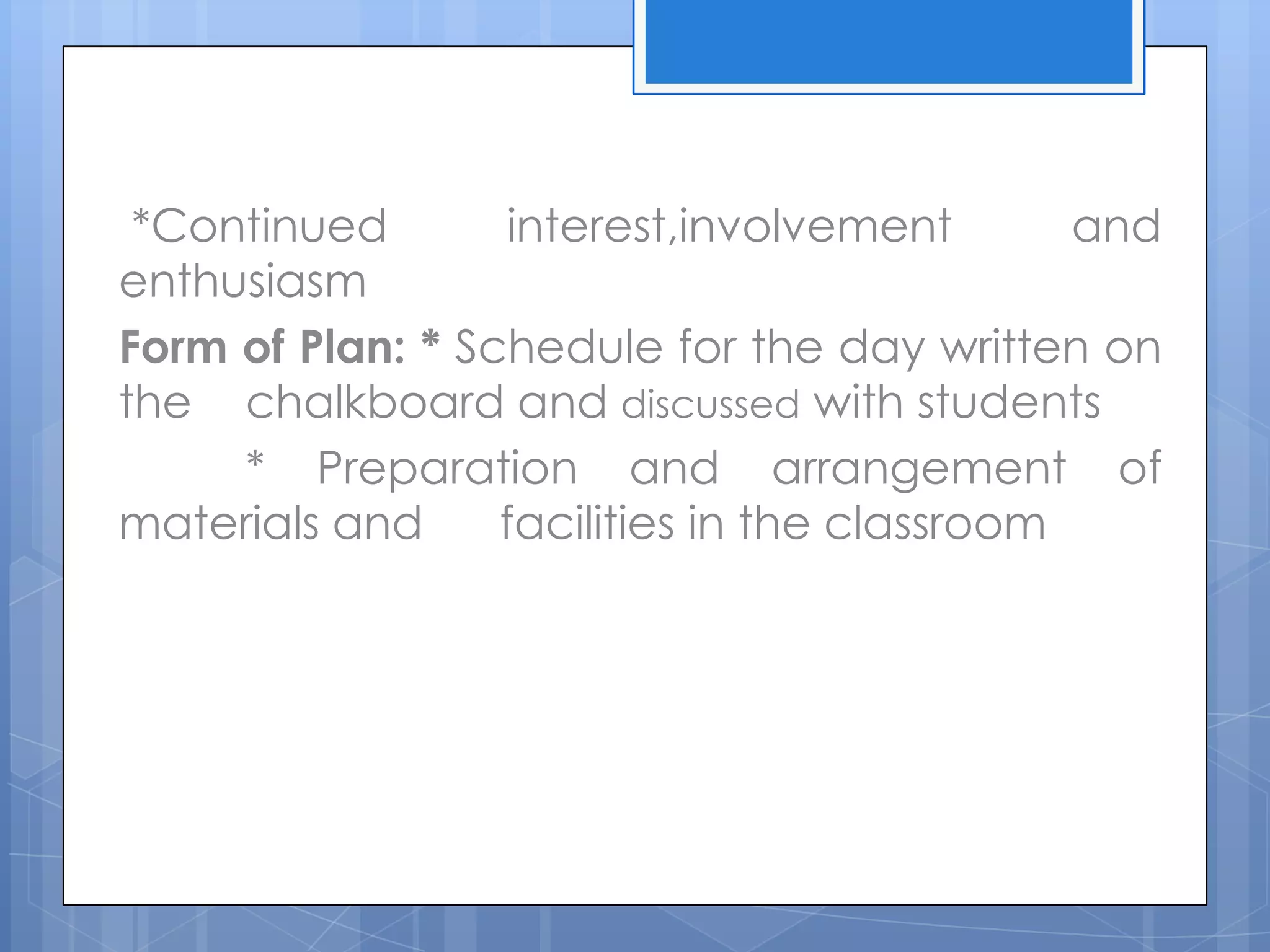
*Continued interest,involvement and
enthusiasm
Form of Plan: * Schedule for the day written on
the chalkboard and discussed with students
* Preparation and arrangement of
materials and facilities in the classroom
What are the
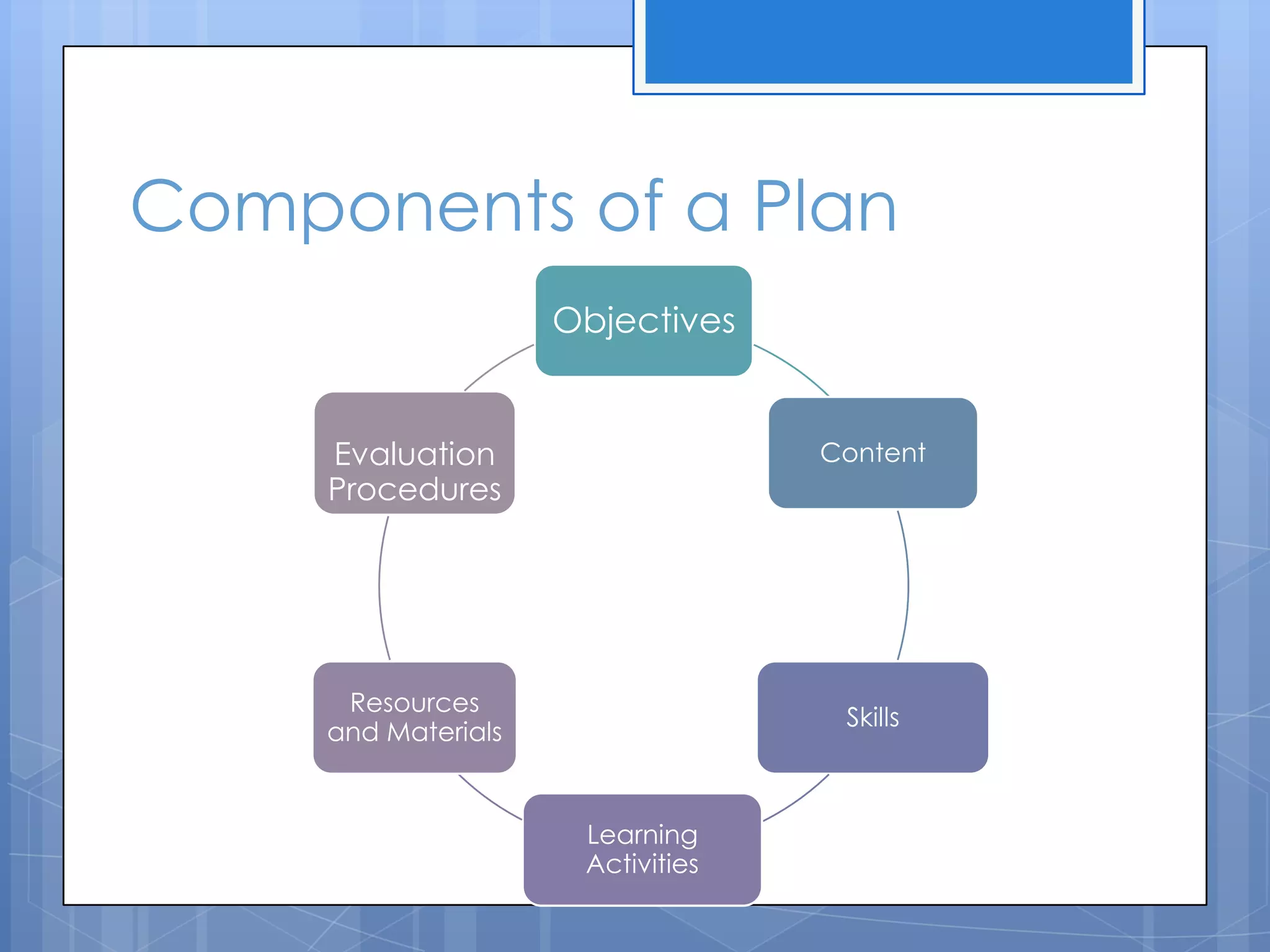
components of a plan?
Components of a Plan
Objectives
Content
Skills
Learning
Activities
Resources
and Materials
Evaluation
Procedures
 Principles of Teaching 2:Developing a lesson
 Principles of Teaching 2:Developing a lesson
 Principles of Teaching 2:Developing a lesson

Principles of Teaching 2:Developing a lesson

  • 1.
  • 2.
    Learning Objectives: Atthe end of the lesson, the students are expected to: 1. Define lesson and linstructional planning; 2. Identify the instructional planning sequence; 3.Enumerate the functions and phases of instructional planning; 4. Name the levels of instructional planning types of lesson plan, and 5. Write a lesson plan .
  • 3.
  • 4.
     A lessonis: * a piece of instruction; • A reading or exercise to be studied by a pupil; • * something learned by study or experience • First Use: 13th century Synonyms: assignment;reading
  • 5.
    Developing a lessontakes the process of planning: what to to teach, how to teach and how to evaluate learning. As mentioned earlier in our discussion effective teaching aligns the three major components of instruction namely: learning objectives;instructional activities and assessment. Therefore, in the planning or process of developing a lesson these three should be taken into consideration. Introduction:
  • 6.
  • 7.
    Instructional Planning is definedas:  Visualizing- the ability to visualize the future classroom events  Guidance-provides the type of roadmap or guide in creating a flow of events that has a starting and ending point  Managing- a way of managing time and events  Decision making-allows one to make decisions about the hows and whats of teaching based on the three primary considerations
  • 8.
    Three Primary Considerations inDecision-Making Student’s prior learning experiences Content derived from curriculum guides, Context and conditions on which the instruction will take place
  • 9.
    Functions of Planning 1.To give an overview of the instruction 2. To facilitate good management of instruction 3. To make learning purposeful 4. To tie instructional events with community services
  • 10.
    4. To providesequencing and pacing 5. To economize time 6. To provide for a variety of instructional activities 7. To make learner’s success more measurable which assists in re-teaching 8. To create the opportunity for higher-level questioning 9. To assist in ordering supplies 10. To guide substitute teachers
  • 11.
    11.To provide opportunitiesfor an individual student or a group of students to benefit maximmally from participation in selected learning activities 12. To provide teachers an opportunity to rehearse mentally and on paper what will take place when they teach.
  • 12.
  • 13.
    Assessing the Learners’ Needs -motivation -self-concept -priorlearning -achievement level -intelligence level Reading comprehension Mapping the Plan -Unit -Daily Giving Instructions -Methods -Materials -Grouping Evaluating -Placement -Formative -Diagnostic Summative Stating the School Goals
  • 14.
  • 15.
  • 16.
  • 17.
  • 18.
    Goals: * establishgeneral content * establish basic curriculum and content *ordering and reserving materials Sources of Information: *Students *resources available *curriculum guidelines Form of Plan: General outline Basic Contents and possible ideas in each subject area Yearly Planning
  • 19.
    Goals: *Details thecontent to be discovered in the next three months * Establish a weekly schedule for term that conforms to goals Sources of Info: * direct contact with students *Time constraints set by school schedule Form of Plan: *Elaboration of outlines * a weeklyschedule outline specifying activities and time Term Planning
  • 20.
    Goals: * Developa well-organized learning experiences * Establish aweekly schedule for term that conforms to goals. Sources of Info: * students abilities * materials length of lessons; set-up, time, demaand, format *School objectives *facilitates for available activities Form of Plan: * List or outline activities and content *List and sequenced activites * Notes in plan books Unit Planning
  • 21.
    Goals: * Layout the week’s activities within the framework of the weekly schedule *Adjust schedule for interruptions and specific needs * Maintain continuity and regularity of activities Sources of Info: * students’ performance in proceeding days and weeks * scheduled school interruptions; materials, aids and other resources Form of Plan: * Names and Time of activities * Day divided into four instructional blocks modified by schedule Weekly Planning
  • 22.
    Goals: *Set upand arrange the classroom for the next day *Specific activity components *Fitting daily schedule to last minute instruction Sources of Info: * instruction in materials materials to be used *Set-up time required for activities *Assessment of class disposition at the start of the day Daily Planning
  • 23.
    *Continued interest,involvement and enthusiasm Formof Plan: * Schedule for the day written on the chalkboard and discussed with students * Preparation and arrangement of materials and facilities in the classroom
  • 24.
  • 25.
    Components of aPlan Objectives Content Skills Learning Activities Resources and Materials Evaluation Procedures