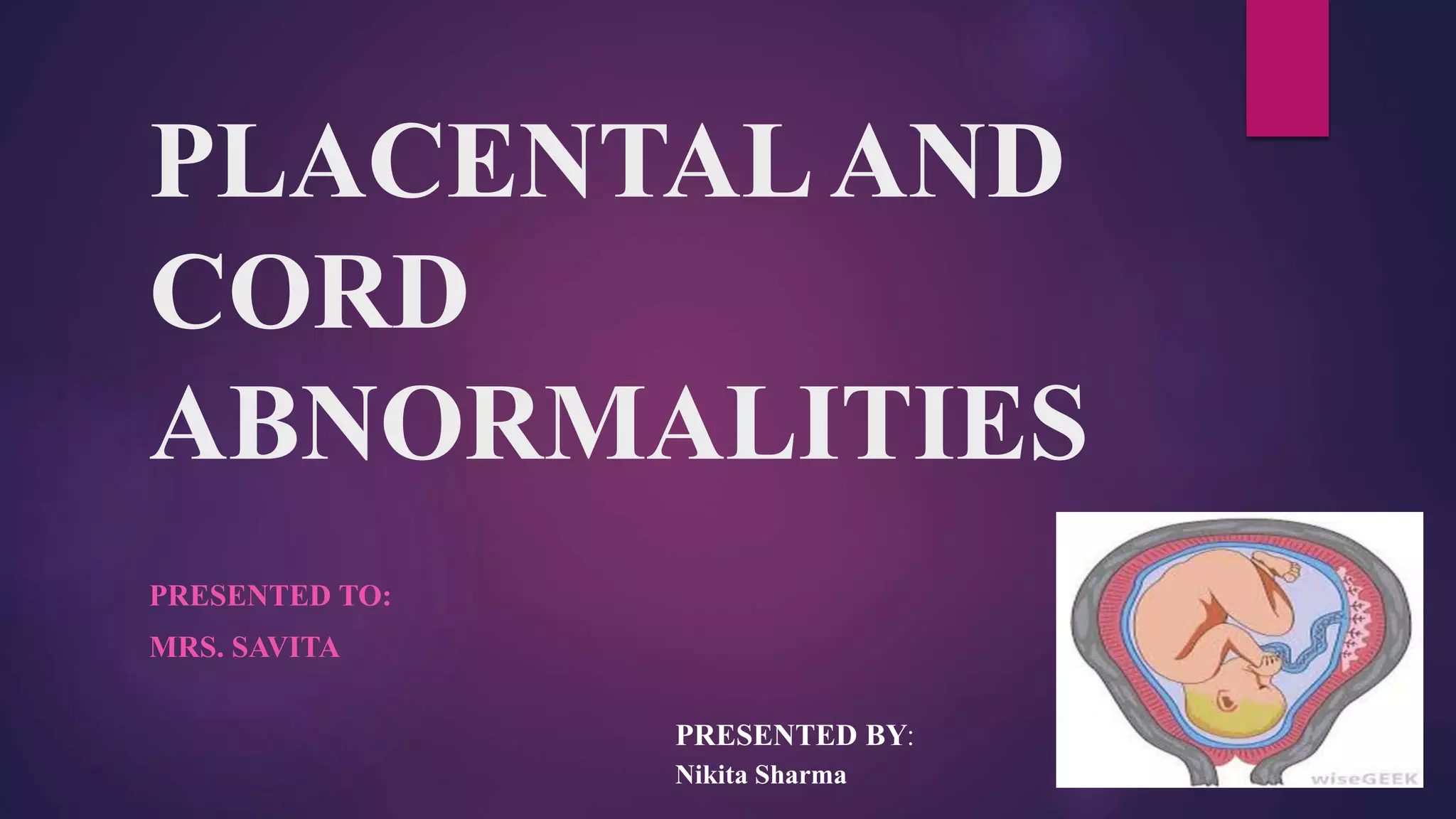


PLACENTALAND
CORD
ABNORMALITIES
PRESENTED TO:
MRS. SAVITA
PRESENTED BY:
Nikita Sharma
PLACENTA
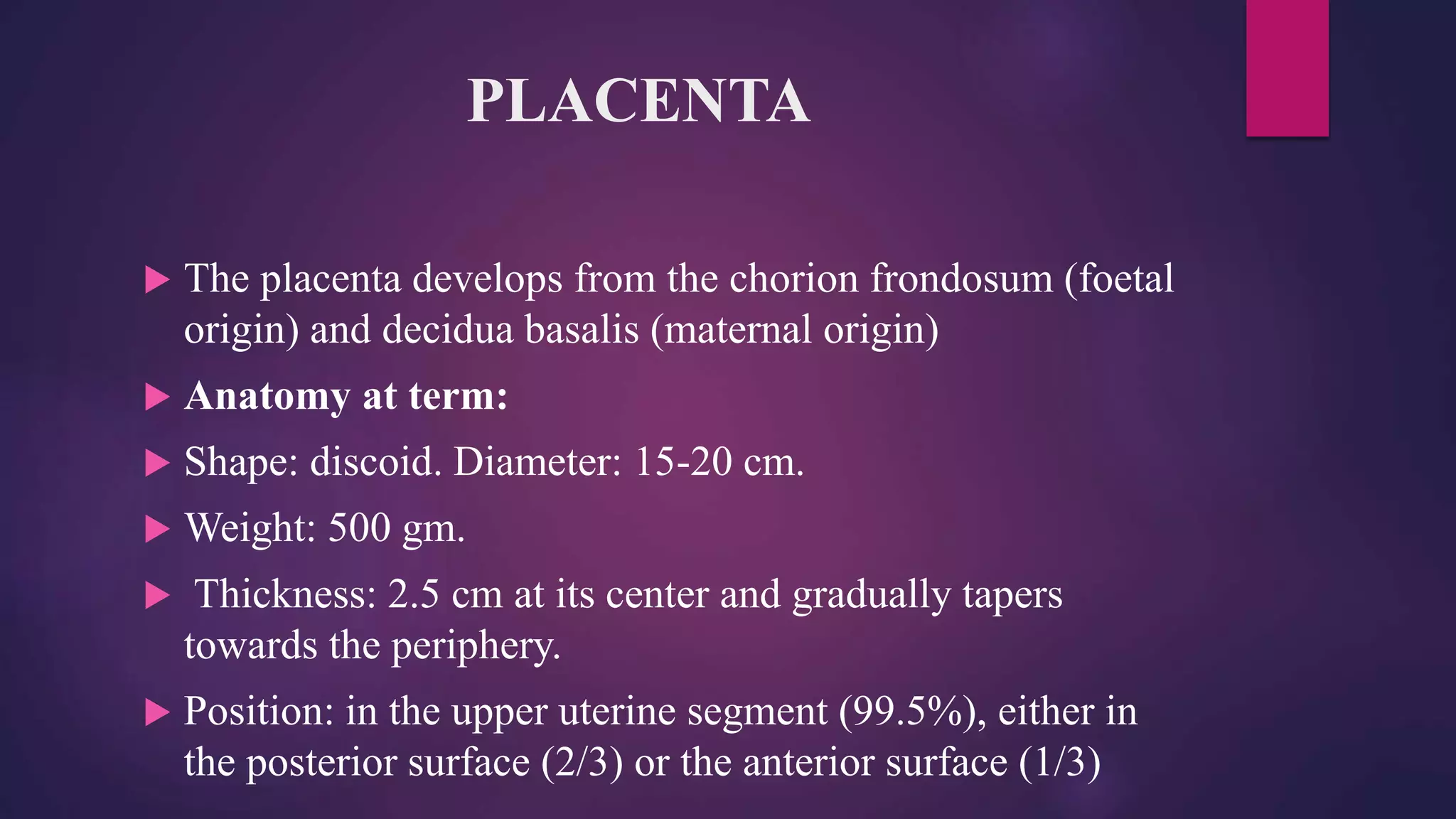
 The placenta develops from the chorion frondosum (foetal
origin) and decidua basalis (maternal origin)
 Anatomy at term:
 Shape: discoid. Diameter: 15-20 cm.
 Weight: 500 gm.
 Thickness: 2.5 cm at its center and gradually tapers
towards the periphery.
 Position: in the upper uterine segment (99.5%), either in
the posterior surface (2/3) or the anterior surface (1/3)
PLACENTALABNORMALITIES
PLACENT
A
SIZE
IMPLANTATION
RELATIONSHIP
DISEASE
FORMS/
Numbers
POSITION
ANOMALIES OF FORMS/ NUMBERS
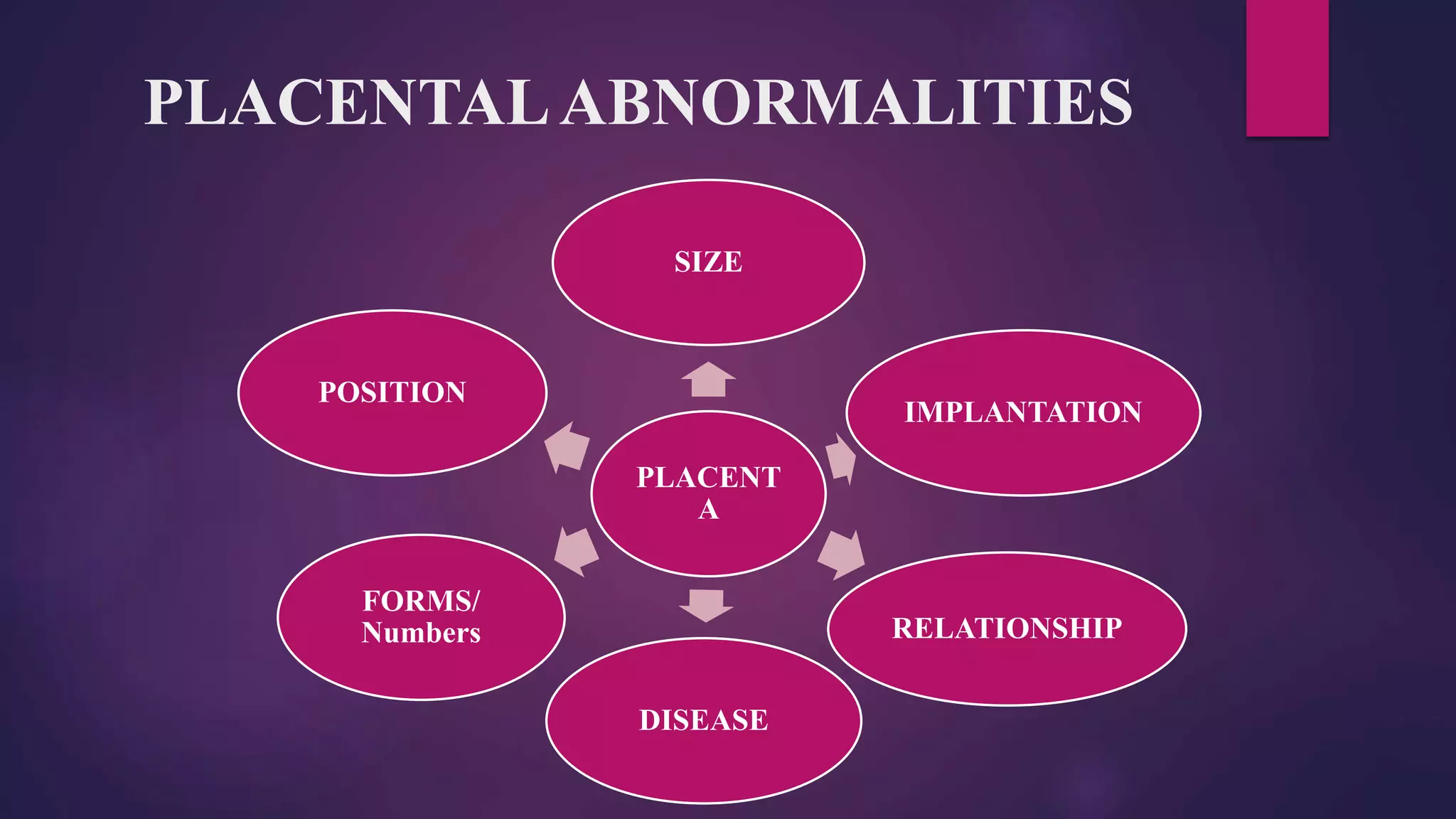
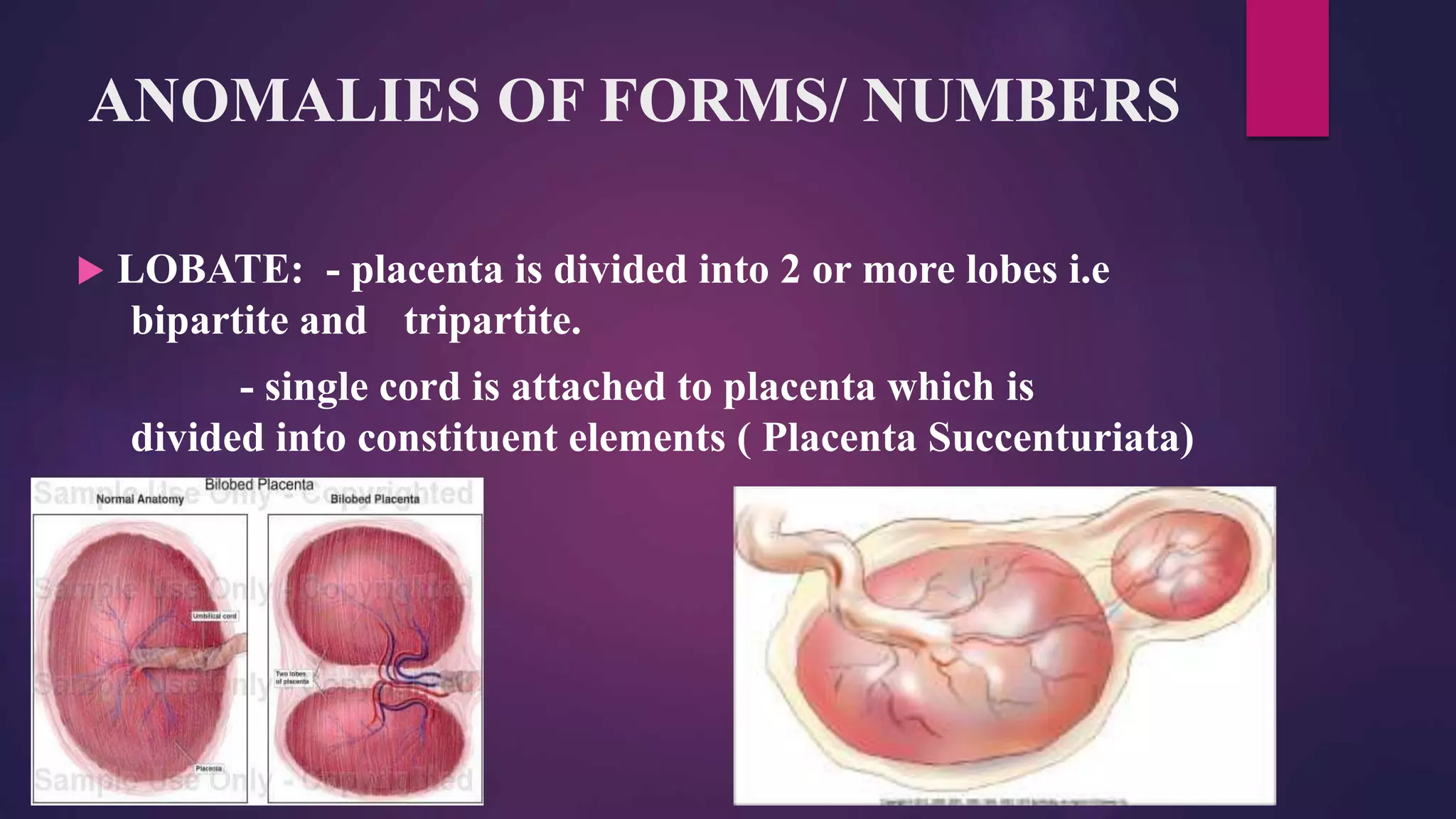
 LOBATE: - placenta is divided into 2 or more lobes i.e
bipartite and tripartite.
- single cord is attached to placenta which is
divided into constituent elements ( Placenta Succenturiata)
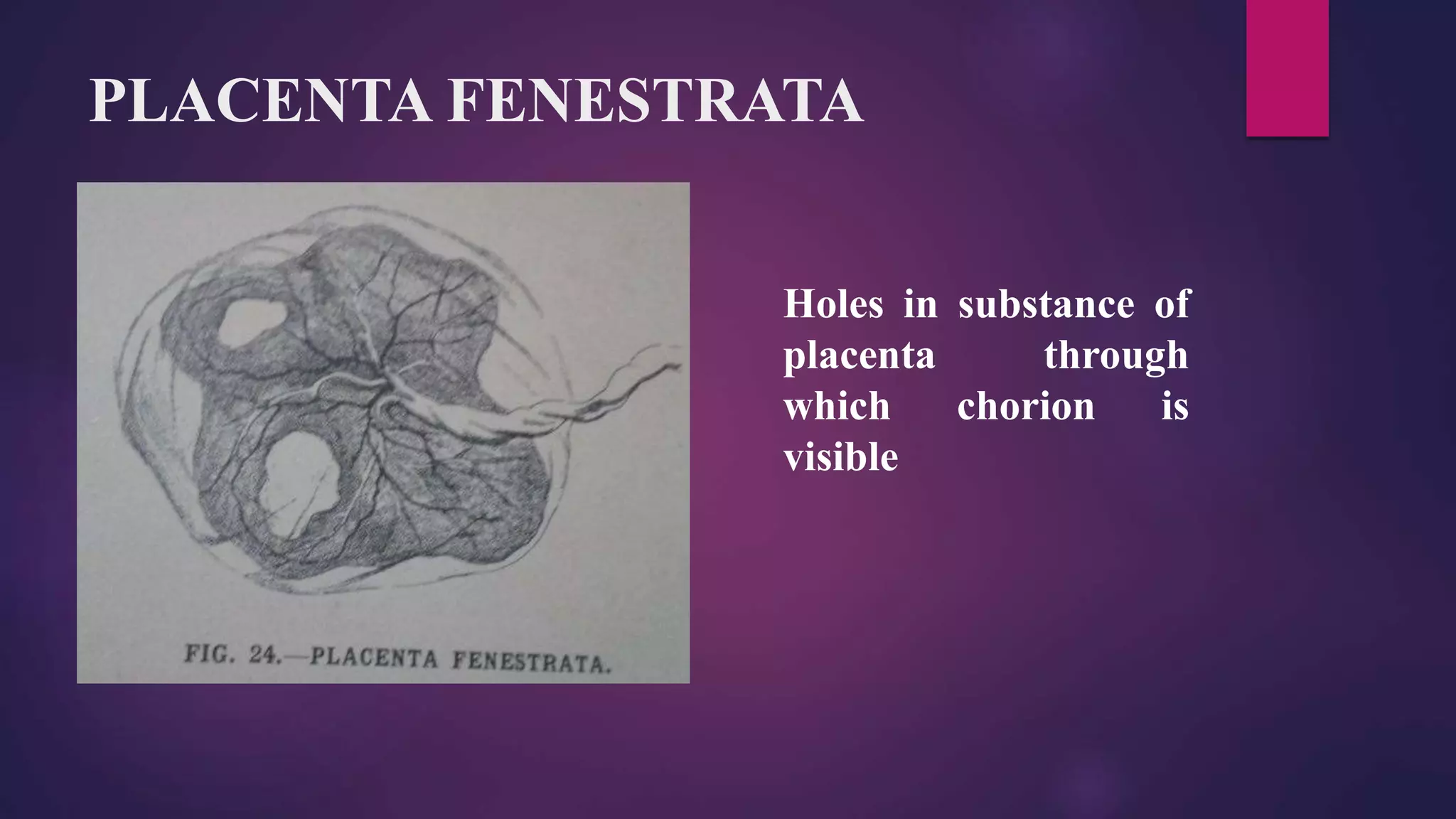
PLACENTA FENESTRATA
Holes in substance of
placenta through
which chorion is
visible
RANIFORM / HORSE SHOE
PLACENTA
Occasionally,
placenta is
kidney shaped
ANOMALIES OF RELATIONSHIPS
WITH CORD AND MEMBRANE
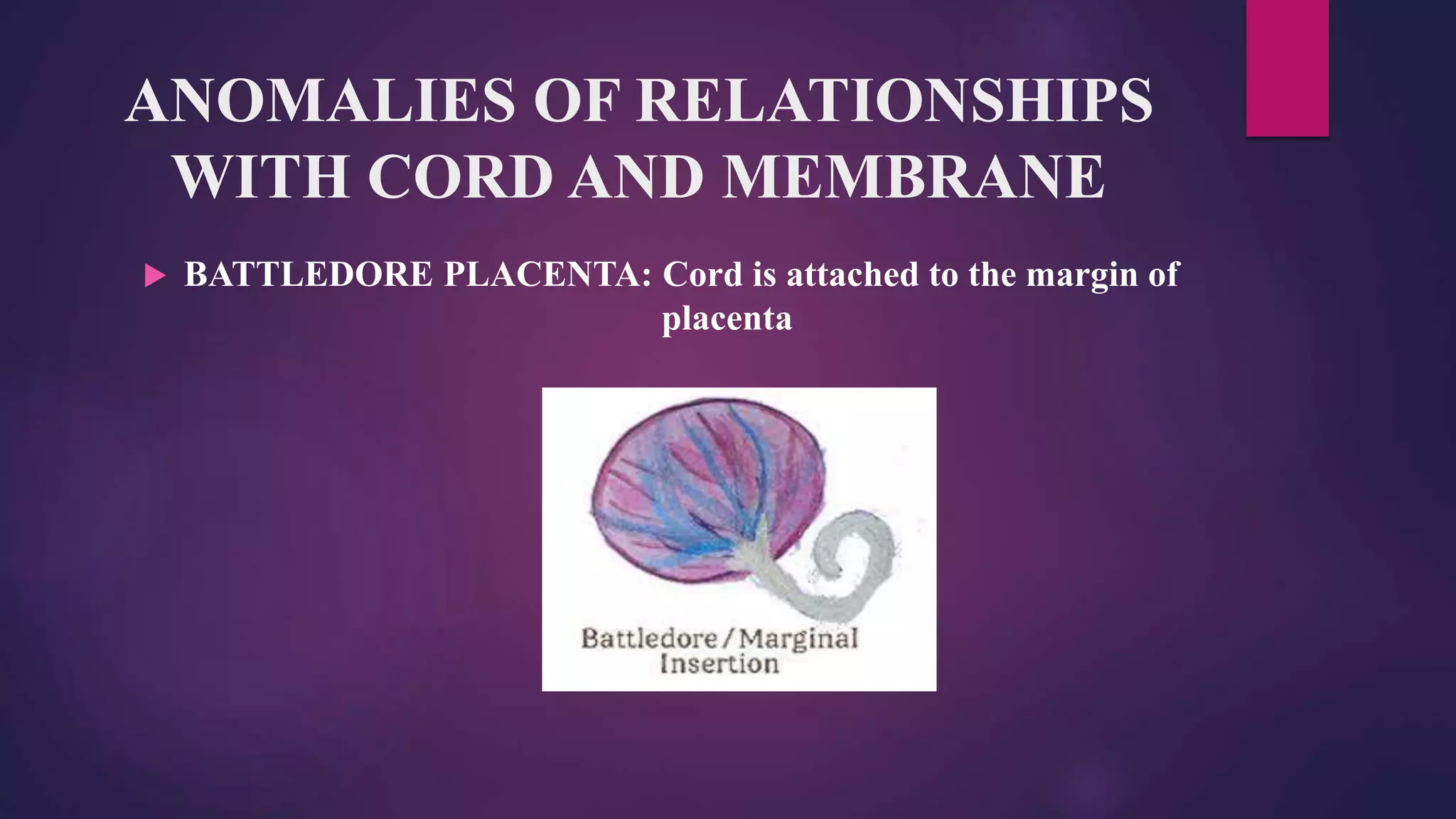
 BATTLEDORE PLACENTA: Cord is attached to the margin of
placenta
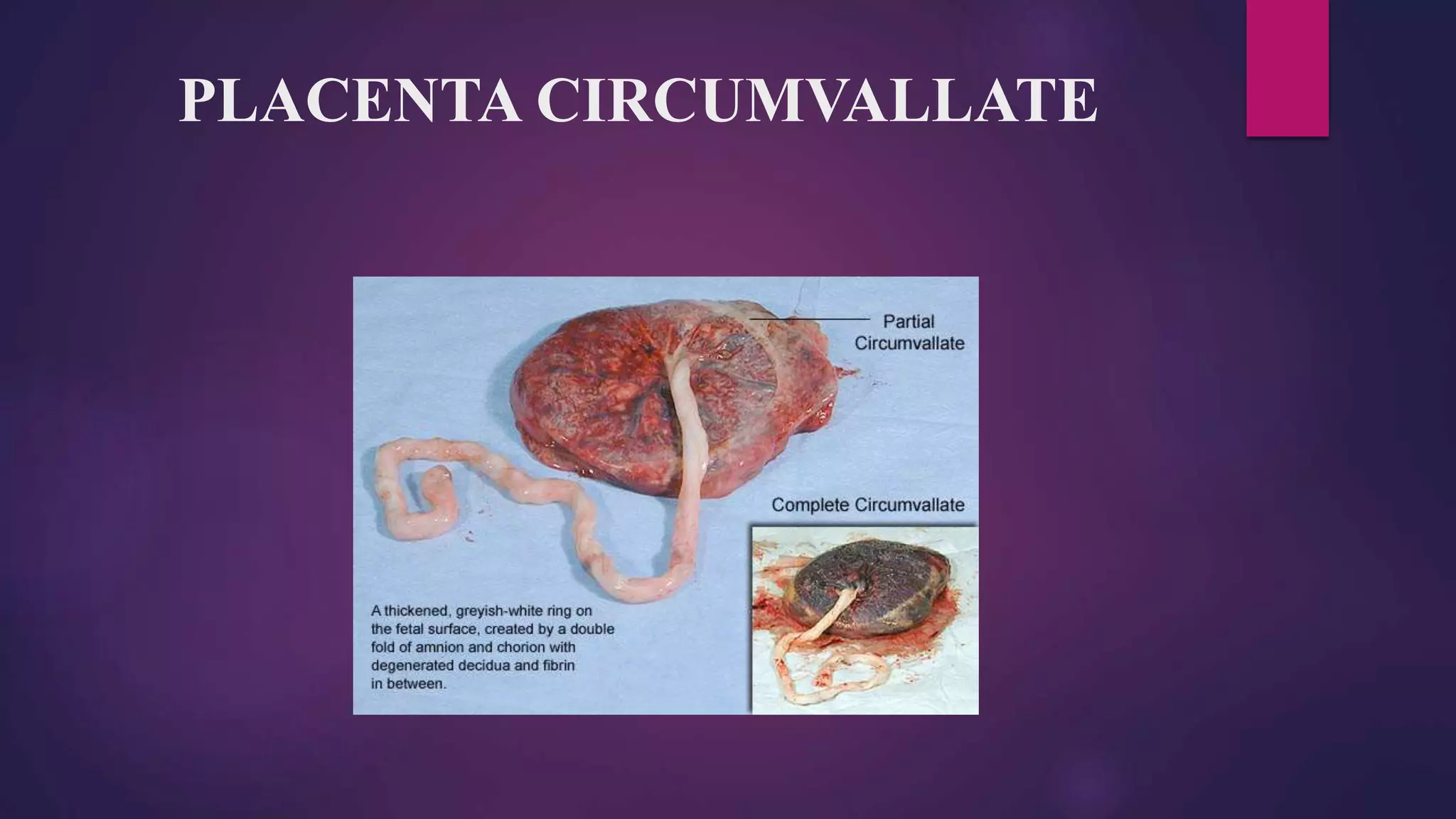
PLACENTA CIRCUMVALLATE
VELAMENTOUS INSERTION
VASA PREVIA
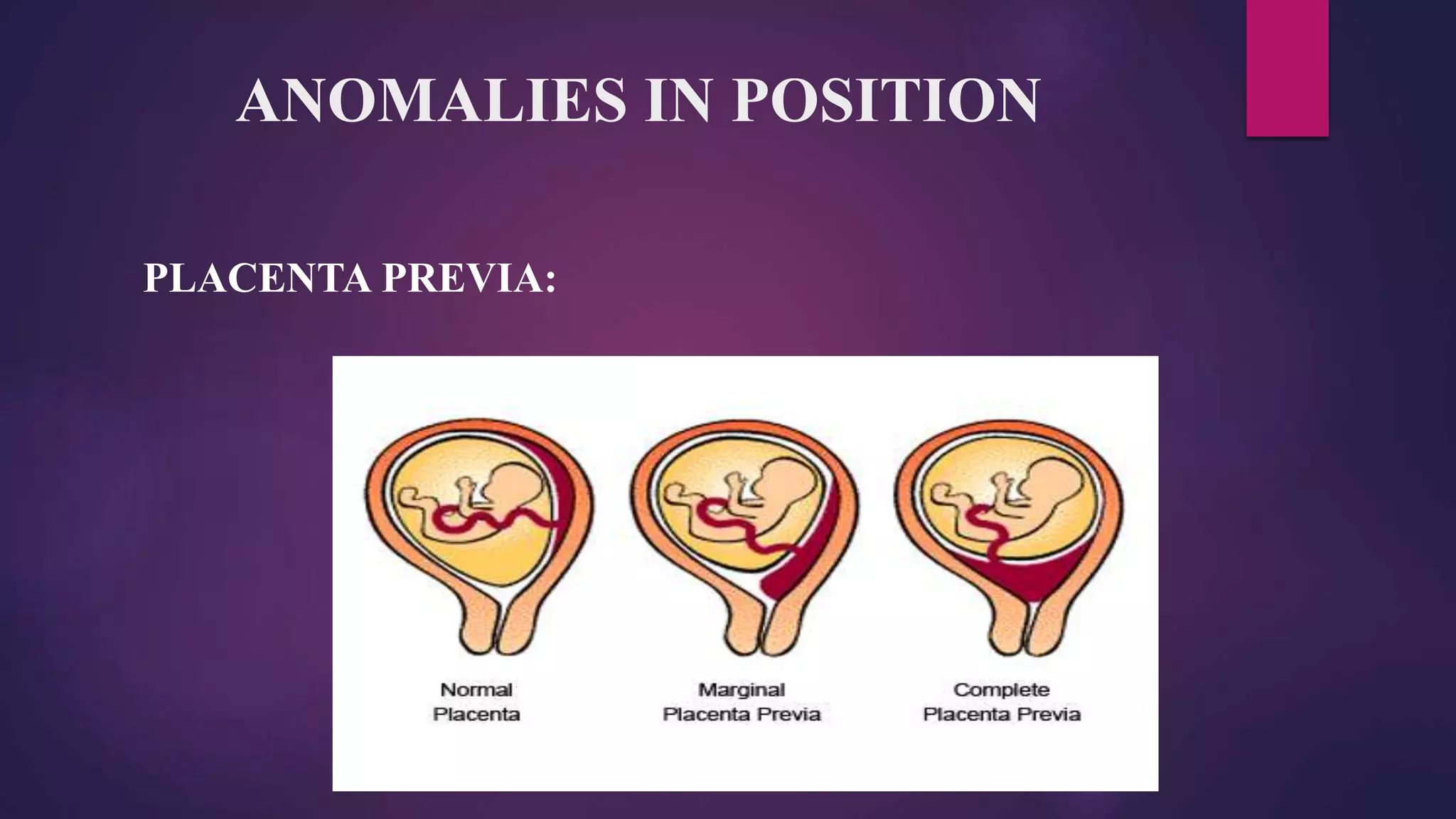
ANOMALIES IN POSITION
PLACENTA PREVIA:
DISEASES OF PLACENTA
 Inflammation : inflammation of placenta occur due to the
presence of infection.
 It may be acute and chronic
PACENTAL TUMOR
 CHORIOANGIOMA
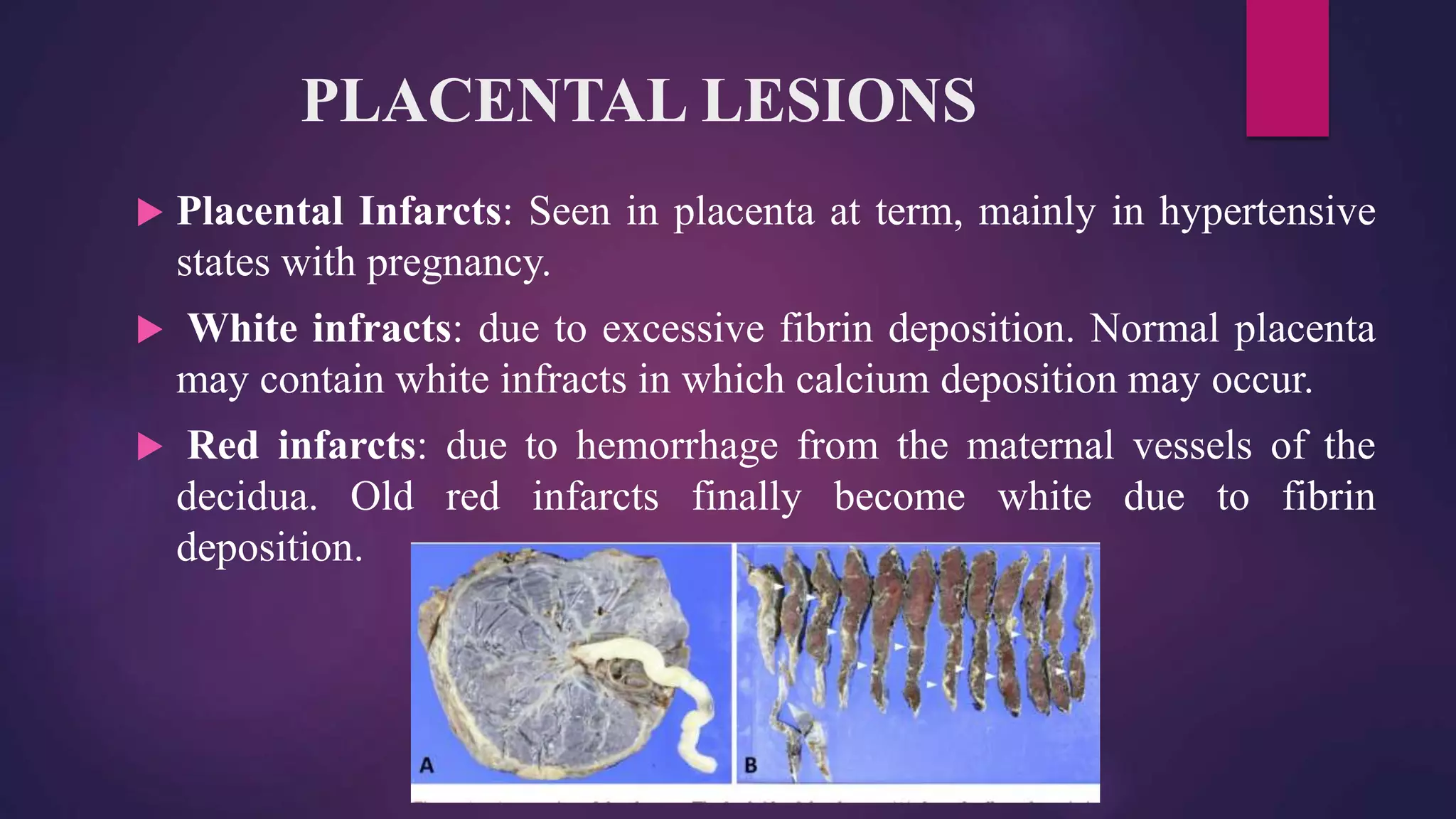
PLACENTAL LESIONS
 Placental Infarcts: Seen in placenta at term, mainly in hypertensive
states with pregnancy.
 White infracts: due to excessive fibrin deposition. Normal placenta
may contain white infracts in which calcium deposition may occur.
 Red infarcts: due to hemorrhage from the maternal vessels of the
decidua. Old red infarcts finally become white due to fibrin
deposition.
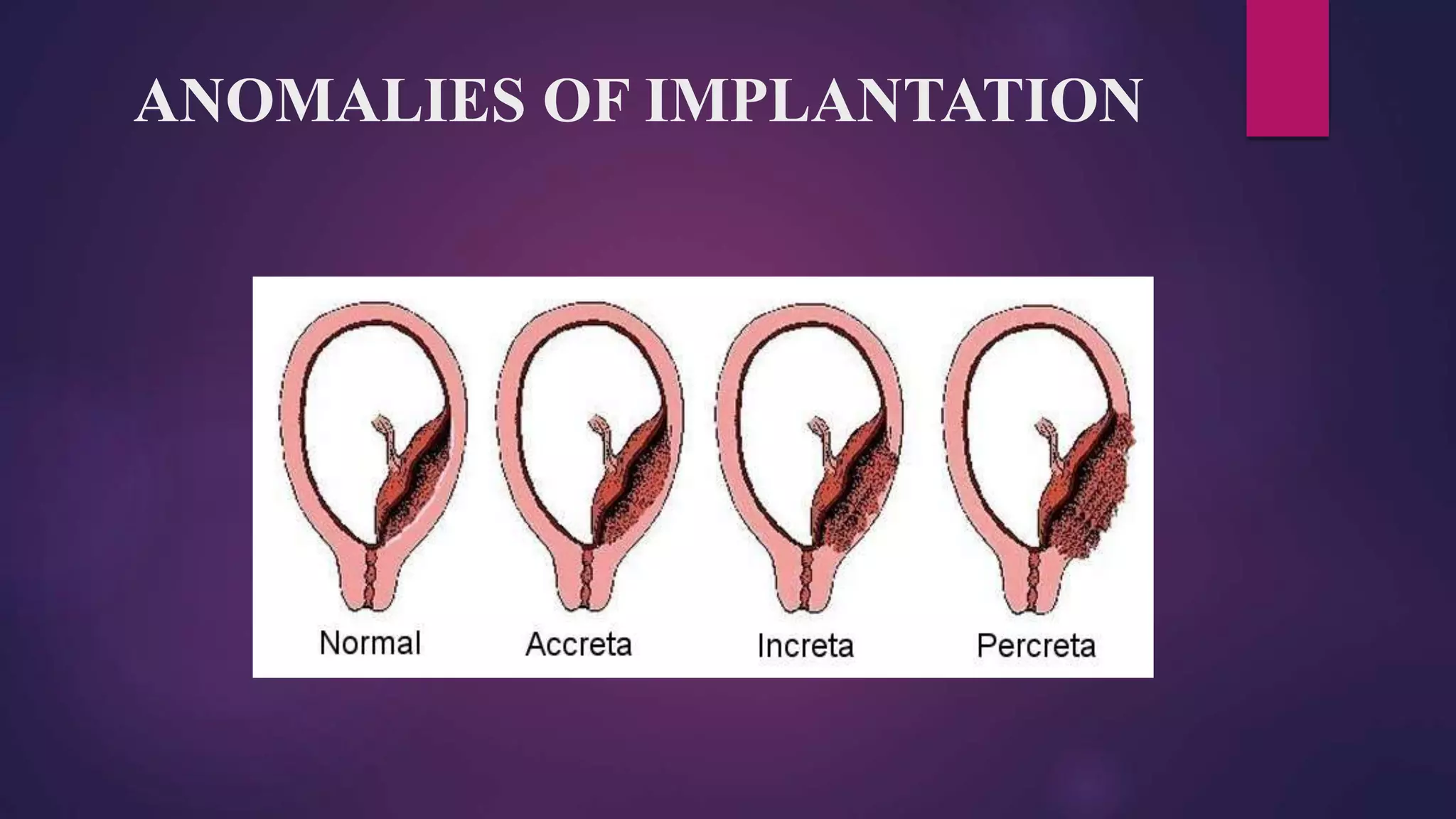
ANOMALIES OF IMPLANTATION
UMBILICAL CORD
 Origin: It develops from the connecting stalk.
 Length: At term, it measures about 50 cm
 Diameter: 2 cm.
 Structure: It consists of mesodermal connective tissue called
Wharton's jelly, covered by amnion.
 It contains:
 one umbilical vein carries oxygenated blood from the placenta to
the foetus,
 two umbilical arteries carry deoxygenated blood from the foetus to
the placenta, remnants of the yolk sac and allantois.
CONTNUE…..
Insertion: The cord is inserted in the foetal
surface of the placenta near the center
"eccentric insertion" (70%) or at the center
"central insertion" (30%).
ABNORMALITIES
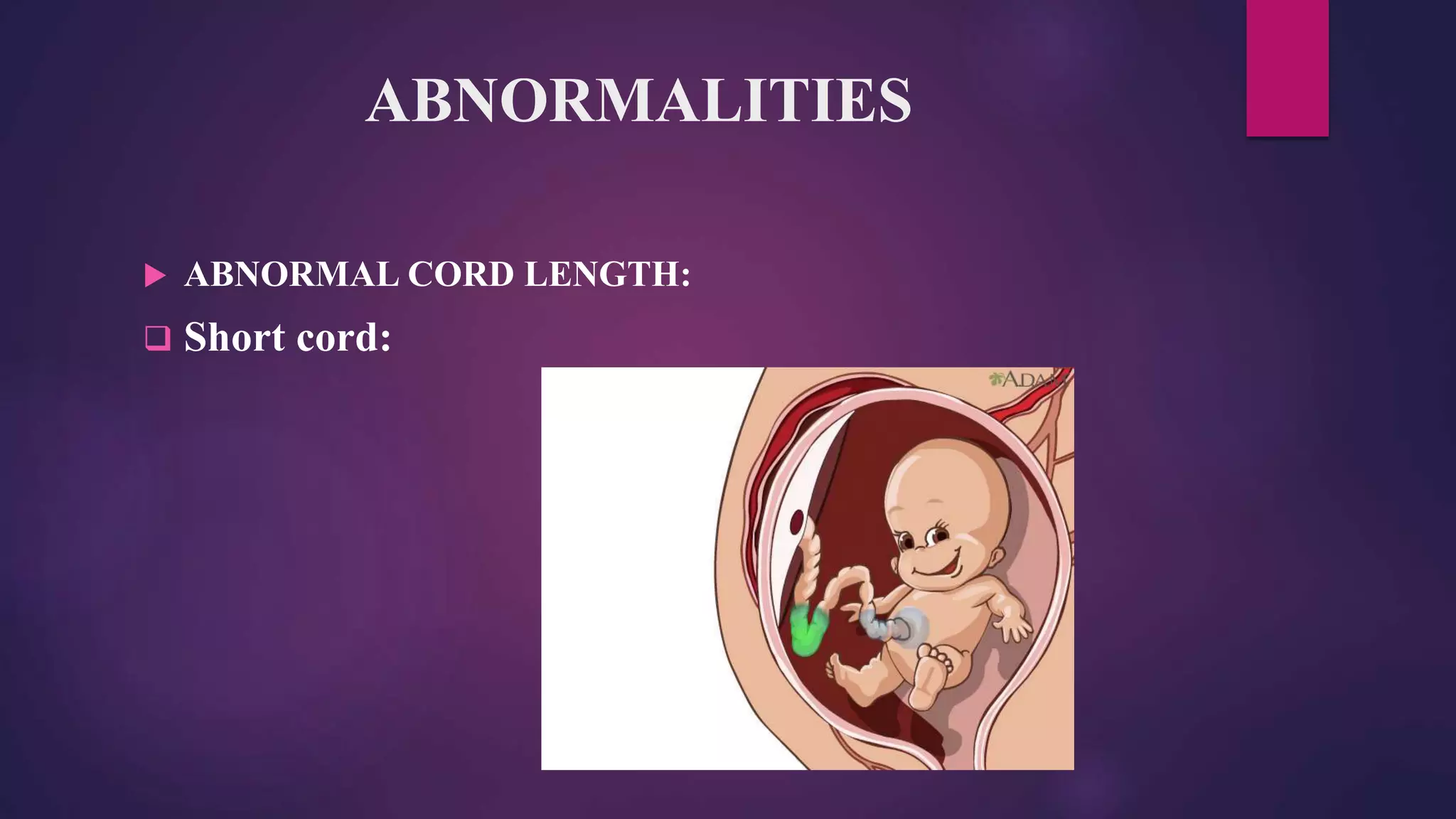
 ABNORMAL CORD LENGTH:
 Short cord:
LONG CORD
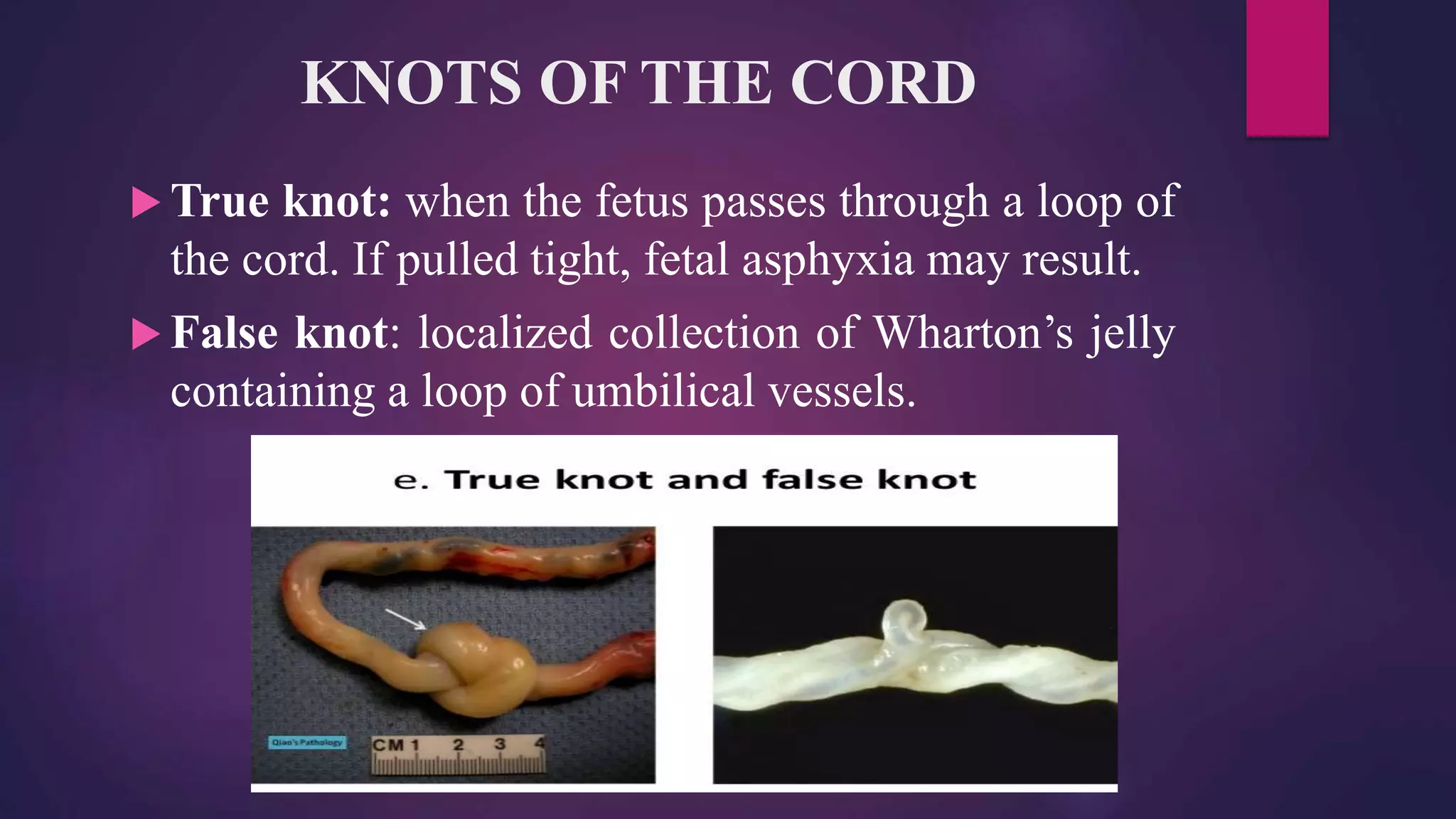
KNOTS OF THE CORD
 True knot: when the fetus passes through a loop of
the cord. If pulled tight, fetal asphyxia may result.
 False knot: localized collection of Wharton’s jelly
containing a loop of umbilical vessels.
TORSION OF THE CORD
 It may occur particularly in the portion near the
fetus where the Wharton's jelly is less abundant.
HEMATOMA
Due to rupture of one of the umbilical vessels
SINGLE UMBILICALARTERY
 It may be associated with other fetal congenital anomalies
SUMMARIZATION
RECAPTULIZATION
REFERENCES
 Konar.H, DC Dutta’s Textbook of obstetrics 8th edition,
Jaypee Medical publication (P) Ltd.
 www.slideshare.com
 www.encyclopedia.com
Placental and cord abnormalities

Placental and cord abnormalities