THE ENDOCRINE
SYSTEM
NIKITA SHARMA
NURSING TUTOR
BECON
PITUITARY GLAND &
HYPOTHALAMUS
• They both acts as a unit, regulating the activity of most of the other
endocrine glands.
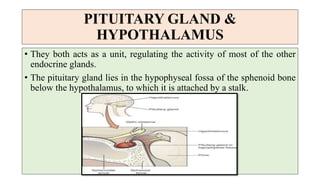
• The pituitary gland lies in the hypophyseal fossa of the sphenoid bone
below the hypothalamus, to which it is attached by a stalk.
PITUITARY GLAND &
HYPOTHALAMUS
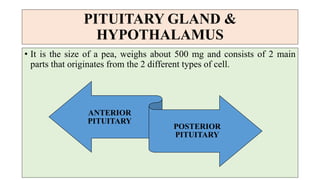
• It is the size of a pea, weighs about 500 mg and consists of 2 main
parts that originates from the 2 different types of cell.
ANTERIOR
PITUITARY
POSTERIOR
PITUITARY
ANTERIOR & POSTERIOR PITUITARY
Anterior pituitary is also known as Adeohypophysis.
It is an up growth of glandular epithelium from the pharynx
Posterior pituitary is also known as Neurohypophysis.
It is a down growth of nervous tissue from the brain.
There is a network of nerve fibres between the hypothalamus and the
posterior pituitary.
BLOOD SUPPLY
ARTERIAL BLOOD:
Branches of internal carotid artery.
Anterior lobe is supplied indirectly by blood that has already passed
through a capillary bed in the hypothalamus but the posterior lobe is
supplied directly.
VENOUS DRAINAGE:
Containing hormones from both lobes, venous blood leaves the gland in
short veins that enter the venous sinuses between the layer of dura
mater.
THE IN FLUENCE OF HYPOTHALAMUS ON
THE PITUITARY GLAND
The hypothalamus controls release of hormones from both the anterior
and posterior pituitary but in following ways:
ANTERIOR PITUITARY
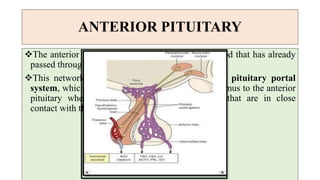
The anterior pituitary is supplied indirectly by blood that has already
passed through a capillary bed in the hypothalamus.
This network of blood vessels forms part of the pituitary portal
system, which transports blood from the hypothalamus to the anterior
pituitary where it enters thin-walled sinusoids that are in close
contact with the secretory cells.
ANTERIOR PITUITARY
This supply also providing oxygen and nutrients and transports
releasing hormones and inhibiting hormones secreted by the
hypothalamus.
GROWTH HORMONE (GH)
Most abundant hormone synthesized by the anterior pituitary.
It stimulates growth & division of most body cells but especially those
in the bones and skeletal muscles.
Body growth in response to the secretion of GH is evident during
childhood and adolescence, & thereafter it maintain the mass of bones
and skeletal muscles.
It also regulates aspects of metabolism in many organs, e.g. liver,
intestines, pancreas, stimulates protein synthesis, especially tissue
growth and repair, promotes breakdown of fats and increase blood
glucose levels.
GROWTH HORMONE (GH)
Its release is stimulated by GHRH and suppressed by GHRIH
(somatostatin), both of which secreted by the hypothalamus.
Secretion of GH is greater at night during sleep and is also stimulated
by hypoglycaemia, exercise and anxiety.
Secretion peaks in adolescence and then declines with age.
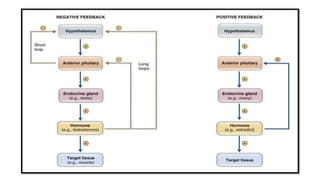
GH secretion is controlled by a negative feedback system; it is
inhibited when the blood level rises ad also when GNRIH is released
by hypothalamus.
GNRIH also suppresses secretion of TSH and GI secretions, e.g.
gastric juice, gastrin and cholecystokinin.
THYROID STIMULATING HORMONE
(TSH)
The release is stimulated by TRH from the hypothalamus.
It stimulates growth and activity of the thyroid gland, which secretes
the hormones Thyroxine (T4) & tri-idothyronine (T3).
Release is lowest in the early evening and highest during the night.
Secretion is regulated by a negative feedback mechanism, i.e. when
the blood level of thyroid hormones is high, secretion of TSH is
reduced and vice-versa.
ADRENOCORTICOTROPHIC HORMONE
(ACTH, CORTICOTROPHIN)
 CRH from the hypothalamus promotes the synthesis and release of
ACTH by the anterior pituitary.
 This increases the concentration of cholesterol and steroids with in the
adrenal cortex and the output of steroid hormones, especially cortisol.
 ACTH levels are highest at about 8 a.m & fall to their lowest about
midnight, although high levels sometimes occur at mid-day and 6 p.m.
 This circadian rhythm is maintained throughout life.
 It is associated with the sleep pattern and adjustment to changes takes
several days e.g. following changing work shifts, travelling to a
different time zone (jet lag).
ADRENOCORTICOTROPHIC HORMONE
(ACTH, CORTICOTROPHIN)
 Secretion is also regulated by a negative feedback mechanism, being
suppressed when the blood level of ACTH rises.
 Other factors that stimulate secretion include hypoglycemia, exercise
and other stressors e.g. emotional states and fever.
PROLACTIN
This hormone is secreted during pregnancy to prepare the breasts for
lactation after childbirth.
The blood level of prolactin is stimulated by PRH released from the
hypothalamus and it is lowered by PIH, dopamine and by an increased
blood level of prolactin.
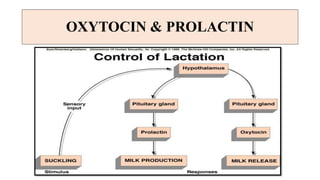
Immediately after birth, suckling stimulates prolactin secretion and
lactation.
The resultant high blood level is a factor in reducing the incidence of
conception during lactation.
PROLACTIN
Prolactin together with estrogens, corticosteroids, insulin and
thyroxine, is involved in initiating and maintain lactation.
Prolactin secretion is related to sleep, rising during any period of
sleep, night or day.
GONADOTROPHINS
Just before puberty two gonadotrophins (sex hormones) are secreted
gradually increasing amount by the anterior pituitary in response to
LHRH, also known of GnRH.
Rising levels of these hormones at puberty promotes mature functioning
of the reproductive organs.
In both males and females the hormones responsible are:
1. FSH
2. LH
IN BOTH SEXES: FSH stimulates production of gametes by the gonads
GONADOTROPHINS
In Females:
 LH & FSH are involved in secretion of the hormones oestrogens and
progesterone during the menstrual cycle.
As the levels of oestrogens and progesterone rise, secretion of LH and
FSH is suppressed.
In Males:
 LH, also called interstitial cell stimulating hormone (ICSH)
stimulates the interstitial cells of the testes to secrete the hormone
testosterone.
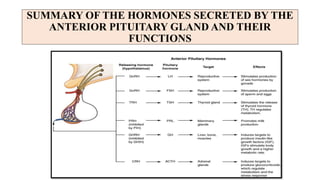
SUMMARY OF THE HORMONES SECRETED BY THE
ANTERIOR PITUITARY GLAND AND THEIR
FUNCTIONS
POSTERIOR PITUITARY
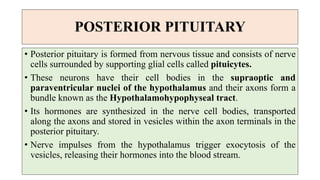
• Posterior pituitary is formed from nervous tissue and consists of nerve
cells surrounded by supporting glial cells called pituicytes.
• These neurons have their cell bodies in the supraoptic and
paraventricular nuclei of the hypothalamus and their axons form a
bundle known as the Hypothalamohypophyseal tract.
• Its hormones are synthesized in the nerve cell bodies, transported
along the axons and stored in vesicles within the axon terminals in the
posterior pituitary.
• Nerve impulses from the hypothalamus trigger exocytosis of the
vesicles, releasing their hormones into the blood stream.
POSTERIOR PITUITARY
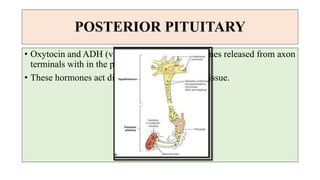
• Oxytocin and ADH (vasopressin) are the hormones released from axon
terminals with in the posterior pituitary.
• These hormones act directly on non-endocrine tissue.
OXYTOCIN
 Stimulates 2 target tissues during and after childbirth: Uterine
smooth muscle and the muscle cells of the lactating breast.
During childbirth increasing amounts of oxytocin are released from
the posterior pituitary into the blood stream in response to increasing
stimulation of sensory stretch receptors in the uterine cervix as the
baby’s head progressively dilates it.
Sensory impulses are generated and travel to the control centre in the
hypothalamus, stimulating the posterior pituitary to release more
oxytocin.
OXYTOCIN
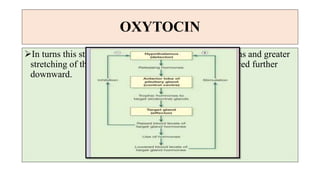
In turns this stimulates more forceful uterine contractions and greater
stretching of the uterine cervix as the baby’s head is forced further
downward.
OXYTOCIN & PROLACTIN
OXYTOCIN
Oxytocin levels rise during sexual arousal in both males and females.
This increases smooth muscle contraction which is associated with
glandular secretion and ejaculation in males
In females, contraction of smooth muscle in the vagina and uterus
promotes movement of sperm towards the uterine tubes.
It is believed that the smell of oxytocin may be involved in social
recognition and bonding (between mother and newborn baby).
ANTIDIURETIC HORMONE (ADH,
VASOPRESSIN)
It helps to reduce urine output.
ADH acts on the distal convulated tubules and collecting ducts of
the nephrons of the kidneys.
It increases their permeability to water and more of the glomerular
filtrate is reabsorbed.
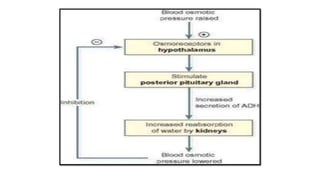
ADH secretion is determined by the osmotic pressure of the blood
circulating to the osmoreceptors in the hypothalamus.
As osmotic pressure rises, e.g. as a result of dehydration, secretion of
ADH increases.
ANTIDIURETIC HORMONE (ADH,
VASOPRESSIN)
More water is therefore reabsorbed and the urine output is reduced.
This means that the body retains more water and the rise in osmotic
pressure is reversed.
Conversely, when the osmotic pressure of the blood is low, e.g. after a
large fluid intake, secretion of ADH is reduced, less water is
reabsorbed and more urine is produced.
ANTIDIURETIC HORMONE (ADH,
VASOPRESSIN)
At high concentrations, e.g. after severe blood loss, ADH causes
smooth muscle contraction, especially vasoconstriction in small
arteries.
This has a pressor effect, raising systematic blood pressure; the
alternative name of this hormone, vasopressin, reflects this effect.
THYROID GLAND
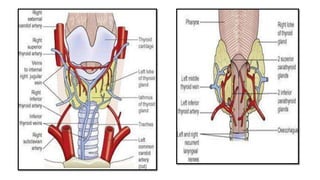
Thyroid gland is situated in the neck in front of the larynx and trachea
at the level of 5th, 6th and 7th cervical and 1st thoracic vertebrae.
It is highly vascular gland that weighs about 25g and surrounded by a
fibrous capsule.
It resembles a butterfly in shape, consisting of 2 lobes, one on either
side of the thyroid cartilage and upper cartilaginous rings of the
trachea.
The lobes are joined by a narrow isthmus, lying in front of the trachea.
The lobes are cone shaped, about 5 cm long 3cm wide.
BLOOD SUPPLY
The arterial blood supply is through superior and inferior thyroid
arteries.
Superior thyroid artery is the branch of external carotid artery and
inferior thyroid artery is the branch of subclavian artery.
The venous return is by thyroid veins, which drains into the
internal jugular veins.
THYROID GLAND
Nerve supply is through laryngeal nerves.
The gland is composed of largely spherical follicles formed from
cuboidal epithelium.
The gland secrete and store colloid, a thick sticky protein material.
Between the follicles are other cells found singly or in small groups:
perafollicular cells, also called c-cells, which secrete the hormone
calcitonin.
THYROXINE & TRI-IDOTHYRONINE
Iodine is essential for the formation of thyroid hormones, T4 and T3,
so numbered as these molecules contain 4 and 3 atoms of the element
iodine respectively.
The thyroid gland selectively takes up iodine from the blood, a
process called iodine trapping.
These are synthesized as large precursor molecule called
thyroglobulin, the major constitute of colloid.
The release of T3 & T4 into the blood is stimulated by TSH from the
anterior pituitary.
THYROID GLAND
Secretion of TSH is stimulated by TRH from the hypothalamus and
secretion of TRH is stimulated by exercise, stress, malnutrition, stress,
low plasma glucose level and sleep.
TSH secretion depends on the plasma levels of the T3 and T4 and
decreases via negative feedback mechanism.
Dietary iodine deficiency greatly increases TSH secretion causing
proliferation of thyroid gland cells and enlargement of the gland
(goitre).
Secretion of T3 and T4 begins about the 3rd month of fetal life and
increases at puberty and in women during the reproductive years.
THYROID GLAND
T4 is more abundant and less potent than T3, which is more
physiologically important.
Most T4 is converted into T3 inside the target cells.
Thyroid hormones enter the cell nucleus and regulate gene expression,
i.e. they increase or decrease protein synthesis.
They enhance the effects of other hormones, e.g. adrenaline and non-
adrenaline.
T3 and T4 affect most cells of the body by:
• Increasing the basal metabolic rate and heat production.
• Regulating metabolism of CHO, proteins and fats.
THYROID GLAND
T3 & T4 are essential for normal growth and development, especially
of the skeleton and nervous system.
Most other organs and systems are also influenced by thyroid
hormones.
Physiological effects of T3 & T4 on the heart, skeletal muscles, skin,
digestive and reproductive systems are more evident when there is
underactivity or over activity of the thyroid gland and can be profound
in childhood.
CALCITONIN
This hormone is secreted by the parafollicular or c-cells in the thyroid
gland.
Calcitonin lowers raised blood calcium (calcium) levels.
It does this by acting on;
- Bone cells promoting their storage of calcium
- Kidney tubules inhibiting the reabsorption of calcium
- Its effect is opposite to that of parathyroid hormone, the hormone
secreted by the parathyroid glands.
- Release of calcitonin is stimulated by increased blood calcium levels.
PARATHYROID GLAND
There are 4 small parathyroid glands, each weighing around 50g, two
embedded in the posterior surface of each lobe of the thyroid gland.
They are surrounded by fine connective tissue capsules that contain
spherical cells arranged in columns with sinusoids containing blood in
between them.
FUNCTIONS
These glands secrete parathyroid hormone (PTH, parathormone).
Secretion is regulated by blood calcium levels.
When they fall, secretion of PTH is increased and vice-versa.
The main function of PTH is to increase blood calcium levels.
This is achieved by increasing the calcium absorption from the small
intestine and reabsorption from the renal tubules.
If these sources provide inadequate supplies then PTH stimulates
osteoclasts and calcium is released from the bones in to the blood.
FUNCTIONS
The hormones from the thyroid gland act in a complementary manner
to maintain blood calcium levels with in the normal range. This is
needed for ;
1. Muscle contraction
2. Transmission of nerve impulses
3. Blood clotting
4. Normal action of many enzymes.
ADRENAL GLANDS
The two adrenal (suprarenal) glands are situated on the upper pole of
each kidney.
They are about 4cm long and 3cm thick.
The arterial blood supply is by branches from the abdominal aorta and
renal arteries.
The venous return is by suprarenal veins. The right gland drains into
the inferior vena cava and the left into the left renal vein.
The gland is composed of 2 parts: the outer part is adrenal cortex and
inner part is medulla. Adrenal cortex is essential t life but medulla is
not.
ADRERNAL CORTEX
It produces 3 groups of steroid hormones from cholesterol
[adrenocorticoids (corticosteroids)]. These are:
1. Glucocorticoids
2. Mineralocorticoids
3. Sex hormones (androgens)
GLUCOCORTICOIDS
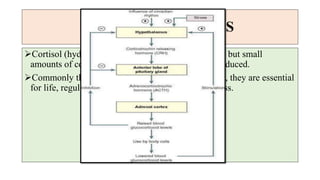
Cortisol (hydrocortisone) is the main glucocorticoid but small
amounts of corticosterone and cortisone are also produced.
Commonly these are collectively known as Steroids, they are essential
for life, regulating metabolism and responses to stress.
ADRERNAL CORTEX
Cortisol secretion shows marked circadian variation peaking between
4 and 8 am and being lowest between midnight and 3 am.
Glucocorticoid secretion increases in response to stress, infection and
surgery and have widespread metabolic effects generally concerned
with catabolism of protein, fat that makes glucose and ther substances
available for us. These include;
• Hyperglycemia
• Lipolysis
• Protein breakdown (AA)
• Promoting absorption of Na & H2O from renal tubules (weak
mineralocorticoid effect).
OTHER EFFECTS OF
GLUCOCORTICOIDS
Anti-inflammatory action
Suppression of immune response
Delayed wound healing
MINERALOCORTICOIDS
(ALDOSTERONE)
Aldosterone is the main mineralocorticoid.
It is involved in maintaining water and electrolyte imbalance.
Through a negative feedback system; it stimulates the reabsorption of
sodium by the renal tubules and excretion of potassium in the urine.
Sodium reabsorption is also accompanied by retention of water and
therefore aldosterone is involved in the regulation of blood volume
and blood pressure too.
Blood potassium levels regulate aldosterone secretion by the adrenal
cortex. When blood potassium levels rise, more aldosterone is secreted
and vice-versa. Angiotensin also stimulates the release of aldosterone.
RENIN-ANGIOTENSIN-
ALDOSTERONE SYSTEM
When renal blood flow is reduced or blood sodium levels fall, the
enzyme renin is secreted by kidney cells.
Renin converts the plasma protein angiotensinogen, produced by the
liver, to angiotensin 1.
ACE, formed in small quantities in the lungs, proximal kidney tubules
and other tissues, converts angiotensin1 to angiotensin 2, which
stimulates secretion of aldosterone.
Angiotensin 2 causes vasoconstriction and increases blood pressure
closing the negative feedback loop.
SEX HORMONES
Sex hormones are secreted by the adrenal cortex are mainly androgens
(male sex hormones) although the amounts produced are insignificant
compared with those secreted by the testes and ovaries in late puberty
and adulthood.
ADRERNAL MEDULLA
The medulla is completely surrounded by the adrenal cortex.
It develops from nervous tissue in the embryo and is part of the
sympathetic nervous system.
When stimulated by extensive sympathetic nerve supply, the glands
release the hormones adrenaline and noradrenaline.
ADRERNALINE & NORADRENALINE
Noradrenaline is the postganglionic neurotransmitter of the
sympathetic division of the autonomic nervous system.
The action of these hormones prolongs and augments stimulation of
the sympathetic nervous system.
Structurally they are very similar, which explains their similar effects.
Together they potentiate the fight or flight response by:
- Increasing heart rate, BP, metabolic rate
- Dilating the pupils
- Diverting blood to essential organs, including the heart, brain and
skeletal muscles, by dilating their blood vessels & constricting those
of less essential organs like skin.
ADRERNALINE & NORADRENALINE
• Adrenaline has a greater effect on the heart and metabolic processes
whereas noradrenaline has more influence on blood vessel diameter.
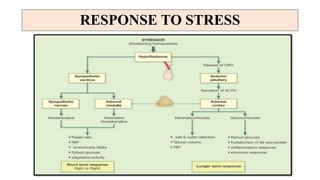
RESPONSE TO STRESS
PANCREATIC ISLETS
The endocrine pancreas consists of clusters of cells, known as
pancreatic islets (islets of langerhans), scattered throughout the gland.
Pancreatic hormones are secreted directly into the bloodstream and
circulate throughout the body.
This is in contrast to the exocrine pancreas and its associated ducts.
There are three main types of cells in the pancreatic islets:
• Alpha cells, which secrete glucagon
• Beta cells, which are numerous and secrete insulin
• Delta cells, which secrete somatostatin (GHRIH)
PANCREATIC ISLETS
The normal blood glucose level is between 3.5 and 8 mmol/L (63 to
144 mg/100mL).
Blood glucose levels are controlled mainly by the opposing actions of
insulin and glucagon:
• Glucagon increases blood glucose levels
• Insulin reduces blood glucose levels
INSULIN
Insulin is a polypeptide consisting of about 50 amino acids.
Its main function is to lower raised blood nutrient levels, not only
glucose but also amino acids and fatty acids.
These effects are described as anabolic i.e. they promote storage of
nutrients.
When nutrients, especially glucose, are in excess of immediate needs
insulin promotes their storage by:
Acting on cell membranes and stimulating uptake and use of glucose
by muscle and connective tissue cells.
INSULIN
Increasing conversion of glucose to glycogen (glycogenesis),
especially in the liver and skeletal muscles.
Accelerating uptake of amino acids by cells, and the synthesis of
proteins .
Promoting synthesis of fatty acids and storage of fat in adipose tissue
(lipogenesis).
Decrease glycogenolysis (breakdown of glycogen in to glucose).
Preventing the breakdown of protein and fat, and glucogenesis
(formation of new sugar from e.g protein).
INSULIN
Secretion of insulin is stimulated by increased blood glucose levels
and decreased by sympathetic stimulation, glucagon, adrenaline,
cortisol and somatostatin.
GLUCAGON
It increases blood glucose levels by stimulating:
Conversion of glycogen to glucose in the liver and skeletal muscles
(glycogenolysis)
Gluconeogenesis
Secretion of glucagon is stimulated by low glucose levels and
exercise, and decreased by somatostatin and insulin.
SOMATOSTATIN (GNRIH)
This hormone also produced by the hypothalamus, inhibits the
secretion of both insulin and glucagon in addition to inhibiting the
secretion of GH from the anterior pituitary.
PINEAL GLAND
The pineal gland is a small body attached to the roof of the third
ventricle and is connected to it by a short stalk containing nerves,
many of which terminate in the hypothalamus.
The pineal gland is about 10mm long, reddish brown in colour and
surrounded by a capsule.
The gland tends to atrophy after puberty and may become calcified in
later life.
MELATONIN
• This is the main hormone secreted by the pineal gland.
• Secretion is controlled by daylight and darkness; levels fluctuate
during each 24-hour period, the being highest at night and the lowest
around mid-day.
• Secretion is also influenced by the number of daylight hours; i.e. there
may be seasonal variations.
• Although its functions are not fully understood, melatonin is behaved
to be associated with:
MELATONIN
Co-ordination of the circadian rhythm and diurnal rhythms of many
tissues, possibly by influencing the hypothalamus.
Inhibition of growth and development of the sex organs before
puberty, possibly by preventing synthesis or release of gonadotrophins.
ORGANS ASSOCIATED WITH
SECONDARY ENDOCRINE FUNCTIONS
LOCAL HORMONES
The number of body tissues not normally described as endocrine glands;
secretes substances that act in tissues nearby.
Some of these are described below:
1. HISTAMINE: This is synthesized and stored by mast cells in the
tissues and basophils in blood. It is released as part of the
inflammatory responses, especially when caused by allergy,
increasing capillary permeability and causing vasodilation. It also
acts as a neurotransmitter, causes contraction of smooth muscle of
the bronchi and alimentary tract, and stimulates the secretion of
gastric juice.
LOCAL HORMONES
2. SEROTONIN (5-HYDROXYTRYPTAMINE, 5-HT):
 Presents in platelets, in the brain, and in the intestinal walls.
It causes intestinal secretion and contraction of smooth muscle and its
role in homeostasis.
It is a neurotransmitter in the CNS and is known to influence mood.
PROSTAGLANDINS (PGs)
These are lipid substances found in most tissues.
They act on neighboring cells but their actions are short-lived as they
are quickly metabolized.
Prostaglandins have potent and wide-ranging physiological effects in:
• The inflammatory response
• Potentiating pain
• Fever
• Regulating BP
• Blood clotting
• Uterine contractions during labour
PROSTAGLANDINS (PGs)
• Other chemically, similar compounds include leukotrienes, which are
involved in inflammatory responses, and thromboxane's, e.g.
thromboxane A2, which is a potent aggregator of platelets.
• All of these active substances are found in only small amounts, as they
are rapidly degraded.

The endocrine system

  • 1.
  • 2.
    PITUITARY GLAND & HYPOTHALAMUS •They both acts as a unit, regulating the activity of most of the other endocrine glands. • The pituitary gland lies in the hypophyseal fossa of the sphenoid bone below the hypothalamus, to which it is attached by a stalk.
  • 3.
    PITUITARY GLAND & HYPOTHALAMUS •It is the size of a pea, weighs about 500 mg and consists of 2 main parts that originates from the 2 different types of cell. ANTERIOR PITUITARY POSTERIOR PITUITARY
  • 4.
    ANTERIOR & POSTERIORPITUITARY Anterior pituitary is also known as Adeohypophysis. It is an up growth of glandular epithelium from the pharynx Posterior pituitary is also known as Neurohypophysis. It is a down growth of nervous tissue from the brain. There is a network of nerve fibres between the hypothalamus and the posterior pituitary.
  • 5.
    BLOOD SUPPLY ARTERIAL BLOOD: Branchesof internal carotid artery. Anterior lobe is supplied indirectly by blood that has already passed through a capillary bed in the hypothalamus but the posterior lobe is supplied directly. VENOUS DRAINAGE: Containing hormones from both lobes, venous blood leaves the gland in short veins that enter the venous sinuses between the layer of dura mater.
  • 6.
    THE IN FLUENCEOF HYPOTHALAMUS ON THE PITUITARY GLAND The hypothalamus controls release of hormones from both the anterior and posterior pituitary but in following ways:
  • 7.
    ANTERIOR PITUITARY The anteriorpituitary is supplied indirectly by blood that has already passed through a capillary bed in the hypothalamus. This network of blood vessels forms part of the pituitary portal system, which transports blood from the hypothalamus to the anterior pituitary where it enters thin-walled sinusoids that are in close contact with the secretory cells.
  • 8.
    ANTERIOR PITUITARY This supplyalso providing oxygen and nutrients and transports releasing hormones and inhibiting hormones secreted by the hypothalamus.
  • 9.
    GROWTH HORMONE (GH) Mostabundant hormone synthesized by the anterior pituitary. It stimulates growth & division of most body cells but especially those in the bones and skeletal muscles. Body growth in response to the secretion of GH is evident during childhood and adolescence, & thereafter it maintain the mass of bones and skeletal muscles. It also regulates aspects of metabolism in many organs, e.g. liver, intestines, pancreas, stimulates protein synthesis, especially tissue growth and repair, promotes breakdown of fats and increase blood glucose levels.
  • 10.
    GROWTH HORMONE (GH) Itsrelease is stimulated by GHRH and suppressed by GHRIH (somatostatin), both of which secreted by the hypothalamus. Secretion of GH is greater at night during sleep and is also stimulated by hypoglycaemia, exercise and anxiety. Secretion peaks in adolescence and then declines with age. GH secretion is controlled by a negative feedback system; it is inhibited when the blood level rises ad also when GNRIH is released by hypothalamus. GNRIH also suppresses secretion of TSH and GI secretions, e.g. gastric juice, gastrin and cholecystokinin.
  • 12.
    THYROID STIMULATING HORMONE (TSH) Therelease is stimulated by TRH from the hypothalamus. It stimulates growth and activity of the thyroid gland, which secretes the hormones Thyroxine (T4) & tri-idothyronine (T3). Release is lowest in the early evening and highest during the night. Secretion is regulated by a negative feedback mechanism, i.e. when the blood level of thyroid hormones is high, secretion of TSH is reduced and vice-versa.
  • 13.
    ADRENOCORTICOTROPHIC HORMONE (ACTH, CORTICOTROPHIN) CRH from the hypothalamus promotes the synthesis and release of ACTH by the anterior pituitary.  This increases the concentration of cholesterol and steroids with in the adrenal cortex and the output of steroid hormones, especially cortisol.  ACTH levels are highest at about 8 a.m & fall to their lowest about midnight, although high levels sometimes occur at mid-day and 6 p.m.  This circadian rhythm is maintained throughout life.  It is associated with the sleep pattern and adjustment to changes takes several days e.g. following changing work shifts, travelling to a different time zone (jet lag).
  • 14.
    ADRENOCORTICOTROPHIC HORMONE (ACTH, CORTICOTROPHIN) Secretion is also regulated by a negative feedback mechanism, being suppressed when the blood level of ACTH rises.  Other factors that stimulate secretion include hypoglycemia, exercise and other stressors e.g. emotional states and fever.
  • 15.
    PROLACTIN This hormone issecreted during pregnancy to prepare the breasts for lactation after childbirth. The blood level of prolactin is stimulated by PRH released from the hypothalamus and it is lowered by PIH, dopamine and by an increased blood level of prolactin. Immediately after birth, suckling stimulates prolactin secretion and lactation. The resultant high blood level is a factor in reducing the incidence of conception during lactation.
  • 16.
    PROLACTIN Prolactin together withestrogens, corticosteroids, insulin and thyroxine, is involved in initiating and maintain lactation. Prolactin secretion is related to sleep, rising during any period of sleep, night or day.
  • 17.
    GONADOTROPHINS Just before pubertytwo gonadotrophins (sex hormones) are secreted gradually increasing amount by the anterior pituitary in response to LHRH, also known of GnRH. Rising levels of these hormones at puberty promotes mature functioning of the reproductive organs. In both males and females the hormones responsible are: 1. FSH 2. LH IN BOTH SEXES: FSH stimulates production of gametes by the gonads
  • 18.
    GONADOTROPHINS In Females:  LH& FSH are involved in secretion of the hormones oestrogens and progesterone during the menstrual cycle. As the levels of oestrogens and progesterone rise, secretion of LH and FSH is suppressed. In Males:  LH, also called interstitial cell stimulating hormone (ICSH) stimulates the interstitial cells of the testes to secrete the hormone testosterone.
  • 19.
    SUMMARY OF THEHORMONES SECRETED BY THE ANTERIOR PITUITARY GLAND AND THEIR FUNCTIONS
  • 20.
    POSTERIOR PITUITARY • Posteriorpituitary is formed from nervous tissue and consists of nerve cells surrounded by supporting glial cells called pituicytes. • These neurons have their cell bodies in the supraoptic and paraventricular nuclei of the hypothalamus and their axons form a bundle known as the Hypothalamohypophyseal tract. • Its hormones are synthesized in the nerve cell bodies, transported along the axons and stored in vesicles within the axon terminals in the posterior pituitary. • Nerve impulses from the hypothalamus trigger exocytosis of the vesicles, releasing their hormones into the blood stream.
  • 21.
    POSTERIOR PITUITARY • Oxytocinand ADH (vasopressin) are the hormones released from axon terminals with in the posterior pituitary. • These hormones act directly on non-endocrine tissue.
  • 22.
    OXYTOCIN  Stimulates 2target tissues during and after childbirth: Uterine smooth muscle and the muscle cells of the lactating breast. During childbirth increasing amounts of oxytocin are released from the posterior pituitary into the blood stream in response to increasing stimulation of sensory stretch receptors in the uterine cervix as the baby’s head progressively dilates it. Sensory impulses are generated and travel to the control centre in the hypothalamus, stimulating the posterior pituitary to release more oxytocin.
  • 23.
    OXYTOCIN In turns thisstimulates more forceful uterine contractions and greater stretching of the uterine cervix as the baby’s head is forced further downward.
  • 24.
  • 25.
    OXYTOCIN Oxytocin levels riseduring sexual arousal in both males and females. This increases smooth muscle contraction which is associated with glandular secretion and ejaculation in males In females, contraction of smooth muscle in the vagina and uterus promotes movement of sperm towards the uterine tubes. It is believed that the smell of oxytocin may be involved in social recognition and bonding (between mother and newborn baby).
  • 26.
    ANTIDIURETIC HORMONE (ADH, VASOPRESSIN) Ithelps to reduce urine output. ADH acts on the distal convulated tubules and collecting ducts of the nephrons of the kidneys. It increases their permeability to water and more of the glomerular filtrate is reabsorbed. ADH secretion is determined by the osmotic pressure of the blood circulating to the osmoreceptors in the hypothalamus. As osmotic pressure rises, e.g. as a result of dehydration, secretion of ADH increases.
  • 27.
    ANTIDIURETIC HORMONE (ADH, VASOPRESSIN) Morewater is therefore reabsorbed and the urine output is reduced. This means that the body retains more water and the rise in osmotic pressure is reversed. Conversely, when the osmotic pressure of the blood is low, e.g. after a large fluid intake, secretion of ADH is reduced, less water is reabsorbed and more urine is produced.
  • 29.
    ANTIDIURETIC HORMONE (ADH, VASOPRESSIN) Athigh concentrations, e.g. after severe blood loss, ADH causes smooth muscle contraction, especially vasoconstriction in small arteries. This has a pressor effect, raising systematic blood pressure; the alternative name of this hormone, vasopressin, reflects this effect.
  • 30.
    THYROID GLAND Thyroid glandis situated in the neck in front of the larynx and trachea at the level of 5th, 6th and 7th cervical and 1st thoracic vertebrae. It is highly vascular gland that weighs about 25g and surrounded by a fibrous capsule. It resembles a butterfly in shape, consisting of 2 lobes, one on either side of the thyroid cartilage and upper cartilaginous rings of the trachea. The lobes are joined by a narrow isthmus, lying in front of the trachea. The lobes are cone shaped, about 5 cm long 3cm wide.
  • 32.
    BLOOD SUPPLY The arterialblood supply is through superior and inferior thyroid arteries. Superior thyroid artery is the branch of external carotid artery and inferior thyroid artery is the branch of subclavian artery. The venous return is by thyroid veins, which drains into the internal jugular veins.
  • 33.
    THYROID GLAND Nerve supplyis through laryngeal nerves. The gland is composed of largely spherical follicles formed from cuboidal epithelium. The gland secrete and store colloid, a thick sticky protein material. Between the follicles are other cells found singly or in small groups: perafollicular cells, also called c-cells, which secrete the hormone calcitonin.
  • 34.
    THYROXINE & TRI-IDOTHYRONINE Iodineis essential for the formation of thyroid hormones, T4 and T3, so numbered as these molecules contain 4 and 3 atoms of the element iodine respectively. The thyroid gland selectively takes up iodine from the blood, a process called iodine trapping. These are synthesized as large precursor molecule called thyroglobulin, the major constitute of colloid. The release of T3 & T4 into the blood is stimulated by TSH from the anterior pituitary.
  • 35.
    THYROID GLAND Secretion ofTSH is stimulated by TRH from the hypothalamus and secretion of TRH is stimulated by exercise, stress, malnutrition, stress, low plasma glucose level and sleep. TSH secretion depends on the plasma levels of the T3 and T4 and decreases via negative feedback mechanism. Dietary iodine deficiency greatly increases TSH secretion causing proliferation of thyroid gland cells and enlargement of the gland (goitre). Secretion of T3 and T4 begins about the 3rd month of fetal life and increases at puberty and in women during the reproductive years.
  • 36.
    THYROID GLAND T4 ismore abundant and less potent than T3, which is more physiologically important. Most T4 is converted into T3 inside the target cells. Thyroid hormones enter the cell nucleus and regulate gene expression, i.e. they increase or decrease protein synthesis. They enhance the effects of other hormones, e.g. adrenaline and non- adrenaline. T3 and T4 affect most cells of the body by: • Increasing the basal metabolic rate and heat production. • Regulating metabolism of CHO, proteins and fats.
  • 37.
    THYROID GLAND T3 &T4 are essential for normal growth and development, especially of the skeleton and nervous system. Most other organs and systems are also influenced by thyroid hormones. Physiological effects of T3 & T4 on the heart, skeletal muscles, skin, digestive and reproductive systems are more evident when there is underactivity or over activity of the thyroid gland and can be profound in childhood.
  • 38.
    CALCITONIN This hormone issecreted by the parafollicular or c-cells in the thyroid gland. Calcitonin lowers raised blood calcium (calcium) levels. It does this by acting on; - Bone cells promoting their storage of calcium - Kidney tubules inhibiting the reabsorption of calcium - Its effect is opposite to that of parathyroid hormone, the hormone secreted by the parathyroid glands. - Release of calcitonin is stimulated by increased blood calcium levels.
  • 39.
    PARATHYROID GLAND There are4 small parathyroid glands, each weighing around 50g, two embedded in the posterior surface of each lobe of the thyroid gland. They are surrounded by fine connective tissue capsules that contain spherical cells arranged in columns with sinusoids containing blood in between them.
  • 40.
    FUNCTIONS These glands secreteparathyroid hormone (PTH, parathormone). Secretion is regulated by blood calcium levels. When they fall, secretion of PTH is increased and vice-versa. The main function of PTH is to increase blood calcium levels. This is achieved by increasing the calcium absorption from the small intestine and reabsorption from the renal tubules. If these sources provide inadequate supplies then PTH stimulates osteoclasts and calcium is released from the bones in to the blood.
  • 41.
    FUNCTIONS The hormones fromthe thyroid gland act in a complementary manner to maintain blood calcium levels with in the normal range. This is needed for ; 1. Muscle contraction 2. Transmission of nerve impulses 3. Blood clotting 4. Normal action of many enzymes.
  • 42.
    ADRENAL GLANDS The twoadrenal (suprarenal) glands are situated on the upper pole of each kidney. They are about 4cm long and 3cm thick. The arterial blood supply is by branches from the abdominal aorta and renal arteries. The venous return is by suprarenal veins. The right gland drains into the inferior vena cava and the left into the left renal vein. The gland is composed of 2 parts: the outer part is adrenal cortex and inner part is medulla. Adrenal cortex is essential t life but medulla is not.
  • 43.
    ADRERNAL CORTEX It produces3 groups of steroid hormones from cholesterol [adrenocorticoids (corticosteroids)]. These are: 1. Glucocorticoids 2. Mineralocorticoids 3. Sex hormones (androgens)
  • 44.
    GLUCOCORTICOIDS Cortisol (hydrocortisone) isthe main glucocorticoid but small amounts of corticosterone and cortisone are also produced. Commonly these are collectively known as Steroids, they are essential for life, regulating metabolism and responses to stress.
  • 45.
    ADRERNAL CORTEX Cortisol secretionshows marked circadian variation peaking between 4 and 8 am and being lowest between midnight and 3 am. Glucocorticoid secretion increases in response to stress, infection and surgery and have widespread metabolic effects generally concerned with catabolism of protein, fat that makes glucose and ther substances available for us. These include; • Hyperglycemia • Lipolysis • Protein breakdown (AA) • Promoting absorption of Na & H2O from renal tubules (weak mineralocorticoid effect).
  • 46.
    OTHER EFFECTS OF GLUCOCORTICOIDS Anti-inflammatoryaction Suppression of immune response Delayed wound healing
  • 47.
    MINERALOCORTICOIDS (ALDOSTERONE) Aldosterone is themain mineralocorticoid. It is involved in maintaining water and electrolyte imbalance. Through a negative feedback system; it stimulates the reabsorption of sodium by the renal tubules and excretion of potassium in the urine. Sodium reabsorption is also accompanied by retention of water and therefore aldosterone is involved in the regulation of blood volume and blood pressure too. Blood potassium levels regulate aldosterone secretion by the adrenal cortex. When blood potassium levels rise, more aldosterone is secreted and vice-versa. Angiotensin also stimulates the release of aldosterone.
  • 48.
    RENIN-ANGIOTENSIN- ALDOSTERONE SYSTEM When renalblood flow is reduced or blood sodium levels fall, the enzyme renin is secreted by kidney cells. Renin converts the plasma protein angiotensinogen, produced by the liver, to angiotensin 1. ACE, formed in small quantities in the lungs, proximal kidney tubules and other tissues, converts angiotensin1 to angiotensin 2, which stimulates secretion of aldosterone. Angiotensin 2 causes vasoconstriction and increases blood pressure closing the negative feedback loop.
  • 49.
    SEX HORMONES Sex hormonesare secreted by the adrenal cortex are mainly androgens (male sex hormones) although the amounts produced are insignificant compared with those secreted by the testes and ovaries in late puberty and adulthood.
  • 50.
    ADRERNAL MEDULLA The medullais completely surrounded by the adrenal cortex. It develops from nervous tissue in the embryo and is part of the sympathetic nervous system. When stimulated by extensive sympathetic nerve supply, the glands release the hormones adrenaline and noradrenaline.
  • 51.
    ADRERNALINE & NORADRENALINE Noradrenalineis the postganglionic neurotransmitter of the sympathetic division of the autonomic nervous system. The action of these hormones prolongs and augments stimulation of the sympathetic nervous system. Structurally they are very similar, which explains their similar effects. Together they potentiate the fight or flight response by: - Increasing heart rate, BP, metabolic rate - Dilating the pupils - Diverting blood to essential organs, including the heart, brain and skeletal muscles, by dilating their blood vessels & constricting those of less essential organs like skin.
  • 52.
    ADRERNALINE & NORADRENALINE •Adrenaline has a greater effect on the heart and metabolic processes whereas noradrenaline has more influence on blood vessel diameter.
  • 53.
  • 54.
    PANCREATIC ISLETS The endocrinepancreas consists of clusters of cells, known as pancreatic islets (islets of langerhans), scattered throughout the gland. Pancreatic hormones are secreted directly into the bloodstream and circulate throughout the body. This is in contrast to the exocrine pancreas and its associated ducts. There are three main types of cells in the pancreatic islets: • Alpha cells, which secrete glucagon • Beta cells, which are numerous and secrete insulin • Delta cells, which secrete somatostatin (GHRIH)
  • 55.
    PANCREATIC ISLETS The normalblood glucose level is between 3.5 and 8 mmol/L (63 to 144 mg/100mL). Blood glucose levels are controlled mainly by the opposing actions of insulin and glucagon: • Glucagon increases blood glucose levels • Insulin reduces blood glucose levels
  • 56.
    INSULIN Insulin is apolypeptide consisting of about 50 amino acids. Its main function is to lower raised blood nutrient levels, not only glucose but also amino acids and fatty acids. These effects are described as anabolic i.e. they promote storage of nutrients. When nutrients, especially glucose, are in excess of immediate needs insulin promotes their storage by: Acting on cell membranes and stimulating uptake and use of glucose by muscle and connective tissue cells.
  • 57.
    INSULIN Increasing conversion ofglucose to glycogen (glycogenesis), especially in the liver and skeletal muscles. Accelerating uptake of amino acids by cells, and the synthesis of proteins . Promoting synthesis of fatty acids and storage of fat in adipose tissue (lipogenesis). Decrease glycogenolysis (breakdown of glycogen in to glucose). Preventing the breakdown of protein and fat, and glucogenesis (formation of new sugar from e.g protein).
  • 58.
    INSULIN Secretion of insulinis stimulated by increased blood glucose levels and decreased by sympathetic stimulation, glucagon, adrenaline, cortisol and somatostatin.
  • 59.
    GLUCAGON It increases bloodglucose levels by stimulating: Conversion of glycogen to glucose in the liver and skeletal muscles (glycogenolysis) Gluconeogenesis Secretion of glucagon is stimulated by low glucose levels and exercise, and decreased by somatostatin and insulin.
  • 60.
    SOMATOSTATIN (GNRIH) This hormonealso produced by the hypothalamus, inhibits the secretion of both insulin and glucagon in addition to inhibiting the secretion of GH from the anterior pituitary.
  • 61.
    PINEAL GLAND The pinealgland is a small body attached to the roof of the third ventricle and is connected to it by a short stalk containing nerves, many of which terminate in the hypothalamus. The pineal gland is about 10mm long, reddish brown in colour and surrounded by a capsule. The gland tends to atrophy after puberty and may become calcified in later life.
  • 62.
    MELATONIN • This isthe main hormone secreted by the pineal gland. • Secretion is controlled by daylight and darkness; levels fluctuate during each 24-hour period, the being highest at night and the lowest around mid-day. • Secretion is also influenced by the number of daylight hours; i.e. there may be seasonal variations. • Although its functions are not fully understood, melatonin is behaved to be associated with:
  • 63.
    MELATONIN Co-ordination of thecircadian rhythm and diurnal rhythms of many tissues, possibly by influencing the hypothalamus. Inhibition of growth and development of the sex organs before puberty, possibly by preventing synthesis or release of gonadotrophins.
  • 64.
  • 65.
    LOCAL HORMONES The numberof body tissues not normally described as endocrine glands; secretes substances that act in tissues nearby. Some of these are described below: 1. HISTAMINE: This is synthesized and stored by mast cells in the tissues and basophils in blood. It is released as part of the inflammatory responses, especially when caused by allergy, increasing capillary permeability and causing vasodilation. It also acts as a neurotransmitter, causes contraction of smooth muscle of the bronchi and alimentary tract, and stimulates the secretion of gastric juice.
  • 66.
    LOCAL HORMONES 2. SEROTONIN(5-HYDROXYTRYPTAMINE, 5-HT):  Presents in platelets, in the brain, and in the intestinal walls. It causes intestinal secretion and contraction of smooth muscle and its role in homeostasis. It is a neurotransmitter in the CNS and is known to influence mood.
  • 67.
    PROSTAGLANDINS (PGs) These arelipid substances found in most tissues. They act on neighboring cells but their actions are short-lived as they are quickly metabolized. Prostaglandins have potent and wide-ranging physiological effects in: • The inflammatory response • Potentiating pain • Fever • Regulating BP • Blood clotting • Uterine contractions during labour
  • 68.
    PROSTAGLANDINS (PGs) • Otherchemically, similar compounds include leukotrienes, which are involved in inflammatory responses, and thromboxane's, e.g. thromboxane A2, which is a potent aggregator of platelets. • All of these active substances are found in only small amounts, as they are rapidly degraded.