THE PLACENTA
BY: G. LUNGU
Objectives
By the end of the presentation, learner should be able to describe:
• the placenta
• functions of the placenta
• Placenta at term
• Umblicol cord
• Membranes and amniotic fliud
• Abnormalities of the placenta
Description
• It is a temporary organ shared by the mother and fetus
• It develops from the outer layer of the pre-implantation embryo
• The pre-implantation embryo (blastocyst) is segregated into two
lineages: the inner cell mass and outer cell mass and outer cell mass
• The outer layer organises into trophoblasts, later becomes the
placenta
Description ct …
Trophoblast proliferates and separetes into:
• Inner cytotrophoblastic layer (fetal side)
• The synctiotrophoblastic layer – outer layer (placental side / maternal
side)
Fetal side Maternal side
FUNCTIONS OF THE PLACENTA
• RESPIRATORY FUNCTION – oxygen from the mother passes into the
placenta into fetal blood by diffussion.
• Similary, the fetus gives off carbon dioxide into maternal blood
Functions ct …
• EXCRETORY FUNCTION – end products of fetal metabolism such as
urea, bilirubin and carbon dioxide cross the placenta into maternal
circulation where they are excreted
• NUTRITION FUNCTION – mothers blood supplies the fetus with
nutrients such as CHO, water, salts, fats, proteins and minerals
Functions ct …
• PROTECTIVE FUNCTION – placental barrier protects the fetus from
many harmful substances. It is limited to viruses, bacilli, syphyllis,
hepatitis since these can cross the placental membrane
Functions ct…
• HORMONAL FUNCTION – oestrogen, progesterone, HCG and HPL are
produced by the placenta. They are responsible for preparing
maternal body for labour and lactation
Functions ct …
• PASSIVE IMMUNITY – immunity to diptheria, measles is passed to
fetus from maternal antibodies.
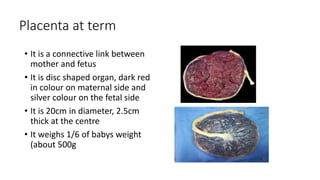
Placenta at term
• It is a connective link between
mother and fetus
• It is disc shaped organ, dark red
in colour on maternal side and
silver colour on the fetal side
• It is 20cm in diameter, 2.5cm
thick at the centre
• It weighs 1/6 of babys weight
(about 500g
Placenta at term ct …
• It has 2 surfaces i.e. Maternal and fetal side
• The chorionic membrane extends from its edges forming a chorionic
sac
• The chorionic sac is lined with amniotic membrane which is filled with
amniotic fluid
• All nourishment of the fetus is derived from the mother through the
placenta
Umblicol cord
• The connecting body or stalk
which joins the placenta and the
fetus
• It is usually inserted on lateral
sides of the placenta or into the
centre of the surface of the
placenta
Umblicol cord
• It is about 50 cm long and 1.5cm thick in diameter
UMBLICOL CORD INSERTION
• BATTLE DORE INSERTION OF THE CORD – The cord is inserted at the
very edge of the placenta
PLACENTA VELAMENTOSA – When the cord is inserted into the
membranes instead of the fetal surface of the placenta
BLOOD VESSELS OF THE UMBLICOL CORD
ONE UMBLICOL VEIN – It is a thin
walled wide lumen vessel which
carries 85% of oxygenated blood
from the placenta to the fetus
TWO UMBLICOL ARTERIES – Thick
walled and narrowed lumen. It
carries deoxygenated blood from
the fetus to the placenta.
• The blood vessels are
surrounded by a jelly like
substance known as whartons
jelly which protects and
supports them
Umblicol cord
• Sometimes the whartons jelly form lumps known as false knots.
• After delivery, inspect for presence of all the 3 vessels. A missing
artery / vessels is associated with a congenital abnormality
THE AMNION
• Also known as amniotic membrane
• The sac becomes filled with fluid derived from maternal circulation
• The fluid is called amniotic fluid or liquor
Amnion
• The sac increases in size until it
completely sorrounds the
embryo which freely floats in the
fluid
• It is tough, translucent and
smooth
• It ruptures at birth
• Some times the baby can be
born with it and can lead to
suffocation
THE CHORION
• It is a thick opaque membrane
• It is friable (easily breaks into small pieces)
• It Seen hanging from the edges of the placenta
NOTE: after delivery of the placenta and membranes, the 2 membranes
can be separated up to the point of cord insertion
• Amniotic membrane, chorionic membrane and fetal side of the
placenta forms the fetal sac.
Amniotic fluid
• It is similar to that of extra
cellular fluid
• 98% is water, 2% solids made up
of electrolytes, proteins,
creatinine, urea and uric acid,
glucose, fats and hormones
• It is clear alkaline fluid
ABNORMALITIES OF THE PLACENTA
• Placenta succenturiata
• Placenta bi partita or tripartita
• Placenta circumvallata
• Placenta infarct
• Placenta oedema
• Meconeum stained placenta and cord
• placenta acreta
Summary
• It is a temporary organ shared by the mother and fetus
• It is a connecting link between the mother and fetus
• It consists of two sides (fetal and maternal), two membranes (amnion
and chorion) and umblicol cord.
• It protects and supports the fetus by performing various functions
like: respiratory, excretory, nutritive and barrier
YEBO

THE PLACENTA (1).pdf

  • 1.
  • 5.
    Objectives By the endof the presentation, learner should be able to describe: • the placenta • functions of the placenta • Placenta at term • Umblicol cord • Membranes and amniotic fliud • Abnormalities of the placenta
  • 6.
    Description • It isa temporary organ shared by the mother and fetus • It develops from the outer layer of the pre-implantation embryo • The pre-implantation embryo (blastocyst) is segregated into two lineages: the inner cell mass and outer cell mass and outer cell mass • The outer layer organises into trophoblasts, later becomes the placenta
  • 7.
    Description ct … Trophoblastproliferates and separetes into: • Inner cytotrophoblastic layer (fetal side) • The synctiotrophoblastic layer – outer layer (placental side / maternal side)
  • 8.
  • 9.
    FUNCTIONS OF THEPLACENTA • RESPIRATORY FUNCTION – oxygen from the mother passes into the placenta into fetal blood by diffussion. • Similary, the fetus gives off carbon dioxide into maternal blood
  • 10.
    Functions ct … •EXCRETORY FUNCTION – end products of fetal metabolism such as urea, bilirubin and carbon dioxide cross the placenta into maternal circulation where they are excreted • NUTRITION FUNCTION – mothers blood supplies the fetus with nutrients such as CHO, water, salts, fats, proteins and minerals
  • 11.
    Functions ct … •PROTECTIVE FUNCTION – placental barrier protects the fetus from many harmful substances. It is limited to viruses, bacilli, syphyllis, hepatitis since these can cross the placental membrane
  • 12.
    Functions ct… • HORMONALFUNCTION – oestrogen, progesterone, HCG and HPL are produced by the placenta. They are responsible for preparing maternal body for labour and lactation
  • 13.
    Functions ct … •PASSIVE IMMUNITY – immunity to diptheria, measles is passed to fetus from maternal antibodies.
  • 14.
    Placenta at term •It is a connective link between mother and fetus • It is disc shaped organ, dark red in colour on maternal side and silver colour on the fetal side • It is 20cm in diameter, 2.5cm thick at the centre • It weighs 1/6 of babys weight (about 500g
  • 15.
    Placenta at termct … • It has 2 surfaces i.e. Maternal and fetal side • The chorionic membrane extends from its edges forming a chorionic sac • The chorionic sac is lined with amniotic membrane which is filled with amniotic fluid • All nourishment of the fetus is derived from the mother through the placenta
  • 16.
    Umblicol cord • Theconnecting body or stalk which joins the placenta and the fetus • It is usually inserted on lateral sides of the placenta or into the centre of the surface of the placenta
  • 17.
    Umblicol cord • Itis about 50 cm long and 1.5cm thick in diameter UMBLICOL CORD INSERTION • BATTLE DORE INSERTION OF THE CORD – The cord is inserted at the very edge of the placenta
  • 18.
    PLACENTA VELAMENTOSA –When the cord is inserted into the membranes instead of the fetal surface of the placenta
  • 19.
    BLOOD VESSELS OFTHE UMBLICOL CORD ONE UMBLICOL VEIN – It is a thin walled wide lumen vessel which carries 85% of oxygenated blood from the placenta to the fetus TWO UMBLICOL ARTERIES – Thick walled and narrowed lumen. It carries deoxygenated blood from the fetus to the placenta.
  • 20.
    • The bloodvessels are surrounded by a jelly like substance known as whartons jelly which protects and supports them
  • 21.
    Umblicol cord • Sometimesthe whartons jelly form lumps known as false knots. • After delivery, inspect for presence of all the 3 vessels. A missing artery / vessels is associated with a congenital abnormality
  • 22.
    THE AMNION • Alsoknown as amniotic membrane • The sac becomes filled with fluid derived from maternal circulation • The fluid is called amniotic fluid or liquor
  • 23.
    Amnion • The sacincreases in size until it completely sorrounds the embryo which freely floats in the fluid • It is tough, translucent and smooth • It ruptures at birth • Some times the baby can be born with it and can lead to suffocation
  • 24.
    THE CHORION • Itis a thick opaque membrane • It is friable (easily breaks into small pieces) • It Seen hanging from the edges of the placenta
  • 25.
    NOTE: after deliveryof the placenta and membranes, the 2 membranes can be separated up to the point of cord insertion • Amniotic membrane, chorionic membrane and fetal side of the placenta forms the fetal sac.
  • 26.
    Amniotic fluid • Itis similar to that of extra cellular fluid • 98% is water, 2% solids made up of electrolytes, proteins, creatinine, urea and uric acid, glucose, fats and hormones • It is clear alkaline fluid
  • 27.
    ABNORMALITIES OF THEPLACENTA • Placenta succenturiata • Placenta bi partita or tripartita • Placenta circumvallata • Placenta infarct • Placenta oedema • Meconeum stained placenta and cord • placenta acreta
  • 28.
    Summary • It isa temporary organ shared by the mother and fetus • It is a connecting link between the mother and fetus • It consists of two sides (fetal and maternal), two membranes (amnion and chorion) and umblicol cord. • It protects and supports the fetus by performing various functions like: respiratory, excretory, nutritive and barrier
  • 29.