PHASE LOCKED LOOP (PLL)
PRESENTED BY:
NAME: MANOJIT ROY
ROLL NO: 10300513064 (L13/EI/83)
DEPT: AEIE
HALDIA INSTITUTE OF TECHNOLOGY
OUTLINE
• What is PLL
• Functional Blocks of PLL
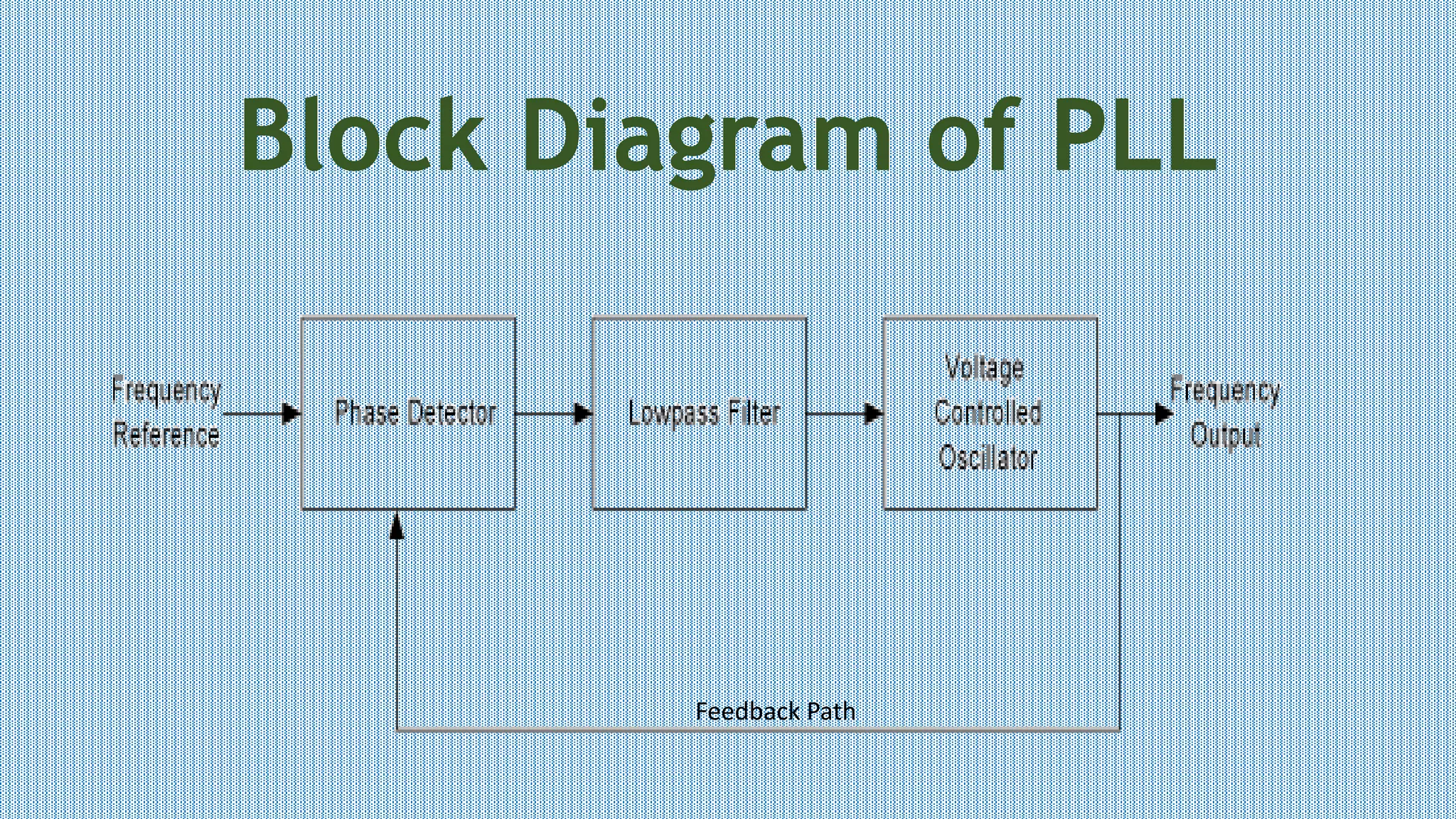
• Block Diagram of PLL
• Phase Detector
• Low Pass Filter
• Voltage Controlled Oscillator (VCO)
• Stages of PLL Operation
• Application
• Full form of PLL is ‘Phase Locked Loop’.
• PLL is a circuit, synchronizing an output signal (generated by an
oscillator) with a reference or input signal in the frequency as well as
in phase.
What is PLL?
Functional Blocks of PLL
•Phase Detector
•Low Pass Filter
•Voltage Control Oscillator (VCO)
Block Diagram of PLL
Feedback Path
Phase Detector
• A phase detector is basically a comparator that compares the input
frequency f_in with feedback frequency f_out.
• Comparing the input frequency & output frequency it provides a error
signal which is basically a Dc voltage.
• The loop is locked when these two signals are of the same frequency
and have a fixed phase difference.
• Basically Phase Detector works as an Ex-OR gate.
Low Pass Filter
• Low-pass filter is used to remove high frequency components and
noise from the output of the phase detector.
• Low Pass Filter provides a steady dc level voltage which becomes the
input of VCO.
Voltage Controlled
Oscillator (VCO)
• Voltage-controlled oscillator generates frequency controlled by input
voltage.
• The dc level output of a low-pass filter is applied as control signal to
the voltage-controlled oscillator (VCO).
• The VCO frequency is adjusted till it becomes equal to the frequency
of the input signal.
• During this adjustment, PLL goes through three stages-free running,
capture and phase lock.
Stages of PLL Operation
• Free Running Stage: When no input is applied at the phase
detector, then due to VCO, PLL works in Free Running Stage. The
output frequency of this stage is dependent on the free running
frequency of VCO.
• Capture Stage: When a input frequency is applied at the phase
detector, then due to feedback mechanism PLL tries to track the
output with respect to input. This stage is called Capture Stage.
Stages of PLL Operation
• Phase Locked State: Due to feedback mechanism, the
frequency comparision stops as soon as the output frequency
become equal to the input frequency. This stage is called Phase
Locked State.
Application
• Used to demodulate frequency-modulated signals.
• In radio transmitters, a PLL is used to synthesize new frequencies
which are a multiple of a reference frequency.
• Demodulation of both FM and AM signals.
• Recovery of small signals that otherwise would be lost in noise.
• Used for syncronization purposes in space communication for
coherent demodulation.
Phase Locked Loop (PLL)

Phase Locked Loop (PLL)

  • 1.
    PHASE LOCKED LOOP(PLL) PRESENTED BY: NAME: MANOJIT ROY ROLL NO: 10300513064 (L13/EI/83) DEPT: AEIE HALDIA INSTITUTE OF TECHNOLOGY
  • 2.
    OUTLINE • What isPLL • Functional Blocks of PLL • Block Diagram of PLL • Phase Detector • Low Pass Filter • Voltage Controlled Oscillator (VCO) • Stages of PLL Operation • Application
  • 3.
    • Full formof PLL is ‘Phase Locked Loop’. • PLL is a circuit, synchronizing an output signal (generated by an oscillator) with a reference or input signal in the frequency as well as in phase. What is PLL?
  • 4.
    Functional Blocks ofPLL •Phase Detector •Low Pass Filter •Voltage Control Oscillator (VCO)
  • 5.
    Block Diagram ofPLL Feedback Path
  • 6.
    Phase Detector • Aphase detector is basically a comparator that compares the input frequency f_in with feedback frequency f_out. • Comparing the input frequency & output frequency it provides a error signal which is basically a Dc voltage. • The loop is locked when these two signals are of the same frequency and have a fixed phase difference. • Basically Phase Detector works as an Ex-OR gate.
  • 7.
    Low Pass Filter •Low-pass filter is used to remove high frequency components and noise from the output of the phase detector. • Low Pass Filter provides a steady dc level voltage which becomes the input of VCO.
  • 8.
    Voltage Controlled Oscillator (VCO) •Voltage-controlled oscillator generates frequency controlled by input voltage. • The dc level output of a low-pass filter is applied as control signal to the voltage-controlled oscillator (VCO). • The VCO frequency is adjusted till it becomes equal to the frequency of the input signal. • During this adjustment, PLL goes through three stages-free running, capture and phase lock.
  • 9.
    Stages of PLLOperation • Free Running Stage: When no input is applied at the phase detector, then due to VCO, PLL works in Free Running Stage. The output frequency of this stage is dependent on the free running frequency of VCO. • Capture Stage: When a input frequency is applied at the phase detector, then due to feedback mechanism PLL tries to track the output with respect to input. This stage is called Capture Stage.
  • 10.
    Stages of PLLOperation • Phase Locked State: Due to feedback mechanism, the frequency comparision stops as soon as the output frequency become equal to the input frequency. This stage is called Phase Locked State.
  • 11.
    Application • Used todemodulate frequency-modulated signals. • In radio transmitters, a PLL is used to synthesize new frequencies which are a multiple of a reference frequency. • Demodulation of both FM and AM signals. • Recovery of small signals that otherwise would be lost in noise. • Used for syncronization purposes in space communication for coherent demodulation.