PULMONARY
FUNCTION
TEST
DR. GANESH BR
PFT
 Spirometry
 – Before and after bronchodilator
 – Sitting and supine
 • Lung volumes
 • Diffusion capacity (DLCO)
 • Methacholine challenge
 • Maximum voluntary ventilation (MVV)
 • Maximum inspiratory and expiratory pressures
(MIPS/MEPS)
 • Pulse oximetry
 • Arterial blood gases (ABGs)
 • Six minute walk test
 • Cardiopulmonary exercise test (CPET)
 • Exhaled nitric oxide (FENO)
EQUIPMENT OF PFT
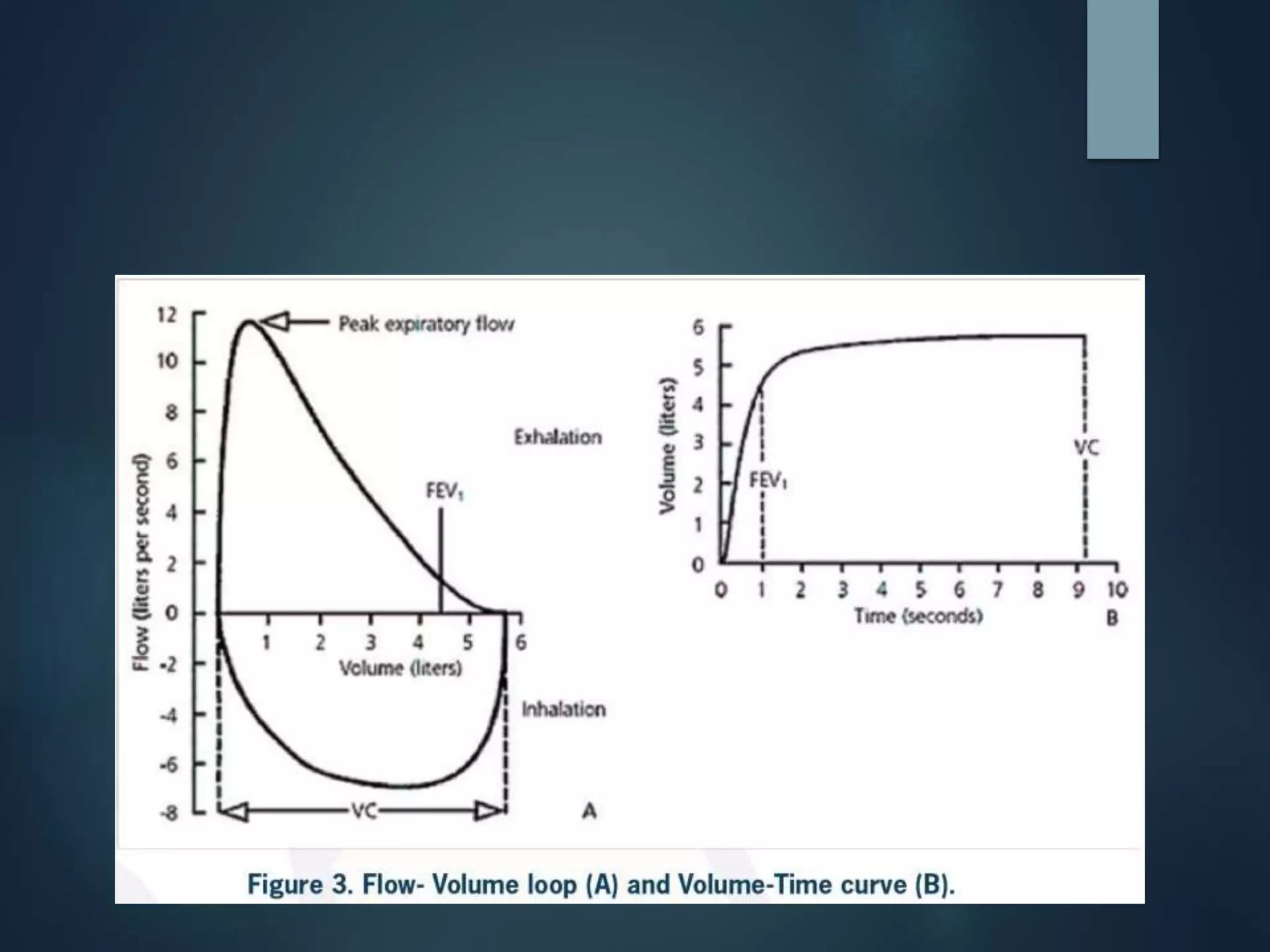
FLOW VOLUME LOOP
PARAMETERS
 FVC: maximum amount of air exhaled after a maximal
inhalation
 If normal:
 Elasticity is fairly normal (normal lung tissue)
 Thoracic cage (configuration of thoracic spine/ribs) is normal
 Respiratory muscles aren’t too weak
 If low, suggests one or more of the above is a problem
(restrictive disorder)
 FEV1: amount of air exhaled in the first second as forcefully as
possible from a full lung
 Measuring the speed of the air being exhaled can provide a
window to the airways -volume exhaled in the first second is a
measure of speed (litres/second)
 (FEV1) reduced speed indicates ‘obstructed’ or narrowed
airways
 FEV1/FVC ratio: identification of airflow obstruction:– <70% of
predicted
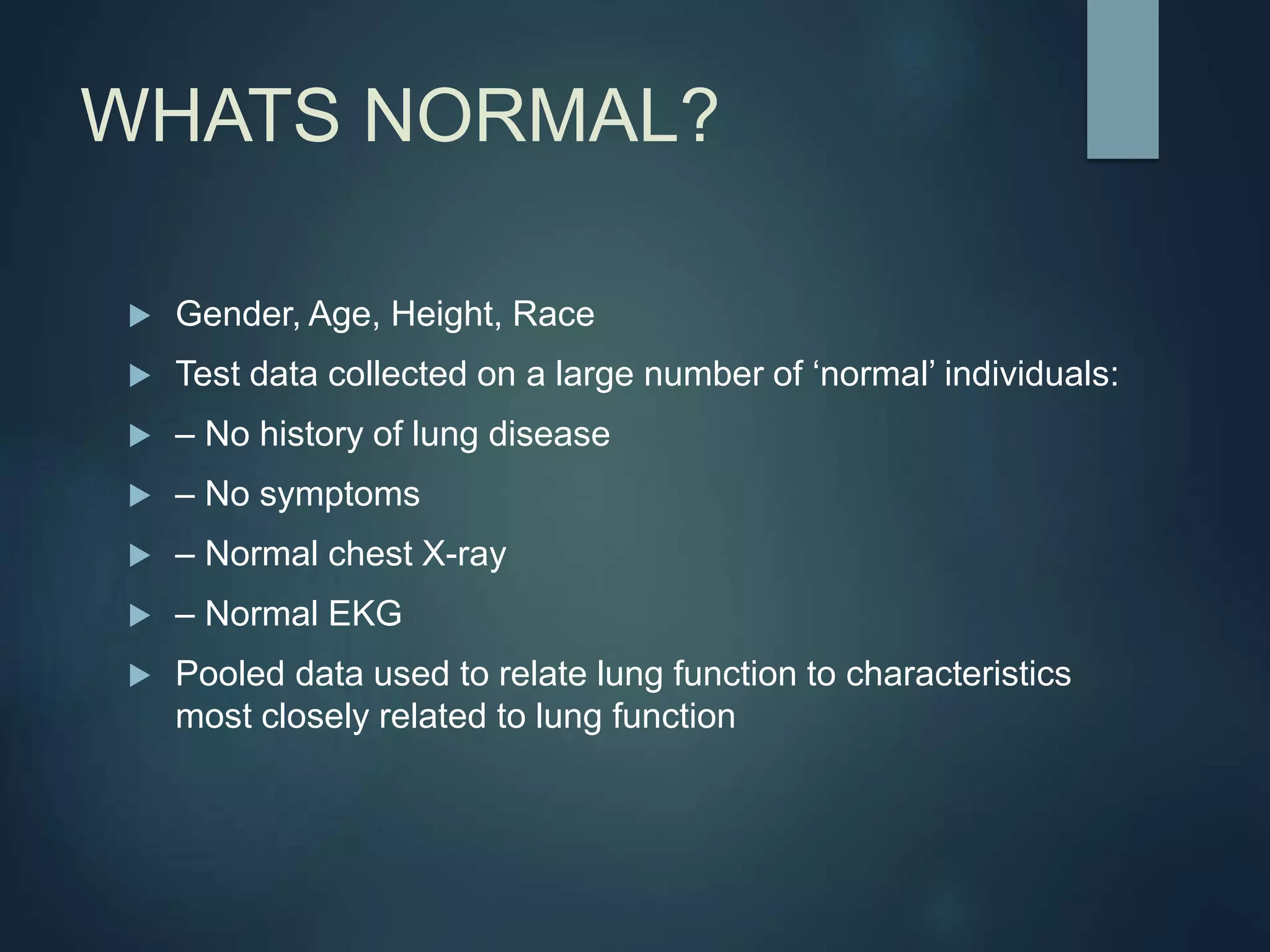
WHATS NORMAL?
 Gender, Age, Height, Race
 Test data collected on a large number of ‘normal’ individuals:
 – No history of lung disease
 – No symptoms
 – Normal chest X-ray
 – Normal EKG
 Pooled data used to relate lung function to characteristics
most closely related to lung function
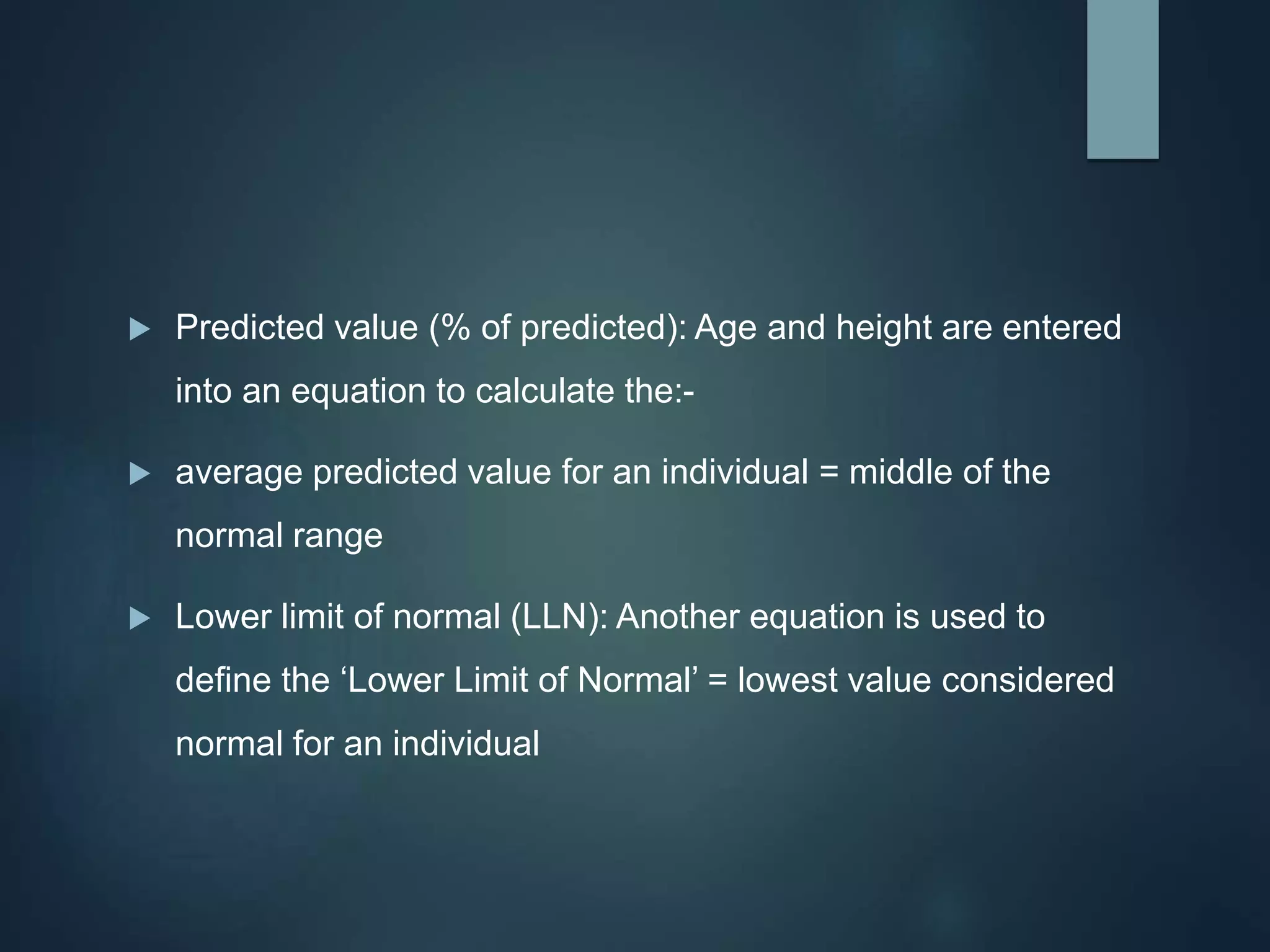
 Predicted value (% of predicted): Age and height are entered
into an equation to calculate the:-
 average predicted value for an individual = middle of the
normal range
 Lower limit of normal (LLN): Another equation is used to
define the ‘Lower Limit of Normal’ = lowest value considered
normal for an individual
STEP BY STEP
INTERPRETATION
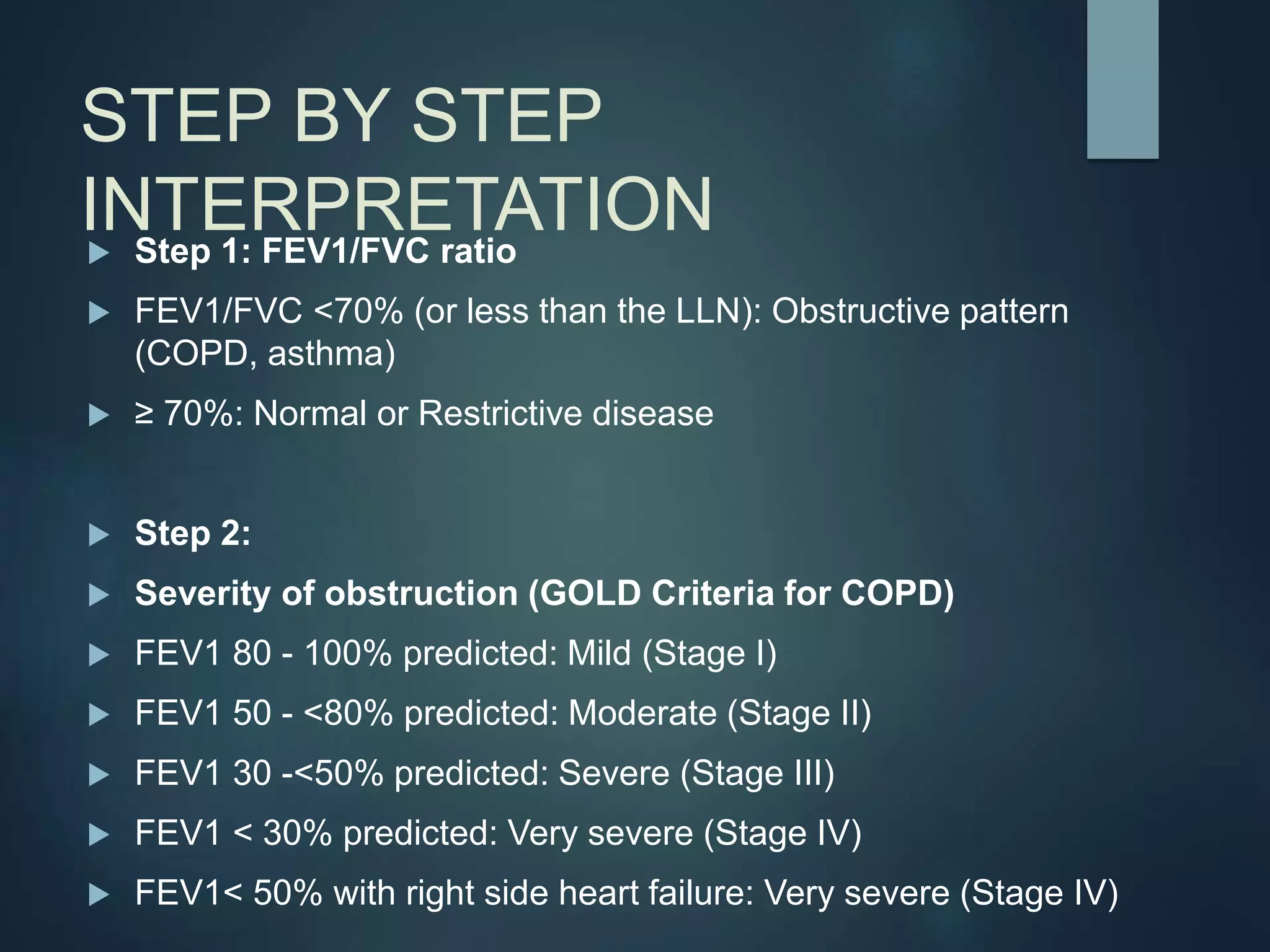
 Step 1: FEV1/FVC ratio
 FEV1/FVC <70% (or less than the LLN): Obstructive pattern
(COPD, asthma)
 ≥ 70%: Normal or Restrictive disease
 Step 2:
 Severity of obstruction (GOLD Criteria for COPD)
 FEV1 80 - 100% predicted: Mild (Stage I)
 FEV1 50 - <80% predicted: Moderate (Stage II)
 FEV1 30 -<50% predicted: Severe (Stage III)
 FEV1 < 30% predicted: Very severe (Stage IV)
 FEV1< 50% with right side heart failure: Very severe (Stage IV)
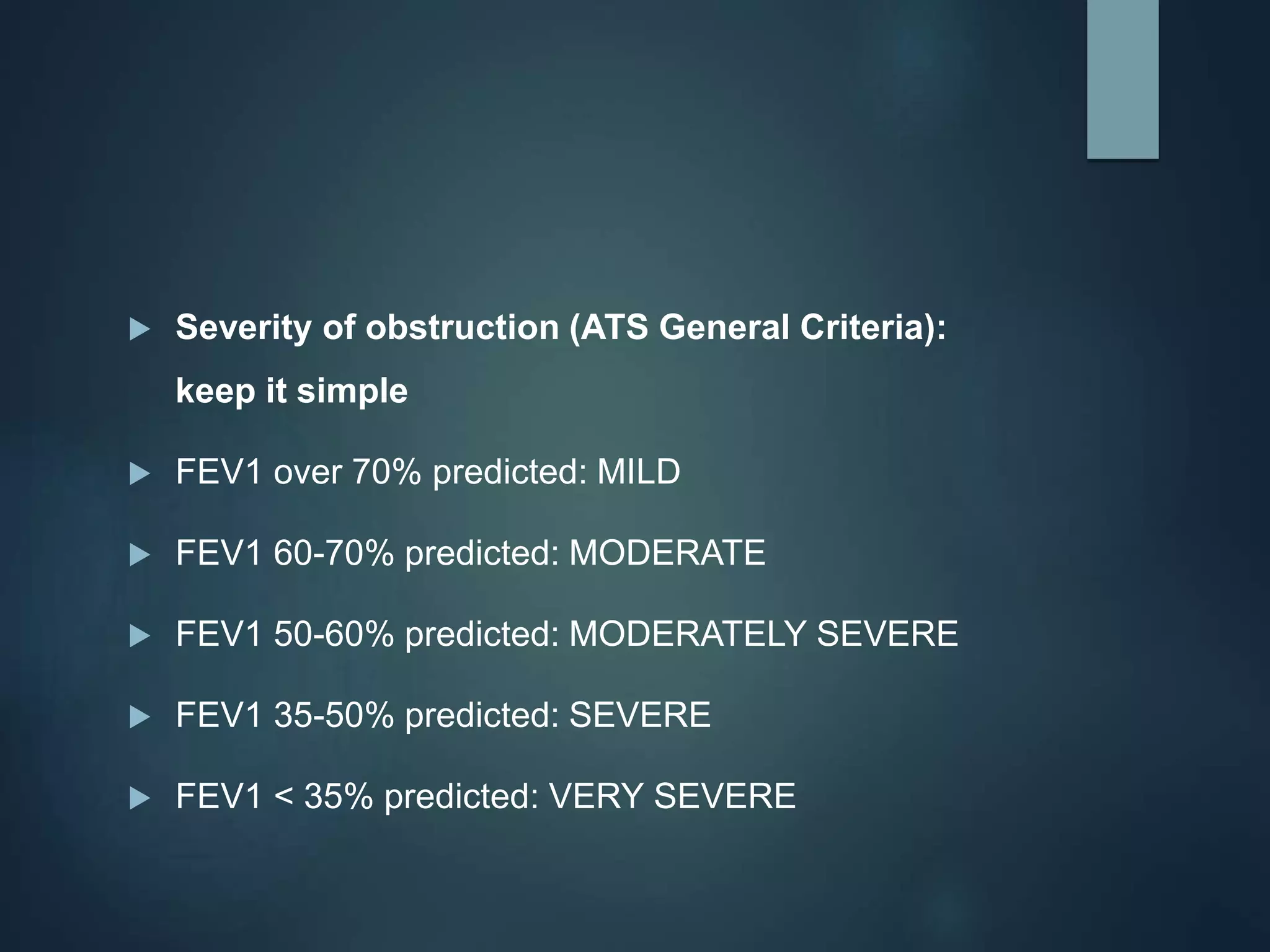
 Severity of obstruction (ATS General Criteria):
keep it simple
 FEV1 over 70% predicted: MILD
 FEV1 60-70% predicted: MODERATE
 FEV1 50-60% predicted: MODERATELY SEVERE
 FEV1 35-50% predicted: SEVERE
 FEV1 < 35% predicted: VERY SEVERE
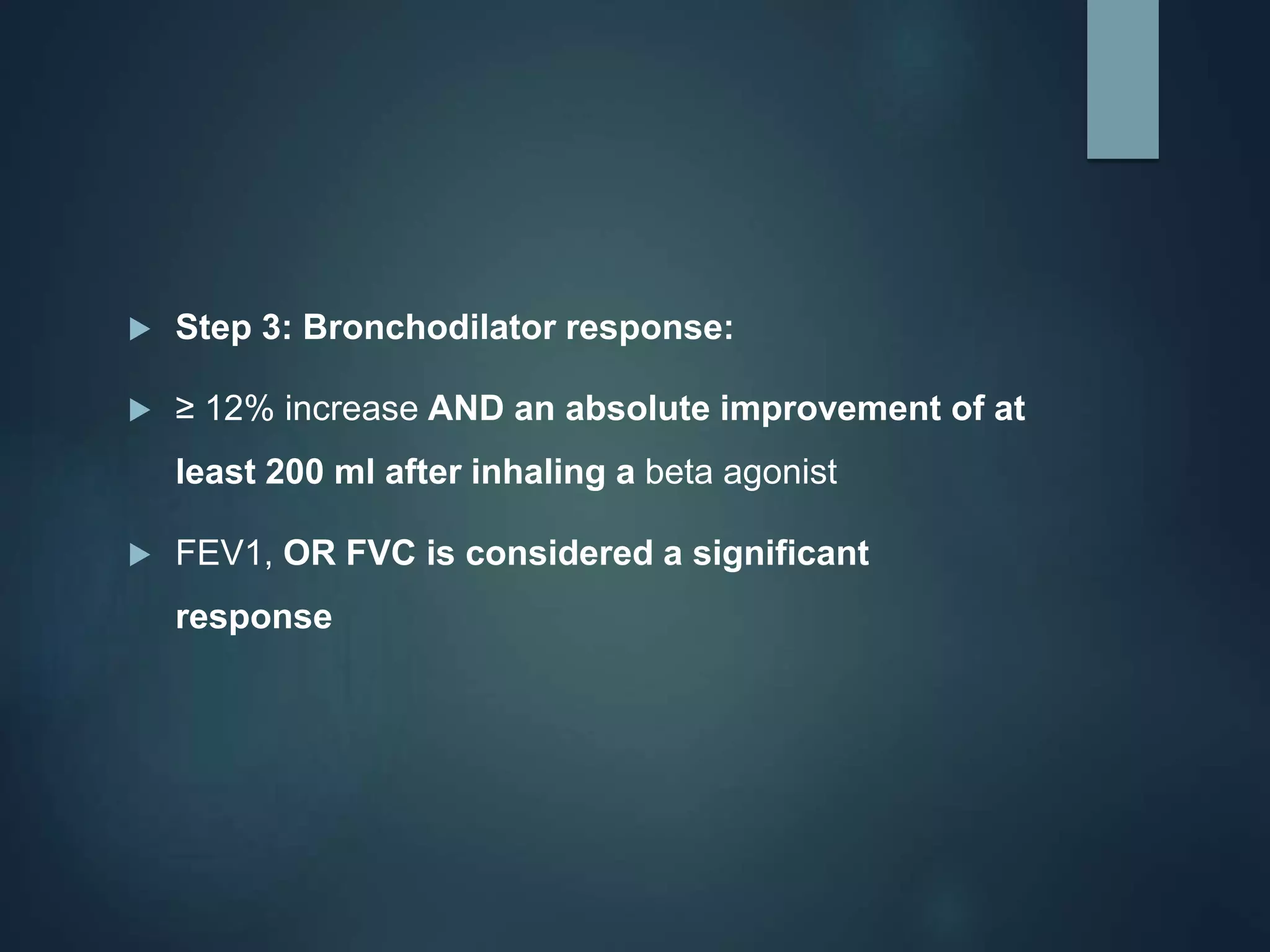
 Step 3: Bronchodilator response:
 ≥ 12% increase AND an absolute improvement of at
least 200 ml after inhaling a beta agonist
 FEV1, OR FVC is considered a significant
response
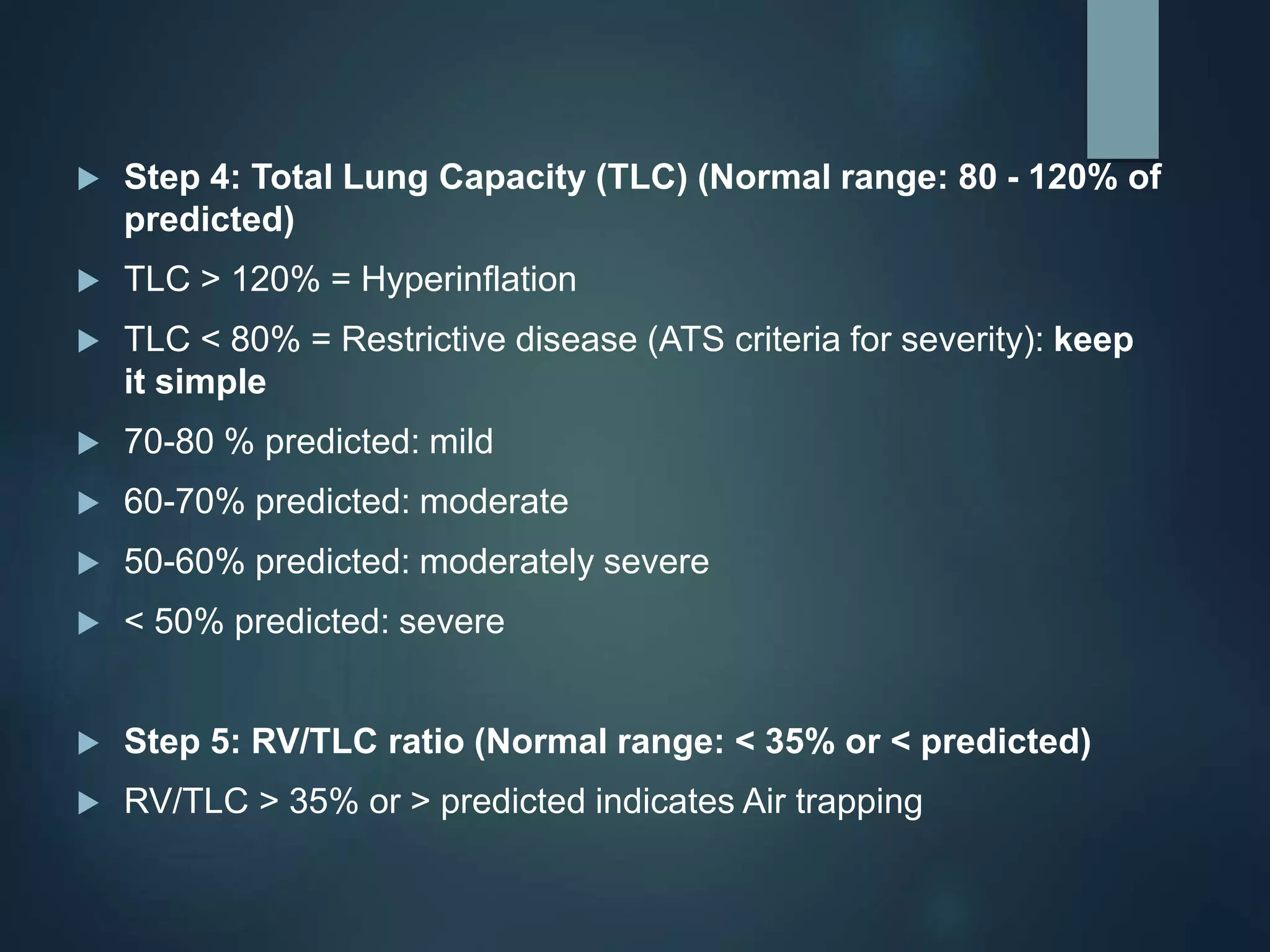
 Step 4: Total Lung Capacity (TLC) (Normal range: 80 - 120% of
predicted)
 TLC > 120% = Hyperinflation
 TLC < 80% = Restrictive disease (ATS criteria for severity): keep
it simple
 70-80 % predicted: mild
 60-70% predicted: moderate
 50-60% predicted: moderately severe
 < 50% predicted: severe
 Step 5: RV/TLC ratio (Normal range: < 35% or < predicted)
 RV/TLC > 35% or > predicted indicates Air trapping
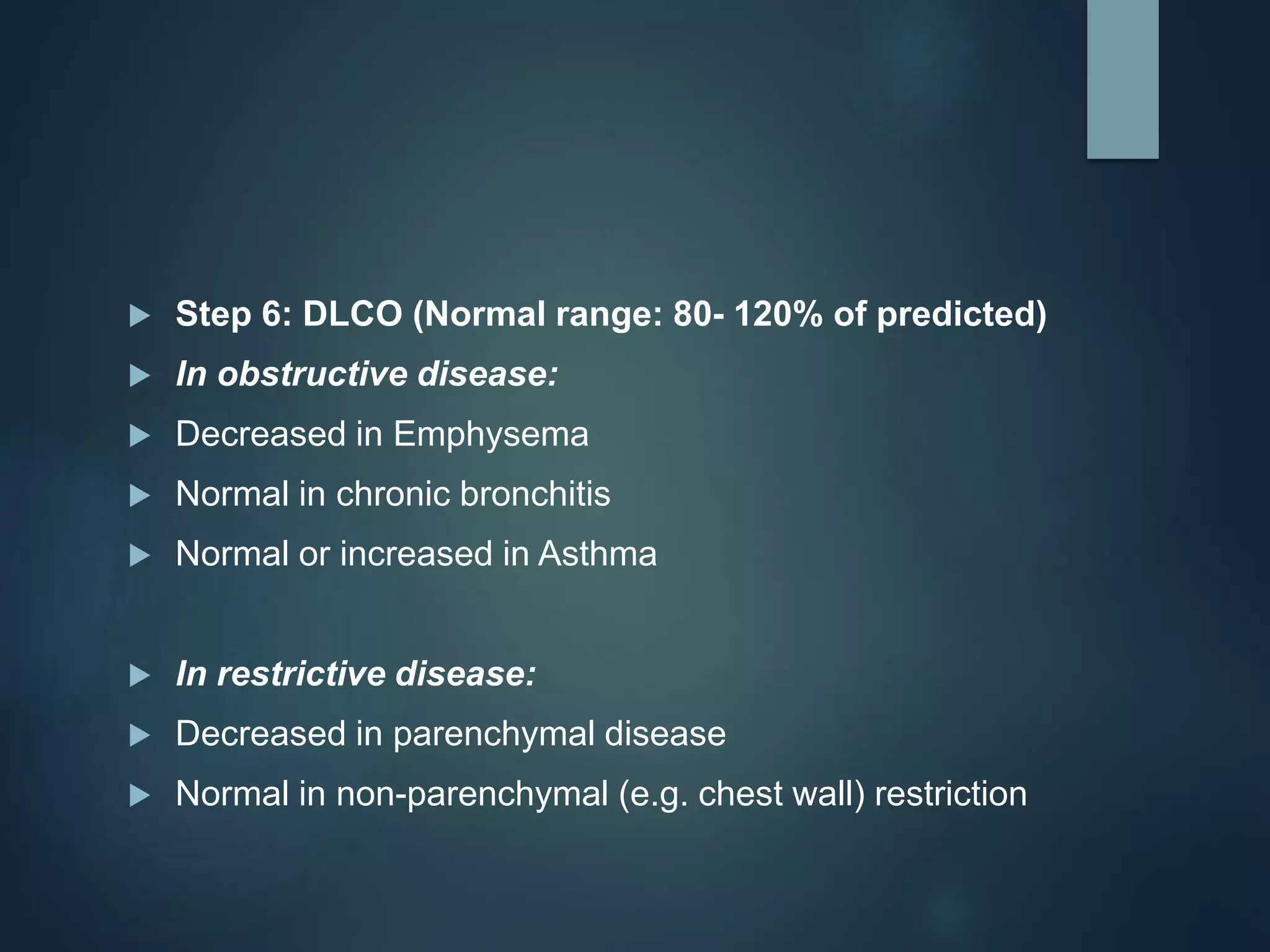
 Step 6: DLCO (Normal range: 80- 120% of predicted)
 In obstructive disease:
 Decreased in Emphysema
 Normal in chronic bronchitis
 Normal or increased in Asthma
 In restrictive disease:
 Decreased in parenchymal disease
 Normal in non-parenchymal (e.g. chest wall) restriction
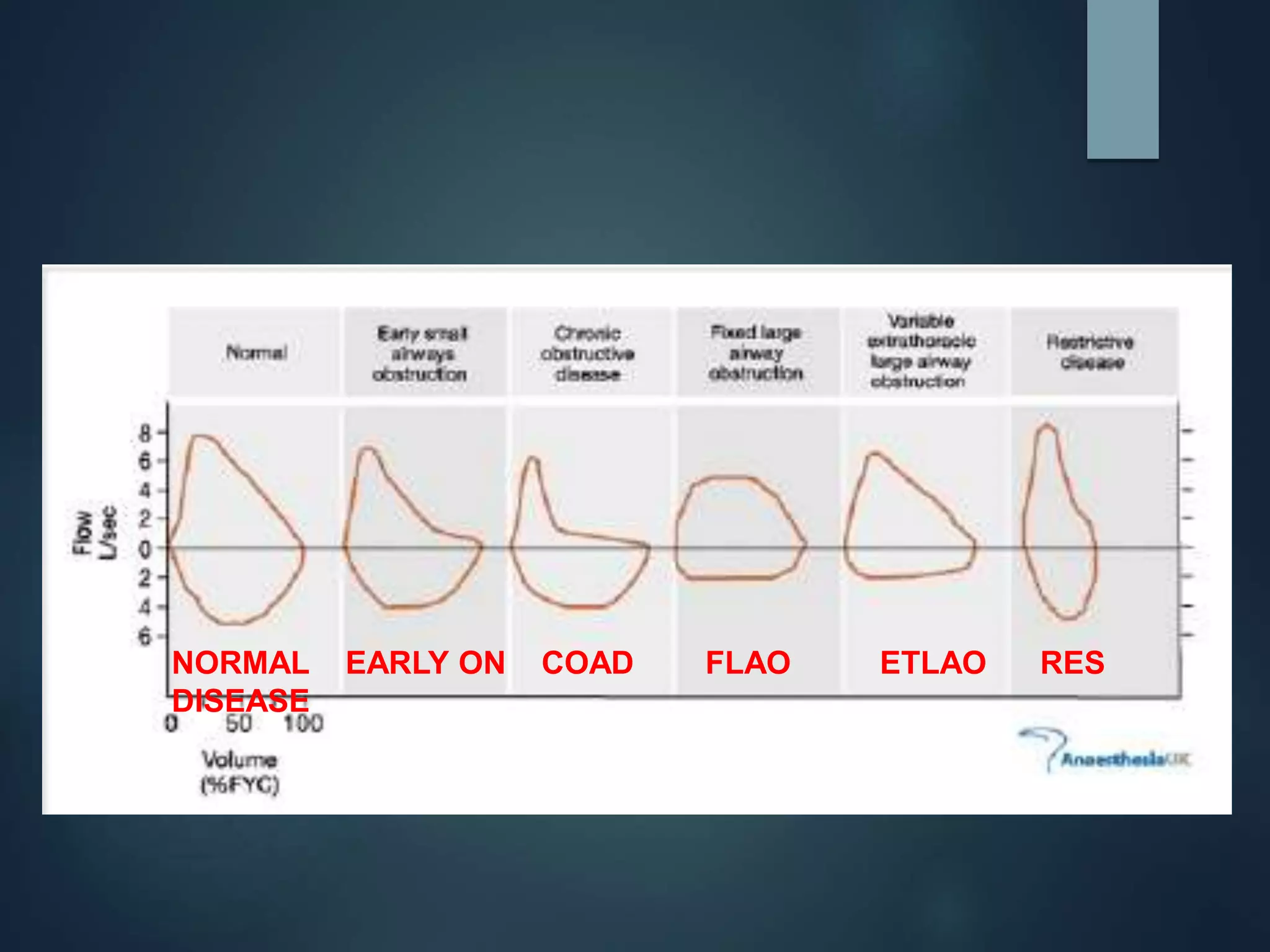
NORMAL EARLY ON COAD FLAO ETLAO RES
DISEASE
PFT DETAIL.pptx

PFT DETAIL.pptx

  • 1.
  • 2.
    PFT  Spirometry  –Before and after bronchodilator  – Sitting and supine  • Lung volumes  • Diffusion capacity (DLCO)  • Methacholine challenge  • Maximum voluntary ventilation (MVV)  • Maximum inspiratory and expiratory pressures (MIPS/MEPS)  • Pulse oximetry  • Arterial blood gases (ABGs)  • Six minute walk test  • Cardiopulmonary exercise test (CPET)  • Exhaled nitric oxide (FENO)
  • 3.
  • 5.
  • 7.
    PARAMETERS  FVC: maximumamount of air exhaled after a maximal inhalation  If normal:  Elasticity is fairly normal (normal lung tissue)  Thoracic cage (configuration of thoracic spine/ribs) is normal  Respiratory muscles aren’t too weak  If low, suggests one or more of the above is a problem (restrictive disorder)
  • 8.
     FEV1: amountof air exhaled in the first second as forcefully as possible from a full lung  Measuring the speed of the air being exhaled can provide a window to the airways -volume exhaled in the first second is a measure of speed (litres/second)  (FEV1) reduced speed indicates ‘obstructed’ or narrowed airways  FEV1/FVC ratio: identification of airflow obstruction:– <70% of predicted
  • 9.
    WHATS NORMAL?  Gender,Age, Height, Race  Test data collected on a large number of ‘normal’ individuals:  – No history of lung disease  – No symptoms  – Normal chest X-ray  – Normal EKG  Pooled data used to relate lung function to characteristics most closely related to lung function
  • 10.
     Predicted value(% of predicted): Age and height are entered into an equation to calculate the:-  average predicted value for an individual = middle of the normal range  Lower limit of normal (LLN): Another equation is used to define the ‘Lower Limit of Normal’ = lowest value considered normal for an individual
  • 11.
    STEP BY STEP INTERPRETATION Step 1: FEV1/FVC ratio  FEV1/FVC <70% (or less than the LLN): Obstructive pattern (COPD, asthma)  ≥ 70%: Normal or Restrictive disease  Step 2:  Severity of obstruction (GOLD Criteria for COPD)  FEV1 80 - 100% predicted: Mild (Stage I)  FEV1 50 - <80% predicted: Moderate (Stage II)  FEV1 30 -<50% predicted: Severe (Stage III)  FEV1 < 30% predicted: Very severe (Stage IV)  FEV1< 50% with right side heart failure: Very severe (Stage IV)
  • 12.
     Severity ofobstruction (ATS General Criteria): keep it simple  FEV1 over 70% predicted: MILD  FEV1 60-70% predicted: MODERATE  FEV1 50-60% predicted: MODERATELY SEVERE  FEV1 35-50% predicted: SEVERE  FEV1 < 35% predicted: VERY SEVERE
  • 13.
     Step 3:Bronchodilator response:  ≥ 12% increase AND an absolute improvement of at least 200 ml after inhaling a beta agonist  FEV1, OR FVC is considered a significant response
  • 14.
     Step 4:Total Lung Capacity (TLC) (Normal range: 80 - 120% of predicted)  TLC > 120% = Hyperinflation  TLC < 80% = Restrictive disease (ATS criteria for severity): keep it simple  70-80 % predicted: mild  60-70% predicted: moderate  50-60% predicted: moderately severe  < 50% predicted: severe  Step 5: RV/TLC ratio (Normal range: < 35% or < predicted)  RV/TLC > 35% or > predicted indicates Air trapping
  • 15.
     Step 6:DLCO (Normal range: 80- 120% of predicted)  In obstructive disease:  Decreased in Emphysema  Normal in chronic bronchitis  Normal or increased in Asthma  In restrictive disease:  Decreased in parenchymal disease  Normal in non-parenchymal (e.g. chest wall) restriction
  • 16.
    NORMAL EARLY ONCOAD FLAO ETLAO RES DISEASE