Expressed Emotions
Niharika Thakkar
M.A, N.E.T, MBPsS,
Clinical Psychology
What are Expressed Emotions??
 Qualitative measure of the 'amount' of emotion
displayed
- Family setting
- Care takers
- Relatives
 How do relatives of a psychological patient express
their attitude towards them while they are not
present ???
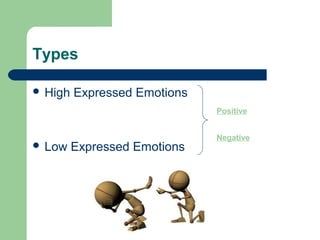
Types
 High Expressed Emotions
 Low Expressed Emotions
Positive
Negative
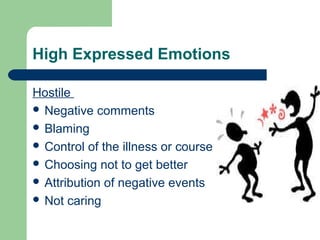
High Expressed Emotions
Hostile
 Negative comments
 Blaming
 Control of the illness or course
 Choosing not to get better
 Attribution of negative events
 Not caring
High Expressed Emotions
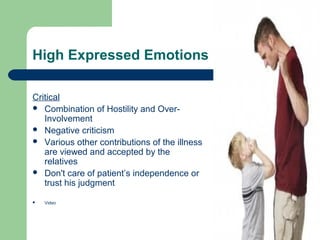
Critical
 Combination of Hostility and Over-
Involvement
 Negative criticism
 Various other contributions of the illness
are viewed and accepted by the
relatives
 Don't care of patient’s independence or
trust his judgment
 Video
High Expressed
Emotions
Over- Involvement
 Guilt : Families blame themselves for
everything
 Disorder is not in the control of the patient at
all
 Pity and Shame
 Overbearing; too protective
 Coping with their illness is difficult if too much
time is spent with the parent/spouse
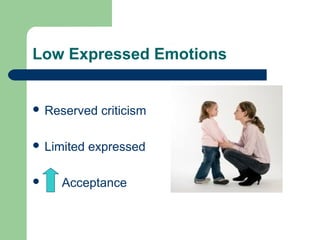
Low Expressed Emotions
 Reserved criticism
 Limited expressed
 Acceptance
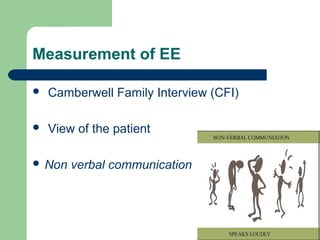
Measurement of EE
 Camberwell Family Interview (CFI)
 View of the patient
 Non verbal communication
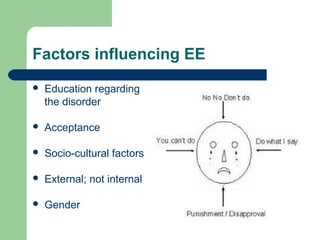
Factors influencing EE
 Education regarding
the disorder
 Acceptance
 Socio-cultural factors
 External; not internal
 Gender
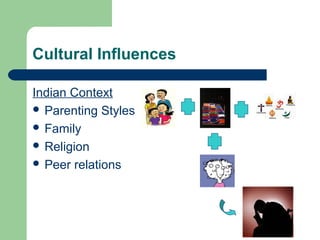
Cultural Influences
Indian Context
 Parenting Styles
 Family
 Religion
 Peer relations
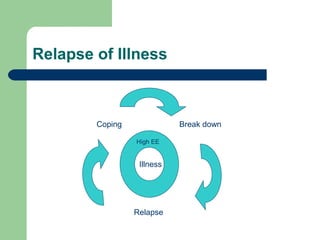
Relapse of Illness
Coping Break down
Relapse
Illness
High EE
Relapse
 Trapped
 Dependent
 Outsider because of the excessive attention
received
 Stress
 Hard to stop criticism once it has started
 Cycle of rehabilitation and relapse
Double Bind
 Gregory Bateson in the 1950s
 Dilemma in communication
 Receives two or more conflicting messages
 Successful response to one message results in a failed
response to the other
 For example, if your employer tells you to do a job, but doesn't
allow enough time for you to do it, and you are in danger of
losing your job if you question the situation, you are in a double
bind.
THANK YOU

Expressed emotions

  • 1.
    Expressed Emotions Niharika Thakkar M.A,N.E.T, MBPsS, Clinical Psychology
  • 2.
    What are ExpressedEmotions??  Qualitative measure of the 'amount' of emotion displayed - Family setting - Care takers - Relatives  How do relatives of a psychological patient express their attitude towards them while they are not present ???
  • 3.
    Types  High ExpressedEmotions  Low Expressed Emotions Positive Negative
  • 4.
    High Expressed Emotions Hostile Negative comments  Blaming  Control of the illness or course  Choosing not to get better  Attribution of negative events  Not caring
  • 5.
    High Expressed Emotions Critical Combination of Hostility and Over- Involvement  Negative criticism  Various other contributions of the illness are viewed and accepted by the relatives  Don't care of patient’s independence or trust his judgment  Video
  • 6.
    High Expressed Emotions Over- Involvement Guilt : Families blame themselves for everything  Disorder is not in the control of the patient at all  Pity and Shame  Overbearing; too protective  Coping with their illness is difficult if too much time is spent with the parent/spouse
  • 7.
    Low Expressed Emotions Reserved criticism  Limited expressed  Acceptance
  • 8.
    Measurement of EE Camberwell Family Interview (CFI)  View of the patient  Non verbal communication
  • 9.
    Factors influencing EE Education regarding the disorder  Acceptance  Socio-cultural factors  External; not internal  Gender
  • 10.
    Cultural Influences Indian Context Parenting Styles  Family  Religion  Peer relations
  • 11.
    Relapse of Illness CopingBreak down Relapse Illness High EE
  • 12.
    Relapse  Trapped  Dependent Outsider because of the excessive attention received  Stress  Hard to stop criticism once it has started  Cycle of rehabilitation and relapse
  • 13.
    Double Bind  GregoryBateson in the 1950s  Dilemma in communication  Receives two or more conflicting messages  Successful response to one message results in a failed response to the other  For example, if your employer tells you to do a job, but doesn't allow enough time for you to do it, and you are in danger of losing your job if you question the situation, you are in a double bind.
  • 14.