
Personal Communication
StrategyKimverly Torres
Bernadette Romero
The
Conference
A. Definition
The Conference
• Is a formal or informal meeting
between/among the teacher and
student and/or parent;
• Has a clear focus on learning for
discussion
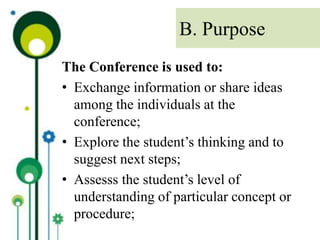
The Conference is used to:
• Exchange information or share ideas
among the individuals at the
conference;
• Explore the student’s thinking and to
suggest next steps;
• Assesss the student’s level of
understanding of particular concept or
procedure;
B. Purpose
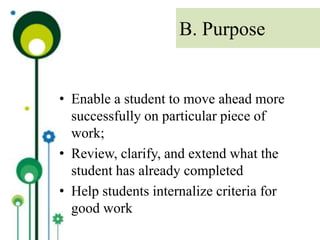
• Enable a student to move ahead more
successfully on particular piece of
work;
• Review, clarify, and extend what the
student has already completed
• Help students internalize criteria for
good work
B. Purpose
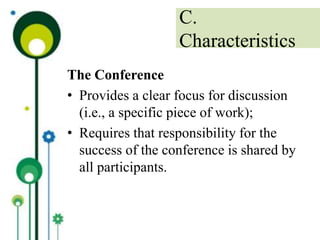
The Conference
• Provides a clear focus for discussion
(i.e., a specific piece of work);
• Requires that responsibility for the
success of the conference is shared by
all participants.
C.
Characteristics
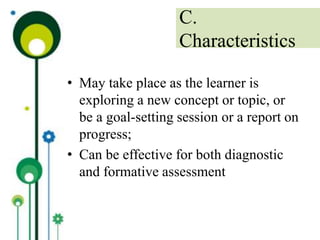
• May take place as the learner is
exploring a new concept or topic, or
be a goal-setting session or a report on
progress;
• Can be effective for both diagnostic
and formative assessment
C.
Characteristics
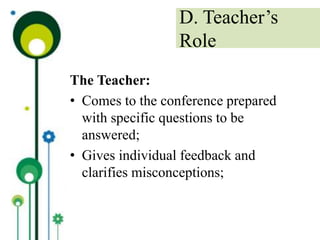
The Teacher:
• Comes to the conference prepared
with specific questions to be
answered;
• Gives individual feedback and
clarifies misconceptions;
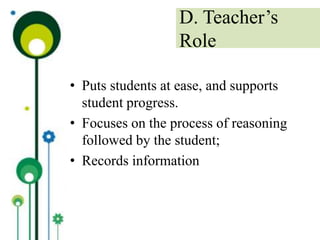
D. Teacher’s
Role
• Puts students at ease, and supports
student progress.
• Focuses on the process of reasoning
followed by the student;
• Records information
D. Teacher’s
Role
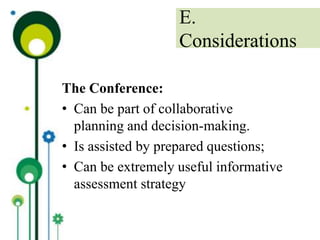
The Conference:
• Can be part of collaborative
planning and decision-making.
• Is assisted by prepared questions;
• Can be extremely useful informative
assessment strategy
E.
Considerations
The
Interview
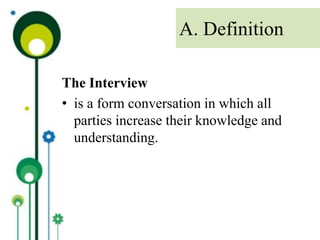
The Interview
• is a form conversation in which all
parties increase their knowledge and
understanding.
A. Definition
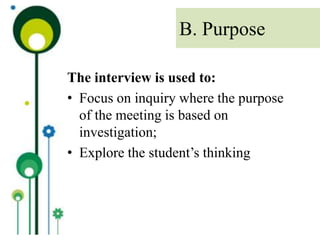
The interview is used to:
• Focus on inquiry where the purpose
of the meeting is based on
investigation;
• Explore the student’s thinking
B. Purpose
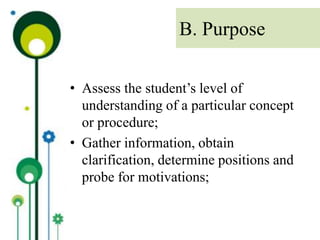
• Assess the student’s level of
understanding of a particular concept
or procedure;
• Gather information, obtain
clarification, determine positions and
probe for motivations;
B. Purpose
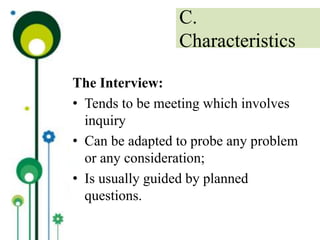
The Interview:
• Tends to be meeting which involves
inquiry
• Can be adapted to probe any problem
or any consideration;
• Is usually guided by planned
questions.
C.
Characteristics
The teacher:
• Is responsible for the initial questions
that guide the conversation, as well as
the flow and movement of the
exchange.
• Generates information
• Allows students to take lead in the
interview when appropriate
D. Teacher’s
Role
The interview:
• Needs time built in for conversations
especially when the purpose is an
honest and thoughtful exchange.
E.
Considerations
Thank you
for listening!
Bernadette
Coffee kimverly

Personal Communication Strategy

  • 1.
  • 2.
  • 3.
    A. Definition The Conference •Is a formal or informal meeting between/among the teacher and student and/or parent; • Has a clear focus on learning for discussion
  • 4.
    The Conference isused to: • Exchange information or share ideas among the individuals at the conference; • Explore the student’s thinking and to suggest next steps; • Assesss the student’s level of understanding of particular concept or procedure; B. Purpose
  • 5.
    • Enable astudent to move ahead more successfully on particular piece of work; • Review, clarify, and extend what the student has already completed • Help students internalize criteria for good work B. Purpose
  • 6.
    The Conference • Providesa clear focus for discussion (i.e., a specific piece of work); • Requires that responsibility for the success of the conference is shared by all participants. C. Characteristics
  • 7.
    • May takeplace as the learner is exploring a new concept or topic, or be a goal-setting session or a report on progress; • Can be effective for both diagnostic and formative assessment C. Characteristics
  • 8.
    The Teacher: • Comesto the conference prepared with specific questions to be answered; • Gives individual feedback and clarifies misconceptions; D. Teacher’s Role
  • 9.
    • Puts studentsat ease, and supports student progress. • Focuses on the process of reasoning followed by the student; • Records information D. Teacher’s Role
  • 10.
    The Conference: • Canbe part of collaborative planning and decision-making. • Is assisted by prepared questions; • Can be extremely useful informative assessment strategy E. Considerations
  • 11.
  • 12.
    The Interview • isa form conversation in which all parties increase their knowledge and understanding. A. Definition
  • 13.
    The interview isused to: • Focus on inquiry where the purpose of the meeting is based on investigation; • Explore the student’s thinking B. Purpose
  • 14.
    • Assess thestudent’s level of understanding of a particular concept or procedure; • Gather information, obtain clarification, determine positions and probe for motivations; B. Purpose
  • 15.
    The Interview: • Tendsto be meeting which involves inquiry • Can be adapted to probe any problem or any consideration; • Is usually guided by planned questions. C. Characteristics
  • 16.
    The teacher: • Isresponsible for the initial questions that guide the conversation, as well as the flow and movement of the exchange. • Generates information • Allows students to take lead in the interview when appropriate D. Teacher’s Role
  • 17.
    The interview: • Needstime built in for conversations especially when the purpose is an honest and thoughtful exchange. E. Considerations
  • 18.